
Reviewed · SANTA CROCE AND FLORENCE CHURCHES
Museo di San Marco in Florence: Beato Angelico, Savonarola and the Medicis
San Marco is where Florence’s art, religion, and Medici politics meet in a quiet convent setting. Fra Angelico’s frescoes are the main draw, but the visit also takes you into friars’ cells, cloisters, and rooms tied to Savonarola, giving the paintings a setting that a quick museum stop cannot provide.
I like the private format, which lets your group set a calmer pace and ask questions without competing with a crowd. I also like the pre-booked entrance, since it removes one small but useful worry from a busy Florence day.
The main caution is the guide. Katherine and Susanna have received warm praise for making the art clear and engaging, but one guest found an assigned guide’s English difficult to follow. The museum itself is the sure thing; the quality of the commentary can vary.
Key points about the San Marco visit
- Fra Angelico’s frescoes: See religious paintings in the convent spaces where they were meant to be seen.
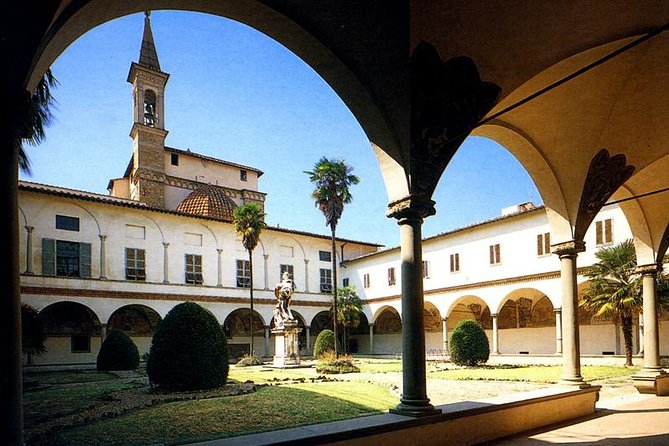
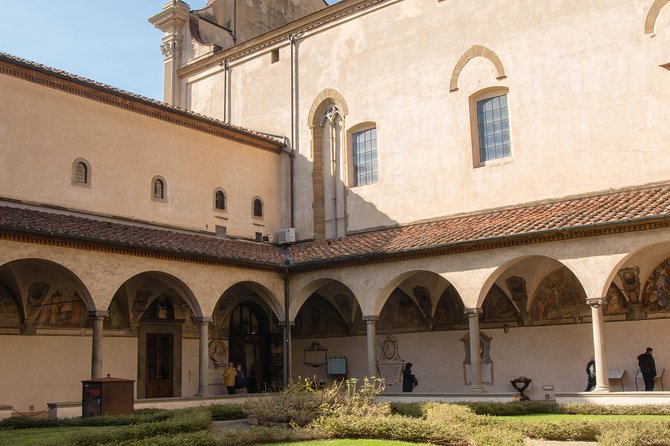
- Five-part visit: The route covers the church, facade, convent, first cloister, and second cloister.
- Savonarola connections: Visit rooms associated with the fiery Dominican preacher Girolamo Savonarola.
- Medici patronage: Learn how Cosimo de’ Medici commissioned the complex and involved architect Michelozzo.
- Private attention: Only your group takes part, with a two-hour pace built around explanation and questions.
- Central meeting point: Meet at Piazza San Marco, with no hotel pickup or drop-off included.
Why San Marco deserves two hours
Florence can make you feel that you must choose between famous names. The Uffizi, Accademia, Duomo, and Palazzo Vecchio usually take priority. San Marco offers a different kind of visit: less about grand public rooms and more about how art worked inside a religious community.
The complex was commissioned by Cosimo de’ Medici and designed in part by Michelozzo. That detail matters because San Marco was not simply a monastery that happened to contain beautiful art. It was also a Medici project, shaped by money, power, architecture, and religious purpose.
Your guide helps connect those threads. You are not just looking at a painting by Beato Angelico, also known as Fra Angelico. You are seeing religious images in a convent built for friars, supported by one of Florence’s most powerful families, and later associated with Savonarola, whose preaching shook the city.
The visit lasts about two hours. That is long enough to cover the main spaces without turning the experience into an all-day museum commitment. If you have limited time in Florence, this is a useful length for fitting San Marco between larger attractions.
More churches and chapels in Florence:
- Florence: Santa Monaca Church Italian Opera Concert Ticket
★ 4.7 · 2,692 reviews - Florence: Santa Maria Novella Entry Ticket & Audioguide
★ 4.3 · 717 reviews - Italian Opera Concert Ticket in Florence’s Santa Monaca Church
★ 4.5 · 602 reviews
Meeting at Piazza San Marco
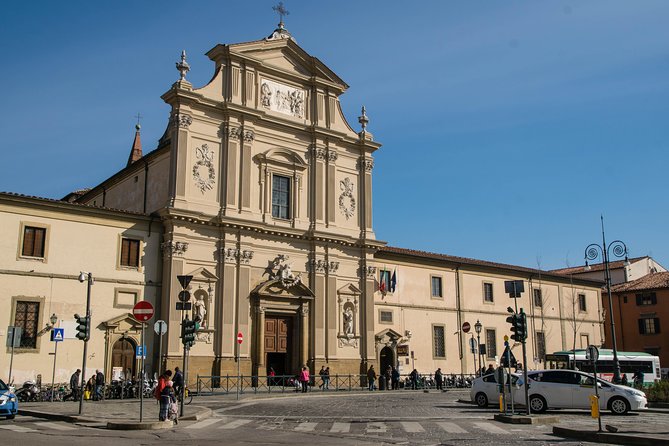
You make your own way to Piazza San Marco. The meeting point is straightforward, and the site is near public transportation, but hotel pickup and drop-off are not part of the experience.
Plan your route before the appointment rather than treating the piazza as an afterthought. Florence’s historic center is easy to cross on foot, yet a wrong turn or a delayed museum visit can eat into a two-hour appointment. Confirmation arrives at booking, so keep the meeting details available on your phone.
The tour ends back at the meeting point. That makes it simple to continue your day from the San Marco area, though the tour does not include transportation elsewhere.
The church and the first view of San Marco
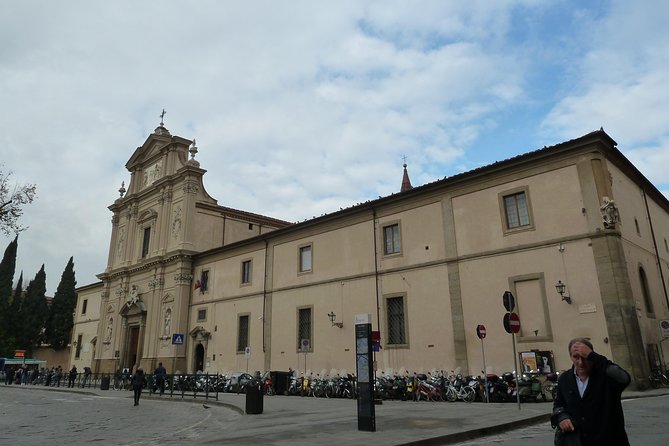
The church introduces you to the religious setting before you move farther into the convent. Your guide explains the role of the complex and helps you read its architecture as part of the larger Medici plan.
This opening is valuable if you know Florence mainly through paintings in large galleries. In a gallery, Fra Angelico’s work can become one more object on a wall. At San Marco, the church and convent help you understand the setting for the images and the life of the friars who lived with them.
The facade is also part of the visit. It gives you a visual sense of the complex from the outside before the tour moves through its interior spaces. The architectural side of the visit is not an extra lecture tacked onto an art tour. It explains why the rooms feel ordered, spare, and purposeful.
Fra Angelico’s paintings in their original setting
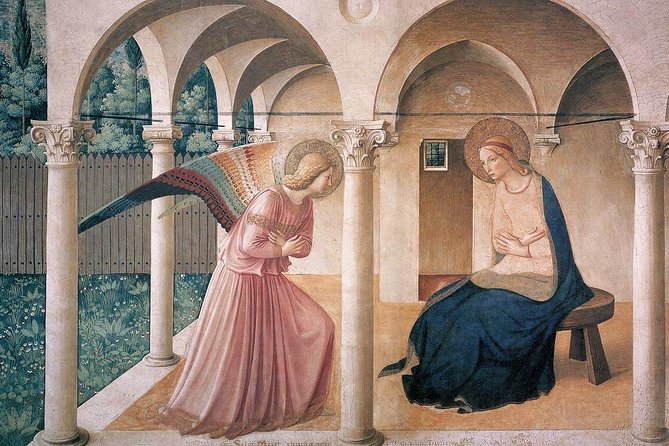
Fra Angelico is the star of San Marco. His works are known for their calm religious feeling and careful use of light, color, and gesture. At this convent, the paintings are linked to the spaces around them rather than separated from their original setting.
That is one of the strongest reasons to book a guide. You can look closely at the frescoes on your own, but a good explanation can point out how the images served prayer and reflection. The guide can also connect the art to the convent and to the Medici patronage behind the project.
One especially useful comment from the tour feedback praised Katherine for making Fra Angelico’s work come alive. That is the right standard to expect from this experience. The paintings do not need theatrical storytelling, but they do benefit from someone who can explain what you are seeing in clear English.
Do keep expectations realistic. A private tour does not guarantee a particular guide, and one previous guest found the assigned guide hard to understand. If clear spoken English is especially important to you, confirm the language arrangements when booking and make sure you can hear the guide easily inside the museum.
More Medici family tours in Florence:
- The Best tour in Florence: Renaissance & Medici Tales – guided by a STORYTELLER
★ 5.0 · 12,316 reviews - The Best Tour in Florence: Renaissance and Medici Tales
★ 5.0 · 10,810 reviews - Florence: Renaissance and Medici Tales Guided Walking Tour
★ 4.8 · 1,549 reviews - Florence: Mysteries of the Medici Guided Walking Tour
★ 4.4 · 940 reviews
The convent, cells, and cloisters
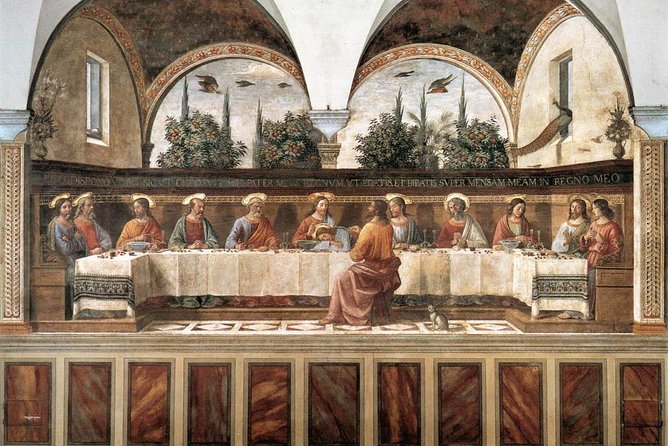
The convent is the heart of the visit. You see the first and second cloisters, along with the cells of the friars. These spaces shift your attention from public Florence to the daily life of a religious community.
The cells are particularly effective because they make San Marco feel personal. They are not grand Medici reception rooms. They are small spaces tied to prayer, study, and community life. Fra Angelico’s paintings take on a different weight when you see them in a place designed for religious reflection.
The two cloisters add a sense of structure to the route. They help you understand how the convent was organized and give the guide natural points for explaining the community, the architecture, and the people connected with San Marco.
You should not expect every room to offer a famous masterpiece. The power of San Marco comes from the relationship between the parts: church, facade, cloisters, cells, and paintings. A guide is most useful here because the importance of a plain-looking room may not be obvious at first glance.
Savonarola and the dramatic side of San Marco
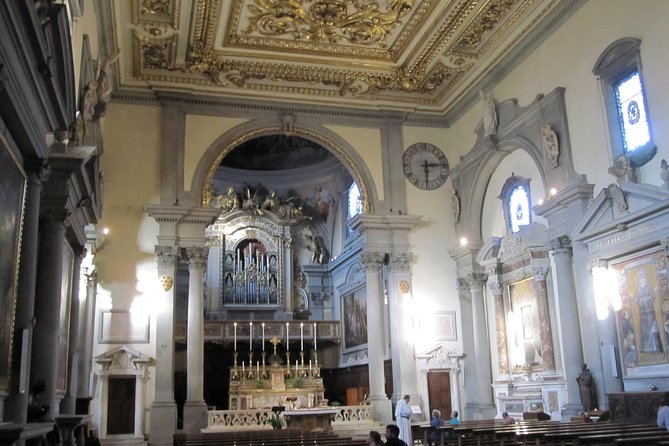
Girolamo Savonarola is one of the most compelling figures connected with San Marco. A Dominican friar and forceful preacher, he became associated with religious reform and Florence’s political turmoil. His presence gives the visit a sharper edge than a quiet art tour might suggest.
You visit cells associated with Savonarola and hear about his connection to the convent. These rooms are a good reminder that San Marco was not isolated from the city. The spiritual life of the friars intersected with Medici power, public opinion, and Florence’s changing politics.
The guide’s job is to keep the story tied to the spaces in front of you. You do not need a long political lecture to appreciate Savonarola’s rooms. A concise explanation of who he was and why San Marco mattered to him can make these simple cells much more memorable.
The Renaissance library linked to Pope Leo X
The visit also includes the Renaissance library associated with Pope Leo X. This adds another layer to San Marco’s importance. The complex was not only a place for worship and private devotion. It also had a role in learning and the circulation of religious and humanist culture.
For readers who care about books, architecture, and Renaissance institutions, this may be one of the most interesting stops. It broadens the visit beyond paintings and gives you another way to understand the influence of the Medici world.
The available information does not provide a detailed description of the library’s displays or current arrangement, so do not book this expecting a full library-focused tour. Think of it as one important part of a wider route through the complex.
What a private tour changes
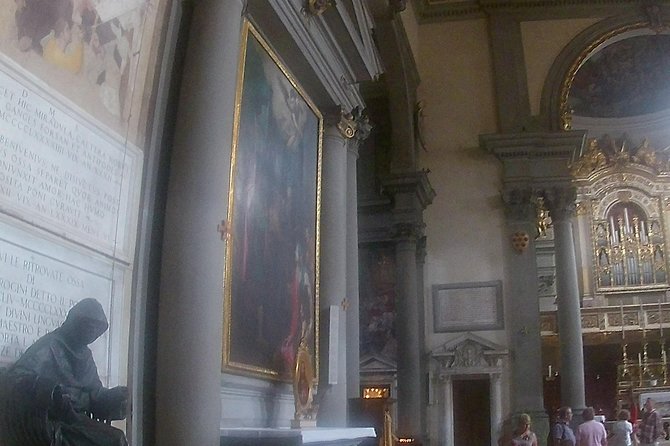
The private setup means only your group participates. That can make a real difference in a convent museum, where narrow spaces and quiet rooms do not suit a large crowd.
You can ask why a particular fresco is placed where it is, pause when a painting catches your attention, or request more explanation about Savonarola or the Medicis. You are not locked into the interests of a larger mixed group.
The tradeoff is price. At $189.18 per person, this is not a budget museum visit, especially for a solo visitor. The cost makes more sense for a small group that values personal attention and wants a guide to handle the connections between architecture, art, and Florentine history.
Group discounts are available, so check the final price for your party before deciding. For a family or a group of friends, the private format may offer better value than booking several separate museum experiences. For one person or a couple watching every euro, a self-guided visit may be easier to justify.
The guide matters more here than at a simple gallery
San Marco rewards explanation. The building contains several kinds of interest at once, and the people connected with it can blur together if you are seeing it alone.
Katherine has been specifically praised for explaining Fra Angelico in a way that made the works accessible. Susanna has also received a warm response for an informative and pleasant visit. These names show the level of service you want, but guide assignments can vary.
A separate experience was rated poorly because the guide’s English was barely understandable, despite strong subject knowledge. That is an important warning, not a reason to dismiss the museum. If the guide speaks too quickly or unclearly, the private format gives you a chance to politely ask for repetition, but it cannot fully solve a language mismatch.
The best outcome is a guide who explains without overwhelming you. San Marco does not need a flood of dates. You need the right links: Cosimo de’ Medici to the commission, Michelozzo to the design, Fra Angelico to the frescoes, and Savonarola to the convent’s later religious and political importance.
Who should book this experience
I would recommend it to art lovers who want more than Florence’s headline museums. It suits you if Fra Angelico interests you, if you enjoy religious art in its original setting, or if you want a quieter stop with a strong connection to Florentine politics.
It is also a good fit for families and small groups. The private format lets the guide adjust the pace, and two hours is manageable for people who do not want a long museum lecture.
History-focused visitors will find plenty to discuss, especially around the Medicis, Savonarola, and the Renaissance library. Architecture fans should also appreciate Michelozzo’s role and the way the church, cloisters, and convent fit together.
You may want to skip it if your Florence schedule is already packed with major sights and you prefer to see museums independently. The $189.18 price is hard to defend if you mainly want a quick look at the building and do not plan to ask questions.
Practical details before you reserve
The tour is offered in English and includes a professional guide, private participation, and admission to Museo di San Marco. You do not need to buy a separate entrance ticket for the museum as part of this booking.
Confirmation is provided at the time of booking. The activity is near public transportation, and most people can take part. Service animals are allowed.
The museum’s opening schedule deserves special attention. One family arrived for a private visit and learned at the meeting point that the museum was closed on Monday because its hours had changed. The operator offered Palazzo Medici instead, but that was not the attraction the family had planned to see.
Before you commit a limited Florence morning to San Marco, confirm the museum’s current opening day and start time. This is the most useful practical check you can make. A change in hours can matter more than any other detail when your itinerary is tight.
Free cancellation is available if you cancel at least 24 hours before the start time. Cancellations or changes made less than 24 hours ahead are not refunded or accepted, based on local time.
Should you book Museo di San Marco?
Book this tour if you want Fra Angelico explained in the setting that gives his work meaning, and if you value a private guide over the lowest possible price. The church, cloisters, friars’ cells, Savonarola’s rooms, and Medici connections give the two hours a clear purpose.
I would be careful about booking without checking the museum schedule, especially for a Monday visit. I would also confirm the language details if easy-to-follow English is essential.
For a small group with an interest in art and Florence’s religious politics, this is a thoughtful use of two hours. For a budget-minded visitor, the museum may be better approached independently. The final decision comes down to how much you want interpretation, not simply entry.
FAQ
Where does the tour begin?
The tour begins at Piazza San Marco in Florence, Italy.
Where does the tour end?
The activity ends back at the meeting point at Piazza San Marco.
How long does the experience last?
The visit lasts approximately two hours.
Is admission to Museo di San Marco included?
Yes. The Museo di San Marco entrance ticket is included.
Is this a private tour?
Yes. Only your group participates in the activity.
Is the tour offered in English?
Yes. The experience is offered in English.
Is hotel pickup included?
No. You make your own way to Piazza San Marco, and hotel pickup and drop-off are not included.
What parts of San Marco do you visit?
The route includes the church, facade, convent, first cloister, and second cloister. It also includes the friars’ cells, Savonarola’s cells, Fra Angelico’s works, and the Renaissance library associated with Pope Leo X.
How much does the tour cost?
The listed price is $189.18 per person. Group discounts are available.
Can I cancel for a full refund?
Yes, if you cancel at least 24 hours before the experience starts. Cancellations or changes made less than 24 hours before the start time are not refunded or accepted.
Recently added around Florence
- Accademia and Uffizi Small-group Guided Tour★ 4.5 · 8 reviews
- The David from Michelangelo.★ 5.0 · 3 reviews
- Combo: Accademia + walking + Uffizi Galleries Guided Tour★ 3.5 · 6 reviews
- The Complete Wine Tour Brunello, Nobile, Chianti wine experience★ 4.0 · 7 reviews
- The Best of Tuscany in 3 Days★ 4.5 · 13 reviews
- The Cooking Lab – Authentic Food Experience★ 5.0 · 113 reviews
- Florence Central Market Food Tour – Private Tour★ 4.0 · 7 reviews
- Family Friendly Florence Private City Tour★ 5.0 · 47 reviews
Santa Croce and Florence Churches, compared.
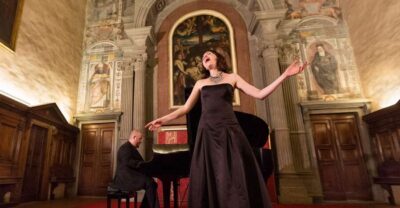
Santa Monaca Church Italian Opera Concert Ticket
Read our review →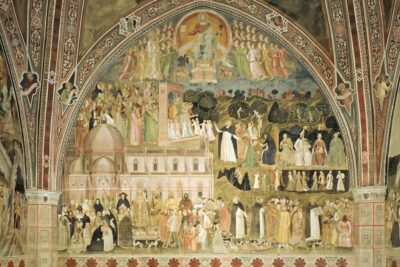
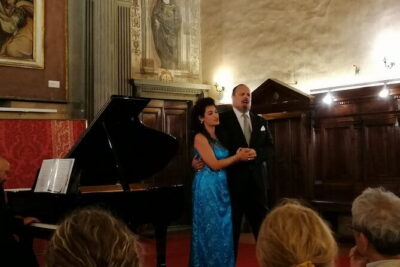
Italian Opera Concert Ticket in Florence’s Santa Monaca Church
Read our review →
Browse the lists this tour appears in