
Reviewed · MEDICI FAMILY TOURS
Florence: Renaissance and Medici Tales Guided Walking Tour
Florence’s Renaissance story makes far more sense when you walk the streets where the Medici family built its power. This tour links San Lorenzo, the Duomo, Palazzo Vecchio, Ponte Vecchio, and the Uffizi with stories about money, politics, art, and family rivalry. I especially like the clear city orientation and the way the guides turn famous buildings into human stories. You also get useful advice on where to eat, drink, and shop.
I like that the route includes more than postcard views. You hear about Dante, decode symbols on buildings, and see how several generations of Medici shaped Florence. The main drawback is that this is an exterior walking tour, so do not expect entry into the Duomo, Brunelleschi’s Dome, Palazzo Vecchio, or the Uffizi. Bring cash for a tip, since the free-tour format depends on gratuities.
Key points to know before you book
- A strong first-day orientation: The route gives you a useful map of central Florence before you tackle museums on your own.
- Medici stories anchor the walk: Political schemes, family influence, and art patronage connect many of the stops.
- The route covers major sights: San Lorenzo, the Duomo, Palazzo Vecchio, Piazza della Signoria, Ponte Vecchio, and the Uffizi all appear.
- Guides make the difference: Chiara, Michele, Glenda, Angela, Fabio, and others are praised for lively storytelling and clear explanations.
- Expect roughly two hours on foot: The published duration is two hours, while the detailed schedule describes about two and a quarter hours.
- Practical advice comes at the end: Your guide can suggest places for local food, drinks, shopping, and further sightseeing.
Why this Florence walk works so well
Florence can feel like a museum without walls. Nearly every corner carries a famous name, but the city’s art and architecture are easier to understand when someone explains the struggle behind them. This walk gives you that framework without asking you to spend half a day inside one museum.
The main theme is the Medici family, though the tour is not only about the dynasty. You move through the story of Florence as a merchant republic, a center of banking, and a city where political control and artistic fame often supported each other.
That makes the route useful for first-time visitors. You get the basic timeline, learn where the key sights are, and hear enough about major figures such as Brunelleschi, Michelangelo, and Dante to make later visits more meaningful.
The guides use stories rather than a long string of dates. Michele is repeatedly praised for his warmth, humor, and ability to keep a group interested for two hours. Chiara is noted for clear storytelling and practical local suggestions. Glenda, Angela, Fabio, and other guides also lead the walk, so the exact style can change from one departure to another.
More Medici family tours in Florence:
- The Best tour in Florence: Renaissance & Medici Tales – guided by a STORYTELLER
★ 5.0 · 12,316 reviews - The Best Tour in Florence: Renaissance and Medici Tales
★ 5.0 · 10,810 reviews - Florence: Mysteries of the Medici Guided Walking Tour
★ 4.4 · 940 reviews
Starting beneath the green umbrella at San Lorenzo
Meet in Piazza di San Lorenzo, in front of the stairs leading to the main entrance of the Basilica of San Lorenzo. Look for the green umbrella belonging to Florence Free Tour-Tale. This detail matters because central Florence has plenty of tour groups, church steps, and similar meeting points.
San Lorenzo is an excellent starting place. The basilica shows a mix of Renaissance and Romanesque design, and the square places you right in the part of Florence tied closely to the Medici family. Before the route reaches the Duomo, you already have the setting for the larger story: old religious power, wealthy families, and new ideas in art and architecture.
Give yourself extra time to find the meeting point. The tour is on foot from the start, and arriving late could mean trying to catch up through narrow central streets.
San Lorenzo and Palazzo Medici Riccardi
The first section examines the Medici connection to San Lorenzo and then moves toward Palazzo Medici Riccardi. This is where the family’s rise becomes easier to picture. The Medici were not kings in the usual sense, but their money, alliances, and influence allowed them to shape Florence for generations.
The palace is important because it reflects how power could be displayed through architecture without looking like a fortress. Your guide explains the role of the building and the people linked to it, helping you connect the public city with the private world of a ruling family.
This is also a good place to listen for the tour’s main lesson: Florence’s Renaissance did not appear by magic. It grew from wealth, competition, civic pride, religious belief, and the ambitions of powerful patrons.
You see the palace from the outside on this walk. If you want to explore its interior, you will need a separate visit.
The Duomo, Giotto’s Bell Tower, and Brunelleschi’s Dome
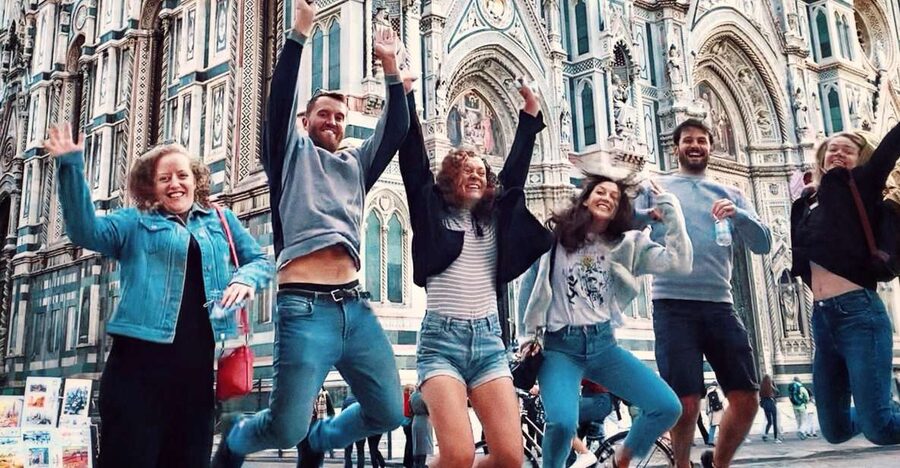
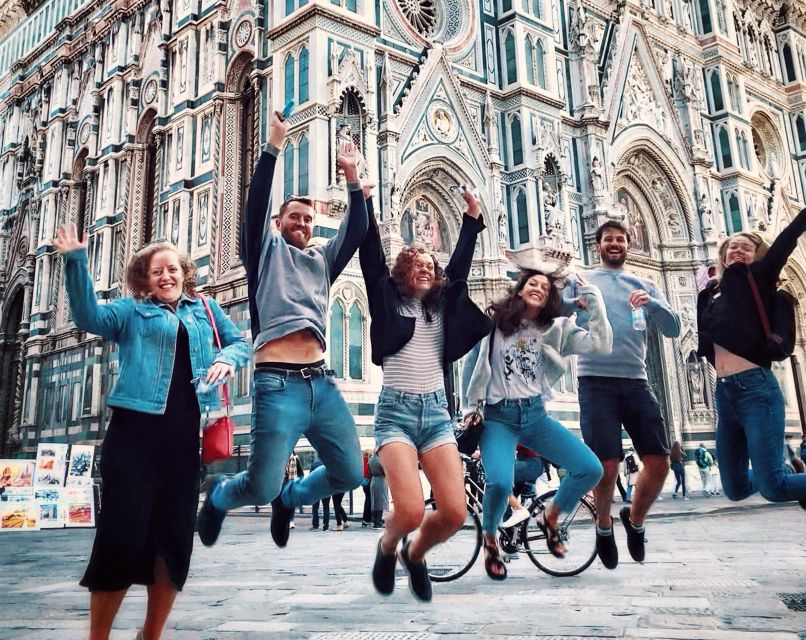
The route then reaches the Florence Cathedral complex, one of the city’s most dramatic spaces. You see the Cathedral of Santa Maria del Fiore, Giotto’s Bell Tower, and Brunelleschi’s Dome while your guide explains how these monuments fit into Florence’s artistic and engineering story.
The dome is the key stop. Its size and construction helped make Brunelleschi one of the defining figures of the Renaissance. A guide can also point out the human side of the achievement: competition, technical problems, civic pride, and the desire to prove Florence’s importance.
Expect to view the complex from the outside rather than climb the dome or enter the cathedral. That is both a benefit and a limitation. You cover more of the city in a short time, but you will need separate tickets and time if you want the interior spaces or the climb.
The area can be crowded and noisy. A September booking specifically benefited from a microphone and earpieces, which helped the group hear the guide in narrow streets. Equipment may vary, but it is worth staying close and keeping your attention on the guide when the city gets busy.
More Renaissance and history tours in Florence:
- The Dark Side of Florence: Mysteries and Legends
★ 5.0 · 2,785 reviews - Florence: Dark Mysteries and Legends Guided Walking Tour
★ 4.6 · 1,081 reviews - Accademia Gallery: Michelangelo’s David and High Renaissance Art
★ 4.0 · 872 reviews - Florence Private Tour: Renaissance, Famous Families & Hidden Gems
★ 5.0 · 233 reviews
Dante’s Florence and the meaning of city symbols
The stop connected with Dante adds a different layer to the walk. Florence is often presented through Medici bankers, painters, and architects, but Dante brings in poetry, exile, politics, and medieval Florence.
The tour also asks you to notice symbols rather than simply photograph buildings. Coats of arms, decorative details, animals, political emblems, and religious signs can reveal who paid for a structure or what message it was meant to send.
This part is especially useful if you like reading a city as you walk. You begin to look above shop signs and tourist crowds. A carved symbol may point to a family, a guild, a religious idea, or an old political claim.
The guide’s storytelling style matters here. Several guides are praised for making complicated history easy to follow, and that is helpful in Florence, where several centuries can appear in the same square.
Palazzo Vecchio and Piazza della Signoria
Palazzo Vecchio and Piazza della Signoria bring the political story into the open. Here, the route shifts from private family power to the public face of Florence.
The square is one of the best places to understand the city’s civic identity. It is also a useful pause in the route because you can take in the buildings, sculptures, and changing layers of Florence without needing to enter a museum.
Your guide explains the connection between the palace, the city government, and the Medici period. The point is not only who lived where. It is how architecture, sculpture, and public space helped communicate authority.
The square can be packed, especially during the middle of the day. You may need to position yourself carefully to see and hear. The route is designed as a walking overview, so do not expect a long stop for every sculpture or building.
Loggia dei Lanzi and the city’s outdoor art
The Loggia dei Lanzi continues the public-art theme. Its open arcade holds major sculptures and gives you a chance to see how Florence turned civic space into a display of power and artistic achievement.
This stop is valuable because it requires no museum ticket to appreciate the setting. You can stand in the square, look at the sculptures, and hear how art served political messages.
If you are planning a later visit to the Uffizi or other museums, take note of the works and names that interest you. The tour may give you a starting list, but it does not replace time inside Florence’s collections.
Ponte Vecchio and the route toward the Uffizi
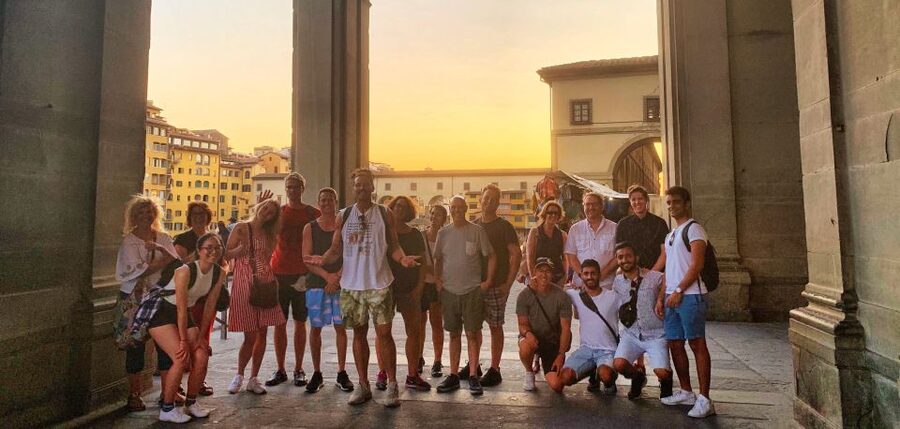
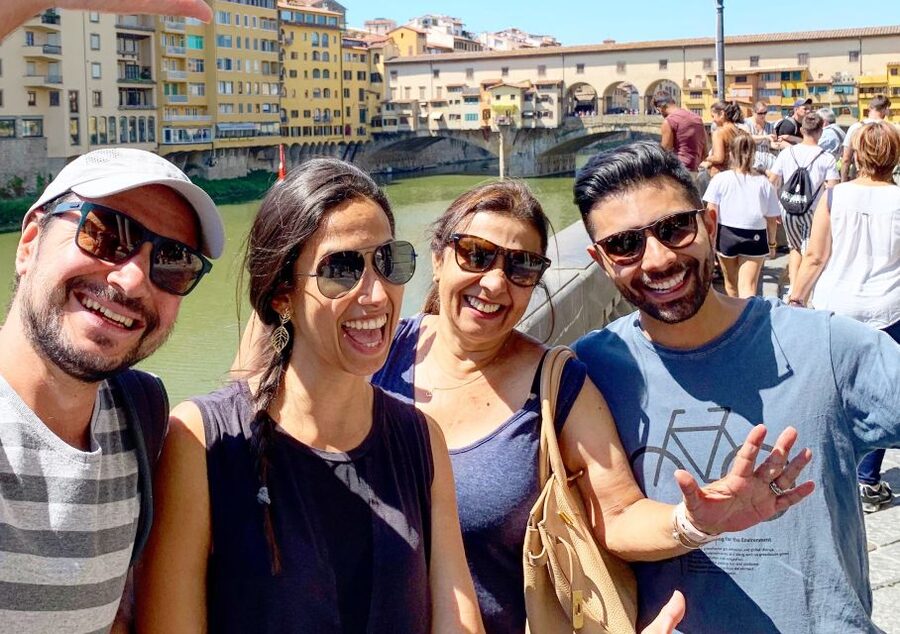
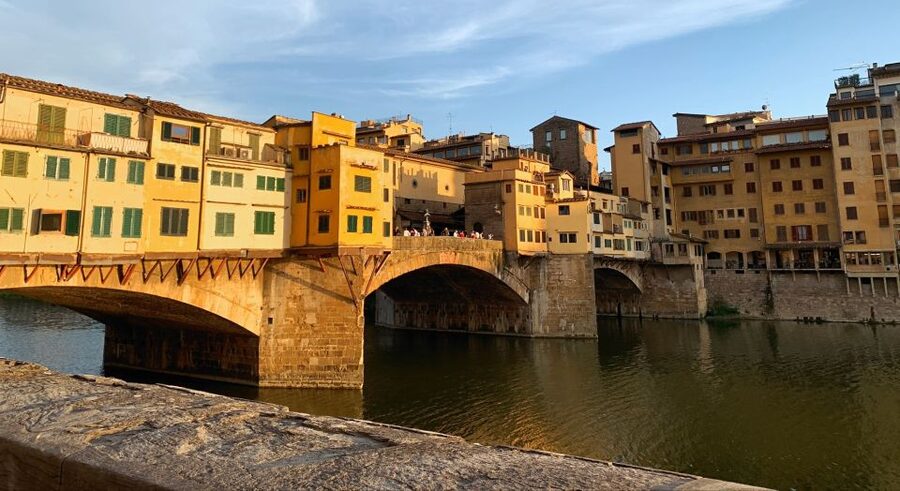
The walk continues toward Ponte Vecchio, one of Florence’s most recognizable landmarks. The bridge gives the tour a change of scenery and shows how the city developed along the Arno.
Your guide may connect the bridge with the broader Medici story and explain why it matters in the city’s layout. The crossing can be crowded, and the shop-lined walkway is not a quiet place for a long lecture, so stay attentive and keep your group in sight.
Ponte Vecchio is also a practical orientation point. After crossing or approaching the bridge, you are well placed to continue exploring the river, the Uffizi area, or the streets around the historic center.
The formal walk ends outside the Uffizi Gallery. That is a sensible finish. You can go into the gallery if you already have a reservation, continue toward the river, or use the guide’s suggestions for food, drinks, and shopping.
What the free-tour price really means
The stated price is unusually low at $2.36 per person, but the format is a free tour supported by tips. One booking note also refers to a small upfront payment in euros, so check the final price shown when you reserve.
The important point is that the advertised amount should not be treated as the full cost of the experience. Bring cash and plan to tip according to the quality of the tour and your budget. One practical comment specifically advises carrying cash, and another makes clear that gratuity is an expected part of this model.
Even after adding a tip, the value can be strong. You receive about two hours of live guiding across many of Florence’s major sights, plus advice that may help you choose restaurants, bars, shops, and later visits.
Still, the low starting price comes with tradeoffs. There are no attraction admissions included, and the exact guide, group size, and presentation style may vary. If you want a private tour or guaranteed entry to monuments, this is not the right product.
Pace, language, weather, and comfort
The tour is offered in English and Spanish. The route is wheelchair accessible, and you should wear comfortable shoes because the entire experience takes place on foot.
The published duration is two hours, although the detailed route gives a figure of two and a quarter hours. Allow at least that much time so you do not need to rush away at the finish.
The tour operates rain or shine. Florence’s weather can change quickly, so wear suitable clothing and bring water. A camera is useful, but the best preparation is footwear that will keep you comfortable over historic streets and crowded squares.
The pace is generally described as steady rather than rushed. That suits visitors who want explanations and questions, but anyone hoping to spend long periods photographing each stop may find the schedule tight.
Who should take this tour
I would choose this walk during your first day or two in Florence. It gives you a working map of the historic center and helps you decide which places deserve a longer visit.
It suits:
- First-time visitors who want the main sights explained in context
- Families with older children or teenagers who respond better to stories than lectures
- People interested in the Medici, Renaissance art, architecture, or political history
- Visitors who want restaurant and shopping advice from a local guide
- Short-stay visitors who need a compact introduction to Florence
The tour is also a good fit for curious repeat visitors. One person who had already spent a month in Florence still found new places and useful information in the walk.
You may want something else if you need museum entry, extended time at the Duomo, or a specialist art lecture. This is a lively city introduction, not a replacement for the Uffizi, the cathedral interior, or a full Medici palace visit.
Should you book the Florence Renaissance and Medici Tales walk?
Book it if you want Florence to make sense before you begin visiting its museums. The route covers the essential center, and its best feature is the connection between buildings, families, artists, and political power.
Choose an early departure if possible. You will get your bearings, learn which sights need more time, and leave with practical suggestions for food and shopping. Just remember that the low advertised price belongs to a tipping model, the tour runs in all weather, and the major interiors are not included.
For a short, story-led introduction to Florence, this is a good-value choice. Bring comfortable shoes, water, weather protection, and cash for the guide.
FAQ
Where does the tour begin?
Meet at Florence Free Tour-Tale in Piazza di San Lorenzo. Look for the green umbrella in front of the stairs leading to the main entrance of San Lorenzo Church.
Where does the tour finish?
The tour ends outside the Uffizi Gallery.
How long does the tour last?
The stated duration is two hours. The detailed schedule describes approximately two and a quarter hours, so allow a little extra time.
Which languages are available?
The tour is offered in English and Spanish.
Is the tour wheelchair accessible?
Yes, the activity is listed as wheelchair accessible.
Does the tour enter the Duomo or Brunelleschi’s Dome?
The route includes guided stops at the Duomo complex, Giotto’s Bell Tower, and Brunelleschi’s Dome, but admission inside those attractions is not included.
Are attraction entrance tickets included?
No. The included services are the walking tour and guide. Entry to attractions is not listed as included.
What should I bring?
Bring comfortable shoes, water, a camera, and clothing suitable for the weather.
Does the tour operate in bad weather?
Yes. The tour takes place rain or shine.
Do I need to tip the guide?
The tour uses a free-tour format, so tipping is an important part of the experience. Bring cash and tip according to your satisfaction and budget.
More walking tours in Florence
- Florence: Guided Walking Tour
★ 4.5 · 3,334 reviews - Skip the line: Uffizi and Accademia Small Group Walking Tour
★ 4.5 · 3,135 reviews - Florence: Guided Walking Tour
★ 4.6 · 1,602 reviews - Florence: Uffizi & Accademia Small Group Walking Tour
★ 4.7 · 1,380 reviews
Recently added around Florence
- Accademia and Uffizi Small-group Guided Tour★ 4.5 · 8 reviews
- The David from Michelangelo.★ 5.0 · 3 reviews
- Combo: Accademia + walking + Uffizi Galleries Guided Tour★ 3.5 · 6 reviews
- The Complete Wine Tour Brunello, Nobile, Chianti wine experience★ 4.0 · 7 reviews
- The Best of Tuscany in 3 Days★ 4.5 · 13 reviews
- The Cooking Lab – Authentic Food Experience★ 5.0 · 113 reviews
- Florence Central Market Food Tour – Private Tour★ 4.0 · 7 reviews
- Family Friendly Florence Private City Tour★ 5.0 · 47 reviews
Medici Family Tours, compared.
The Best tour in Florence: Renaissance & Medici Tales – guided by a STORYTELLER
Read our review →
The Best Tour in Florence: Renaissance and Medici Tales
Read our review →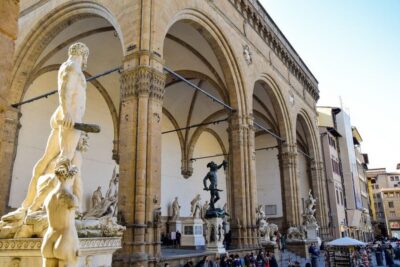
Guided Tour of Medici Family Secrets and Chapels
Read our review →
Pitti Palace, Palatina Gallery and the Medici: Arts and Power in Florence.
Read our review →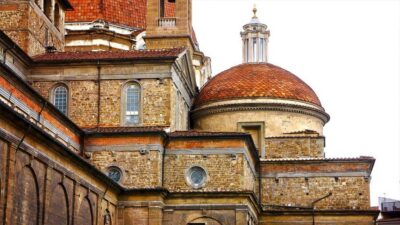
Browse the lists this tour appears in