
Reviewed · MEDICI FAMILY TOURS
The Best Tour in Florence: Renaissance and Medici Tales
Florence makes more sense once you see it as the Medici family’s stage. This two-hour walk links their church, palace, cathedral, political square, and art museum, giving you a useful map of the city along with the stories that connect it all. The Medici thread keeps the tour from becoming a simple checklist of buildings.
I like the route for two clear reasons: it covers a lot without requiring a ticket to every sight, and the guides turn architecture into human drama. I also like the low advertised price, especially for a first look at Florence. The main consideration is that this is an outdoor overview, not a museum visit, and a group of up to 30 people can make some stops feel crowded.
The guides are a major part of the experience. Camilla, Deborah, Alberto, Aurora, Manuel, Simona, Elisabetta, Marco, and others are praised for lively storytelling, clear explanations, humor, and practical food advice. Bring cash for a tip, since the guide’s payment depends on your donation at the end.
Key points to know before booking
- A Medici-centered route: Follow the family’s influence from San Lorenzo to Palazzo Vecchio and the Uffizi.
- Ten central sights in about two hours: The walk covers major landmarks with several short stops.
- A donation-based experience: The advertised cost is $3.62 per person, but the guide is compensated by what you choose to donate.
- English-speaking licensed guides: Named guides include Camilla, Deborah, Alberto, Aurora, Manuel, Simona, and others.
- Best as a first-day orientation: You finish near the Uffizi and can return later to sights that deserve more time.
- Outdoor and weather-dependent: Wear comfortable shoes and plan for the possibility of rain affecting the tour.
Why this Medici walk works so well in Florence
Florence is compact, but its history is not simple. A cathedral, a palace, a family chapel, a public square, and an art museum can all sit within a short walk, yet each belongs to a different chapter of the city’s story.
This tour gives you a framework. You learn how the Medici family moved from banking into political power, how that power shaped buildings and art, and how Florence became one of Europe’s major centers of the Renaissance. The guide’s job is not only to point at a facade, but to explain why it is there and who paid for it.
The route is especially helpful if you are new to Florence. You see the main landmarks early in your visit, then decide which deserve a second look. The tour also includes lesser-known details and side streets, so it is not only a parade of famous views.
The pace is brisk but reasonable. Most stops last about 10 minutes, with a shorter five-minute stop at Dante’s house. You will spend the full time on foot, outdoors, and usually surrounded by the normal noise of central Florence.
More Medici family tours in Florence:
- The Best tour in Florence: Renaissance & Medici Tales – guided by a STORYTELLER
★ 5.0 · 12,316 reviews - Florence: Renaissance and Medici Tales Guided Walking Tour
★ 4.8 · 1,549 reviews - Florence: Mysteries of the Medici Guided Walking Tour
★ 4.4 · 940 reviews
Starting at San Lorenzo and the Medici church
Meet at Piazza di San Lorenzo, next to the statue of Giovanni de’ Medici sitting on a throne. This is a practical meeting point in the center of town, near Florence’s main market district and public transport.
The Basilica of San Lorenzo is the right place to begin. It was the parish church of the Medici family and the burial place of principal family members from Cosimo il Vecchio through Cosimo III. That fact gives the opening stop real weight: this is not simply an old church, but a place where the family’s private power became visible.
You should expect an explanation of the church from outside rather than a full interior visit. Admission is not included, so plan to return separately if you want to see more. The 10-minute stop is enough to understand its role, but not enough for a detailed look at every work of art.
I like this beginning because it places the Medici story in a real neighborhood. You are not starting with an abstract lecture about the Renaissance. You are standing at the family’s spiritual home, surrounded by the market streets that still give this part of Florence its daily energy.
Palazzo Medici Riccardi and the rise of a banking family
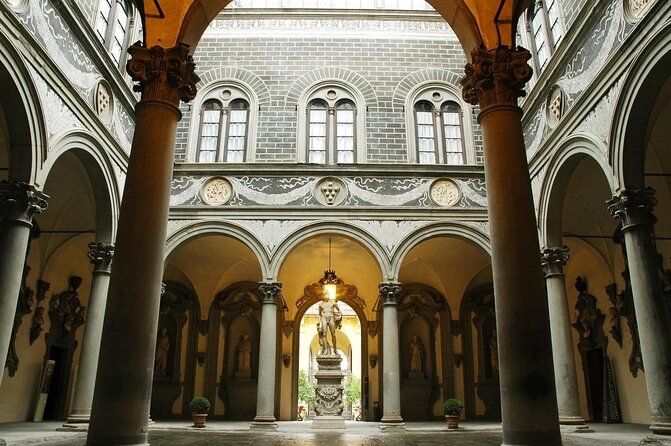
From San Lorenzo, the walk continues to Palazzo Medici Riccardi. Cosimo de’ Medici commissioned the palace, which was built between 1444 and 1484.
The building helps explain how the Medici presented themselves. They had money, influence, and political reach, but they also had to manage the delicate business of appearing respectable rather than openly royal. Your guide can use the palace to show how architecture became a form of public messaging.
The exterior stop lasts about 10 minutes, and admission is not included. That is worth noting if you are hoping to see the palace interiors or its art. This tour gives you the setting and the story, while a separate visit would be needed for a longer look inside.
This is one of the strongest parts for anyone interested in the family itself. Guides such as Aurora, Alberto, Camilla, and Deborah are especially praised for making Medici politics easy to follow. You do not need a background in Italian history. The family connections are explained through stories, rivalries, and decisions rather than a list of dates.
The Baptistery, Duomo, and the center of Florence
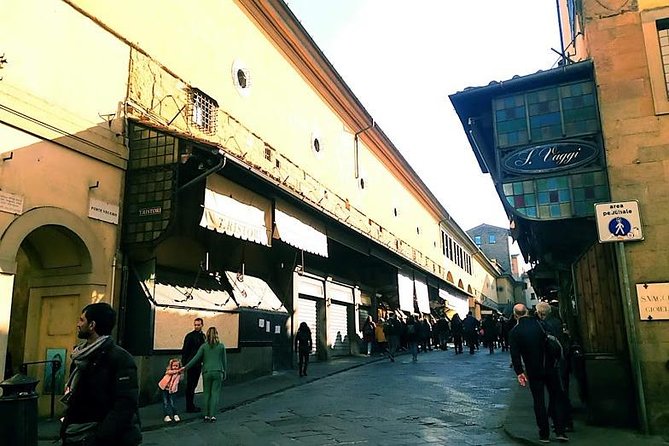
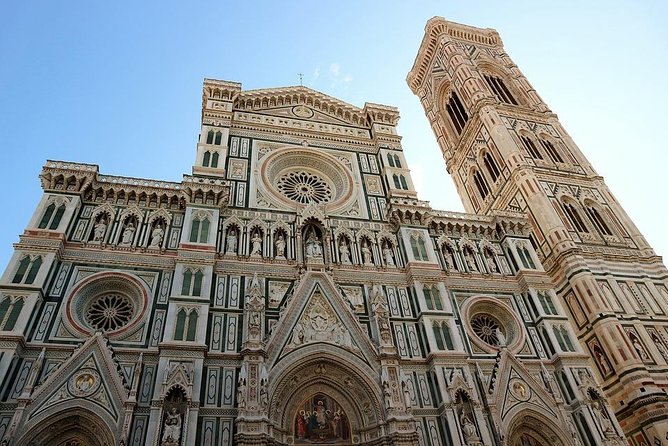
The next section brings you into Piazza del Duomo, where the Baptistery, cathedral, and Giotto’s Campanile form one of Florence’s most famous groups of buildings.
The Baptistery of Saint John is one of the oldest buildings in Florence. Built between 1059 and 1128 in the Florentine Romanesque style, it has a much older feel than the Renaissance buildings that follow in the route. Its position directly across from the cathedral makes it easy to understand how the religious heart of the city was arranged.
The stop lasts about 10 minutes, and admission is not included. You will see the building and hear about its place in Florence, but you will not have time for a full interior visit.
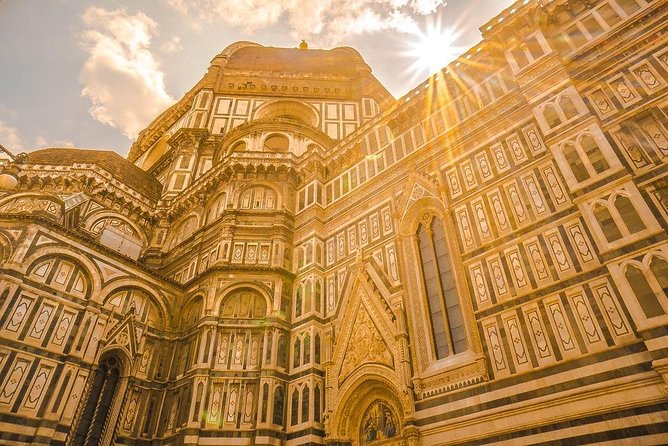
Then comes Florence Cathedral, formally Santa Maria del Fiore. Construction began in 1296 in the Gothic style, and the cathedral complex is part of the UNESCO World Heritage historic center. Admission to the cathedral itself is listed as free, though this walking tour does not provide a dedicated entry experience.
The outside view is the point here. The size of the cathedral and the contrast of its colored marble are easier to appreciate when your guide explains how it fits into the city’s ambitions. This is also where the tour can feel most crowded, so stay close enough to hear clearly.
Giotto’s Campanile is next. The bell tower is known for its Gothic design, sculpture, and polychrome marble. You will have about 10 minutes at the stop, but entry is not included. If you later decide to climb or visit the tower, you will need a separate ticket and more time.
More Renaissance and history tours in Florence:
- The Dark Side of Florence: Mysteries and Legends
★ 5.0 · 2,785 reviews - Florence: Dark Mysteries and Legends Guided Walking Tour
★ 4.6 · 1,081 reviews - Accademia Gallery: Michelangelo’s David and High Renaissance Art
★ 4.0 · 872 reviews - Florence Private Tour: Renaissance, Famous Families & Hidden Gems
★ 5.0 · 233 reviews
Brunelleschi’s dome and the story behind the skyline
The Cupola del Brunelleschi gets its own stop, and it deserves one. The dome was once the largest in the world and remains the largest brick dome ever built.
The guide’s role here is to explain the problem the builders faced and why the dome was such a major achievement. From the square, you can see how the dome dominates the skyline and how it changed the scale of the cathedral complex.
The stop is about 10 minutes, with admission not included. That distinction matters. You will learn about the dome and see it from ground level, but this tour does not take you up into the cupola.
For many people, this is the moment when the Renaissance becomes more than a term from a guidebook. The dome represents engineering, money, civic pride, and artistic ambition all at once. It also gives you a good reason to consider a separate cathedral visit after the walking tour.
Dante’s Florence in a five-minute stop
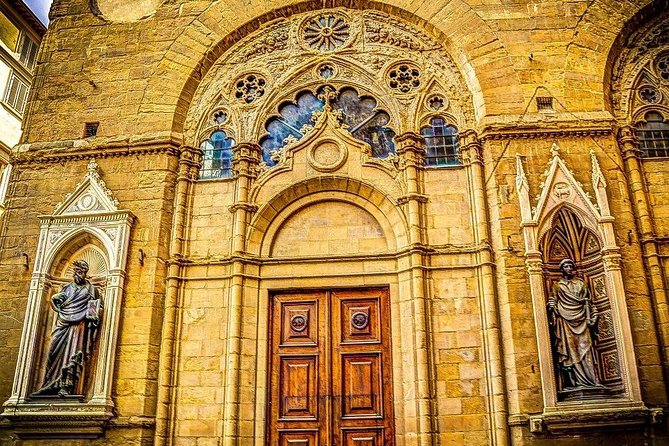
The route continues to the Museo Casa di Dante, associated with Dante Alighieri, author of the Divine Comedy and one of the most important writers in the Italian language.
This is a short stop, listed at about five minutes. Admission is free, but the walk is not designed as a museum visit. You will get the setting and the reason Dante matters to Florence, then continue toward the political center.
The brief pause works well as a change of subject. Until this point, the focus is largely on Medici power, religious buildings, and architecture. Dante brings in language, poetry, and the older medieval city. His work also helps you think about Florence as a place with an identity shaped by words as well as stone.
If Dante is a major interest for you, plan to return on your own. The stop introduces the subject, but it cannot cover his life and work in detail within a two-hour route.
Piazza della Signoria and the public face of power
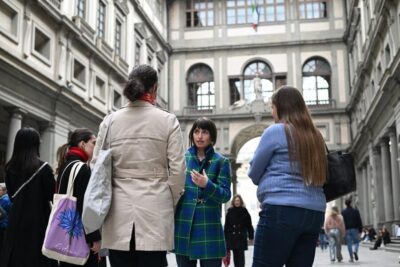
Piazza della Signoria is where Florence’s political story comes into full view. The L-shaped square sits in front of Palazzo Vecchio and serves as a natural link between the Duomo area and the Uffizi.
The square is also a useful place to pause and look around. It is an active public space, not a quiet museum courtyard. You will see tourists, local movement, statues, and the open Loggia dei Lanzi nearby.
The guide explains how the square functioned as a meeting place and how the buildings around it represented civic authority. This makes the earlier Medici stops easier to place. You have seen the family’s church and palace. Now you see the public setting where Florence displayed power.
Admission to the square is free. The main challenge is sound and crowd control. With up to 30 people, the guide may need to gather the group tightly, especially at busy times. This is also one reason to stay near the guide and arrive at the meeting point early.
Palazzo Vecchio and Michelangelo’s David
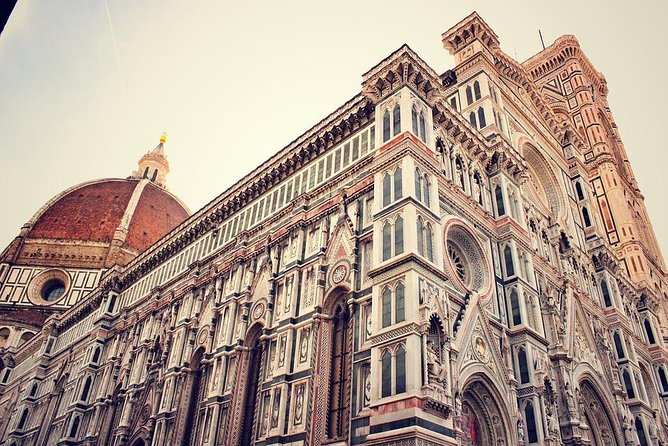
Palazzo Vecchio is Florence’s town hall, a massive fortress-palace overlooking Piazza della Signoria. It is one of Tuscany’s most impressive civic buildings and remains one of the key places for understanding Florence’s political life.
Outside the palace, you see a copy of Michelangelo’s David. The original is elsewhere, but the replica still gives you a strong sense of how the statue functions in this setting. The guide can explain why David became such a powerful symbol for Florence and why placing the statue near the town hall mattered.
The tour allows about 10 minutes here. Admission to Palazzo Vecchio is not included, so you will need another ticket if you want to see the rooms and museum inside.
This stop also highlights the difference between a walking tour and a museum tour. You get context quickly and see the building in its urban setting. You do not get a slow examination of the palace interiors, sculpture collection, or decorative details.
Ending by the Uffizi Gallery
The walk ends in the Piazza della Signoria area, near the Uffizi Gallery. The endpoint can vary slightly within the indicated area, but the finish is convenient for continuing your day.
The Uffizi began in 1560 when Giorgio Vasari designed the complex for Cosimo I de’ Medici to house the offices of Florentine magistrates. The name comes from uffizi, meaning offices. It later became one of Italy’s most important art museums, with major works from the Italian Renaissance.
The tour does not include Uffizi admission, and the listed stop is about 10 minutes. That is enough for an introduction and a useful explanation of why the museum belongs in the Medici story. It is not enough for a museum visit.
If you plan to enter the Uffizi, book a separate visit and allow much longer than the tour itself. The walking tour works best as preparation. You will understand why the museum is where it is and how the Medici connection shaped its collection.
What the $3.62 price really means
The advertised price of $3.62 per person makes this one of the least expensive ways to get a guided introduction to central Florence. But it is important to understand the payment model.
The experience is offered through donations. The guide is not paid a standard fixed fee by the tour price. At the end, you decide how much to give based on the guide’s time, clarity, and professionalism. The listed price should not be treated as the final cost of the experience.
Several strong guide names appear repeatedly in the tour details, including Camilla, Deborah, Alberto, Aurora, Manuel, Simona, Elisabetta, and Marco. Their strengths include clear storytelling, humor, art knowledge, local food suggestions, and the ability to explain Florence to people who are not history specialists.
I would budget for a fair donation rather than treating this as a nearly free activity. One detailed recommendation suggested at least €20 per person, but the final amount is your choice. The value is strongest if you use the walk to shape the rest of your Florence visit.
Practical details that affect your day
The tour is offered in English and includes a licensed guide. It is a mobile-ticket experience, lasts about two hours, and can include up to 30 people.
Wear comfortable shoes. The route links several central sights on foot, and standing at busy squares can be tiring. Since the experience requires good weather, check the forecast and keep your schedule flexible.
Most people can take part, and service animals are allowed. The route is near public transportation, which makes the San Lorenzo meeting point fairly easy to reach.
You can cancel for a full refund up to 24 hours before the start time. Cancellations or changes within 24 hours are not refunded. If poor weather or too few bookings causes the tour to be canceled, you are offered another date, another experience, or a full refund.
Who should book this Florence walking tour?
I would choose this tour for a first or second day in Florence. It gives you a map of the central sights, a basic understanding of the Medici family, and enough context to make later museum visits more rewarding.
It suits you especially well if you enjoy stories, architecture, politics, and art but do not want a formal lecture. The guides are expected to make the material accessible, and the lively style can help keep children and non-history enthusiasts interested, though the tour is still built around historical explanation.
It is less suitable if you want interior access to the Duomo, Baptistery, Palazzo Vecchio, or Uffizi. It is also not ideal if you dislike group walks, outdoor sightseeing, or donation-based pricing.
Should you book it?
Yes, if you want an affordable, story-driven introduction to Florence and understand that the tour is an orientation rather than a series of museum visits. The route covers San Lorenzo, Palazzo Medici Riccardi, the Baptistery, Duomo, Campanile, Brunelleschi’s dome, Dante’s house, Piazza della Signoria, Palazzo Vecchio, and the Uffizi area in about two hours.
Book it early in your stay, arrive at San Lorenzo before the meeting time, and keep a little cash ready for the guide. Then use the rest of your trip to return to the buildings that caught your interest. That is where this tour offers its best value: it helps turn Florence from a collection of famous facades into a city with a connected story.
FAQ
Where does the tour start?
The tour starts at Piazza di San Lorenzo, 35R, 50123 Firenze FI, Italy, next to the statue of Giovanni de’ Medici sitting on a throne.
Where does the tour end?
It ends in the Piazza della Signoria area near the Uffizi Gallery. The exact endpoint may vary slightly within the indicated area.
How long does the tour last?
The walking tour lasts approximately two hours.
Is the tour offered in English?
Yes. The tour is offered in English and includes a licensed guide.
Is admission to the attractions included?
No. Admission is not included for San Lorenzo, Palazzo Medici Riccardi, the Baptistery, Giotto’s Campanile, Brunelleschi’s dome, Palazzo Vecchio, or the Uffizi. Admission to the Duomo and Dante’s house is listed as free, but the tour does not provide a separate interior visit.
How does the donation payment work?
The advertised price is $3.62 per person, but the tour is made possible by donations. At the end, you decide how much to give the guide, and the donation is the guide’s only compensation.
Can I cancel the tour?
Yes. You can cancel at least 24 hours before the start time for a full refund. Cancellations or changes made less than 24 hours before the start time are not refunded. If bad weather or too few bookings causes cancellation, you are offered another date, another experience, or a full refund.
Recently added around Florence
- Accademia and Uffizi Small-group Guided Tour★ 4.5 · 8 reviews
- The David from Michelangelo.★ 5.0 · 3 reviews
- Combo: Accademia + walking + Uffizi Galleries Guided Tour★ 3.5 · 6 reviews
- The Complete Wine Tour Brunello, Nobile, Chianti wine experience★ 4.0 · 7 reviews
- The Best of Tuscany in 3 Days★ 4.5 · 13 reviews
- The Cooking Lab – Authentic Food Experience★ 5.0 · 113 reviews
- Florence Central Market Food Tour – Private Tour★ 4.0 · 7 reviews
- Family Friendly Florence Private City Tour★ 5.0 · 47 reviews
Medici Family Tours, compared.
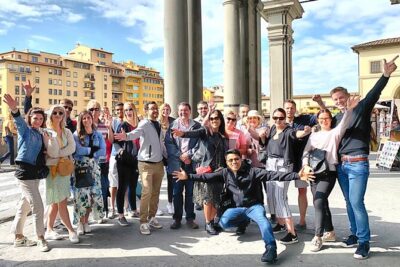
The Best tour in Florence: Renaissance & Medici Tales – guided by a STORYTELLER
Read our review →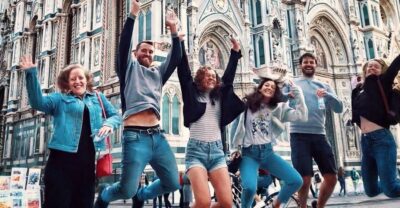
Renaissance and Medici Tales Guided Walking Tour
Read our review →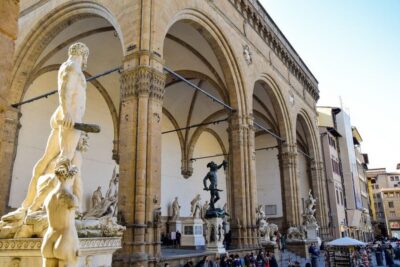
Guided Tour of Medici Family Secrets and Chapels
Read our review →
Pitti Palace, Palatina Gallery and the Medici: Arts and Power in Florence.
Read our review →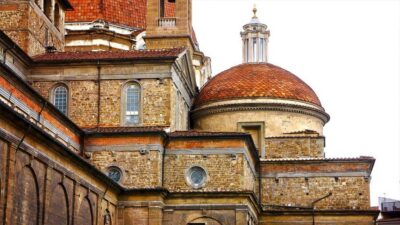
Browse the lists this tour appears in