
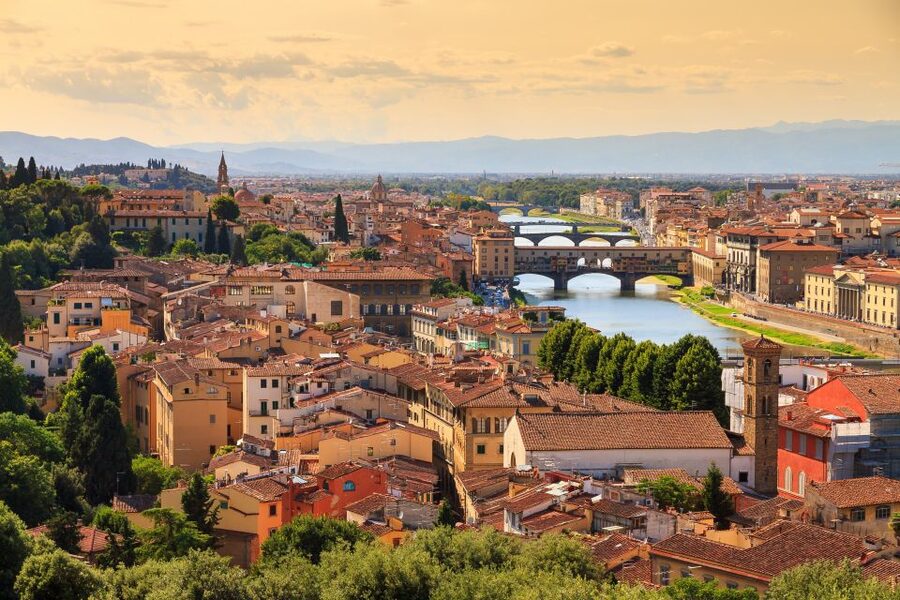
Reviewed · SANTA CROCE AND FLORENCE CHURCHES
Florence: Timed Entrance Ticket to San Marco Museum
San Marco Museum gives you something Florence’s headline sights cannot: a quiet look at a working Dominican convent filled with art made for prayer. Fra Angelico’s frescoes are the main draw, but the humble cells, cloisters, kitchens, and old refectory make the place feel personal rather than grand.
I especially like the Annunciation, which alone makes the visit worthwhile, and the chance to see where Girolamo Savonarola lived. The $15 price is fair for the art, architecture, and access to a less crowded corner of central Florence.
The main drawback is the lack of a guided tour or audio guide with this ticket. Some labels are only in Italian, and parts of the museum may occasionally be closed, so you should arrive with a little background if you want the paintings fully explained.
Key points to know before you go
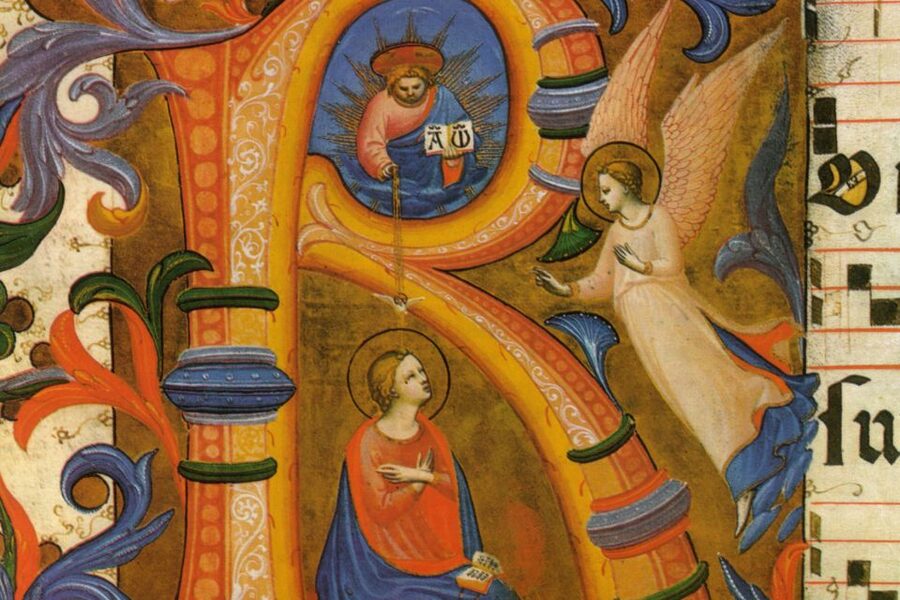
- Fra Angelico’s Annunciation: One of Florence’s most important Renaissance paintings is displayed here in the convent where the artist’s religious world made sense.
- A real Dominican convent: Monks still live in part of the building, giving the visit a quiet, lived-in quality.
- Savonarola’s cell: See the small room connected with the fiery preacher who challenged the corruption of the clergy.
- More than paintings: The route includes the Cloister of St. Anthony, old kitchens, service rooms, and the Great Refectory.
- Timed entry matters: Your chosen date and time are binding, and you can be refused entry if you arrive outside the slot.
- Self-guided visit: The ticket includes entry and booking fees, but no guide or audio tour.
Why San Marco feels different from Florence’s big museums

Florence can overwhelm you with famous names. The Uffizi, Accademia, and Duomo area deserve their place on your schedule, but San Marco offers a slower kind of art experience. You are not simply moving from one celebrated canvas to the next. You are walking through the setting for which much of the art was made.
The museum occupies a church and a 15th-century Dominican convent. Cosimo de’ Medici commissioned the convent’s renovation, and architect Michelozzo shaped the building into one of the finest examples of Florentine Renaissance design. The result is elegant but not showy. Its beauty comes from proportion, pale walls, quiet corridors, and frescoes placed where monks once lived and prayed.
That setting matters. Fra Angelico’s work can seem especially clear and direct here because the paintings were created for a religious community, not for a modern gallery wall. You can see how art and daily life shared the same rooms.
San Marco is also a good break from Florence’s louder sights. The museum sits at Piazza San Marco, 3, in a part of the city that is easy to reach on foot from the historic center. Once inside, the mood changes quickly.
More churches and chapels in Florence:
- Florence: Santa Monaca Church Italian Opera Concert Ticket
★ 4.7 · 2,692 reviews - Florence: Santa Maria Novella Entry Ticket & Audioguide
★ 4.3 · 717 reviews - Italian Opera Concert Ticket in Florence’s Santa Monaca Church
★ 4.5 · 602 reviews
Beginning at the cloister and convent entrance
Before entering, take a moment to look at the exterior. The building has a statuesque, formal appearance, but the interior route soon becomes more intimate.
Your visit begins near the convent spaces and the elegant Cloister of St. Anthony. Cloisters are often treated as passageways, but here the architecture sets the tone for everything that follows. The open courtyard, orderly lines, and old doors decorated with frescoes give you a sense of a place designed for quiet repetition.
Do not hurry through these first spaces. The cloister helps you understand that San Marco is not just an art museum. It is a religious building with an active Dominican presence. Dominican monks still live in part of the convent, although the museum areas are open for visitors.
That creates a useful contrast with Florence’s grand palaces. You are not looking at rooms built mainly to display wealth. You are seeing a place arranged around worship, study, work, and communal life.
Fra Angelico’s frescoes and the famous Annunciation
The central reason to visit is Beato Angelico, also known as Fra Angelico. He was a Dominican friar and one of the leading artists of the Florentine Renaissance. His paintings combine careful design with a calm, devotional feeling.
The Annunciation is the painting many people come to see. It is easy to understand why. The scene is graceful and restrained, with architecture and figures arranged in a way that feels peaceful rather than theatrical. You can spend a long time with it without needing a crowd of surrounding masterpieces to make the room important.
Fra Angelico’s frescoes appear throughout the convent. Their placement is part of their power. Rather than encountering one large exhibition hall, you move through spaces where religious images once helped shape the daily routine of the friars.
The paintings reward patience. Give yourself time to notice the simple gestures, the spare settings, and the way the frescoes fit the rooms. If you rush in expecting the drama of the Uffizi, you may miss what makes San Marco special.
The information panels are not always available in both English and Italian. There is still enough material for English-speaking visitors to follow the main story, but you will get more from the visit if you read about Fra Angelico before arriving or bring your own guidebook.
Seeing Savonarola’s small cell
San Marco is also tied to Girolamo Savonarola, the Dominican friar whose sermons attacked the corruption and moral decay of the clergy. He became one of Florence’s most forceful and controversial religious figures.
You can visit the cell where Savonarola lived. It is a modest space, and that modesty is the point. After the ornate Renaissance paintings, the cell brings you back to the physical reality of convent life.
Savonarola’s story ended violently. He was hanged and burned at the stake in Piazza della Signoria. Knowing this gives the cell a darker charge, but San Marco does not turn the room into a theatrical attraction. The power comes from the contrast between his influence in Florence and the plain place where he lived.
I find this part of the museum most useful when paired with a walk through the city afterward. Piazza della Signoria is not far away, so you can connect the room at San Marco with the public square where Savonarola met his end.
More museums and galleries in Florence:
- Florence: Skip-The-Line Uffizi Gallery Timed Entry Ticket
★ 4.5 · 27,832 reviews - Florence: Leonardo Interactive Museum Entry Ticket
★ 4.5 · 11,763 reviews - Florence Accademia Gallery Tour with Entrance Ticket Included
★ 4.5 · 6,148 reviews - Uffizi Gallery Small Group Tour with Guide
★ 4.5 · 4,923 reviews
The Great Refectory, kitchen, and service rooms
The museum continues beyond Fra Angelico’s frescoes. You will see the Great Refectory, the old kitchen, and service areas that show how the convent functioned.
The Great Refectory is especially worthwhile because it shifts your attention from individual devotional paintings to communal life. This was a place where the friars ate together, and its large-scale works help explain the role of art in a religious house.
You can also see paintings by Fra Bartolomeo, another important painter and Dominican monk who lived at San Marco in the early 16th century. His presence adds another layer to the convent’s artistic importance. This was not simply a building that later acquired a collection. Artists lived and worked within this religious setting.
The old kitchen and service areas are less polished than the formal art rooms, which is precisely why they matter. They help you picture the ordinary work behind the spiritual life of the convent. If you are interested in architecture, social history, or the practical side of monastic life, do not skip them.
How much time should you allow?
The ticket is valid for one day, but the entry slot is specific. You choose a date and time when booking, and that time cannot be treated casually. Arrive early enough to find the ticket office inside the museum at Piazza San Marco, 3.
The supplied information does not give a required visit length. You should plan enough time to see the cloister, Fra Angelico’s rooms, Savonarola’s cell, the refectory, and the service areas without racing. Art lovers will want longer for the frescoes, while a visitor making a shorter stop can still see the main spaces at a steady pace.
Because the museum is quieter and more intimate than Florence’s largest attractions, it does not usually feel like a place that demands an entire day. The one-day validity gives you flexibility around your schedule, but it does not mean you can enter at any hour. Your booked slot remains binding.
What the $15 ticket includes
At $15 per person, this is a sensible purchase if you already plan to see Florence’s major museums and want a different kind of experience. You are paying for more than a single famous painting. The ticket covers the museum’s art, the convent architecture, the cloister, Savonarola’s cell, and the refectory and service areas.
The booking fee is included, and the ticket lets you skip the ticket line. That may be useful during busy periods, although advance booking may not always be essential when the museum is quiet. One visit at 10 a.m. was described as straightforward and not crowded, but conditions can change.
The extras connected with the ticket are less important to me. You receive a 10 percent discount at the Hard Rock Shop on Via dei Brunelleschi, 1, in Piazza della Repubblica, excluding limited-edition and charity items. You also receive 10 percent off the à la carte menu at the Hard Rock Cafe at the same address, excluding alcohol.
Those discounts should not influence your decision to visit San Marco. Think of them as minor add-ons, not part of the museum’s value.
The limits of a self-guided visit
This is a timed entrance ticket, not a guided tour. No guide is included, and the supplied information does not provide an audio guide option. That is the clearest weakness for anyone who wants detailed art explanations.
You can still enjoy the visit on your own, especially if you know the basic stories of Fra Angelico, Fra Bartolomeo, and Savonarola. The rooms are compelling even without a lecture. But you may find some works harder to place, especially when labels are only in Italian.
One separate experience reference names a guide called Sabine and praises her clear discussion of art and history. That should not be confused with this ticket. If you specifically want a guide, you need to book a guided option rather than assume one will be waiting at San Marco.
Also check the rooms as you enter. Some exhibition spaces may be closed at times. That does not erase the value of the visit, but it can affect what you see.
Accessibility and practical booking details
The museum is listed as wheelchair accessible. Your ticket begins and ends at the museum, with no transportation included.
You can cancel up to 24 hours before the visit for a full refund, and the reserve-now, pay-later option lets you hold your plans without paying immediately. These terms are useful if your Florence schedule is still changing.
Keep your entry time visible on your phone or ticket. Accompanying people must also have admission tickets, so do not assume one booked ticket covers an entire group.
Who will enjoy San Marco most?
I would put San Marco high on the list for:
- Anyone drawn to Fra Angelico and early Renaissance religious art
- People who prefer quiet museums to Florence’s biggest crowds
- Visitors interested in monastic life and working religious buildings
- Architecture fans who want to see Michelozzo’s convent design
- Readers of Florentine history who want a physical connection to Savonarola
- Repeat visitors looking for a less obvious stop
It may be less satisfying if you want a large collection of secular Renaissance paintings, a full English commentary, or a guide who explains every room. The museum’s strength is its atmosphere and setting, not the size of its collection.
Families can make the visit work, but younger children may find the quiet rooms and religious paintings less engaging than Florence’s more visually varied attractions. Adults who enjoy history, architecture, and contemplative spaces will likely get more from it.
Should you book the San Marco Museum ticket?
Yes, if you want to see Florence beyond the headline sights. The Fra Angelico Annunciation, the convent frescoes, and the chance to enter Savonarola’s cell make the $15 fee worthwhile. The working monastery setting gives the museum a sense of purpose that large galleries cannot easily reproduce.
Book it with realistic expectations. You are buying access, not a guided lesson. Arrive at the exact time, allow room for closed sections, and prepare to read some Italian labels or do a little research before you go.
If your Florence schedule is already packed with the Uffizi, Accademia, and Duomo, San Marco is still a strong choice for a quieter change of pace. It is not the city’s loudest attraction, but it may be one of the visits you remember most clearly.
FAQ
Where is the San Marco Museum?
The museum is at Piazza San Marco, 3, 50121 Firenze, Tuscany, Italy. The ticket office is inside the museum.
Is this a guided tour?
No. The ticket provides timed entrance to the museum, but a guided tour is not included.
What can I see inside San Marco Museum?
You can see works by Fra Angelico and Fra Bartolomeo, the Cloister of St. Anthony, the Dominican convent, Savonarola’s cell, the Great Refectory, the old kitchen, and service areas.
Is the entry time flexible?
No. The date and time slot selected during booking are binding. You may be refused entry if you arrive outside the allotted time.
Is the museum wheelchair accessible?
Yes, the activity information lists San Marco Museum as wheelchair accessible.
Can I cancel the ticket?
Yes. You can cancel up to 24 hours in advance for a full refund. A reserve-now, pay-later option is also available.
Recently added around Florence
- Accademia and Uffizi Small-group Guided Tour★ 4.5 · 8 reviews
- The David from Michelangelo.★ 5.0 · 3 reviews
- Combo: Accademia + walking + Uffizi Galleries Guided Tour★ 3.5 · 6 reviews
- The Complete Wine Tour Brunello, Nobile, Chianti wine experience★ 4.0 · 7 reviews
- The Best of Tuscany in 3 Days★ 4.5 · 13 reviews
- The Cooking Lab – Authentic Food Experience★ 5.0 · 113 reviews
- Florence Central Market Food Tour – Private Tour★ 4.0 · 7 reviews
- Family Friendly Florence Private City Tour★ 5.0 · 47 reviews
Santa Croce and Florence Churches, compared.
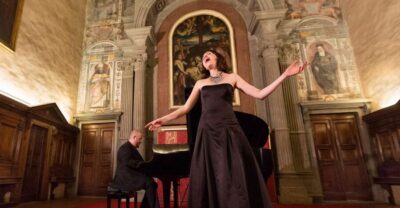
Santa Monaca Church Italian Opera Concert Ticket
Read our review →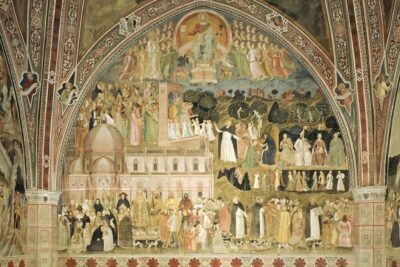
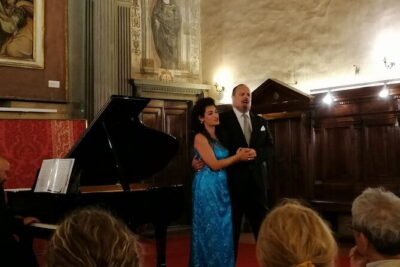
Italian Opera Concert Ticket in Florence’s Santa Monaca Church
Read our review →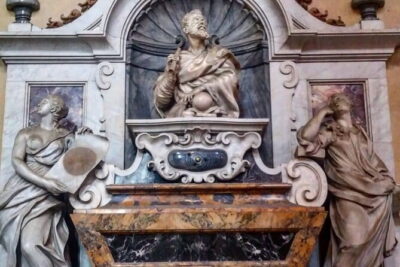
Basilica Santa Croce: Walking Among the Masters of Florence
Read our review →Browse the lists this tour appears in