
Reviewed · GALILEO AND LEONARDO MUSEUM TOURS
Florence: Leonardo Interactive Museum Entry Ticket
Leonardo’s notebooks can feel distant behind glass. Here, his ideas become working wooden machines you can test with your own hands. Turn screws, move levers, study gears, and see why designs drawn more than 500 years ago still make sense.
I especially like the hands-on workshops, where you can build bridges, domes, and polyhedrons, and the easy central location near the Duomo and Accademia Gallery. The main drawback is that this is a self-guided museum, so you must bring your own earphones for the audio commentary and read or listen at your own pace.
Key points to know before you go
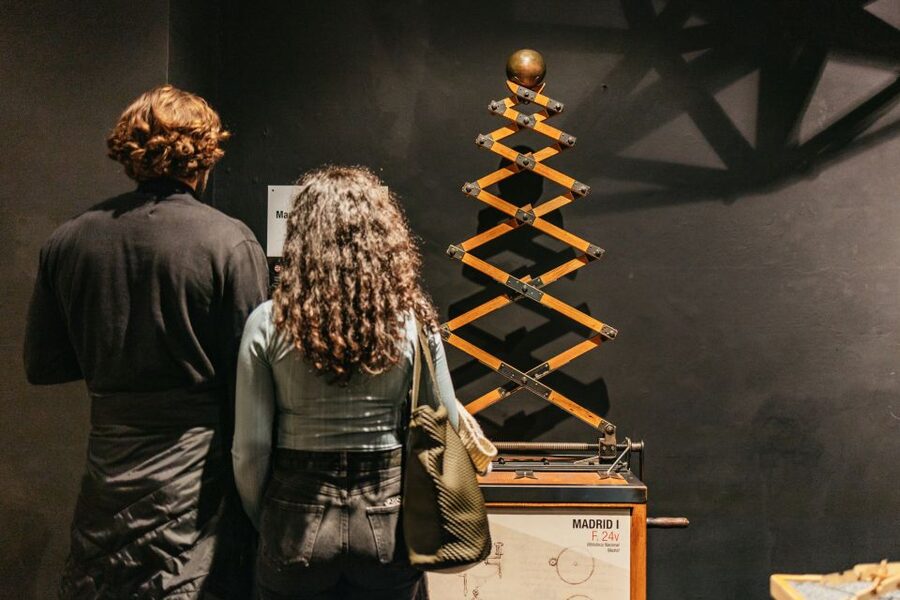
- Leonardo’s sketches become machines: Try models based on designs from his famous codexes, including a tank, catapult, worm screw, and hydraulic saw.
- Built for curious hands: The exhibits invite you to operate mechanisms rather than only look at them.
- A useful family stop: Children around age 7 or 8 and older can get much more from the displays than from a traditional art museum.
- About one hour works well: You can move quickly, or spend 90 minutes testing puzzles and machines.
- Audio guide, not live tour: Commentary is available on your smartphone in six languages, with your own earphones.
- Check the entrance carefully: The museum is close to the Duomo, but misleading red signs can point you away from the correct doorway.
Why Leonardo works better here with moving parts
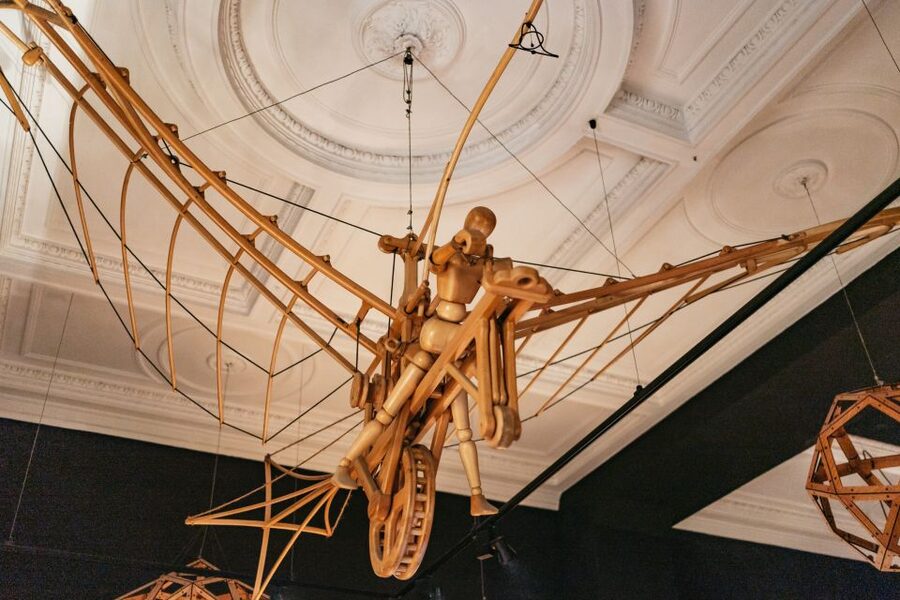
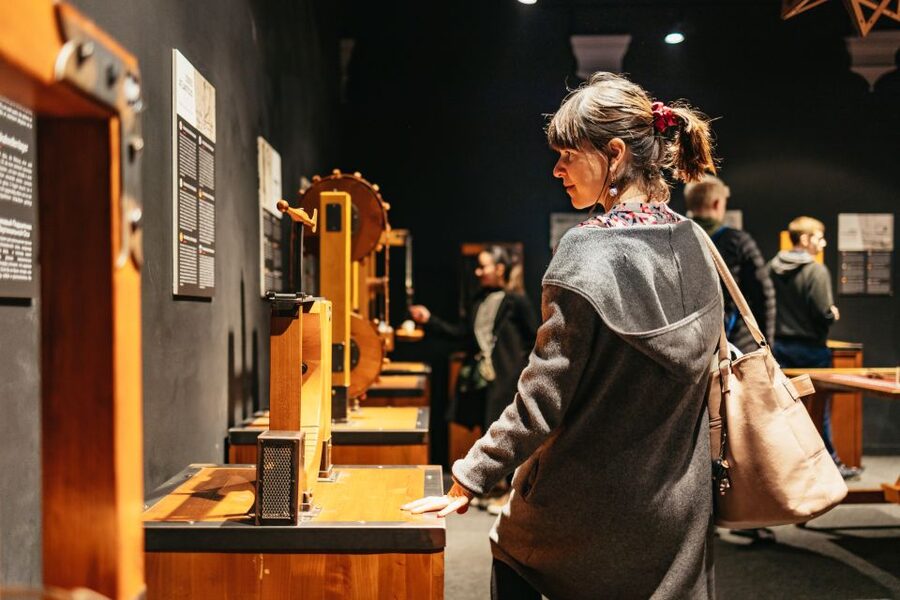
Florence is full of paintings, chapels, and sculptures that ask you to look quietly. This museum changes the rhythm. You are allowed, and expected, to handle many of the machines with care.
That simple difference helps you understand Leonardo’s thinking. A sketch of a gear or screw can look like a puzzle on a page. When you turn the mechanism and watch one part drive another, the idea becomes clear in seconds.
I like this approach because it gives you a small lesson in engineering without requiring a technical background. You do not need to know the vocabulary of physics before arriving. The displays let you learn through action, trial, and observation.
The museum also connects several sides of Leonardo’s work. You can explore engineering, physics, anatomy, and painting rather than treating him only as the painter of the Mona Lisa. The result is a broader picture of a man who observed how bodies, water, force, and movement worked.
More Galileo and Leonardo museum visits:
- Leonardo Da Vinci Museum Entrance Ticket
★ 4.5 · 1,458 reviews - Florence: Museo Galileo Entry Ticket
★ 4.5 · 1,422 reviews - Leonardo Interactive Museum® Entrance Ticket
★ 4.5 · 583 reviews
Finding the museum near the Duomo
The entrance is just a short walk from the Duomo and the Accademia Gallery, making this an easy addition to a day in central Florence. You do not need a separate trip across town or a bus ride to reach it.
You do need to pay attention at the final few steps. From the Duomo, a red vertical advertisement may show the words Da Vinci Museum with two arrows pointing right. Those signs do not lead to the entrance for this museum. Follow your booking details carefully instead of assuming the first Da Vinci sign is correct.
This matters because Florence has two museums with very similar names. The original museum is the one described here, and the other location is a few blocks away. A booking for one should not be treated as a general ticket for both.
Tickets are sold online, and you select the day and entry time in advance. That system is designed to reduce queues. It also means you should have the correct time and entrance information ready before you arrive.
What you see during an hour inside
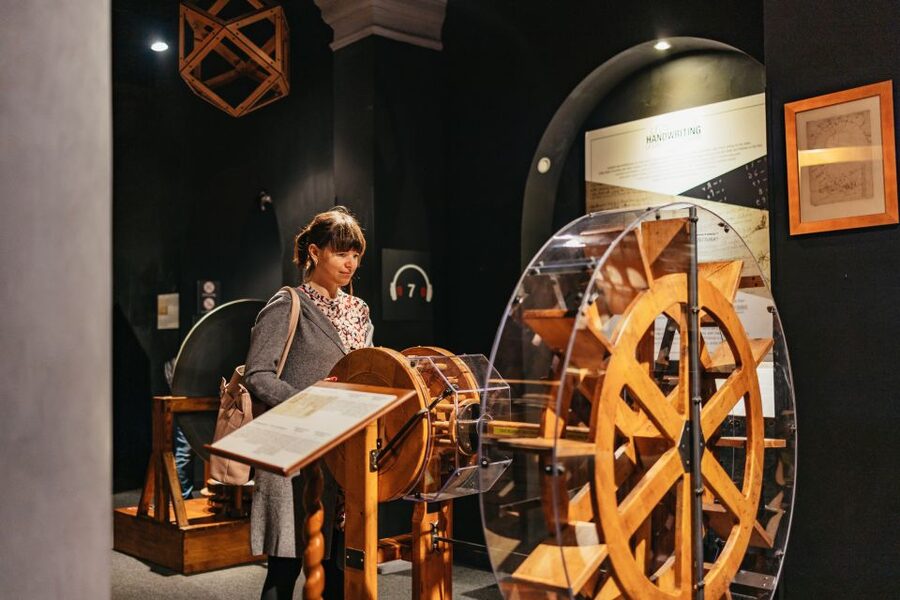
There is no fixed walking route with a guide leading you from room to room. You enter, get oriented, and then explore the displays at your own speed.
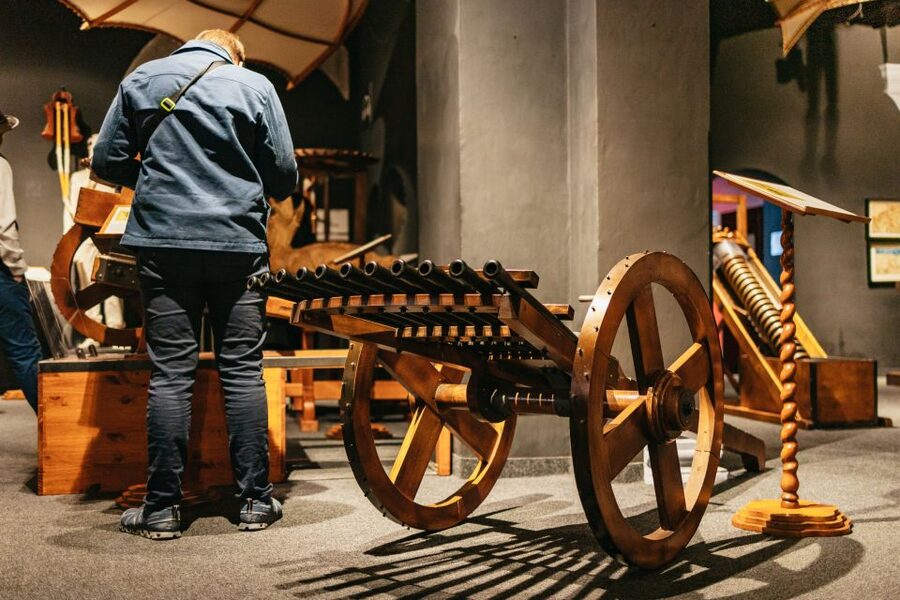
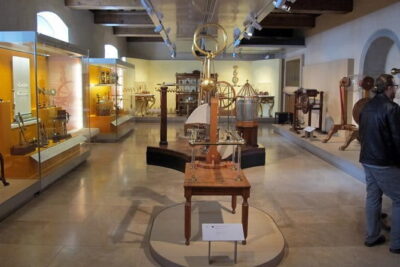
Start with the larger machines. The tank, catapult, vertical screw, and hydraulic saw give you the clearest sense of Leonardo’s practical imagination. These are not just decorative replicas. The point is to see how the parts move and how a small action can create force elsewhere.
The worm screw is especially useful for understanding the link between Leonardo’s drawings and modern mechanical ideas. You can study the shape, turn the mechanism, and think about how the design transfers movement.
The printing press offers another change of pace. It shows how Leonardo looked beyond weapons and construction toward processes that affected communication and work. The displays make these connections easier to follow than a page of historical dates would.
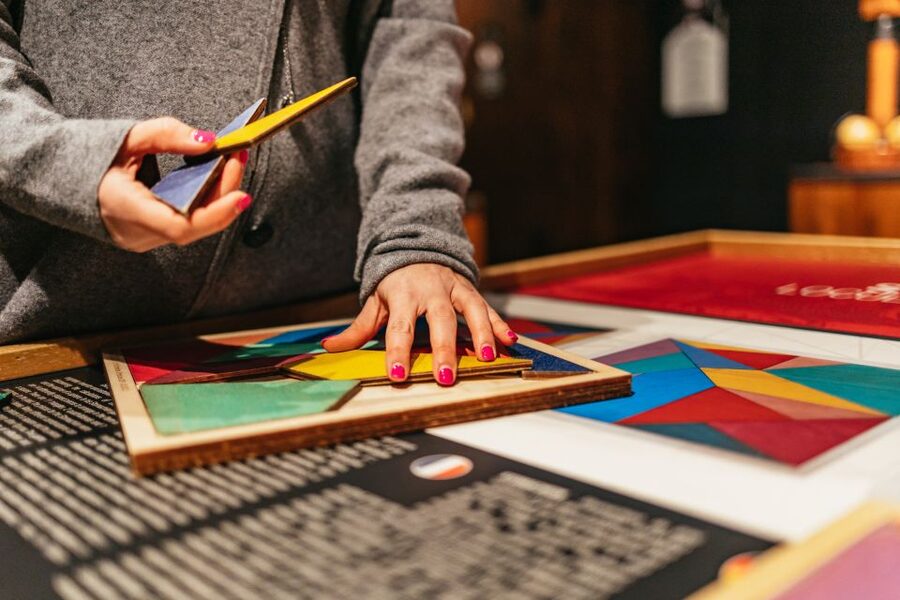
You may also find smaller mechanisms and puzzles that reward patience. Some are best understood by touching them, then trying again after you notice how the pieces fit together. Children often spend longer at these stations than adults expect.
Allow at least an hour for a proper visit. An hour is enough for a focused look at the major inventions. If your children or teenagers enjoy puzzles, gears, and machines, plan closer to 90 minutes. The museum does not force you to stay that long, but the hands-on format can hold attention well beyond a quick photo stop.
Building bridges, domes, and polyhedrons
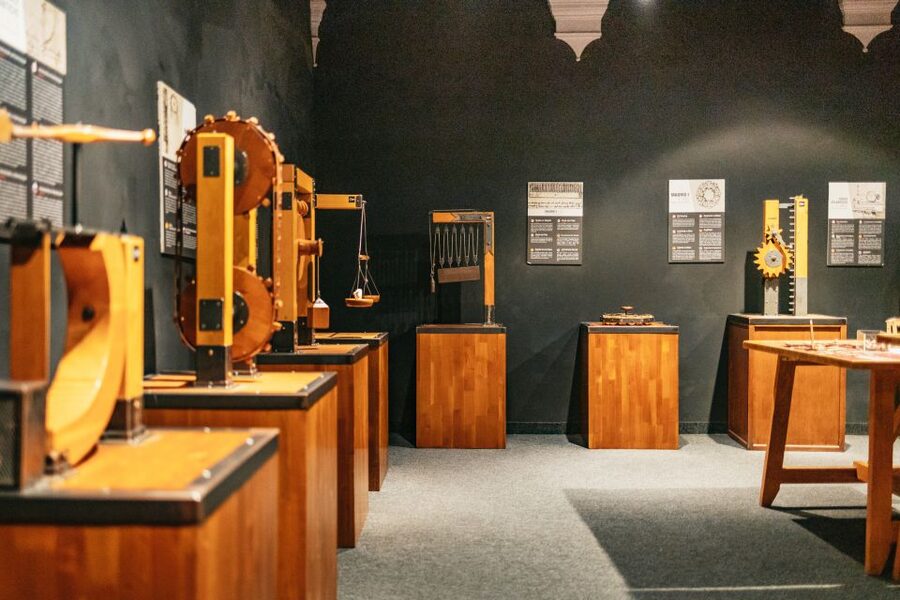
The workshops add a useful physical element. Building a bridge or dome makes you think about balance, weight, shape, and support. These are basic ideas, but they become much easier to grasp when your own construction succeeds or collapses.
The polyhedron activity brings geometry into the visit without making it feel like a classroom exercise. You can handle the pieces, study the structure, and see how simple forms combine into something more complex.
I like these tasks because they give families something to do together. One person can build while another reads the explanation or listens to the audio. If you are visiting with older children, the activities provide a break from the usual instruction not to touch anything in a museum.
The exhibits are hands-on, but the information still matters. Read the descriptions before operating a machine if you want to understand what Leonardo was attempting. If you only rush from lever to lever, you may enjoy the play but miss the connection to his codex drawings.
More museums and galleries in Florence:
- Florence: Skip-The-Line Uffizi Gallery Timed Entry Ticket
★ 4.5 · 27,832 reviews - Florence Accademia Gallery Tour with Entrance Ticket Included
★ 4.5 · 6,148 reviews - Uffizi Gallery Small Group Tour with Guide
★ 4.5 · 4,923 reviews - Florence: Accademia Gallery Guided Tour
★ 4.6 · 4,156 reviews
The audio guide and self-guided format
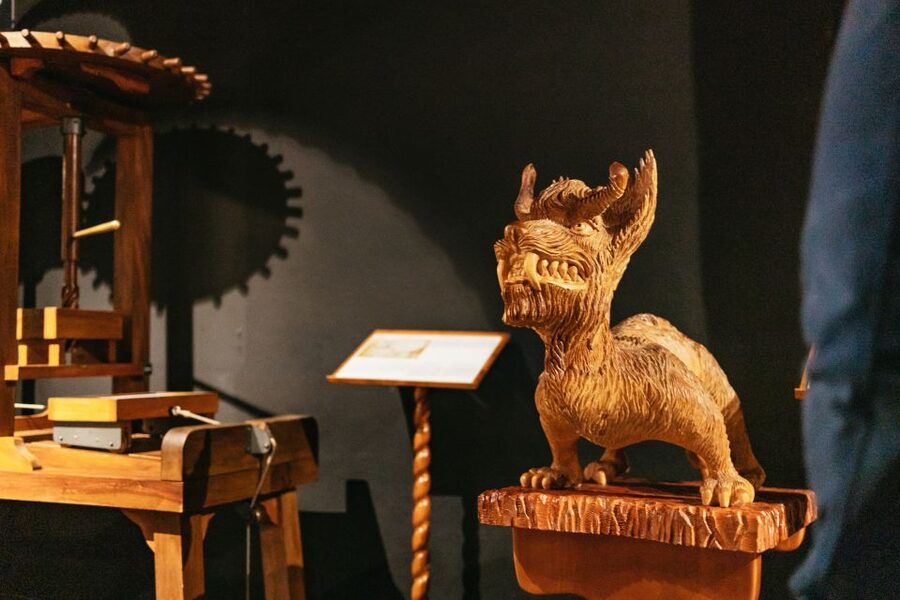
Your ticket includes an audio guide that you access with your smartphone. It is available in Italian, English, French, Spanish, German, and Portuguese. Bring your own earphones, since they are not listed as included.
This format gives you control. You can spend extra time with the tank or catapult, skip a section that does not interest you, and move through the displays without waiting for a group. Free Wi-Fi is included as well.
The tradeoff is the lack of a live guide. Nobody is there to adjust the explanation to your questions or point out a detail you have missed. If you prefer a personal storyteller, this will feel more limited than a guided museum visit.
For many families, though, self-guided access is an advantage. Children can move at a natural pace, and adults do not need to worry about keeping a group together. Teenagers who dislike formal museums may respond better to machines they can test themselves.
Why children and teenagers tend to enjoy it
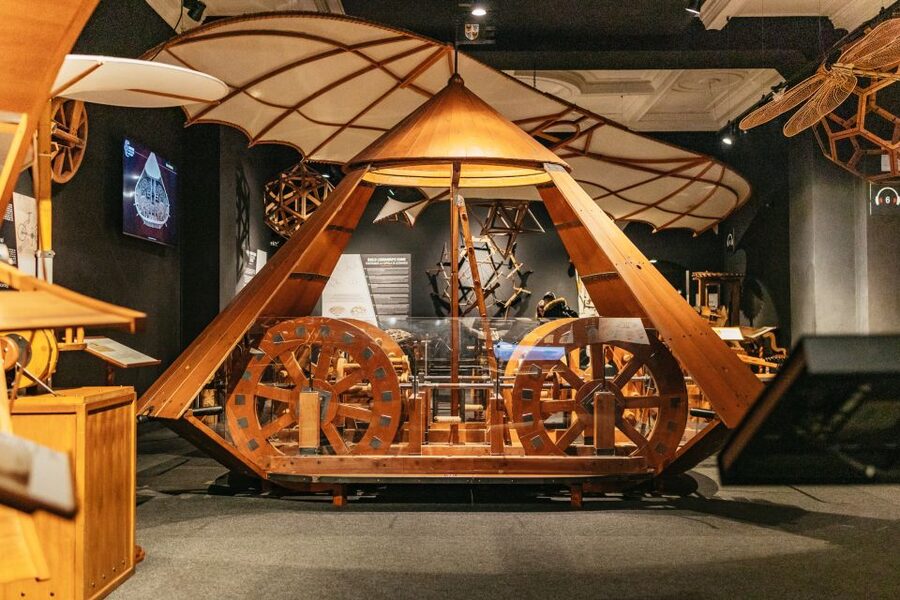
The museum is suitable for visitors around age 7 or 8 and older. That age guidance makes sense because the main appeal is understanding how the models work, not simply looking at colorful displays.
Younger children may enjoy moving parts and puzzles, but they may not follow every explanation. Adults should stay close and remind children to operate the machines carefully. The instruction is to try the inventions with caution, which is sensible for working mechanical replicas.
Older children and teenagers get more from the visit because they can connect the machines to science, design, and problem-solving. A 17-year-old interested in engineering may notice the ingenuity of the mechanisms. A teenager who is usually uninterested in museums may appreciate having a task instead of only a display case to inspect.
Adults should not dismiss the museum as a children’s attraction. The hands-on models offer a practical way to understand Leonardo’s ideas, and the broader subjects, including anatomy and painting, give the visit more substance than a collection of toys.
How the $9 price fits a Florence day
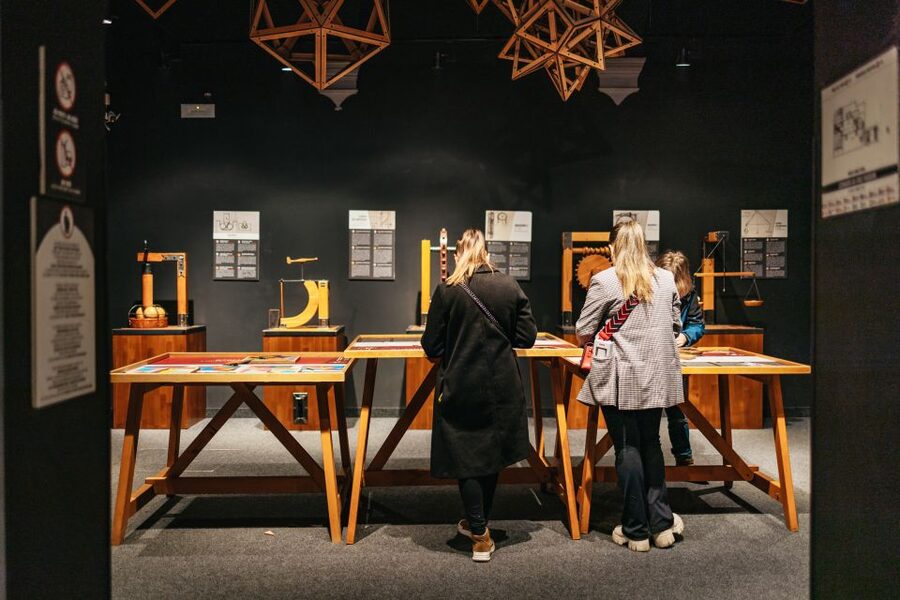
At $9 per person, this is an inexpensive central Florence activity. The value is strongest if you want a short indoor stop with a clear focus and something for different ages to do together.
The price does not include a live guide, but it does include museum entry, smartphone audio commentary, and Wi-Fi. You are paying for a self-paced experience rather than a full guided tour.
I would not compare this ticket directly with Florence’s major art museums, since the purpose is different. You are not coming for a large collection of original paintings. You are coming to see working models based on Leonardo’s designs and to learn by handling them.
That makes the ticket particularly useful between larger sights. After the Duomo or Accademia, you can spend an hour doing something more active. It also works on a rainy day, though the information provided does not give a full indoor floor plan or crowd forecast.
Timing, crowds, and practical planning
The listed duration is one hour, but your actual visit can be shorter or longer depending on how much you read and how many machines you test. Early entry may give you a quieter experience. A visit around 10 a.m. has been described as calm, and February can also be less busy.
That is not a guarantee, so choose your time with care if you want room at the displays. A quiet visit matters here because several machines are more enjoyable when you can take a turn without feeling rushed.
Book online and select an entry time. This helps avoid queues, and the museum sells tickets exclusively online. The activity ends back at the same meeting point because there is no transport or separate finishing location.
You can cancel up to 24 hours before the scheduled visit for a full refund. The reserve now and pay later option also lets you hold a place without paying immediately, which can help while you arrange a Florence itinerary.
What this museum does not provide
Do not expect an original Leonardo manuscript collection or a conventional art exhibition. The emphasis is on replicas, mechanisms, explanations, and participation.
Do not expect a live historian or engineer to guide you. The audio guide is useful, but you will need to use your phone and earphones. If your phone battery is low, prepare before entering.
Do not expect every part of the visit to appeal equally to every person. Someone interested mainly in Renaissance painting may prefer an art museum. Someone curious about how things work will find the machines more rewarding.
The museum also requires care. Hands-on does not mean rough handling. Operate the mechanisms gently, follow the instructions, and give other people a turn.
Who should book this Florence experience?
I would choose this museum for families with children around 7 or 8 and older, especially after several days of looking at art. It gives children permission to interact with exhibits in a controlled way.
It also suits teenagers, adults who enjoy design or engineering, and anyone who wants to see a different side of Leonardo. The visit works well for people who learn by doing rather than by reading long labels.
I would be less likely to book it if my main goal were original artwork, a live historical explanation, or a long museum visit. This is a focused, active stop, not a full-day cultural institution.
Should you book the Leonardo Interactive Museum?
Book it if you want to understand Leonardo’s inventions through movement, not just sketches. For $9, the combination of central location, hands-on machines, audio commentary, and family appeal is strong.
Plan for one hour, or closer to 90 minutes if you enjoy the puzzles and building activities. Bring earphones, confirm the exact entrance, and remember that the red signs near the Duomo may send you to the wrong place.
Skip it if you want a traditional gallery filled with original Renaissance art. Choose it if you want to turn a codex drawing into a working idea, let your children experiment, and give your Florence schedule a lively change of pace.
FAQ
Where is the Leonardo Interactive Museum?
The entrance is in central Florence, a few steps from the Accademia Gallery and the Duomo.
How long does a visit take?
The listed duration is one hour. You can spend about 90 minutes if you take extra time with the machines, puzzles, and workshops.
Is the museum suitable for children?
It is suitable for everyone aged around 7 or 8 and older. Children can try many of the machines and interactive activities with care.
Is there a live guide?
No. The ticket includes an audio guide for your smartphone, but not a live guide.
What languages are available for the audio guide?
The audio guide is available in Italian, English, French, Spanish, German, and Portuguese.
Do I need to bring earphones?
Yes. You listen through your smartphone and should bring your own earphones.
What machines can I try?
You can try models including the tank, catapult, worm screw, vertical screw, hydraulic saw, and printing press, along with other mechanisms based on Leonardo’s codex designs.
Are tickets sold online or at the entrance?
Tickets are sold exclusively online. You choose the date and entry time when booking.
Can I cancel the ticket?
You can cancel up to 24 hours in advance for a full refund. You can also reserve and pay later.
Recently added around Florence
- Accademia and Uffizi Small-group Guided Tour★ 4.5 · 8 reviews
- The David from Michelangelo.★ 5.0 · 3 reviews
- Combo: Accademia + walking + Uffizi Galleries Guided Tour★ 3.5 · 6 reviews
- The Complete Wine Tour Brunello, Nobile, Chianti wine experience★ 4.0 · 7 reviews
- The Best of Tuscany in 3 Days★ 4.5 · 13 reviews
- The Cooking Lab – Authentic Food Experience★ 5.0 · 113 reviews
- Florence Central Market Food Tour – Private Tour★ 4.0 · 7 reviews
- Family Friendly Florence Private City Tour★ 5.0 · 47 reviews
Galileo and Leonardo Museum Tours, compared.

Skip the Line: Galileo Museum Ticket in Florence
Read our review →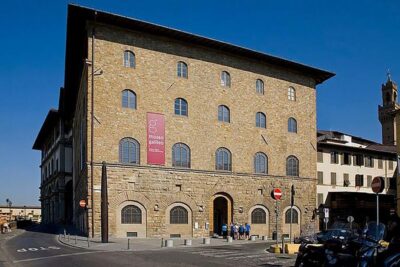
Express Uffizi Gallery and Leonardo da Vinci Museum
Read our review →
Browse the lists this tour appears in