
Reviewed · GALILEO AND LEONARDO MUSEUM TOURS
Florence: Private Astronomical Tour of the Museo Galileo
Galileo’s original telescope is the star of this private visit, but the museum gives you much more than a famous tube of glass and wood. You’ll see the tools that helped early scientists measure the heavens, track time, study temperature, and make sense of a changing universe. The guide adds the story of Galileo’s work at the Medici court and places each instrument in its period.
I like the private format, which lets you ask questions and set the pace within the 1.5-hour visit. I also like the collection’s unusual range, from astrolabes and celestial globes to a 1568 nocturnal and a 1593 armillary sphere. The main consideration is that a guide-led visit cannot give every interactive display and video the time it deserves, especially if you are passionate about the science itself.
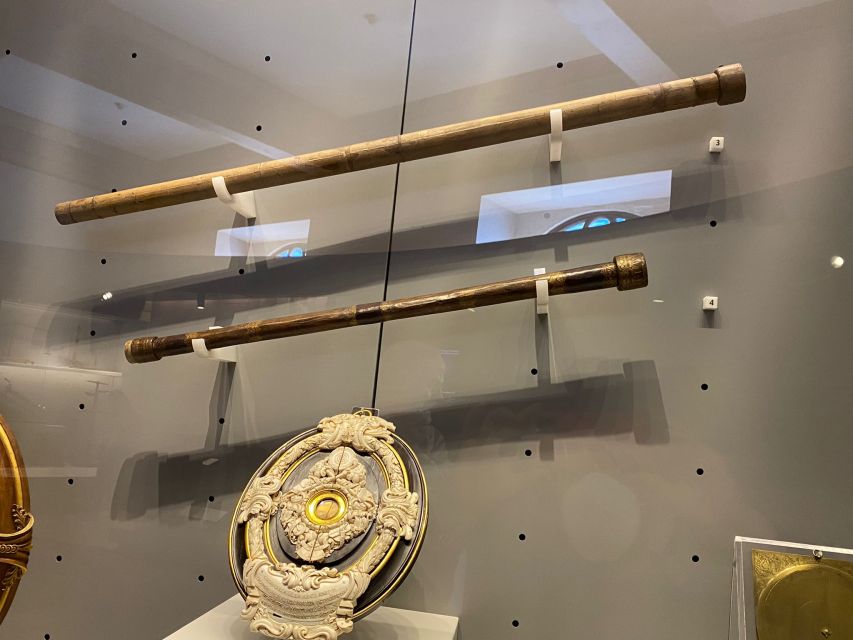
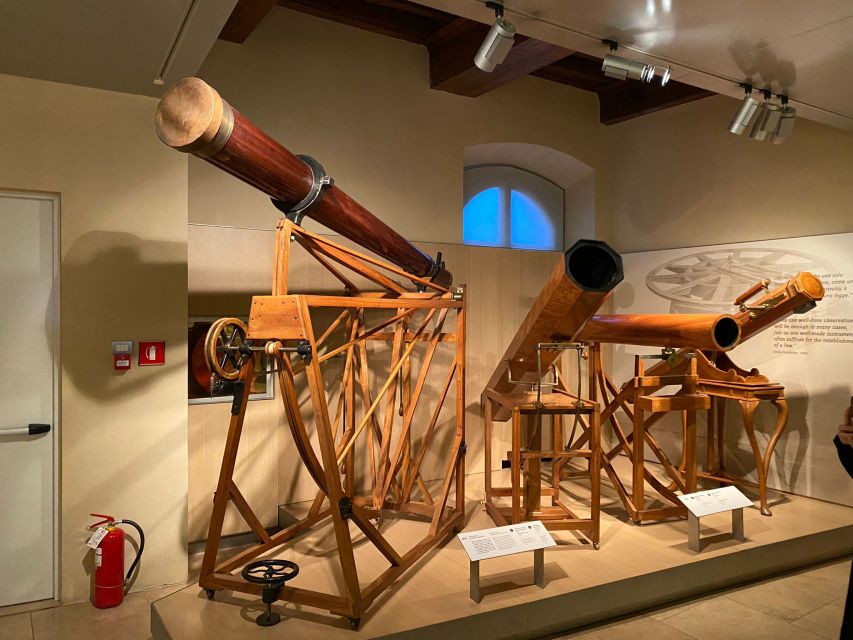
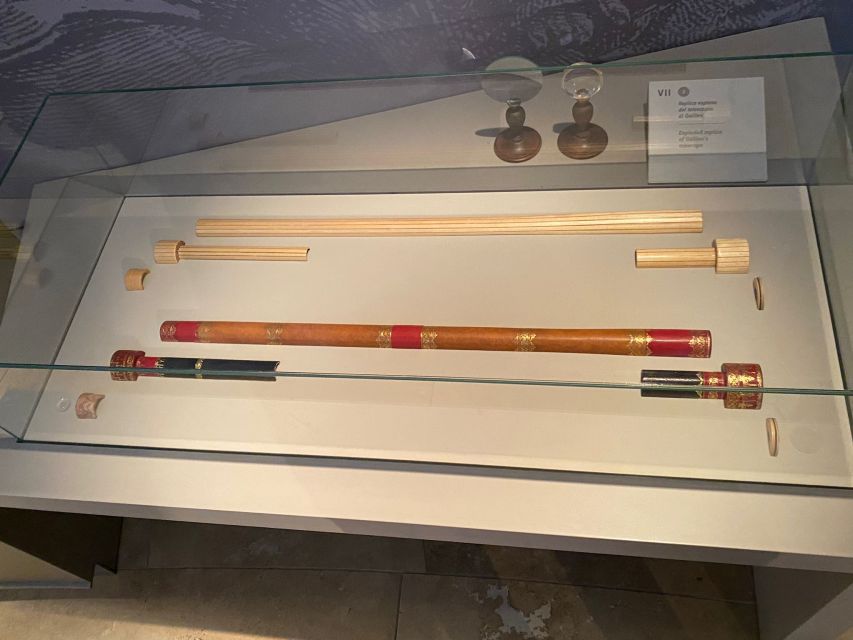
- Galileo’s original telescope: See the instrument used in his astronomical studies, not a modern replica.
- A working history of measurement: Follow how people measured time, space, temperature, and the sky.
- Rare Renaissance instruments: Look for Girolamo della Volpaia’s 1568 nocturnal and Santucci’s 1593 armillary sphere.
- Private guide in your language: Tours are available in English, Spanish, German, Italian, and French.
- Fast-track museum access: Express security and reserved admission save time at a busy Florence sight.
- Useful family option: Children can explore old scientific games and instruments, though science-loving adults may want extra time afterward.
Galileo’s Telescope Comes First
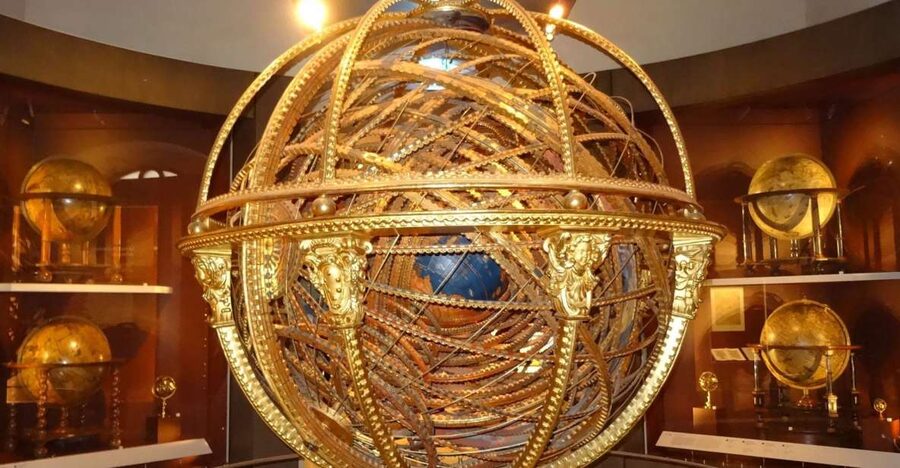
The Museo Galileo is not simply a room full of old objects. It tells the story of how people learned to observe and measure a world that could not yet be explained with modern technology.
The most important stop is Galileo Galilei’s original telescope. This is the instrument connected to his astronomical studies, and seeing it in person gives the visit a strong sense of place. You are looking at a tool from the period when careful observation began to challenge long-held ideas about the heavens.
Your guide will explain Galileo’s work and his connection to Florence. During the reign of Cosimo II de’ Medici, Galileo served at the court of the Grand Dukes of Florence. That court connection matters because science in this period did not happen in isolation. Mathematicians, philosophers, rulers, artists, and instrument makers all played a part in building and preserving scientific collections.
The guide’s role is especially useful here. The objects are old, often delicate, and not always self-explanatory. A telescope can look like a simple wooden tube until you understand what it allowed Galileo to observe and why that changed astronomy.
A Short Tour Through a Large Scientific Collection
The collection began with Cosimo I de’ Medici in the 16th century and continued under later rulers. It grew further after the founding of the Academy of Assay in 1657, then was carried on by Grand Duke Leopoldo of the Lorraine family.
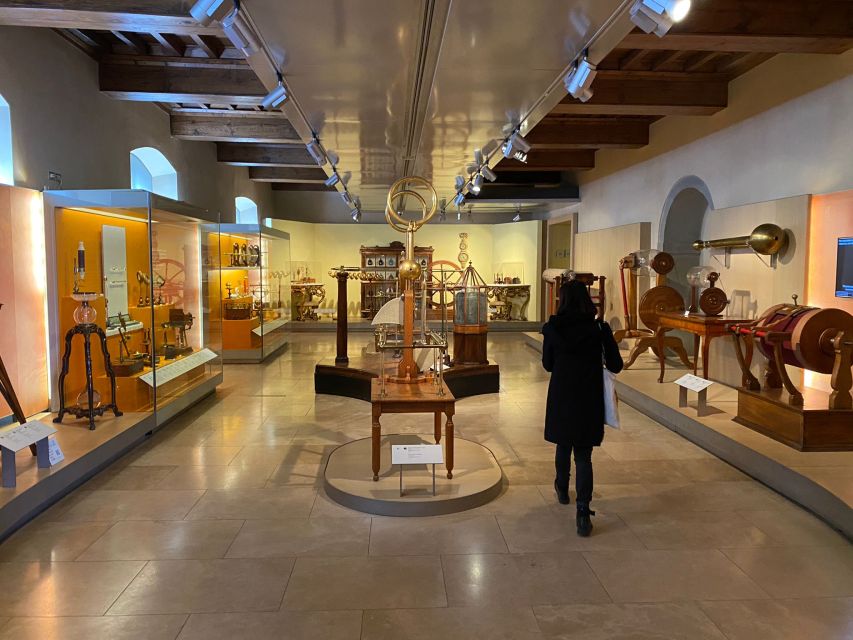
You will not see every object in the museum during 90 minutes. That is both the strength and the limit of this tour. A private guide can select the most important pieces and give you a clear route, but you will need more time if you want to stop at every display, watch every video, and read the full explanations.
I would treat this visit as a guided introduction rather than a complete museum study. The guide is there to connect objects and ideas. You can then decide if you want to return to certain rooms on your own, using the museum’s app for additional scientific explanations.
That approach works well for a first visit. The museum contains a lot of specialist material, and a quick explanation can help you understand what deserves your attention. It also prevents the tour from becoming a long march past instruments with unfamiliar names.
More Galileo and Leonardo museum visits:
- Florence: Leonardo Interactive Museum Entry Ticket
★ 4.5 · 11,763 reviews - Leonardo Da Vinci Museum Entrance Ticket
★ 4.5 · 1,458 reviews - Florence: Museo Galileo Entry Ticket
★ 4.5 · 1,422 reviews
How People Measured the Sky
Astrolabes and celestial globes show how earlier observers mapped the heavens before modern telescopes and digital tools.
An astrolabe is not just a decorative metal disk. It could help with astronomical calculations and the measurement of positions in the sky. A celestial globe presents the heavens as a sphere, giving you a physical model of how stars and constellations were arranged.
The guide will connect these instruments to the development of astronomy. You will hear how methods of observation changed and how instruments became more precise. This is one of the most valuable parts of the tour if you like seeing the practical steps behind a major scientific idea.
The museum also contains maps and globes that help place astronomy in a wider setting. These objects show how people tried to represent both the Earth and the sky with the information available to them.
The private setting is useful in this section. If an explanation about celestial movement or measurement is unclear, you can ask for another example instead of simply moving on with a large group.
The 1568 Nocturnal and the 1593 Armillary Sphere
Two particularly distinctive objects deserve your attention: the original nocturnal by Girolamo della Volpaia from 1568 and Santucci’s armillary sphere from 1593.
The nocturnal is a historic instrument for telling time at night by observing the stars. Its purpose connects astronomy to everyday needs. Before modern clocks and electronic devices, the sky itself could serve as a clock, provided you knew how to read it.
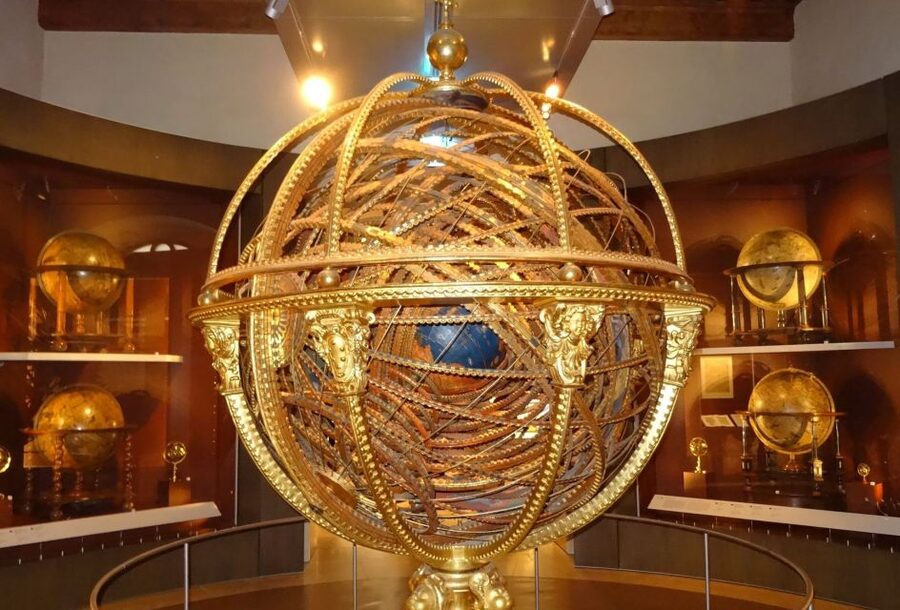
The armillary sphere is a model made from rings that represent the circles of the heavens. Santucci’s example, dated 1593, shows the care and skill required to build a physical model of celestial movement.
These pieces make the museum feel practical rather than abstract. You are not only hearing about old theories. You are seeing the instruments people used to calculate, navigate, observe, and teach.
Take a moment to look closely at the construction. Photography is allowed without flash, so you can record details while protecting the artifacts. Large bags and backpacks may need to go into the cloakroom, which is worth remembering before you arrive.
Clocks, Thermometers, and the Problem of Measuring Time
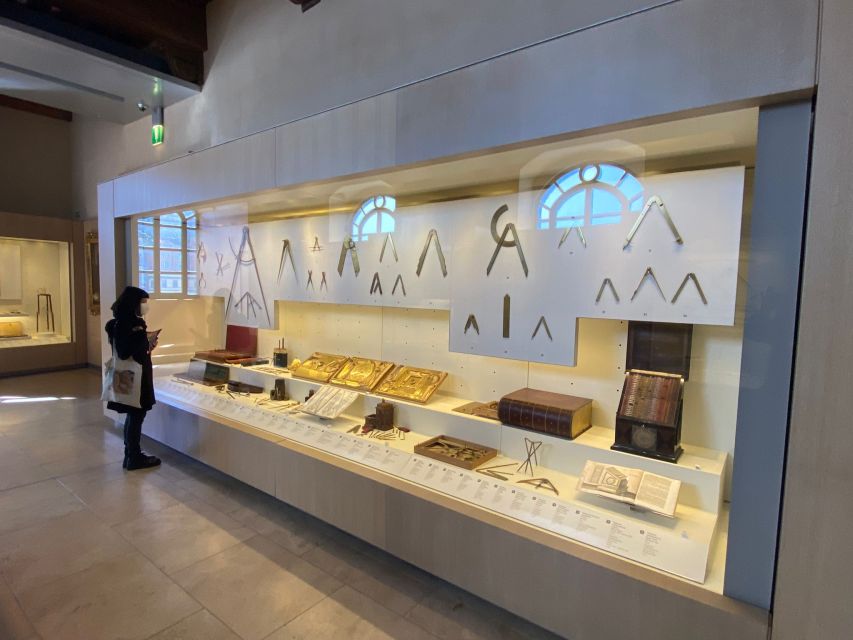
The visit moves beyond astronomy into timekeeping and temperature. Antique clocks and thermometers show how scientists gradually developed more reliable ways to record changes in the world.
Time seems obvious to modern visitors because phones and watches give us exact readings instantly. The older instruments in this museum remind you that measuring time accurately was once a technical challenge. Small errors could affect experiments, navigation, and astronomical observations.
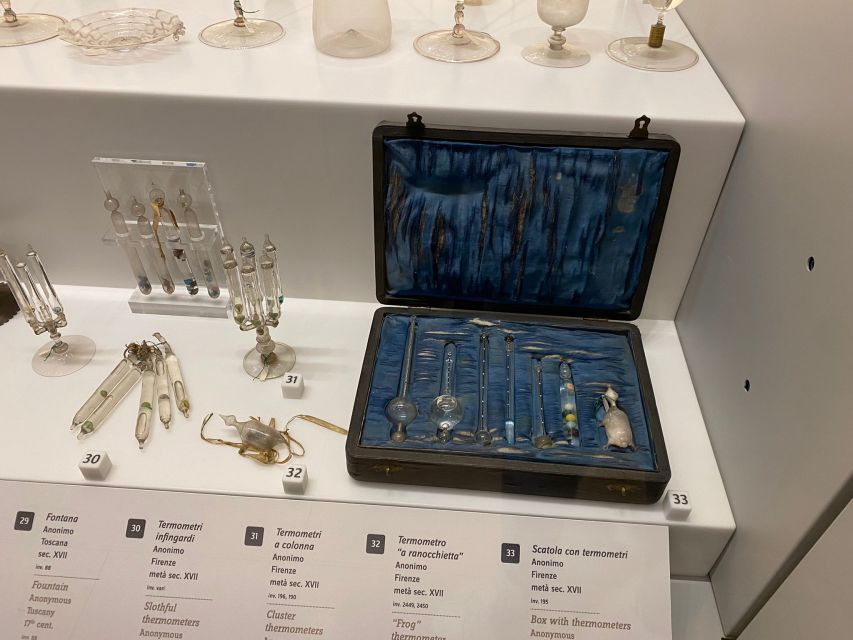
Thermometers tell a similar story. The idea of recording temperature required instruments that could respond consistently and a scale that people could understand. The museum presents these developments alongside other scientific tools, allowing you to see how measurement became more precise.
This part of the tour may be particularly helpful if you are visiting with children. The objects provide an easy way to discuss how people solved practical problems before modern technology. The guide can explain the basic purpose of each instrument, while the displays and videos provide further detail if you choose to stay longer.
More private tours in Florence:
- Cinque Terre and Pisa Tower Tour from Florence Semi Private
★ 5.0 · 1,406 reviews - From Florence: Private Chianti Hills Tour with Tasting
★ 4.3 · 809 reviews - Private Self-Guided E-Bike Ride in Tuscany with Vineyard Visit
★ 5.0 · 775 reviews - Florence Private Transportation in Rickshaw
★ 5.0 · 730 reviews
Optics, Electrostatics, and Old Scientific Games
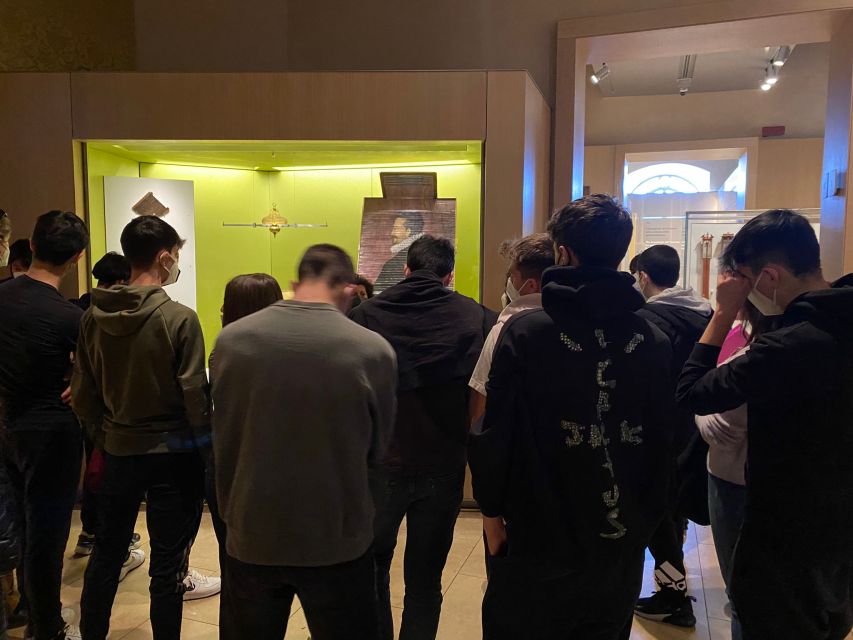
The collection also introduces optics and electrostatics. These subjects can feel technical, but the museum uses instruments and demonstrations to make them more approachable.
Optics connects naturally to Galileo’s telescope. It deals with light, lenses, and the way instruments change what the eye can see. Once you have looked at the telescope, the displays about optics help explain why the instrument mattered.
Electrostatics offers another change of subject. It shows how scientists investigated forces that could not be seen directly. You may find these displays more useful when the guide explains the principle in plain language rather than rushing through names and dates.
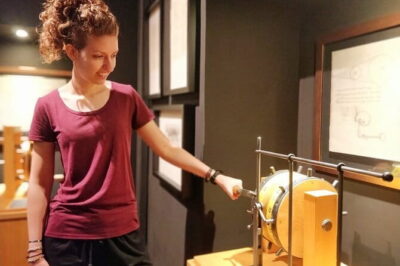
The museum also includes games from the past. This is a welcome change of pace, especially for families. Children can see that scientific curiosity was not separated from play and experimentation. Adults may enjoy these objects too, since they show how people learned through hands-on amusement as well as formal study.
What the Private Format Really Gives You
A private tour means your group has the guide’s attention. You are not tied to a large crowd, and you can ask for more background when a display catches your interest.
That does not mean the guide can explain every scientific detail in the museum within 90 minutes. The tour is strongest when you want the historical and cultural frame: Galileo’s connection to the Medici court, the growth of the collection, and the purpose of the instruments.
If your main goal is to understand exactly how each device works, plan extra museum time. The museum app includes useful scientific video explanations for the main displays. A good strategy is to take the guided tour first, then spend another two hours exploring independently with the app if astronomy and physics are major interests.
Some visitors may prefer a shorter guided visit of about 45 minutes followed by self-guided time. That is not the format described here, but the point is worth keeping in mind when planning your day. A private 1.5-hour tour gives you more personal attention, while independent viewing gives you more control over technical detail.
Is $159 Per Person a Fair Price?
At $159 per person, this is not a budget museum entry. The price includes fast-track admission, reservation fees, a professional guide, and headsets, but not food, drinks, or transport.
The value depends on what you want from the museum. If you want a quick orientation, a private guide, and the chance to ask questions about Galileo and the collection, the cost can make sense. You are paying for personal guidance and time saved at the entrance, not just a ticket.
The price is harder to justify if you plan to spend most of your time watching videos and studying technical displays on your own. In that case, a self-guided visit may offer more freedom, provided you are comfortable finding your way through the collection without a private explanation.
I would recommend this tour most strongly for first-time museum visitors, families, and anyone interested in the connection between science, rulers, and Renaissance Florence. Serious astronomy fans should consider adding independent museum time to get full value from the displays.
Timing, Meeting Point, and Access
Arrive 15 minutes before the scheduled start. Before the tour begins, exchange your voucher at the ticket office and look for the City Florence Tours office, where you will meet the guide.
The express security entrance helps reduce waiting, but it does not remove the need to arrive early. A late arrival could make the check-in process stressful, particularly if you are fitting the museum between other Florence appointments.
Wear comfortable walking shoes. You will be inside the museum for the full 1.5 hours, and standing or moving between displays may be tiring.
The activity information says the museum is wheelchair accessible, but it also lists the tour as unsuitable for people with mobility impairments. That is an important inconsistency. If you need step-free access or have specific mobility needs, confirm the current arrangements with the provider before booking rather than relying on the general accessibility label.
The tour is offered in English, Spanish, German, Italian, and French. Headsets are included, which can help you hear the guide clearly while looking at objects in the galleries.
Who Will Get the Most From This Visit?
You will get the most from this experience if you enjoy the story behind scientific objects. The tour is a good fit for someone who wants to understand why Galileo mattered, how the Medici supported scientific work, and how early instruments helped people measure the natural world.
Families can also do well here. The old games, globes, and unusual instruments give children plenty to look at, and the guide can turn unfamiliar objects into a story about observation and invention.
This is less ideal for someone who wants a quiet, fully self-guided museum visit. It may also feel too short for a specialist who wants to study every instrument in detail. The best plan for that visitor is to treat the private tour as an introduction and leave extra time for the museum app and independent viewing.
The experience has a 4.5 rating from 21 bookings, which fits its main strength: the guide can bring order and historical meaning to a complicated collection. Just keep your expectations clear. This is not a complete technical course in astronomy.
Should You Book the Museo Galileo Private Tour?
Book it if you want a focused introduction to Galileo, original scientific instruments, and Florence’s Medici-era interest in science. The private format, fast-track entry, and choice of five languages make it a practical option when your Florence schedule is tight.
Think twice if you want to spend hours studying videos, experiments, and detailed scientific explanations. You may prefer a self-guided visit, or you can combine that approach with this tour by allowing extra time afterward.
For most first-time visitors, I would choose the private tour if the price fits your budget. It gives you the story, points out the objects worth seeing, and helps you understand why the museum matters. Just do not rush away when the guide finishes. The best technical explanations may be waiting in the app.
FAQ
How long does the Museo Galileo private tour last?
The tour lasts 1.5 hours.
What is included in the tour price?
The price includes fast-track entrance tickets, reservation fees, a professional tour guide, and headsets.
Is hotel pickup included?
No. Hotel pickup and drop-off are not included.
Which languages are available?
The live tour guide is available in English, Spanish, German, Italian, and French.
Where do I meet the guide?
You must exchange your voucher at the ticket office first, then go to the City Florence Tours office and meet the guide inside.
How early should I arrive?
Arrive 15 minutes before the activity begins.
Can I take photographs inside the museum?
Yes. Photography is allowed, but flash photography is not permitted because it can harm the artifacts.
Is the museum wheelchair accessible?
The information provided says the museum is fully wheelchair accessible, but the activity is also listed as unsuitable for people with mobility impairments. Confirm your specific access needs with the provider before booking.
Can I cancel for a full refund?
Yes. You can cancel up to 24 hours in advance for a full refund.
Do I have to pay when I book?
No. The reserve-now, pay-later option lets you book your place without paying immediately.
Recently added around Florence
- Accademia and Uffizi Small-group Guided Tour★ 4.5 · 8 reviews
- The David from Michelangelo.★ 5.0 · 3 reviews
- Combo: Accademia + walking + Uffizi Galleries Guided Tour★ 3.5 · 6 reviews
- The Complete Wine Tour Brunello, Nobile, Chianti wine experience★ 4.0 · 7 reviews
- The Best of Tuscany in 3 Days★ 4.5 · 13 reviews
- The Cooking Lab – Authentic Food Experience★ 5.0 · 113 reviews
- Florence Central Market Food Tour – Private Tour★ 4.0 · 7 reviews
- Family Friendly Florence Private City Tour★ 5.0 · 47 reviews
Galileo and Leonardo Museum Tours, compared.
Skip the Line: Galileo Museum Ticket in Florence
Read our review →
Express Uffizi Gallery and Leonardo da Vinci Museum
Read our review →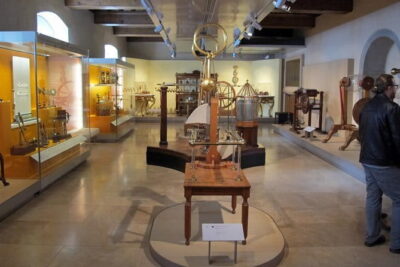
Browse the lists this tour appears in