
Reviewed · GALILEO AND LEONARDO MUSEUM TOURS
Leonardo Da Vinci Museum Entrance Ticket
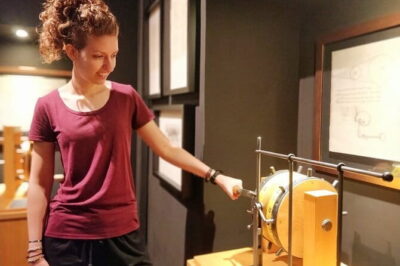
Leonardo da Vinci’s notebooks leap off the page here. At the Museo Leonardo Da Vinci, more than 50 models show how his ideas about flight, warfare, construction, anatomy, and mechanics might have worked. Many are working replicas, so this feels less like looking at framed sketches and more like testing the mind behind them.
I like two things right away: the central Florence location makes this an easy stop between major sights, and the hands-on displays give children and curious adults something to do. The price is also reasonable at $12.55 for a visit that usually takes an hour to an hour and a half.
The main caution is simple: this is an inventions museum, not a gallery of Leonardo’s original paintings. Most displays are models based on his designs, and some adults looking for original objects or deeper scholarly detail may find the visit fairly light.
Key points to know before you go
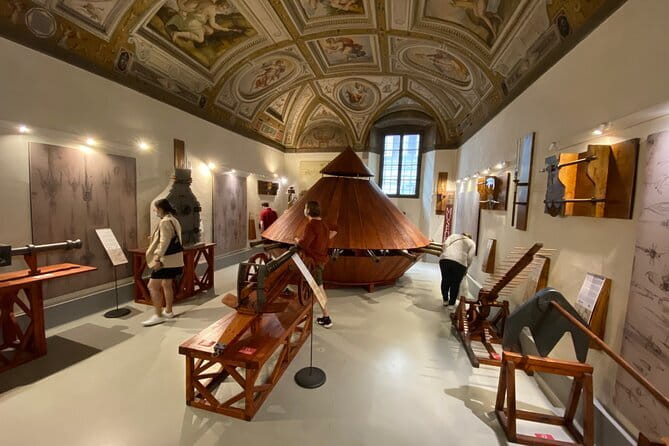
- More than 50 models fill four rooms, covering civil machines, flying machines, military devices, and anatomical studies.
- Many replicas can be operated, though not every exhibit is hands-on and some interactive pieces may not be working.
- The visit is self-guided, so you can move quickly or spend extra time reading and testing mechanisms.
- Plan on 60 to 90 minutes, making it easy to fit into a busy day in Florence.
- Families get the most from it, thanks to interactive displays and a children’s building area.
- Check the city carefully when booking, since Leonardo museums in Florence, Rome, Milan, and Venice can be confused with one another.
What this Florence museum actually focuses on
This museum is devoted mainly to Leonardo the inventor and investigator. You will not come here to see the Mona Lisa or a major collection of his paintings. Instead, you will see physical interpretations of ideas found in his notebooks and drawings.
That distinction matters. Leonardo is often presented first as a painter, but his work reached into engineering, architecture, music, anatomy, physics, and military design. The museum gives those less familiar sides of him the most room.
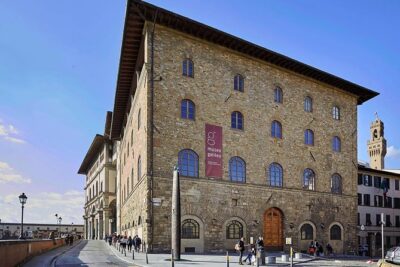
The collection is housed at the Galleria Michelangelo, in one of Florence’s well-known central streets. The building was once associated with the Macchiaioli, the Italian artists who met at Caffè Michelangiolo. The setting adds a small piece of Florence’s artistic story before you even reach the machines.
You will also find large-screen documentaries about Leonardo’s life and work. These provide useful background, especially if you arrive without having read much about him. Still, this is not a guided lecture. You set your own pace and decide which machines deserve your attention.
More Galileo and Leonardo museum visits:
- Florence: Leonardo Interactive Museum Entry Ticket
★ 4.5 · 11,763 reviews - Florence: Museo Galileo Entry Ticket
★ 4.5 · 1,422 reviews - Leonardo Interactive Museum® Entrance Ticket
★ 4.5 · 583 reviews
Four rooms, four different sides of Leonardo
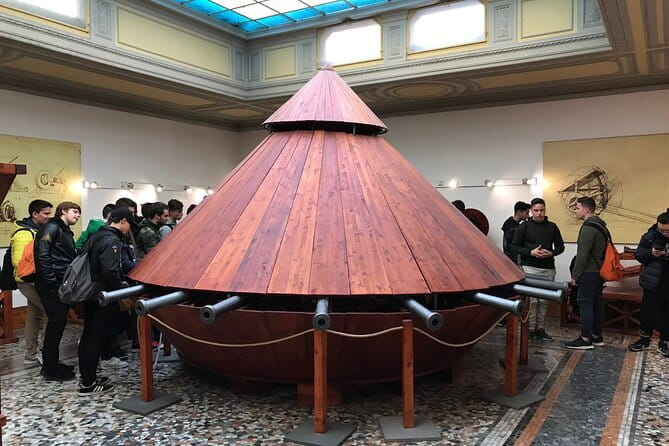
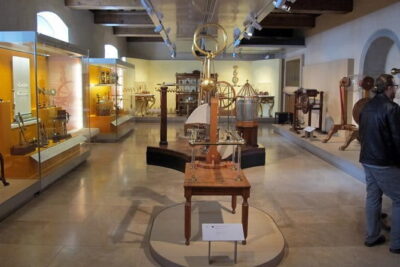
The visit is arranged across four rooms, each with a clear theme. That makes the museum easy to follow and helps prevent Leonardo’s many interests from blending into one long row of gadgets.
Civil machines and engineering ideas
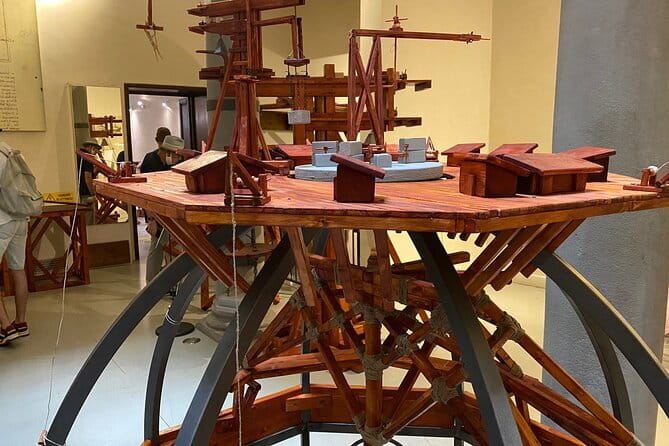
The largest room is devoted to civil machines. This is where you will find models linked to construction, movement, lifting, and practical engineering.
These displays help you see Leonardo as a problem solver. He was not simply sketching fanciful devices. He was studying how force, weight, balance, and motion could be used. Even when a design never reached full construction, the model lets you consider the question he was asking.
This room can reward careful reading, but it may also be the least instantly exciting for young children. If your family is eager to touch and move things, you may want to pass through the explanatory material first, then return to the machines that catch your eye.
Flying machines
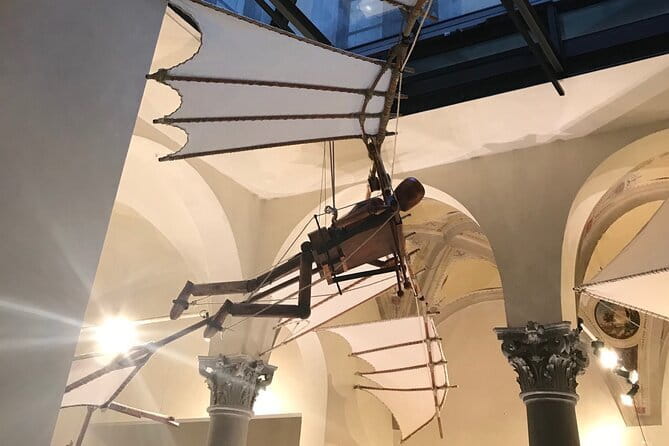
The second room turns to flight. Leonardo studied birds, wings, air, and the possibility of human flight centuries before airplanes existed.
The models make his thinking easier to grasp than a drawing alone. You can compare the shape of his ideas with the natural forms he was trying to copy. The displays are not proof that his flying machines would have worked as planned, but they show how boldly he approached a problem that had no practical answer in his time.
This section is a good reason to visit even if you are not especially interested in military history or art. It presents Leonardo as an observer of nature and an early engineer of the impossible.
More museums and galleries in Florence:
- Florence: Skip-The-Line Uffizi Gallery Timed Entry Ticket
★ 4.5 · 27,832 reviews - Florence Accademia Gallery Tour with Entrance Ticket Included
★ 4.5 · 6,148 reviews - Uffizi Gallery Small Group Tour with Guide
★ 4.5 · 4,923 reviews - Florence: Accademia Gallery Guided Tour
★ 4.6 · 4,156 reviews
War machines
The third room contains military designs. Expect machines connected with defense, weapons, and battlefield strategy.
This part may interest adults who want to understand the practical side of Leonardo’s employment and commissions. It also gives older children a clear sense that Renaissance invention was not always peaceful. Leonardo’s talents could be applied to fortifications and weapons just as readily as to bridges or musical devices.
Some visitors may find this room more visually striking than the civil machines. It is also a useful reminder that Leonardo’s genius existed within the politics and conflicts of his period.
Anatomical models
The fourth room contains the newer collection of anatomical models. Here the focus shifts from machines to the human body.
Leonardo’s anatomical studies show the same close observation found in his engineering sketches. The models help connect his work in art and science, since understanding muscles, bones, and structure mattered to both.
This room may be less suitable for very young children, depending on their interests. It is also one of the museum’s more valuable sections for anyone who wants to see how Leonardo crossed boundaries between art, medicine, and scientific study.
Why the working replicas matter
The museum’s biggest strength is its physical approach. A drawing of a gear or lifting device can look impressive, but a model that turns, moves, or demonstrates a principle gives you a better sense of what Leonardo was trying to solve.
I like this format because it rewards curiosity rather than prior knowledge. You do not need to understand Renaissance engineering before arriving. You can watch a mechanism, read the short explanation, and start to see how the parts relate.
Do keep your expectations in check. These are replicas and interpretations, not Leonardo’s original machines. One disappointing experience can come from expecting authenticated artifacts or a museum filled with original manuscripts. That is not what this attraction offers.
The hands-on quality also varies. Some exhibits are designed for interaction, while others are for looking only. A few interactive elements may not be operating perfectly at the time of your visit. The experience works best when you treat it as a practical learning display rather than a formal art museum.
A good Florence stop for families
Families are likely to get the strongest value here. Children can see machines move, test selected devices, and spend time in a building area designed for them. That gives young visitors a break from the quiet, no-touch rules found in many traditional museums.
The museum also helps answer a common family travel problem: how do you make Renaissance culture interesting to children who are tired of paintings and churches? Mechanical models give them something concrete to examine.
Adults should not dismiss it as only a children’s attraction. The range of subjects is broad, from anatomy to music, architecture, and military engineering. Still, if you want original art, advanced historical analysis, or a large institutional museum, this may feel modest.
The visit can be especially useful at the start of a Florence sightseeing day. It introduces Leonardo’s work in a direct way, then leaves you free to connect what you saw with the city’s wider art and architecture. You can also use it as a short indoor break on a hot day, since the museum can be completed in about an hour.
How long to stay and how to plan your time

Set aside one hour to one and a half hours. You can move faster if you mainly want to see the models, or take longer if you read the explanations and test each available mechanism.
There is no need to build the entire day around this museum. Its compact format works well before or after another central Florence sight. Flexible entry during opening hours makes planning easier, though you should follow the admission instructions attached to your ticket.
The stated opening hours are 10 AM to 6 PM daily from June 29, 2023, through February 16, 2027. The experience is offered in English, and the attraction is near public transportation.
A small group limit of 20 people applies to the activity. Since this is a self-guided museum rather than a scheduled walking tour, the limit may matter less than it would on a guided excursion. Still, pre-booking is sensible during busy periods if you want to reduce the chance of waiting.
The location, bookshop, and café
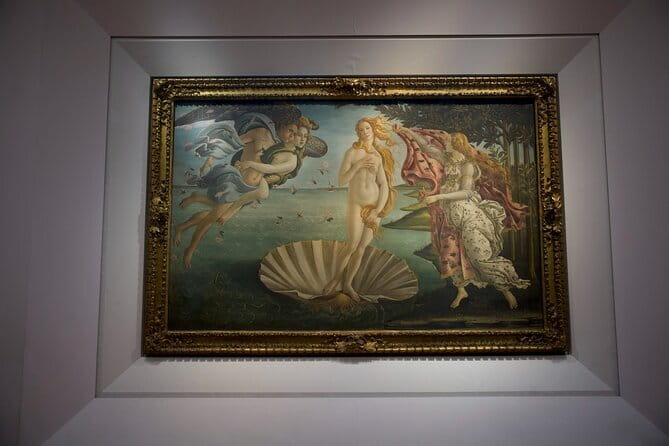
The Galleria Michelangelo location is one of the museum’s practical advantages. It is in central Florence and close to major tourist sights, so you can reach it without giving up half a day to transport.
Inside, a bookshop sells publications and Leonardo-themed gadgets. This is a useful stop if you want a book to explain the inventions in greater detail, or a small souvenir for a child who enjoyed the models.
The exhibition area also has an agreement with Caffè Michelangiolo, a restaurant inside the exhibition area. Food and drinks are not included in the ticket, so plan to pay separately if you use it.
The building itself has painted ceilings, which add a little visual interest beyond the machines. Do not expect a grand palace or a vast gallery. The appeal is the combination of an old Florence setting with accessible models of Leonardo’s ideas.
Is $12.55 a fair price?
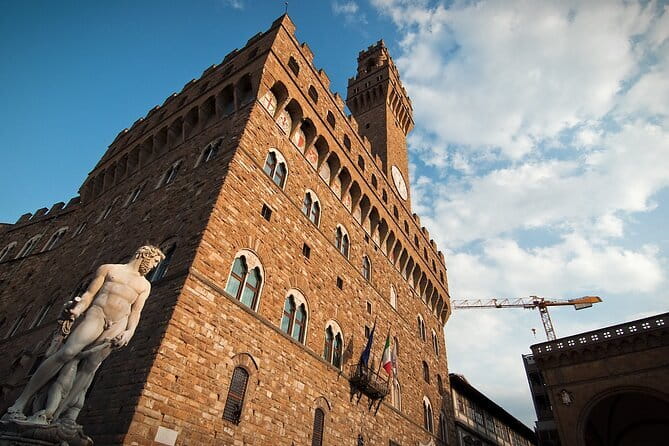
At $12.55 per person, I consider this a fair buy for the right visitor. A one-hour museum stop in central Florence can be useful when you want something educational without committing to a major museum complex.
The value is strongest for families, engineering fans, children who like to build things, and adults who want a quick introduction to Leonardo beyond his paintings. The hands-on elements make the admission feel more worthwhile than a display of static reproductions alone.
The value is weaker if you are looking for original Leonardo works, rare documents, or a large collection requiring several hours. Since most models are replicas, the museum cannot offer the same level of authenticity as a major art or manuscript institution.
I would also compare it with your other Florence priorities. The city is full of world-class art, and your time is limited. This museum earns its place when you want a change from paintings and churches, or when your children need a more active stop.
Important booking detail: Florence is not Milan, Rome, or Venice
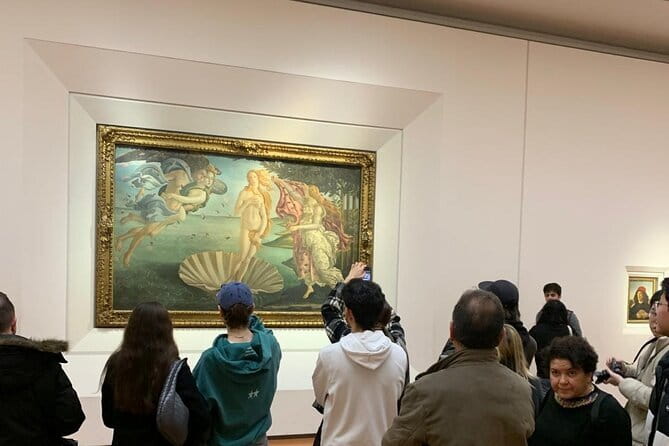
Be very careful when selecting your ticket. There are Leonardo da Vinci museums in several Italian cities, and a booking for Florence will not work at a museum in Rome, Milan, or Venice.
This is the single most serious practical risk attached to the experience. Check the city name, museum name, and meeting information before paying. If you make a mistake, changes made less than 24 hours before the start time are not accepted, and a refund may not be available.
The ticket allows free cancellation up to 24 hours before the experience begins. The cut-off uses local time, so do not leave a cancellation or change until the last minute.
Who should book this museum?
I would choose this attraction for:
- Families with children who enjoy machines and building activities
- Adults curious about Leonardo’s engineering and anatomy
- Visitors wanting a short indoor stop in central Florence
- People who prefer self-guided visits and flexible pacing
- Anyone looking for a reasonably priced break from major art museums
I would think twice if you mainly want original paintings, rare artifacts, or a detailed scholarly presentation. The museum presents Leonardo’s ideas through replicas, films, labels, and interactive devices. That can be lively and useful, but it is not the same as seeing original Renaissance objects.
Should you book the Leonardo da Vinci Museum?
Book it if you want an accessible, hands-on look at Leonardo’s inventions and have an hour to spare in central Florence. The machines, four-room layout, documentaries, and children’s area give the visit a clear purpose, and the $12.55 price is reasonable for a compact family-friendly attraction.
Skip it if your priority is Leonardo’s art or original material. Also skip it if you are likely to confuse the Florence museum with one in another Italian city. For the right audience, this is a smart, manageable stop that turns Leonardo’s sketches into something you can see and, in many cases, operate.
FAQ
How much does admission cost?
The listed price is $12.55 per person.
How long does the museum visit take?
Plan on approximately one hour to one hour and 30 minutes.
What are the opening hours?
The stated opening hours are 10 AM to 6 PM, Monday through Sunday.
Is the visit guided?
The museum visit is self-guided. You can enter during opening hours and explore at your own pace.
Is the experience offered in English?
Yes. The experience is offered in English.
What is included with the ticket?
Admission to the Leonardo da Vinci Museum is included.
Are food and drinks included?
No. Food and drinks are not included in the admission ticket.
Is hotel pickup and drop-off included?
No. Hotel pickup and drop-off are not included.
Can children participate?
Yes. Most people can participate, and the museum includes hands-on displays and a children’s building area.
Can I cancel for a refund?
Yes. You can cancel at least 24 hours before the experience start time for a full refund. Cancellations or changes made less than 24 hours before the start time are not accepted for a refund.
Recently added around Florence
- Accademia and Uffizi Small-group Guided Tour★ 4.5 · 8 reviews
- The David from Michelangelo.★ 5.0 · 3 reviews
- Combo: Accademia + walking + Uffizi Galleries Guided Tour★ 3.5 · 6 reviews
- The Complete Wine Tour Brunello, Nobile, Chianti wine experience★ 4.0 · 7 reviews
- The Best of Tuscany in 3 Days★ 4.5 · 13 reviews
- The Cooking Lab – Authentic Food Experience★ 5.0 · 113 reviews
- Florence Central Market Food Tour – Private Tour★ 4.0 · 7 reviews
- MaMa Florence: The Art of Corzetti – Hands-On Pasta Class★ 5.0 · 15 reviews
Galileo and Leonardo Museum Tours, compared.
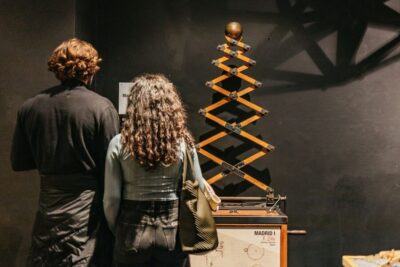
Skip the Line: Galileo Museum Ticket in Florence
Read our review →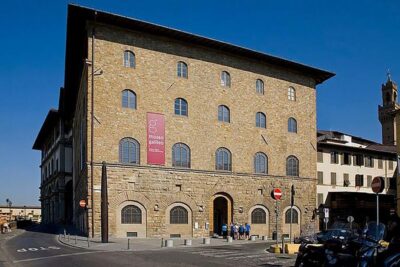
Express Uffizi Gallery and Leonardo da Vinci Museum
Read our review →
Browse the lists this tour appears in