
Reviewed · SANTA CROCE AND FLORENCE CHURCHES
Express Florence – Medici Chapel & Highlights Walking Tour
Florence packs a remarkable amount of art into a small walk. This tour links the political heart at Piazza della Signoria with the Duomo, Ponte Vecchio, Mercato Centrale, and the Medici burial church at San Lorenzo. You get a useful first look at the city without spending half a day on a bus.
I like two things here. First, the route gives you both famous sights and smaller details, from the replica of David to the old Roman line of Via Capaccio. Second, guides such as Antonio, Anthony, Emilia, and Aldo bring strong local knowledge and can adjust the talk to your interests. The possible drawback is the pace: 90 minutes is short for this much Florence, and the walk includes cobbles, stairs, slopes, and long stretches on foot.
Key points to know before you book
- David without the museum wait: See Michelangelo’s famous statue replica in Piazza della Signoria, along with major Renaissance sculptures in the open air.
- A broad Florence sampler: The route covers political squares, medieval streets, the Arno crossing, food markets, the Duomo, and Medici sites.
- Medici Chapel access costs extra: Priority entry is available only with the fast-track upgrade, which extends the tour to about 2 hours 30 minutes.
- Small group size: The tour allows a maximum of 20 people, though some departures may feel much smaller.
- Strong guide element: Antonio, Anthony, Emilia, and Aldo are among the guides praised for clear storytelling, local advice, and a warm manner.
- Wear real walking shoes: Expect uneven paving, cobblestones, inclines, declines, and stairs in all weather.
What this Florence walk does well
The route works as a fast orientation to Florence. You begin at Piazza della Signoria and finish inside the Basilica of San Lorenzo, moving through the historic center rather than simply checking off one indoor attraction.
That matters because Florence is best understood as a connected city. The square where rulers displayed power leads to merchant streets, a bridge lined with shops, the cathedral complex, and the church tied to the Medici family. You see how art, government, religion, and trade occupied the same compact area.
The guide is central to the experience. Antonio is praised for explaining statues, local events, and lesser-known corners. Anthony is noted for an engaging style and broad command of the city’s art. Emilia is described as warm and full of enthusiasm, while Aldo has helped adjust the pace for a participant who could not walk quickly.
You should not expect a private tour by default. The maximum group size is 20, but some departures may be much smaller. One reported departure became a tour for just two people, though that should be treated as a pleasant possibility, not a promise.
More churches and chapels in Florence:
- Florence: Santa Monaca Church Italian Opera Concert Ticket
★ 4.7 · 2,692 reviews - Florence: Santa Maria Novella Entry Ticket & Audioguide
★ 4.3 · 717 reviews - Italian Opera Concert Ticket in Florence’s Santa Monaca Church
★ 4.5 · 602 reviews
Piazza della Signoria and Palazzo Vecchio
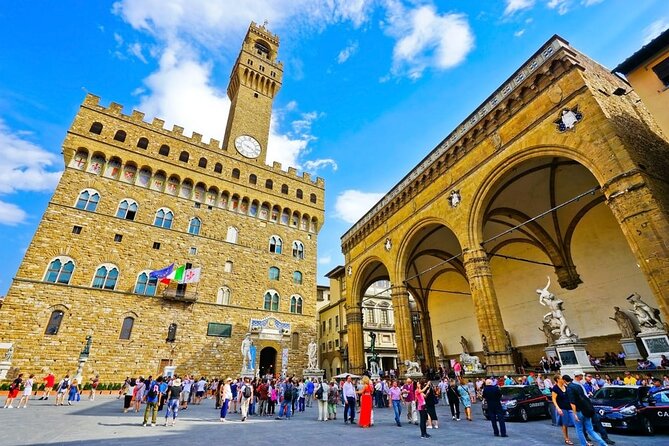
The tour begins at Piazza della Signoria, Florence’s great civic square. It is an excellent starting point because you immediately encounter the city’s political past in the open air.
The Loggia dei Lanzi acts like a free sculpture gallery beside Palazzo Vecchio. You can see Benvenuto Cellini’s Perseus with the Head of Medusa and Giambologna’s Rape of the Sabine Women among other works. The setting helps you understand how Florence used public art to project wealth and authority.
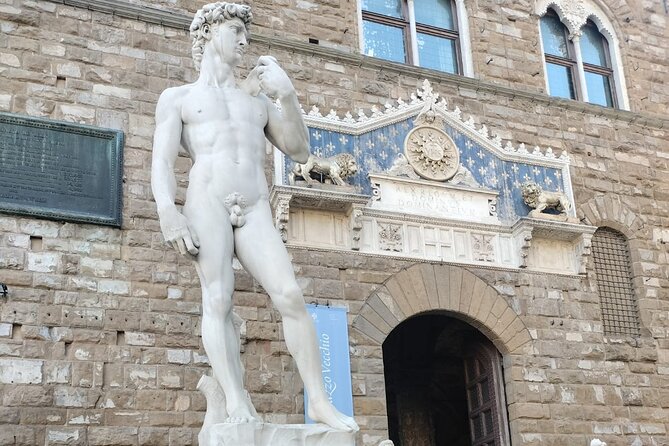
Near the Palazzo Vecchio entrance is a copy of Michelangelo’s David. The original moved to the Accademia Gallery for protection, so this replica is not a substitute for seeing the marble original indoors. Still, it gives you the correct setting: David once represented the strength and independence of Florence in this very square.
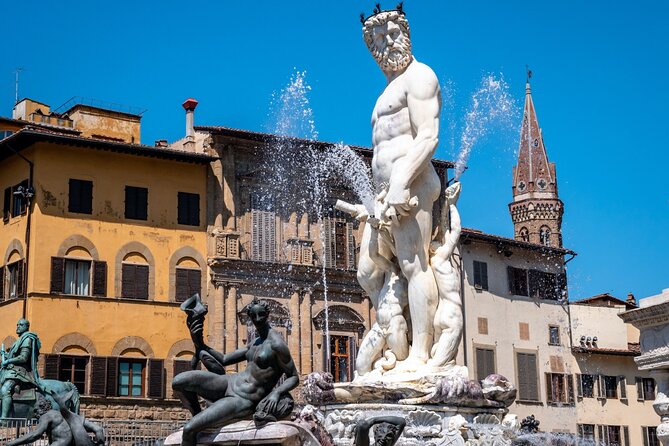
The Fountain of Neptune adds another layer of civic decoration. Your guide can help connect the statues, palace, and square rather than leaving you to stare at a collection of names and dates.
You spend about 10 minutes in the piazza, followed by another 10 minutes focused on Palazzo Vecchio. The palace is not entered as part of the standard tour, and admission is not included. That keeps the route moving, but you should know that the interior rooms and Renaissance decoration require a separate visit.
Orsanmichele and the old city streets
From the civic square, the route continues to the Church and Museum of Orsanmichele. Its unusual shape is part of the appeal. The building dates to 1290 and is nearly square, with Gothic marble decoration that looks quite different from Florence’s great basilicas.
This is the sort of stop that benefits from a guide. On your own, you might pass it without realizing that a church and museum occupy such a distinctive building. The scheduled visit is about 10 minutes, so expect an introduction rather than a long examination of the interior.
You then reach Piazza della Repubblica, a broad urban space that sits over the former Roman forum and later medieval city center. The stop lasts about five minutes. It is brief, but it gives you a useful sense of how Florence changed from Roman settlement to medieval commune and later modern city.
The walk between these points is part of the lesson. Florence’s historic center is compact enough to cover on foot, but the paving can be hard on your legs. Wear shoes with a firm sole, especially if you plan to keep exploring after the tour.
Ponte Vecchio and Via Capaccio
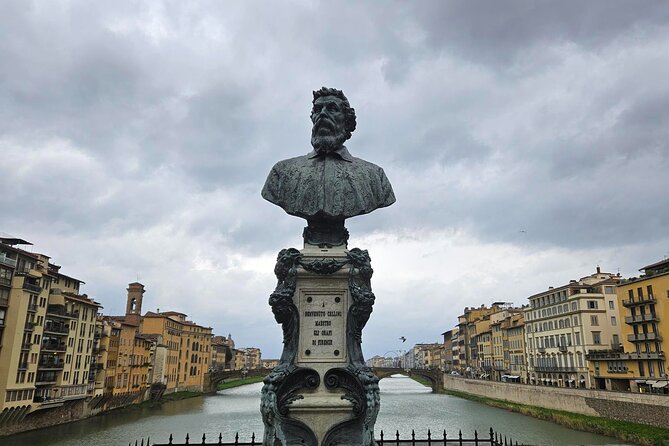
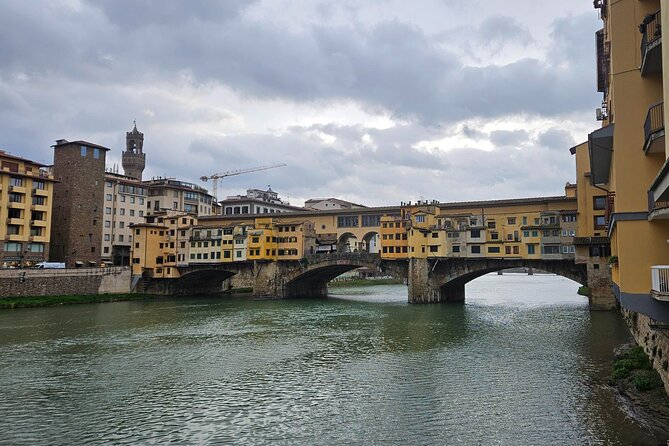
Ponte Vecchio is the route’s most familiar crossing. The bridge dates to the 14th century and is closely linked with the Medici period. Its shops and narrow passage make it one of Florence’s most recognizable scenes, but the bridge is more useful when you understand its place in the city’s movement between the two sides of the Arno.
The tour allows about 10 minutes here. That is enough to cross and hear the main story, but not enough for an extended look at every shop or a slow pause by the river. If you want photographs, take them efficiently and stay with the group.
After the bridge, the walk includes Via Capaccio, described as a former Roman street, with Renaissance and medieval towers along the way. This is a good counterpoint to the grand monuments. Florence is not only domes and famous statues. Its older street plan and tower houses show how closely packed the medieval city was.
The route also points out Florence’s towers, including the D’Arnolfo Tower. Exact viewing time depends on the group’s movement, so do not expect a dedicated tower climb. The value here is the guide’s ability to help you notice features you might otherwise overlook.
More Medici family tours in Florence:
- The Best tour in Florence: Renaissance & Medici Tales – guided by a STORYTELLER
★ 5.0 · 12,316 reviews - The Best Tour in Florence: Renaissance and Medici Tales
★ 5.0 · 10,810 reviews - Florence: Renaissance and Medici Tales Guided Walking Tour
★ 4.8 · 1,549 reviews - Florence: Mysteries of the Medici Guided Walking Tour
★ 4.4 · 940 reviews
Mercato Centrale and the city’s everyday side
The Mercato Centrale section shifts the mood from palace and church to commerce. You visit the craft market of Loge Del Mercato and the Fountain of the Boar, then continue through Via del Corso and Via Elisabetta.
The market stop lasts about 15 minutes. It is not a full food tour, and the tour does not promise tastings. Instead, it places Florence’s grand art in the setting of ordinary trade, shopping, and daily movement.
Via Elisabetta is associated with Florence’s oldest tower, dating to the sixth or seventh century. A detail like this gives the walk a sense of depth without requiring another museum ticket. You may find the narrow streets and tower remains more memorable than another formal explanation of Renaissance art.
This section also gives you a chance to ask for practical advice. Antonio is praised for offering suggestions that helped shape the rest of a Florence visit. That kind of local guidance can be worth a good part of the price, particularly if this is your first day in the city.
The Duomo in a concentrated 15 minutes
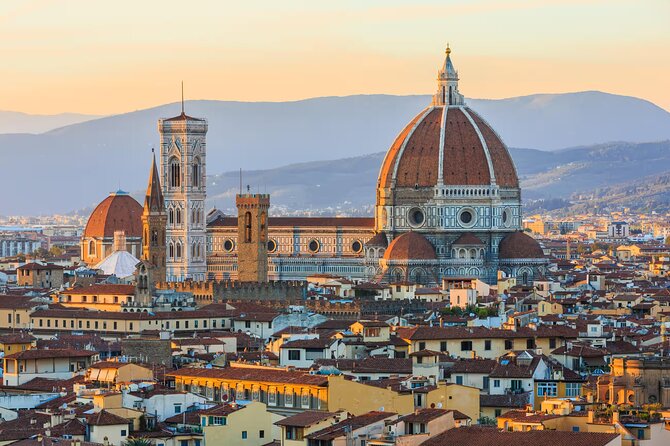
Piazza del Duomo is the spiritual center of Florence and the visual high point of the route. In one square you can see Santa Maria del Fiore, Brunelleschi’s Dome, Giotto’s Bell Tower, and the Baptistery.
The tour does not include a climb of the dome or bell tower. It also does not list interior admission to the cathedral as part of the standard package. The guide instead gives you the outside view and explains how the buildings relate to one another.
That is still valuable. The cathedral complex is easy to experience as a blur of marble, stripes, doors, and crowds. A guide helps you separate the cathedral from the baptistery, identify the bell tower, and understand why Brunelleschi’s dome is such a major part of Florence’s identity.
You also see the Baptistery doors known as the Doors of Paradise. The tour highlights the artistic importance of these doors, but the stop is short, about 15 minutes. If you want detailed time with the cathedral interior, baptistery, or museum, plan a separate visit.
The Duomo area can be busy and difficult for a group to navigate. Stay close to your guide and listen for meeting instructions. This is one place where a small group is much easier to manage than a very large one.
San Lorenzo and the Medici Chapels
The tour ends inside the Basilica of San Lorenzo, a church closely tied to the Medici family. It is one of Florence’s major churches and serves as the burial place of principal Medici family members from Cosimo il Vecchio through Cosimo III.
The final stop is scheduled for about 15 minutes. That makes it an introduction, not a full museum visit. The church itself and the Medici Chapels deserve more time if you care about Medici history, Michelangelo, funerary art, or Renaissance architecture.
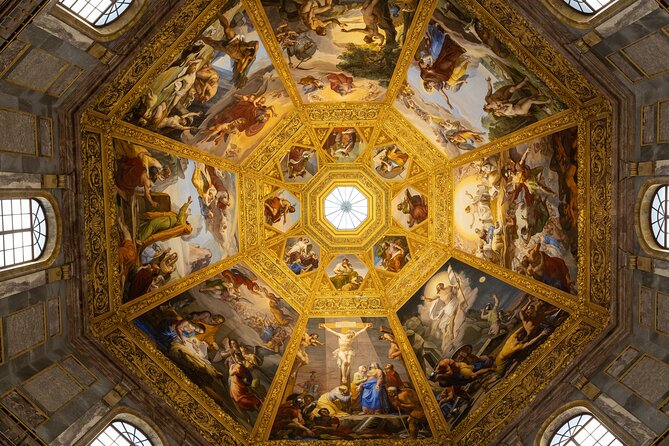
The Medici Chapels include the Sagrestia Nuova, designed by Michelangelo, and the larger Cappella dei Principi, created through cooperation between the Medici family and architects. These spaces give the tour its strongest indoor art connection.
Pay close attention to the booking option. Priority access to the Medici Chapel is not included automatically. It is available only when you choose the fast-track upgrade. That upgraded version lasts about 2 hours 30 minutes instead of 1 hour 30 minutes.
The extra time and entry can make sense if the chapels are a main reason for booking. Without the upgrade, you should not assume that priority admission is part of the standard price. The end point is inside San Lorenzo Church, which is convenient if you want to continue exploring the church and surrounding market district afterward.
Is $58.87 a fair price?
At $58.87 per person, this is not the cheapest way to walk around Florence. You can see Piazza della Signoria, Ponte Vecchio, the Duomo exterior, and several streets without paying for a guide.
The value comes from the explanation and the route design. In 90 minutes, you cover a lot of ground and get context for statues, buildings, streets, churches, and towers. If your time is tight, paying to get oriented can help you use the rest of your stay more wisely.
The price is easier to justify if you want a guide who answers questions and offers advice beyond memorized dates. Antonio and Anthony receive particularly strong praise for their explanations and energy. Emilia is noted for making the city feel personal and welcoming. Aldo has shown patience with a slower pace.
The main limit is that the standard tour does not include all indoor admissions. Palazzo Vecchio and the Medici Chapel are listed with admission not included, and priority chapel entry requires the upgrade. Check the exact option at booking so you can compare the total price with your plans.
Who will enjoy this walk most?
I would choose this tour for a first visit, a short stay, or the first morning of a longer Florence trip. It gives you a map in your head: civic Florence at Signoria, the river crossing, market streets, the cathedral zone, and Medici San Lorenzo.
It also suits families who want history explained in a lively way. Antonio is specifically praised for keeping children interested in Florence’s past. The route may work well for older children who can manage a steady walk, but it is not recommended for people with limited mobility.
You should be in decent health and comfortable walking on uneven surfaces. The tour operates in all weather, so bring suitable clothing. Florence’s stone streets can be tiring even when the distance looks modest.
Book the upgrade if the Medici Chapels are a priority and you want fast-track entry. Choose the standard version if you mainly want a guided city overview and plan to handle indoor museums separately.
Final decision: book or skip?
Book this tour if you want a compact, guide-led introduction to Florence’s central sights, especially if this is your first day. The combination of open-air sculpture, Ponte Vecchio, market streets, the Duomo, and San Lorenzo gives you more range than a single-site visit.
I would be cautious if you dislike walking quickly or want long, quiet time inside museums. The itinerary is full, and the 90-minute version cannot explore every monument in depth.
For the best fit, wear comfortable shoes, confirm the chapel upgrade before paying, and treat the tour as an orientation rather than a complete Florence art experience. With a strong guide such as Antonio, Anthony, Emilia, or Aldo, it can give you the city’s basic structure and several useful ideas for the rest of your stay.
FAQ
How long does the standard tour last?
The standard walking tour lasts approximately 1 hour and 30 minutes.
Is there a longer version with fast-track Medici Chapel entry?
Yes. An optional upgrade includes fast-track entrance to the Medici Chapel and extends the experience to about 2 hours and 30 minutes.
Is priority access to the Medici Chapel included in the basic price?
No. Priority access is included only when you book the upgrade option.
Where does the tour begin?
The meeting point is at P.za della Signoria, 16, 50122 Florence.
Where does the tour end?
The tour ends inside the Basilica of San Lorenzo at Piazza di San Lorenzo, 9.
Is admission to Palazzo Vecchio included?
No. Admission to Palazzo Vecchio is not included.
Is the tour offered in English?
Yes. The experience is offered in English.
Is the tour suitable for people with limited mobility?
It is not recommended for people with limited mobility. The walk includes cobblestones, uneven surfaces, hills, inclines, declines, and stairs.
More walking tours in Florence
- Florence: Guided Walking Tour
★ 4.5 · 3,334 reviews - Skip the line: Uffizi and Accademia Small Group Walking Tour
★ 4.5 · 3,135 reviews - Florence: Guided Walking Tour
★ 4.6 · 1,602 reviews - Florence: Uffizi & Accademia Small Group Walking Tour
★ 4.7 · 1,380 reviews
Recently added around Florence
- Accademia and Uffizi Small-group Guided Tour★ 4.5 · 8 reviews
- The David from Michelangelo.★ 5.0 · 3 reviews
- Combo: Accademia + walking + Uffizi Galleries Guided Tour★ 3.5 · 6 reviews
- The Complete Wine Tour Brunello, Nobile, Chianti wine experience★ 4.0 · 7 reviews
- The Best of Tuscany in 3 Days★ 4.5 · 13 reviews
- The Cooking Lab – Authentic Food Experience★ 5.0 · 113 reviews
- Florence Central Market Food Tour – Private Tour★ 4.0 · 7 reviews
- Family Friendly Florence Private City Tour★ 5.0 · 47 reviews
Santa Croce and Florence Churches, compared.
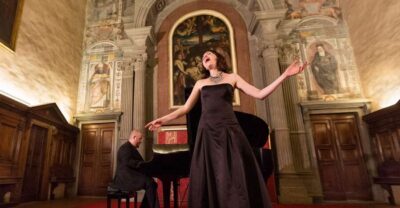
Santa Monaca Church Italian Opera Concert Ticket
Read our review →
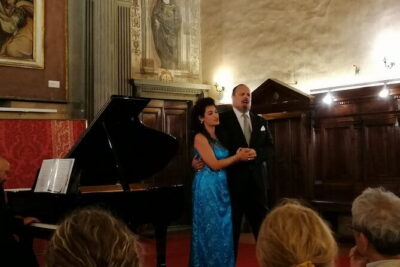
Italian Opera Concert Ticket in Florence’s Santa Monaca Church
Read our review →
Browse the lists this tour appears in