
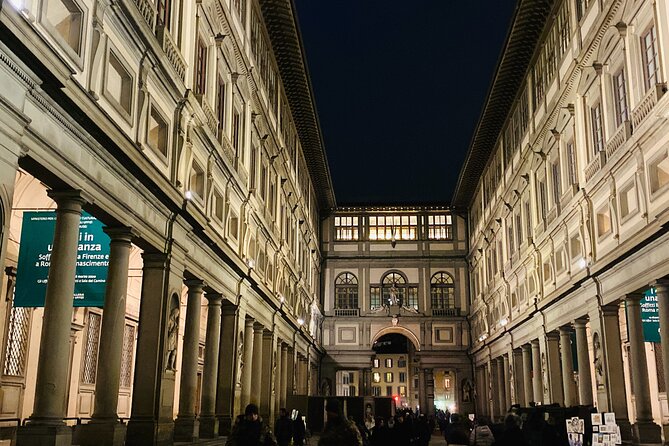
Reviewed · UFFIZI GALLERY TOURS
Uffizi Gallery Tickets: Step into the Heart of Renaissance Art
The Uffizi is Florence’s great art book brought to life. Built around the Medici family collection, it takes you from medieval religious panels to the bold colors of Botticelli, the careful observation of Leonardo da Vinci, and the drama of Caravaggio. Prebooking your timed entry is the main reason to choose this experience, especially when Florence is busy.
I like the freedom to move at your own pace, and I like the range of available time slots. You can spend a focused morning with Botticelli, or give the museum four hours or more and still leave plenty unseen. Artemisia Gentileschi’s Judith and Holofernes is another strong reason to come.
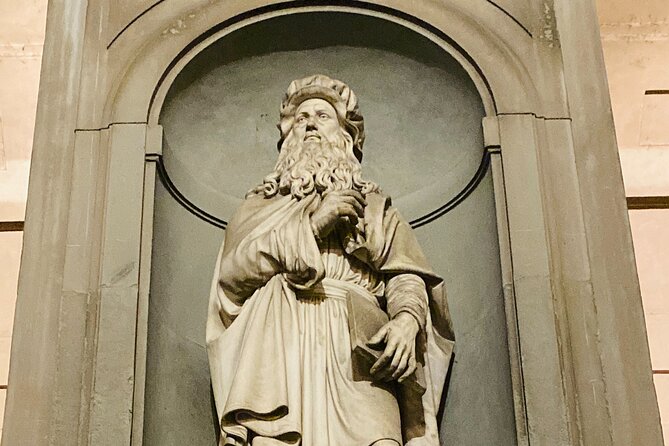
The catch is that this ticket gives you admission, not a guide. The Uffizi is vast, and first-time visitors can easily underestimate it. You also need to find the ticket redemption point by the Leonardo da Vinci statue, and same-day re-entry is not something to count on.
Key things to know before you book
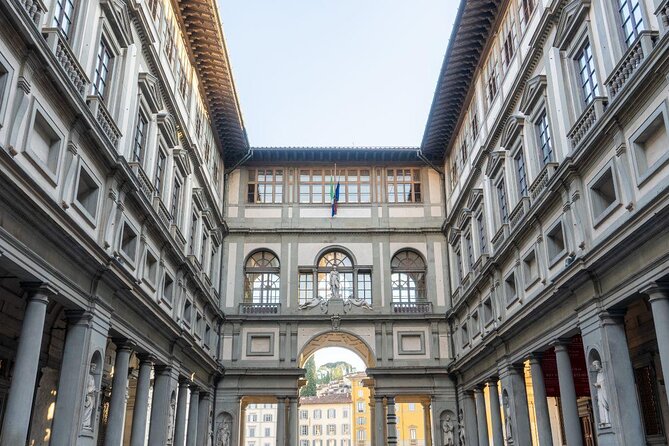
- You are booking timed entry, which helps protect your chosen visit time during Florence’s busiest periods.
- The Medici collection covers centuries of art, from Giotto and Cimabue to Botticelli, Leonardo, Raphael, and Caravaggio.
- Artemisia Gentileschi’s Judith and Holofernes is one of the museum’s most powerful paintings and deserves deliberate attention.
- This is a self-guided visit, so you control the pace but receive no organized tour or expert commentary.
- Plan for most of a day if you want depth, since four hours may only cover about half of the displays.
- The meeting point is at the Leonardo da Vinci statue, at Piazzale degli Uffizi, 209.
Why the Uffizi matters so much in Florence
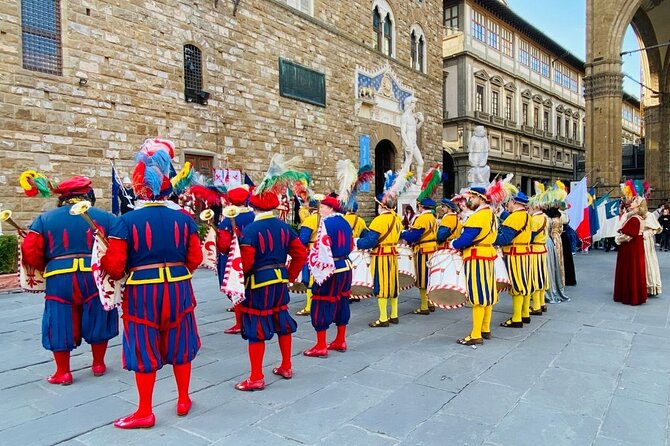
The Uffizi is not simply a room full of famous paintings. It is the record of how European painting changed. You can watch artists move away from stiff, symbolic medieval figures toward more natural bodies, convincing space, emotional faces, and scenes that feel tied to the real world.
The Medici family made this possible in two ways. They commissioned major works, and they preserved them. Their collection grew into one of Europe’s oldest major art holdings, then became Florence’s public inheritance through Anna Maria Luisa de’ Medici, the last surviving member of the family responsible for donating the collection to the city.
That detail gives the museum a human center. When you look at Anna Maria Luisa’s portrait, you are not only seeing another formal image of a wealthy Florentine. You are meeting the person who helped keep the Medici art together in Florence rather than allowing it to scatter into private collections.
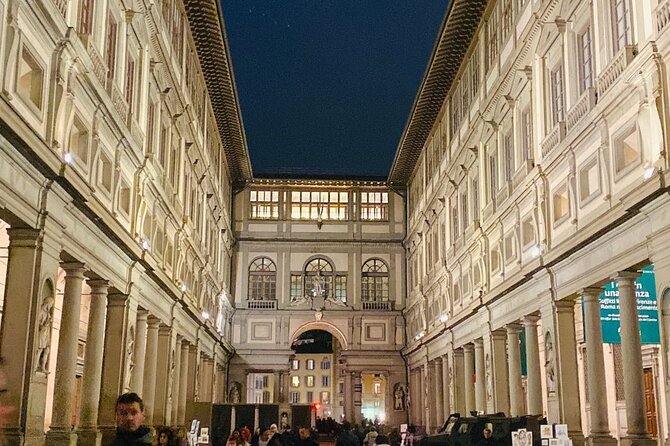
The building itself reinforces this connection. Ancient statues and busts line the corridors, many of them Roman copies of Greek sculptures whose original versions no longer survive. The hallways are part of the visit, not just passageways between rooms. Look up, look down, and take time with the sculpture as you move through the galleries.
More ways into the Uffizi:
- Florence: Skip-The-Line Uffizi Gallery Timed Entry Ticket
★ 4.5 · 27,832 reviews - Florence: Uffizi Priority Ticket & Masterpieces Audio App
★ 4.2 · 6,402 reviews - Florence: Skip-the-Line Uffizi Small Group Tour
★ 4.6 · 5,926 reviews
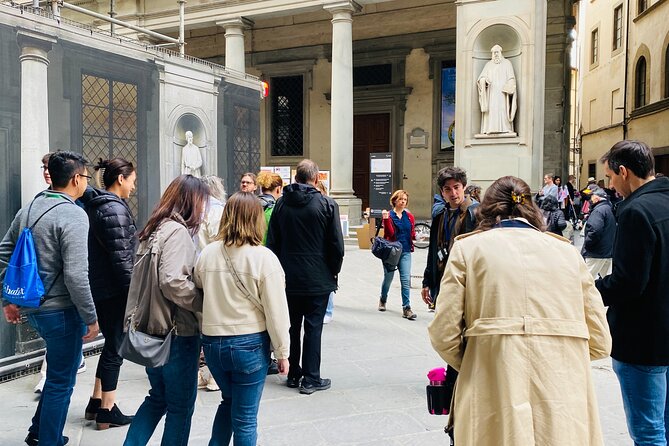
Your visit begins at the Leonardo da Vinci statue
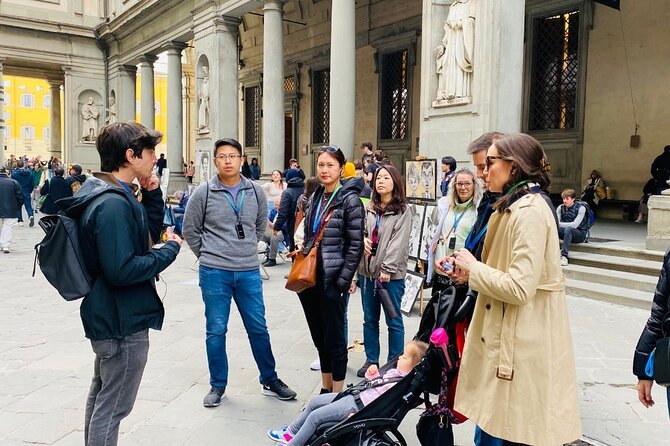
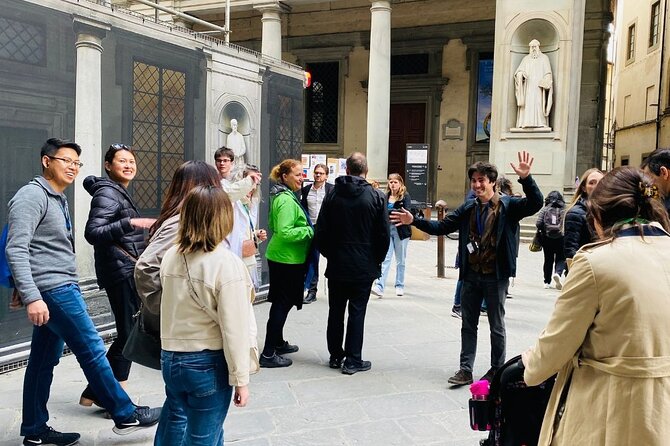
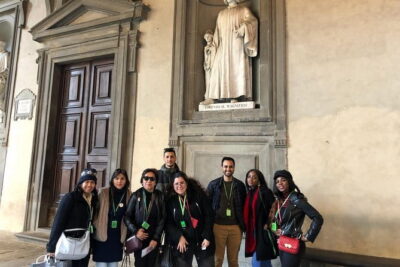
Your ticket redemption point is the statue of Leonardo da Vinci at Piazzale degli Uffizi, 209, in Florence. This is the place to make sure you are in the right location before your selected entry time.
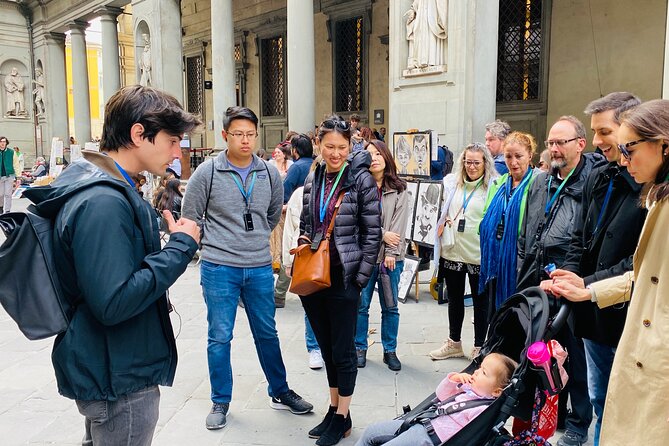
The Uffizi is in the historic center, and the surrounding area can feel confusing if you are trying to locate a specific statue among the galleries and public spaces. Give yourself extra time to find the meeting point. One disappointing part of this experience can be simple confusion at the start, not the museum itself.
Once your ticket is handled, you enter for the time slot you selected. The operator guarantees skip-the-line entry even during peak season, except when delays or strikes by museum management interfere. That promise is valuable in Florence, where an hour spent waiting outside is an hour lost from the collection.
This is not a guided tour. You will not have a named guide leading you from room to room, and no transportation, food, drinks, or hotel pickup is included. That keeps the visit flexible, but it also means you should arrive with a basic plan.
The medieval rooms show where Renaissance art began
Start by giving the earliest rooms more attention than you might expect. Works by Giotto, Cimabue, and Duccio di Buoninsegna show the development of Italian painting before the full Renaissance took shape.
These paintings can look formal at first. Figures often face forward, backgrounds may feel flat, and gold surfaces can dominate the scene. But look closely and you will see artists making important changes in expression, gesture, and the arrangement of figures.
Giotto is especially useful as a starting point. His work points toward a more solid and human way of presenting sacred stories. Cimabue and Duccio help you see the artistic conversation that came before and around him.
This section rewards patience. If you hurry straight to Botticelli, you will enjoy the famous pictures, but you will miss the sense of movement that makes them important. The Uffizi is best understood as a story, and this is the opening chapter.
Botticelli’s Venus is the visual high point for many visitors
The Botticelli rooms are among the museum’s biggest draws. His Venus is graceful, strange, and instantly recognizable, with a mythological subject that feels very different from the religious panels nearby.
You may have seen reproductions of this painting countless times. The original still gives you more to study: the fine lines, the pale figures, the flowing hair, and the way the picture turns beauty into an almost ceremonial event.
Take time with Botticelli’s other work too. The museum’s appeal is not based on one famous image. His paintings help show the Medici taste for classical subjects and elegant, idealized figures.
The room can become a destination in itself, but try not to stop there. The surrounding works place Botticelli in context, showing how artists of the period handled mythology, religion, portraiture, and the human body.
More Renaissance and history tours in Florence:
- The Best tour in Florence: Renaissance & Medici Tales – guided by a STORYTELLER
★ 5.0 · 12,316 reviews - The Best Tour in Florence: Renaissance and Medici Tales
★ 5.0 · 10,810 reviews - The Dark Side of Florence: Mysteries and Legends
★ 5.0 · 2,785 reviews - Florence: Renaissance and Medici Tales Guided Walking Tour
★ 4.8 · 1,549 reviews
Leonardo’s Annunciation rewards a slower look
Leonardo da Vinci’s Annunciation is another essential stop. It shows the young Leonardo working within a religious subject while already paying close attention to nature, space, and observation.
You can spend several minutes simply following the details. Notice how the setting supports the story, how the figures relate to one another, and how the picture balances careful design with a sense of life.
Leonardo’s work is often discussed through the lens of his later fame, but the Uffizi lets you see an earlier stage of his career. That makes the painting useful beyond its celebrity. You are looking at an artist testing ideas that would later become central to Renaissance art.
The room also helps you appreciate why the museum works well without a guide for some visitors. You can stop, read the information available, and return to a painting when something catches your eye. The tradeoff is that you must decide what deserves your time.
Raphael, Caravaggio, and the changing mood of art
Raphael brings a polished balance and clarity to the collection. His work is a useful contrast to the more experimental energy found elsewhere. Look for the calm arrangement of figures and the sense that every part of the image has been carefully placed.
Caravaggio shifts the mood. His paintings use stronger contrasts and more direct emotional force. Light becomes an active part of the story, not just a way to reveal the figures.
The Uffizi makes these comparisons possible because the collection spans so much time and so many approaches. You are not visiting isolated masterpieces. You are watching artistic priorities change across generations.
The collection also includes the only panel painting in the world by Michelangelo, according to the supplied museum description. That makes it a particularly important stop for anyone interested in the artist’s work beyond the Sistine Chapel and his sculptures.
Do not miss Artemisia Gentileschi’s Judith and Holofernes
Artemisia Gentileschi’s Judith and Holofernes deserves a deliberate pause. The subject is violent, but the painting’s force comes from its directness, physical effort, and emotional intensity.
Gentileschi’s picture is especially compelling because Judith is not presented as a distant symbol. She appears active and determined. The action has weight, and the composition refuses to make the scene feel decorative.
You may find this painting more arresting than some of the better-known works in the museum. It also gives you a chance to see the range of artists represented at the Uffizi, rather than treating the collection as a parade of male Renaissance masters.
If your time is limited, place this work alongside Botticelli’s Venus, Leonardo’s Annunciation, and the ancient sculptures near the top of your plan. Those stops give you four very different reasons to visit.
Ancient sculpture gives the corridors their own character
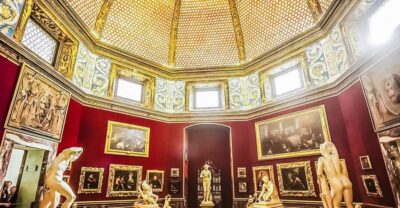
The Medici collection includes ancient statues and busts placed along the museum’s hallways. Many are Roman copies of Greek sculptures that no longer survive in their original form.
That makes the sculpture more than decoration. In some cases, these copies are among the main ways later generations know what Greek sculptors produced. The pieces also show how strongly the Medici valued the classical past.
The corridor setting changes your pace. You are not moving through a series of small, isolated rooms filled only with paintings. You pass sculpture, portraits, architectural views, and art from different periods as the museum unfolds.
If you are mainly interested in painting, do not rush past the statues. They help explain the classical ideals that shaped Renaissance artists, especially the renewed interest in the human body and ancient mythology.
How much time should you allow?
The official duration is listed as one day, but that does not mean you must remain inside all day. It means your admission is suitable for a full day of independent exploration.
A rushed visit can cover the famous highlights in roughly two hours, but you will lose much of the museum’s broader story. Four hours is a more useful minimum if you want to look carefully. Even then, you may cover only about half of the displays.
One first-time visit found that nearly four hours still barely touched the full collection. That is a good warning. The Uffizi is too large for the common plan of squeezing it between lunch and an evening reservation.
I suggest choosing a morning time slot if the Uffizi is one of your main Florence priorities. You will have more energy for the early medieval rooms and more freedom to continue when you reach the major Renaissance galleries. Bring a short list of must-see works, then allow room for discoveries.
A cafe is available inside, which gives you a place to pause rather than treating the museum as a race. Still, do not assume you can leave and return later the same day. Same-day re-entry was a source of confusion, and you should plan as if your ticket is for one continuous visit.
Is the $57.93 price good value?
At $57.93 per person, this is not a budget museum ticket. You are paying for a reserved admission arrangement and the convenience of selecting a time slot in advance, not for a guide or a bundled day of sightseeing.
The value depends on your priorities. If you are visiting in high season, protecting your entry time can be worth the extra cost. A missed morning or a long wait outside can disrupt reservations, meals, and other Florence plans.
It is also useful for visitors who prefer to explore alone. You avoid the pace of a group and can spend ten minutes with one painting or move on quickly from a room that does not interest you.
The price is harder to justify if you expect an expert to explain the art. No guided tour is included. You also need to arrange your own way to the gallery, and food and drinks are separate.
In practical terms, this ticket suits someone who values certainty and independence. It is less suitable for someone seeking the lowest possible admission price or a structured art lesson.
Who will get the most from this ticket?
I recommend it for first-time Florence visitors who want to see the Uffizi without gambling on same-day availability. It also works well for repeat visitors with a short list of artists or works they want to revisit.
Art lovers can spend much longer than the usual museum visit. Families and mixed-interest groups may appreciate the ability to move at different speeds, though large luggage and pets are not allowed.
You should think twice if you dislike large museums or tend to lose interest after an hour. The Uffizi rewards a patient pace, and its size can become tiring. A clear shortlist will help.
This is also a good fit if you want a quiet, independent visit rather than a social group outing. If you need context, consider reading about the Medici, Giotto, Botticelli, Leonardo, and Caravaggio before you go, since the ticket itself does not provide a guide.
Booking, cancellation, and practical limits
You receive confirmation at the time of booking, and free cancellation is available if you cancel at least 24 hours before the experience start time. Changes or cancellations made within 24 hours are not accepted, and the local time in Florence controls the cutoff.
Most people can participate, but pets and large luggage are not allowed. The ticket does not include transportation to or from the museum, hotel pickup, meals, or drinks.
The experience is often booked well ahead, with an average booking time of about 77 days in advance. You do not need to copy that exact schedule, but it shows why waiting until the last minute can be a poor plan during high season.
Should you book the Uffizi ticket?
Book this if you want a reliable entry time, prefer exploring alone, and are ready to give the museum at least a serious morning. The prebooked reservation is the main benefit, while the enormous collection is the main reward.
Skip it if you want a guided explanation included in the price, or if you only have a short gap in your day. The Uffizi can be too much for a rushed visit.
My practical choice would be a morning slot, a written list of four or five priority works, and enough time to continue beyond the obvious Botticelli rooms. Find the Leonardo statue first, do not count on leaving and returning, and treat the museum as a major Florence appointment rather than a quick stop.
FAQ
What does the Uffizi Gallery ticket include?
It includes a ticket and reservation for entry to the Uffizi Gallery. It does not include a guided tour, food, drinks, hotel pickup, drop-off, or transportation.
Is this a guided tour?
No. This is an admission ticket with a reserved time slot. You explore the museum independently and set your own pace.
Where do I redeem the ticket?
The redemption point is at the statue of Leonardo da Vinci, Piazzale degli Uffizi, 209, 50122 Firenze FI, Italy.
Which artists can I see at the Uffizi?
The collection includes works by Botticelli, Caravaggio, Raphael, Leonardo da Vinci, Giotto, Cimabue, Duccio di Buoninsegna, Artemisia Gentileschi, and Michelangelo, among others.
Are pets and large luggage allowed?
No. Pets and large luggage are not allowed.
Can I cancel for a full refund?
Yes, if you cancel at least 24 hours before the experience start time. Cancellations or changes made less than 24 hours in advance are not accepted for a refund.
More museums and galleries in Florence
- Florence: Leonardo Interactive Museum Entry Ticket
★ 4.5 · 11,763 reviews - Florence Accademia Gallery Tour with Entrance Ticket Included
★ 4.5 · 6,148 reviews - Uffizi Gallery Small Group Tour with Guide
★ 4.5 · 4,923 reviews - Florence: Accademia Gallery Guided Tour
★ 4.6 · 4,156 reviews
Recently added around Florence
- Accademia and Uffizi Small-group Guided Tour★ 4.5 · 8 reviews
- The David from Michelangelo.★ 5.0 · 3 reviews
- Combo: Accademia + walking + Uffizi Galleries Guided Tour★ 3.5 · 6 reviews
- The Complete Wine Tour Brunello, Nobile, Chianti wine experience★ 4.0 · 7 reviews
- The Best of Tuscany in 3 Days★ 4.5 · 13 reviews
- The Cooking Lab – Authentic Food Experience★ 5.0 · 113 reviews
- Florence Central Market Food Tour – Private Tour★ 4.0 · 7 reviews
- MaMa Florence: The Art of Corzetti – Hands-On Pasta Class★ 5.0 · 15 reviews
Uffizi Gallery Tours, compared.
Skip-The-Line Uffizi Gallery Timed Entry Ticket
Read our review →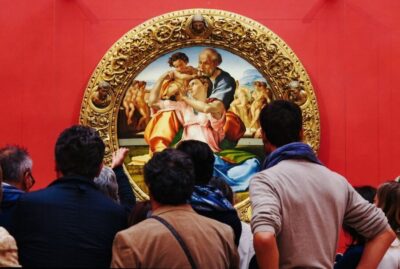
Uffizi Priority Ticket & Masterpieces Audio App
Read our review →
Skip the line: Uffizi and Accademia Small Group Walking Tour
Read our review →
Uffizi Gallery and Accademia Gallery Guided Tour
Read our review →
Uffizi Gallery Small-Group Guided Tour with Ticket
Read our review →
Michelangelo’s David, Accademia & Uffizi Small Group Tour
Read our review →Browse the lists this tour appears in