
Reviewed · FLORENCE RENAISSANCE HISTORY TOURS
LGBTQ + friendly Renaissance Gay life in Florence tour
Florence’s grand palaces and famous statues tell only part of the city’s story. This walking tour looks at the people and private lives usually left out, from Leonardo da Vinci’s sodomy accusations to the forbidden world of Grand Duke Gian Gastone de’ Medici. Mila Lavorini leads the tour in English and keeps the subject direct, thoughtful, and lively.
I like the small maximum of 10 people, which gives you room to ask questions, and I like that the route uses familiar sights to explain less familiar history. The main consideration is that the tour deals frankly with sexuality, prostitution, legal punishment, and social attitudes, so it may feel more candid than a standard Florence sightseeing walk.
Key points at a glance
- A different Florence route: See Piazza della Signoria, Ponte Vecchio, Orsanmichele, and other central sites through an LGBTQ+ historical lens.
- Mila Lavorini as your guide: Expect a warm, engaging presentation with humor, anecdotes, and clear explanations.
- Small-group format: The tour accepts no more than 10 people, with headsets included.
- Medici stories with a personal angle: Learn about Lorenzo de’ Medici’s court, Gian Gastone’s secret life, and the families who shaped Florence.
- A two-hour walking experience: The route stays in central Florence and ends back at the meeting point near the Hard Rock Cafe.
- Good value at $30.07: You are paying for interpretation and historical context rather than entry to paid attractions.
Florence’s Renaissance story, told from the margins
Florence is easy to visit as a parade of masterpieces: the Duomo, Michelangelo’s David, the Ponte Vecchio, and Medici palaces. This tour asks a more pointed question: who lived, loved, and survived behind that polished public image?
You begin with the city’s LGBTQ+ past rather than treating it as an afterthought. The subject is not presented as a modern identity category simply placed onto the Renaissance. Instead, Mila explains medieval attitudes toward sexuality, the laws that governed same-sex acts, and the gap between public morality and private behavior.
That distinction matters. Renaissance Florence was not a place where modern ideas of gay identity existed in the same form they do today. But same-sex relationships, accusations, punishments, coded behavior, and powerful men with private lives were all part of the historical record. The tour gives you a way to think about those facts without pretending the past was more open or more simple than it was.
I would treat this as a history walk with an LGBTQ+ focus, not as a conventional sightseeing tour with a few colorful anecdotes added on. The city’s major squares and buildings provide the setting, but the real subject is how power, law, religion, gender, class, and desire shaped daily life.
More Renaissance and history tours in Florence:
- The Best tour in Florence: Renaissance & Medici Tales – guided by a STORYTELLER
★ 5.0 · 12,316 reviews - The Best Tour in Florence: Renaissance and Medici Tales
★ 5.0 · 10,810 reviews - The Dark Side of Florence: Mysteries and Legends
★ 5.0 · 2,785 reviews
Starting at Piazza della Repubblica
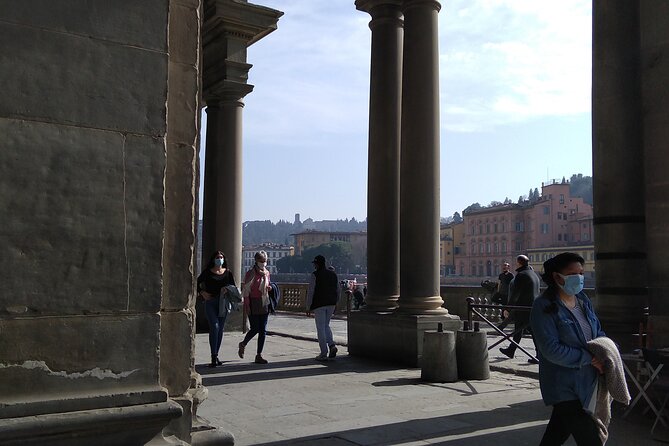
The meeting point is at the Hard Rock Cafe on Via dei Brunelleschi, 1, close to Piazza della Repubblica. This is a practical place to begin because the square is central and easy to reach by public transportation.
The first 10 minutes set the tone for the walk. Mila introduces gay life in Renaissance Florence and begins placing the subject within the city’s wider social structure. You are not simply handed a list of famous names. You start by considering how people in medieval and Renaissance Florence understood sexual behavior, reputation, and public shame.
Piazza della Repubblica is now a broad, open urban space with shops, cafes, and heavy foot traffic. That modern setting creates a useful contrast with the social world Mila describes. Florence can feel like an open-air museum, but this stop reminds you that its streets were also places where private behavior could become a public legal matter.
The tour uses headsets, which should help you follow Mila while standing near busy streets. Since the group is capped at 10, you should have a better chance of hearing the explanation and asking a question than on a large city walk.
Palazzo Strozzi and the price of breaking the rules
The next stop is Palazzo Strozzi, where the focus turns to laws and penalties. The stop lasts only about five minutes, but it carries some of the tour’s most important context.
Florentine attitudes toward same-sex activity were shaped by law, religion, family honor, and social rank. Punishments and accusations did not affect every person in the same way. Wealth, connections, age, and political influence could change the risks involved.
This is where the tour moves beyond the easy version of Renaissance history. Florence is often presented through its artists and patrons, yet the same political system that funded art also regulated private conduct. The palaces were not just homes and works of architecture. They were symbols of the families who made rules, enforced them, or found ways around them.
You should expect frank discussion rather than a sanitized account. The subject includes penalties and the use of accusations as a form of social or political pressure. For me, that makes the stop valuable, but it also explains why the tour is not suited to anyone looking only for light sightseeing.
Santa Trinita and the power of the Spini family
At Piazza Santa Trinita, Mila points out the Spini family palace. The stop is brief, about five minutes, but it adds another layer to the story: the relationship between elite families, money, and private behavior.
Florence’s powerful families shaped far more than architecture. They influenced government, religion, trade, artistic patronage, and social rules. A discussion of queer life in this setting cannot be separated from class. The freedom available to a wealthy court figure was not the same as the freedom available to an ordinary worker.
This is one of the tour’s strengths. It connects individual stories with the city’s power structure instead of treating LGBTQ+ history as a series of isolated scandals. You learn to look at a palace and ask who lived there, who benefited from its influence, and what kinds of conduct could be hidden behind its formal facade.
More LGBTQ-friendly tours in Florence:
- Florence: LGBTQ Renaissance Walking Tour with Mila
★ 4.9 · 85 reviews
Gian Gastone and the private Medici world
One of the most distinctive parts of the walk is the discussion of Gian Gastone de’ Medici, the last Grand Duke of Tuscany. Mila explores his secret and forbidden life, giving you a more personal view of the final phase of Medici rule.
This story adds a human scale to a dynasty usually remembered for banking, politics, and patronage. The Medici name can dominate any visit to Florence, but a family history is not only a sequence of public achievements. It also includes private relationships, rumors, habits, and the limits placed on people who lived under constant scrutiny.
The word forbidden is important here. The tour does not suggest that a powerful title erased social danger or judgment. Instead, it shows how status could offer protection while also making private life part of public gossip and political calculation.
This section will appeal to you if you enjoy history that links personalities to institutions. It is less useful if you want only dates and architectural facts. Mila’s approach includes anecdotes and humor, so the story moves at a human pace rather than sounding like a lecture.
Across the Ponte Vecchio with Lorenzo de’ Medici
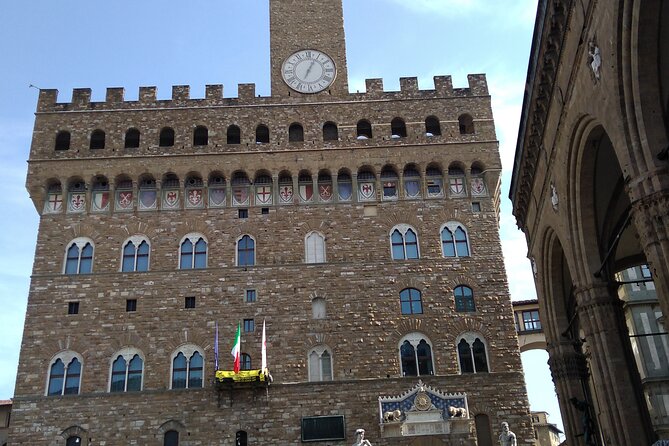
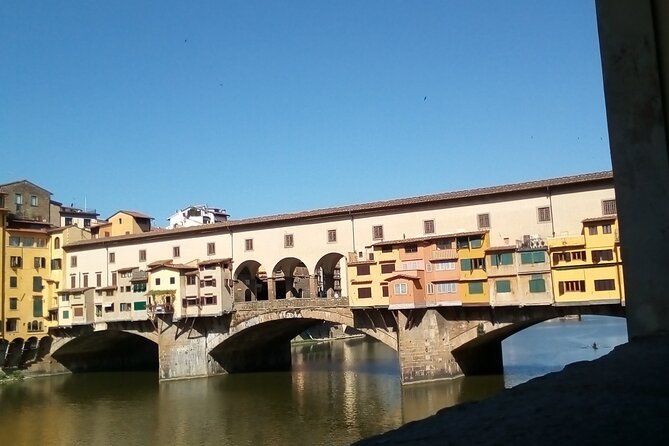
At Ponte Vecchio, the tour turns to Lorenzo de’ Medici, known as Lorenzo the Magnificent, and the philosophy of his court of pleasure. The stop lasts about 15 minutes, giving Mila more time to connect the bridge, the Medici court, and the ideals of Renaissance Florence.
The Ponte Vecchio is one of the city’s busiest sights, so it may be crowded while you listen. That is part of the experience, not a flaw in the route. You are standing at one of Florence’s most familiar landmarks while hearing about court culture, pleasure, reputation, and the lives that unfolded around elite power.
Lorenzo’s Florence is often remembered as a golden age of art and learning. This tour asks you to look at the less polished side of that image. A court devoted to poetry, beauty, philosophy, and pleasure could also be a place where people were judged closely and where social rules were unevenly applied.
The bridge also gives the walk a clear sense of movement. You are not planted in one square for two hours. The route carries you through the historic center, and the changing streets help the stories develop.
Chiasso del Buco and the medieval gay district
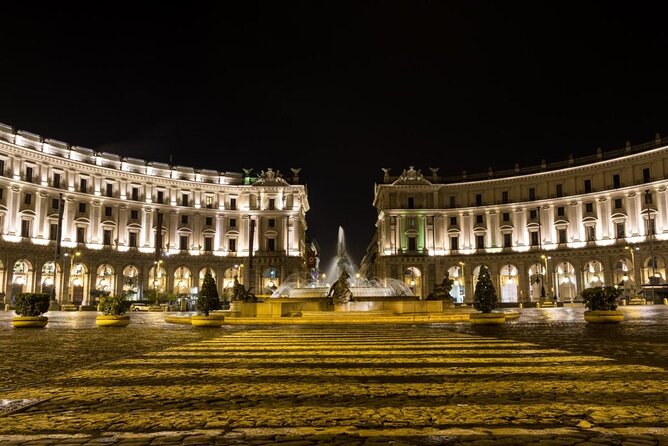
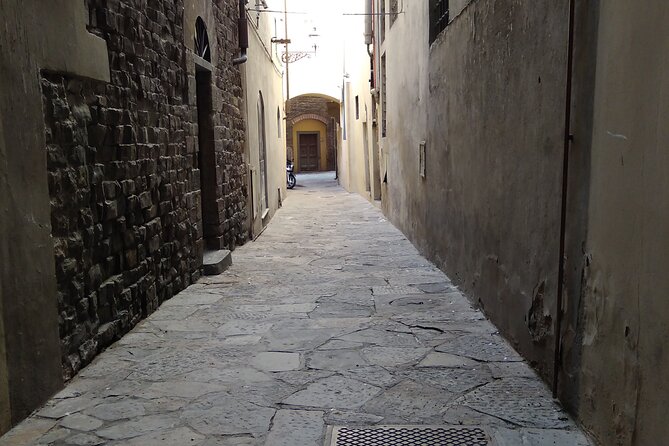
Chiasso del Buco offers one of the route’s more unusual stops. Mila describes the area as part of the medieval gay district and explains how same-sex life existed within the medieval city.
This is the kind of place you might pass without noticing on a normal Florence itinerary. Its value comes from the explanation attached to it. Narrow lanes and small urban spaces can reveal how people moved, met, hid, and became known to one another in a city where privacy was limited.
The phrase medieval gay area needs some care. Medieval people did not use LGBTQ+ language in the modern sense, and identities were shaped by different religious, legal, and social ideas. The tour’s subject is best understood as a history of same-sex desire, behavior, accusation, and community within its own period.
That distinction makes the stop stronger. You are not being asked to force modern labels onto old lives. You are being shown how historians can discuss queer pasts while respecting the differences between then and now.
Piazza della Signoria and an early public Pride story
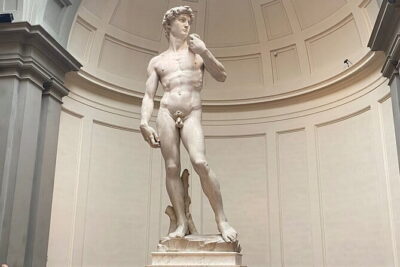
At Piazza della Signoria, the group stops for about 20 minutes. This is one of the longer stops and one of the most recognizable settings on the route. You will see a copy of Michelangelo’s David while hearing about the site as the seat of what the tour presents as the first Pride in the 16th century.
The square is ideal for connecting public display with public identity. Statues, government buildings, ceremonies, punishment, and crowd opinion all met here. It was a place where power made itself visible, and where the city could communicate its values in front of an audience.
The Pride comparison should be understood as a historical interpretation, not as a claim that Renaissance Florence held a modern Pride parade. The tour uses the site to discuss public expressions of queer life and the changing ways people have challenged or negotiated social rules.
This is also a good moment to think about David itself. The statue is often presented as a symbol of civic strength and male beauty. In the context of this walk, the image gains another set of questions about the body, desire, masculinity, and the way public art can carry meanings beyond its official purpose.
Orsanmichele, Leonardo, and the role of women
The final major stop is the Church and Museum of Orsanmichele, where the tour brings together Leonardo da Vinci, accusations of sodomy, and female prostitution. The stop lasts about 15 minutes.
Mila explains that Leonardo was denounced twice for sodomy. That detail does not turn Leonardo’s life into a simple label. It shows how accusations could enter the public record, how artistic figures could be exposed to scrutiny, and how surviving documents shape what we think we know about the past.
This is an important difference between historical evidence and modern gossip. An accusation is not automatically proof of an act, and the tour’s value lies in giving you the legal and social setting around such claims. You hear how suspicion could be recorded, used, or remembered.
The discussion of female prostitution broadens the route beyond male same-sex life. Sexuality in Renaissance Florence involved women’s labor, economic dependence, marriage, gender expectations, and the control of women’s bodies. Including prostitution helps show that sexual rules were part of a larger system, not one narrow set of laws aimed at men.
Orsanmichele itself adds visual weight to the stop. The church and museum are central landmarks, but the tour uses them as a setting for social history rather than offering a standard art lecture. If you want to understand how religious spaces, commerce, public morality, and sexuality overlapped, this is a useful finish.
What the two-hour format feels like
The walk lasts about two hours and ends back at the original meeting point. That makes it easy to fit into a day of sightseeing, especially if you want a focused activity rather than a full-day excursion.
The route includes several short stops, with longer explanations at Ponte Vecchio, Piazza della Signoria, and Orsanmichele. You should expect to walk between central locations and listen outdoors. The tour does not include entry to paid attractions, so the price covers the guided experience rather than museum admission.
Mila’s style is one of the clearest reasons to book. She is described as warm, empathetic, punctual, entertaining, and eager to answer questions. Her humor and anecdotes help keep serious material from becoming stiff, while her direct approach means the harder subjects are not softened beyond recognition.
The small group is especially useful here. In a group of up to 10, the experience can become a conversation rather than a speech. Some people have received the tour with only two participants, creating a very personal walk. You should not assume that will happen on your date, but the group limit still offers more space than a large city tour.
Is $30.07 a fair price?
At $30.07 per person, this is good value if you want a focused historical perspective on Florence. You are not paying for monument entry, a meal, or transportation. You are paying for two hours of guiding, interpretation, local context, and a route that is difficult to recreate from a standard guidebook.
The value is strongest for someone who has already seen the obvious sights or wants to understand them differently. Piazza della Signoria and Ponte Vecchio are free to visit on your own, but the stories connecting them to sexuality, law, court culture, and social control are the real product.
If you want access inside museums or palaces, this will not meet that need. If you want an expert-led conversation that gives familiar places a new meaning, the price is modest.
Who should book this Florence walk?
I would recommend it to:
- LGBTQ+ visitors seeking a tour that treats queer history as a serious part of Florence’s past.
- First-time visitors who want a fresh way to see famous central landmarks.
- Returning visitors who have already toured the Duomo, galleries, and Medici sites.
- History-minded people interested in law, class, religion, gender, and court life.
- Couples and small groups who prefer a personal walk with time for questions.
- Anyone comfortable with frank discussion of sexuality, punishment, and prostitution.
I would hesitate to recommend it if your main goal is Renaissance art, church interiors, or detailed architectural analysis. The route includes important buildings and public spaces, but the emphasis is social history and LGBTQ+ life.
The tour is offered in English, includes headsets, and accepts mobile tickets. Service animals are allowed, most people can participate, and the route is near public transportation. You receive confirmation when booking, and free cancellation is available up to 24 hours before the start time. Cancellations or changes made within 24 hours are not accepted for a refund.
Should you book it?
Book this tour if you want Florence to feel like a lived-in city rather than a collection of masterpieces. Mila’s route links Medici power, Leonardo’s accusations, medieval social rules, court pleasure, prostitution, and public identity in a way that adds meaning to places you may already plan to visit.
Skip it if you want a neutral, conventional overview of Florence’s art and architecture. For everyone else, especially those looking for a respectful LGBTQ+ perspective that is candid without losing its historical footing, this two-hour walk offers a distinctive and fairly priced way to see the city.
FAQ
Where does the tour begin?
The tour begins at the Hard Rock Cafe, Via dei Brunelleschi 1, 50123 Florence, Italy.
Where does the tour end?
The activity ends back at the meeting point.
How long does the tour last?
The tour lasts approximately two hours.
What language is the tour offered in?
The tour is offered in English.
Who leads the tour?
The experience provider and guide is Mila Lavorini.
How large is the group?
The tour has a maximum of 10 participants.
Are headsets included?
Yes. Headsets are included.
Does the price include admission to museums or other attractions?
No. Other items not specifically listed as included are not covered. The stops listed for the tour have no admission charge.
Can I cancel the tour for a refund?
Yes. You can cancel up to 24 hours before the experience start time for a full refund. Cancellations or changes made less than 24 hours before the start time are not accepted.
Recently added around Florence
- Accademia and Uffizi Small-group Guided Tour★ 4.5 · 8 reviews
- The David from Michelangelo.★ 5.0 · 3 reviews
- Combo: Accademia + walking + Uffizi Galleries Guided Tour★ 3.5 · 6 reviews
- The Complete Wine Tour Brunello, Nobile, Chianti wine experience★ 4.0 · 7 reviews
- The Best of Tuscany in 3 Days★ 4.5 · 13 reviews
- The Cooking Lab – Authentic Food Experience★ 5.0 · 113 reviews
- Florence Central Market Food Tour – Private Tour★ 4.0 · 7 reviews
- Family Friendly Florence Private City Tour★ 5.0 · 47 reviews
Florence Renaissance History Tours, compared.
The Best tour in Florence: Renaissance & Medici Tales – guided by a STORYTELLER
Read our review →
The Best Tour in Florence: Renaissance and Medici Tales
Read our review →
The Dark Side of Florence: Mysteries and Legends
Read our review →
Renaissance and Medici Tales Guided Walking Tour
Read our review →
Dark Mysteries and Legends Guided Walking Tour
Read our review →
Accademia Gallery: Michelangelo’s David and High Renaissance Art
Read our review →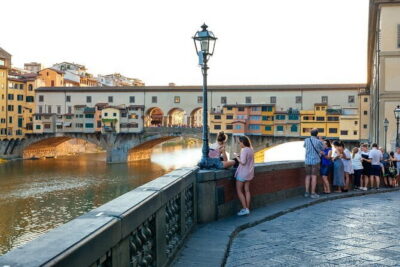
Florence Private Tour: Renaissance, Famous Families & Hidden Gems
Read our review →Browse the lists this tour appears in