
Reviewed · FLORENCE RENAISSANCE HISTORY TOURS
Florence: LGBTQ Renaissance Walking Tour with Mila
Florence’s grand Renaissance sights take on a new meaning when you hear how queer people lived, loved, hid, and were punished here. This two-hour walking tour with Mila links famous landmarks to stories usually left out of standard city tours, including the old gay district, Medici family politics, and the Ponte Vecchio’s medieval cruising culture.
I like the way the tour uses real places rather than a lecture room, and I like Mila’s mix of careful research, humor, and warmth. One thing to consider is the subject matter: you’ll hear about fines, public punishment, denunciation, and discrimination, so this is not a light sightseeing stroll. It is accessible and rain or shine, but comfortable shoes and weather protection matter.
Key points to know before you book
- Mila brings Florence’s queer past to life: Her storytelling connects personal lives and political events to the streets around you.
- The route covers major sights: You’ll see Piazza della Repubblica, Santa Trinita Bridge, Pitti Palace Square, Ponte Vecchio, Piazza della Signoria, and Orsanmichele Church.
- The Medici story takes an unexpected turn: Gian Gastone, the last male Medici ruler, receives special attention.
- The tour focuses mainly on gay male history: This reflects the surviving records and Florence’s role as a place for male cruising, while women and lesbians are also discussed.
- The price is modest for a private-feeling subject tour: At $29 per person, the cost is reasonable if you want context beyond the usual Renaissance highlights.
- Plan for an outdoor walk: The tour lasts two hours, uses a headset, and runs in all weather.
Why this Florence walk offers more than the usual Renaissance tour
Most first visits to Florence revolve around art, churches, dynasties, and architecture. Those subjects are important, but they can make the city seem cleaner and more orderly than it really was. This tour asks a sharper question: how did people who loved outside accepted rules survive in a city watched over by family, church, courts, and neighbors?
That change in viewpoint is the tour’s main value. You still see major Florence landmarks, but you hear stories about law, gossip, social rank, masculinity, and power. The city becomes less like an open-air museum and more like a place where real people had to make difficult choices.
Mila is central to the experience. Her style, based on the available feedback, combines serious historical explanation with jokes and an easy manner. That balance matters because the subject can turn grim. She explains punishments and public shaming without making light of them, then gives the group room to ask questions.
She also provides context beyond LGBTQ history. You’ll hear about Florence, the Medici, wealthy families, religion, and political change. If you want a tour that covers only modern LGBTQ landmarks, this is not that. It is a historical walk through a city where queer lives are part of a larger story about power and social control.
More Renaissance and history tours in Florence:
- The Best tour in Florence: Renaissance & Medici Tales – guided by a STORYTELLER
★ 5.0 · 12,316 reviews - The Best Tour in Florence: Renaissance and Medici Tales
★ 5.0 · 10,810 reviews - The Dark Side of Florence: Mysteries and Legends
★ 5.0 · 2,785 reviews
Starting at Piazza della Repubblica
Meet Mila in Piazza della Repubblica, next to the Hard Rock Café under the loggia. She carries a sign, which helps in a busy central square. This is a practical meeting point because it sits in the middle of Florence’s walkable historic center and is easy to pair with other sightseeing.
The opening section deals with Florence’s laws against what authorities called the crime of sodomy. You’ll learn about fines and punishments applied to people considered guilty, as well as the way those rules shifted over the centuries.
This part gives the rest of the tour its framework. The goal is not to pretend that a modern identity label maps perfectly onto medieval or Renaissance life. Instead, Mila examines the behavior, relationships, accusations, and social categories recorded by authorities. That distinction is important. Historical evidence is often incomplete, and the people making the records were usually officials, churchmen, or other powerful men.
Piazza della Repubblica itself is also a useful place to begin because it is a broad, highly visible public space. The contrast between today’s open city center and earlier systems of surveillance makes the discussion feel immediate. You are not simply hearing dates. You are standing in a place where public life, reputation, and social rules mattered.
Crossing Santa Trinita Bridge to Pitti Palace Square
From the city center, the route crosses Santa Trinita Bridge and continues toward Pitti Palace Square. The bridge adds a pleasant change of pace, with views toward the Arno and Florence’s historic riverfront buildings.
At Pitti Palace Square, the focus turns to the Medici family. You’ll hear about the dynasty’s political reach and about Gian Gastone, the last male member of the family. His life raises questions about private conduct, public duty, inheritance, and the burden placed on powerful men to produce heirs.
Gian Gastone is an especially useful figure for this tour because he connects queer history to the machinery of European politics. The Medici were not simply wealthy patrons who paid for art. They shaped Florence and influenced wider political affairs. A member of that family could not easily separate private life from public expectation.
The square also helps you see how wealth and status affected personal freedom. Rules were rarely applied equally to everyone. Social position could change how a scandal was handled, who was protected, and who was exposed. Mila’s discussion places the Medici story beside the experience of less powerful Florentines, giving you a clearer sense of how class and reputation worked together.
Ponte Vecchio and the history of cruising
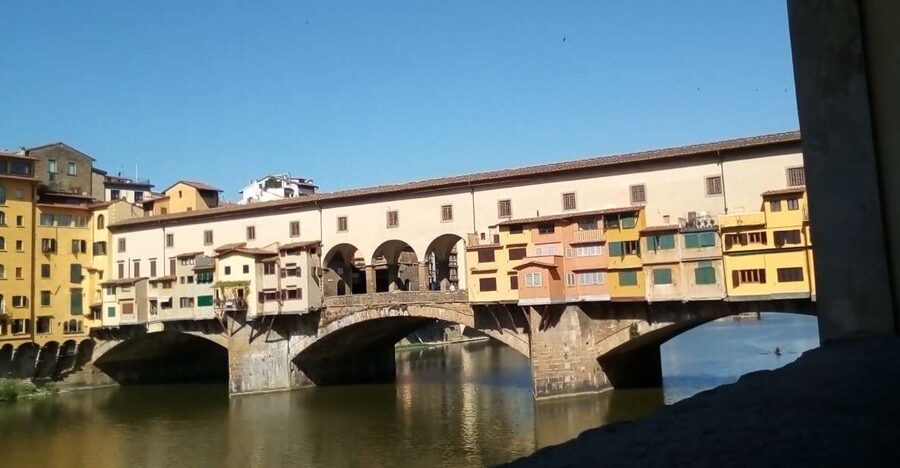
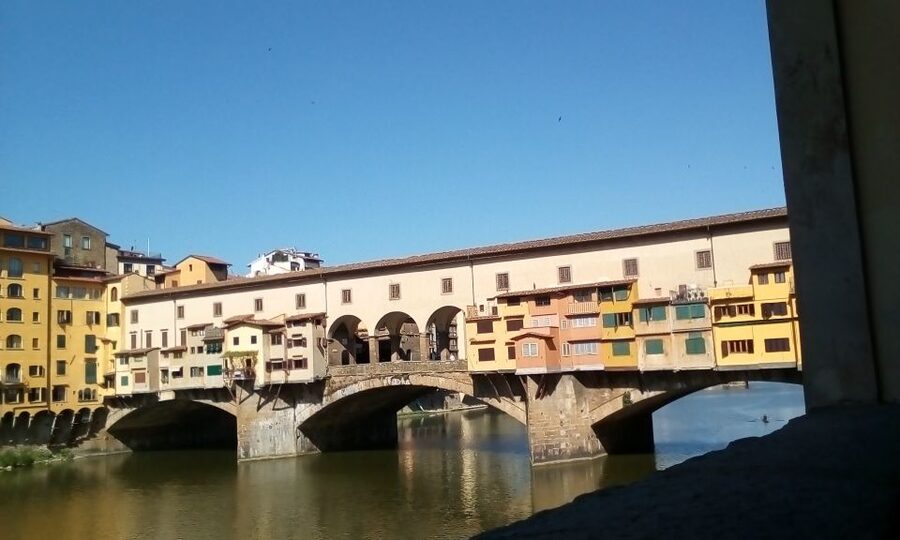
The Ponte Vecchio is one of Florence’s most familiar sights, but this tour gives it a less polished past. As you cross the bridge, Mila explains its connection to queer life and why it was known as a popular place for male cruising in medieval and Renaissance times.
This stop works well because the bridge is not treated as a mere photo point. Its central location, constant foot traffic, shops, and connection between parts of the city made it a natural place for people to see and approach one another. The story also shows how public spaces can serve different purposes at different times. A landmark that now feels carefully packaged for sightseeing once carried more secretive social meanings.
You should expect some discussion of coded behavior, risk, and public exposure. The experience is historical rather than sensational. The value comes from understanding how people found one another despite laws and social pressure.
Ponte Vecchio can be crowded, especially during busy periods. The headset is useful here, since you may need to focus on Mila’s voice while pedestrians pass and the group keeps moving. If you prefer a quiet, slow-paced walk with long stops, the bridge section may feel a little active.
More walking tours in Florence:
- Florence: Guided Walking Tour
★ 4.5 · 3,334 reviews - Skip the line: Uffizi and Accademia Small Group Walking Tour
★ 4.5 · 3,135 reviews - Florence: Guided Walking Tour
★ 4.6 · 1,602 reviews - Florence: Renaissance and Medici Tales Guided Walking Tour
★ 4.8 · 1,549 reviews
Pitti Palace, the Medici, and a more complicated Florence
The Medici material is one of the strongest reasons to choose this tour even if you already know the standard Florence story. You will not get only the familiar tale of patrons, painters, and palaces. The discussion of Gian Gastone brings in sexuality, dynastic anxiety, and the way historians judge powerful figures.
Mila also uses the wider city to explain how laws changed as Italy’s political and social climate shifted. This keeps the tour from suggesting that Florence had one fixed attitude toward queer people for hundreds of years. Legal codes, political structures, religious influence, and social customs all changed.
You’ll find that the tour is not just about famous men. The surviving records do lean heavily toward gay male experiences, partly because historical authorities documented male behavior more closely and partly because Florence had a particular reputation for male cruising. The tour also addresses women and lesbians, though with less material available.
That limitation is worth knowing in advance. If you want an equal amount of attention on every part of the LGBTQ spectrum, the historical record may not allow it. If you want an honest look at what can and cannot be recovered from the past, this approach is useful.
The old gay district near Piazza della Signoria
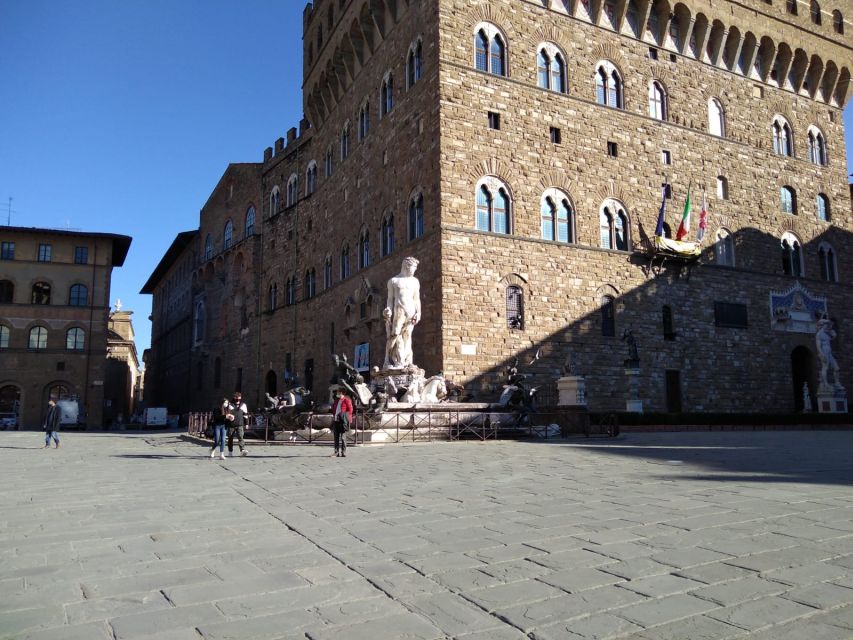
The route continues to the ancient gay district near Piazza della Signoria. Here, Florence’s celebrated art and public power sit beside stories of policing and social pressure.
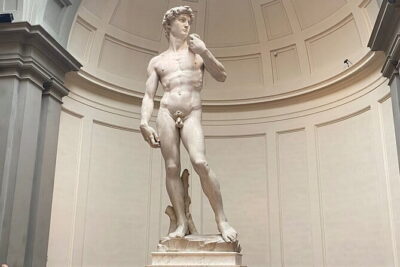
You’ll see a copy of Michelangelo’s David and Benvenuto Cellini’s Perseus with the Head of Medusa in the square. These works are major attractions in their own right, but Mila connects them to the wider culture of male beauty, artistic ideals, patronage, and public display.
Cellini is an especially fitting figure for a tour that examines queer history because his life and reputation bring art, ego, violence, sexuality, and power into the same discussion. The tour does not ask you to reduce a famous artist to one aspect of his life. Instead, it shows how complicated public figures can be, especially when their private conduct was recorded by enemies, officials, or later historians.
The Piazza della Signoria section is also visually impressive. You are surrounded by sculptures, civic buildings, and reminders of Medici authority. That setting makes the discussion of who was allowed to belong in public life more powerful.
Expect people, photos, and normal city noise here. The guide uses a headset, which should help, but you may still need to stay close to the group.
Orsanmichele Church and public denunciation
The walk continues to Orsanmichele Church, where the tone becomes darker. Mila explains how special boxes were hung so people could denounce members of the LGBTQ community, particularly gay men.
This is one of the most important stops because it shows how discrimination worked through ordinary civic and religious systems. The threat did not come only from formal courts. Neighbors, acquaintances, and members of the public could take part in accusation and exposure.
For me, this is where the tour moves beyond colorful anecdotes. Florence’s queer past includes meeting places and famous figures, but it also includes fear. A person had to consider who was watching, who might report them, and what could happen afterward.
Mila’s reported approach to delicate subjects is measured, with humor used carefully rather than as a way to avoid the difficult parts. That makes the material easier to absorb without making it feel trivial.
A practical two-hour walk
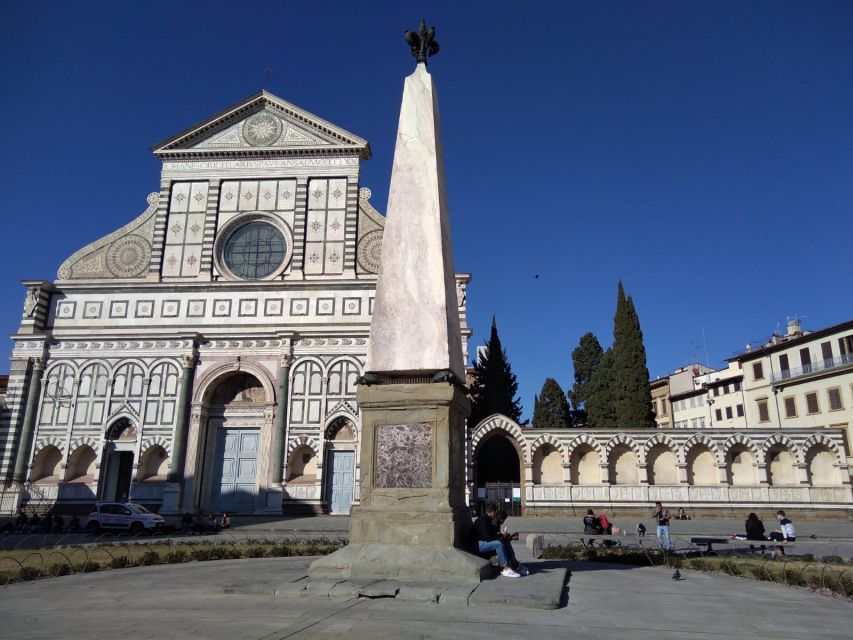
The route lasts two hours and is conducted in English. It is a walking tour through the city center, with no hotel pickup, drop-off, or included entrance tickets. The major value comes from the guiding, interpretation, and route design rather than from access to an interior site.
At $29 per person, I think the price is fair. You see several famous Florence locations while receiving a subject-focused tour that would be difficult to recreate from a standard guidebook. A typical city walk may show you the same squares and bridges, but it is unlikely to connect them through queer history, law, and personal stories.
The headset is included and useful in crowded streets. The tour is listed as wheelchair accessible, though you should still expect an outdoor city route with bridges, squares, and pedestrian areas. The activity runs rain or shine, so bring suitable clothing and shoes.
You can cancel up to 24 hours before the start for a full refund, and you can reserve while paying later. Those options are useful in Florence, where weather and changing museum plans can affect your schedule.
Who will get the most from Mila’s tour
I would choose this walk if you want an LGBTQ-focused way to understand Florence without giving up the city’s essential sights. It suits couples, solo visitors, queer travelers, allies, and anyone who wants to question the usual polished Renaissance story.
It is also a good choice near the beginning of your stay. Mila offers suggestions for other places to see and eat, including a well-regarded gelato tip, so the walk can help shape the rest of your time in the city.
The tour can work for teenagers, but parents should know that it addresses sexuality, punishment, and discrimination. One family found the content appropriate for a 15-year-old, yet the tone is historical and serious rather than designed as a children’s activity.
You may want a different tour if you dislike walking, want extensive museum interiors, or prefer a broad survey of Florence’s art with no focus on sexuality and law. You should also understand that the stories center mainly on gay men because that is where much of the surviving evidence and local history lies.
Should you book this LGBTQ Florence walking tour?
Book it if you want a thoughtful alternative to the standard Florence walk, especially if you care about LGBTQ history, overlooked lives, and the gap between public reputation and private experience. Mila’s warmth, humor, careful sourcing, and ability to answer questions are major strengths.
At two hours and $29, it offers strong value while still leaving most of your day free. The main caution is the subject matter and the outdoor format. If you are ready for difficult history, uneven records, and a few uncomfortable truths, this tour gives Florence a sharper human face.
FAQ
Where does the LGBTQ Renaissance walking tour meet?
Meet Mila at Piazza della Repubblica, next to the Hard Rock Café under the loggia. She will have a sign.
How long does the Florence LGBTQ walking tour last?
The tour lasts two hours.
What language is the tour conducted in?
The live tour guide speaks English.
What places does the tour visit?
The route includes Piazza della Repubblica, Santa Trinita Bridge, Pitti Palace Square, Ponte Vecchio, the old gay district near Piazza della Signoria, Piazza della Signoria, and Orsanmichele Church.
Is the walking tour wheelchair accessible?
Yes, the activity is listed as wheelchair accessible.
What happens if it rains?
The tour takes place rain or shine, so bring clothing and shoes suitable for the weather.
More LGBTQ-friendly tours in Florence
- LGBTQ + friendly Renaissance Gay life in Florence tour
★ 5.0 · 13 reviews
Recently added around Florence
- Accademia and Uffizi Small-group Guided Tour★ 4.5 · 8 reviews
- The David from Michelangelo.★ 5.0 · 3 reviews
- Combo: Accademia + walking + Uffizi Galleries Guided Tour★ 3.5 · 6 reviews
- The Complete Wine Tour Brunello, Nobile, Chianti wine experience★ 4.0 · 7 reviews
- The Best of Tuscany in 3 Days★ 4.5 · 13 reviews
- The Cooking Lab – Authentic Food Experience★ 5.0 · 113 reviews
- Florence Central Market Food Tour – Private Tour★ 4.0 · 7 reviews
- Family Friendly Florence Private City Tour★ 5.0 · 47 reviews
Florence Renaissance History Tours, compared.
The Best tour in Florence: Renaissance & Medici Tales – guided by a STORYTELLER
Read our review →
The Best Tour in Florence: Renaissance and Medici Tales
Read our review →
The Dark Side of Florence: Mysteries and Legends
Read our review →
Renaissance and Medici Tales Guided Walking Tour
Read our review →
Dark Mysteries and Legends Guided Walking Tour
Read our review →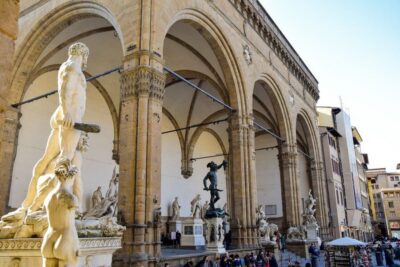
Accademia Gallery: Michelangelo’s David and High Renaissance Art
Read our review →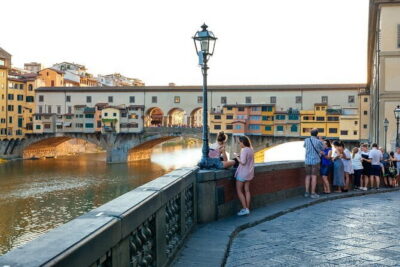
Florence Private Tour: Renaissance, Famous Families & Hidden Gems
Read our review →Browse the lists this tour appears in