
Reviewed · FLORENCE RENAISSANCE HISTORY TOURS
Renaissance & Medieval Florence Guided Walking Tour plus mobile App
Florence’s story comes together best on foot, and this tour strings together the city’s biggest Renaissance sights in a short, useful route. You begin among the Medici churches and palaces, pass the Duomo and its famous dome, then cross the Arno on the Ponte Vecchio.
I like the strong first-day route and the chance to see both sides of the river without arranging separate visits. I also like the small-group limit of 20, plus the Vox City app for further exploring after the guide leaves. The main catch is that bilingual groups can spend much of the tour hearing the same explanation twice, which may cut into English speaking time.
Key points to know before you book
- San Lorenzo sets the story: Learn how the Medici family shaped Florence while seeing its church, chapels, palace, and cloister.
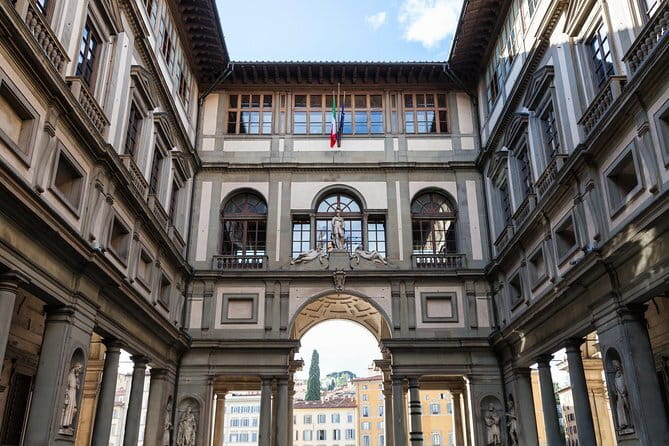
- The route covers major landmarks: You pass the Duomo, Piazza della Signoria, the Uffizi courtyard, Ponte Vecchio, Pitti Palace, and medieval Florence.
- The tour is mostly outdoors: You see interiors only in limited fashion, with the Basilica of San Lorenzo cloister as the clearest included visit.
- The guide adds context: Local guides explain politics, art, architecture, legends, and practical orientation for the rest of your stay.
- The app extends the day: Bring your own smartphone and headphones to use Vox City’s self-guided routes and audio commentary.
- Language matters: English is offered, but some groups have been conducted in English and another language, slowing the pace.
A smart first walk through Florence
At $30.04 per person, this is priced as an orientation tour rather than a full museum experience. You are paying for a local guide who connects the sights, not for admission to the Uffizi, Medici Chapels, Palazzo Vecchio, or Pitti Palace.
That distinction matters. Florence can feel like a parade of grand facades, statues, church doors, and crowded lanes until someone explains how the pieces fit together. The Medici financed art and architecture, the city’s political power gathered around Palazzo Vecchio, and the Vasari Corridor linked the ruling family’s home with government offices and the river crossing.
The advertised duration is about 1 hour and 30 minutes. Some groups have taken closer to two hours, especially when questions or two-language commentary are involved. Wear comfortable shoes, since this is a genuine walking route with several stops rather than a single square-side talk.
The meeting point is on Via de’ Martelli, near the center of Florence. The end point is Ponte Vecchio, a useful place to finish because you can continue toward either the Oltrarno district or the historic center. Public transportation is nearby, though most of the route itself is on foot.
More Renaissance and history tours in Florence:
- The Best tour in Florence: Renaissance & Medici Tales – guided by a STORYTELLER
★ 5.0 · 12,316 reviews - The Best Tour in Florence: Renaissance and Medici Tales
★ 5.0 · 10,810 reviews - The Dark Side of Florence: Mysteries and Legends
★ 5.0 · 2,785 reviews
San Lorenzo and the Medici beginning
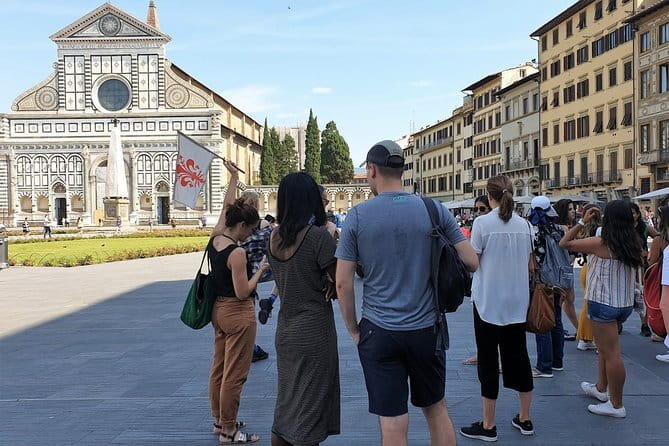
The walk starts in San Lorenzo, one of the best places in Florence to understand the Medici family’s reach. The neighborhood includes an open-air market selling leather goods, clothes, and other souvenirs. It can feel busy and commercial, but it also gives you a sense of how closely daily life and major monuments sit together in Florence.
The Basilica di San Lorenzo was the Medici family church. The tour includes its elegant cloister, designed by Brunelleschi, the architect associated with Florence’s great dome. The cloister offers a welcome pause from the streets, with a calmer atmosphere and a clear example of Renaissance design.
You should keep your expectations measured here. The tour does not include a full visit to every Medici interior. The Medici Chapels, designed by Michelangelo and Matteo Nigetti, and the Palazzo Medici Riccardi are discussed or viewed along the route, but attraction entry is not included.
That is still useful. A guide can point out what deserves a return visit, helping you decide if you want to spend more time inside the chapels or palace later. If you want detailed time in Michelangelo’s New Sacristy, this walk is not a substitute for an admission ticket and a separate visit.
Medici power at the palace
The Palazzo Medici Riccardi was designed by Michelozzo for Cosimo de’ Medici, head of the powerful Medici banking family. Seeing it in context helps you understand that Florence’s Renaissance was not only about painters and sculptors. It was also about banking wealth, political influence, family alliances, and carefully displayed status.
The guide’s role is important at this point. A bare sightseeing route gives you a church, a palace, and a market. A good guide connects them and explains why the Medici family mattered so much to Florence’s politics and art.
Several guides have earned strong praise for this part of the experience and for the tour as a whole, including Marta, Helena, Larisa, Sylvia, and Maximilian. Guides change, so you should not book expecting one particular person. The useful pattern is that the best guides add anecdotes, answer questions, and explain Florence in a way that helps you notice details later.
The Duomo complex in 20 minutes
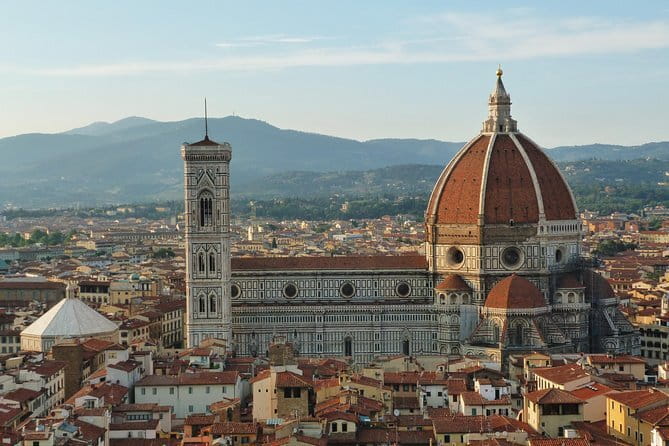
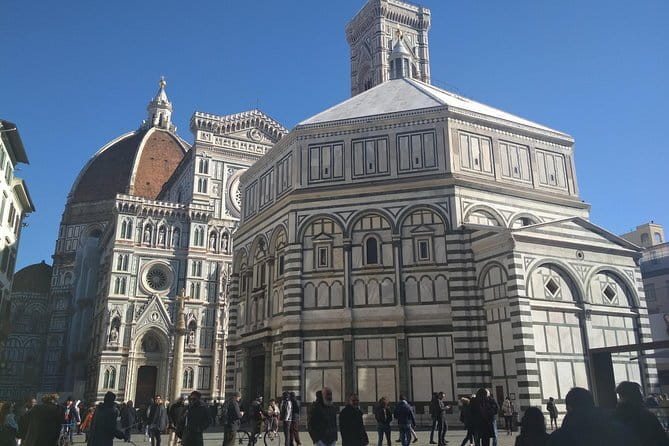
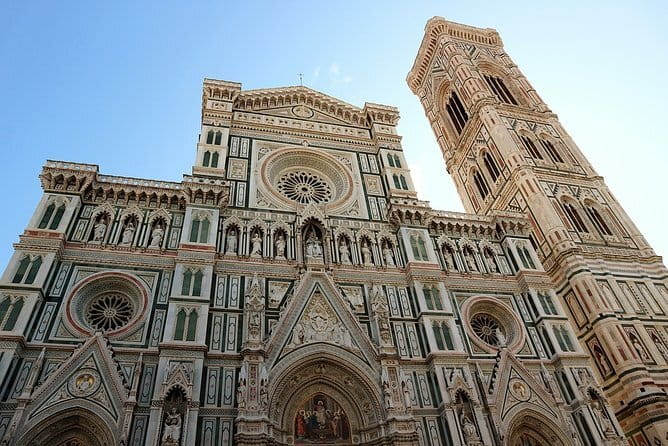
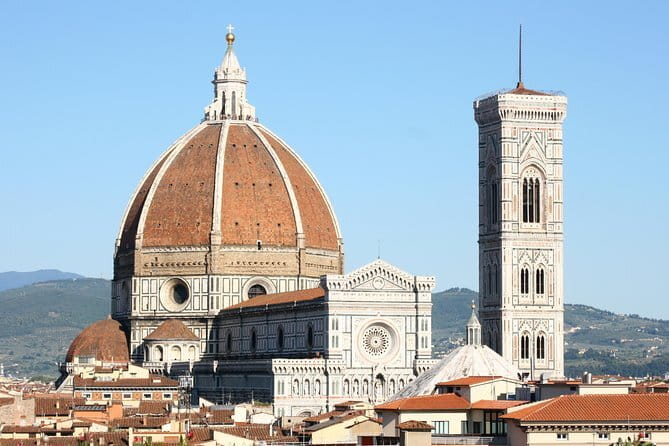
From San Lorenzo, the walk continues to Piazza del Duomo. This is the visual high point of the first half of the route. The Cathedral of Santa Maria del Fiore, Brunelleschi’s Cupola, Giotto’s Bell Tower, and the Baptistery of Saint John gather in one extraordinary square.
You receive an outside explanation of the architecture and history, with time to admire the buildings and hear about the dome’s importance. The Baptistery’s Gates of Paradise are part of the discussion, as are the cathedral and bell tower.
The stop is listed at about 20 minutes, which is enough for orientation but not for a full architectural study. You will not climb the dome as part of this experience, and attraction admission is not included. If you plan to visit the Duomo complex inside, arrange that separately and allow far more time.
This short stop works well early in a Florence visit. You can learn which building interests you most, note the entrances, and return when you are ready for a longer visit. Expect crowds in the square, so listen carefully and keep sight of the guide.
More walking tours in Florence:
- Florence: Guided Walking Tour
★ 4.5 · 3,334 reviews - Skip the line: Uffizi and Accademia Small Group Walking Tour
★ 4.5 · 3,135 reviews - Florence: Guided Walking Tour
★ 4.6 · 1,602 reviews - Florence: Renaissance and Medici Tales Guided Walking Tour
★ 4.8 · 1,549 reviews
Rubbing the nose of Porcellino
The route then heads to the Mercato della Paglia, or Straw Market, to see Fontana del Porcellino. This bronze piglet is tied to a popular luck tradition: rub the statue’s nose and you are meant to return to Florence.
It is a lighter moment after the churches and palaces. The stop takes about 10 minutes, giving you time to see the statue and hear the story without turning the visit into a long detour.
The market area also gives you another look at Florence’s souvenir trade. It is worth keeping your expectations practical here. Porcellino is a quick cultural stop, not a major monument, but its local tradition gives the route some variety.
Piazza della Signoria as an outdoor gallery
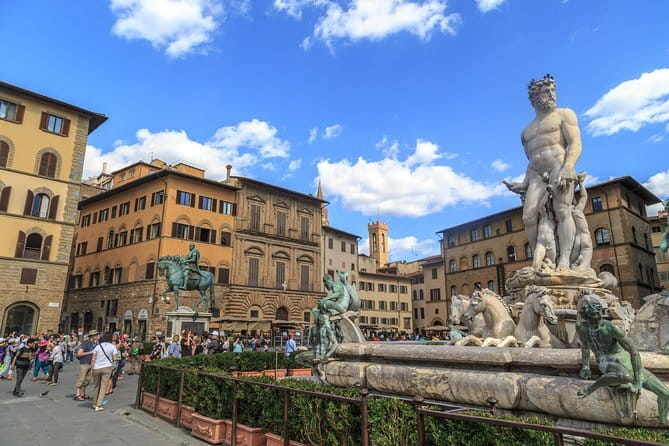
Piazza della Signoria brings you into Florence’s political center. Palazzo Vecchio dominates the square, while outdoor sculptures turn the surrounding space into an open-air gallery.
The guide points out works such as Giambologna’s Rape of the Sabine Women. The sculpture is especially interesting when you learn to look at it from several angles, since the figures twist upward in a composition meant to be viewed from all sides.
The square is also a place where the tour’s format becomes clear. You are given context while standing outdoors among crowds, cafes, and passing pedestrians. A strong guide can hold your attention and keep the explanation lively. A less engaging guide may leave you standing still for too long, especially on a chilly day.
That is one reason to wear warm layers even if the forecast looks mild. Several stops involve listening in an exposed public space rather than walking continuously. If you prefer constant movement, the tour may feel slower than expected.
The Uffizi courtyard and Vasari Corridor route

From Piazza della Signoria, the walk passes through the courtyard of the Uffizi Gallery. The museum itself is not included, but this exterior passage helps explain Florence’s artistic importance and the way the historic center was organized around Medici power.
The route then follows the path of the Vasari Corridor from the outside. The corridor was designed as a private connection between the government center and the Medici residence across the river. You do not enter the corridor on this tour, but tracing its route gives you a better sense of how the ruling family moved through the city.
This is a good example of the tour’s value. You are not simply checking off famous places. You are seeing how government, art, family power, and private movement were linked in a compact part of Florence.
Ponte Vecchio and the Oltrarno side
The tour crosses the Arno on the Ponte Vecchio, Florence’s oldest bridge and its famous jewelry bridge. Shops line the span, while the river views give you a welcome change from the narrow central streets.
The bridge is more than a photo stop. It connects the historic center with the Oltrarno, the area on the opposite bank. From here, the route reaches Pitti Palace, the grand Medici residence that became the family’s main home after the Palazzo Vecchio.
You see Pitti Palace from outside, since entry is not included. Still, this part of the walk is valuable because many short Florence tours never cross the river. One guide can show you how the city continues beyond the Duomo and Uffizi area.
The official end point is Ponte Vecchio, although the route description also includes Pitti Palace and the medieval quarter. Because the order may change, confirm with your guide how much of the route will be covered on your departure day. The supplied route places the finish at Ponte Vecchio, so you should plan on the tour ending there unless the guide explains otherwise.
Medieval Florence and Dante’s neighborhood
The final portion introduces the medieval quarters associated with Dante Alighieri. This area feels different from the grand Renaissance spaces. The streets are tighter, the buildings more austere, and the atmosphere tied to Florence before the Medici era reached its height.
You may see the Badia Fiorentina and the Bargello Palace. The Badia offers a more modest counterpoint to the Duomo, while the Bargello is known for its severe exterior and important sculpture collection. Again, the tour does not include attraction entry, so treat these as outside orientation points.
This ending adds depth to a route that could otherwise become a simple parade of Renaissance landmarks. Florence was not created all at once, and the medieval quarter helps you see the older city beneath the later monuments.
What the guide adds, and where the format can slip
The strongest part of the experience is the human explanation. Guides have been praised for clear accounts of Florence’s politics, art, architecture, and everyday life. Some have also offered practical suggestions for places to visit later, which is particularly helpful if this is your first day in town.
The tour works best when the guide keeps walking between stops and then pauses for a focused explanation. On the other hand, standing in one spot while a long account is repeated can feel slow. One guide was especially praised for pacing the group well, while another was criticized for giving information no more detailed than the tour description. Guide quality can vary, as it does with any shared walking tour.
Language is the biggest practical concern. English is offered, but several groups have included French or Spanish speakers alongside English speakers. When the guide delivers every explanation in two languages, the same stop can take longer and English-speaking time can feel reduced.
If you need an English-only experience, ask at the meeting point before the tour begins. The group limit is 20, but a smaller group is possible, and that can make questions easier. The best experiences have included groups of about five to ten people, though you should not assume that size.
The Vox City app after the walk
The mobile app is a useful addition, but it requires preparation. Download Vox City from the App Store or Google Play before the tour, bring your own smartphone, and carry headphones. The meeting-point assistant provides the credentials before the walk begins.
The app includes self-guided city itineraries, audio commentary, and explanations of points of interest. This helps fill the gaps left by a short guided route. You can return to a neighborhood at your own pace instead of relying entirely on the group schedule.
Headphones are not provided. Your phone also needs enough battery for the app, so charging before the tour is sensible. The app does not replace museum tickets or guided access to the interiors of the major attractions. Think of it as an extra walking companion, not an admission pass.
Is $30.04 good value?
At $30.04, the tour offers fair value if you want a broad introduction to central Florence. You get a local professional guide, a route covering both sides of the Arno, assistance at the meeting point, and access to a self-guided audio app.
The value drops if you expect long interior visits. Attraction entry is not included, and most monuments are seen from outside. You are paying for orientation, storytelling, and efficient use of your first afternoon, not for a museum tour.
For a short stay, that can be exactly right. You can learn where the main sights are, identify the interiors worth booking, and avoid spending your first day staring at a map. For a repeat visit focused on art collections, a specialized museum tour may serve you better.
Who should book this Florence walk?
I would choose this for a first visit, a short stay, or a day when you want the city to make sense before exploring alone. It suits people who enjoy history and architecture but do not want to plan every street and landmark themselves.
It is also a good fit if you want to cross the river and see Pitti Palace without arranging separate transport. The route is central, public transportation is nearby, and most participants can take part, provided they are comfortable walking and standing outdoors.
I would hesitate if you dislike shared tours, need an English-only group, or want detailed access to the Duomo, Uffizi, Medici Chapels, and Palazzo Vecchio. In those cases, book individual attraction visits or a private guide instead.
Should you book it?
Book this tour if you want a compact introduction to Florence’s Medici, medieval, and Renaissance landmarks, with a guide to connect the story and an app to continue on your own. The strongest reasons are the route, the local context, and the chance to cross the Arno in about 90 minutes.
Before paying, ask about the language mix and confirm the meeting-point identification. Some confusion has occurred when guides were not clearly identified, and bilingual commentary can stretch the time. With comfortable shoes, your phone, headphones, and realistic expectations about outdoor sightseeing, this is a useful first look at Florence for a reasonable price.
FAQ
How long does the Florence walking tour last?
The advertised duration is approximately 1 hour and 30 minutes. The actual pace can vary, and bilingual commentary or questions may make the walk longer.
What language is the tour offered in?
The tour is offered in English. Some groups have also included French or Spanish commentary, so ask about the language arrangement at the meeting point if this is important to you.
Where does the tour begin?
The meeting point is Via de’ Martelli, 50, 50122 Florence, Italy.
Where does the tour end?
The listed end point is Ponte Vecchio, 50125 Florence, Italy.
Are attraction tickets included?
No. Entry to attractions is not included. The tour provides outside visits and explanations, with the Basilica di San Lorenzo cloister included in the walking route.
Do I need a smartphone and headphones?
Yes. You need your own smartphone and headphones to use the Vox City app after the guided tour. Headphones are not provided.
What is the maximum group size?
The tour has a maximum of 20 participants.
Can I cancel for a full refund?
Yes, if you cancel at least 24 hours before the experience start time. Cancellations made less than 24 hours before the start time are not refunded, and changes within that period are not accepted.
More audio guide and self-guided tours in Florence
- Florence: Uffizi Priority Ticket & Masterpieces Audio App
★ 4.2 · 6,402 reviews - Florence: Michelangelo’s David Entrance Ticket and Audio App
★ 4.3 · 1,901 reviews - Florence: Uffizi & Accademia Priority Tickets with Audio App
★ 4.4 · 1,253 reviews - Florence: Eco-Friendly Golf Cart City Tour with Audio Guide
★ 4.6 · 1,094 reviews
Recently added around Florence
- Accademia and Uffizi Small-group Guided Tour★ 4.5 · 8 reviews
- The David from Michelangelo.★ 5.0 · 3 reviews
- Combo: Accademia + walking + Uffizi Galleries Guided Tour★ 3.5 · 6 reviews
- The Complete Wine Tour Brunello, Nobile, Chianti wine experience★ 4.0 · 7 reviews
- The Best of Tuscany in 3 Days★ 4.5 · 13 reviews
- The Cooking Lab – Authentic Food Experience★ 5.0 · 113 reviews
- Florence Central Market Food Tour – Private Tour★ 4.0 · 7 reviews
- Family Friendly Florence Private City Tour★ 5.0 · 47 reviews
Florence Renaissance History Tours, compared.
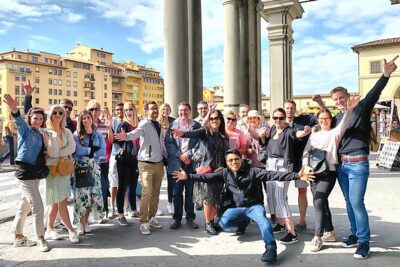
The Best tour in Florence: Renaissance & Medici Tales – guided by a STORYTELLER
Read our review →
The Best Tour in Florence: Renaissance and Medici Tales
Read our review →
The Dark Side of Florence: Mysteries and Legends
Read our review →
Renaissance and Medici Tales Guided Walking Tour
Read our review →
Dark Mysteries and Legends Guided Walking Tour
Read our review →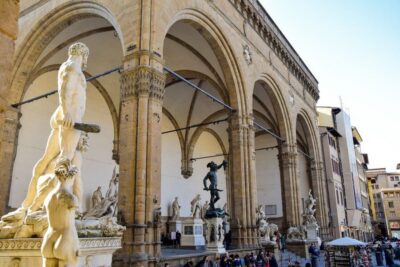
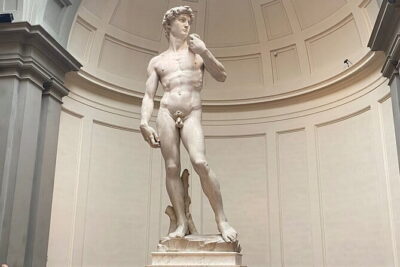
Accademia Gallery: Michelangelo’s David and High Renaissance Art
Read our review →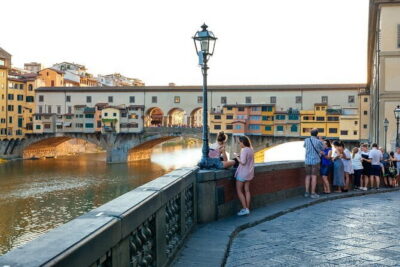
Florence Private Tour: Renaissance, Famous Families & Hidden Gems
Read our review →Browse the lists this tour appears in