
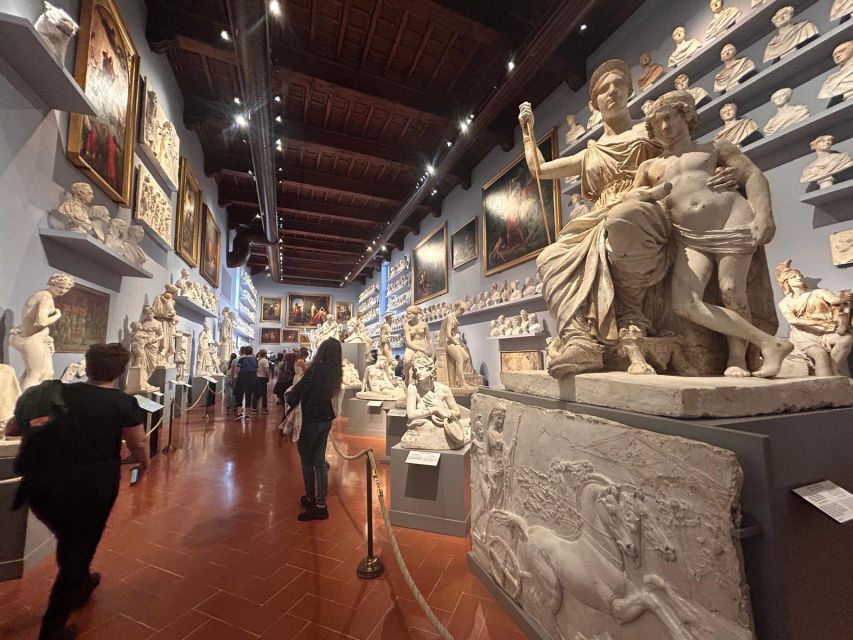
Reviewed · ACCADEMIA GALLERY AND DAVID TOURS
Florence: Michelangelo’s David Entrance Ticket and Audio App
Michelangelo’s David is the reason most people come to Florence’s Accademia Gallery, and seeing the original in person is quite different from seeing a photograph. The sculpture’s scale, detail, and calm expression only make full sense when you are standing a few steps away.
I like the timed entry because it saves you from the ticket-office queue, and I like the freedom of the audio app. You get useful background without being tied to a live guide or a fixed walking pace. The drawback is that the audio guide can be brief, and some visitors find it hard to match each recording with the correct artwork.
Key points at a glance
- David is the main event: See Michelangelo’s famous marble sculpture in the specially designed main hall.
- Timed entry saves time: Exchange your voucher for a physical ticket and use the separate entrance, though a short wait is still possible.
- The audio app gives you freedom: Download Pop Guide before arrival, then explore at your own pace with your own headphones.
- There is more than David: Look for Michelangelo’s unfinished sculptures, medieval paintings, Botticelli, Giotto, and imposing altarpieces.
- Small details matter: Bring a charged smartphone, headphones, and identification for children aged 6 to 17.
- Plan around crowds: The museum may delay entry when many people are inside, and late arrival can mean losing your timed slot.
Why the Accademia visit begins with David
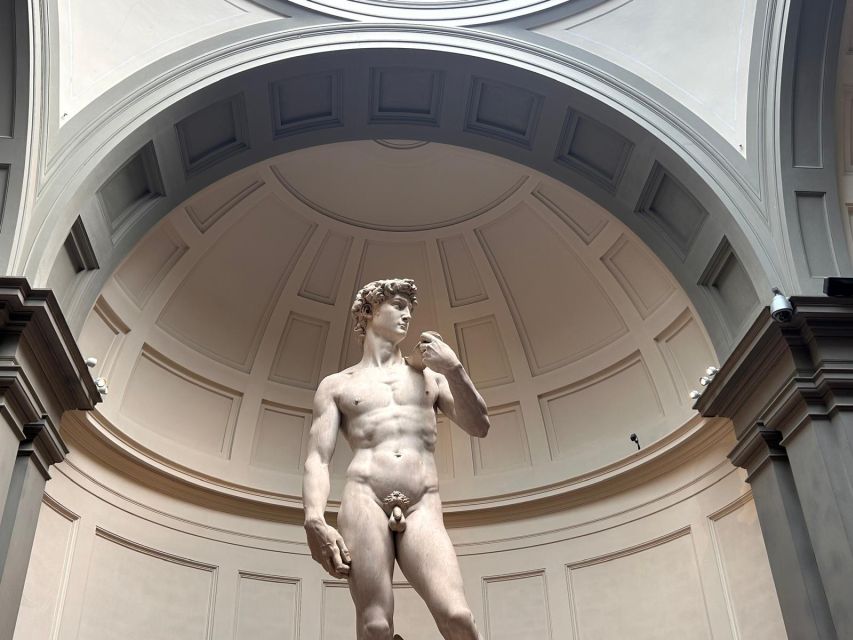
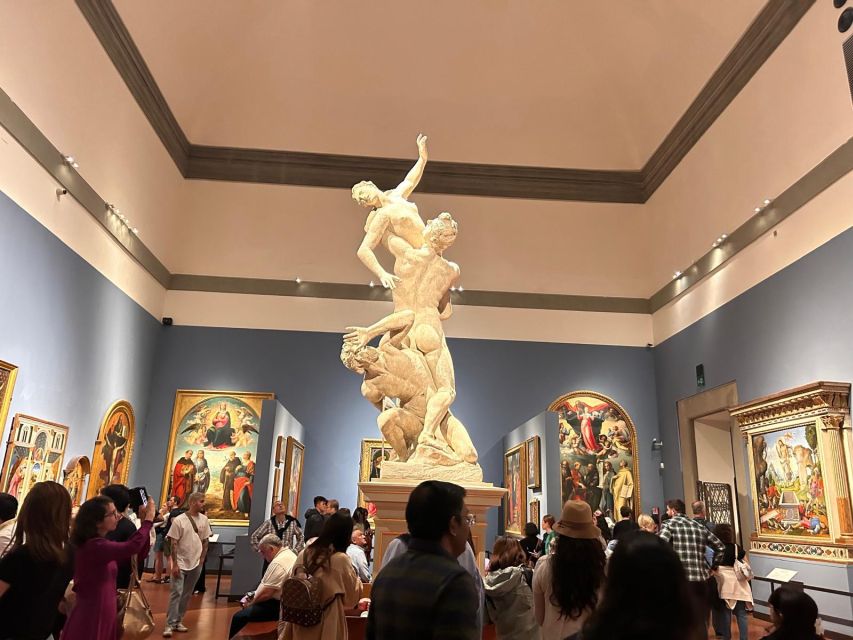
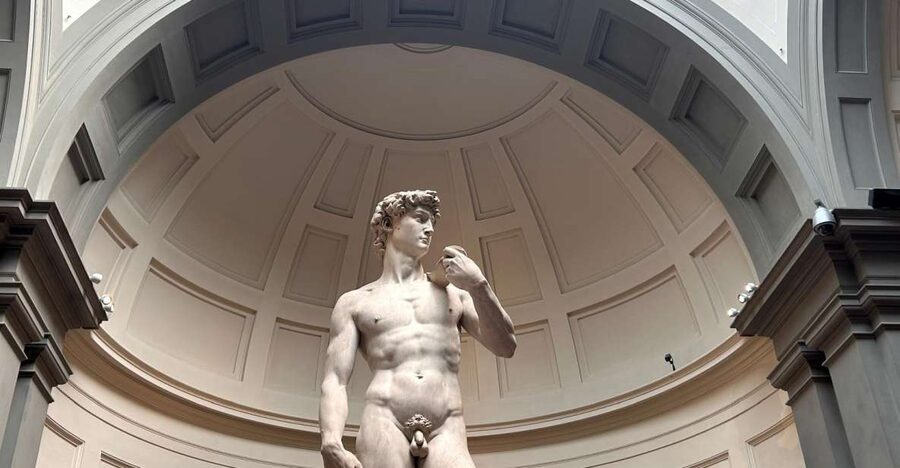
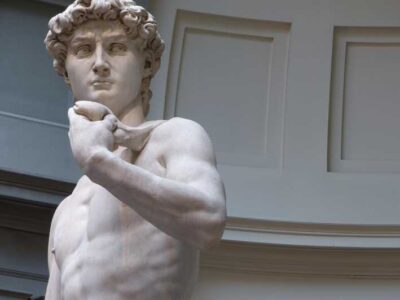
The Accademia Gallery is not Florence’s largest museum, but it contains one of the world’s most famous sculptures. David is housed in the main hall beneath a high ceiling, where you can walk around the statue and see it from several angles.
Michelangelo carved David from marble in the early 16th century. The figure represents the biblical hero before his battle with Goliath, not after it. That choice gives the sculpture its famous alert, tense expression. David is watching, thinking, and preparing.
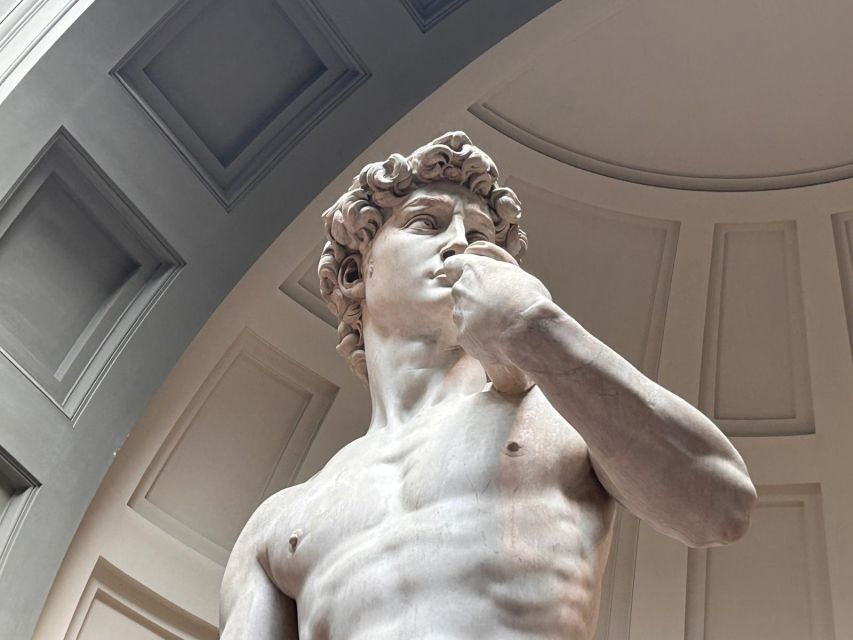
The details reward a slow look. Notice the hands, the veins, the turn of the head, and the way the body shifts its weight. A photograph can show the outline, but it cannot give you the full sense of the marble’s surface or the statue’s enormous scale.
You will usually find the room crowded, especially during high season. Take a moment to look up and around before moving close. The best part of this visit is not simply checking David off a list. It is giving yourself enough time to notice how the statue changes as you walk around it.
More ways to see the David at the Accademia:
- Florence: Timed Entrance Ticket to Michelangelo’s David
★ 4.6 · 16,983 reviews - Florence: Michelangelo’s David Skip-the-Line Entry Ticket
★ 4.5 · 12,764 reviews - Florence Accademia Gallery Tour with Entrance Ticket Included
★ 4.5 · 6,148 reviews
Meeting the host and getting inside
Your meeting point is in front of the Carrefour Express Supermarket. Look for a staff member holding a white flag marked ENJOY ROME. You exchange your voucher there for a physical museum ticket, then follow the host to the appropriate entrance.
This arrangement is simple, but it is not the same as walking directly into the gallery with a phone voucher. Allow time to find the Carrefour Express and locate the host before your scheduled admission. The meeting instructions are important, especially in Florence, where several streets around the Accademia can be busy with people heading toward the museum.
The main benefit is avoiding the regular ticket-office line. You enter through a separate entrance for timed admissions. That can save a great deal of time on a hot afternoon, when the queues outside may be long.
Do not treat the timed slot casually. Latecomers are not guaranteed admission or a refund. The museum may also hold groups for 15 or 20 minutes, and entry can take longer when the galleries are full. The point is to reduce the uncertainty, not to promise instant access at the exact minute printed on your ticket.
What the three-hour visit feels like
The listed duration is three hours, but you are not joining a three-hour guided tour. After the host gets you into the museum, you explore independently with the Pop Guide audio app.
That is a good setup if you like to pause, skip sections, or spend extra time with one artwork. You are free to focus on David, then decide how much attention to give the rest of the collection. Families and couples may find this easier than trying to stay beside a guide.
The audio app requires preparation. Download Pop Guide before you arrive, bring a charged smartphone, and carry your own headphones. At the meeting point, you receive login credentials. The app is useful for basic explanations, but it may not identify every work clearly, and some recordings are short.
I would not rely on the app as your only source of information if you want a detailed art lesson. A live guide can point out small features and answer questions. Here, the tradeoff is independence and usually a lower price than a private or group tour.
Michelangelo’s unfinished sculptures
After David, look for Michelangelo’s unfinished works. These sculptures are fascinating because parts of the figures still appear to be trapped inside the marble.
The unfinished surfaces let you think about the carving process in a direct way. Instead of seeing only a polished final figure, you can see how much material Michelangelo removed and how the human form seems to emerge from the stone. They also make a useful companion to David, which can appear almost impossibly complete.
This section is easy to rush past if you have come only for the famous statue. I recommend slowing down here. The unfinished figures show the physical work behind Michelangelo’s reputation and give you another way to understand his skill.
The audio app can help explain what you are seeing, but keep your eyes on the marble first. The visual contrast between the rough and finished surfaces is the important point.
More audio guide and self-guided tours in Florence:
- Florence: Uffizi Priority Ticket & Masterpieces Audio App
★ 4.2 · 6,402 reviews - Florence: Uffizi & Accademia Priority Tickets with Audio App
★ 4.4 · 1,253 reviews - Florence: Eco-Friendly Golf Cart City Tour with Audio Guide
★ 4.6 · 1,094 reviews - Florence: Uffizi Skip-the-Line Ticket & Digital Audio Guide
★ 4.2 · 1,044 reviews
The Gipsoteca and 19th-century sculpture
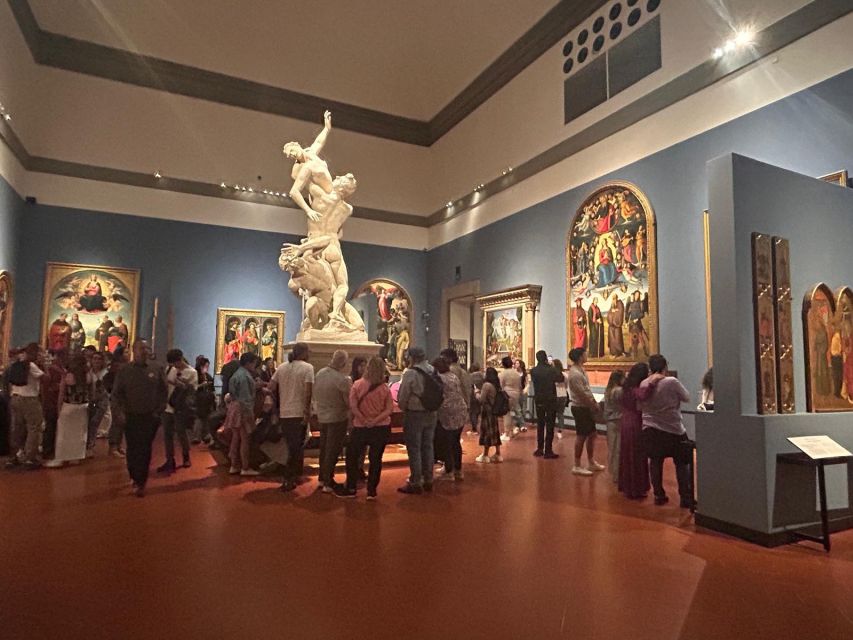
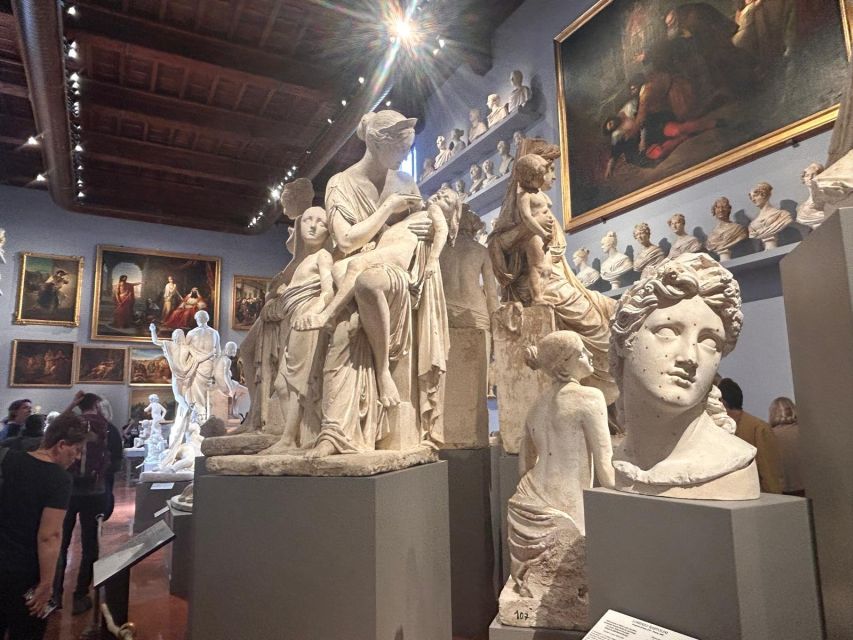
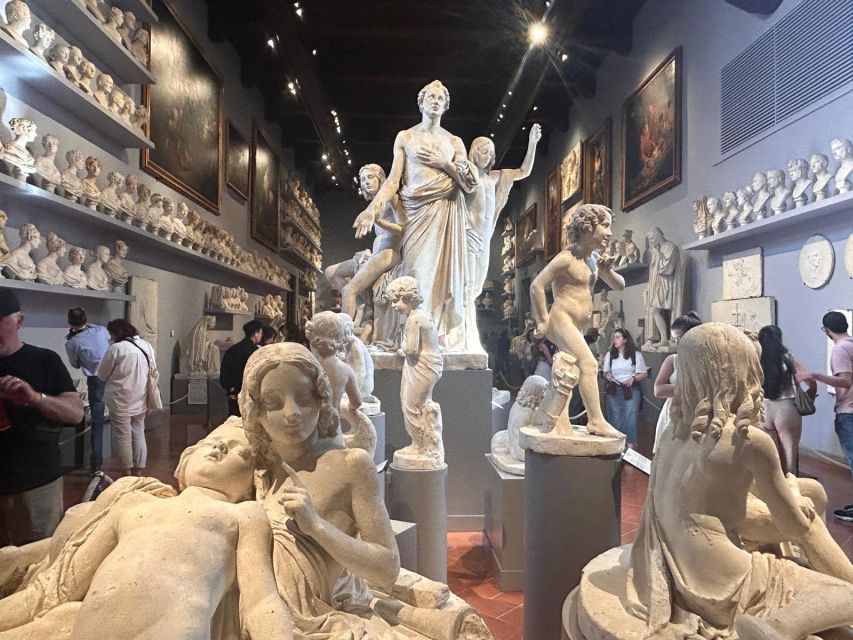
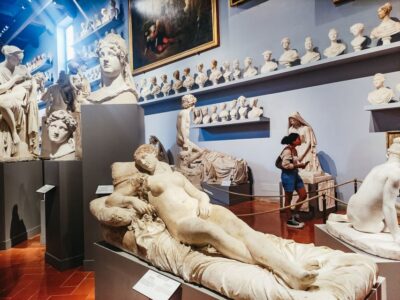
The Gipsoteca contains original plaster models made by Florentine sculptors in the 19th century. These are not as famous as David, yet they give the museum a wider time range and show how artists developed large sculptures before producing final versions.
Plaster models can look less dramatic than marble, but they reveal planning and proportion. You may see how a sculptor tested a pose or worked out the shape of a figure. This is a quieter part of the visit, and it helps you move beyond the idea that the Accademia is simply a one-statue museum.
If your time is limited, you might spend most of it with Michelangelo and the paintings. If you have the full three hours, the Gipsoteca is worth including. It adds context without requiring a separate museum visit.
Medici musical instruments, including Stradivarius pieces
The museum also holds original musical instruments from the Medici collection. Three are by Stradivarius, giving you a chance to see objects connected to Florence’s courtly musical life.
This is a welcome change of pace after the sculptures. Instruments show another side of the Medici world, where art, music, collecting, and political display were closely linked. You may not spend long in this section, but it rewards anyone who enjoys decorative arts or music.
The audio guide may offer a short explanation, but its coverage is not equally detailed for every object. Use the app as a helpful layer, not as a complete catalogue of everything in the building.
Medieval and Renaissance paintings
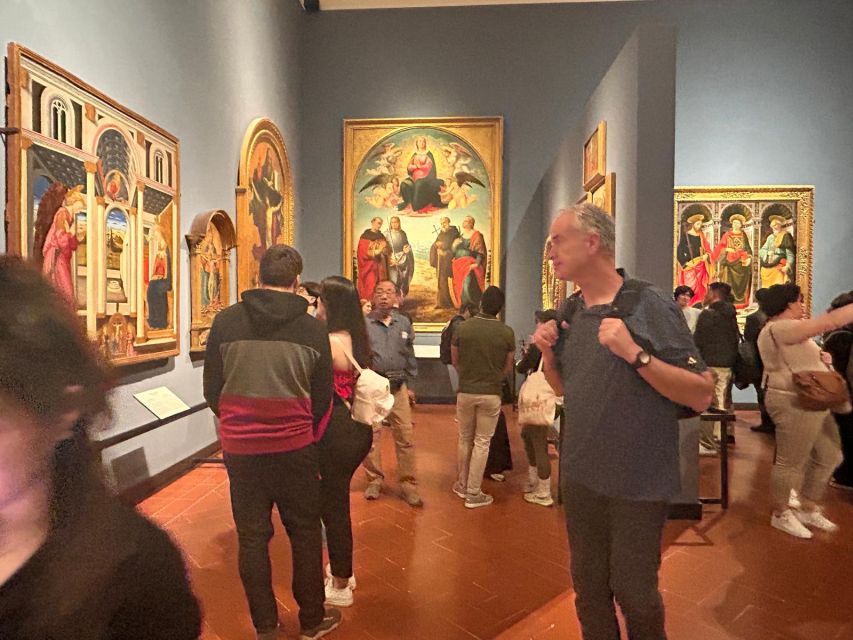
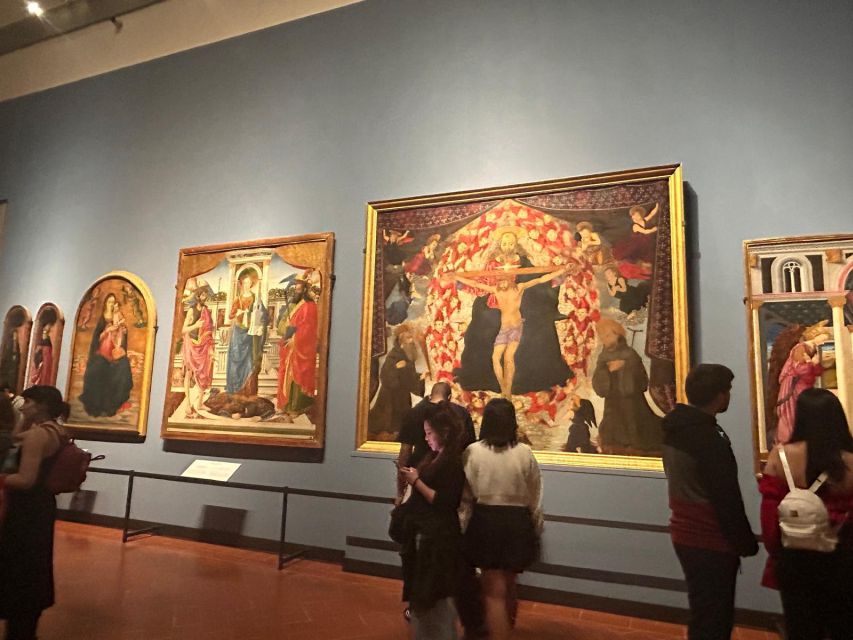
The painting galleries take you from the sculpture rooms into works by medieval and Renaissance artists. Giotto and Botticelli are among the names associated with the collection.
These paintings help place Florence’s artistic development into a larger story. Medieval altarpieces can look formal at first, especially after the immediate drama of David. Look closer at the gold backgrounds, the arrangement of figures, and the devotional purpose of the works.
Botticelli gives you a later Renaissance point of reference, while Giotto represents an earlier moment in the development of Florentine painting. You do not need an art-history degree to enjoy the change. Simply notice how figures, space, and emotion develop from one period to another.
The galleries can feel less crowded than the main David room, though conditions vary. This is where the audio app is most useful for a first visit, since a few lines about date, artist, and subject can make an unfamiliar altarpiece easier to read.
Medieval altarpieces on the top floor
Finish on the top floor with the medieval altarpieces. These large works were made for churches, so their size and structure can feel more impressive when you see them together.
The altarpieces are a good final stop because they take you back before Michelangelo and the high Renaissance. Their gold details and formal compositions offer a different kind of beauty. They also remind you that Florence’s artistic story did not begin with David.
If you are tired by this point, you might be tempted to skip the upper floor. I would try to continue, especially if you have already paid for the timed admission. The museum is compact enough that the extra rooms do not require an entire additional afternoon.
Is the $38 price good value?
At about $38 per person, this is more expensive than buying a basic museum ticket directly when official tickets are available. The difference is that you are paying for reserved access, help with the entrance process, and the audio app.
The value is strongest when official tickets are sold out or when you are visiting during a busy period. Several visitors have found this option only a little more expensive than the standard museum price, while avoiding a long queue. In that situation, the extra cost can be sensible.
The value is weaker if you already have a museum reservation, do not plan to use the audio app, and are comfortable organizing your own entry. One person simply needed admission and did not use the audio guide, so the added cost provided less benefit.
I would think of the $38 as a time-saving fee rather than a full guided-tour price. You get access and basic interpretation, not a personal art historian. For a first visit during a crowded week, that trade can be worthwhile.
How to make the audio guide work better
The Pop Guide app is easy to use when it is prepared in advance. Download it before heading to the meeting point, charge your phone, and bring headphones. This avoids wasting time outside while trying to install an app or find a connection.
The app gives you a self-guided route, but do not expect every artwork to have a long explanation. Some sections are brief, and locating the work connected to a recording can take effort.
I suggest using the app selectively:
- Start with David and Michelangelo’s unfinished works.
- Listen to explanations for the artists or rooms you do not recognize.
- Pause the audio when the gallery becomes crowded.
- Use the museum layout and the artwork itself as your main guide.
Your own earbuds are important. The activity does not provide headphones, and using a phone speaker would be awkward in a quiet gallery.
Who should book this experience?
This ticket suits you if David is a priority and you want to avoid the regular ticket-office queue. It also works well for independent visitors who prefer to move at their own pace.
Families may appreciate the simple entry process and the option to skip audio sections when children lose interest. Children aged 6 to 17 need valid photo identification showing their date of birth to receive the discounted rate. Without it, the full adult price may apply.
This is less suitable if you want a detailed, live explanation of every room. There is no live guide included. It may also disappoint you if you expect to walk straight inside at the scheduled time, since the museum can impose a short wait when visitor numbers are high.
The museum is wheelchair accessible. Large bags and luggage are not allowed, so arrive with only what you need for the visit.
Practical timing advice for Florence
Choose your start time carefully because the ticket is fixed. Give yourself enough time to reach the Carrefour Express, find the white flag, exchange your voucher, and join the correct entry line.
Once inside, plan on roughly two hours if you want to see David, the unfinished sculptures, the Gipsoteca, instruments, paintings, and altarpieces without racing. The listed three-hour window gives you room for a slower pace, pauses, and crowd delays.
Morning and early entry times can be appealing because queues may build later, but the exact starting times depend on availability. If your schedule is tight, leave a buffer after the museum rather than booking a restaurant or train immediately afterward.
Should you book the David ticket?
Book it if you want secure timed access, the official tickets are unavailable, or you would rather pay a little extra than spend part of your Florence day in line. The host system is straightforward, and the museum includes much more than the famous statue.
Skip it if you already have direct admission, do not want an app, or prefer a live art guide. The audio commentary is useful but not a replacement for an in-person specialist.
For most first-time visits, I think the ticket offers a fair trade: you get David, a worthwhile collection of paintings and sculpture, and a way into one of Florence’s busiest museums without the usual ticket-office gamble. Just arrive early, download Pop Guide, bring headphones, and leave enough time to appreciate the quieter rooms after the main attraction.
FAQ
How much does the Accademia Gallery ticket cost?
The listed price is $38 per person. This includes timed entry to the Accademia Gallery and access to the Pop Guide audio app.
Where is the meeting point?
Meet the activity provider’s staff in front of the Carrefour Express Supermarket. Look for a person holding a white flag marked ENJOY ROME.
Do I get to skip the line?
You skip the regular ticket-office line and enter through a separate entrance for timed admission. A wait of around 15 or 20 minutes is still possible, and entry may be delayed when the museum is crowded.
Is a live guide included?
No. A host or greeter helps you exchange the voucher and reach the correct entrance, but the visit is self-guided through the Pop Guide app.
What should I bring?
Bring a charged smartphone and your own headphones. Children aged 6 to 17 should also bring valid photo identification showing their date of birth.
Can I cancel the booking?
You can cancel up to 24 hours before the activity for a full refund. Reserve now and pay later is also available.
Recently added around Florence
- Accademia and Uffizi Small-group Guided Tour★ 4.5 · 8 reviews
- The David from Michelangelo.★ 5.0 · 3 reviews
- Combo: Accademia + walking + Uffizi Galleries Guided Tour★ 3.5 · 6 reviews
- The Complete Wine Tour Brunello, Nobile, Chianti wine experience★ 4.0 · 7 reviews
- The Best of Tuscany in 3 Days★ 4.5 · 13 reviews
- The Cooking Lab – Authentic Food Experience★ 5.0 · 113 reviews
- Florence Central Market Food Tour – Private Tour★ 4.0 · 7 reviews
- Family Friendly Florence Private City Tour★ 5.0 · 47 reviews
Accademia Gallery and David Tours, compared.
Timed Entrance Ticket to Michelangelo’s David
Read our review →
Michelangelo’s David Skip-the-Line Entry Ticket
Read our review →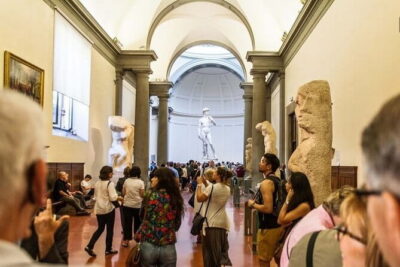
Florence Accademia Gallery Tour with Entrance Ticket Included
Read our review →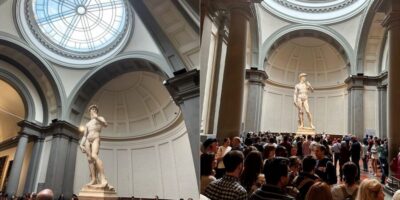
Timed Entry Ticket to Michelangelo’s David & eBook
Read our review →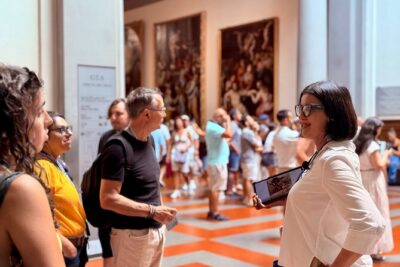
Skip the line: Uffizi and Accademia Small Group Walking Tour
Read our review →
Accademia Gallery Guided Tour with Entry Ticket
Read our review →Browse the lists this tour appears in