
Reviewed · FLORENCE RENAISSANCE HISTORY TOURS
The not-touristy Florence with Camilla, local art historian
Florence’s best moments are not always inside its famous museums. With Camilla, a local art historian, you walk from Santa Croce to Santa Trinita through medieval streets, small squares, and religious sites that many first-time visitors pass without a second glance. The tour connects art, faith, Dante, and daily city life in one compact route.
I like two things right away: the route moves across the old center instead of keeping you in one square, and Camilla gives the streets a clear cultural frame. The stop in Dante’s district, with its discussion of his love for Beatrice and the place of women in the Middle Ages, adds more than dates and names.
The main consideration is the price: $610 for about two hours makes this a premium walk. It can make sense for a private or very small party that wants Camilla’s close attention, but you should confirm how the price applies to your booking before paying.
Key points to know before you book
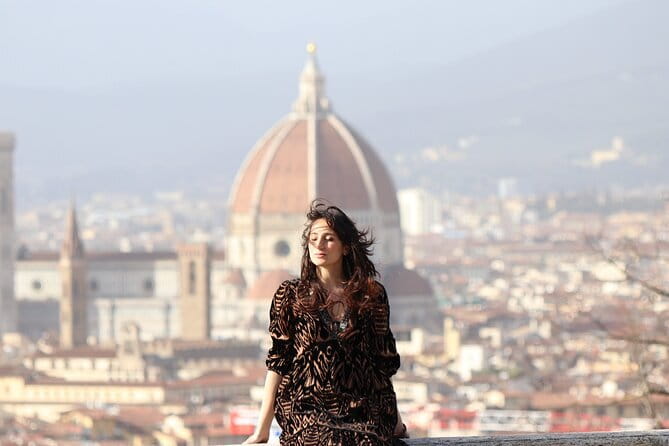
- Camilla brings an art historian’s eye to churches, squares, and Florence’s medieval streets.
- The route crosses the historic center, beginning at Santa Croce and ending at Santa Trinita.
- Dante’s district is part of the story, including his connection with Beatrice and the role of women in medieval society.
- Santa Trinita provides a quiet finish, with time inside a religious setting away from the street.
- The walk is short but focused, lasting about two hours with four planned stops.
- The group can reach 15 people, so ask about the expected group size if personal attention matters to you.
Why this Florence walk feels different
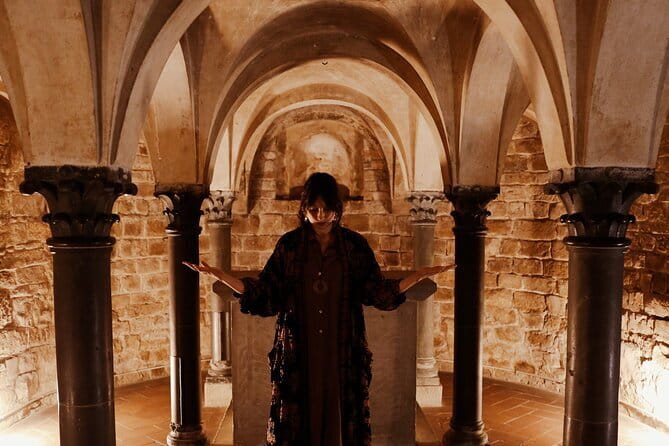
This is not a checklist tour of Florence’s headline sights. You do not spend the walk racing toward the Duomo, Uffizi, or Ponte Vecchio. Instead, Camilla uses a chain of squares and churches to explain how Florence developed as a place of beauty, belief, power, and artistic ambition.
That approach suits you if you have already seen the major landmarks, or if you want an introduction that feels more like a guided conversation than a parade of famous photo stops. The route is also useful at the start of a Florence visit because it helps you understand how the medieval center fits together.
The experience begins in Piazza di Santa Croce and finishes at Basilica di Santa Trinita. Those points are close enough to connect on foot, yet the route crosses a meaningful section of the old city. You get a sense of movement through Florence rather than standing in one spot while the guide talks.
The short duration matters. At roughly two hours, this is easy to fit before lunch, after a museum visit, or on a day when you want a modest amount of walking. The tradeoff is that each subject receives only a brief treatment. If you want long church visits or detailed art analysis of many individual works, a museum tour would give you more time with fewer themes.
More Renaissance and history tours in Florence:
- The Best tour in Florence: Renaissance & Medici Tales – guided by a STORYTELLER
★ 5.0 · 12,316 reviews - The Best Tour in Florence: Renaissance and Medici Tales
★ 5.0 · 10,810 reviews - The Dark Side of Florence: Mysteries and Legends
★ 5.0 · 2,785 reviews
Starting in Piazza Santa Croce
Piazza Santa Croce is the opening setting, and Camilla uses the square to introduce Florence’s links with art, beauty, and flowers. That may sound broad, but it gives the walk a useful starting point: you begin with the city’s identity before moving into its smaller details.
The square is an effective place to get your bearings. It gives Camilla room to explain the larger Florence story, while you can begin noticing how a major public space relates to the streets around it. The first stop lasts about ten minutes, so expect an introduction rather than a full study of every building or artwork.
Admission is included for the planned stops, according to the supplied tour details. Still, you should think of this as a walking and interpretation experience first. The value comes from how Camilla links places together, not from spending a long time inside a single monument.
Santa Croce is also a practical meeting point. The address is Piazza di Santa Croce, 13, in central Florence, and the area is near public transportation. You will want to arrive ready to walk, since the route soon leaves the opening square and heads through the older center.
Piazza San Firenze and the smaller corners of the city
The second stop is Piazza San Firenze, where Camilla points out lesser-known features in the area. The stated visit lasts about ten minutes, so this is another concise stop built around explanation and orientation rather than a long formal visit.
This part of the route appeals to me because it gives you a chance to see how Florence rewards attention. The city’s famous sights can dominate your schedule, but smaller squares often reveal the changing layers of the center. Camilla’s role is to help you notice why a place matters, even when it is not the image most people came to photograph.
Do not expect every corner to feel empty. Florence is a busy destination, and a walk through the center can still include ordinary city activity. The promise here is not complete solitude. It is a route that places less emphasis on the most crowded sights and more emphasis on the spaces between them.
That distinction matters when you book. If you want a tour built around Florence’s major masterpieces, this may feel too indirect. If you enjoy context, streets, and religious architecture, the detour can be the point.
Walking through Dante’s medieval district
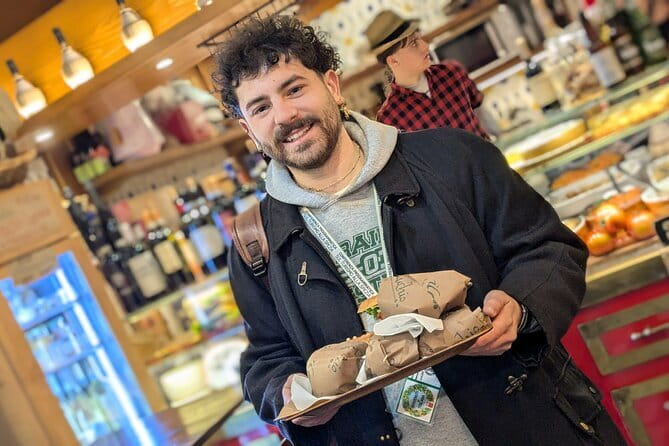
After San Firenze, the walk crosses the medieval center toward Piazza della Repubblica. Along the way, you pass through Dante’s district and see his house. The tour uses this stretch to discuss Dante’s love for Beatrice and the role of women in the Middle Ages.
This is one of the most distinctive parts of the experience. Dante is not treated only as a famous poet attached to a house. His story becomes a way to talk about medieval ideas of love, society, and gender. That gives the walk a human subject, not just a sequence of architectural facts.
You should keep your expectations measured. The tour description does not promise entry into Dante’s house or a long literary lecture. The useful part is the setting and the conversation as you move through the district. Camilla can place the story in the streets where the medieval city took shape, which gives the subject a stronger sense of place.
The route then reaches Piazza della Repubblica after crossing the old center. The stop lasts about fifteen minutes, making it the longest planned pause. The square provides a clear change from the tighter medieval streets, and Camilla can use that contrast to show how Florence contains different layers of urban development.
For me, this walking connection is more valuable than a rushed stop at an isolated address. You see how one area leads into another, and you get a better feel for the scale of central Florence. Wear comfortable shoes, since the experience is built around moving through the city rather than simply standing at four points.
A completely different way to spend an afternoon in Florence:
- Florence: Skip-The-Line Uffizi Gallery Timed Entry Ticket
★ 4.5 · 27,832 reviews - Tuscany Day Trip from Florence: Siena, San Gimignano, Pisa and Lunch at a Winery
★ 5.0 · 21,634 reviews - Florence: Timed Entrance Ticket to Michelangelo’s David
★ 4.6 · 16,983 reviews - Florence: Michelangelo’s David Skip-the-Line Entry Ticket
★ 4.5 · 12,764 reviews
Finishing inside Basilica di Santa Trinita

The final stop is Basilica di Santa Trinita, where the walk closes in a quieter religious setting. Camilla describes the ending as a chance to experience the silence of a medieval sacred space after moving through the city streets.
That change in mood is a strong choice. A Florence walk can easily become a rush of façades, stories, and photographs. Finishing inside a church gives you a pause. You have time to let the themes of art, belief, and medieval life settle without the same street noise around you.
The visit is planned for about ten minutes. That is enough for a focused look and a quiet conclusion, but not enough for a full church tour or extended art study. If Santa Trinita is a major priority for you, you may want to return on your own with more time.
The end point is Piazza di Santa Trinita, 50123 Florence. This makes the tour convenient for continuing into the center afterward. You are not returned to Santa Croce, so plan your next stop from the finishing point rather than assuming a round-trip route.
What Camilla adds as an art historian
The strongest reason to choose this experience is Camilla herself. She is presented as a local art historian, and the route depends on her ability to connect visual culture with social and religious history.
That matters because Florence can be hard to read without context. You may see a church, a square, or a medieval street and understand its appearance without understanding its place in city life. Camilla’s focus gives you a way to ask why the site mattered and how it relates to Florence’s wider story.
A strong guide also changes the value of a short tour. Two hours is not enough to cover everything, but a clear guide can help you leave with a useful mental map. The praise attached to Camilla centers on her love for the subject and her ability to make Florence’s art feel more meaningful. Those qualities are especially helpful if you want interpretation rather than a simple list of facts.
The group limit is listed as 15 people. That is still large enough for the experience to feel less personal if the group fills, though it is smaller than many city walks. If you want close conversation and plenty of questions, check the expected group size when booking.
Is $610 a fair price?
At $610, this is not a budget walking tour. The price needs to be judged against the format: about two hours, a local art historian, a route focused on places away from the standard sightseeing path, and admission included for the listed stops.
For a private booking or a small party splitting the cost, the price may be reasonable if Camilla’s personal attention is the main reason you are booking. It can also suit visitors who have limited time and want a thoughtful introduction rather than several hours of general sightseeing.
For one person or a couple paying the full amount, the cost is harder to justify. The walk is short, and the itinerary includes four brief stops rather than long visits to major paid attractions. You are paying mainly for the guide’s interpretation and the carefully connected route.
I would ask one practical question before confirming: does the $610 price cover the whole booking or each person? The supplied details give the price but do not clarify its basis. That answer changes the value considerably.
Walking comfort, timing, and group size

The tour lasts approximately two hours and takes place on foot across central Florence. Most people can participate, and the route is near public transportation, but the supplied information does not give a detailed accessibility description.
You should be prepared for steady city walking and time on your feet. Comfortable shoes are the sensible choice. Since the experience requires good weather, rain or poor conditions can lead to a different date or a full refund.
The mobile ticket is convenient. You can keep the booking on your phone rather than carrying a printed voucher. Confirmation is provided at booking, which helps when you are arranging a tight Florence schedule.
The route begins at Piazza Santa Croce and ends at Basilica di Santa Trinita. That one-way design is useful if you want to continue sightseeing afterward, but it means you should not plan to finish back at the starting square.
Who will enjoy this most?
I would choose this walk if you care about the story behind Florence’s streets. It suits first-time visitors who want a softer introduction to the city, as well as repeat visitors who have already seen the major sights and want a different angle.
It is a good fit for people who enjoy art, religious sites, medieval history, and literary connections. The discussion of Dante and Beatrice gives the route a personal thread, while the churches and squares keep it tied to the physical city.
Families with older children may also find the themes easier to follow than a long museum lecture, though the tour is not described as a dedicated children’s program. Anyone who dislikes walking, wants extensive interior visits, or prefers major landmarks should consider another format.
The group cap of 15 offers some control over size, but it is not a guarantee of a private experience. If direct conversation with Camilla is important, confirm the group arrangement before booking.
Cancellation and weather notes
You can cancel for a full refund up to 24 hours before the start time. Changes or cancellations made less than 24 hours before the experience are not accepted, and the amount paid is not refunded.
Poor weather can cancel the walk. In that case, you are offered another date or a full refund. The experience also requires a minimum number of participants, so failure to reach that minimum can lead to another date, another experience, or a full refund.
These rules are fair for a scheduled walking tour, but keep the deadline in mind if your Florence plans may change. The important cutoff is based on local time.
Should you book this Florence walk?
Book it if you want Florence explained through small squares, medieval streets, Dante, and churches, and if you place a high value on Camilla’s art-historian guidance. The route is short, focused, and more thoughtful than a standard landmark march.
Think twice if $610 feels high for two hours or if you want long visits inside famous museums. This is a premium interpretation-led walk, not a low-cost overview.
My practical call: it is best for a small party that wants a personal introduction to Florence’s less obvious corners and is comfortable paying for a specialist guide. Confirm the price basis and expected group size first. If those details suit your budget, the route offers a useful, human-scale way to understand the city.
FAQ
How long does the Florence walking tour last?
The experience lasts approximately two hours.
Who leads the tour?
The tour is led by Camilla, a local art historian.
Where does the tour begin?
It begins at Piazza di Santa Croce, 13, 50122 Firenze FI, Italy.
Where does the tour end?
It ends at Basilica di Santa Trinita, Piazza di Santa Trinita, 50123 Firenze FI, Italy.
What places are included on the route?
The planned stops are Piazza Santa Croce, Piazza San Firenze, Piazza della Repubblica, and Basilica di Santa Trinita.
Does the tour include Dante-related sites?
Yes. The route passes through Dante’s district and includes seeing his house. The discussion covers Dante’s love for Beatrice and the role of women in the Middle Ages.
What is the maximum group size?
The tour can include a maximum of 15 people.
Is the ticket mobile?
Yes. The experience provides a mobile ticket.
Can I cancel for a refund?
You can cancel up to 24 hours before the start time for a full refund. Cancellations or changes made within 24 hours are not refunded or accepted. If poor weather or an insufficient minimum number of participants causes the experience to be canceled, you are offered another date or experience, or a full refund.
Recently added around Florence
- Accademia and Uffizi Small-group Guided Tour★ 4.5 · 8 reviews
- The David from Michelangelo.★ 5.0 · 3 reviews
- Combo: Accademia + walking + Uffizi Galleries Guided Tour★ 3.5 · 6 reviews
- The Complete Wine Tour Brunello, Nobile, Chianti wine experience★ 4.0 · 7 reviews
- The Best of Tuscany in 3 Days★ 4.5 · 13 reviews
- The Cooking Lab – Authentic Food Experience★ 5.0 · 113 reviews
- Florence Central Market Food Tour – Private Tour★ 4.0 · 7 reviews
- Family Friendly Florence Private City Tour★ 5.0 · 47 reviews
Florence Renaissance History Tours, compared.
The Best tour in Florence: Renaissance & Medici Tales – guided by a STORYTELLER
Read our review →
The Best Tour in Florence: Renaissance and Medici Tales
Read our review →
The Dark Side of Florence: Mysteries and Legends
Read our review →
Renaissance and Medici Tales Guided Walking Tour
Read our review →
Dark Mysteries and Legends Guided Walking Tour
Read our review →
Accademia Gallery: Michelangelo’s David and High Renaissance Art
Read our review →
Florence Private Tour: Renaissance, Famous Families & Hidden Gems
Read our review →Browse the lists this tour appears in