
Reviewed · FLORENCE RENAISSANCE HISTORY TOURS
Renaissance Secrets with Elvis – Walking experience
Florence’s story is not confined to its museums. This Medici-focused walking tour links the Accademia, Duomo, Piazza della Signoria, Ponte Vecchio, Palazzo Pitti, and San Lorenzo into one useful city walk. You get the political story behind the art, along with the kind of street-level orientation that helps Florence make sense.
I like two things here. First, the route gives you a clear framework for the Renaissance instead of treating each monument as an isolated photo stop. Second, guides such as Elvis and Alisa bring a personal, well-informed style, with Alisa praised for her warmth and Elvis noted for making the subject lively without talking down to anyone.
The main consideration is timing. The advertised length is about 90 minutes, yet the route covers a large part of central Florence. Expect an efficient overview rather than a slow, museum-style examination of every site, and confirm whether you want interior admissions before booking.
Key points to know before you book
- Start outside the Accademia: Meet at Via Ricasoli 58, in front of the Galleria dell’Accademia.
- Follow the Medici trail: The route connects the Duomo, Signoria, Ponte Vecchio, Palazzo Pitti, and San Lorenzo.
- Learn the story behind the sights: The focus is the Medici family and Florence’s role in the Renaissance.
- Expect a small group: The maximum is 15 people, with the possibility of a more personal experience.
- Pay about $30.10: That is a fair price for a guided orientation if you value context and city layout.
- Plan for English: The experience is offered in English and lasts about one hour and 30 minutes.
Why this route works for a first look at Florence
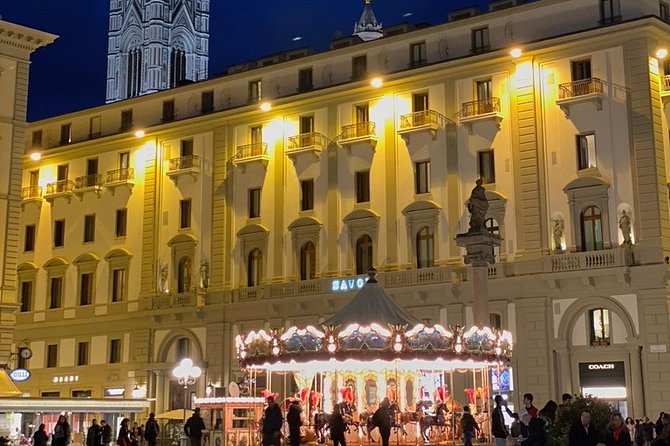
I like walking tours that give you a mental map before you start tackling Florence’s museums. This one begins beside the Accademia, then leads you toward the Duomo and across the political and commercial heart of the city. You are not simply collecting landmarks. You are following the places where Medici wealth, church power, art, and public life met.
The Medici theme gives the walk a useful thread. Florence can feel like a long parade of grand buildings, sculpted figures, and famous names. A guide can explain how the Medici family shaped the city’s cultural life and why the Renaissance became so strongly tied to Florence.
That context matters most when you are standing in a busy square and trying to understand what you are seeing. A short explanation about who paid for a building, who controlled a neighborhood, or how a family used art to display power can make the city feel less like a museum and more like a living political story.
At $30.10 per person, this is not the cheapest way to stroll around Florence. It is still reasonable if the guide gives you a strong introduction and helps you decide where to spend your own time afterward. The value is in the explanation and the route, not in transportation or a long museum visit.
More Renaissance and history tours in Florence:
- The Best tour in Florence: Renaissance & Medici Tales – guided by a STORYTELLER
★ 5.0 · 12,316 reviews - The Best Tour in Florence: Renaissance and Medici Tales
★ 5.0 · 10,810 reviews - The Dark Side of Florence: Mysteries and Legends
★ 5.0 · 2,785 reviews
Starting at Via Ricasoli and the Accademia
The meeting point is Via Ricasoli 58, directly in front of the Galleria dell’Accademia. That is a practical starting place because the Accademia is one of Florence’s best-known artistic addresses and sits close to the Duomo.
You should arrive with the meeting point clearly saved on your phone. Via Ricasoli is a central street, and the area around the Accademia can be busy. The mobile ticket makes it easy to keep your booking details with you, but it does not replace the need to identify the guide and group at the appointed time.
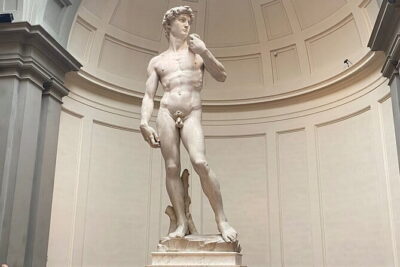
The Accademia is strongly associated with Michelangelo’s David, but the supplied tour details do not promise entry into the gallery. Treat this as a meeting point and an exterior part of the route unless the provider confirms otherwise. That distinction matters because the tour is short, and a full gallery visit would require a different pace.
From here, the guide can begin with the larger question: why did Florence become such an important center for art and ideas? That opening sets up the rest of the walk. Instead of seeing the Renaissance as a distant schoolbook period, you start connecting it to streets, churches, families, and public spaces.
Piazza del Duomo and Florence’s public face
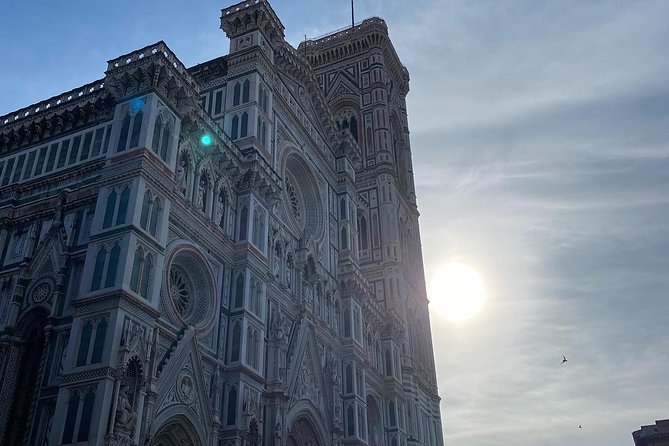
The route continues to Piazza del Duomo, the city’s great religious center. The square brings several major pieces of Florence together, making it a natural place for a guide to explain how faith, civic pride, architecture, and money worked together.
You can expect the guide to use the setting to discuss Florence’s artistic legacy and the forces that helped shape it. The value here is not just the view. It is the ability to understand why this cluster of buildings carries such weight in the city.
The square can be crowded, so listen carefully and keep the group in sight. A 15-person maximum is helpful, but it is still possible for the party to spread out around a busy monument or crossing. Comfortable walking shoes and a little attention to the group will make the experience easier.
Because the tour is offered in English, you can ask questions and follow the historical thread without having to translate along the way. The guide’s role is especially useful here, where visual grandeur can overpower the smaller details.
Piazza della Signoria and the politics of art
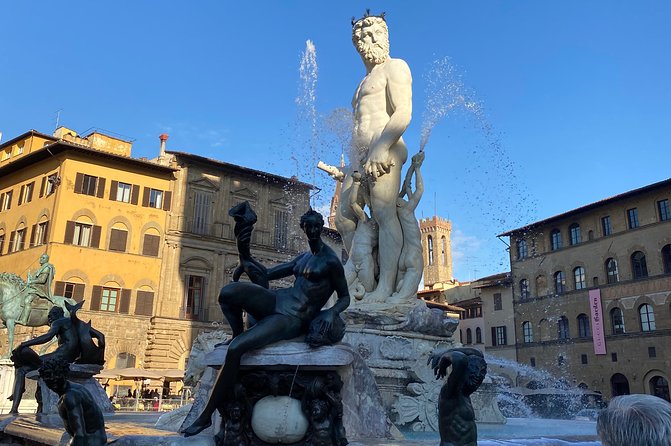
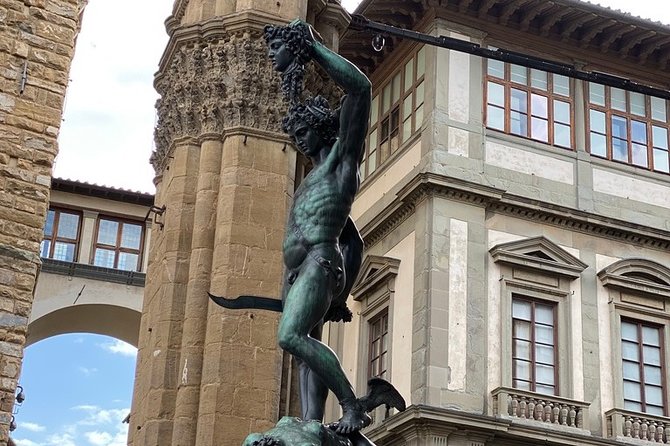
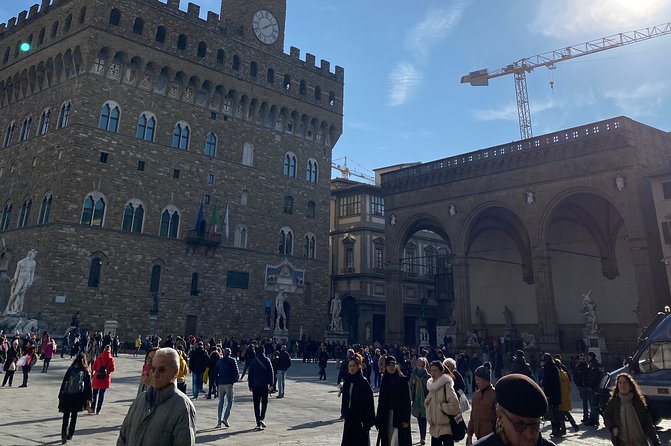
Piazza della Signoria shifts the focus from religious power to civic and political life. It is one of the best places on the route to connect public sculpture with authority, competition, and the image Florence wanted to project.
This is where the Medici story can become especially engaging. The family’s importance was not only financial. Power was displayed through buildings, artistic commissions, public ceremonies, and control of central spaces. A good explanation helps you see why a statue or palace was placed where it was, rather than treating the square as a random collection of famous sights.
I also like this stop because it gives the walk a change of mood. The Duomo presents Florence as a religious and artistic center. Piazza della Signoria shows the city as a place of argument, ambition, and government. Moving between those spaces helps you understand the city’s character.
The drawback is that this is an outdoor explanation in a public square. Noise and crowds may affect how easily you hear every word. If you want detailed discussion of each work, you may need to return later on your own or book a longer art-focused visit.
More walking tours in Florence:
- Florence: Guided Walking Tour
★ 4.5 · 3,334 reviews - Skip the line: Uffizi and Accademia Small Group Walking Tour
★ 4.5 · 3,135 reviews - Florence: Guided Walking Tour
★ 4.6 · 1,602 reviews - Florence: Renaissance and Medici Tales Guided Walking Tour
★ 4.8 · 1,549 reviews
Ponte Vecchio and the Medici connection
Ponte Vecchio is one of the route’s most memorable stops. The bridge crosses the Arno and links the central city with the direction of Palazzo Pitti. It is also a natural place to discuss how Florence developed across the river and how elite power connected different parts of the city.
The bridge is visually appealing, but it can be tightly packed. You will get more from the stop if you focus on the guide’s explanation rather than trying to move quickly through the shops and crowds.
The Medici connection gives Ponte Vecchio more meaning than a simple scenic crossing. The tour’s central idea is that Florence’s famous places are connected by family influence and Renaissance ambition. At the bridge, that idea becomes physical: you are moving from one major zone of the city to another along a route shaped by history.
You should also keep the 90-minute schedule in mind. Ponte Vecchio is a place where you may want to linger for photographs, but a walking tour needs to keep moving. If the bridge view is a priority, plan time to return later.
Palazzo Pitti and San Lorenzo complete the story
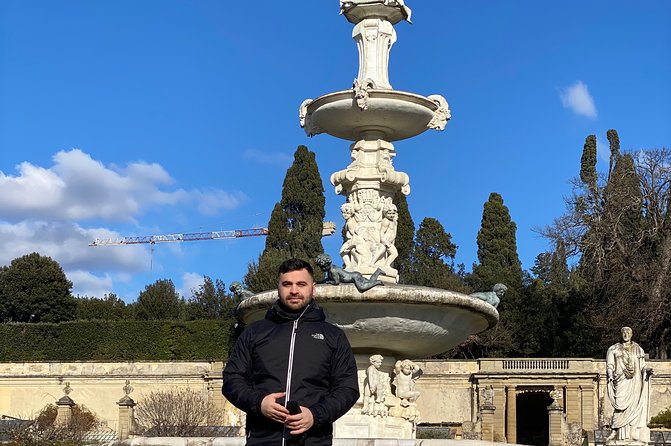
Palazzo Pitti adds another major Medici setting to the route. Its position across the Arno helps show how Florence’s ruling family used grand residences and public spaces to express status and authority.
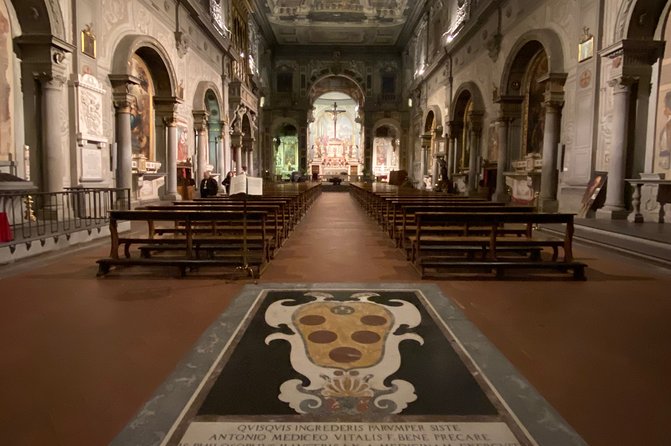
The itinerary also includes San Lorenzo, another important part of the city’s Medici story. Together, Palazzo Pitti and San Lorenzo broaden the tour beyond the most photographed central landmarks. You get a sense of how the family’s influence reached across Florence, from political squares to religious and residential centers.
This is one reason I would take the tour early in a Florence stay. After the walk, you have a better basis for choosing what to revisit. You might want more time at a palace, a church, a gallery, or simply a quiet look at the streets you crossed with the guide.
The route covers a lot of ground for a 90-minute experience. That is useful if you want a quick orientation, but it also means the stops cannot all receive equal attention. Consider this a connected introduction rather than a full visit to each building.
The guides make the difference
The strongest part of this experience is the guiding. Elvis is described as relaxed, entertaining, and highly informed, with a clear passion for Florence. That combination matters. A guide can know the facts and still make a walk feel flat. Here, the aim is to connect information with genuine affection for the city.
Alisa is another guide associated with the experience. She is described as personable and good at helping people understand Florence’s layout. That is a useful skill for a first day because the city’s central streets can seem confusing even when the landmarks are close together.
Claudius and Elvis have also provided highly personal tours, including a walk for a single participant. You should not assume you will receive a private tour, since the group can include up to 15 people. Still, the small maximum leaves more room for questions than a large coach-style outing.
One guide was also praised for speaking four languages, though the activity itself is offered in English. The important point for you is that the guide team appears comfortable presenting art and history to different kinds of visitors, including families.
A particularly useful detail is the family appeal. A family with children aged 10 to 14 found the experience engaging for both adults and young people. That does not mean every child will love a historical walk, but the style should suit families who want substance without a stiff lecture.
How much history will you actually get?
The tour centers on the Medici family and the Renaissance. You should expect an explanation of Florence as a cultural center and an account of how the city’s artistic legacy developed.
The word secrets in the title suggests hidden stories, but you should interpret it sensibly. This is not a promise of access to private rooms or restricted areas. The interesting secrets are likely to be the connections and lesser-known context that become visible when someone explains the city in sequence.
The subject is broad, so the guide has to choose what to include. In 90 minutes, you may hear a clear overview of Medici influence, Renaissance culture, and the meaning of the main landmarks. You should not expect a detailed biography of every Medici ruler or a full art lecture on every building.
That balance is appropriate for many visitors. I would choose this tour if you want to understand why Florence matters before spending more time inside its museums. I would choose a longer specialist tour if you already know the basic Renaissance story and want close attention to individual works.
Price, group size, and practical value
The cost is $30.10 per person. With a maximum of 15 participants, the price is fair for a guided city orientation, especially if the group remains well managed and you use the information to plan the rest of your stay.
The average booking time is 14 days ahead. That suggests you should not leave it until the last minute if you have fixed plans in Florence. Booking ahead also helps you place the walk at the start of your visit, when its city layout and museum context are most useful.
The experience includes a mobile ticket and operates in English. It begins and ends at Via Ricasoli 58, so you do not need to arrange a separate return transfer. Since it is a walking activity, you should allow enough energy for streets, squares, and crossings rather than expecting a seated tour.
Most people can participate, and service animals are allowed. The meeting point is near public transportation. Free cancellation is available if you cancel at least 24 hours before the start time. A cancellation made inside that window is not refundable, and changes made then are not accepted.
Who will get the most from this walk?
I would recommend it to a first-time visitor who wants a quick historical framework. It is also a good fit for someone who finds Florence’s art overwhelming and wants a guide to explain the links between the city’s major places.
Families may appreciate the accessible presentation, particularly if children can stay interested through stories about powerful families, art, and city rivalry. Couples and solo visitors can also benefit, especially if they want a structured first outing rather than wandering without a plan.
You may want something else if your priority is entering the Accademia or spending extended time inside museums. The information provided does not include admission details, and the short duration leaves limited time for interior visits. This is a walking overview with major outdoor landmarks, not a substitute for a dedicated gallery tour.
It is also worth being realistic about the pace. The route reaches several important places, but you will not have unlimited time for photographs or quiet observation at each one. I would schedule the tour early, then return to the places that deserve more time.
Should you book Renaissance Secrets with Elvis?
Book it if you want a small-group introduction to Florence’s Medici and Renaissance story, led in English by guides such as Elvis or Alisa. The best reason to choose it is the combination of city orientation and historical context. You finish with a clearer idea of how the Duomo, Signoria, Ponte Vecchio, Palazzo Pitti, and San Lorenzo fit together.
Skip it if you mainly want museum entry, a slow art lesson, or a long visit at one landmark. For everyone else, $30.10 is a sensible price for 90 minutes of focused walking, especially at the beginning of a Florence stay.
FAQ
How much does the walking tour cost?
The listed price is $30.10 per person.
How long does the experience last?
The tour lasts approximately one hour and 30 minutes.
What language is the tour offered in?
The experience is offered in English.
Where does the tour begin?
The meeting point is Via Ricasoli 58, 50122 Florence, in front of the Galleria dell’Accademia.
Where does the tour end?
The activity ends back at the meeting point.
How large can the group be?
The maximum group size is 15 participants.
Can I cancel for a full refund?
Yes. You can cancel for a full refund up to 24 hours before the experience begins. Cancellations or changes made less than 24 hours before the start time are not accepted for a refund.
Recently added around Florence
- Accademia and Uffizi Small-group Guided Tour★ 4.5 · 8 reviews
- The David from Michelangelo.★ 5.0 · 3 reviews
- Combo: Accademia + walking + Uffizi Galleries Guided Tour★ 3.5 · 6 reviews
- The Complete Wine Tour Brunello, Nobile, Chianti wine experience★ 4.0 · 7 reviews
- The Best of Tuscany in 3 Days★ 4.5 · 13 reviews
- The Cooking Lab – Authentic Food Experience★ 5.0 · 113 reviews
- Florence Central Market Food Tour – Private Tour★ 4.0 · 7 reviews
- Family Friendly Florence Private City Tour★ 5.0 · 47 reviews
Florence Renaissance History Tours, compared.
The Best tour in Florence: Renaissance & Medici Tales – guided by a STORYTELLER
Read our review →
The Best Tour in Florence: Renaissance and Medici Tales
Read our review →
The Dark Side of Florence: Mysteries and Legends
Read our review →
Renaissance and Medici Tales Guided Walking Tour
Read our review →
Dark Mysteries and Legends Guided Walking Tour
Read our review →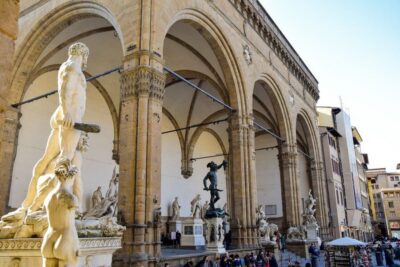
Accademia Gallery: Michelangelo’s David and High Renaissance Art
Read our review →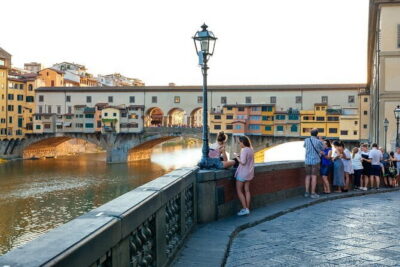
Florence Private Tour: Renaissance, Famous Families & Hidden Gems
Read our review →Browse the lists this tour appears in