
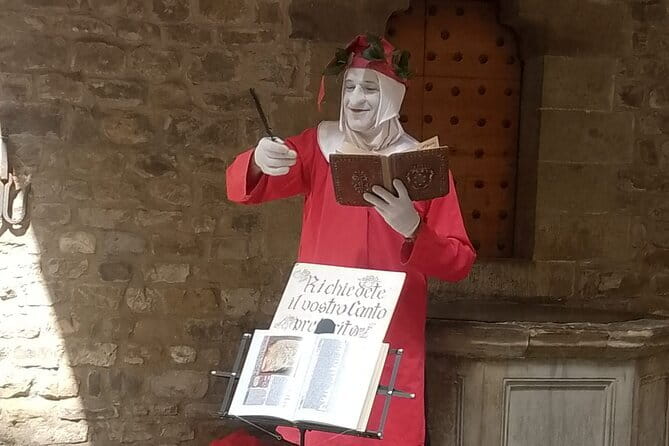
Reviewed · FLORENCE RENAISSANCE HISTORY TOURS
Renaissance Florence & the rivalry of Michelangelo and Leonardo
Florence’s Renaissance story becomes more personal when you follow the rivalry between Michelangelo and Leonardo da Vinci. This three-hour tour connects their artistic methods and strong personalities with the Medici family, Florentine politics, and the churches and squares where their world took shape. The most unexpected stop is Santo Spirito, where you see a wooden crucifix Michelangelo made as a very young artist.
I like the route for two clear reasons: it adds meaning to familiar sights, and it includes a lesser-known Michelangelo work that many visitors miss. Antonio, the guide, also provides his own recommendations for food, music, drinks, and museums. The main consideration is that many stops are exterior visits, so you should not book this expecting a full museum tour or entry to the Duomo and Palazzo Vecchio.
Key points at a glance
- Michelangelo’s early wooden crucifix: The included visit to Santo Spirito is the tour’s most unusual art stop.
- Leonardo and Michelangelo as rivals: Their contrasting personalities and working methods provide the main thread.
- Medici Florence in context: San Lorenzo connects the family’s church, chapels, and Michelangelo’s architectural work.
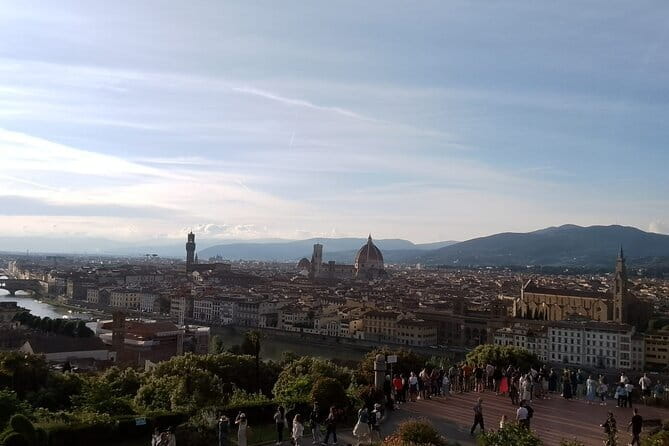
- A compact central route: You see major landmarks from Piazza della Signoria to Ponte Vecchio and Santo Spirito.
- Small group format: The tour accepts a maximum of 16 people, with a professional English-speaking guide.
- Good value for an art-minded visitor: At $31.35, the price includes the guide and crucifix ticket, but not entry to the Duomo or Palazzo Vecchio.
Why the Michelangelo and Leonardo rivalry makes Florence easier to understand
Many Florence tours point out famous buildings and statues, then move on. This one uses the rivalry between Michelangelo and Leonardo to give those sights a common thread. You hear how their personalities, artistic habits, and techniques differed, while also learning how politics and patronage shaped the work they produced.
That approach matters because Renaissance art did not develop in a vacuum. Florence was a city of powerful families, public commissions, competing workshops, and political tension. The artists needed patrons, and patrons used art to express wealth, authority, faith, and civic pride.
The rivalry gives you a useful way to read the city. Michelangelo is linked here not only to the famous David, but also to San Lorenzo, the Laurentian Library, the Medici Chapels, and the young artist’s wooden crucifix at Santo Spirito. Leonardo’s place in the story helps you think about experimentation, observation, and the competition that pushed both men toward ambitious work.
I also like that the tour does not treat these men as distant geniuses. Their personal differences and working methods become part of the story. That makes the art easier to remember, especially if you are visiting Florence with someone who does not want a long lecture packed with dates.
More Renaissance and history tours in Florence:
- The Best tour in Florence: Renaissance & Medici Tales – guided by a STORYTELLER
★ 5.0 · 12,316 reviews - The Best Tour in Florence: Renaissance and Medici Tales
★ 5.0 · 10,810 reviews - The Dark Side of Florence: Mysteries and Legends
★ 5.0 · 2,785 reviews
Piazza della Signoria sets the political stage
The meeting point is Piazza della Signoria, where the tour begins at 10:00 a.m. The first stop is the exterior and front area of Palazzo Vecchio, Florence’s former seat of civic power. You spend about 15 minutes here, enough time to get your bearings and understand why this building matters before moving into the square.
Piazza della Signoria is more than an attractive open space. It has served as a center of Florentine political life since the Middle Ages. The statues around it were meant to be seen by citizens and visitors alike, so public art and public authority are closely tied together here.
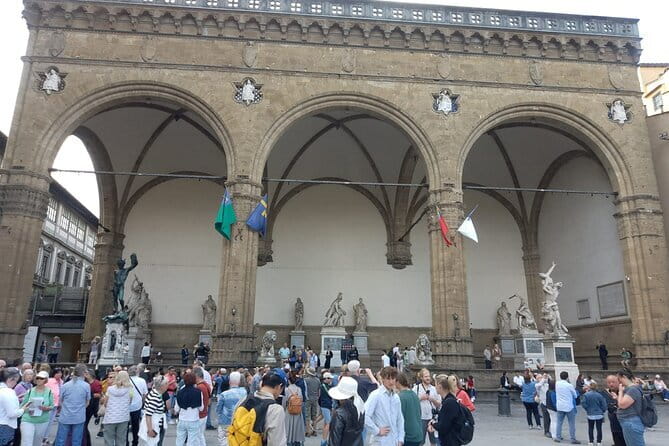
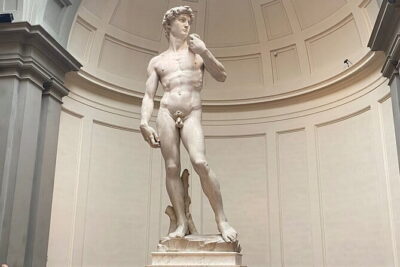
The nearby Loggia dei Lanzi works like an outdoor sculpture gallery. You can see Benvenuto Cellini’s Perseus with the Head of Medusa and Giambologna’s Rape of the Sabine Women. A replica of Michelangelo’s David also recalls the original political meaning of the statue, which once represented strength and resistance for Florence.
The Fountain of Neptune adds another layer to the square. You will not enter Palazzo Vecchio on this tour, and its admission is not included. Still, beginning outside is useful because the guide can explain the setting before you decide if you want to return later for a full interior visit.
The Duomo is an exterior lesson in ambition
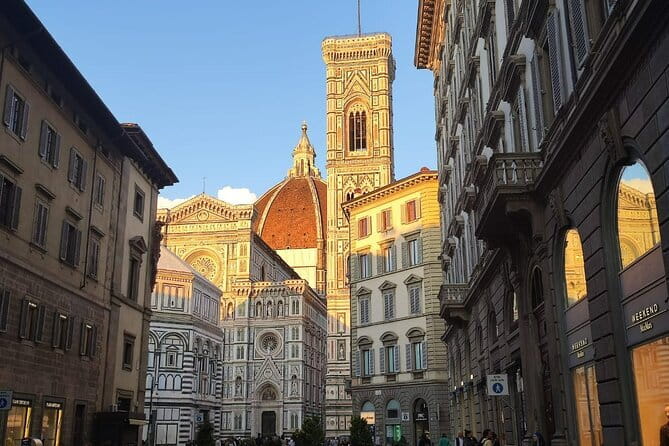
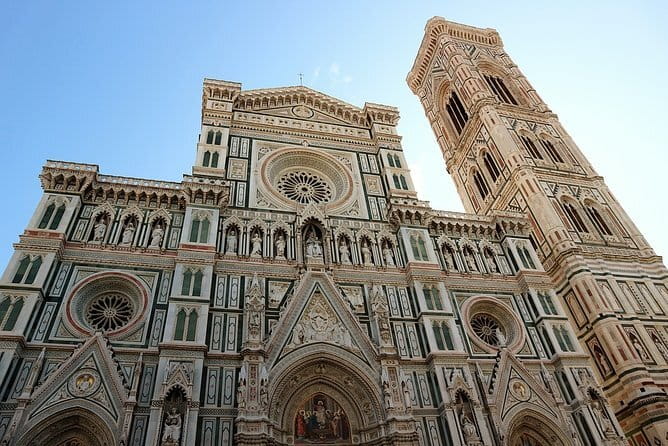
The route then reaches the Duomo complex, where you spend about 30 minutes outside Santa Maria del Fiore, Giotto’s Bell Tower, and the Baptistery of St. John. These three buildings sit together, but each tells a different part of Florence’s architectural story.
Brunelleschi’s dome is the main event. It is described as the largest brick dome ever constructed and uses a double shell with a herringbone brick pattern for support. Even from street level, you can appreciate the scale of the problem Brunelleschi solved and the confidence required to attempt it.
Giotto designed the bell tower, though he died after only the lower levels were built. Andrea Pisano and Francesco Talenti completed the structure. The Baptistery adds another important part of the complex, with its long connection to Florentine religious life and civic identity.
The tour does not include admission to the cathedral complex. That is worth planning around. If you want to climb the dome, visit the interior, or see the related monuments from inside, you will need separate tickets and additional time. This tour gives you the explanation and outside view, not the complete Duomo visit.
San Lorenzo brings the Medici family into the story

San Lorenzo is one of the strongest sections for understanding the connection between art, religion, and family power. You spend about 30 minutes in the square and surrounding area, with attention to the Basilica of San Lorenzo, the Medici Chapels, the Laurentian Library, and the nearby market.
The Basilica of San Lorenzo was the parish church of the Medici family and is one of Florence’s oldest and largest churches. That family connection makes the site especially important for a tour centered on Michelangelo. The Medici were not simply private art collectors. Their support helped shape the city’s public image and gave artists access to major commissions.
The Medici Chapels served as the family mausoleum. Michelangelo designed the New Sacristy, where architecture and sculpture work together to honor the dead and project family status. The tour’s rivalry theme becomes especially useful here because you can think about how an artist’s style changed when working for a powerful patron and a specific purpose.
The Laurentian Library is another Michelangelo project. He designed both the building and its unusual staircase. You will not get the same experience as a dedicated interior visit, but learning about the design from the outside helps you recognize that Michelangelo’s work went far beyond painting and sculpture.
San Lorenzo Market surrounds the square. The tour does not promise a market tasting or shopping stop, so treat it as part of the setting rather than a scheduled food experience. Antonio’s personal recommendations for local food, drinks, music, and museums may be particularly useful here or after the tour.
A completely different way to spend an afternoon in Florence:
- Florence: Skip-The-Line Uffizi Gallery Timed Entry Ticket
★ 4.5 · 27,832 reviews - Tuscany Day Trip from Florence: Siena, San Gimignano, Pisa and Lunch at a Winery
★ 5.0 · 21,634 reviews - Florence: Timed Entrance Ticket to Michelangelo’s David
★ 4.6 · 16,983 reviews - Florence: Michelangelo’s David Skip-the-Line Entry Ticket
★ 4.5 · 12,764 reviews
Santa Trinita and Via de’ Tornabuoni add a quieter pause
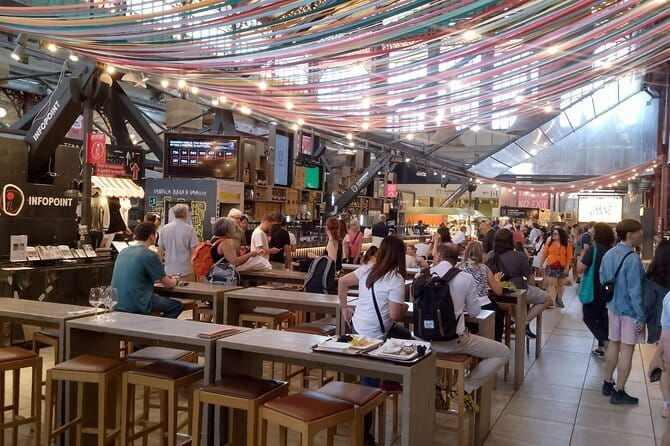
Piazza Santa Trinita receives about 10 minutes. It is a small historic square along Via de’ Tornabuoni, one of Florence’s most elegant streets, known for luxury shops and old buildings.
This stop is shorter than the Duomo or San Lorenzo, but it gives the route a change of pace. You see another part of central Florence where architecture, commerce, and public space meet. Do not expect a long visit or a major included monument here. Its value is in the connection between the larger landmarks.
If you are sensitive to standing time, this is a good place to make use of a short pause. The complete experience lasts around three hours, and much of the route takes place outside.
Ponte Vecchio links the city across the Arno
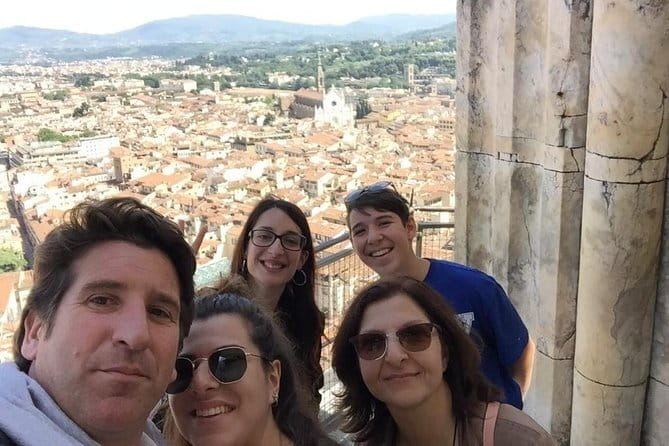
The tour continues to Ponte Vecchio, Florence’s famous bridge over the Arno. You spend about 10 minutes here, taking in its unusual built-up form and long history.
Ponte Vecchio is one of those sights that can feel familiar before you arrive because it appears in nearly every Florence guidebook. A guide can help prevent it from becoming a quick photo stop by tying the bridge to the city’s wider development and the movement between central Florence and Oltrarno.
The visit is brief, so plan to return if you want time to browse the shops or take photographs from different angles. This is another example of the tour’s purpose: it gives you a connected reading of Florence rather than a long stay at every landmark.
Santo Spirito reveals Michelangelo before the legend
The most distinctive stop is Basilica di Santo Spirito in the Oltrarno district. About 30 minutes are set aside here, and the ticket for Michelangelo’s wooden crucifix is included.
The basilica was designed by Brunelleschi and has a calmer setting than Florence’s most crowded central sights. Its clean architectural design gives you a chance to focus on proportion, space, and light rather than simply looking for famous names.
The wooden crucifix is the reason this stop matters. Michelangelo created it when he was about 17 years old, making it an early work from before he became the towering figure most people associate with the Sistine Chapel and David. He reportedly made it to thank the prior for allowing him to study anatomy. That access helped him develop the close understanding of the human body that later shaped his art.
This is a valuable detail because it changes how you look at the piece. You are not only seeing an early religious sculpture. You are seeing a young artist learning through observation and study, while building the technical foundation for later work.
The crucifix is also a welcome contrast to Florence’s biggest attractions. You will not find the same scale as the Duomo or the David replica, but the work offers a more intimate look at Michelangelo’s development. For many people, this will be the strongest reason to choose this tour over a standard city highlights walk.
What the three-hour format means for you
A three-hour tour can cover a surprising amount of Florence, but it cannot provide long interior visits at every stop. The schedule gives roughly 15 minutes at Palazzo Vecchio, 15 at Piazza della Signoria, 30 at the Duomo, 30 at San Lorenzo, 10 at Santa Trinita, 10 at Ponte Vecchio, and 30 at Santo Spirito.
That adds up to a quick-moving route. You should wear comfortable shoes and expect regular walking and standing. The tour is held outdoors for much of its length, and the experience requires good weather. If poor weather cancels the tour, you are offered another date or a full refund.
The group size is capped at 16 people. That is small enough to make questions practical without promising the feel of a private tour. The professional English-speaking guide is included, and Antonio is identified as the guide connected with the local recommendations. His suggested book of Florence addresses food, music, drinks, and museums, which gives you useful options after the tour ends.
The finish is in front of Santa Croce. That is helpful because you can continue exploring from there, although the route’s final listed major art stop is Santo Spirito. Confirm the exact walking order and ending details when you book if your schedule is tight.
Is $31.35 a fair price?
At $31.35 per person, I consider this a reasonable price for a three-hour guided introduction to Renaissance Florence. The value comes from the organizing idea, the guide, the small maximum group size, and the included ticket for Michelangelo’s wooden crucifix.
You should also budget for separate admission if you want to enter Palazzo Vecchio or visit the Duomo complex beyond the exterior. Those tickets are not included. That is not a problem if you mainly want context and orientation, but it matters if you are comparing this with a tour that includes major interiors.
The tour is a better deal for someone who already plans to visit Florence’s main sights independently. You can use this experience to understand what you are seeing, then return to the Duomo, Palazzo Vecchio, or San Lorenzo for longer visits.
It is less suitable if your priority is a museum-heavy itinerary. You will see a lot from outside, and the route is built around interpretation rather than extended time in galleries.
Who should book this Florence experience?
I would choose this tour if you enjoy art but want the stories behind the works. It suits first-time visitors who need a clear introduction to Florence, as well as repeat visitors who have already seen the main squares and want a different angle.
It is also a good fit for families with older children or teenagers. The rivalry between Michelangelo and Leonardo offers a simple narrative, while the political and personal details give the adults something to think about too.
You may want to skip it if you dislike city walking, need guaranteed indoor visits, or want to spend most of your time inside the Duomo and museums. The tour is also not the right choice if you are looking for a food tour, since Antonio’s recommendations are suggestions rather than included tastings.
The experience has a 5.0 rating based on 40 reviews, with 100 percent recommending it. One especially useful point comes from a visitor who had lived in Florence decades earlier and still chose this as a favorite among several booked tours. That supports the tour’s strongest claim: it can add something after you have already seen the standard sights.
Should you book it?
Book this tour if you want Florence’s famous places tied together by the competition between Michelangelo and Leonardo, and if Santo Spirito’s early Michelangelo crucifix appeals to you. At $31.35, it offers a good amount of guided context without committing you to a full day.
Skip it if you want entry to every major monument included in one ticket. For most visitors, the smartest plan is to use this tour early in your stay, then return on your own to the interiors that catch your interest.
FAQ
How long does the tour last?
The tour lasts approximately three hours.
Where does the tour begin?
It begins at Piazza della Signoria in Florence.
What time does the tour start?
The scheduled start time is 10:00 a.m.
Where does the tour end?
The tour ends in front of Santa Croce in Florence.
Is the Michelangelo wooden crucifix ticket included?
Yes. Admission for the Michelangelo wooden crucifix at Santo Spirito is included.
Are Palazzo Vecchio and Duomo admission tickets included?
No. Admission tickets for Palazzo Vecchio and Santa Maria del Fiore are not included.
What language is the tour in?
A professional English-speaking guide leads the tour.
How many people can join the tour?
The maximum group size is 16 people.
Can I cancel for a full refund?
Yes, you can cancel at least 24 hours before the experience starts for a full refund. Changes or cancellations made less than 24 hours before the start time are not accepted, and the experience may also be rescheduled or refunded if poor weather or insufficient bookings cause a cancellation.
Recently added around Florence
- Accademia and Uffizi Small-group Guided Tour★ 4.5 · 8 reviews
- The David from Michelangelo.★ 5.0 · 3 reviews
- Combo: Accademia + walking + Uffizi Galleries Guided Tour★ 3.5 · 6 reviews
- The Complete Wine Tour Brunello, Nobile, Chianti wine experience★ 4.0 · 7 reviews
- The Best of Tuscany in 3 Days★ 4.5 · 13 reviews
- The Cooking Lab – Authentic Food Experience★ 5.0 · 113 reviews
- Florence Central Market Food Tour – Private Tour★ 4.0 · 7 reviews
- Family Friendly Florence Private City Tour★ 5.0 · 47 reviews
Florence Renaissance History Tours, compared.
The Best tour in Florence: Renaissance & Medici Tales – guided by a STORYTELLER
Read our review →
The Best Tour in Florence: Renaissance and Medici Tales
Read our review →
The Dark Side of Florence: Mysteries and Legends
Read our review →
Renaissance and Medici Tales Guided Walking Tour
Read our review →
Dark Mysteries and Legends Guided Walking Tour
Read our review →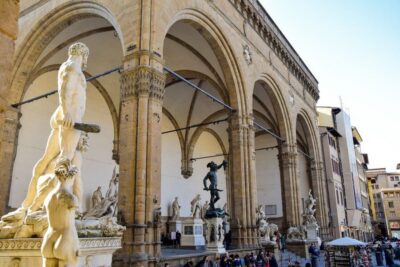
Accademia Gallery: Michelangelo’s David and High Renaissance Art
Read our review →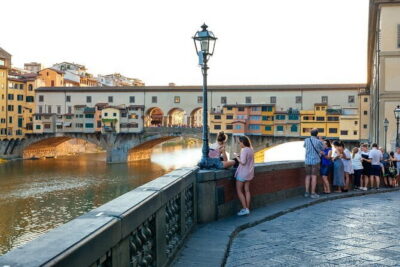
Florence Private Tour: Renaissance, Famous Families & Hidden Gems
Read our review →Browse the lists this tour appears in