
Reviewed · SANTA CROCE AND FLORENCE CHURCHES
Private guided tour of Hidden Symbols in Santa Maria Novella
Santa Maria Novella is not simply a handsome church beside Florence’s main railway station. It is a visual puzzle. Its facade, chapels, frescoes, and cloisters are packed with religious signs, classical references, and symbols that are easy to miss when you walk through on your own. This private tour is built around seeing those details and understanding why they matter.
I like two things right away: the tour has one clear theme, and the private format lets Sonia Sánchez adjust her explanations to your group. I also like the route’s range, from Masaccio’s famous Trinity and Giotto’s crucifix to the Green Cloister, Spanish Chapel, and Paolo Uccello’s frescoes.
The main consideration is time. Ninety minutes is short for such a large complex, especially if you want long periods to admire each work quietly. Admission is also extra, and the tour cost is charged per group rather than per person.
Key points to know before booking
- A symbol-focused visit: The guide explains the meanings behind images, gestures, architectural details, and religious references.
- A private group of up to 10: You do not share the guide with strangers, so questions and pacing can be tailored to your party.
- Sonia Sánchez leads the experience: She is an official art historian guide, praised for clear explanations, patience, and strong knowledge of mythology and Florentine art.
- Major works plus quieter spaces: The route includes Masaccio’s Trinity, Giotto’s crucifix, several chapels, the cloisters, the Spanish Chapel, and Paolo Uccello’s frescoes.
- The tour starts at 3:30 p.m.: Plan to arrive at Piazza di Santa Maria Novella, 18/A, with time to handle the separate entrance ticket.
- Admission is not included: Adults pay €7.50, while visitors aged 11 to 17 pay €5.
Why Santa Maria Novella rewards a guided visit
Florence has no shortage of famous art. The problem is that many works reveal only part of their story at first glance. You can admire a painted wall, notice a halo, and move on. A good guide helps you see the connections between the image, the patron who paid for it, the religious idea behind it, and the artistic choices made by the painter.
That is the purpose here. The tour is not just a fast circuit of Santa Maria Novella’s top sights. It is arranged around mysticism, art, and visual codes, with anecdotes and curious details added along the way.
I would choose this experience if you enjoy asking why a figure holds a particular object, why a scene appears in one chapel rather than another, or how a church communicates ideas to people who could not read. You will still see the headline works, but the focus is on interpretation rather than a simple list of names and dates.
The private setting helps. With up to 10 people, you can ask Sonia to repeat a point, spend a little longer on a work, or clarify an unfamiliar myth. Several pieces of feedback highlight her ability to explain clearly, respond patiently, and use straightforward language. That matters in a church where visual information can pile up quickly.
More churches and chapels in Florence:
- Florence: Santa Monaca Church Italian Opera Concert Ticket
★ 4.7 · 2,692 reviews - Florence: Santa Maria Novella Entry Ticket & Audioguide
★ 4.3 · 717 reviews - Italian Opera Concert Ticket in Florence’s Santa Monaca Church
★ 4.5 · 602 reviews
Starting with Alberti’s grand facade
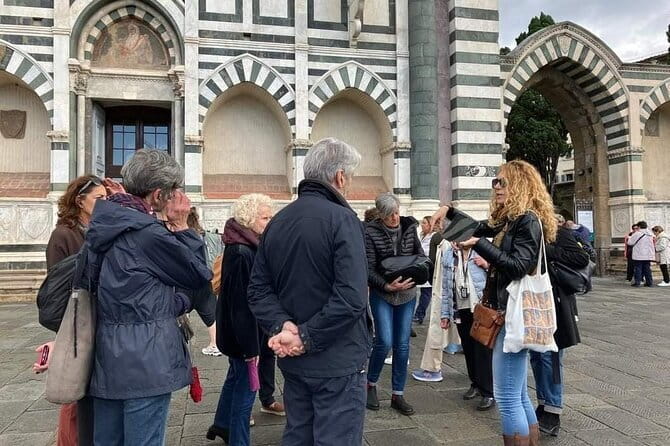
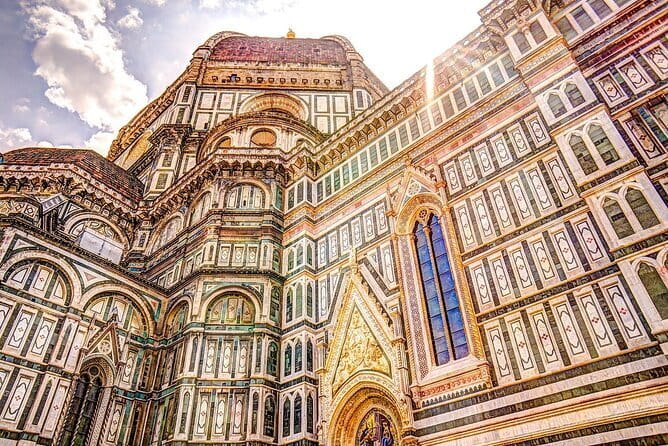
The visit begins outside with the facade designed by Leon Battista Alberti. This is an important choice because the exterior already introduces the central idea of the tour: beauty here is organized, measured, and full of meaning.
The facade combines older lower sections with Alberti’s carefully controlled upper design. Look for the strong geometry, the round forms, and the way the upper level is tied visually to the broader building. A guide focused on symbols can help you read the facade as more than decoration.
I like beginning here because it gives you a framework for the interior. You start to notice that geometry, balance, and religious purpose are working together. You also get a moment to locate the meeting point at Piazza di Santa Maria Novella, 18/A, before moving indoors.
The meeting point is near public transportation, which makes this a practical stop to place early or late in a Florence day. The tour begins at 3:30 p.m., so you can schedule lunch beforehand and still have time for another activity afterward, though the exact closing time can vary slightly.
Masaccio’s Trinity and the shock of painted space
Masaccio’s Trinity is one of the essential stops. The fresco is famous for its use of perspective, creating the illusion of a deep architectural space behind the painted figures. It is the kind of work that becomes more impressive when you understand what the artist was trying to make your eye do.
On your own, you might recognize the name and take a quick photograph. With Sonia, you can expect attention to the arrangement of the figures, the painted architecture, and the religious meaning carried by the scene. The symbol-based approach should make this stop especially useful if you want to understand how perspective can serve both artistic and spiritual aims.
This is also where a private guide has a practical advantage. The work can prompt questions about symbolism, technique, and the way Renaissance art guided a worshipper’s attention. A group tour may need to keep moving. Here, you have a better chance to pause and ask for a second explanation.
Giotto’s crucifix and the emotional power of simplicity
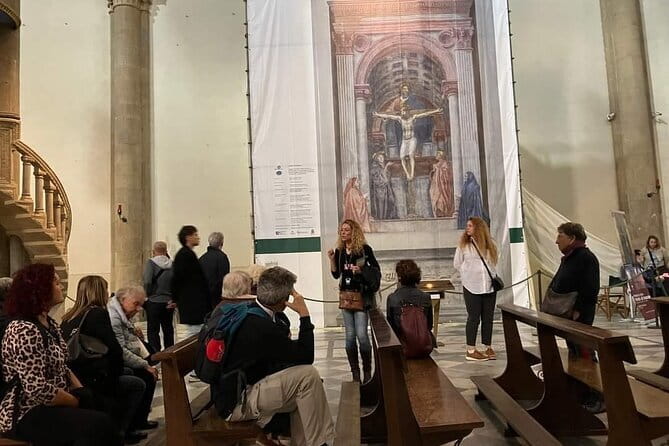
Giotto’s crucifix offers a different experience. Rather than the complex spatial illusion of Masaccio, you encounter a devotional image centered on Christ’s suffering.
The value of this stop lies in comparison. The tour lets you move between different artistic approaches rather than treating every work as an isolated masterpiece. Sonia can help you consider how artists communicate belief through posture, scale, expression, and the arrangement of the body.
I would not expect a lengthy, museum-style lecture on every work in 90 minutes. The strength of the visit is the connection between key examples. You see how different artists use form and image to express religious ideas, then carry that way of looking into the chapels and cloisters.
More private tours in Florence:
- Cinque Terre and Pisa Tower Tour from Florence Semi Private
★ 5.0 · 1,406 reviews - From Florence: Private Chianti Hills Tour with Tasting
★ 4.3 · 809 reviews - Private Self-Guided E-Bike Ride in Tuscany with Vineyard Visit
★ 5.0 · 775 reviews - Florence Private Transportation in Rickshaw
★ 5.0 · 730 reviews
The Strozzi Chapel and the Tornabuoni Chapel
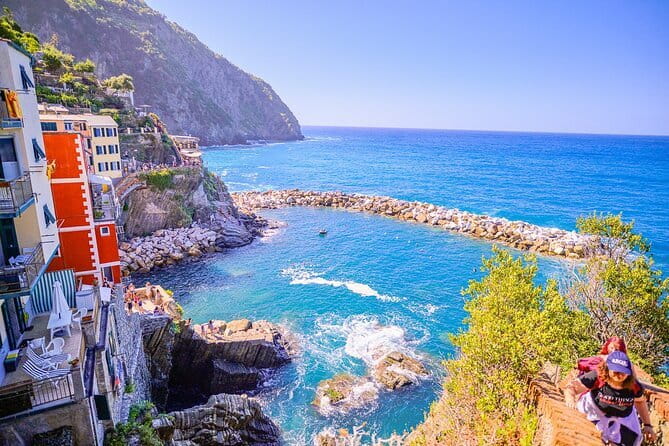
The chapels bring the role of Florentine families into view. The Strozzi Chapel and Tornabuoni Chapel are not bare rooms with paintings added later. They are carefully planned spaces in which architecture, sculpture, fresco, family identity, and religious devotion work together.
A guide can point out how patrons shaped what appeared on the walls and how the placement of scenes affects the way you move through the space. This is where the tour’s social side becomes useful. You are not just looking at saints and biblical scenes. You are also seeing how powerful families presented their values and status.
The Tornabuoni Chapel is particularly important for its extensive fresco decoration. The tour gives you a way to approach it without trying to memorize every scene. I would focus on how the stories are arranged, how figures interact, and how everyday Florentine details can appear alongside sacred events.
The itinerary also includes a Strozzi Chapel in Mantua. That wording may reflect the provider’s route description, so I would ask for clarification if this specific reference matters to you. The main Santa Maria Novella visit clearly includes the Strozzi Chapel in Florence, along with the Tornabuoni Chapel.
The Green Cloister and the Spanish Chapel
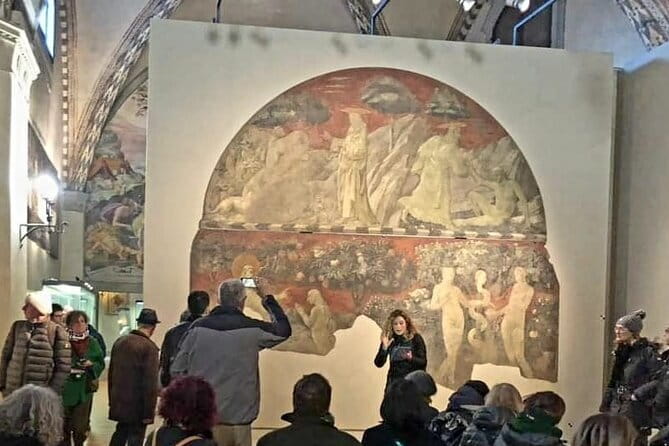
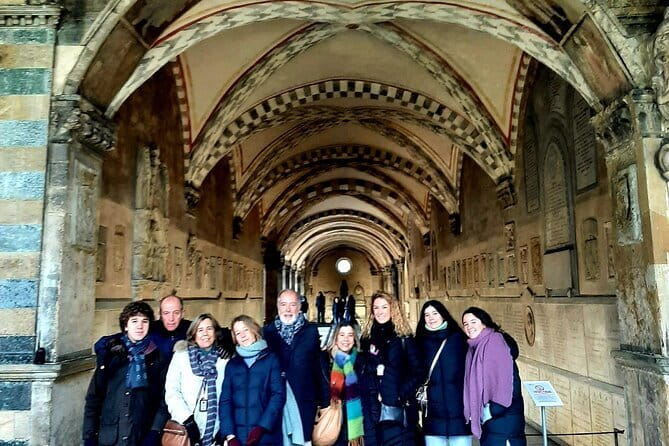
The Green Cloister changes the pace. After the major interior works, you move into a more open setting with frescoed walls and a quieter sense of space. The name comes from the green tones used in the fresco decoration, giving the area a distinct look within the complex.
Cloisters are easy to rush through. You may see the arches, glance at the painted walls, and head onward. A guide focused on symbols can direct your attention to repeated forms, scenes, and details that connect the artwork to the religious life of the complex.
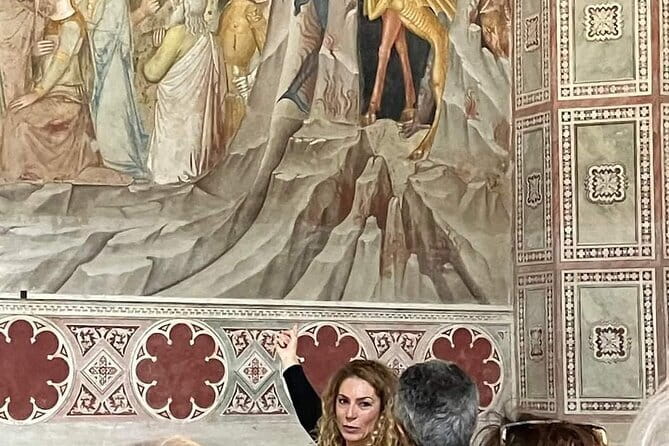
The Spanish Chapel adds another major visual program. Its frescoes contain dense theological imagery, so this is one of the places where Sonia’s ability to explain complicated subjects in simple language can make a real difference. The chapel rewards patience, but the 90-minute limit means you may need to accept a brisk overview rather than a slow reading of every panel.
I like that these spaces are included. They broaden the visit beyond the two or three works most people already know. You get a better sense of Santa Maria Novella as a complete artistic setting, not just a container for individual masterpieces.
Paolo Uccello’s frescoes in the museum
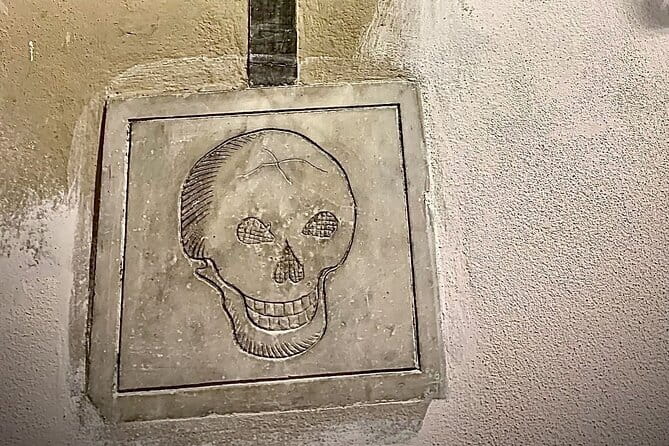
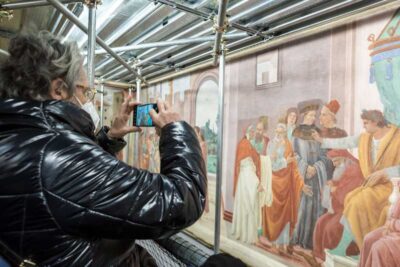
The final museum section includes frescoes by Paolo Uccello. This gives the tour another chance to explore how artists handled movement, space, pattern, and symbolic meaning.
Uccello is often associated with his fascination with perspective, and his work fits naturally into a tour that asks you to look closely at visual structure. The museum setting also gives the route a different character from the church and chapels.
Do not expect the museum portion to function like a separate, full museum tour. It is one part of a compact visit. Still, including it is valuable because it gives you more examples to compare and helps tie together the tour’s interest in artistic method and meaning.
The sequence from church to cloister, chapel, and museum also keeps the experience from feeling repetitive. Each space asks you to look in a slightly different way.
Sonia Sánchez as your guide
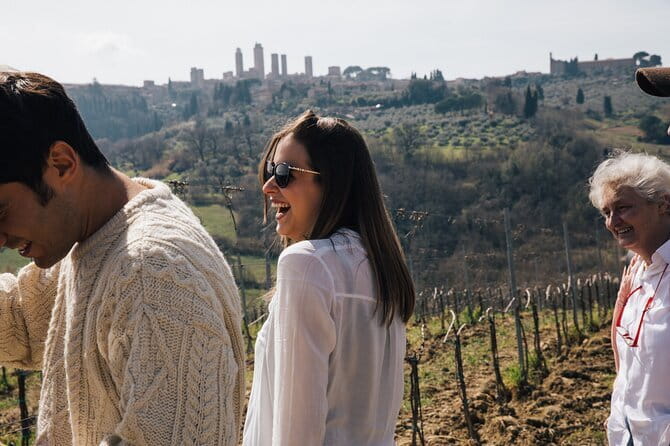
Sonia Sánchez is identified as an official art historian guide specializing in symbols in art. The strongest praise attached to her work concerns clarity, professionalism, patience, and warmth.
That combination matters more here than a guide who simply knows a long list of facts. Symbolic art can become confusing when explanations grow too technical. The feedback consistently presents Sonia as someone who makes difficult material understandable, repeats explanations when needed, and answers questions without making you feel rushed.
She is also praised for her knowledge of mythology, which is useful in Florence. Classical stories and figures often appear alongside Christian themes, and knowing the difference between them is essential to reading Renaissance art.
Several people who booked other Florence tours with Sonia returned to her for additional visits, including the Uffizi, Accademia, Palazzo Vecchio, and the historic center. That does not guarantee a particular experience for every group, but it does suggest that she is a guide people may want to use again after this church visit.
The available feedback is especially strong from Spanish-speaking visitors. If you prefer Spanish, confirm the language when booking so your expectations are clear.
Price, group size, and what you receive
The listed cost is $201.67 per group, with up to 10 people included. Admission is separate: €7.50 for adults and €5 for ages 11 to 17.
For one or two people, that can feel expensive compared with entering Santa Maria Novella on your own. For a family or group of friends, the calculation improves because the guide fee is spread across the party. A full group of 10 is getting a private art historian for a reasonable per-person cost, provided everyone is interested in the subject.
I would compare this with the cost of wandering through the church without context. If your goal is simply to see the building, self-guided entry may be enough. If you want a focused explanation of symbols and a chance to ask questions, the private fee has a clearer purpose.
The mobile ticket is convenient, but remember that the admission fee itself is not included. Set aside money for the entrance and arrive at the meeting point before 3:30 p.m.
Who will enjoy this 90-minute tour most
This experience suits you if you:
- Enjoy art explained through stories, symbols, and mythology.
- Prefer a private guide to a large shared group.
- Want to see several parts of Santa Maria Novella in one visit.
- Like asking questions or requesting a clearer explanation.
- Have already seen Florence’s famous paintings and want more meaning behind them.
- Are visiting with family or friends and can divide the group price.
It may not suit you if you want a slow, silent visit or if you prefer to spend an hour on one painting. The route covers a lot, and the focus is explanation. You should also be comfortable walking through a church, chapels, cloisters, and museum spaces during a 90-minute visit.
Service animals are allowed, the site is near public transportation, and the activity states that most people can participate. For specific mobility needs, you should confirm arrangements before booking because the available details do not describe every surface or access point.
Timing, cancellations, and practical planning
The starting time is 3:30 p.m., and the tour returns to the same meeting point. The planned duration is about one hour and 30 minutes.
I would avoid scheduling a tight dinner reservation immediately afterward. The visit is short, but art explanations can run a little over, and you may want a few minutes to orient yourself after leaving the complex.
Free cancellation is available if you cancel at least 24 hours before the local start time. Cancellations or changes made less than 24 hours ahead are not refunded or accepted, so check your Florence plans before committing.
Should you book it?
Book this tour if you want Santa Maria Novella to make sense as a system of images rather than a string of famous names. The strongest reasons are the private format, the focused subject, and Sonia Sánchez’s reported ability to explain art clearly and patiently.
I would be less inclined to book it for a quick first look at the church or for a group with little interest in religious imagery. The separate admission fee and 90-minute limit are also worth noting.
For an art-minded family, a small group of friends, or anyone curious about the symbols tucked into Florence’s masterpieces, this is a smart use of an afternoon. You will see the major works, but the real benefit is learning how to look past the obvious.
FAQ
How long does the Hidden Symbols in Santa Maria Novella tour last?
The tour lasts approximately one hour and 30 minutes.
What time does the tour begin?
It starts at 3:30 p.m.
Where does the tour meet?
The meeting point is Piazza di Santa Maria Novella, 18/A, 50123 Florence, Italy. The tour ends back at the meeting point.
Is admission to Santa Maria Novella included?
No. Admission costs €7.50 for adults and €5 for visitors aged 11 to 17.
How many people can join the private tour?
The private activity is available for a group of up to 10 people, and only your group participates.
Can I cancel for a full refund?
Yes, if you cancel at least 24 hours before the experience start time. Cancellations or changes made less than 24 hours before the local start time are not refunded or accepted.
Recently added around Florence
- Accademia and Uffizi Small-group Guided Tour★ 4.5 · 8 reviews
- The David from Michelangelo.★ 5.0 · 3 reviews
- The Complete Wine Tour Brunello, Nobile, Chianti wine experience★ 4.0 · 7 reviews
- Combo: Accademia + walking + Uffizi Galleries Guided Tour★ 3.5 · 6 reviews
- The Best of Tuscany in 3 Days★ 4.5 · 13 reviews
- The Cooking Lab – Authentic Food Experience★ 5.0 · 113 reviews
- Florence Central Market Food Tour – Private Tour★ 4.0 · 7 reviews
- Family Friendly Florence Private City Tour★ 5.0 · 47 reviews
Santa Croce and Florence Churches, compared.
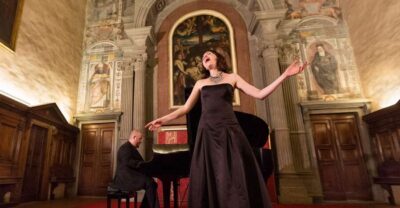
Santa Monaca Church Italian Opera Concert Ticket
Read our review →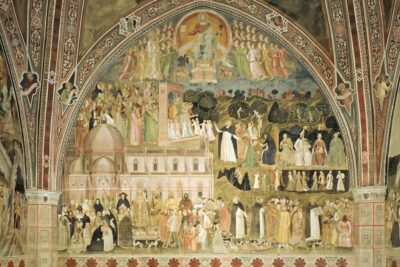
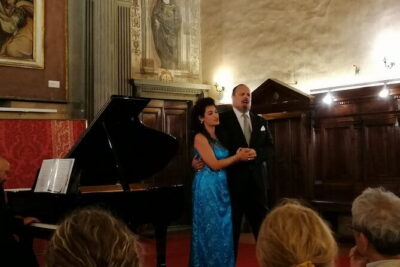
Italian Opera Concert Ticket in Florence’s Santa Monaca Church
Read our review →
Browse the lists this tour appears in