
Reviewed · MEDICI FAMILY TOURS
Medici Tour in Florence
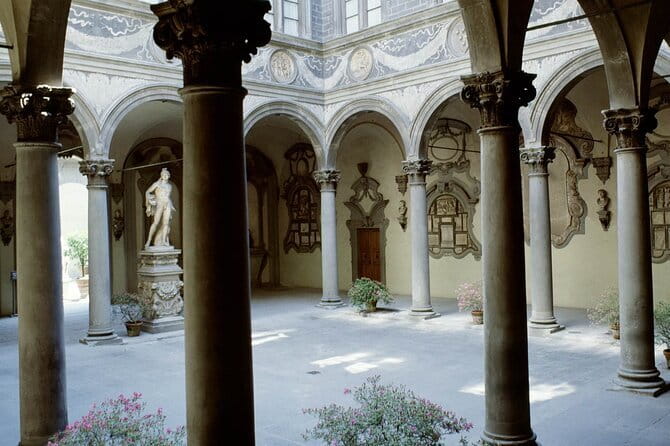
The Medici story begins inside Palazzo Medici Riccardi, not in a grand royal palace built for kings, but in the first Renaissance family home of Florence’s most influential clan. In two hours, you’ll see where Cosimo the Elder and Lorenzo the Magnificent lived, where leading artists worked, and where the Chapel of the Magi preserves one of Florence’s most dazzling painted interiors.
I like the focus on one compact, important building, and I like the chance to connect the Medici family with artists such as Michelangelo, Donatello, Botticelli, Paolo Uccello, and Benozzo Gozzoli. Guides Giacomo and Deanna have been praised for their clear explanations and passion for Florence. The main caution is that the experience can depend heavily on the individual guide: one English-language tour reportedly spent too much time on building materials and present-day uses, with too little about the family or the TV show.
Key points to know before booking
- The palace was the Medici family’s first Renaissance home, commissioned by Cosimo the Elder around 1444.
- The Chapel of the Magi is the visual high point, with frescoes by Benozzo Gozzoli and scenes linked to the Medici world.
- The tour connects art and power, showing how Medici money and influence helped artists such as Michelangelo build their careers.
- The group is limited to 15 people, which should make questions and conversation easier than on a large city tour.
- The advertised experience includes TV filming locations, but you may want to confirm this with the guide at the start.
- The $162.57 price is a premium for two hours, so this makes the most sense if you want expert context rather than a quick self-guided visit.
Entering Palazzo Medici Riccardi on Via Cavour
Your meeting point is at Via Camillo Cavour 3, in central Florence. The tour ends at the Magi Chapel inside Palazzo Medici Riccardi, at Via Camillo Cavour 1, so the start and finish are only a short distance apart.
That simple arrangement matters. You do not spend part of a two-hour tour crossing town, waiting for transport, or being led between unrelated sights. The entire experience stays with one building and its immediate story. I find that especially useful in Florence, where a short walk can quickly turn into a long stop at another church, square, or museum.
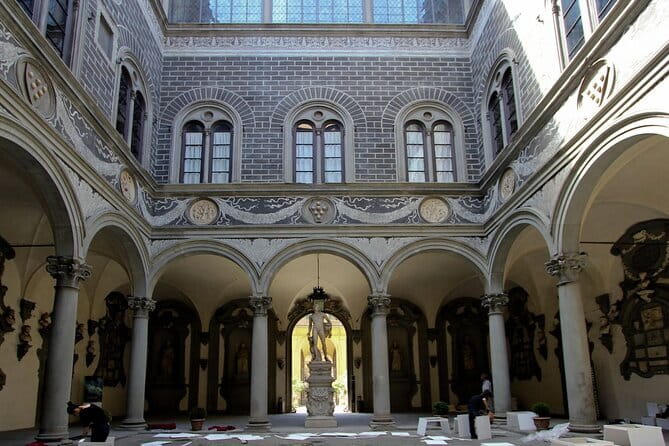
Palazzo Medici Riccardi was commissioned by Cosimo the Elder around 1444 and designed by Michelozzo. It is described as the first Renaissance building erected in Florence, a major claim that helps explain why the palace matters beyond the Medici name.
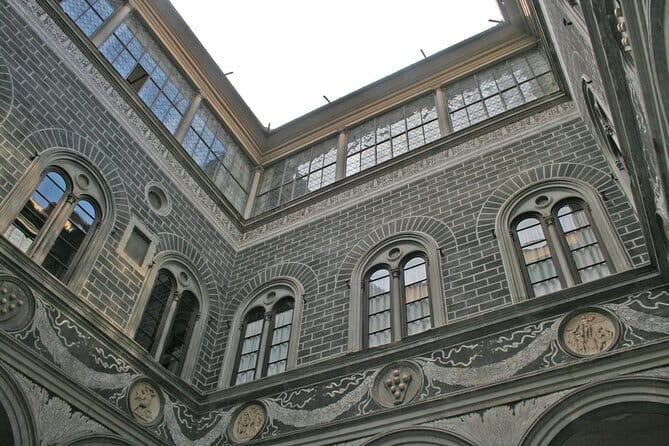
From the outside, the building presents a careful progression of textures and shapes. Its floors are clearly separated, the stonework becomes more refined as the facade rises, and a large cornice caps the roofline. Arched windows line the facade, while a partly enclosed loggia marks the corner.
Your guide should help you read these details as signs of power, not just decoration. The palace was a family residence, but it also sent a message about restraint, wealth, and authority. The Medici did not need a castle in the city center. They needed a home that looked respectable, strong, and modern.
More Medici family tours in Florence:
- The Best tour in Florence: Renaissance & Medici Tales – guided by a STORYTELLER
★ 5.0 · 12,316 reviews - The Best Tour in Florence: Renaissance and Medici Tales
★ 5.0 · 10,810 reviews - Florence: Renaissance and Medici Tales Guided Walking Tour
★ 4.8 · 1,549 reviews
Cosimo the Elder, Lorenzo, and the family home
The building brings the Medici story down to a human scale. This was the home of Cosimo the Elder and Lorenzo the Magnificent, two figures who shaped Florence through money, politics, patronage, and personal relationships.
That is one of the best reasons to choose this tour instead of a general Renaissance walk. You are not just hearing that the Medici funded artists. You are learning where the family lived while making decisions that affected Florence’s art, religion, politics, and public life.
The palace also served as a workplace for artists of the calibre of Donatello, Michelangelo, Paolo Uccello, Benozzo Gozzoli, and Botticelli. The word workplace is important. The Medici household was not separate from the artistic world around it. Artists were brought into the family’s orbit, and their work helped express the family’s taste and status.
A good guide will make those links clear. Giacomo has been praised for his courteous manner and strong command of the Medici story. Deanna has been praised for her passion for Florence and the Medici family, as well as her wider insight into the city. Guide assignments can vary, and the service may be provided in two languages, so it is sensible to pay attention at the beginning and ask for clarification if needed.
The Chapel of the Magi and Benozzo Gozzoli’s procession
The Chapel of the Magi is the tour’s main artistic prize. It is included in the admission and forms the final destination of the visit.
Benozzo Gozzoli’s fresco cycle is closely tied to the Medici family and their public image. The subject is the journey of the Magi, but the painted procession also gives the Medici a place within the scene. That blend of religious subject and family identity is exactly the sort of detail that can be difficult to grasp from a guidebook caption alone.
Inside the chapel, you can expect your guide to explain how the paintings connect sacred imagery, courtly display, and Medici power. The chapel was not simply a private room for worship. It helped present the family as cultured, devout, and worthy of influence.
Give yourself time to look beyond the brightest figures. Notice the procession, clothing, animals, architecture, and the way the painted world creates a sense of movement around the chapel. A guide can point out who matters and why, but you should also allow yourself a quiet moment to take in the room without a running explanation.
The chapel is a good example of why a small, focused tour can be useful. If you visit alone, you may recognize the names but miss the connection between the painting and the family who commissioned it. With a guide, the image becomes part of a larger story about Florence’s ruling household.
Michelangelo and the Medici circle
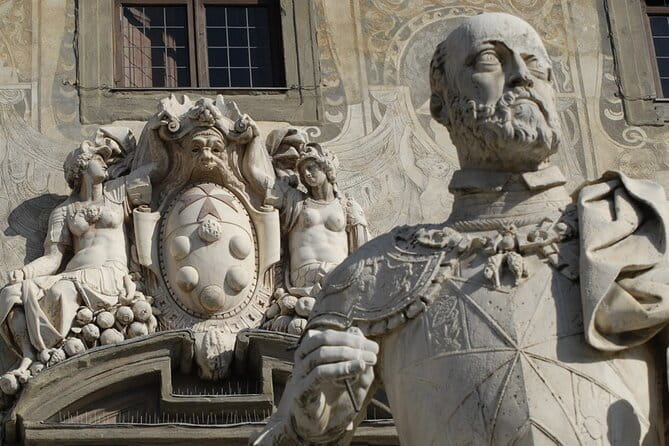
The Medici connection to Michelangelo gives the tour a strong human thread. The family did not merely collect finished art. Their support, commissions, and social reach helped create opportunities for artists.
The palace was associated with artists including Michelangelo, Donatello, Botticelli, and Paolo Uccello. That list tells you how much creative activity gathered around the Medici household. The tour should help you see these figures as people working within a network of patrons, workshops, family ties, and political expectations.
The building itself also changed over time. In 1517, the original loggia was closed, and two kneeling windows were added according to Michelangelo’s project. Those windows are a useful reminder that the palace was not frozen in the moment of Cosimo’s construction. It continued to change as the family’s position and artistic tastes developed.
This is where I would want a guide to slow down. It is easy to race past architectural details while waiting for famous names. The better approach is to connect the windows and facade to the Medici family’s ongoing effort to shape the city around them.
The palace remained occupied by less prominent members of the family until 1659. That year, Ferdinando II sold it to the Riccardi marquises. This later chapter helps place the Medici period in time. You are seeing a building with a long life, not a stage set preserved only for the family’s greatest years.
A completely different way to spend an afternoon in Florence:
- Florence: Skip-The-Line Uffizi Gallery Timed Entry Ticket
★ 4.5 · 27,832 reviews - Tuscany Day Trip from Florence: Siena, San Gimignano, Pisa and Lunch at a Winery
★ 5.0 · 21,634 reviews - Florence: Timed Entrance Ticket to Michelangelo’s David
★ 4.6 · 16,983 reviews - Florence: Michelangelo’s David Skip-the-Line Entry Ticket
★ 4.5 · 12,764 reviews
What the TV connection adds, and what it may not
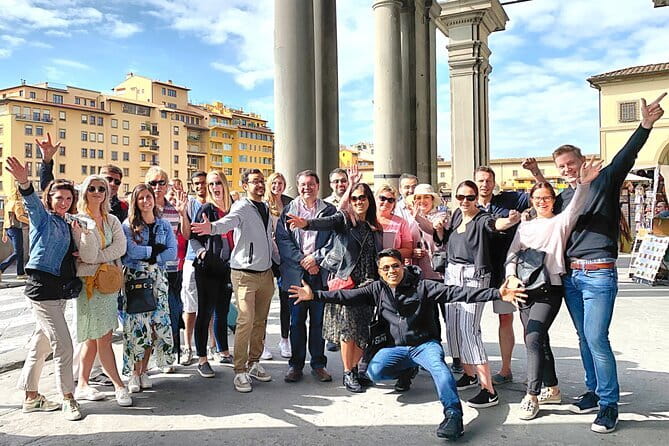
The tour includes filming locations associated with The Medici TV show. That can add a welcome modern hook, especially if you came to Florence after watching the series.
Still, I would keep your expectations measured. The show connection is one advertised element, but one past participant felt the guide did not discuss it enough. Another guide may handle it differently, and the tour’s main strength is the real palace and its art, not a behind-the-scenes television experience.
If the filming locations matter to you, ask about them right away. A simple question at the meeting point can help you learn whether the guide plans to point them out and how much time will be given to the subject. That is better than waiting until the final minutes and finding that the discussion has focused mainly on architecture.
The TV angle works best as a bonus. The Medici family’s actual story is already dramatic: political influence, patronage, family rivalries, artistic ambition, and a home filled with work by major Renaissance figures. You do not need the television connection to make the visit worthwhile.
Two hours is enough for a focused introduction
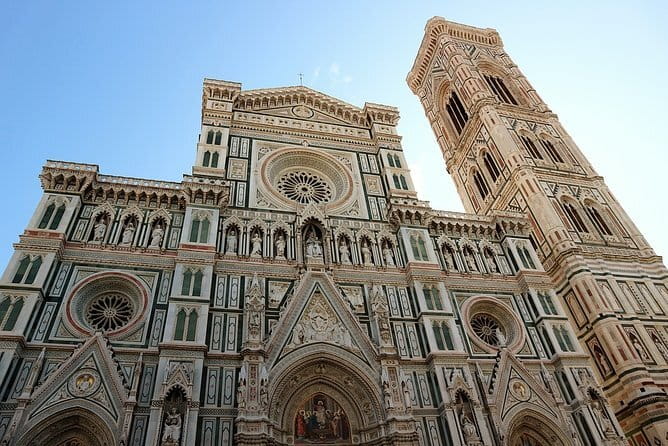
The experience lasts about two hours, with roughly one hour specifically listed for Palazzo Medici Riccardi and its admission. The exact pace may depend on the guide, the group, and how much time is spent in the chapel.
Two hours is a sensible length for this site. It gives you enough time to understand the palace, the family, and the chapel without turning the visit into an exhausting lecture. It also leaves room in your Florence schedule for San Lorenzo, the Duomo, the Uffizi, or a slow walk through the historic center.
The short format also means you should not expect a complete study of every Medici figure or every building connected to the family. This is an introduction centered on one palace. If you want a full survey of Medici Florence, you will need additional sights and perhaps another walking tour.
The maximum group size is 15 people. That is small enough for the guide to answer questions without shouting across a crowd, though it is not a private tour. The experience may sometimes be described as private in casual language, but the stated group limit is 15, so you should book with that number in mind.
Is $162.57 good value for two hours?
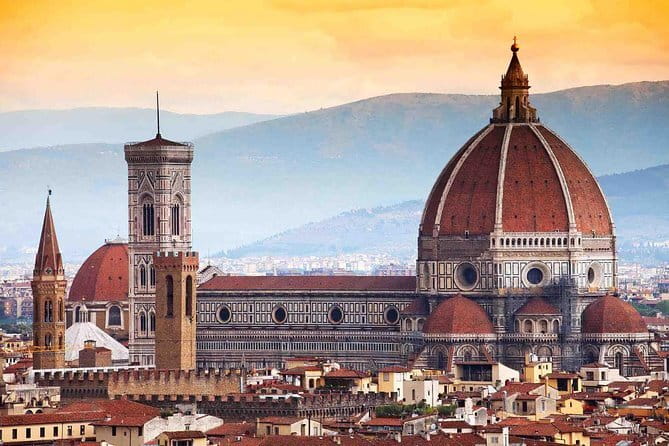
At $162.57 per person, this is not a budget museum visit. The admission is included, but the price is still high for a two-hour experience focused on one palace.
I would judge the value by the kind of visit you want. If you like to read labels, move at your own pace, and already understand the Medici family, you may find the price hard to justify. Palazzo Medici Riccardi is a compact site, and a self-guided visit could cost much less.
I see stronger value if you want the palace explained as a connected story. A good guide can link Michelozzo’s design, Medici patronage, the Chapel of the Magi, Michelangelo’s project, and the family’s place in Florence. That context can make a short visit feel far more useful than a quick walk through the rooms.
The guide is the deciding factor. Giacomo and Deanna received especially warm praise for their courtesy, passion, and command of Florence. At the same time, one English-language experience was criticized for unclear speech and too much attention to stones and current building use. Since the cost is substantial, I would ask direct questions and make sure the guide is covering the subjects that matter most to you.
Who should book this Medici visit?
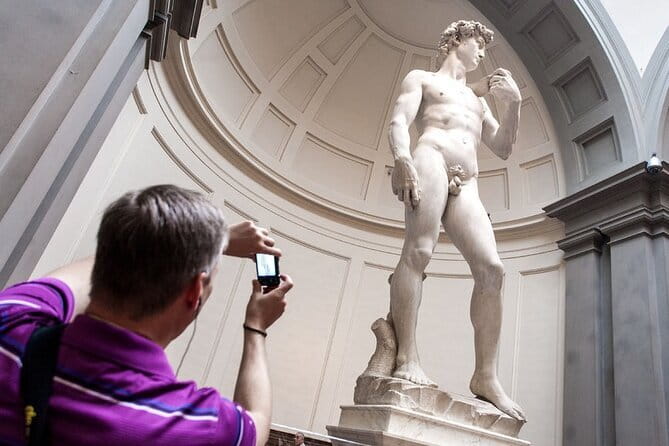
I would recommend it most strongly for you if:
- You want a focused introduction to the Medici family.
- You care about the link between political power and Renaissance art.
- You would like help reading the Chapel of the Magi.
- You are interested in Michelangelo’s connection to the palace.
- You watched The Medici and want to see related places in Florence.
- You prefer a small group to a large city tour.
It may be less suitable if you want a broad Florence tour, a long art lecture, or a guaranteed television-focused experience. It may also disappoint if you need a very slow visit with lots of independent time, since the guide controls the pace.
Most participants can take part, and the tour is offered in English, though the guide service may be provided in two languages. If precise English delivery is important to you, confirm the arrangement when booking or at the start.
Practical details for planning your visit
Your meeting point is Via Camillo Cavour 3, 50122 Florence. The tour ends at the Magi Chapel in Palazzo Medici Riccardi, at Via Camillo Cavour 1. Use the exact meeting address rather than simply heading to Florence’s main cathedral area.
You receive booking confirmation at the time of purchase, and a mobile ticket is provided. The tour has free cancellation if you cancel at least 24 hours before the start time. Cancellations made less than 24 hours before the start time are not refunded, and changes within that period are not accepted.
The experience is booked an average of 64 days in advance, which suggests that planning ahead is wise, especially if your Florence dates are fixed. The stated price is $162.57 per person, and admission to the palace is included.
Should you book the Medici Tour in Florence?
Book this tour if you want the Medici story anchored in a real family home, with special attention to the Chapel of the Magi, Renaissance patronage, and Michelangelo’s connection to the palace.
I would not book it solely for the TV show references. Those may be brief, and the experience works best when you treat the series as an extra rather than the main event.
The high price calls for realistic expectations. You are paying for interpretation, not a full-day museum pass. Choose it if a well-led two-hour explanation of one of Florence’s key Renaissance buildings sounds more useful than a quick independent visit. If you can get a guide such as Giacomo or Deanna, the palace should give you a clear, memorable introduction to how the Medici helped shape Florence.
FAQ
Where does the Medici Tour in Florence start?
The tour starts at Via Camillo Cavour 3, 50122 Florence, Italy.
Where does the tour end?
The tour ends at the Magi Chapel in Palazzo Medici Riccardi, at Via Camillo Cavour 1, Florence.
How long does the experience last?
The tour lasts approximately two hours.
What is included in the tour price?
Admission to Palazzo Medici Riccardi is included in the tour.
How much does the tour cost?
The listed price is $162.57 per person.
Is the tour offered in English?
Yes. The experience is offered in English, though the guide service may be provided in two languages.
How many people can join the tour?
The maximum group size is 15 people.
Is a mobile ticket available?
Yes. The experience provides a mobile ticket.
Can I cancel for a full refund?
Yes. You can cancel at least 24 hours before the experience start time for a full refund. Cancellations made less than 24 hours in advance are not refunded.
Recently added around Florence
- Accademia and Uffizi Small-group Guided Tour★ 4.5 · 8 reviews
- The David from Michelangelo.★ 5.0 · 3 reviews
- Combo: Accademia + walking + Uffizi Galleries Guided Tour★ 3.5 · 6 reviews
- The Complete Wine Tour Brunello, Nobile, Chianti wine experience★ 4.0 · 7 reviews
- The Cooking Lab – Authentic Food Experience★ 5.0 · 113 reviews
- Florence Central Market Food Tour – Private Tour★ 4.0 · 7 reviews
- The Best of Tuscany in 3 Days★ 4.5 · 13 reviews
- Family Friendly Florence Private City Tour★ 5.0 · 47 reviews
Medici Family Tours, compared.
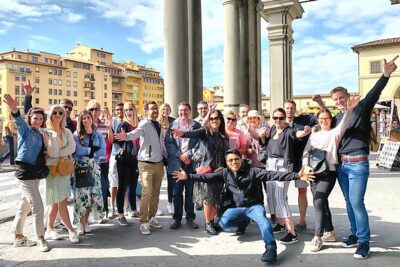
The Best tour in Florence: Renaissance & Medici Tales – guided by a STORYTELLER
Read our review →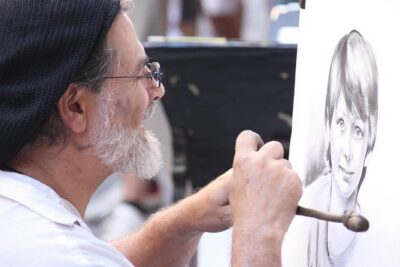
The Best Tour in Florence: Renaissance and Medici Tales
Read our review →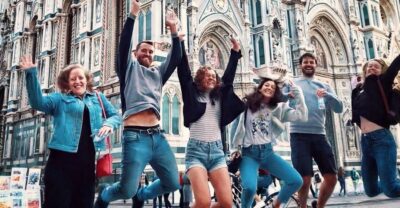
Renaissance and Medici Tales Guided Walking Tour
Read our review →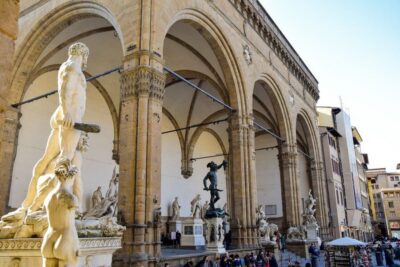
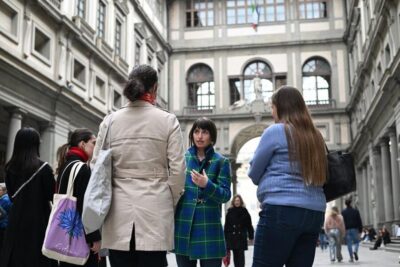
Guided Tour of Medici Family Secrets and Chapels
Read our review →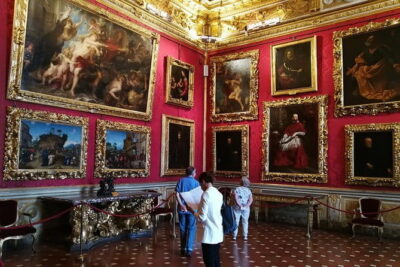
Pitti Palace, Palatina Gallery and the Medici: Arts and Power in Florence.
Read our review →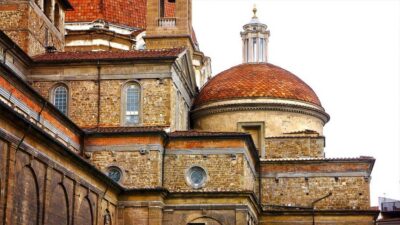
Browse the lists this tour appears in