
Reviewed · MEDICI FAMILY TOURS
Medici Chapels Private Tour
The Medici Chapels pack Florence’s power story into one compact visit. You move from the family’s burial crypt to the glittering Chapel of the Princes, then into Michelangelo’s New Sacristy, where Day and Night and Dawn and Dusk sit beside the tombs of Medici rulers.
I like the private format because you can focus on the parts that matter most to you, rather than follow a large group through a quiet chapel. I also like the clear three-hour shape: about 90 minutes in the chapels and 90 minutes in the Basilica of San Lorenzo. The main drawback is the price, $240.73 per person, which makes the tour best suited to visitors who want a guide’s interpretation, not simply admission.
One guide praised in the booking information is Viktoria, who explains several centuries of Medici power in a clear, easy-to-follow way. The tour is a good pick if you want Florence’s art and politics connected in one sitting, but independent visitors who already know Michelangelo may find the cost hard to justify.
Key Points to Know
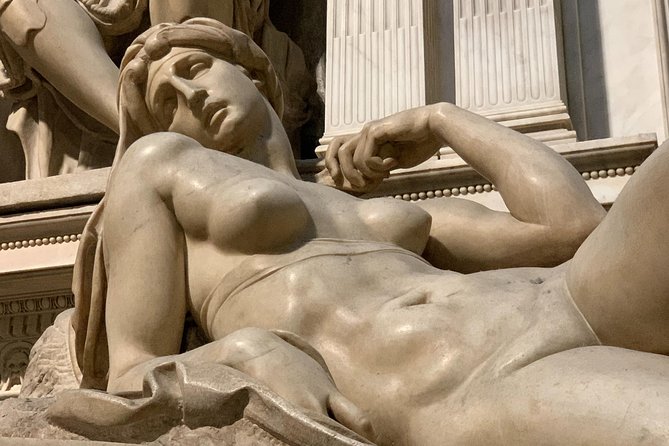
- Michelangelo’s four famous figures: See Day and Night, Dawn and Dusk in the New Sacristy.
- Two major sites in one tour: Visit the Medici Chapels and the Basilica of San Lorenzo during a private three-hour outing.
- A powerful family mausoleum: The Chapel of the Princes uses grand decoration to show the reach and wealth of the Medici grand dukes.
- A smaller, personal setting: The private group format lets you ask questions and set the pace more easily than a large group tour.
- Several guide languages: Tours are offered in English, Spanish, French, German, and Italian.
- A practical booking tip: On the first Sunday of each month, admission is free, but tickets cannot be reserved ahead of time and entry is not guaranteed.
Why the Medici Chapels Matter
The Medici Chapels are not just a collection of old tombs. They are a carefully built statement about family power, artistic taste, and political ambition.
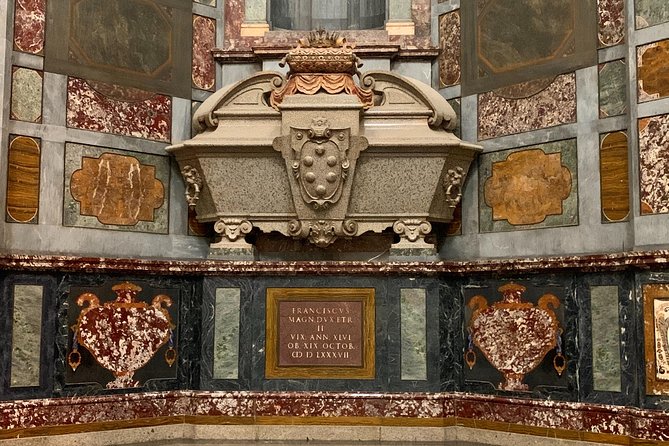
The Medici family ruled Florence for generations. Their connection to San Lorenzo was especially close. This was their parish church, and the nearby chapels became the burial place for the grand dukes of Tuscany, their wives, and other members of the family.
That makes the site useful for understanding Florence beyond its famous paintings. You see how the Medici used architecture, marble, sculpture, and ceremony to shape their public image. A guide can connect the decoration to the family story, which is where this tour earns much of its value.
I would not treat this as a quick photo stop. The appeal lies in the contrast between the different rooms. The crypt is more subdued and closely tied to burial. The Chapel of the Princes is theatrical and richly decorated. The New Sacristy is more intimate, with Michelangelo’s sculptures carrying much of the emotional force.
More Medici family tours in Florence:
- The Best tour in Florence: Renaissance & Medici Tales – guided by a STORYTELLER
★ 5.0 · 12,316 reviews - The Best Tour in Florence: Renaissance and Medici Tales
★ 5.0 · 10,810 reviews - Florence: Renaissance and Medici Tales Guided Walking Tour
★ 4.8 · 1,549 reviews
Meeting at San Lorenzo Square
The tour begins in front of the statue of Giovanni dalle Bande Nere in San Lorenzo Square. This gives you a straightforward meeting point in the San Lorenzo area, close to the buildings you will visit.
You do not receive hotel pickup or drop-off, so plan to make your own way to the square. The tour ends back at the meeting point, which makes it easy to continue exploring the San Lorenzo district afterward.
I like this arrangement for a central Florence tour. There is no time spent collecting people from different hotels, and the outing stays focused on the Medici complex. Still, give yourself enough time to find the statue before the scheduled start. A private tour is less forgiving if you arrive late because the guide is working to a set timetable.
The exact starting time depends on availability. Check the schedule before booking, especially if you are trying to fit this around the Uffizi, Accademia, or a train departure.
The Medici Crypt and Family Burial Places
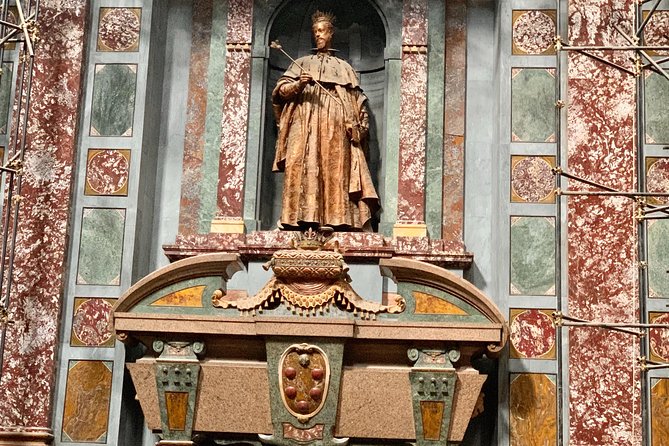
Inside the museum, the visit begins in the crypt. This is where some of the grand dukes of Tuscany and their wives are buried, along with less prominent members of the Medici family.
The crypt helps place the grand rooms above it in context. You first see the family as a long line of people connected by marriage, rank, and inheritance. Then you move upward into spaces designed to display wealth and status.
The site also includes works connected with major artists such as Ghirlandaio, Della Robbia, Perugino, Raphael, Michelangelo, and Sansovino. The collection includes gold work and miniatures as well. The exact attention given to each piece will depend on your guide and the pace of your group, but the range gives the visit more depth than a single-room Michelangelo stop.
This part may appeal most to visitors who enjoy the details of religious art and court culture. If you are mainly interested in Michelangelo, the crypt can feel like a slow start. I would still pay attention here, since it explains why the chapels were built and how the family’s private burial place grew into a public display of power.
The Chapel of the Princes and Medici Splendor
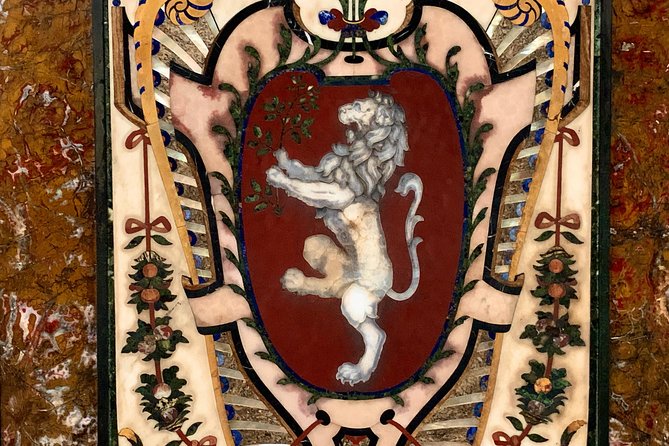
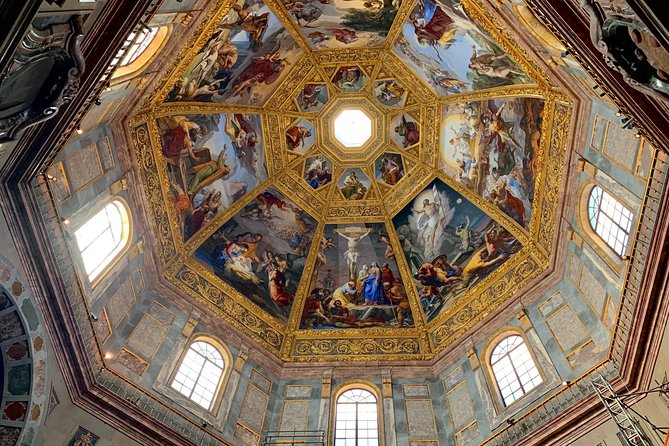
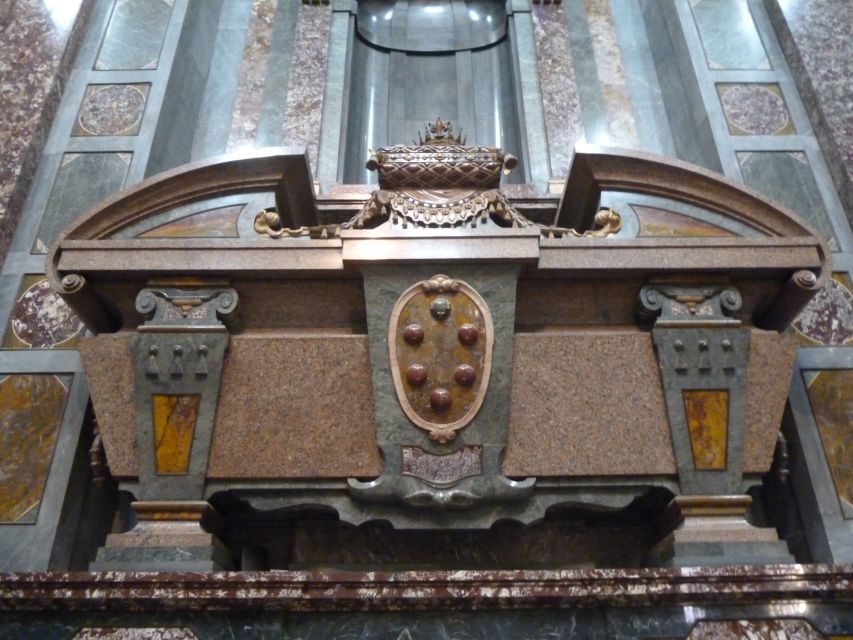
The Chapel of the Princes is the visual shock of the visit. Its purpose was not quiet simplicity. It was designed as a grand mausoleum for the Medici grand dukes.
The decoration reflects the family’s enormous resources. Marble, colored stone, and elaborate surfaces create a room meant to impress. It is the kind of space where the building itself becomes part of the political message: the Medici wanted their family line remembered as powerful, wealthy, and worthy of honor.
A guide is particularly useful here because the room can overwhelm you at first. Without context, you may notice only the glitter and scale. With an explanation of the grand dukes and the role of the mausoleum, the decoration becomes easier to read as a carefully planned family image.
You should also expect a contrast with the New Sacristy. The Chapel of the Princes is broad, ceremonial, and showy. Michelangelo’s room is more focused on sculpture, proportion, and the human shape. Seeing both in one visit lets you compare two very different ways of presenting Medici authority.
More private tours in Florence:
- Cinque Terre and Pisa Tower Tour from Florence Semi Private
★ 5.0 · 1,406 reviews - From Florence: Private Chianti Hills Tour with Tasting
★ 4.3 · 809 reviews - Private Self-Guided E-Bike Ride in Tuscany with Vineyard Visit
★ 5.0 · 775 reviews - Florence Private Transportation in Rickshaw
★ 5.0 · 730 reviews
Michelangelo’s New Sacristy
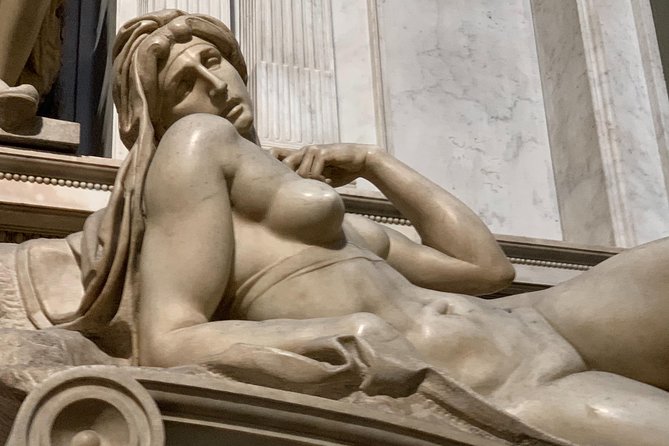
The New Sacristy is the artistic center of the tour. Michelangelo designed it as a funeral chapel, and the tomb sculptures are among Florence’s most famous works.
Here you see Day and Night and Dawn and Dusk, figures placed on the tombs of Medici family members. These sculptures are not merely decorative portraits. Their poses and expressions create a meditation on time, sleep, waking, age, and death.
You will want time to look carefully at the figures. The names are easy to remember, but the ideas behind them are less simple. Day and Night suggest the cycle of time. Dawn and Dusk create another pair of transitions. Their placement beside the Medici tombs ties the passage of time to the family’s desire for lasting remembrance.
Michelangelo’s work can look familiar from photographs, but the setting matters. The sculptures are part of a chapel, not isolated objects in a gallery. The relationship among the figures, tombs, walls, and light is part of the experience.
This is where a private guide can make a real difference. You can ask why the figures are arranged as they are, how the chapel relates to the Medici family, or what makes Michelangelo’s approach different from the decoration in the Chapel of the Princes. A strong guide such as Viktoria can also make the family story easier to follow across several generations.
Basilica of San Lorenzo and Brunelleschi’s Design
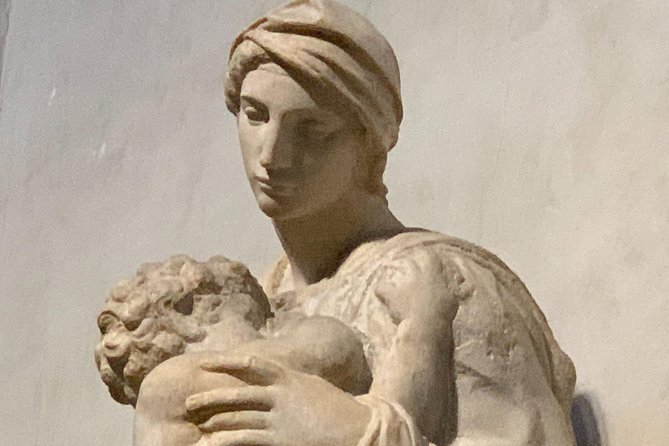
The tour also includes the Basilica of San Lorenzo, the Medici family’s parish church. Filippo Brunelleschi rebuilt the church, and Donatello contributed to its decoration.
San Lorenzo is important because it shows the family’s connection to Florence as worshippers and patrons, not only as rulers placing their names on a mausoleum. The church’s role helps explain why the Medici Chapels were built beside it.
The church visit lasts about 90 minutes, like the chapel visit. That gives you time to look beyond the headline names and consider the building as a whole. Brunelleschi’s architectural work and Donatello’s decoration represent an earlier stage of the artistic world that the Medici supported.
For some people, this will be the most useful part of the tour because it links architecture, religion, and family influence. Others may prefer the more dramatic New Sacristy. Either way, having both sites together prevents the visit from becoming a single-artist lesson.
Afterward, you walk through Piazza di San Lorenzo before returning to the meeting point. The square gives you a chance to reorient yourself and continue through Florence independently.
What the Three-Hour Schedule Feels Like
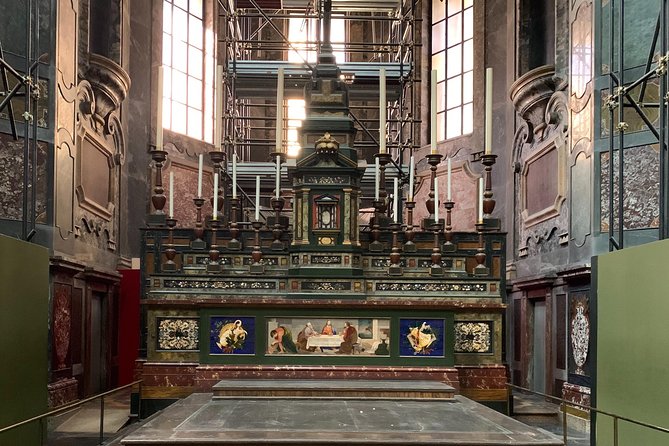
Three hours is a sensible length for this pair of sites. A shorter visit could cover the famous sculptures but leave little room for the crypt, the church, or the family story. A much longer visit might feel heavy if you are not deeply interested in funerary art and Medici politics.
The listed plan divides the time evenly:
- About 90 minutes at the Medici Chapel
- About 90 minutes at the Basilica of San Lorenzo
- Walking and sightseeing around Piazza di Madonna degli Aldobrandini and Piazza di San Lorenzo
The private format should make the schedule more adaptable than a large group tour. You can ask for clarification, spend longer with Michelangelo, or move on when a section has made its point. The guide still controls the overall timing, so do not expect an entirely free-form visit.
The tour is also a good choice early in your Florence stay. It gives you a useful framework for understanding Medici names, buildings, and artistic commissions you may encounter elsewhere in the city.
Guide Languages and Private Group Value
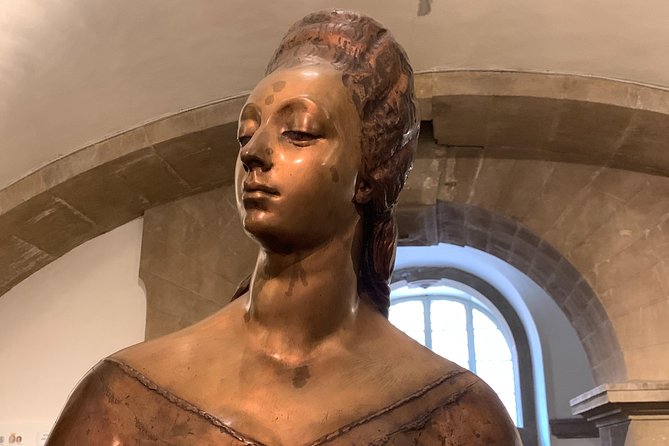
The professional guide can lead the tour in English, Spanish, French, German, or Italian. Choose the language in which you can discuss art and family politics most comfortably. That matters here because the visit depends on explanation, not just looking.
A private group is especially helpful if your party has mixed interests. One person can ask about Michelangelo’s sculptural choices, another can ask about the Medici rulers, and the guide can connect both questions. You also avoid the stop-and-start rhythm that often comes with a large group.
The strongest specific praise attached to the experience concerns Viktoria. She is described as explaining the Medici family’s eventful story across several centuries in an interesting and understandable way. That is exactly the skill this tour needs. The family tree can become confusing quickly, so clear storytelling is more useful than a long list of dates.
The quality of any guided visit depends on the individual guide, but the available guide languages and private structure give you a good chance of getting a focused experience.
Is $240.73 Per Person a Fair Price?
At $240.73 per person, this is not a budget museum visit. The cost includes entrance tickets, a professional multilingual guide, and a private three-hour tour.
The value depends on how much interpretation you want. If you only want to see Michelangelo’s sculptures, you can look for a less expensive entry option and explore at your own pace. If you want the crypt, Chapel of the Princes, San Lorenzo, and the family story tied together, the private guide adds something that admission alone cannot provide.
The price may make sense for a small group that would otherwise hire a guide separately. It is harder to justify for a solo visitor or a couple watching every euro, particularly if you already have a strong background in Renaissance art.
The included skip-the-ticket-line access is also useful when available, since it reduces time spent dealing with entry. Still, the first Sunday rule requires care. Admission is free on that day, but tickets cannot be reserved ahead of time, and entry is not guaranteed. If you plan around free admission, you accept the risk of missing the visit.
Who Should Book This Tour?
I would recommend this tour to visitors who want a focused explanation of Medici influence and Michelangelo’s funeral sculptures. It suits first-time Florence visitors who prefer to connect several sights with one guide rather than study each room alone.
It is also a good match for people who enjoy art but do not want a full-day museum tour. The three-hour schedule gives you a serious look at two important sites while leaving the rest of the day open.
Families and small groups may appreciate the private format, especially if different people want to ask questions. The language choice is another strong point for anyone who would rather discuss the art in Spanish, French, German, Italian, or English.
I would think twice if you mainly want a quick look at Day and Night. The price is high for a narrow interest, and the tour spends meaningful time on the crypt, Chapel of the Princes, and San Lorenzo. Those places are central to the experience, not optional extras.
My Take: A Strong Choice for Context and Michelangelo
This private Medici Chapels tour works best when you want more than a checklist of famous sculptures. It shows you the crypt, the grand family mausoleum, Michelangelo’s New Sacristy, and the Medici parish church in one organized visit.
I especially like the contrast between the Chapel of the Princes and Michelangelo’s sculptures. One room speaks through scale and costly materials. The other speaks through the posture and mood of carved human figures. San Lorenzo then adds the wider religious and architectural setting.
Book it if you value a clear guide, want a private group, and are comfortable paying for three hours of focused interpretation. Skip it if your priority is the lowest possible admission cost or if you already know the Medici story well enough to explore on your own.
FAQ
How long does the Medici Chapels private tour last?
The tour lasts three hours. The planned visits include about 1.5 hours at the Medici Chapel and 1.5 hours at the Basilica of San Lorenzo.
Where does the tour begin?
It begins in front of the statue of Giovanni dalle Bande Nere in San Lorenzo Square.
Where does the tour end?
The activity ends back at the meeting point.
Does the tour include hotel pickup or drop-off?
No. Hotel pickup and drop-off are not included.
Which languages are available?
The live guide is available in Spanish, English, French, German, and Italian.
Is this a private tour?
Yes. The tour is arranged for a private group.
What does the tour include?
The price includes entrance tickets, a professional multilingual guide, and the private three-hour tour.
Can I visit for free on the first Sunday of the month?
Entrance is free on the first Sunday of each month, but tickets cannot be reserved ahead of time, so entry is not guaranteed.
Recently added around Florence
- Accademia and Uffizi Small-group Guided Tour★ 4.5 · 8 reviews
- The David from Michelangelo.★ 5.0 · 3 reviews
- Combo: Accademia + walking + Uffizi Galleries Guided Tour★ 3.5 · 6 reviews
- The Complete Wine Tour Brunello, Nobile, Chianti wine experience★ 4.0 · 7 reviews
- The Best of Tuscany in 3 Days★ 4.5 · 13 reviews
- The Cooking Lab – Authentic Food Experience★ 5.0 · 113 reviews
- Florence Central Market Food Tour – Private Tour★ 4.0 · 7 reviews
- MaMa Florence: The Art of Corzetti – Hands-On Pasta Class★ 5.0 · 15 reviews
Medici Family Tours, compared.
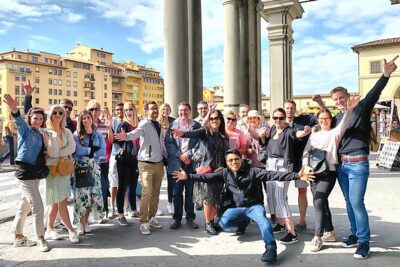
The Best tour in Florence: Renaissance & Medici Tales – guided by a STORYTELLER
Read our review →
The Best Tour in Florence: Renaissance and Medici Tales
Read our review →
Renaissance and Medici Tales Guided Walking Tour
Read our review →
Guided Tour of Medici Family Secrets and Chapels
Read our review →
Pitti Palace, Palatina Gallery and the Medici: Arts and Power in Florence.
Read our review →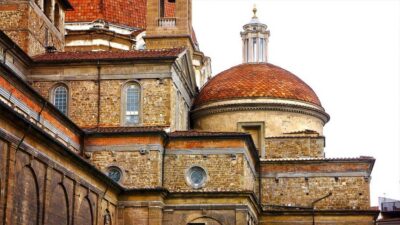
Browse the lists this tour appears in