
Reviewed · MEDICI FAMILY TOURS
Florence: The Medicis Private Walking Tour
The Medici family shaped Florence from a banking dynasty into Europe’s great Renaissance power, and this private walking tour follows that rise across the city. You’ll connect churches, palaces, public squares, and the Vasari Corridor instead of seeing each sight as an isolated monument.
I like the clear two-hour route, which gives you a useful overview before you decide which buildings deserve a longer visit. I also like the private format and the chance to ask questions as you go. The main drawback is that most stops are exterior explanations, and the long list of locations means some visits receive only five or ten minutes.
Key points at a glance
- Follow the Medici story across Florence: The route links San Marco, San Lorenzo, the Duomo, Piazza della Signoria, Ponte Vecchio, and Pitti Palace.
- See the Vasari Corridor from the city streets: Your guide explains the famous passageway connecting Medici residences without including entry inside.
- Expect a private two-hour walk: You can ask questions and set the pace more easily than in a large group.
- Most sights are viewed from outside: Entrance tickets are not included, so this is primarily a historical walking tour.
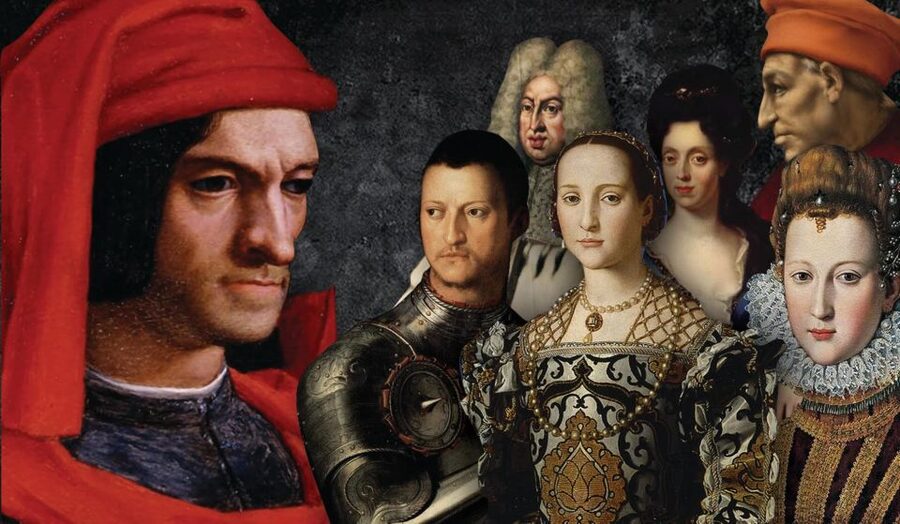
- Hear the family story from origin to extinction: The guide traces the Medicis from their Mugello roots to their final dynasty.
- Check the endpoint before booking: The route is described as finishing in Piazza Pitti, while the meeting information also says the activity ends back at the meeting point.
Why the Medicis make a good Florence walking theme
Florence can feel like a museum without walls. One palace tells you about banking, a church reveals family power, and a bridge points to private corridors built for rulers who preferred not to mix with ordinary crowds. The Medicis connect these pieces.
This tour focuses on that connection. You begin at San Marco Square and follow the family’s rise from origins in the Mugello area, north of Florence, to its role in Renaissance Florence and European politics. The story then continues through the dynasty’s eventual extinction.
That broad sweep is the tour’s main value. You are not simply looking at grand façades. You are learning why these places mattered to one family and how their influence changed the city.
The experience is led by a licensed guide in English, Italian, or French. Marcelo is one guide associated with the tour, and the feedback about him describes a charming guide with strong command of the subject. Guide quality matters here because the buildings themselves cannot tell the whole story from the pavement.
At $118.95 per person, the price is high for a two-hour walk if you judge it only by time. The private format changes the calculation. If you are traveling with family or friends and want a focused introduction without sharing a guide with strangers, the cost may make sense. If you mainly want to enter museums and chapels, you will need to budget separately for tickets.
More Medici family tours in Florence:
- The Best tour in Florence: Renaissance & Medici Tales – guided by a STORYTELLER
★ 5.0 · 12,316 reviews - The Best Tour in Florence: Renaissance and Medici Tales
★ 5.0 · 10,810 reviews - Florence: Renaissance and Medici Tales Guided Walking Tour
★ 4.8 · 1,549 reviews
Starting at San Marco Square
Meet your guide by the statue in the middle of Piazza San Marco, at Piazza San Marco 1n. This is a practical starting point because the square introduces both Florence’s religious institutions and the Medici network.
Here, your guide sets up the family story. You learn how a family from the Mugello area gained power through banking, political relationships, and patronage. That introduction gives the later palaces and churches a purpose.
The meeting point is central, but arrive ready to walk. The tour crosses much of Florence’s historic center and continues toward the Arno and Pitti Palace. Comfortable shoes are essential, even though the activity lasts only two hours.
Palazzo Medici Riccardi and the family’s first great home
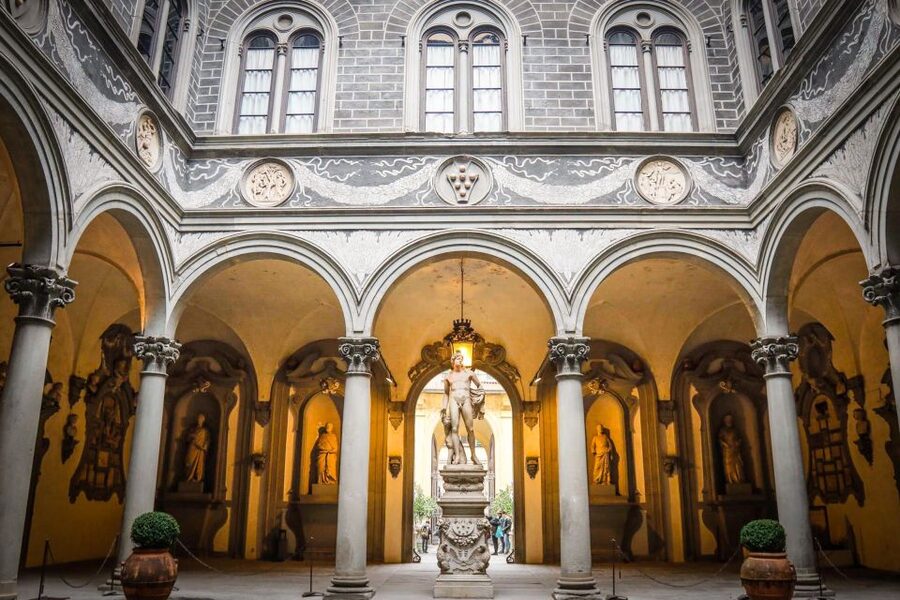
The first major stop is Palazzo Medici Riccardi, where you receive about ten minutes of guided explanation. This palace is an important early marker of Medici power.
The name itself reflects a later owner, but the building is tied to the Medicis’ rise in Florence. Your guide uses it to explain how a family could turn private wealth into public authority through architecture and patronage.
Because the stop is brief and exterior-focused, you should not expect a full palace visit. Still, this is one of the more useful stops for understanding the family’s original position in the city. The tour shows you where power began before it spread to larger residences and state buildings.
San Lorenzo and the Medici Chapel
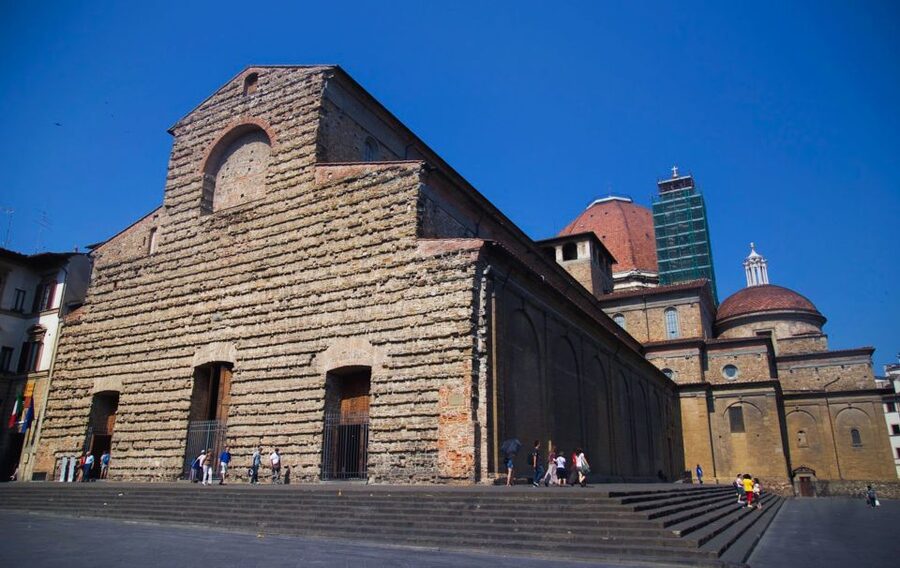
The walk continues to the Basilica of San Lorenzo, with roughly five minutes of explanation, followed by the Medici Chapel with about ten minutes. These stops are closely connected to the family’s religious and dynastic identity.
San Lorenzo is important because it served as the Medici family church. The chapel adds a more personal side to the story, showing how family memory, burial, art, and political display came together.
The short timing is both helpful and limiting. You get the key connection quickly, but you will not have time for a detailed artistic reading of every sculpture or architectural feature. Entrance tickets are not included, so plan this tour as an introduction rather than a substitute for visiting the chapel interiors.
If you want to return later, note the guide’s explanations carefully. The tour can help you decide if the Medici Chapel deserves one of your limited museum visits.
More walking tours in Florence:
- Florence: Guided Walking Tour
★ 4.5 · 3,334 reviews - Skip the line: Uffizi and Accademia Small Group Walking Tour
★ 4.5 · 3,135 reviews - Florence: Guided Walking Tour
★ 4.6 · 1,602 reviews - Florence: Uffizi & Accademia Small Group Walking Tour
★ 4.7 · 1,380 reviews
The Duomo and Medici influence in public Florence
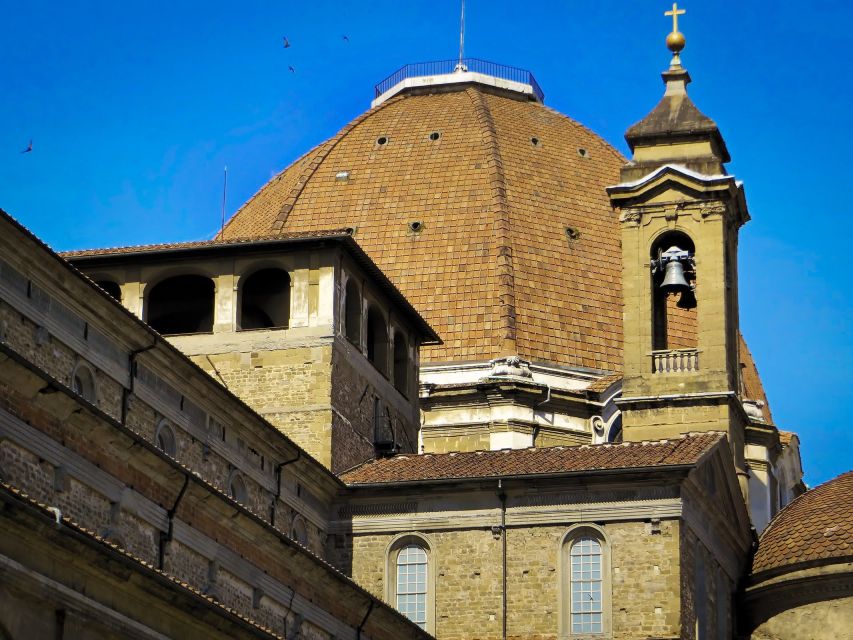
At the Florence Duomo complex, the guide provides about ten minutes of commentary. The cathedral area is one of the city’s busiest sight zones, so a guide can help you place Medici power within Florence’s larger religious and civic life.
The stop is not an admission to the cathedral, dome, baptistery, or other paid areas. You see the complex as part of the walking route and learn how the Medicis were linked to major Florentine institutions.
I find this kind of stop useful because it broadens the story beyond private palaces. The Medicis did not shape Florence only by living well. Their influence reached churches, civic projects, art, and public life.
Piazza San Firenze, Bargello, and Palazzo Gondi
The route then passes through Piazza San Firenze, where the guide speaks for about five minutes, before reaching the National Museum of Bargello for a ten-minute explanation. You also stop at Palazzo Gondi for another ten minutes.
These locations show how the Medici story is spread through the city rather than confined to one family quarter. The Bargello adds an important civic setting, while Palazzo Gondi helps you see Florence’s network of elite families and grand residences.
Again, the focus is on the outside. If you want to enter the Bargello, you will need a separate admission ticket. That matters because the museum is a major destination in its own right, and a ten-minute stop cannot cover its collection.
I would treat this section as a way to build a mental map. You see where the Medici world met other powerful Florentine families, then continue toward the main civic center.
Piazza della Signoria and Palazzo Vecchio
Piazza della Signoria receives about five minutes of guided attention, followed by ten minutes at Palazzo Vecchio. This is one of the most important parts of the walk for understanding the relationship between the Medicis and Florence’s government.
Palazzo Vecchio was the center of civic authority, not simply another palace. Here, your guide explains how the Medicis moved from influential citizens to rulers who controlled the city’s political life.
The square is also a good place to see how public art and political messaging worked together. Even without entering the palace, you can connect the building’s stern exterior and the surrounding civic space to the family’s ambitions.
If you plan to visit Palazzo Vecchio later, this explanation can make the interior more meaningful. The tour does not include admission, so do not confuse the guided stop with an indoor palace tour.
The Uffizi, Vasari Corridor, and Ponte Vecchio
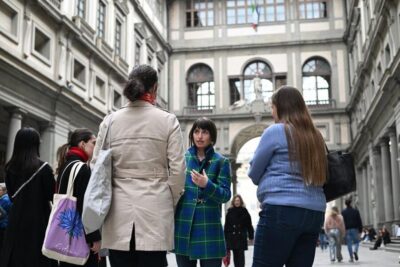
The route continues to the Uffizi Gallery for around ten minutes. The guide uses the gallery’s exterior and setting to explain the Medici relationship with art, administration, and court life.
The Uffizi is one of the clearest reminders that the Medicis were not only political operators. They supported artists, collected works, and used culture to strengthen their position. You will not enter the gallery as part of this activity, but the outside explanation helps you understand why the building matters.
Next comes the Vasari Corridor, with about five minutes of commentary. This famous passageway allowed the Medici rulers to move between residences with greater privacy and security. It is one of the most distinctive details on the route because it makes family power feel physical. The family did not merely own buildings. It connected them.
At Ponte Vecchio, you receive about ten minutes of guided explanation. The bridge is a natural place to understand how the corridor crossed the Arno and linked the Uffizi area with the Medici residences on the other side.
This is likely to be one of the most memorable sequences of the walk. You see the public bridge, look toward the private passage above it, and learn how the Medici court moved through Florence. Since the tour stays outside, you should not expect access to the corridor itself.
Santa Felicita and the final approach to Pitti Palace
The Church of Santa Felicita receives about ten minutes of attention. Its connection to the Vasari Corridor gives the stop a practical purpose: the passageway included a route near the church, allowing the Medici family to attend services without moving through the street like ordinary worshippers.
That detail makes the corridor easier to understand. It was not simply an architectural curiosity. It supported the daily life and privacy of the ruling family.
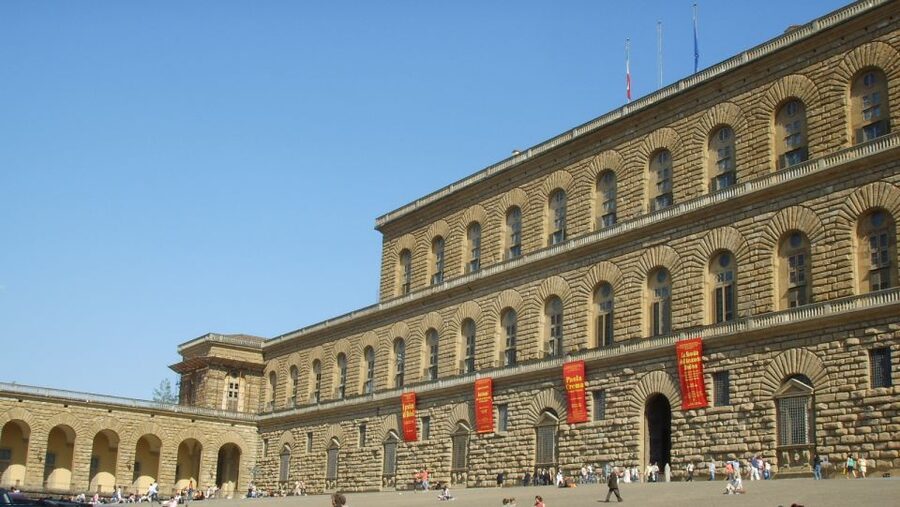
The final stops are Piazza Pitti, with about five minutes of explanation, and Pitti Palace, with about ten minutes. The palace marks the later Medici residence and the route’s natural endpoint.
Pitti Palace is a powerful finish because the story has moved from the family’s early home near San Lorenzo to the grand residence across the Arno. You can see, in physical terms, how the family’s status expanded.
The route is described as finishing at Piazza de’ Pitti. However, the meeting information also says the activity ends back at the meeting point. I would confirm the exact end location before booking, especially if you have a timed museum visit, dinner reservation, or train to catch.
What the two-hour format really gives you
Two hours is enough for a strong orientation, not a full study of Medici Florence. The route includes around sixteen named locations, and several receive only five minutes. That pace keeps the walk moving, but it means you should expect concise explanations at some stops.
I like this format for a first day in Florence. You get a citywide framework and can return to the places that interest you most. It also prevents one palace or church from taking over the entire day.
The private group setup gives you a better chance to ask questions than a large public tour. It may also make the guide’s commentary more responsive to your interests, although the supplied details do not promise a customized route.
Earphones are included. That is useful in busy streets, where traffic, crowds, and nearby conversations can make a guide hard to hear. Food, drinks, and entrance tickets are not included, so bring water and plan any interior visits separately.
The activity is advertised as wheelchair accessible, but the additional information also says it is not suitable for people with mobility impairments. Those statements do not fully agree. Because this is a long city walk with many stops and possible street-level obstacles, I would contact the provider before booking if accessibility is important to you.
Who will get the most from this Medici walk
I would choose this tour if you want a private historical overview and are curious about how Florence’s major sights fit together. It is especially useful for first-time visitors who want a story-led walk rather than a simple list of buildings.
It also suits families or small groups who prefer a private guide and want to ask questions along the way. The available languages are English, Italian, and French.
I would think twice if your main goal is to see interiors. The tour includes no entrance tickets, and most stops are outside. In that case, you may get better value from booking museum admissions separately and using this walk only if you want the Medici political story tied to the streets.
The $118.95 price per person is easiest to justify when several people share the private experience and value the guide’s attention. For a solo visitor, it is a larger expense for two hours. Free cancellation up to 24 hours before the start and reserve-now, pay-later booking make the commitment less rigid, but they do not change the basic price calculation.
Should you book this Florence Medici tour?
Book it if you want the Medici story to guide your first look at Florence. The route has a strong arc, from San Marco and the family’s early rise to Pitti Palace and the dynasty’s later grandeur. Marcelo is associated with the experience, and a good guide can make the short stops feel connected rather than rushed.
Skip it if you want extended time inside the Medici Chapel, Palazzo Vecchio, the Uffizi, or the Vasari Corridor. Those admissions are not included, and the schedule is designed for an exterior walking overview.
For the right visitor, this is a useful way to get your bearings and understand why Florence looks the way it does. Just allow extra time afterward for the interiors that catch your interest, and confirm the endpoint and accessibility details before paying.
FAQ
How long does the Medici walking tour last?
The guided tour lasts two hours. Starting times depend on availability.
Where does the tour begin?
It begins by the statue in the middle of Piazza San Marco, at Piazza San Marco 1n in Florence.
Where does the tour finish?
The route is described as finishing at Piazza de’ Pitti, 50125 Florence. The meeting information also says the activity ends back at the meeting point, so confirm the final location when booking.
Is this a private tour?
Yes. The activity is offered for a private group.
Which languages are available?
The live guide is available in English, Italian, and French.
Are entrance tickets included?
No. Entrance tickets are not included. The tour provides guided explanations of the locations, primarily from outside.
Are food and drinks included?
No. Food and drinks are not included in the price.
Can I cancel for a full refund?
Yes. You can cancel up to 24 hours in advance for a full refund. You can also reserve now and pay later.
Recently added around Florence
- Accademia and Uffizi Small-group Guided Tour★ 4.5 · 8 reviews
- The David from Michelangelo.★ 5.0 · 3 reviews
- Combo: Accademia + walking + Uffizi Galleries Guided Tour★ 3.5 · 6 reviews
- The Complete Wine Tour Brunello, Nobile, Chianti wine experience★ 4.0 · 7 reviews
- Florence Central Market Food Tour – Private Tour★ 4.0 · 7 reviews
- The Best of Tuscany in 3 Days★ 4.5 · 13 reviews
- The Cooking Lab – Authentic Food Experience★ 5.0 · 113 reviews
- Family Friendly Florence Private City Tour★ 5.0 · 47 reviews
Medici Family Tours, compared.
The Best tour in Florence: Renaissance & Medici Tales – guided by a STORYTELLER
Read our review →
The Best Tour in Florence: Renaissance and Medici Tales
Read our review →
Renaissance and Medici Tales Guided Walking Tour
Read our review →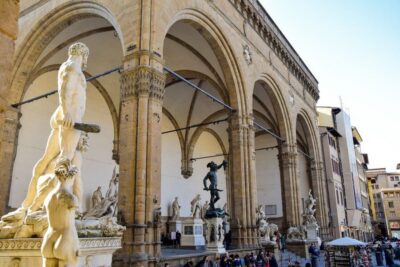
Guided Tour of Medici Family Secrets and Chapels
Read our review →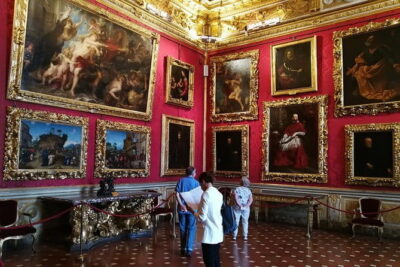
Pitti Palace, Palatina Gallery and the Medici: Arts and Power in Florence.
Read our review →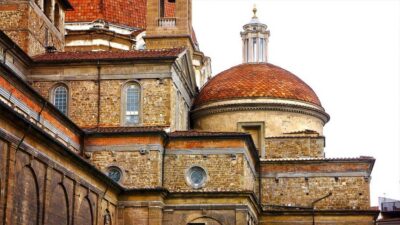
Browse the lists this tour appears in