
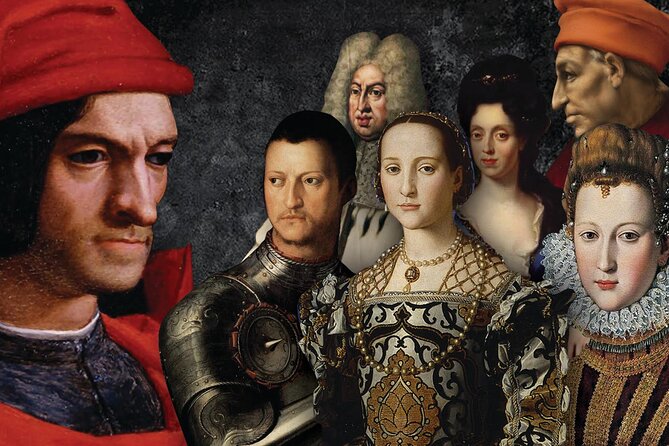
Reviewed · MEDICI FAMILY TOURS
Florence – The Medici’s Private Walking Tour
The Medici story comes alive best on Florence’s streets, where family palaces, churches, bridges, and public squares reveal how power worked in Renaissance Italy. This two-hour private walk follows that story from Palazzo Medici Riccardi to Palazzo Pitti, with stops at the Duomo, San Lorenzo, Piazza della Signoria, and Ponte Vecchio.
I like the personal format and the guides’ gift for storytelling. Isabella, Marcello, Irene, Lisa, Giacomo, and Marco have each been praised for clear explanations, humor, and real enthusiasm for Florence. I also like the route’s timing: take it early in your stay, and the city’s famous buildings will make much more sense afterward.
The main drawback is important: admission tickets are not included. In practice, this is an outdoor walking tour with historical commentary, not a ticketed tour inside the palaces, chapels, galleries, or the Vasari Corridor. At $126.16 per person, that distinction matters.
Key points to know before you book
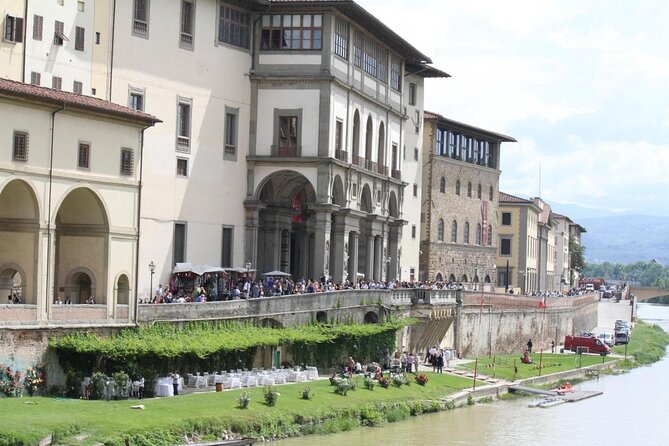
- Follow one family across Florence: The route links Medici homes, churches, civic spaces, and the bridge used by the family’s private corridor.
- Expect an outdoor-focused tour: The guide explains the buildings from outside, and monument admissions cost extra.
- Private means your group only: You can ask questions and set a comfortable pace within the two-hour schedule.
- Start at Piazza San Marco: Central accommodation pickup may be available on foot, but confirm the details before departure.
- Book it early in your visit: The historical background can help you understand later visits to the Uffizi, Medici Chapels, Pitti Palace, and Boboli Gardens.
- Allow for walking and sun: Wear smart casual clothes and comfortable shoes, and arrive 15 minutes early.
Why the Medici story works so well on foot
The Medici did not rule Florence from one building alone. Their influence spread through residences, churches, banks, political offices, art commissions, and carefully managed public images.
This route lets you connect those pieces as you walk. You begin near the family’s early base of power and finish at the grand palace they used after their position had grown far beyond that of wealthy merchants. The movement across the city mirrors the family’s rise.
I like this approach more than a simple palace tour. You are not just looking at a façade and hearing a date. You are following a family through changing fortunes, artistic ambition, political pressure, and scandal.
The private format also has real value. You are not sharing your guide with a large group, so you can ask why Michelangelo mattered to the Medici, how the Vasari Corridor worked, or which family members caused the most trouble. The pace is described as flexible, with time for questions, though the route still covers six stops in about two hours.
Guides have included Isabella, Marcello, Irene, Lisa, Giacomo, and Marco. The strongest praise has focused on their ability to explain art and politics in plain English, add humor, and make the story feel connected to the streets around you. One guide, Lisa, was described as especially careful about shade, sun, and whether the group was following the story. That sort of attention matters during a walking tour.
More Medici family tours in Florence:
- The Best tour in Florence: Renaissance & Medici Tales – guided by a STORYTELLER
★ 5.0 · 12,316 reviews - The Best Tour in Florence: Renaissance and Medici Tales
★ 5.0 · 10,810 reviews - Florence: Renaissance and Medici Tales Guided Walking Tour
★ 4.8 · 1,549 reviews
Palazzo Medici Riccardi and the family’s first great statement
Your first main stop is Palazzo Medici Riccardi, a fitting place to begin. Cosimo de’ Medici commissioned the palace in the mid-15th century, and architect Michelozzo gave it a strong, restrained exterior that projected seriousness rather than royal extravagance.
The building helped establish the Medici as Florence’s leading family. Its design used proportion, symmetry, and classical ideas that were reshaping architecture during the Renaissance. The rough stonework on the lower façade made the palace look solid and defensive, while the interior was far more polished.
The highlight inside is the Magi Chapel, decorated with frescoes by Benozzo Gozzoli. The paintings present the Medici family in a grand religious procession, but they also function as a family advertisement. Wealth, taste, connections, and divine favor all appear in the picture.
Here is the practical catch: the tour allows about 15 minutes at this stop, and admission is listed as free for the tour itself, but you should not assume the guide is taking you inside. The broader admission policy for this experience excludes monument and attraction tickets. Ask your guide or operator if you want to visit the chapel separately.
Piazza del Duomo, where Florence makes its case
At Piazza del Duomo, the guide turns from one family palace to the city’s great religious center. The cathedral, Brunelleschi’s dome, Giotto’s bell tower, and the Baptistery form one of Florence’s most memorable views.
This is a short stop, about 15 minutes, so think of it as a visual and historical orientation rather than a cathedral visit. You will hear why the dome was such an extraordinary engineering achievement and how the surrounding buildings helped Florence present itself as a major European center.
The Baptistery deserves special attention. Its marble exterior and famous golden doors are closely tied to the city’s artistic development. The nickname Gates of Paradise is useful shorthand, but your guide can give the doors a place in the wider Medici story.
You will not have admission to the cathedral, dome, bell tower, or Baptistery included in this walking tour. If you plan to enter any of them, arrange that separately. The tour’s value here is the explanation and the chance to see how the monuments fit together before you return for a longer visit.
San Lorenzo, Brunelleschi, and the Medici tombs
The Basilica di San Lorenzo brings the family story closer to home. The church was one of Florence’s oldest, and the Medici supported its 15th-century rebuilding with designs linked to Brunelleschi.
From outside, the plain façade can seem almost unfinished. Inside, the building becomes more refined, with Renaissance proportions and art connected to figures such as Donatello. That contrast is worth noticing: the Medici did not need every public surface to shout. Their influence was clear through the church’s funding, chapels, artworks, and burial places.
The Medici Chapels are the major draw. Michelangelo designed monumental tombs for members of the family, turning burial into a carefully staged statement about power, memory, and mortality.
Again, this is a commentary stop, not an included interior visit. The listed time is about 15 minutes, which is enough for context but not enough to study the church and chapels properly. I would use the guide’s explanation as a preview, then return with a separate ticket if the tombs are high on your list.
More walking tours in Florence:
- Florence: Guided Walking Tour
★ 4.5 · 3,334 reviews - Skip the line: Uffizi and Accademia Small Group Walking Tour
★ 4.5 · 3,135 reviews - Florence: Guided Walking Tour
★ 4.6 · 1,602 reviews - Florence: Uffizi & Accademia Small Group Walking Tour
★ 4.7 · 1,380 reviews
Piazza della Signoria and the public face of power
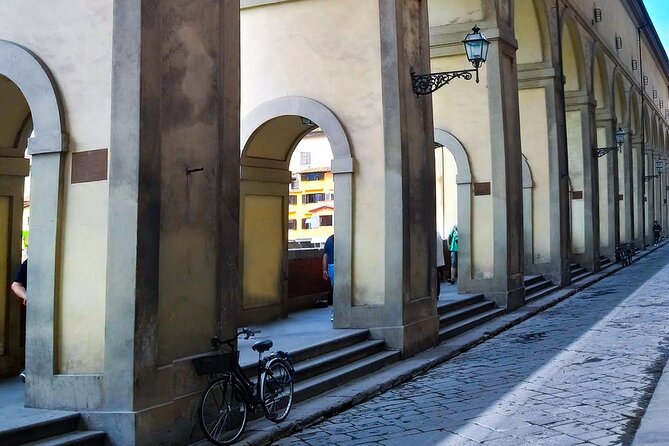
Piazza della Signoria gives you the political side of Florence. Palazzo Vecchio dominates the square, and the surrounding sculpture collection makes the area feel like an open-air gallery.
The replica of Michelangelo’s David marks the entrance to the Palazzo Vecchio. It recalls the original statue’s role as a symbol of Florentine independence, even as the Medici later took control of the city’s government. The Fountain of Neptune and the statues beneath the Loggia dei Lanzi add more layers of myth, politics, and public display.
This is the longest stop, at about 25 minutes, and it earns the extra time. The guide can connect the square to the Uffizi nearby and explain how Florence used art in public spaces to shape civic identity.
The tour does not include entry to Palazzo Vecchio or the Uffizi Gallery. That limitation is easy to miss when a tour description mentions top sights, so keep your expectations clear. You are seeing the setting and receiving the story, not touring the interiors.
Ponte Vecchio and the Medici’s private shortcut
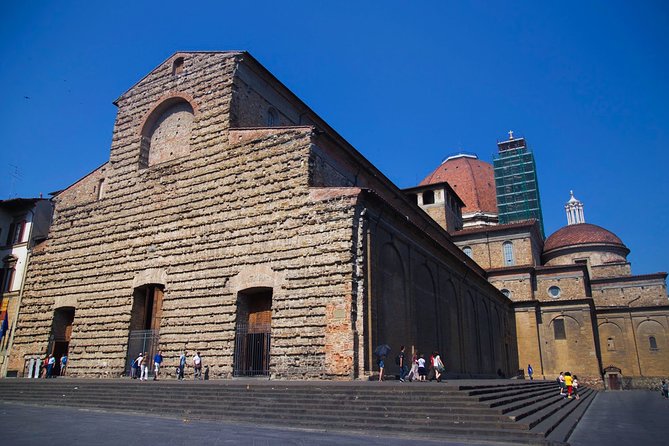
Ponte Vecchio is one of the route’s most memorable stops because the bridge combines everyday commerce with Medici privilege. Its jewelry shops give it a polished look today, while its medieval structure and position over the Arno reveal its older role in city life.
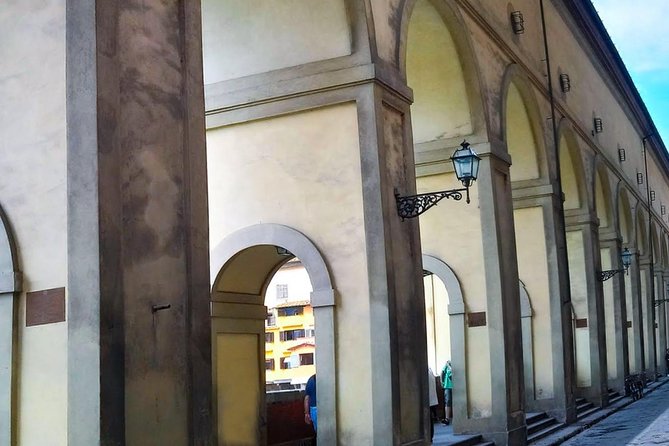
Above the bridge runs the Vasari Corridor, built in 1565 to connect Palazzo Vecchio with Pitti Palace. The Medici could move between their government offices and residence without walking through the crowds below. It was practical, private, and a little theatrical.
This is a good place to ask questions. How did the corridor change the family’s movement through Florence? Why did they need privacy? What did it say about the distance between rulers and ordinary residents?
The answer becomes clearer as you walk toward the Oltrarno. The corridor was not just a clever passageway. It reflected a ruling family that had moved from merchant wealth to princely behavior.
The tour gives you about 20 minutes here, and the bridge is free to cross. Do not expect access to the corridor itself. The private passageway is part of the explanation, not an included attraction.
Palazzo Pitti, where the story ends
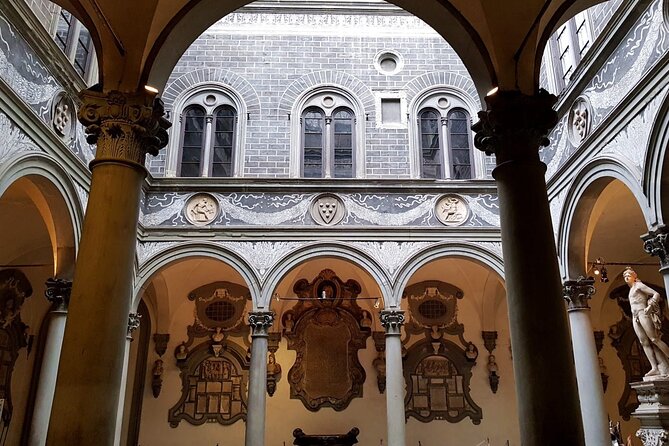
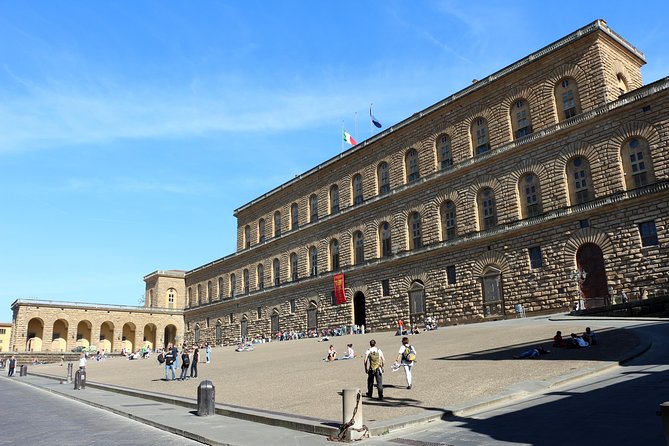
The final stop is Palazzo Pitti, across the Arno in the Oltrarno district. The massive stone façade feels heavier and more imposing than the Medici’s earlier palace, which makes it a useful final chapter.
Inside are decorated rooms and museums, including the Palatine Gallery, with works by Raphael and Titian. Behind the palace, the Boboli Gardens add sculpture, fountains, and broad views across Florence.
The guide allows about 25 minutes here. That is enough to explain why the palace mattered and point out what deserves a return visit. It is not enough for a complete museum or garden visit, and admission is not included.
You should plan your day around this endpoint. Since the tour ends at Palazzo Pitti and does not include hotel drop-off, you can continue into the palace or gardens if you have tickets, stop for a meal in the Oltrarno, or walk back toward the historic center.
Price, pace, and what you actually receive
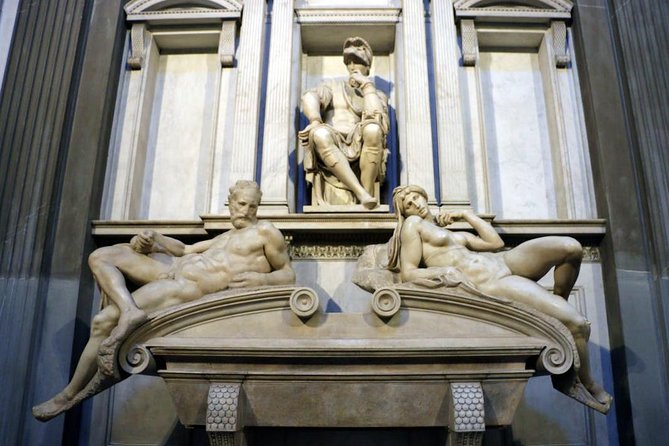
At $126.16 per person, this is not a cheap orientation walk. The price makes more sense if you value a private guide, focused Medici storytelling, and the chance to ask questions without a large group slowing things down.
It makes less sense if you expect interior access. You are paying for the guide’s time and interpretation, not entry to Palazzo Medici Riccardi, the Medici Chapels, Palazzo Vecchio, the Vasari Corridor, Palazzo Pitti, or the galleries. Budget separately for any buildings you want to enter.
The route lasts about two hours and covers much of central Florence on foot. Pickup may be offered from centrally located accommodation, but it is done on foot, and the standard meeting point is Piazza San Marco. You should arrive 15 minutes before departure.
The tour is offered in English, includes a professional guide, and can provide earphones if needed. Group discounts may be available, but this is still a private activity, so only your party participates.
The cancellation rule is simple: cancel at least 24 hours before the start time for a full refund. Changes or cancellations made later are not accepted for a refund.
Who will get the most from this walk
I would recommend this tour to you if the Medici are a main reason you came to Florence, or if you want politics and family drama alongside the usual art talk. It also suits anyone who wants a strong first look at the city before visiting its museums.
The route is especially useful for:
- First-time visitors who want the city’s major sights connected by one story
- History and Renaissance art fans
- Couples or families who prefer a private guide
- Visitors planning to enter the Uffizi, Medici Chapels, or Pitti Palace later
- Anyone who enjoys asking detailed questions at their own pace
I would hesitate if you want a tour packed with interior visits. I would also think twice about the price if you only need directions or a quick introduction to Florence. A self-guided walk can show you the same streets, but it will not give you the live back-and-forth that is the main reason to choose this experience.
Should you book the Medici private walking tour?
Book it if you want the Medici story to organize your first days in Florence. The route connects family homes, religious foundations, political spaces, the Vasari Corridor, and the final palace in a way that makes the city easier to read.
Book early in your visit if possible. One guide’s most useful advice came after a guest had taken the tour on the final day: the walk revealed many other places worth exploring, but there was no time left to see them. Take the tour near the beginning, then return to the interiors that catch your attention.
Just confirm the admission issue before paying. This experience is best understood as a private, guided outdoor tour with excellent historical context. If that is what you want, the strong guide feedback and 4.8 rating make it a promising choice. If you expect the guide to lead you inside each palace and chapel, choose a different tour or budget for separate tickets.
FAQ
How long does the Medici private walking tour last?
The tour lasts approximately two hours.
Where does the tour begin?
The standard meeting point is Piazza San Marco in Florence.
Where does the tour end?
The tour ends at Palazzo Pitti, at Piazza de’ Pitti 1.
Is hotel pickup available?
Pickup is offered from centrally located accommodation. It is done on foot.
Are monument admission tickets included?
No. Admission to monuments and attractions is not included.
Is the tour private?
Yes. Only your group participates in the activity.
What language is the tour offered in?
The tour is offered in English.
Can I cancel for a full refund?
Yes. You can cancel at least 24 hours before the start time for a full refund. Cancellations or changes made less than 24 hours before departure are not refunded.
Recently added around Florence
- Accademia and Uffizi Small-group Guided Tour★ 4.5 · 8 reviews
- The David from Michelangelo.★ 5.0 · 3 reviews
- Combo: Accademia + walking + Uffizi Galleries Guided Tour★ 3.5 · 6 reviews
- The Complete Wine Tour Brunello, Nobile, Chianti wine experience★ 4.0 · 7 reviews
- The Best of Tuscany in 3 Days★ 4.5 · 13 reviews
- The Cooking Lab – Authentic Food Experience★ 5.0 · 113 reviews
- Florence Central Market Food Tour – Private Tour★ 4.0 · 7 reviews
- Family Friendly Florence Private City Tour★ 5.0 · 47 reviews
Medici Family Tours, compared.
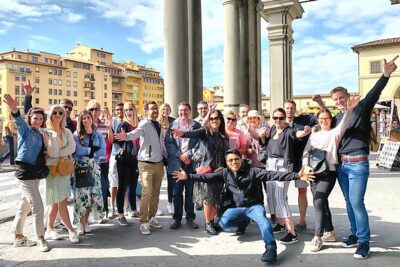
The Best tour in Florence: Renaissance & Medici Tales – guided by a STORYTELLER
Read our review →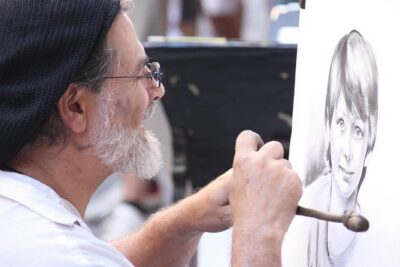
The Best Tour in Florence: Renaissance and Medici Tales
Read our review →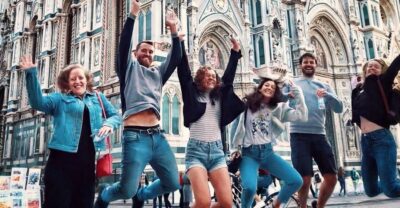
Renaissance and Medici Tales Guided Walking Tour
Read our review →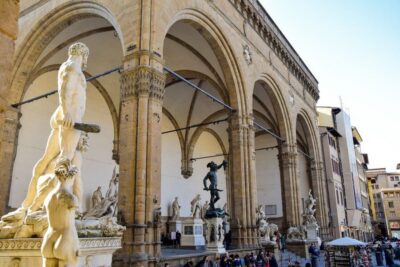
Guided Tour of Medici Family Secrets and Chapels
Read our review →
Pitti Palace, Palatina Gallery and the Medici: Arts and Power in Florence.
Read our review →
Browse the lists this tour appears in