
Reviewed · FLORENCE RENAISSANCE HISTORY TOURS
Florence: Renaissance City Walking Tour
Florence makes a fine open-air museum, and this walk takes you through its greatest hits without putting you behind a museum wall. You’ll begin at the Uffizi, pass the Palazzo Vecchio, cross toward Santa Croce and Ponte Vecchio, then finish at the Duomo.
I like the strong historical thread, which ties famous streets to Dante, Michelangelo, Leonardo da Vinci, and the Medici family. I also like the route through Oltrarno, Santo Spirito, and San Frediano, where artisan shops and old tower houses offer a more local side of Florence.
The catch is simple: ninety minutes is not long for this much city. You’ll cover a fair amount of ground, and the walk is best for orientation and stories rather than long stops inside attractions. Comfortable shoes are essential, and large bags are not allowed.
Key points to know before booking
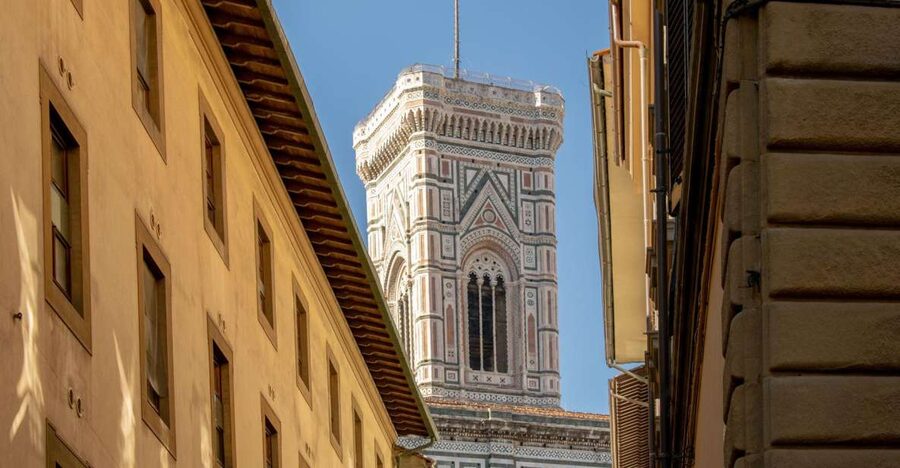
- The route covers Florence’s major landmarks: See the Uffizi courtyard, Piazza della Signoria, Santa Croce, Ponte Vecchio, Piazza della Repubblica, and the Duomo area.
- You hear the people behind the city: The guide connects Florence to Dante Alighieri, Michelangelo, Leonardo da Vinci, and the Medici family.
- Oltrarno adds local character: Artisan shops, old tower houses, Santo Spirito, and San Frediano give the route more texture than a standard monument-only walk.
- The tour lasts 1.5 hours: Expect a brisk overview, not a slow museum visit or a full exploration of every neighborhood.
- An audio headset is included: This should help you follow the guide while moving through busy streets.
- The price is $40 per person: That is reasonable if you want a focused introduction to Florence with a live English-speaking guide.
Why this walk works as a Florence introduction
Florence is compact enough to walk, but its story can feel scattered. One square points to the Medici, another to a church full of famous tombs, and a bridge leads into a district with a different feel altogether. A good walking route gives those pieces an order.
This tour does that in a short stretch. You begin among the city’s political and artistic symbols, move through Santa Croce and the Arno, then finish near the Cathedral of Santa Maria del Fiore. Along the way, the guide explains how people, power, art, and streets fit together.
I would treat this as a first-look tour. It can help you decide which places deserve a longer visit later. It is not designed to replace time inside the Uffizi, Palazzo Vecchio, Santa Croce, or the Cathedral. Entry tickets and refreshments are not included, and the route focuses on exterior views and street-level context.
The included audio headset matters more than it may seem. Florence’s central streets can be crowded, and a headset lets you keep moving while still hearing the guide. If your guide is Elisa, expect an engaging style with room for questions. She has a knack for keeping the walk lively enough that the distance does not feel like the main event.
More Renaissance and history tours in Florence:
- The Best tour in Florence: Renaissance & Medici Tales – guided by a STORYTELLER
★ 5.0 · 12,316 reviews - The Best Tour in Florence: Renaissance and Medici Tales
★ 5.0 · 10,810 reviews - The Dark Side of Florence: Mysteries and Legends
★ 5.0 · 2,785 reviews
Starting among the Uffizi and Piazza della Signoria
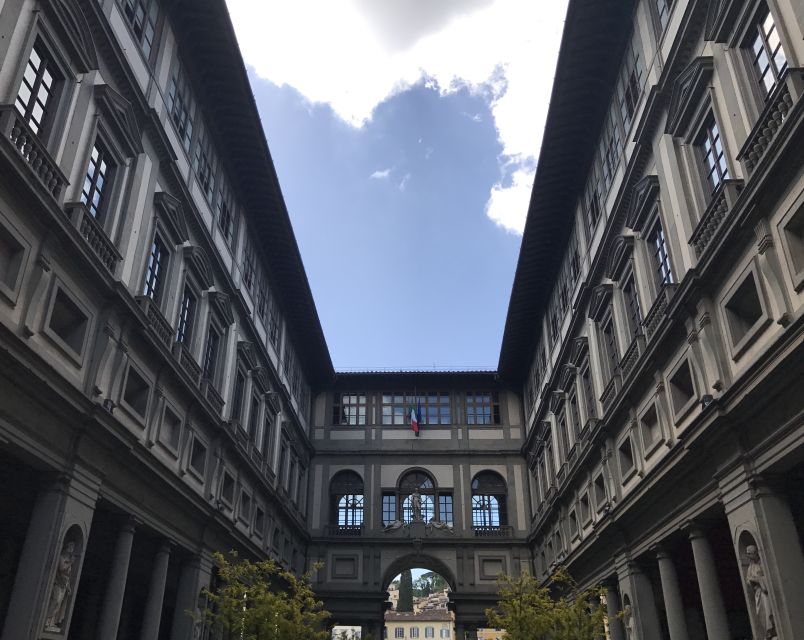
The walk begins in the courtyard of the Uffizi Gallery, one of Florence’s best-known settings. Even if you are not entering the museum, this is a useful place to start because the Uffizi connects directly with the city’s political center.
From there, you reach Piazza della Signoria and the Palazzo Vecchio. The square is more than a pretty gathering place. It has long been tied to Florence’s public life, and the Palazzo Vecchio gives the area a strong sense of power and ceremony.
The nearby Loggia dei Lanzi is one of the first major visual stops. Its open arches frame important sculptures, allowing you to see public art without joining a museum queue. Your guide can explain what you are looking at and why these works belong in such a prominent civic setting.
This opening section is especially useful if you are new to Florence. You get several famous sights quickly, but the guide provides the link between them. The drawback is that a square filled with art and architecture rewards lingering, while a 1.5-hour tour must keep its pace.
If you want detailed sculpture analysis or time to study every statue, plan to return later. During the walk, listen for the larger story and note the pieces you want to revisit.
Narrow streets leading to Santa Croce
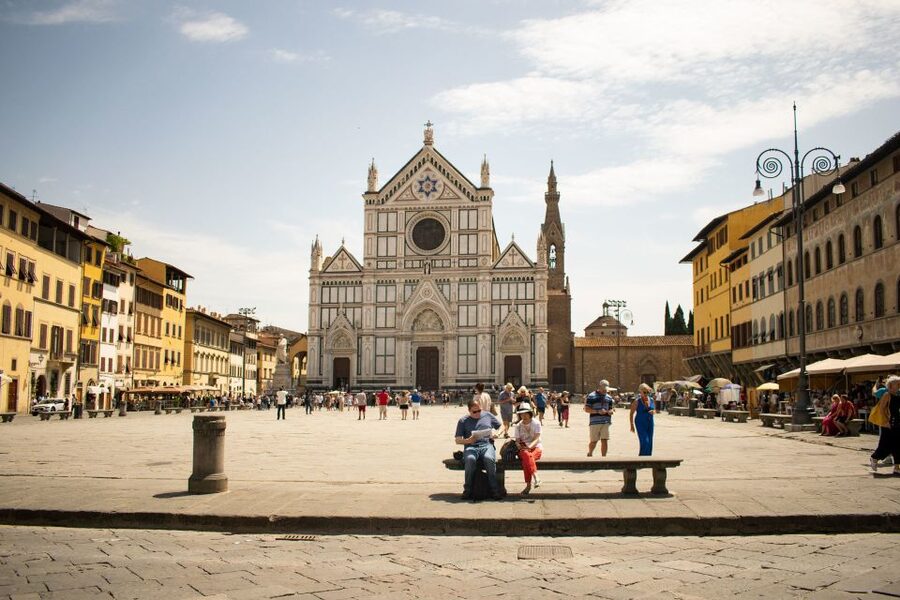
The route then follows narrower streets toward Piazza Santa Croce. This change in scale is welcome. Florence is not only grand squares and famous facades. Its smaller lanes show how closely the city’s monuments sit beside ordinary urban life.
Santa Croce is an important stop because the church is linked with some of Italy’s best-known figures. The tour presents it as a smaller version of Florence’s iconic Duomo, while also drawing attention to its role as the final resting place of people such as Dante Alighieri and Michelangelo.
That connection gives the square a personal edge. You are not only looking at stone and decoration. You are standing near the memory of writers, artists, and public figures who shaped Italian culture.
The exterior visit is valuable for orientation, but do not expect a full church tour. The experience includes a walking route and expert guidance, not admission to attractions. If you want to see the interior, tombs, chapels, or artwork in detail, you will need separate time and arrangements.
Santa Croce also shows why a guide helps in Florence. Without context, a church can become another beautiful building in a city full of beautiful buildings. With the story attached, the stop becomes easier to remember.
Along the outside route of the Vasari Corridor
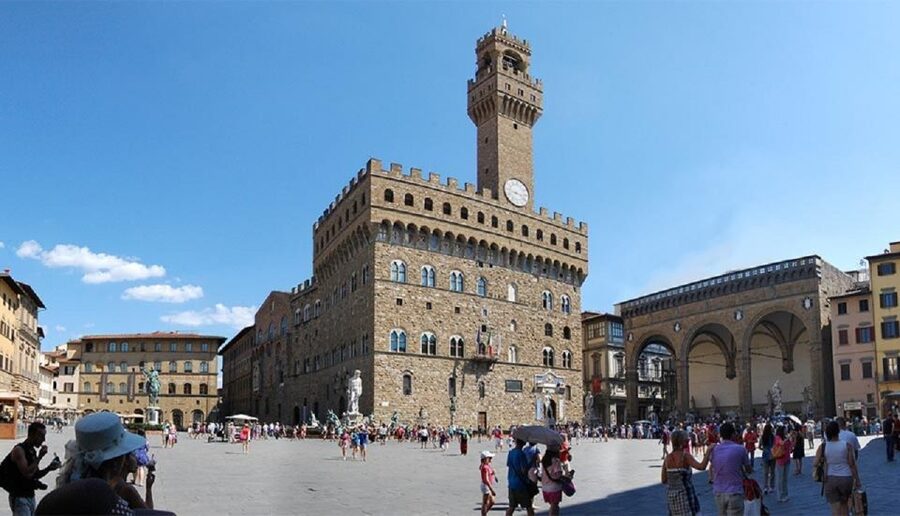
From Santa Croce, the walk continues toward the Arno and Ponte Vecchio, following the external path of the Vasari Corridor. This is an important detail to understand before booking. The route takes you along the outside path, not on a private or interior visit through the corridor.
The Vasari Corridor is tied to the Medici family and their need to move between important parts of Florence. Even from the outside, it gives the guide a natural way to explain Medici power and the way the family shaped the city.
That is one of the tour’s best themes. The Medici story is not treated as a separate lecture. It appears in the streets, buildings, routes, and public spaces you are already seeing. You learn how Florence’s art and architecture were connected to influence and patronage.
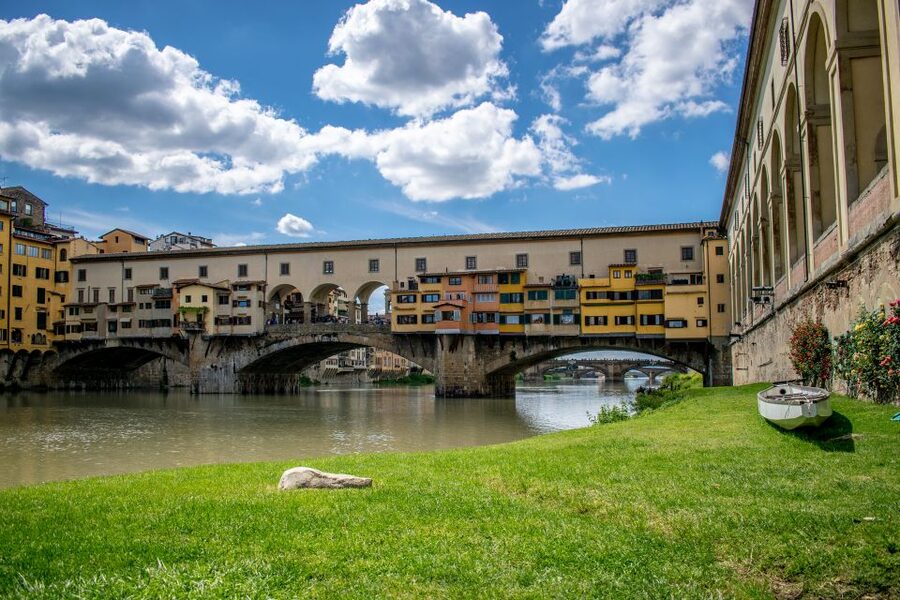
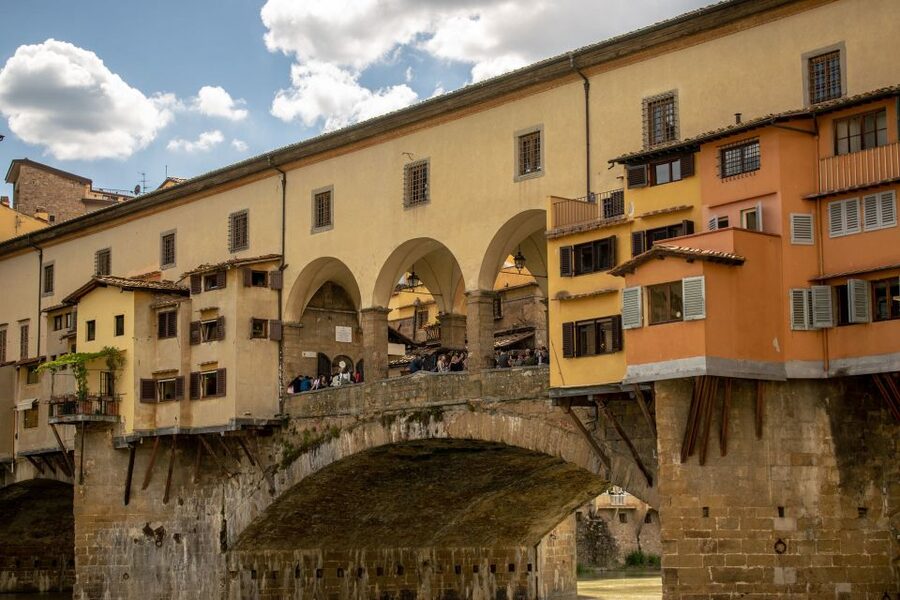
At Ponte Vecchio, the setting becomes more picturesque. The bridge is lined with goldsmith shops, and its position over the Arno makes it one of Florence’s signature views. It is also a place where the tour may feel crowded, so the audio headset should be useful.
Ponte Vecchio is a quick stop on a route that keeps moving. You can take in the bridge, the shops, and the river, but you may not have much time for shopping or careful photography. If you want a quiet bridge visit, return at another hour.
More walking tours in Florence:
- Florence: Guided Walking Tour
★ 4.5 · 3,334 reviews - Skip the line: Uffizi and Accademia Small Group Walking Tour
★ 4.5 · 3,135 reviews - Florence: Guided Walking Tour
★ 4.6 · 1,602 reviews - Florence: Renaissance and Medici Tales Guided Walking Tour
★ 4.8 · 1,549 reviews
Seeing Oltrarno, Santo Spirito, and San Frediano
The move into Oltrarno is what gives this walk more range than a basic list of central monuments. Oltrarno means the area on the other side of the Arno, and its streets offer a different feel from the formal spaces near the Uffizi and Palazzo Vecchio.
Here, the emphasis shifts to artisan shops, old tower houses, local traditions, and an international mix. The neighborhoods of Santo Spirito and San Frediano are included in the route, giving you a look at parts of Florence that are often passed over by visitors focused only on the Duomo and the Uffizi.
I like this portion because it helps you see Florence as a living city rather than a collection of preserved sights. The shops and neighborhood streets add everyday character. You may find this especially useful if you are deciding where to spend the rest of your stay.
Still, keep your expectations in check. The tour does not promise visits inside workshops, tastings, or shopping time. You are walking through these districts with commentary, not taking a hands-on artisan class.
The route also involves a fair amount of walking. Wheelchair access is listed, but the practical question for any participant is stamina. You should be comfortable moving through the city for the full 1.5 hours, with only the stops built into the route.
From Ponte Santa Trinita to the Duomo
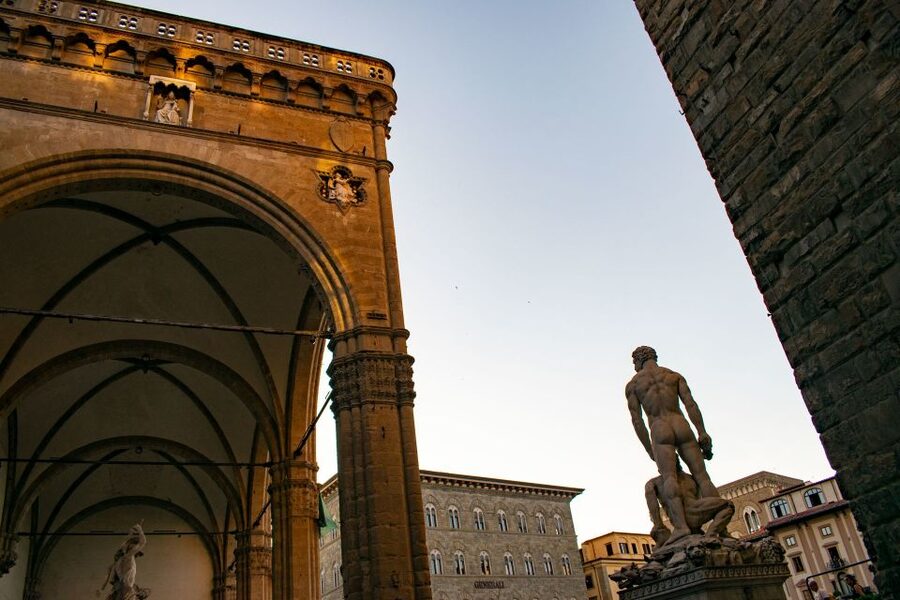
After Oltrarno, the route reaches Ponte Santa Trinita. This gives you another bridge perspective and leads toward Via Tornabuoni, one of Florence’s notable central streets.
The transition is a good reminder of the city’s mix of old and polished. You move from neighborhood streets and artisan traditions toward a more formal shopping avenue, then on to Piazza della Repubblica. The changing surroundings make the route feel like a compact cross-section of Florence.
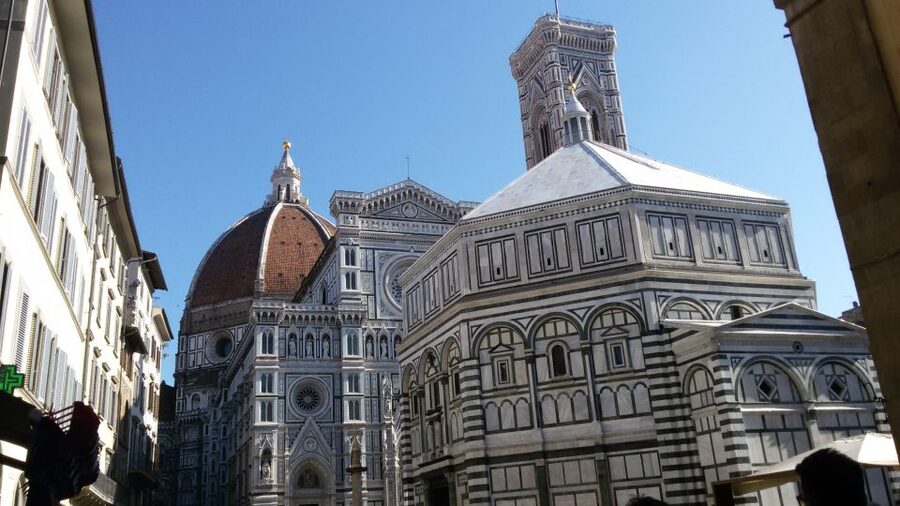
Piazza della Repubblica provides another large urban space before the final approach. By this point, the tour has moved through political Florence, religious Florence, Medici Florence, artisan Florence, and commercial Florence. That range is the main value of the itinerary.
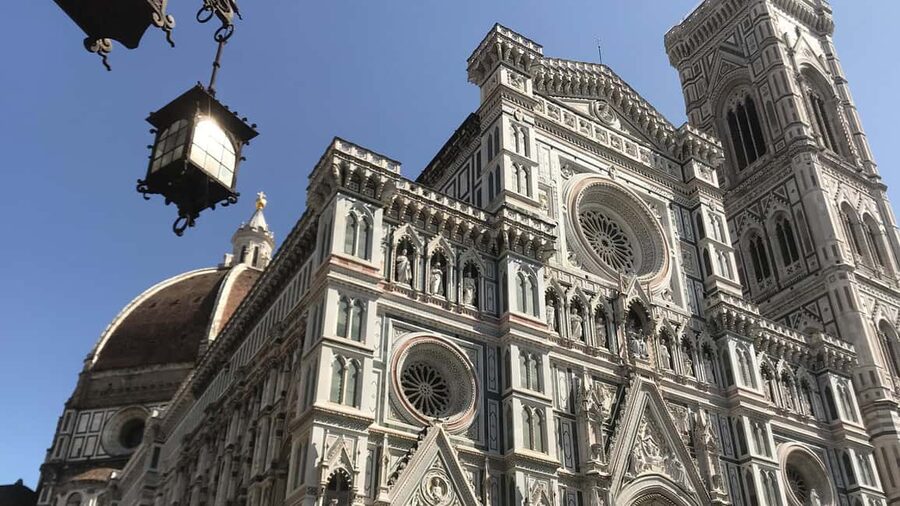
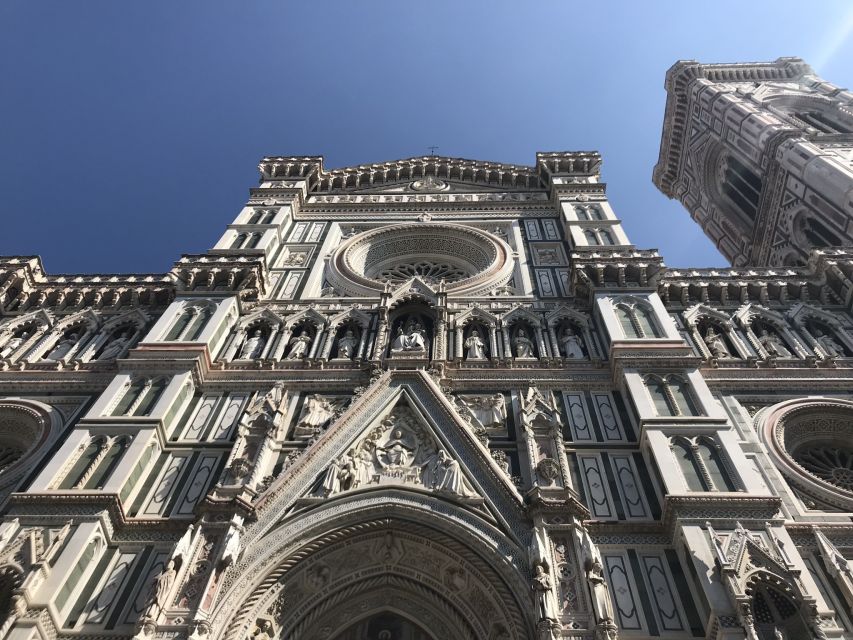
The final major sight is the Cathedral of Santa Maria del Fiore, better known as the Duomo. Coming face to face with the cathedral at the end gives the walk a clear finish. Its scale and familiar profile make it an effective final landmark, especially if this is your first day in Florence.
Again, the tour is about seeing and understanding the exterior. You should not expect a climb, interior entry, or extended architectural study. If you plan to visit the cathedral complex, arrange that separately and leave enough time for admission procedures and security requirements.
What $40 buys you
At $40 per person, this is not the cheapest way to walk around Florence, since you could follow the same streets on your own. The value comes from the organized route and historical explanation.
A self-guided walk can show you the Uffizi, Santa Croce, Ponte Vecchio, Oltrarno, and the Duomo. It is harder to connect those sights into one clear story, especially when you are seeing Florence for the first time. A live English-speaking guide can point out what matters before you hurry on to the next square.
The audio headset adds practical value. You do not need to crowd around the guide to hear, and you can keep your attention on the buildings around you. The price also includes the guide and the walking tour, which makes the cost easier to justify for visitors who prefer a structured introduction.
The price is less appealing if you already know Florence well or have spent time with a detailed guidebook. It is also not the best choice if you want lengthy stops, interior visits, food, or shopping. Refreshments are not included, and the tour does not provide entry tickets.
For a short first orientation, I consider $40 fair. The key is to book it for what it is: a guided city walk that builds context, not an all-access sightseeing pass.
Timing, comfort, and practical details
The tour lasts 1.5 hours, and starting times depend on availability. That makes it easy to fit into a day, but the short duration also explains the brisk pace.
Wear comfortable shoes. This is not optional advice. You will cover central Florence on foot, and the route includes several neighborhoods and major landmarks. Bring only what you need because luggage and large bags are not allowed.
The tour is offered in English with a live guide. An audio headset is included. Wheelchair access is available, but you should still consider the stated amount of walking when deciding if it suits you.
There are no refreshments, so plan around the start time. A small water bottle may be sensible if permitted, but the stated restrictions mean you should avoid bringing a large day bag.
The cancellation policy is flexible: you can cancel up to 24 hours ahead for a full refund. You can also reserve now and pay later, which is helpful if your Florence schedule is still shifting.
Who should book this Florence walk
I would recommend it to first-time visitors who want a fast but meaningful introduction to Florence. It suits you if you want the major landmarks, a little neighborhood character, and stories about the figures who shaped the city.
It is also a good fit for anyone who likes walking but does not want to plan every turn. The route moves from the Uffizi to the Duomo while adding Oltrarno, Santo Spirito, and San Frediano. That saves you the work of building your own route.
Families and mixed-age groups may appreciate the 1.5-hour format, though everyone should be ready for steady walking. The guide’s use of an audio headset can make it easier for a group to stay together without missing the commentary.
I would skip it if you want a slow architectural study, museum admission, a food experience, or a private tour with plenty of time at each stop. You should also think twice if walking for ninety minutes is difficult.
Should you book the Renaissance City Walking Tour?
Book it if you want Florence to make sense quickly. The best parts are the route’s range, the Medici connections, and the move into Oltrarno and its neighboring districts. You get much more than a march between postcard sights.
The main limitation is time. Ninety minutes gives you a strong outline, but not deep visits. Use the walk to learn what you are seeing, then return to Santa Croce, the Uffizi, the Duomo, or Ponte Vecchio on your own.
At $40, it is a sensible choice for a first day in Florence, especially if Elisa is leading your departure and you value a lively guide who welcomes questions. Bring comfortable shoes, leave the large bag at your accommodation, and expect a brisk, story-filled introduction to the Renaissance city.
FAQ
How long does the Florence Renaissance City Walking Tour last?
The tour lasts 1.5 hours. Starting times vary, so check availability when booking.
What language is the tour offered in?
The tour is conducted in English by a live tour guide.
What sights are included on the walking route?
The route includes the Uffizi Gallery courtyard, Piazza della Signoria, Palazzo Vecchio, the Loggia dei Lanzi, Santa Croce, the external path of the Vasari Corridor, Ponte Vecchio, Oltrarno, Santo Spirito, San Frediano, Ponte Santa Trinita, Via Tornabuoni, Piazza della Repubblica, and the Cathedral of Santa Maria del Fiore.
Is the tour wheelchair accessible?
Yes, the activity is listed as wheelchair accessible. It also involves a fair amount of walking, so consider the route length when planning.
What should I bring?
Bring comfortable shoes. Luggage and large bags are not allowed.
What is included in the $40 price?
The price includes the walking tour, an expert guide, and an audio headset. Refreshments are not included.
Recently added around Florence
- Accademia and Uffizi Small-group Guided Tour★ 4.5 · 8 reviews
- The David from Michelangelo.★ 5.0 · 3 reviews
- Combo: Accademia + walking + Uffizi Galleries Guided Tour★ 3.5 · 6 reviews
- The Complete Wine Tour Brunello, Nobile, Chianti wine experience★ 4.0 · 7 reviews
- The Cooking Lab – Authentic Food Experience★ 5.0 · 113 reviews
- Florence Central Market Food Tour – Private Tour★ 4.0 · 7 reviews
- The Best of Tuscany in 3 Days★ 4.5 · 13 reviews
- Family Friendly Florence Private City Tour★ 5.0 · 47 reviews
Florence Renaissance History Tours, compared.
The Best tour in Florence: Renaissance & Medici Tales – guided by a STORYTELLER
Read our review →
The Best Tour in Florence: Renaissance and Medici Tales
Read our review →
The Dark Side of Florence: Mysteries and Legends
Read our review →
Renaissance and Medici Tales Guided Walking Tour
Read our review →
Dark Mysteries and Legends Guided Walking Tour
Read our review →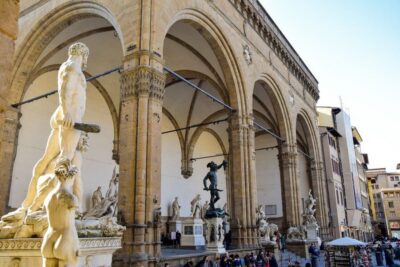
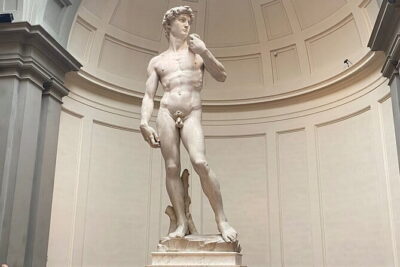
Accademia Gallery: Michelangelo’s David and High Renaissance Art
Read our review →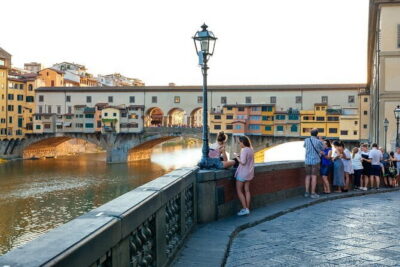
Florence Private Tour: Renaissance, Famous Families & Hidden Gems
Read our review →Browse the lists this tour appears in