
Reviewed · FLORENCE
Florence: Leonardo Drawings
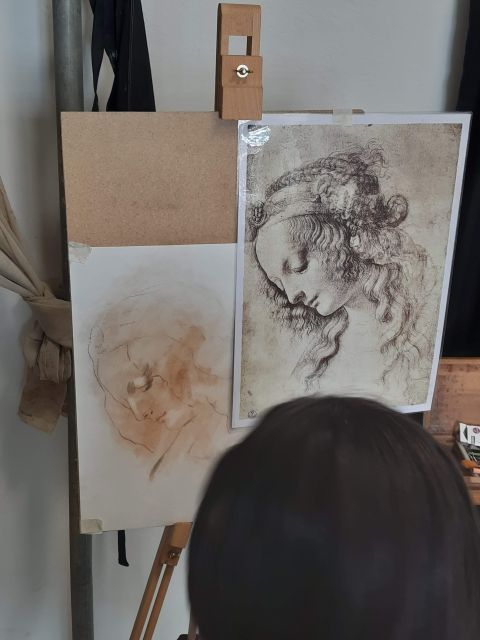
Leonardo da Vinci’s working methods come alive at a drawing table in Florence. In this three-hour private class, you study a famous Leonardian sketch and reproduce it step by step with charcoal, sanguine, sepia, pencil, and paper. I like the hands-on format, and I like that the lesson suits complete beginners as well as experienced artists.
The main consideration is location. Geko Art Studio sits outside Florence’s tight historic center, about a 32-minute walk according to one recent booking experience. The time is also arranged personally after booking, so you should keep an eye on your email or WhatsApp rather than assuming the time shown at checkout is final.
Key points at a glance
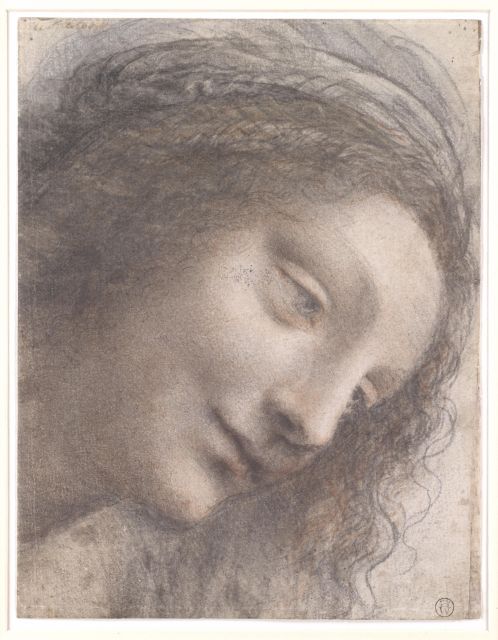
- Leonardo’s methods at your own drawing table: Work through traditional techniques instead of simply looking at Renaissance art.
- Charcoal, sanguine, and sepia practice: Try the materials used to create the soft shadows and warm tones linked with old master drawings.
- A private three-hour lesson: The instructor can guide your pace closely, whether you have not drawn in years or already take advanced art classes.
- Useful historical context: Learn about Leonardo, Renaissance art, and the purpose of the tools while you work.
- All core supplies included: You receive an easel, paper, pencils, sanguine pencil, charcoal, and an eraser.
- Coffee break included: Cookies, water, and juice give you a short pause during the lesson.
Drawing like Leonardo at Geko Art Studio
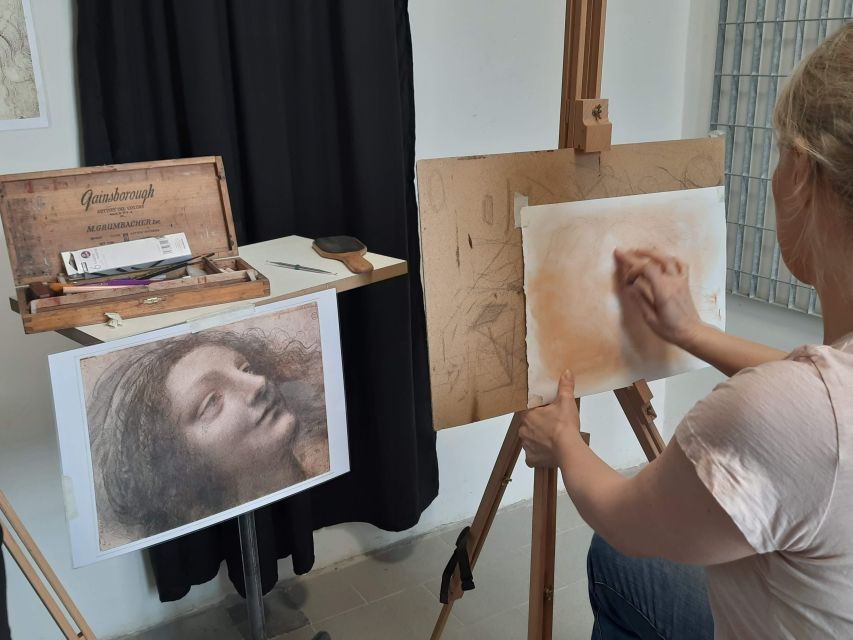
This experience gives you something Florence’s major museums cannot: time to work with your hands. You are not rushing past a Leonardo drawing with a crowd behind you. You sit down, handle the materials, and try to understand how an image takes shape through line, tone, pressure, and patience.
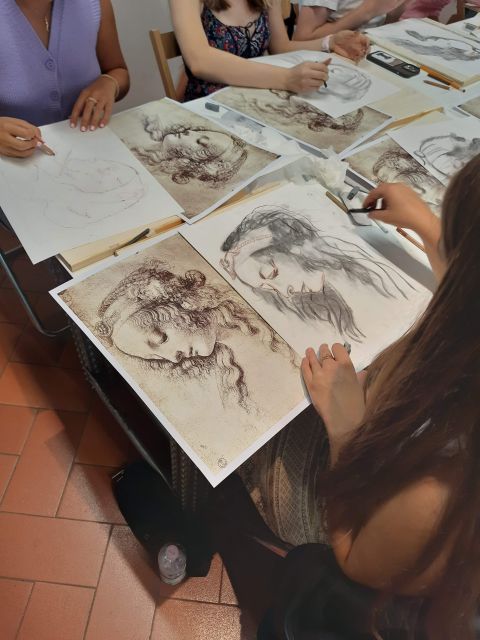
The class takes place at Geko Art Studio, identified by its glass door. It is a private group experience, which matters here. Drawing requires concentration, and a small private setting gives the instructor room to watch your progress and correct your technique as you go.
The goal is to reproduce one of Leonardo da Vinci’s famous sketches. The supplied information does not name the exact sketch in advance, so you should ask the studio if you want to know which image you will study before arriving. That detail may matter if you are hoping to work on a particular anatomical study, portrait, or technical drawing.
You do not need previous training. The teacher leads you through the process in order, so you are not left to guess how much pressure to apply or where to begin. At the same time, the class is not only for beginners. One participant with extensive art-class experience found the instruction offered plenty of new material, which suggests that the lesson goes beyond a basic recreational sketching session.
Other Florence days worth putting in the same trip:
- Florence: Skip-The-Line Uffizi Gallery Timed Entry Ticket
★ 4.5 · 27,832 reviews - Tuscany Day Trip from Florence: Siena, San Gimignano, Pisa and Lunch at a Winery
★ 5.0 · 21,634 reviews - Florence: Timed Entrance Ticket to Michelangelo’s David
★ 4.6 · 16,983 reviews
The first step: studying the model and materials
The class begins with an introduction to the drawing process and the tools. You work on paper with an easel, pencil, sanguine pencil, charcoal, and eraser. These are simple materials, but each behaves differently, and learning that difference is one of the most useful parts of the class.
Pencil helps you establish lines and structure. Charcoal creates broad dark areas and soft transitions. Sanguine brings a warm reddish tone that connects your drawing to the look of many Renaissance studies. Sepia is also part of the stated technique, although the included equipment specifically lists a sanguine pencil rather than a separate sepia tool.
This material-focused approach gives the experience real value. You are not just told that Leonardo used certain methods. You get to feel how a line changes when you switch tools, how charcoal can be softened, and how an eraser can become part of the drawing rather than merely a way to remove mistakes.
The instructor also supplies historical and cultural background about Leonardo and the Renaissance. That context helps you see the sketch as working art, not just a finished image. Leonardo’s drawings were tied to observation, study, and problem-solving, and the lesson uses those ideas as a starting point for your own work.
Building the sketch step by step
The heart of the class is the guided reproduction of the chosen sketch. You follow the teacher through the traditional drawing process rather than attempting the full image at once.
That order is useful if you are rusty. One recent participant had not drawn in years and found that the supportive teaching helped rebuild confidence. Another beginner said the drawing looked much better by the end than expected. Those details point to an important strength: the lesson is structured to keep you moving, even if your first marks feel uncertain.
You can expect the instructor to focus on observation, proportion, line, and shading as the drawing develops. The exact teaching sequence is not specified, so the studio is the best source for precise details. Still, the stated format is clear: you work through a traditional method under direct guidance and learn how Leonardo used his materials.
For experienced artists, the value may be less about producing a perfect copy and more about examining decisions. How does a master suggest volume with a few strokes? How does a dark passage balance a light one? What happens when a line is left visible instead of polished away? A good instructor can turn those questions into practical exercises.
The class also gives you permission to slow down. Florence can be a full-on museum-and-church marathon, but drawing forces a different rhythm. You spend three hours looking closely at one image instead of trying to absorb dozens.
Why the Renaissance setting matters
The workshop does not take place inside Leonardo’s studio, and it should not be confused with a museum visit. Its strength is practical rather than monumental. You learn by doing, then connect the physical work to Renaissance art and Leonardo’s life.
That connection is especially useful for anyone who has looked at old master drawings and wondered how they were made. Museum labels can tell you the date and medium, but they rarely explain what the artist felt in the hand. Working with charcoal and sanguine gives you a small, direct sense of the problems involved.
The lesson also brings art history down to a human scale. Leonardo was a major Renaissance figure, but this class does not require you to approach him as an untouchable genius. You study a drawing, test a technique, make adjustments, and see how much patience sits behind an apparently effortless image.
I would consider this a strong choice after visiting Florence’s museums, especially if you want an activity that adds understanding rather than another sightseeing stop. It can also work before a museum visit, giving you a set of questions to carry into the galleries.
A completely different way to spend an afternoon in Florence:
- Florence: Michelangelo’s David Skip-the-Line Entry Ticket
★ 4.5 · 12,764 reviews - The Best tour in Florence: Renaissance & Medici Tales – guided by a STORYTELLER
★ 5.0 · 12,316 reviews - Florence: Leonardo Interactive Museum Entry Ticket
★ 4.5 · 11,763 reviews - The Best Tour in Florence: Renaissance and Medici Tales
★ 5.0 · 10,810 reviews
A private class with room for questions
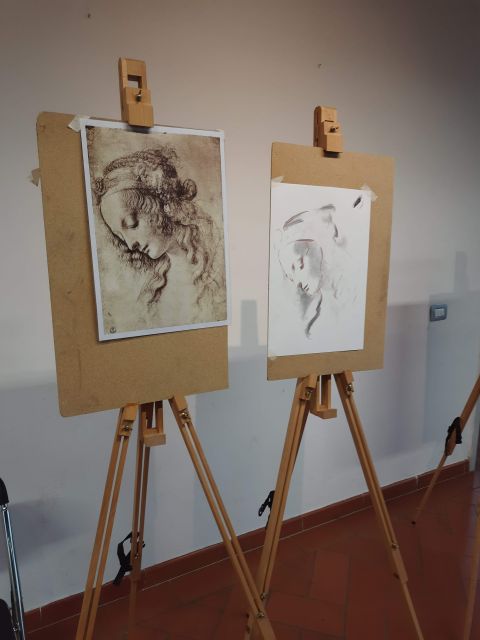
The private-group format is one of the best reasons to choose this experience over a large public workshop. You can ask about the materials, request help with a difficult section, and receive instruction suited to your level.
The teachers speak English, Italian, and Spanish. That makes the class practical for a broad range of visitors, though you should choose your preferred language when arranging the time if possible. The available instruction is especially important in a drawing class, where a small misunderstanding about pressure or shading can affect the whole exercise.
The teaching style appears to be friendly and encouraging. A solo participant received close attention, while a parent reported that her daughter came home inspired after the class. Another participant praised the instructor’s experience with charcoal and classic techniques.
Those comments should not lead you to expect an effortless art lesson. You still have to concentrate and work. The benefit is that you are supported while doing so. If you want a class where you can produce a picture without learning much, this may feel more demanding. If you want to understand the process, that effort is the point.
What is included in the $182 price
The price is $182 per person, which places this well above a casual one-hour sketching activity. The value depends on how much you want from your Florence schedule.
Included are the main materials: easel, paper, pencil, sanguine pencil, charcoal, and eraser. You do not need to assemble a portable art kit or buy supplies before arriving. A coffee break with cookies, water, and juice is also included.
You are paying mainly for a three-hour private lesson with an instructor, not for expensive equipment or a major attraction ticket. That makes the price easier to justify for someone serious about learning a traditional drawing method. It is less appealing if you only want a quick souvenir activity or a short introduction to sketching.
I would compare it with the cost of other private art instruction in Florence rather than with a museum admission. The strongest value comes from direct teaching, the private format, and the chance to work with several traditional materials. You also leave with your drawing, although shipping is not included if you need the studio to send anything later.
The coffee break is a pleasant extra, but it is not the reason to book. The reason is the focused instruction.
Timing, meeting point, and practical planning
The lesson lasts three hours, with common time windows of 10 am to 1 pm and 2 pm to 5 pm. A later session from 5:30 pm to 8:30 pm is sometimes available.
The time is arranged personally with the studio. After booking, the team contacts you by WhatsApp or email as the date approaches. If you have a tight museum reservation, dinner booking, or train departure, contact the studio at [email protected] rather than waiting for the final arrangement.
Meet at the glass door of Geko Art Studio. Transport to and from the studio is not included. One participant described the walk from central Florence as about 32 minutes, so allow extra time and do not treat the meeting point as if it were beside the Duomo.
The studio is wheelchair accessible. You should still confirm the easiest route and any specific access needs directly with the provider, since no further access details are supplied.
The flexible cancellation policy allows a full refund when you cancel at least 24 hours in advance. You can also reserve and pay later, which helps if your Florence plans are still shifting.
Who will get the most from this experience
This class is a natural fit for several kinds of visitors:
- Beginners: You receive step-by-step instruction, materials, and encouragement without needing drawing experience.
- Returning artists: If you have not drawn for years, the structured process gives you a calm way back in.
- Experienced artists: The focus on classic methods and Renaissance materials offers technique rather than simple entertainment.
- Families with an artistic interest: A recent parent found the class inspiring for her daughter, though you should confirm the child’s age suitability with the studio.
- Museum lovers: The workshop adds a practical layer to your understanding of Renaissance drawings.
- Couples or friends seeking a quieter Florence activity: A private class breaks up the usual cycle of churches, galleries, and crowded streets.
It may not suit you if your schedule has no spare three-hour block, if you need a central meeting point, or if you dislike activities where the finished result depends on your own effort. You are learning to draw, not ordering a professional portrait.
My take on the teaching and atmosphere
The strongest feature is the combination of serious instruction and a welcoming tone. One participant who had taken many advanced art classes still learned new things. Another described the teachers as talented, warm, and easy to be around. That mix matters because drawing can feel exposed, especially when you are comparing your work with Leonardo’s.
The class also seems to handle different skill levels well. Beginners receive clear direction, while experienced artists can ask more technical questions and spend longer refining tone and structure. The teacher’s role is not just to demonstrate, but to help you see what your own drawing needs next.
I would expect the atmosphere to be relaxed but focused. The coffee break gives you a pause, and the private setting avoids the awkwardness of working in a large room full of strangers. Still, the three-hour length means you should arrive ready to concentrate.
Should you book the Leonardo drawing class?
Book it if you want a hands-on Florence activity with real art instruction, especially if Leonardo, Renaissance technique, or charcoal drawing interests you. The private format, included materials, supportive teaching, and three-hour work period make the $182 price reasonable for someone who values learning over sightseeing speed.
Think twice if you want to stay in the city center, have only a short gap in your schedule, or expect a polished artwork without much personal effort. The studio location takes planning, and the final time is arranged after booking.
For an art-minded visitor, I would choose this over another generic craft class. You leave with a better sense of how old master drawings were built, a sketch made with your own hands, and perhaps a renewed belief that drawing is something you can still learn.
FAQ
How long does the Leonardo drawing experience last?
The experience lasts three hours.
What drawing materials are provided?
The studio provides an easel, paper, pencil, sanguine pencil, charcoal, and eraser. The lesson also covers sepia as part of the traditional drawing techniques.
Do I need previous drawing experience?
No. The class is suitable for beginners and experienced artists, and the instructor guides you step by step.
Which languages are available?
Instruction is available in English, Italian, and Spanish.
What time does the class start?
Common time slots are 10 am to 1 pm and 2 pm to 5 pm. A 5:30 pm to 8:30 pm session is sometimes available. The exact time is arranged personally with the studio after booking.
Is the activity wheelchair accessible?
Yes, the experience is listed as wheelchair accessible.
Recently added around Florence
- Accademia and Uffizi Small-group Guided Tour★ 4.5 · 8 reviews
- The David from Michelangelo.★ 5.0 · 3 reviews
- Combo: Accademia + walking + Uffizi Galleries Guided Tour★ 3.5 · 6 reviews
- The Complete Wine Tour Brunello, Nobile, Chianti wine experience★ 4.0 · 7 reviews
- The Best of Tuscany in 3 Days★ 4.5 · 13 reviews
- The Cooking Lab – Authentic Food Experience★ 5.0 · 113 reviews
- Florence Central Market Food Tour – Private Tour★ 4.0 · 7 reviews
- MaMa Florence: The Art of Corzetti – Hands-On Pasta Class★ 5.0 · 15 reviews