
Reviewed · FLORENCE
Spedale degli Innocenti: the first Orphanage ever built
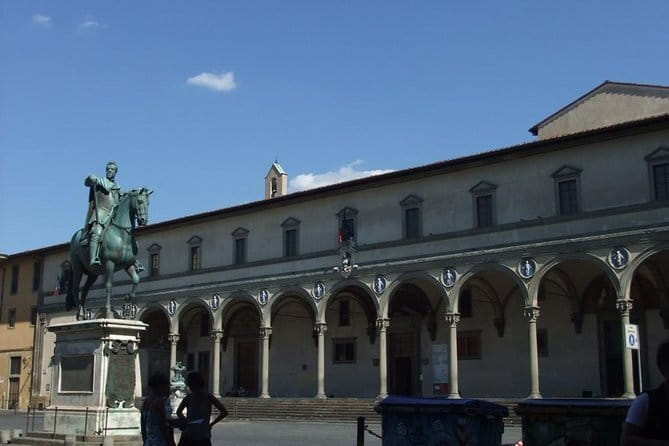
The most striking part of this Florence tour is the building itself. The Spedale degli Innocenti was designed by Filippo Brunelleschi in the 1400s as an orphanage, and its clean columns, measured proportions, and calm arcade helped define early Renaissance architecture. Inside, you’ll connect that grand design with the children who once lived there.
I love the private format, since your guide can focus on your group rather than follow a large crowd. I also like the mix of architecture, art, and social history, especially the chance to see works linked to Ghirlandaio and Botticelli. The main caution is the guide service: clear English is important here, and one available review reports that poor English and an overly loud presentation made parts of the tour hard to follow.
Key points to know before booking
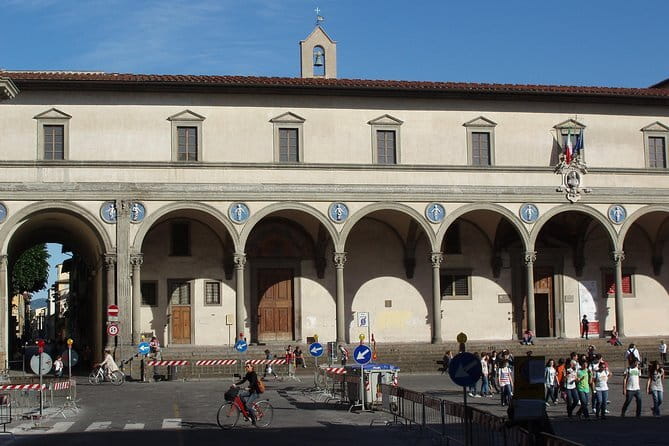
- Brunelleschi’s landmark: See a building designed in the 1400s and regarded as the first fully Renaissance-style building.
- A private 90-minute visit: Only your group takes part, with entrance tickets and reservation included.
- More than an art stop: Learn about the children who lived here, including Agata Esmeralda, the first child recorded at the orphanage on February 5, 1445.
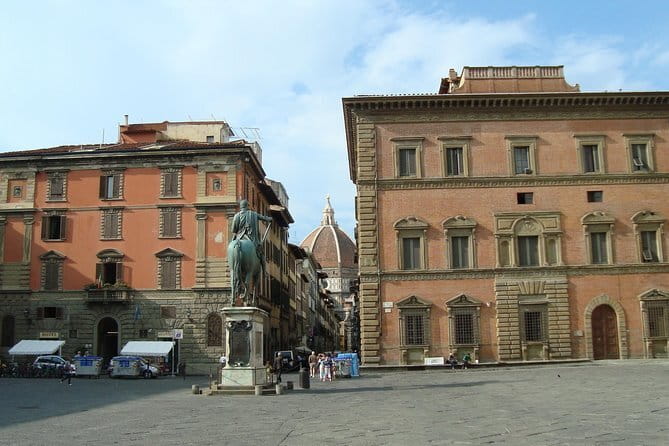
- Piazza Santissima Annunziata setting: Begin in one of Florence’s most impressive squares before entering the museum.
- Art by major Florentine names: The museum includes works by Ghirlandaio and Botticelli.
- A guide-quality caveat: The experience depends heavily on your guide’s English and ability to speak quietly inside the museum.
Why this orphanage matters to Florence
Florence has no shortage of famous churches, palaces, and museums. The Spedale degli Innocenti gives you something different: a place where architecture and public welfare meet.
The building was created as an orphanage in the 15th century and still houses children’s service organizations today. That continuing connection gives the site more weight than a simple architectural monument. You are not only looking at elegant columns. You are looking at a building designed to care for abandoned children, a practical civic purpose wrapped in a new architectural language.
The first child hosted there was Agata Esmeralda, recorded on February 5, 1445. That date helps put a human face on the institution. Once you hear it, the orphanage becomes easier to picture as a working place with infants, caretakers, records, and daily routines, rather than an empty Renaissance shell.
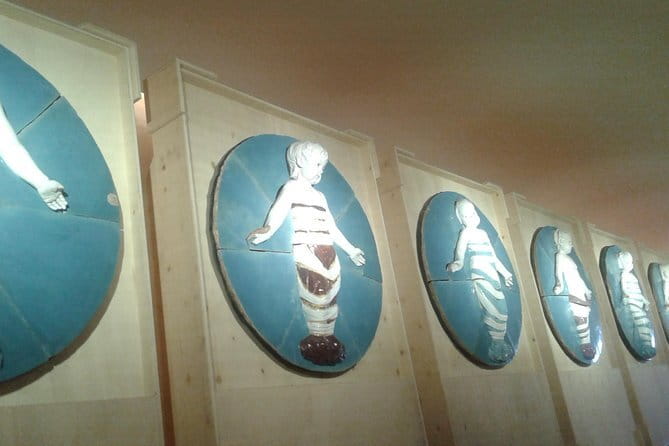
The museum also displays material about the children who passed through the institution. This is one of the tour’s most valuable features, since it keeps the visit from becoming only a lesson in columns and measurements.
Other Florence days worth putting in the same trip:
- Florence: Skip-The-Line Uffizi Gallery Timed Entry Ticket
★ 4.5 · 27,832 reviews - Tuscany Day Trip from Florence: Siena, San Gimignano, Pisa and Lunch at a Winery
★ 5.0 · 21,634 reviews - Florence: Timed Entrance Ticket to Michelangelo’s David
★ 4.6 · 16,983 reviews
Meeting in Piazza Santissima Annunziata
You make your own way to Piazza della Santissima Annunziata, the starting point for the tour. The square is a fitting introduction because the Spedale degli Innocenti forms an important part of its architectural setting.
The opening stop is brief, about five minutes, but it gives your guide a chance to point out the building from outside and explain why the square matters. Admission to the piazza is free, while the museum entrance is included with the tour.
Take care with the meeting point details. The listed address is Piazza della SS. Annunziata, P.za della SS. Annunziata, Florence. The tour does not include hotel pickup or drop-off, so you need to arrange your own way there. The activity ends back at the meeting point, which keeps the plan simple after the visit.
This is also a good place to arrive a little early. The experience is private, but the square is a public meeting area, and finding your guide may take a moment. The operator is Florence Tours by Made of Tuscany.
Inside Brunelleschi’s early Renaissance design
The main part of the tour lasts about 90 minutes at the Museo degli Innocenti. Your guide explains the features that make the building such an important example of Renaissance design.
You’ll hear about its columns and proportions, two details that can seem simple until someone shows you how carefully they work together. Brunelleschi’s design is known for order and balance. The building does not rely on heavy decoration to make an impression. Its effect comes from the relationship between the columns, arches, open space, and measured lines.
That makes a private guide useful. You can look at the building and enjoy its calm appearance on your own, but a good explanation helps you understand why this particular design changed architectural thinking. The tour is aimed at interpretation, not just entry.
The building is often described as the first fully Renaissance-style structure. That claim gives the visit its central theme. You are seeing an early attempt to create a clear, proportioned architectural system based on classical ideas, while also serving a real social need.
A drawback is that this kind of explanation requires a guide who speaks clearly. One detailed review gave the art discussion credit but found the guide’s English difficult to understand. The same review noted that the guide spoke too loudly while others were touring and viewing the museum. That is worth considering, especially if you care more about thoughtful explanation than simply entering the building.
Art by Ghirlandaio and Botticelli
The museum, renovated in 2016, includes a gallery of artworks by well-known Florentine artists. The names highlighted for this tour are Ghirlandaio and Botticelli.
Ghirlandaio is especially interesting because Michelangelo worked as his apprentice. That small connection adds a useful piece of Florence’s artistic story. It shows how the city’s workshops functioned as places where younger artists learned, practiced, and built careers.
Botticelli brings another familiar name from Florence’s golden age. The tour does not simply place the art in front of you and move on. Your guide discusses the works as part of the museum visit, connecting them with the institution and its setting.
Based on the available feedback, the art portion may be the strongest part of the guided experience. One reviewer specifically found the art discussion better than the other sections. That does not guarantee the same guide or delivery on your date, but it suggests that visitors who already enjoy Renaissance painting may find the museum particularly worthwhile.
You should also set your expectations correctly. This is not presented as a full-day art course or a broad survey of Florence’s galleries. It is a focused visit to one institution, with selected works and a strong emphasis on the building and its social purpose.
A completely different way to spend an afternoon in Florence:
- Florence: Michelangelo’s David Skip-the-Line Entry Ticket
★ 4.5 · 12,764 reviews - The Best tour in Florence: Renaissance & Medici Tales – guided by a STORYTELLER
★ 5.0 · 12,316 reviews - Florence: Leonardo Interactive Museum Entry Ticket
★ 4.5 · 11,763 reviews - The Best Tour in Florence: Renaissance and Medici Tales
★ 5.0 · 10,810 reviews
The children behind the institution

The museum displays information about the children who came through the orphanage. This material gives the visit an emotional and social side that a standard architecture tour might leave out.
The building’s design can feel polished and idealized, but the orphanage served children in difficult circumstances. Learning that Agata Esmeralda was the first child hosted there on February 5, 1445 gives the institution a clear beginning and a human point of reference.
This part of the visit may matter most to you if you enjoy museums that explain how ordinary people lived. The tour is not limited to famous artists and architects. It also asks what the building was for, who depended on it, and how its purpose continues through children’s service organizations today.
The available information does not specify exactly how many displays or records you will see, so I would not expect a detailed account of every child who lived there. Instead, think of the museum as combining architectural interpretation, selected art, and an introduction to the orphanage’s work.
What a private tour changes
The private format is one of the clearest reasons to consider this experience. Only your group takes part, so you are not placed in a large scheduled crowd. A private guide can usually adjust the pace, answer questions, and spend more time on the parts that interest you most.
That matters in a museum where the subject is not instantly obvious. You might want more help with Renaissance proportions, while someone else in your group may care more about the artwork or the children’s records. A private visit gives you a better chance of keeping the discussion relevant.
Still, private does not automatically mean perfect. The quality rests heavily on the individual guide. The only detailed criticism available concerns poor English and excessive volume, both of which can affect a museum visit. If you book, it is reasonable to expect clear commentary and a respectful indoor speaking level. If the explanation is difficult to follow, the value of the private format drops sharply.
The tour has an average booking lead time of 25 days. That suggests you should plan ahead, particularly if your Florence dates are fixed. Confirmation is provided at booking, and mobile tickets are available.
Is $169.98 per person a fair price?
At $169.98 per person, this is not a budget museum visit. The price includes the professional guide, private touring, entrance tickets, and reservation. It does not include transport to or from your hotel.
The value depends on how many people are in your group and how much you want guided interpretation. For one person or a couple, the cost is substantial. For a larger private group, the per-person value may improve, especially since group discounts are listed as a feature. You should check the exact discount before booking rather than assume it applies to every party size.
I would see the price as paying for access plus attention. If you only want to walk through the museum and look at the art, the cost may feel high. If you want someone to explain why the building is important, connect the artwork to Florence’s artistic world, and discuss the orphanage’s role, the private format makes more sense.
The 90-minute length is another factor. It is long enough for a focused visit without taking over your day. You can fit it between other Florence plans, though you should allow extra time to reach the meeting point and continue on afterward.
Who will enjoy this Florence visit
I would recommend this tour most strongly to people with a specific interest in Renaissance architecture, Florentine painting, or the history of social care. It also suits anyone who has already seen Florence’s largest art museums and wants a more focused stop.
Families may appreciate the subject because the museum connects art and architecture with the lives of children. The private format can also make it easier to ask questions at a child-friendly pace, though the supplied information does not describe a special children’s program.
Architecture students, art-history fans, and visitors curious about Brunelleschi should find plenty to discuss. The building is the real focus, and the museum provides art and social history around it.
You may want to skip this tour if you need a guide with guaranteed fluent English, since that point is not specified and one review reports a serious communication problem. You might also prefer a self-guided visit if you dislike indoor commentary or want to move at your own pace.
Most people can participate, the museum is near public transportation, and service animals are allowed. The activity is private, but the information does not specify other accessibility details, so you should ask the operator directly if you have particular mobility needs.
Cancellation and planning details
You can cancel for a full refund up to 24 hours before the experience starts. Inside that 24-hour window, the payment is not refunded, and changes are not accepted. The cut-off follows Florence local time.
The activity is confirmed at booking, and you receive a mobile ticket. Since hotel pickup is not included, plan your route to Piazza Santissima Annunziata before the day of the tour.
I would also make sure your group agrees on what it wants from the visit. If everyone wants art, tell the guide early. If the architecture or the children’s story matters more, say so at the start. A private tour gives you the chance to shape the discussion, but only if you use that opportunity.
Should you book the Spedale degli Innocenti tour?
Book it if you want a short, private introduction to one of Florence’s most important Renaissance buildings, with art by Ghirlandaio and Botticelli and a clear focus on the orphanage’s children. The building, the square, and the social purpose make this more distinctive than a routine art stop.
Think twice if $169.98 per person feels high for 90 minutes, or if clear English from the guide is essential and you cannot confirm that in advance. The art portion appears to be a strong point, but the detailed feedback raises a real concern about communication and speaking volume.
For the right group, this is a worthwhile focused visit. Ask for the guide’s language ability when booking, arrive at the exact piazza meeting point, and use the private format to steer the conversation toward the subjects you care about most.
FAQ
How long does the Spedale degli Innocenti tour last?
The private tour lasts approximately 1 hour and 30 minutes, including the visit to the museum.
Where does the tour begin?
The tour begins at Piazza della SS. Annunziata, also written as Piazza Santissima Annunziata, in Florence.
Where does the tour end?
The activity ends back at the meeting point.
Is this a private tour?
Yes. Only your group takes part in the activity.
Are entrance tickets included?
Yes. Entrance tickets and the reservation are included in the tour price.
Is hotel pickup included?
No. You make your own way to Piazza Santissima Annunziata, and hotel pickup and drop-off are not included.
Which artists can I see at the museum?
The museum includes artwork by Ghirlandaio and Botticelli.
Is the tour suitable for most people?
Most people can participate. The site is near public transportation, and service animals are allowed.
Can I cancel for a refund?
Yes. You can cancel at least 24 hours before the start time for a full refund. Cancellations or changes made less than 24 hours before the experience are not refunded or accepted.
Recently added around Florence
- Accademia and Uffizi Small-group Guided Tour★ 4.5 · 8 reviews
- The David from Michelangelo.★ 5.0 · 3 reviews
- Combo: Accademia + walking + Uffizi Galleries Guided Tour★ 3.5 · 6 reviews
- The Complete Wine Tour Brunello, Nobile, Chianti wine experience★ 4.0 · 7 reviews
- The Best of Tuscany in 3 Days★ 4.5 · 13 reviews
- The Cooking Lab – Authentic Food Experience★ 5.0 · 113 reviews
- Florence Central Market Food Tour – Private Tour★ 4.0 · 7 reviews
- Family Friendly Florence Private City Tour★ 5.0 · 47 reviews