
Reviewed · PITTI PALACE AND BOBOLI GARDENS TOURS
Florence: Boboli The Medici Gardens & Hidden Messages
Florence’s Boboli Gardens are not just a pleasant park behind Pitti Palace. They are a giant outdoor puzzle, filled with gods, heroes, fountains, grottoes, and messages meant for people who knew how to read them. I like that this tour explains the symbols instead of leaving you to admire a statue and wonder what on earth it means. I also like the route to the top, where the city opens out below you.
The 1.5-hour guided walk gives you a useful introduction without taking up half your day. Guides such as Alessandra, Guido, Ivano, and Anna Maria Luisa have been singled out for clear, warm explanations. The main drawback is the price: at $93 per person, this is a costly way to see a garden, especially if you mainly want to wander at your own pace.
Key points at a glance
- Medici design from 1562: Learn how Cosimo I de Medici’s garden became a model for royal parks across Europe.
- Art with hidden meanings: Hear the stories behind Hercules, Demeter, Tyndareus, Neptune, and other figures.
- A guided route through Boboli: Reach major sights such as the Artichoke Fountain, Secret Garden, and Tunnel of Love.
- A high viewpoint over Florence: The upper terraces provide one of the tour’s best rewards.
- Good for families and nature lovers: The setting mixes open space, plants, sculptures, and stories.
- Bring practical gear: Comfortable shoes are important, and large bags, luggage, smoking, and pets are not allowed.
Why Boboli makes more sense with a guide
Boboli Gardens can look simple at first: lawns, trees, paths, stonework, and statues spread across the hill behind Pitti Palace. But the park was designed to communicate power and taste. Its paths, terraces, fountains, and sculptures were arranged as part of a larger idea about rulers, nature, mythology, and control.
That is where a guide earns the fee. Without context, you see an attractive historic garden. With context, you begin to notice why a particular god appears beside a fountain, why Hercules turns up again and again, and how the Medici used art to present themselves as cultured and powerful.
I would not choose this walk if I wanted a quiet solo stroll with no commentary. I would choose it if I wanted Boboli to make sense. The tour gives you a framework for the park, then leaves you with enough visual detail to keep exploring on your own.
The garden began taking shape for Cosimo I de Medici in 1562. Over time, it developed into a large European-style garden with statues and features from several artistic periods, from ancient Roman influence to later and contemporary work. That range keeps the walk from feeling like a single-period museum.
More Pitti Palace and Boboli Gardens visits:
- Florence: Uffizi, Pitti Palace & Boboli Combined 5-Day Pass
★ 4.5 · 1,726 reviews - Florence: Pitti Palace and Boboli Gardens Ticket & eBook
★ 4.5 · 835 reviews - Florence: Pitti Palace, Boboli Garden, Palatine Gallery Tour
★ 4.9 · 558 reviews
Starting at Pitti Palace
The meeting point is the main entrance to Pitti Palace. This is useful because Pitti is one of Florence’s major landmarks, but it also means you should allow time to find the correct entrance before the tour begins.
Your admission includes a skip-the-line ticket for the gardens. It does not include entry to the Palatine Gallery or other museums inside Pitti Palace. That distinction matters. You are booking a walk through Boboli, not a combined Pitti Palace museum tour.
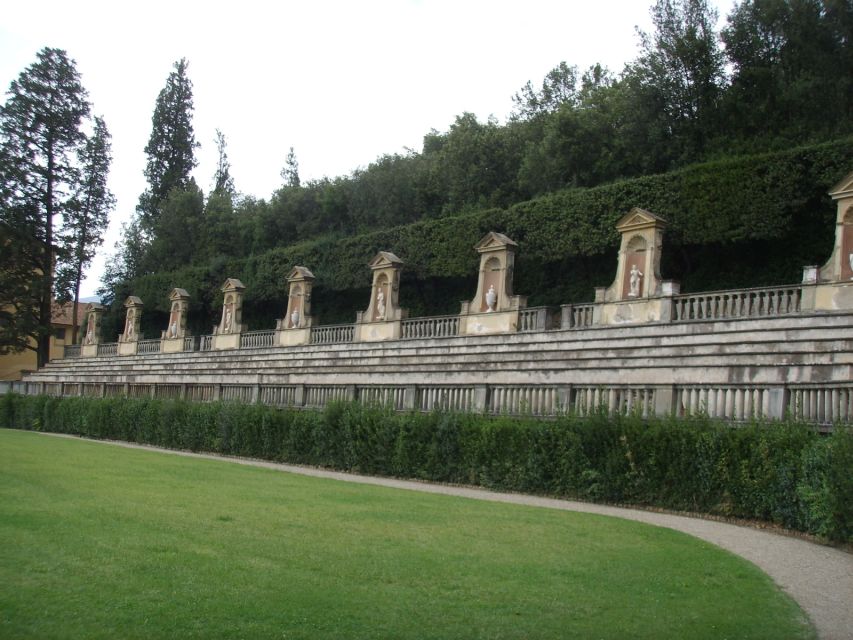
From the palace entrance, the gardens spread uphill. The first impression is one of scale. Boboli covers several kilometers of paths, vegetation, terraces, art, and water features. The guided route cannot explain every corner in 90 minutes, so the guide’s job is to select the sights that give you the clearest sense of the place.
That is a strength, not a flaw. Without a plan, you could spend your time following paths at random and miss the features that give Boboli its character.
Following the Medici idea of a royal garden
The Medici did not create Boboli as a simple public green space. It was a setting for court life and display. The garden’s form allowed visitors to move through spaces that shifted from formal to wooded, from open to enclosed, and from low paths to high views.
Your guide will connect those changes to the Medici family and the later families who lived at Pitti Palace. The garden becomes a record of how powerful people wanted to be seen. The statues are not random decoration. They show strength, fertility, wisdom, courage, and control over nature.
You will also hear how Boboli became a model for European royal gardens. That makes the visit more useful than a quick look at Florence’s plants and fountains. You begin to see Boboli as an early example of the grand formal park style that later appeared at courts across Europe.
The tour’s focus on myths gives the commentary a lively edge. Stories of gods and heroes are easier to remember than a list of dates, and they help you understand why the garden is filled with symbolic figures.
Hercules, Demeter, and Tyndareus
The sculpture stops give the walk its strongest storytelling. Hercules is one of the central figures you encounter. His image carried clear associations with physical power, courage, and victory, qualities that rulers were happy to place near their homes.
Demeter brings a different set of ideas. As a figure connected with agriculture and the earth, she fits naturally into a garden built around growth, seasonal change, and cultivated nature. Tyndareus, the Spartan king, adds another classical figure to the mix.
You do not need a background in Greek and Roman mythology to enjoy this part. The guide supplies the basic story, then explains how the figure fits the setting. I find that approach more helpful than a long lecture on classical art. You get enough information to understand what you are seeing, without needing to memorize an entire family tree of gods.
The myths also show how art in Boboli works on two levels. A sculpture can be attractive on its own, but it can also signal political ideas. The garden asks you to look at the image, then consider why it was placed there.
More Medici family tours in Florence:
- The Best tour in Florence: Renaissance & Medici Tales – guided by a STORYTELLER
★ 5.0 · 12,316 reviews - The Best Tour in Florence: Renaissance and Medici Tales
★ 5.0 · 10,810 reviews - Florence: Renaissance and Medici Tales Guided Walking Tour
★ 4.8 · 1,549 reviews - Florence: Mysteries of the Medici Guided Walking Tour
★ 4.4 · 940 reviews
Fountains, grottoes, and the Secret Garden
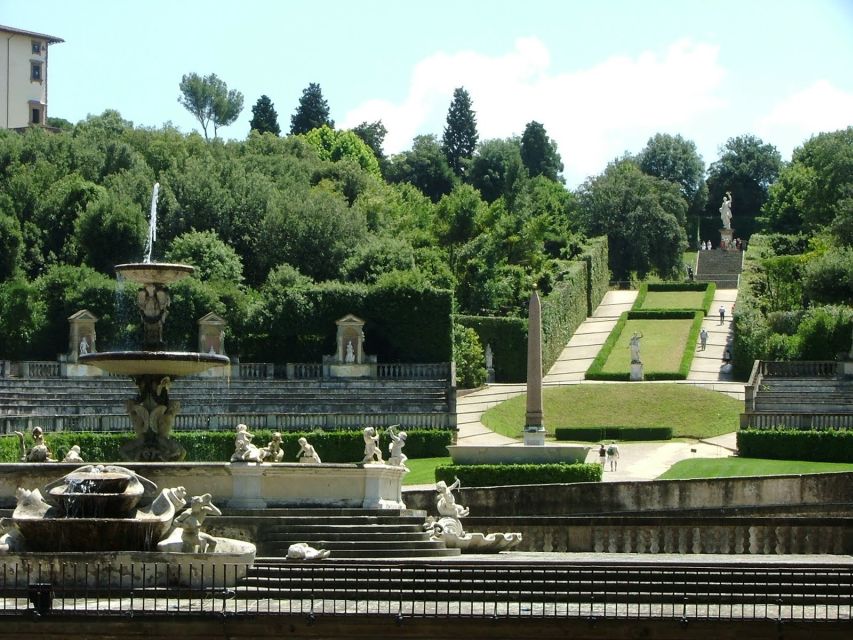
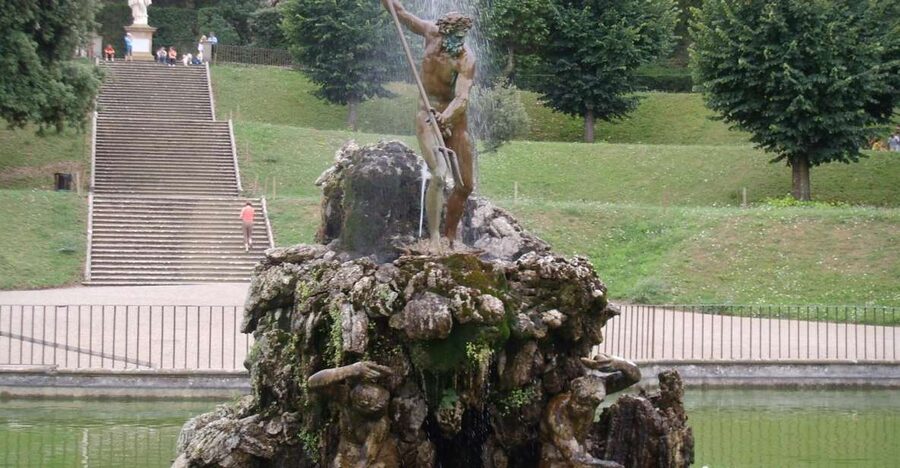
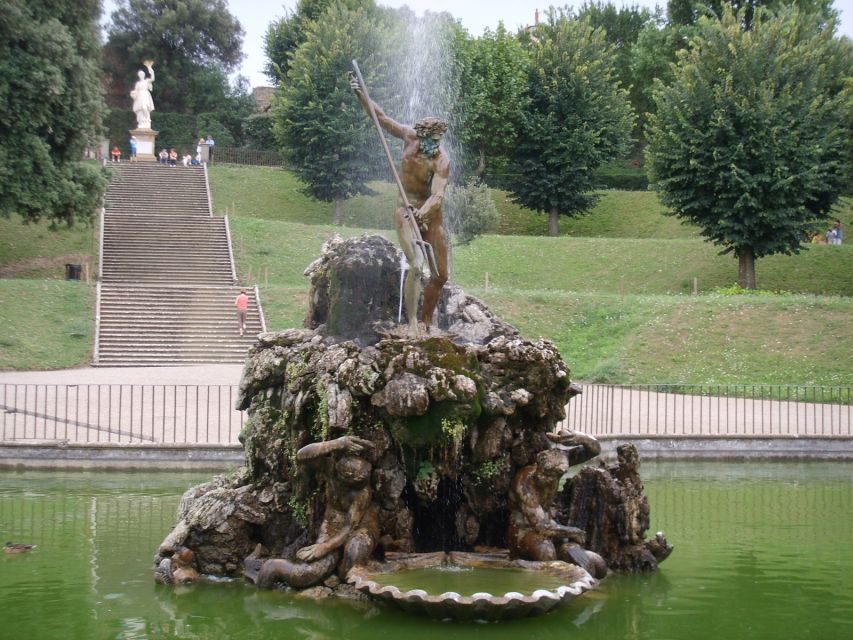
Boboli’s fountains provide some of the most memorable visual stops. The Fountain of the Artichoke is one of the named highlights, while the Fountain of Neptune adds a more mythological note. These are not simply practical water features. They add movement, sound, and theater to the garden.
The grottoes bring a different mood. The park’s enclosed and artificial spaces contrast with the open terraces and long views. You move from cultivated order into places that feel more mysterious, with stone surfaces and sculptural detail shaping the experience.
The Secret Garden is another important stop. Its name alone suggests the kind of controlled privacy that mattered in a court garden. The guide can explain how these tucked-away spaces fit into the larger design, rather than treating them as isolated curiosities.
Then there is the Tunnel of Love. The name gives the area a lighter, more romantic character. This is one reason the experience works well for couples, but the garden also suits families and children because the route includes stories, statues, wooded paths, and things to spot along the way.
Do not expect every feature to look freshly polished. Boboli is an old, large garden exposed to weather and constant use. One gardener’s condition may feel perfectly atmospheric to another’s eye, while someone expecting immaculate flower beds may be disappointed. If your main interest is formal horticulture, keep your expectations measured.
The climb to Florence’s best payoff
The tour heads toward the top of the gardens, where you can look across Florence. This is one of the clearest reasons to join a guided walk rather than simply staying near the palace entrance.
Boboli rises above the city, and the upper sections reward the climb with a broad panorama. You can pause here and connect the garden to the city below. The view also explains the garden’s position: Pitti Palace and its grounds were not cut off from Florence. They watched over it.
The climb is not described as extreme, but the garden covers sloping ground and several kilometers of paths. Comfortable shoes are essential. Avoid treating this as a quick flat stroll through a city park. The route includes terraces, woods, and uphill sections, so sturdy footwear will make the experience much easier.
I would also plan around the weather. One guide led a particularly enjoyable walk despite unpleasant conditions, but rain can make stone paths and slopes less comfortable. The experience is outdoors, and the garden’s charm depends on being willing to walk through it.
What the 90-minute format really gives you
Ninety minutes is enough for an introduction to Boboli’s main ideas and major sights. It is not enough to inspect every statue, explore every path, or linger in every corner. That tradeoff is important when you compare this experience with a self-guided visit.
The short format works well for a day packed with Florence sights. You can visit Boboli in the morning or afternoon, learn the essentials, and continue to another part of the city. It also suits you if you prefer a clear route and a guide who keeps the visit moving.
The limitation is that you may want more time afterward. Boboli is large enough to reward a slower second look, but the supplied activity does not promise an extended free period or a full Pitti Palace visit. If you want the Palatine Gallery or other Pitti museums, you need separate tickets.
The guide languages are English and Italian. The guide’s role is especially valuable here because the garden’s meaning is not obvious from the paths alone. Visitors have praised Alessandra for her warmth and command of the subject, Guido for reaching the most interesting sections, and Ivano for making the Medici story engaging even in poor weather.
Is $93 a fair price?
At $93 per person, this is not a budget garden walk. The price includes admission, a skip-the-line ticket, an official local guide, and the walking tour. That makes the value depend heavily on how much you want interpretation.
If you are content to enter Boboli and wander among the trees and statues, the guided option may feel expensive. The garden itself can be enjoyed visually without a lecture. You will also need a separate ticket if you want to visit the Palatine Gallery or another Pitti Palace museum, so do not assume the $93 covers the whole palace complex.
I see better value here if you are interested in Medici history, Renaissance symbolism, sculpture, or the design of European royal gardens. The guide helps turn scattered objects into a connected story. That is the part you cannot get from a simple entrance ticket.
The price may also make sense for a family that wants structure. Children can lose interest in a large garden if the walk has no focus, but stories about gods, heroes, secret spaces, and a tunnel can give them a reason to keep going. The tour is also a good fit for a couple looking for a scenic, slightly romantic outing.
Tips for a smoother walk
Wear shoes you would trust on sloping paths and stone surfaces. This is the most important practical tip. Comfortable footwear is specifically required, and you will appreciate it as the route reaches the upper parts of the garden.
Bring a passport or ID card. Large bags and luggage are not allowed, so avoid arriving with a suitcase or oversized day bag. Pets and smoking are also not permitted.
The tour is described as green and eco-friendly, with walking as the central form of transport. That sounds obvious in a garden, but it matters: you are not being driven between sights. You move through Boboli on foot, at a pace set by the route and the guide.
Allow a little extra time to reach the main entrance of Pitti Palace. The meeting point is clear, but palace entrances in a busy city can be confusing if you arrive at the last minute.
You can cancel up to 24 hours before the activity for a full refund, and you can reserve now while paying later. Those options help if your Florence schedule is still changing.
Who should book this Boboli tour?
I would recommend it to you if:
- You want the myths and symbols explained, not just the sculptures pointed out.
- You are curious about the Medici family and the origins of European royal gardens.
- You like outdoor sights but want a guide to give the walk shape.
- You are visiting Florence with children and want a story-led activity.
- You enjoy romantic settings, fountains, grottoes, and city views.
- You want to see Boboli’s main features in a short, organized visit.
I would hesitate if you dislike guided tours, prefer to stop whenever you wish, or mainly want botanical detail. The garden’s maintenance can also disappoint serious hobby gardeners who expect every planting bed to look perfect.
Should you book it?
Book this experience if Boboli feels confusing from the outside or if you want to understand why the garden matters. The strongest parts are the guide-led explanation of Medici symbolism, the mythological sculptures and fountains, and the climb to the Florence panorama.
Skip it if you only want an inexpensive walk or if you plan to spend a full day exploring Pitti Palace museums. At $93, the tour needs to offer more than admission, and its real value comes from the stories. For the right visitor, Boboli changes from a large historic park into a readable work of art.
FAQ
Where does the Boboli Gardens tour meet?
The meeting point is at the main entrance to Pitti Palace in Florence.
How long does the tour last?
The guided walking tour lasts 1.5 hours.
What does the price include?
The $93 price includes entrance fees with skip-the-line tickets, an official local guide, and the walking tour.
Does the tour include the Palatine Gallery?
No. Tickets to the Palatine Gallery and other museums inside Pitti Palace are not included.
Which languages are available?
The tour is offered in English and Italian.
What sights will the tour cover?
The route includes major Boboli features such as sculptures of Hercules, Demeter, and Tyndareus, the Artichoke Fountain, the Fountain of Neptune, the Secret Garden, the Tunnel of Love, and the upper viewpoint over Florence.
What should I bring?
Bring a passport or ID card and wear comfortable shoes.
Are large bags or luggage allowed?
No. Luggage and large bags are not allowed. Pets and smoking are also prohibited.
Can I cancel for a refund?
Yes. You can cancel up to 24 hours in advance for a full refund. You can also reserve now and pay later.
Recently added around Florence
- Accademia and Uffizi Small-group Guided Tour★ 4.5 · 8 reviews
- The David from Michelangelo.★ 5.0 · 3 reviews
- Combo: Accademia + walking + Uffizi Galleries Guided Tour★ 3.5 · 6 reviews
- The Complete Wine Tour Brunello, Nobile, Chianti wine experience★ 4.0 · 7 reviews
- The Best of Tuscany in 3 Days★ 4.5 · 13 reviews
- The Cooking Lab – Authentic Food Experience★ 5.0 · 113 reviews
- Florence Central Market Food Tour – Private Tour★ 4.0 · 7 reviews
- MaMa Florence: The Art of Corzetti – Hands-On Pasta Class★ 5.0 · 15 reviews
Pitti Palace and Boboli Gardens Tours, compared.
Uffizi, Pitti Palace & Boboli Combined 5-Day Pass
Read our review →

Pitti Palace, Boboli Garden, Palatine Gallery Tour
Read our review →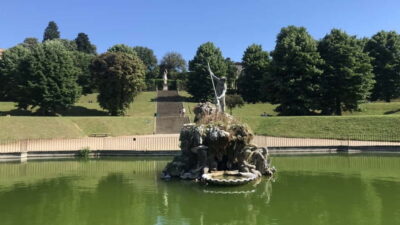
Uffizi, Pitti, Boboli and 7 Attractions 5-Day Pass
Read our review →
Pitti Palace, Boboli Garden & Palatina Gallery Guided Tour
Read our review →
Pitti Palace and Palatina Gallery Ticket and Tour
Read our review →
Pitti Palace, Palatina Gallery and the Medici: Arts and Power in Florence.
Read our review →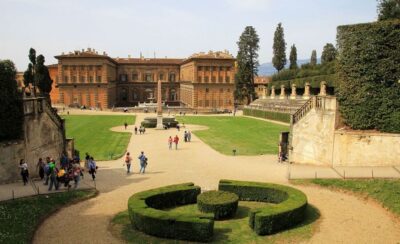
Browse the lists this tour appears in