
Reviewed · GALILEO AND LEONARDO MUSEUM TOURS
Small-group Guided tour of Galileo’s Museum
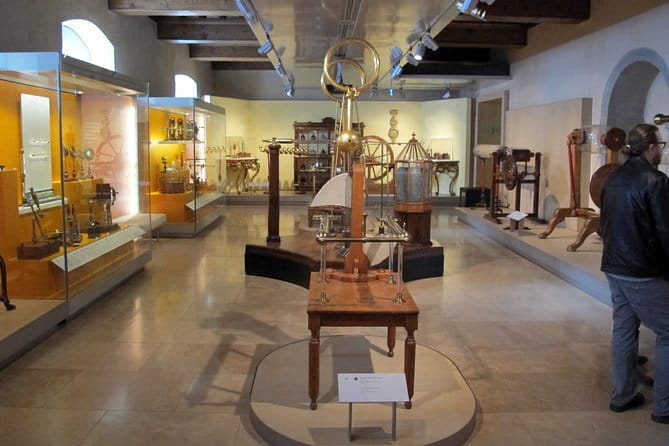
Galileo’s Museum is where Florence’s Renaissance story takes a turn from marble and paint to astrolabes, telescopes, globes, batteries, and medical instruments. The collection shows how people measured time, mapped the world, studied the heavens, and slowly replaced guesswork with testing. A guide helps turn a room full of old devices into a story you can follow.
I like the small group of no more than nine because you can ask questions without shouting across a crowd. I also like the skip-the-line entry and the way guides connect science to Florence’s Medici rulers, art, politics, and trade. The main drawback is the fixed 90-minute format: if the museum is closing, you may not get extra time to look around on your own.
Key points to know before you book
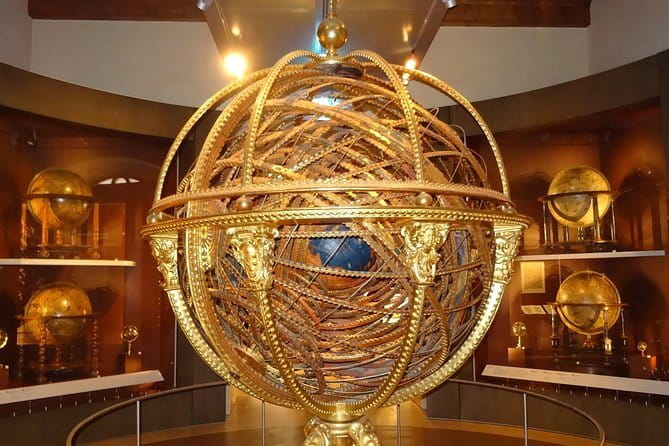
- The collection covers far more than Galileo: Expect instruments tied to astronomy, navigation, geography, weather, communication, medicine, and physics.
- The guide matters here: Leonardo, Ivano, Fabio, Cristiano, and Cortina have all led sessions praised for clear explanations and lively storytelling.
- The group stays small: A maximum of nine people makes it easier to hear, ask questions, and adjust the pace.
- The tour connects science with Florence: You learn how the Medici world helped shape scientific work and how inventions fit into Renaissance life.
- The museum suits curious older children: Teenagers interested in science can ask questions and see objects that make school lessons feel real.
- The price pays for interpretation and convenience: At $137.57 per person, this is not a cheap museum visit, but skip-the-line access and a personal guide add real value.
Why this museum changes the way you see Florence
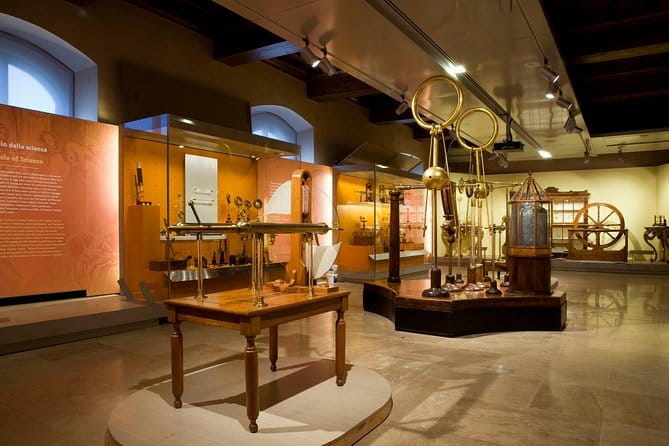
Most first-time visits to Florence center on paintings, churches, and sculpture. That makes sense, but the Museo Galileo gives you another way to understand the city. Here, Florence is not only the home of Michelangelo and the Medici chapel. It is also a place where people built instruments, tested ideas, tracked the stars, measured time, and argued about how the world worked.
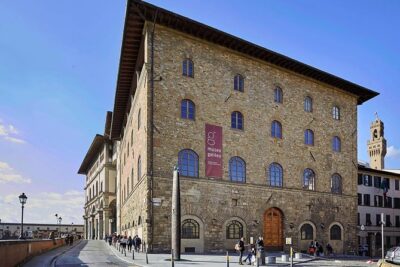
You begin at the Museo Galileo, at Piazza dei Giudici 1. The tour lasts about 90 minutes and ends at the same place. The guide leads you through the collection rather than leaving you to decode every brass instrument and wooden case by yourself.
That help matters. The museum contains an extensive range of scientific objects, and many are easier to admire than to understand at first glance. A guide can tell you what an object did, who used it, and why it mattered at the time. The best parts of this experience come when a strange-looking device stops being a display and becomes a solution to a real problem.
More Galileo and Leonardo museum visits:
- Florence: Leonardo Interactive Museum Entry Ticket
★ 4.5 · 11,763 reviews - Leonardo Da Vinci Museum Entrance Ticket
★ 4.5 · 1,458 reviews - Florence: Museo Galileo Entry Ticket
★ 4.5 · 1,422 reviews
Starting outside with a sundial and Galileo’s world
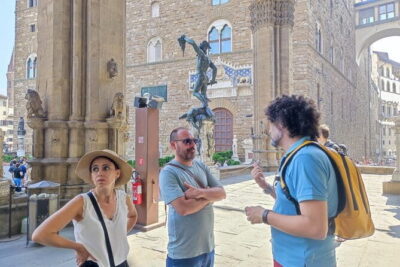
The tour may begin outside with an explanation of the sundial near the entrance. That is a useful opening because it puts measurement right in front of you. Before clocks became common and precise, people relied on the sun, shadows, stars, and mechanical devices to make sense of time.
From there, the story moves into Galileo’s Florence and the wider scientific world around him. Galileo is the obvious central figure, but you should not expect a single-person biography. The collection also brings in other scientists, explorers, mathematicians, and thinkers, including Copernicus, Columbus, Americus Vespucci, and members of the Medici family.
This wider view is one of the tour’s strengths. You see science as part of daily life and political power, not as a separate subject floating above society. Trade needed maps. Navigation needed instruments. Medicine needed devices. Rulers wanted new knowledge and often supported the people who produced it.
The guide also links scientific change to the Florence you may already have seen elsewhere. After looking at Renaissance art and sculpture, you gain a fresh sense of the same period’s experiments, arguments, and practical inventions.
Inside the collection: instruments that made ideas visible
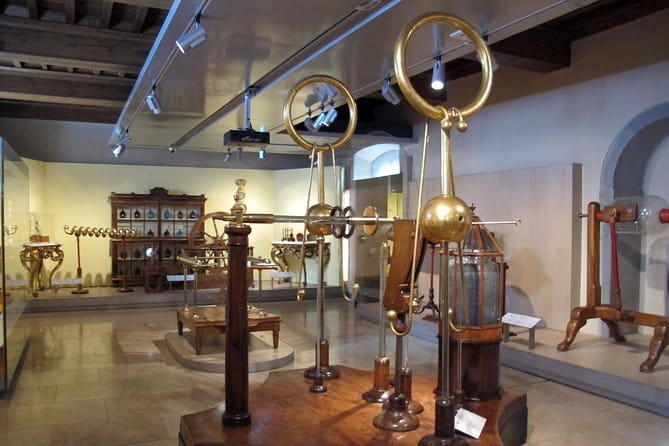
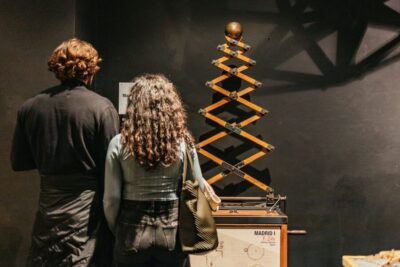
The museum’s displays cover several fields, so the visit does not stay focused on astronomy. You might move from astrolabes to globes, then to maps, batteries, weather instruments, medical devices, and tools connected with physics or communication.
Astrolabes and other navigation instruments show how people read the sky and found their way across distance. Globes and maps reveal how European ideas about the shape and size of the world changed. The collection also helps you see how exploration, commerce, and scientific observation pushed one another forward.
The objects linked to timekeeping are especially useful. Accurate time measurement was not just a matter of convenience. It affected navigation, travel, astronomy, and the ability to compare observations made in different places. The tour also covers chronometers and the problems people faced when trying to keep time accurately at sea.
You may also see early forms of batteries and instruments related to weather and communication. These displays help connect older experiments with things you now take for granted. A modern phone, weather report, or navigation app feels ordinary because the hard work behind measurement has disappeared from daily life. This museum puts some of that work back in view.
The objects are the stars, but the guide provides the plot. Leonardo has been praised for showing how the political and economic climate of Tuscany affected scientific development, while Ivano has led explanations covering timekeeping, imaging, navigation, weather, and communication. Those subjects give the collection a broad reach without turning the visit into a list of dates.
Galileo, the Medici, and the science of Renaissance Florence
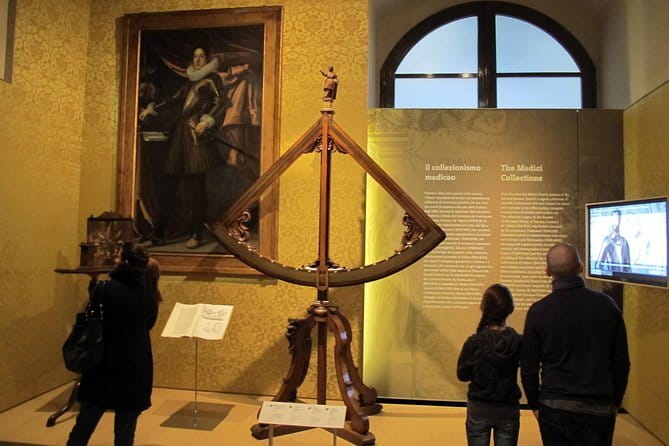
Galileo’s name draws people in, but the museum works best when you treat him as part of a larger story. You learn about his contributions alongside the people, institutions, and tools that made scientific progress possible.
Florence’s Medici rulers appear in this story as patrons and political players. Their influence reached beyond palaces and churches. Support from powerful families could give scientists access to money, equipment, collections, and an audience. At the same time, science did not unfold in a vacuum. Beliefs, rivalries, trade, religion, and political interests all shaped what people studied and how they presented their findings.
A good guide makes these connections without turning the tour into a lecture. One guide has been praised for explaining the links between science, technology, art, and sculpture. That approach is helpful if you have already spent days admiring Florence’s Renaissance masterpieces and want to understand the intellectual world behind them.
The tour can also clarify the difference between seeing a famous name on a wall and understanding the work attached to it. Galileo’s importance becomes easier to grasp when you see the instruments used to observe, record, calculate, and test ideas.
More museums and galleries in Florence:
- Florence: Skip-The-Line Uffizi Gallery Timed Entry Ticket
★ 4.5 · 27,832 reviews - Florence Accademia Gallery Tour with Entrance Ticket Included
★ 4.5 · 6,148 reviews - Uffizi Gallery Small Group Tour with Guide
★ 4.5 · 4,923 reviews - Florence: Accademia Gallery Guided Tour
★ 4.6 · 4,156 reviews
Why the small group makes a difference

The maximum group size is nine. That is small enough for a guide to keep an eye on the whole group and respond to questions without losing the room.
This format is particularly useful in a museum filled with technical objects. You can ask what a device was for, how it worked, or why it mattered. If you are traveling with teenagers, the format gives them a better chance to speak up. One family’s three science-minded teenagers asked questions throughout the tour, and the guide adjusted the experience to keep their curiosity moving.
The guide may also point out details you would pass by. One memorable example is Galileo’s finger, preserved as part of the collection. It is an odd, slightly macabre detail, but it gives the museum a human edge and tends to stick in your mind long after the brass instruments blur together.
Small groups do not guarantee a perfect match between guide and audience. One session was led by someone with a strong art history background who was less comfortable explaining the technical use of certain tools. If you want a highly scientific explanation of every mechanism, keep that possibility in mind. The guide’s ability to explain the objects clearly is central to the value of this tour.
A 90-minute route, and the question of enough time
The stated duration is about 1 hour and 30 minutes. That is enough for a guided introduction to the main themes, but it is not enough to inspect every object at length.
I see this as a good first visit rather than a complete study of the museum. The guide helps you identify the important sections and understand why they matter. You can then decide which objects deserve more of your attention if you return or have extra time.
There is one practical limitation. If the museum is closing at the end of the 90 minutes, you may have to leave as soon as the guided portion ends. You should not assume that the tour automatically includes a free period afterward. If you want time to read labels and examine objects at your own pace, check the schedule before booking and avoid placing the tour at the end of the museum’s opening hours.
The fixed duration does have an advantage. It fits neatly into a Florence sightseeing day, especially if you are also visiting nearby landmarks. The meeting point is central and close to public transportation, though hotel pickup and drop-off are not included.
Is $137.57 a fair price?
The cost is $137.57 per person. For a 90-minute museum visit, that is a serious price, especially if you are used to entering museums on your own.
The value comes from three things: skip-the-line access, an English-speaking professional guide, and a group limited to nine. You are not paying only to enter the building. You are paying for someone to explain a specialized collection and show you how the instruments fit together.
For a science enthusiast, family with older children, or visitor with limited time in Florence, that added explanation can justify the cost. A good guide turns the collection from a series of unfamiliar objects into a clear story about measurement, discovery, and power.
If you already know the history of early science and enjoy reading museum labels at your own speed, the price may feel harder to defend. You could prefer a self-guided visit, especially if you want to linger over a particular area. The group format also means you follow the guide’s route and timing rather than setting your own pace.
Group discounts are available, so the final value may improve for a larger party. The tour is offered in English.
Who will enjoy this Galileo Museum tour most?
I would recommend it first to adults who enjoy science, technology, history, navigation, or the practical side of the Renaissance. You do not need a technical background. The guide’s job is to explain why the objects mattered, not assume you already understand them.
Families with school-age children and teenagers can also get a lot from the visit, particularly if the children are interested in science. The collection gives physical form to ideas they may have met in class. The guide can answer questions and connect the displays to Galileo’s work and other discoveries.
This is less suitable if your main interest is Renaissance painting or sculpture. The tour links science to Florence’s art and politics, but the museum itself is devoted to scientific instruments and related history.
You should also consider your preferred pace. The experience is structured and guided. That is a benefit if you want direction, but less appealing if you dislike scheduled visits or prefer to examine every case independently.
Practical details that help the visit go smoothly
The meeting point is Museo Galileo, Piazza dei Giudici 1, 50122 Florence. The tour ends back at the meeting point. Hotel transportation is not included, and food and drinks are not part of the experience.
Confirmation is provided when you book. The tour is near public transportation, and most people can participate. The group can include up to nine people, which is worth checking if you are comparing this with a large museum group.
Free cancellation is available if you cancel at least 24 hours before the start time. Cancellations made less than 24 hours ahead do not receive a refund, and changes within that period are not accepted. The cut-off uses Florence local time.
Because the tour averages booking 57 days ahead, I would not leave it until the last minute if your Florence dates are fixed. That booking pattern does not guarantee that every date sells out, but it is a useful sign that advance planning makes sense.
Should you book it?
Book this tour if you want Florence’s scientific story explained by a guide rather than pieced together alone. The small group, skip-the-line entry, and wide range of objects make it a strong choice for adults, older children, and anyone curious about how people learned to measure the world.
At $137.57, it is best viewed as a guided interpretation experience, not a basic museum ticket. I would be especially inclined to book it for a family with science-loving teenagers or for anyone who has already seen Florence’s art and wants a different side of the Renaissance.
Skip it if you prefer complete control over your time, already have strong expertise in scientific instruments, or want a long unhurried museum visit after the guide finishes. For most curious visitors, though, 90 focused minutes can make this specialized museum far easier to understand and much more memorable.
FAQ
How long does the Galileo Museum tour last?
The tour lasts approximately 1 hour and 30 minutes.
Where does the tour begin?
It begins at Museo Galileo, Piazza dei Giudici 1, 50122 Florence, Italy.
Where does the tour end?
The activity ends back at the Museo Galileo meeting point.
Is admission to the museum included?
Yes. Museum admission and skip-the-line access are included.
How many people can join the tour?
The tour has a maximum of nine participants.
Is the tour offered in English?
Yes. The tour is offered in English.
What happens if I need to cancel?
You can receive a full refund if you cancel at least 24 hours before the experience starts. Cancellations or changes made less than 24 hours before the start time are not accepted for a refund.
Recently added around Florence
- Accademia and Uffizi Small-group Guided Tour★ 4.5 · 8 reviews
- The David from Michelangelo.★ 5.0 · 3 reviews
- Combo: Accademia + walking + Uffizi Galleries Guided Tour★ 3.5 · 6 reviews
- The Complete Wine Tour Brunello, Nobile, Chianti wine experience★ 4.0 · 7 reviews
- The Best of Tuscany in 3 Days★ 4.5 · 13 reviews
- The Cooking Lab – Authentic Food Experience★ 5.0 · 113 reviews
- Florence Central Market Food Tour – Private Tour★ 4.0 · 7 reviews
- Family Friendly Florence Private City Tour★ 5.0 · 47 reviews
Galileo and Leonardo Museum Tours, compared.
Skip the Line: Galileo Museum Ticket in Florence
Read our review →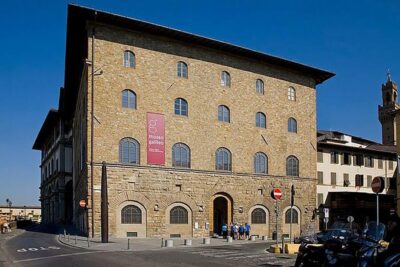
Express Uffizi Gallery and Leonardo da Vinci Museum
Read our review →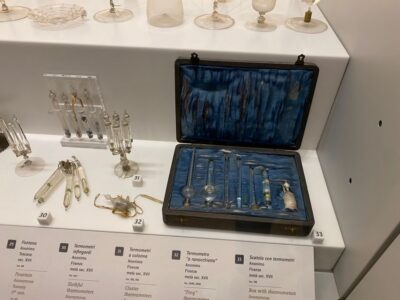
Browse the lists this tour appears in