
Reviewed · MEDICI FAMILY TOURS
The Medici family and the Renaissance with a local art historian
Florence’s Renaissance story becomes much easier to follow when you connect its great buildings to one family’s rise. This two-hour walk follows the Medici from San Lorenzo to the Arno, linking palaces, churches, statues, politics, and art along the way. Storytelling is the main tool, not a long list of dates.
I like the route’s clear shape and its small-group limit of 15 people. I also like the promise of close attention to overlooked details, including hidden passages, building symbols, and the reason Florence has so many towers. The main consideration is time: six stops in about two hours means you will see the exteriors and hear the stories, but this is not a substitute for visiting Florence’s major museums or palace interiors.
Key points to know before you book
- A Medici-focused route: Follow the family’s influence from Basilica di San Lorenzo to Palazzo Vecchio and the river.
- Guides with a storytelling style: Deborah and Manuel Messina are named in the available feedback, with an emphasis on personal, engaging explanations.
- A compact two-hour walk: The route covers major sights quickly, with short stops rather than lengthy interior visits.
- Important art and political settings: See the Duomo, Piazza della Signoria, Palazzo Vecchio, and Ponte Vecchio in one connected walk.
- Small group format: The maximum group size is 15, which should make it easier to hear the guide and ask questions.
- Simple practical setup: The tour begins at 2:00 pm in Piazza di San Lorenzo and ends beside the Uffizi Gallery and Ponte Vecchio.
Why the Medici story works so well on foot
The Medici family did not simply live in Florence. They shaped the city’s art, politics, religious life, and public image. That makes this route more useful than a sightseeing walk that treats each monument as a separate photo stop.
You begin with the family’s early base and finish beside the river, moving through places where power was displayed in stone. Along the way, the guide can explain how a family that began with modest roots became one of Europe’s leading dynasties in little more than a century.
I like this people-first approach. The Renaissance can feel like a parade of famous names: Michelangelo, Donatello, Brunelleschi, and others. Here, the focus is also on the decisions, ambitions, marriages, rivalries, and alliances that allowed these artists to work and allowed the Medici to gain influence.
The tour is especially useful if Florence is new to you. You get a framework for the city before visiting the Uffizi Gallery, Palazzo Vecchio, or the Medici chapels on your own. Instead of seeing a painting or building as an isolated masterpiece, you begin to understand who paid for it, who used it, and what message it sent.
More Medici family tours in Florence:
- The Best tour in Florence: Renaissance & Medici Tales – guided by a STORYTELLER
★ 5.0 · 12,316 reviews - The Best Tour in Florence: Renaissance and Medici Tales
★ 5.0 · 10,810 reviews - Florence: Renaissance and Medici Tales Guided Walking Tour
★ 4.8 · 1,549 reviews
San Lorenzo, where the Medici story starts
The meeting point is Piazza di San Lorenzo, at number 13, and the first stop is the Basilica di San Lorenzo. Allow a few minutes to locate the guide and get settled before the 2:00 pm start.
The opening section provides a short introduction to Florence and its symbols. That may sound basic, but it matters. Florence is compact, and its central streets can seem like a crowded collection of churches, palaces, and squares. A clear opening explanation helps you understand how the city’s religious, commercial, and political zones fit together.
The Basilica di San Lorenzo is a fitting starting point because it is closely tied to the Medici family. The stop is planned for about 15 minutes, so expect an explanation outside or a brief introduction rather than a long church visit. Admission is not included.
That distinction is important. If you want to see the interior, you should treat the church visit as a separate expense and time commitment. The tour’s purpose here is to set the stage, not to provide a full guided visit of every artwork inside.
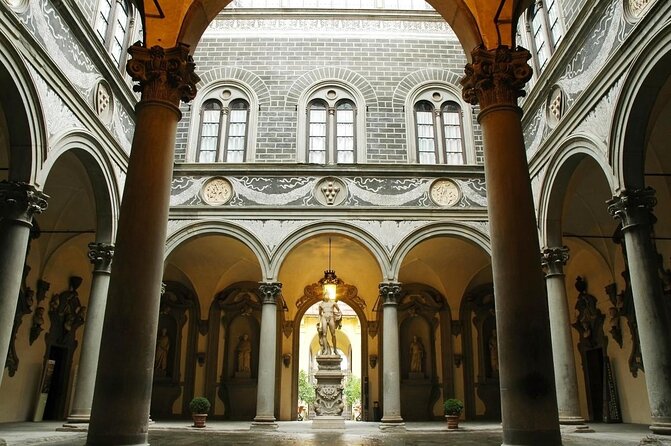
Palazzo Medici Riccardi and the family’s public image
The next stop is Palazzo Medici Riccardi, also planned for about 15 minutes. Here the guide introduces Laurence the Magnificent and other major figures connected with Renaissance Florence.
This is where the family story becomes more personal. The Medici were not only bankers or patrons. They were people who needed to manage public opinion, political rivals, family interests, and the expectations of Florence’s citizens. A palace can tell you a great deal about that balance.
The exterior gives you a chance to consider how a powerful family presented itself in the city. The guide’s role is especially important here because the building itself may not explain why it mattered. You need the links between architecture, family power, and public life.
Admission is not included. The short stop also means you should not expect a full interior tour. If the palace is a priority for you, ask the guide whether the route allows enough time to note what you should return to see later.
The Duomo, Florence’s giant landmark
From the Medici palace, the walk continues to the Duomo. The stop lasts about 20 minutes, making it the longest scheduled pause on the route.
The cathedral complex is one of Florence’s biggest visual surprises. Even after seeing pictures, the scale and decoration can be hard to grasp from a distance. The guide addresses why the Duomo is so special, giving you a better way to read the building instead of simply taking a photograph and moving on.
Admission to this stop is listed as free, but that does not mean every part of the cathedral complex is included in the walking experience. The tour is not presented as a dome climb or interior ticketed visit. If you want to enter specific sections, you should plan those separately.
The Duomo is also a useful point for understanding the relationship between art, engineering, civic pride, and religious belief. The Renaissance was not only about paintings in quiet galleries. It was also about creating a city center that announced Florence’s wealth and ambition.
More Renaissance and history tours in Florence:
- The Dark Side of Florence: Mysteries and Legends
★ 5.0 · 2,785 reviews - Florence: Dark Mysteries and Legends Guided Walking Tour
★ 4.6 · 1,081 reviews - Florence: Mysteries of the Medici Guided Walking Tour
★ 4.4 · 940 reviews - Accademia Gallery: Michelangelo’s David and High Renaissance Art
★ 4.0 · 872 reviews
Piazza della Signoria, where Medici power becomes public
The walk then reaches Piazza della Signoria, with about 15 minutes devoted to meeting other members of the Medici family. This is a strong change of setting. San Lorenzo and Palazzo Medici Riccardi connect to family identity, while Piazza della Signoria brings you into Florence’s public and political theater.
The square is filled with sculpture and surrounded by buildings that carried civic meaning. Here, the guide can connect statues and architecture to authority, conflict, and the way Florence chose to represent itself.
This is one of the places where a good explanation adds real value. You might recognize famous figures in the square but miss why they were placed there, what they communicated, or how their presence related to the ruling family. The available feedback specifically highlights attention to historical items on buildings and details that are easy to overlook.
The stop is still brief. You will hear a focused explanation rather than study every sculpture in detail. If art is your main interest, bring a few questions. A small group of no more than 15 makes that more realistic than a large coach tour.
Palazzo Vecchio and the political heart of Florence
Palazzo Vecchio follows Piazza della Signoria, with another 15-minute stop. The building served as Florence’s political heart, and the tour presents it as one of the city’s most colorful settings.
This is a good place to see how the Medici story moved from private family influence into formal government. Politics in Florence was not an abstract subject. It was conducted in rooms, squares, corridors, and palaces, with symbols used to show who had authority.
Admission is not included, so this portion should be understood as an exterior-focused introduction unless the guide gives different instructions on the day. A separate palace visit would be needed for a full look at the interior rooms and artworks.
I would not choose this tour solely for Palazzo Vecchio if you want a detailed museum visit. I would choose it if you want the building placed within the wider story of Florence. That context can make a later self-guided visit much more rewarding.
Ponte Vecchio and the final view across the Arno
If time permits, the tour concludes at Ponte Vecchio. The planned stop is about 10 minutes, and the official end point is on Lungarno Anna Maria Luisa de’ Medici, beside the Uffizi Gallery and in front of the bridge.
This is a smart finish. Ponte Vecchio gives you a strong final view and places you near several of Florence’s most important sights. It also leaves you in a useful spot for continuing your afternoon. You can visit the Uffizi if you have a reservation, walk along the river, or cross the bridge into the Oltrarno area.
The wording about time matters. The tour includes several stops and walking between them, so Ponte Vecchio is not guaranteed as a full-length stop if earlier discussions run long. I would consider it the intended ending rather than a promise of a long bridge visit.
The final location also makes the tour practical for a first afternoon in Florence. You finish in the city center rather than at an out-of-the-way meeting point. That saves you from arranging transport back to your hotel.
What the guide’s style adds
The experience is built around storytelling. The guide aims to bring Renaissance figures back into view as people, not just names attached to paintings and statues.
That style suits Florence well. A dry lecture can make even the Duomo feel like a numbered stop. A story about ambition, family loyalty, political risk, or artistic competition gives you a reason to pay attention to the building in front of you.
Deborah is described as engaging and able to keep the tour moving. Manuel Messina is associated with explanations about history, hidden passages, building details, and the reason Florence has so many towers. Since guide assignment can vary, you should not assume that one specific person will lead every departure.
The strongest feature here is the attempt to make history easy to remember. I like that the tour does not limit itself to famous artists. It connects people, buildings, and city design. That gives you a more complete picture of why Florence became such an important center of Renaissance culture.
How the $100 price measures up
At $100 for about two hours, this is not a cheap orientation walk. The value depends on what you want from a guide.
You are paying for a focused, art-history-led explanation of central Florence, not admission to major museums or extended interior access. If you already know the Medici story and prefer to explore at your own speed, the price may feel high for a short route.
If you want a strong introduction and learn best through spoken explanation, the price can make sense. The route covers several of Florence’s biggest sights, and a maximum of 15 people gives the guide a better chance to speak clearly and respond to questions.
You should also remember that the cost does not include admission to Basilica di San Lorenzo, Palazzo Medici Riccardi, or Palazzo Vecchio. Budget for those separately only if you plan to return or enter during the walk.
The mobile ticket is convenient. You do not need to collect paper tickets, and the meeting point is central. Public transportation is nearby, though the route itself is designed as a walking experience.
Practical advice for a comfortable afternoon
Wear comfortable shoes. The tour covers central Florence on foot, and short stops do not remove the need to walk between them.
Bring water, especially in warm weather. The tour begins at 2:00 pm and can place you outdoors for much of the afternoon. Good energy helps, since the route relies on listening while standing in busy public spaces.
The tour requires good weather and a minimum number of participants. If poor weather causes cancellation, you can receive a different date or a full refund. If the minimum number is not reached, you are offered another date or experience, or a full refund.
Free cancellation is available up to 24 hours before the start time. Inside that 24-hour window, the amount paid is not refunded, and changes are not accepted. The cut-off follows local Florence time.
Service animals are allowed, and most people can participate. The small-group limit is 15, but the experience is still a walking tour with several outdoor stops, so plan accordingly.
Who should book this Florence walk?
I would recommend it most to first-time visitors who want the city’s major Renaissance landmarks connected by one clear story. It also suits anyone who enjoys art but wants more than dates, artist names, and isolated facts.
Families with older children may find the people-focused format easier to follow than a formal museum lecture. Couples and solo visitors who like asking questions should also benefit from the small group.
I would be more cautious if you want extensive interior access, a dome climb, or detailed viewing time at each monument. The route is fast and broad. It gives you orientation and context, then leaves you to return to the places that catch your interest.
Should you book the Medici and Renaissance tour?
Book it if you want Florence explained through the Medici family, with an engaging guide, a practical central route, and a clear connection between art and power. Deborah and Manuel Messina are associated with especially lively explanations, including overlooked building details and hidden passages.
Skip it if you prefer a self-guided walk, already know Medici history, or want your $100 to include museum admissions. For the right audience, this is a useful first look at Florence, especially when you want the city’s monuments to feel like parts of one unfolding story rather than separate attractions.
FAQ
How long does the Medici and Renaissance tour last?
The tour lasts about two hours.
Where does the tour begin?
It begins at Piazza di San Lorenzo, 13, 50123 Florence, Italy.
What time does the tour start?
The start time is 2:00 pm.
Where does the tour end?
It ends on Lungarno Anna Maria Luisa de’ Medici, beside the Uffizi Gallery and in front of Ponte Vecchio.
What is the maximum group size?
The tour has a maximum of 15 participants.
Can I cancel for a full refund?
Yes. You can cancel up to 24 hours before the experience start time for a full refund. Cancellations within 24 hours are not refunded.
More family-friendly days out in Florence
- Florence: Guided Tour of Medici Family Secrets and Chapels
★ 4.7 · 512 reviews - Florence Private Tour: Renaissance, Famous Families & Hidden Gems
★ 5.0 · 233 reviews - Florence: Medici Family Guided Walking Tour
★ 4.6 · 189 reviews - Cooking Class on a Family Farm in Chianti with Lunch
★ 5.0 · 165 reviews
Recently added around Florence
- Accademia and Uffizi Small-group Guided Tour★ 4.5 · 8 reviews
- The David from Michelangelo.★ 5.0 · 3 reviews
- Combo: Accademia + walking + Uffizi Galleries Guided Tour★ 3.5 · 6 reviews
- The Complete Wine Tour Brunello, Nobile, Chianti wine experience★ 4.0 · 7 reviews
- The Best of Tuscany in 3 Days★ 4.5 · 13 reviews
- The Cooking Lab – Authentic Food Experience★ 5.0 · 113 reviews
- Florence Central Market Food Tour – Private Tour★ 4.0 · 7 reviews
- Family Friendly Florence Private City Tour★ 5.0 · 47 reviews
Medici Family Tours, compared.
The Best tour in Florence: Renaissance & Medici Tales – guided by a STORYTELLER
Read our review →
The Best Tour in Florence: Renaissance and Medici Tales
Read our review →
Renaissance and Medici Tales Guided Walking Tour
Read our review →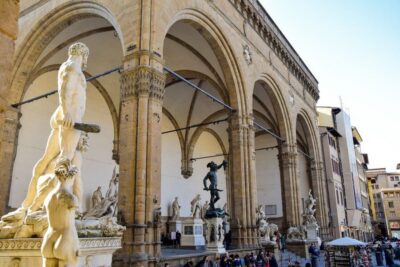
Guided Tour of Medici Family Secrets and Chapels
Read our review →
Pitti Palace, Palatina Gallery and the Medici: Arts and Power in Florence.
Read our review →
Browse the lists this tour appears in