
Reviewed · SANTA CROCE AND FLORENCE CHURCHES
Michelangelo and Santa Croce Private Tour
Michelangelo’s story comes alive in two very different places: the grand Basilica of Santa Croce, where he is buried, and Casa Buonarroti, the former family home filled with his early work. I like that this tour connects the artist’s final resting place with the youthful talent that shaped his career. I also like the private format, since guides such as Giovanni and Cristina can adjust the pace and explain details that are easy to miss alone.
The main drawback is the price, $232.23 per person for three hours. That is a serious spend, especially for a solo visitor, but it makes more sense if you want focused attention, reserved entrance tickets, and a clear story linking Florence’s art and architecture. You will also need to dress modestly, since sleeveless shirts are not allowed inside the church.
Key points to know before booking
- Michelangelo’s early art at Casa Buonarroti: See Madonna of the Stairs and Battle of the Centaurs, works that reveal his close study of Greek and Roman art.
- Santa Croce in one carefully paced visit: Allow about 75 minutes for the church, including Giotto’s chapels, Brunelleschi’s Pazzi Chapel, and Michelangelo’s tomb.
- A truly private experience: Your guide leads your own group, with Spanish, English, French, German, or Italian available.
- A strong guide can shape the day: Giovanni, also called John, and Cristina have received especially warm praise for clear explanations and an easy pace.
- No transportation is involved: You meet at Dante’s statue in Piazza Santa Croce and return there at the end.
- Best for art lovers with limited time: Three hours gives you a concentrated look at Florence’s Renaissance story without committing to a full-day tour.
Why this tour works for Michelangelo fans
Florence can make Michelangelo feel scattered across the city. His David is at the Accademia Gallery, his tomb is in Santa Croce, and his family home is in another part of the historic center. This tour brings two important pieces together in a single morning or afternoon.
I like the way the route links the public Michelangelo with the private one. At Santa Croce, you learn about the celebrated artist honored by Florence. At Casa Buonarroti, you see the young sculptor’s work and the family setting connected with his name.
The tour is not limited to Michelangelo alone. Santa Croce also gives you a compact lesson in Florentine painting, architecture, religious life, and civic memory. A good guide can explain why this church matters beyond its famous tombs, then shift naturally to the artistic experiments preserved at Casa Buonarroti.
You should think of this as a focused art and history visit, not a general Florence walking tour. The route does not cover the Uffizi, Accademia, Duomo, or Medici Chapels. That narrow focus is useful if Michelangelo is high on your list, but it may feel limited if you want a broad first look at Florence.
More churches and chapels in Florence:
- Florence: Santa Monaca Church Italian Opera Concert Ticket
★ 4.7 · 2,692 reviews - Florence: Santa Maria Novella Entry Ticket & Audioguide
★ 4.3 · 717 reviews - Italian Opera Concert Ticket in Florence’s Santa Monaca Church
★ 4.5 · 602 reviews
Meeting Dante in Piazza Santa Croce
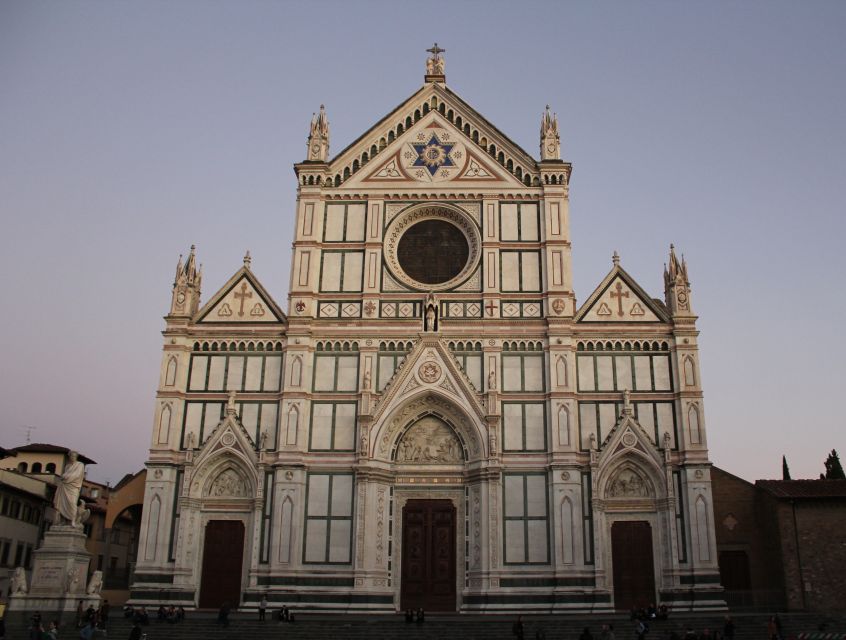
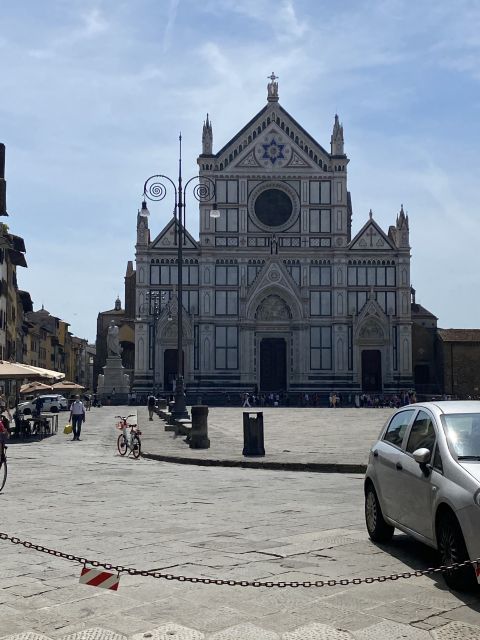
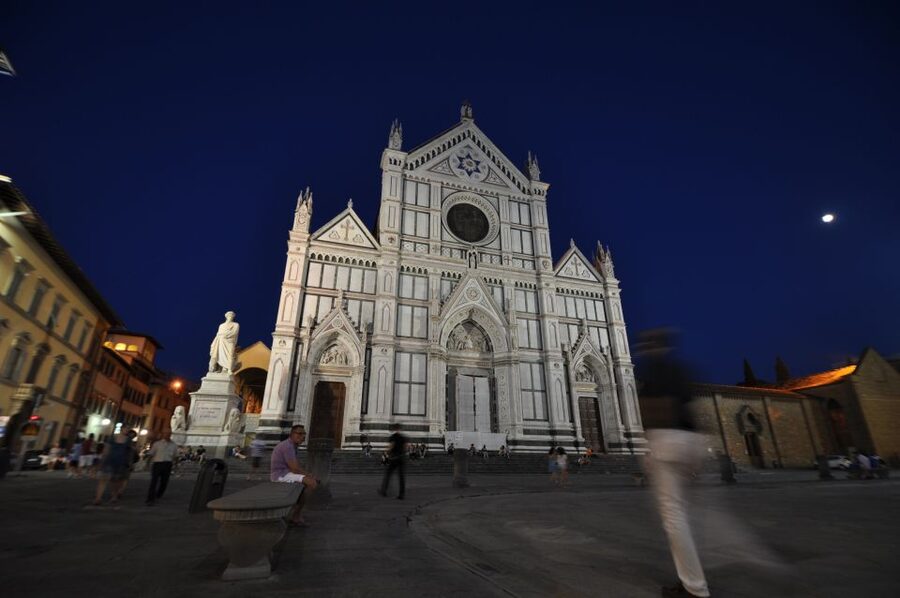
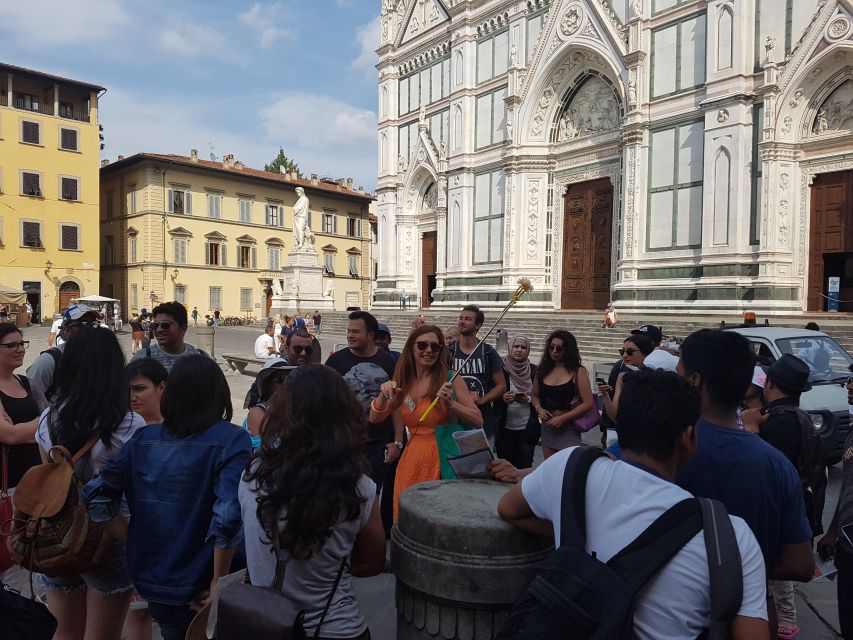
The tour begins in front of the statue of Dante Alighieri in Piazza Santa Croce. This is a sensible meeting point because the square sits directly before the basilica and gives you a clear visual landmark.
The opening stop in the square lasts about 15 minutes. You can expect your guide to set the scene before taking you inside, placing Santa Croce within Florence’s story and explaining why this part of the city is tied so closely to major artists and thinkers.
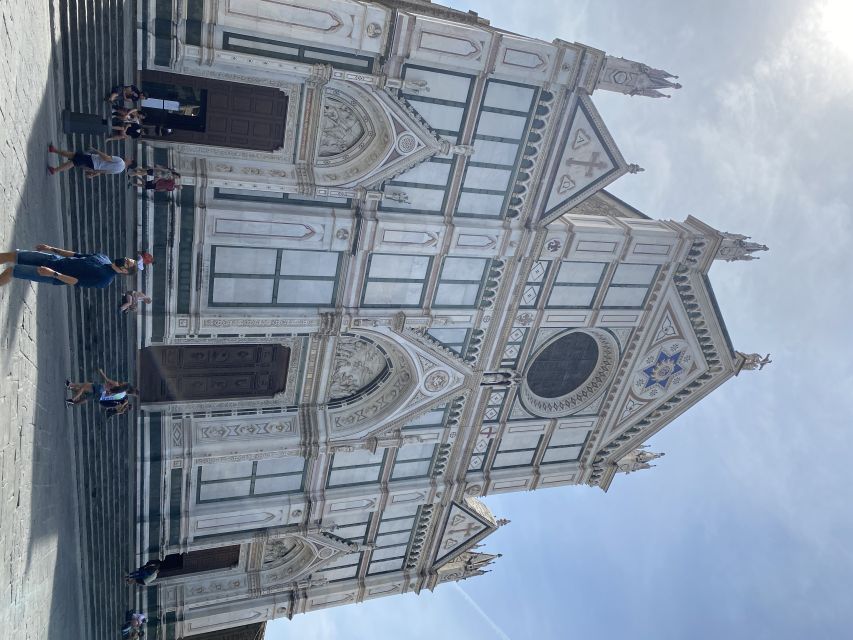
Do not treat this short stop as filler. A guide can help you look at the church facade and the square with more purpose before you enter. It also gives your private group time to meet, confirm the language, and settle into the pace of the visit.
Because the tour begins and ends at the same place, the logistics are simple. You do not need to arrange a taxi or follow a guide through several distant neighborhoods. The experience stays centered on Santa Croce and Casa Buonarroti.
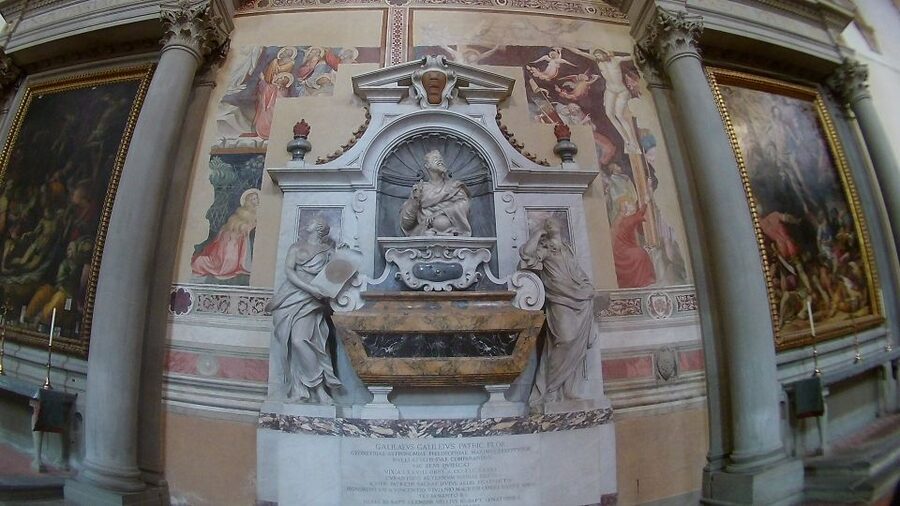
Santa Croce, Michelangelo’s burial place
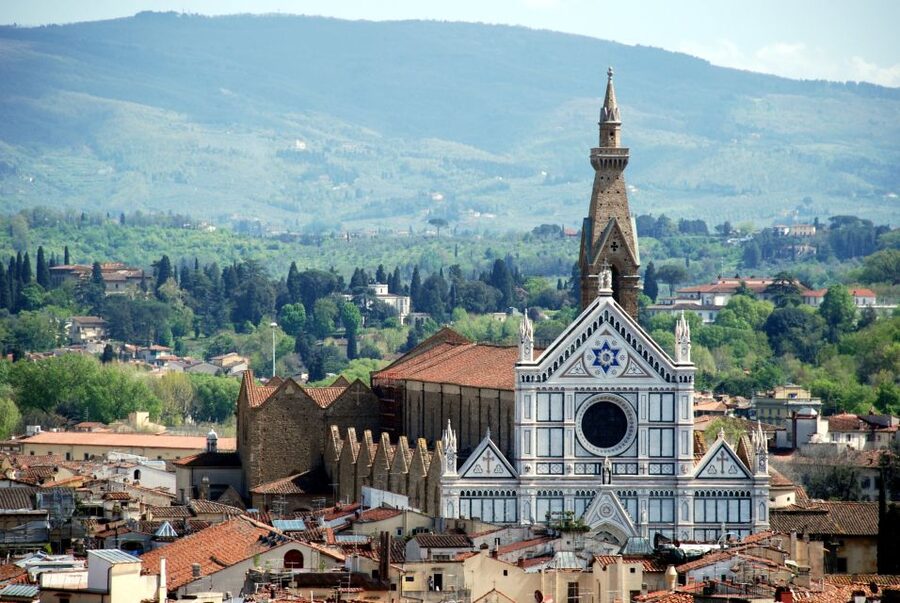
The Basilica of Santa Croce receives about 75 minutes of guided attention. That is enough time for a serious introduction without turning the visit into a long architectural lecture.
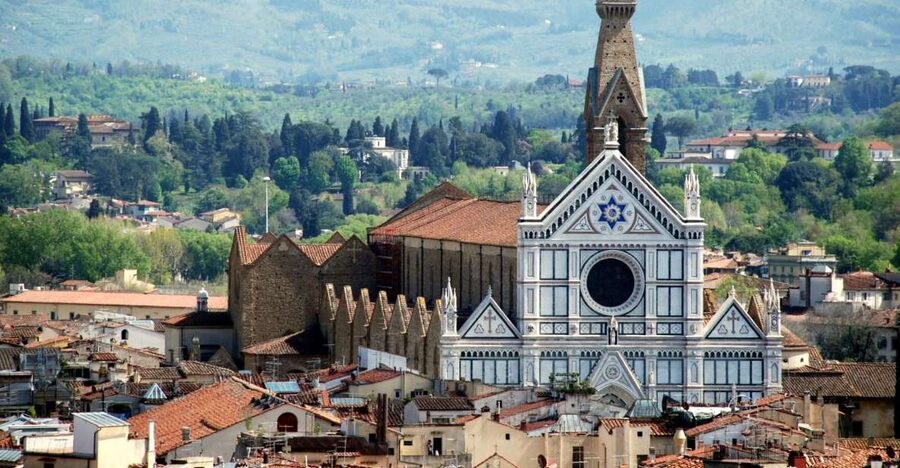
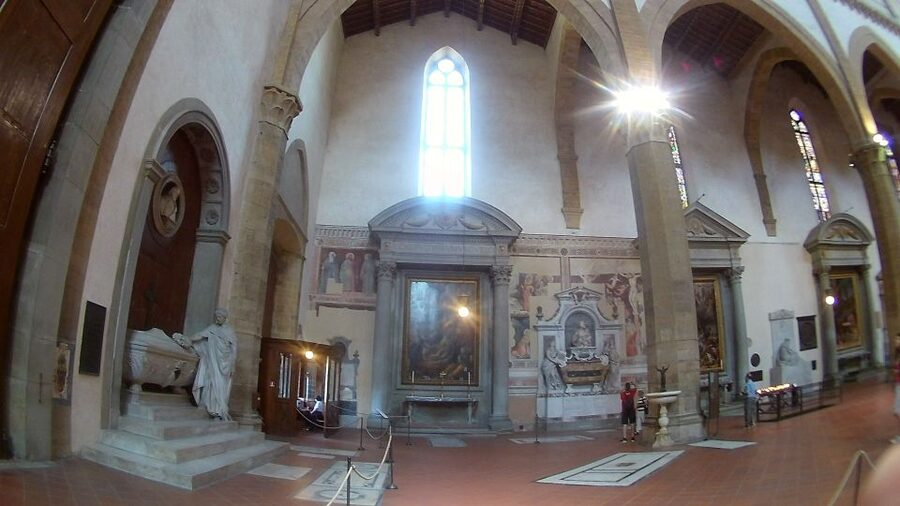
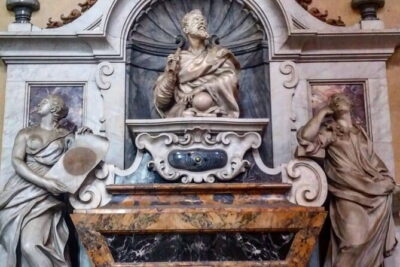
Santa Croce is the largest Franciscan church in the world, and its size becomes clear as you move through the interior. The church is also famous for the people connected with it. Michelangelo’s tomb gives this tour its central purpose, but the building holds far more than one memorial.
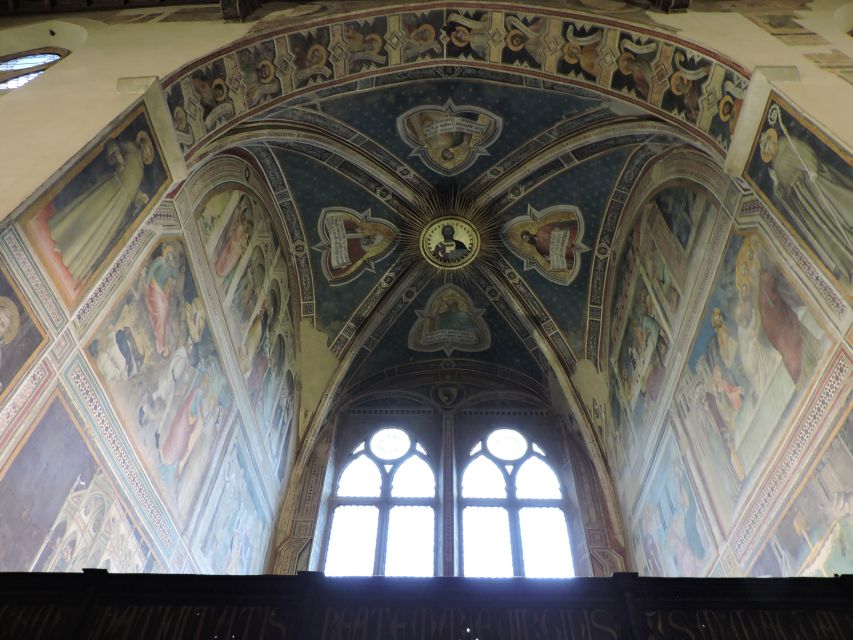
The Bardi and Peruzzi Chapels contain frescoes by Giotto, one of the key artists in the development of Florentine painting. Your guide can help you notice the storytelling, gestures, and arrangement of figures rather than simply pointing out the names.
The Sacristy adds another layer to the visit. Then comes the Pazzi Chapel, designed by Filippo Brunelleschi. Its clean architectural order provides a useful contrast to the decorative and narrative work elsewhere in the church.
I especially like this part of the tour because it prevents Michelangelo from being treated in isolation. You see the artistic world he inherited, including Giotto’s painting and Brunelleschi’s architecture. That context makes his own work easier to understand.
Michelangelo’s tomb is an emotional focal point, but remember that a tomb is a memorial, not a surviving studio. The church will not show you every stage of his career. Instead, it gives you the place where Florence honors him, along with the artistic setting that shaped the city he knew.
Your guide’s role matters here. Santa Croce has plenty of visual information, and it is easy to move from chapel to chapel without knowing what deserves your attention. Giovanni, also known as John, has been praised for adding detail even for someone who had already visited Santa Croce many times. That is a good reason to choose a private tour if you have been before or want more than a basic introduction.
One practical point is clothing. Sleeveless shirts are not allowed, so dress with church rules in mind. You should also bring a passport or identity card, as requested for the activity.
Casa Buonarroti and Michelangelo’s first masterpieces
The final major stop is Casa Buonarroti, with about one hour of guided time. This is where the tour shifts from Michelangelo’s public memory to his artistic beginnings.
The house contains Madonna of the Stairs and Battle of the Centaurs, both associated with the young Michelangelo. These are valuable works to see because they show ambition before the fully mature style most people know from the Sistine Chapel or David.
Madonna of the Stairs is especially useful for thinking about Michelangelo as a developing sculptor. Battle of the Centaurs points to his fascination with Greek and Roman art, a passion that helped shape his work throughout his career.
You may also see the wooden model for the marble facade of San Lorenzo. This shifts the focus from sculpture to architecture and shows how broad Michelangelo’s working life became. He was not only a sculptor. He also worked as a painter, architect, poet, and engineer.
Another model relates to the chariot used to move David from Piazza della Signoria to the Accademia Gallery in 1873. That detail connects the museum to Florence’s changing treatment of its most famous sculpture. It also reminds you that major works often have a long public life after the artist finishes them.
Casa Buonarroti rewards close attention. The objects are not simply famous names in rooms. They help you trace Michelangelo’s ideas from early study and sculpture to architectural planning and the later preservation of his reputation.
The museum also connects with more recent conservation work. A particularly interesting detail associated with the visit is the restoration project involving a painting by Artemisia. One past experience included the chance to speak with Elizabeth Wicks about that work. That personal contact is not something I would treat as guaranteed, but the restoration story adds another layer to the house’s role as a place where art continues to be studied and cared for.
More private tours in Florence:
- Cinque Terre and Pisa Tower Tour from Florence Semi Private
★ 5.0 · 1,406 reviews - From Florence: Private Chianti Hills Tour with Tasting
★ 4.3 · 809 reviews - Private Self-Guided E-Bike Ride in Tuscany with Vineyard Visit
★ 5.0 · 775 reviews - Florence Private Transportation in Rickshaw
★ 5.0 · 730 reviews
What a private guide adds
A private format changes the feel of the visit. You are not trying to hear a guide over a large crowd or waiting for a group to catch up. You can ask why a sculpture matters, pause over a chapel, or request more detail about Michelangelo’s family and working methods.
The guides available for this experience speak Spanish, English, French, German, and Italian. Giovanni and Cristina are names connected with particularly strong feedback. Giovanni has been praised for making three hours pass quickly through a mix of information and personal warmth. Cristina has been appreciated for adjusting the speed for an older family member who needed a slower pace.
That last point matters. The route includes a church and museum rather than a long city walk, but you still spend three hours standing and moving through historic interiors. A private guide can make the schedule less rigid. You can ask for a calmer pace, though the total time remains fixed.
I would not book a private tour simply because the word private sounds luxurious. I would book it if you value conversation and interpretation. The extra cost buys attention, not a different set of monuments.
Is $232.23 per person a fair price?
At $232.23 per person, this is expensive for a three-hour Florence tour. The value depends heavily on how much you want guidance.
The price includes a professional local guide and entrance tickets. It also gives you a private group rather than a shared tour. If you are traveling with family or friends, the cost may feel more reasonable when you consider that one guide is focused on your group rather than a large audience.
For one person or a couple on a tight budget, I would compare this with visiting the sites independently. Santa Croce and Casa Buonarroti can be meaningful without a private guide, especially if you enjoy reading labels and researching ahead of time.
Still, a private visit can be good value if you have limited time or want a deeper art lesson without planning every detail yourself. The tour joins two places that are easy to treat separately, and the guide provides the thread between them.
The strongest case for the price is the quality of the explanation. The strongest argument against it is the short duration. You are paying a premium for three concentrated hours, not a full-day Florence experience.
Who should book this experience?
I would recommend it most strongly to:
- First-time Florence visitors who want Michelangelo to be a main theme.
- Art and architecture students who want context around early works.
- Families who prefer a private pace and the chance to ask questions.
- Repeat visitors to Santa Croce who want more than a quick look.
- Couples or small groups willing to pay for individual attention.
- Visitors who want a guided introduction before exploring other Renaissance sites alone.
I would be more cautious if your priority is seeing David, the Sistine Chapel, or the Uffizi. None of those are part of this route. I would also think twice if you are mainly interested in a broad city orientation, since the tour stays focused on Santa Croce and Casa Buonarroti.
The visit suits people who like detail. If you prefer to move quickly from one famous sight to another, the 75 minutes inside Santa Croce and one hour at the museum may feel slow. If you enjoy understanding why a work matters, the pace is more useful.
Timing, cancellation, and practical details
The experience lasts three hours, with starting times available according to the date you choose. Since there is no transportation between stops, wear comfortable shoes, but you do not need to prepare for a long walking excursion.
You meet at the Dante statue in Piazza Santa Croce, and the tour ends back at the same point. Entrance tickets and the professional private guide are included.
You can cancel up to 24 hours in advance for a full refund. The reserve-now, pay-later option also gives you some flexibility, which is helpful when your Florence schedule is still changing.
Bring a passport or ID card. Avoid sleeveless shirts so you can enter the basilica without a clothing problem.
Should you book it?
Book this tour if you want a clear, personal account of Michelangelo that connects his burial place with his early sculptures and architectural work. The private format, multilingual guides, and carefully focused route make it especially useful for families, art lovers, and repeat visitors to Santa Croce.
Skip it if $232.23 per person feels too high for three hours or if your main goal is a general Florence overview. For the right audience, the cost buys more than entrance tickets. It buys a guide who can connect Giotto, Brunelleschi, Michelangelo, and Casa Buonarroti into one understandable story.
FAQ
How long does the Michelangelo and Santa Croce Private Tour last?
The tour lasts three hours. Starting times depend on availability for your chosen date.
Where does the tour begin?
You meet in front of the statue of Dante Alighieri in Piazza Santa Croce.
Where does the tour end?
The activity ends back at the meeting point in Piazza Santa Croce.
Which places are visited?
The tour includes Piazza di Santa Croce, the Basilica of Santa Croce, and Casa Buonarroti.
Is the tour private?
Yes. It is offered for a private group.
Which languages are available?
The guide can provide the tour in Spanish, English, French, German, or Italian.
What is included in the price?
The price includes a professional private local guide and entrance tickets.
What should I bring and wear?
Bring a passport or identity card. Sleeveless shirts are not allowed, so wear clothing suitable for entry into the basilica.
Recently added around Florence
- Accademia and Uffizi Small-group Guided Tour★ 4.5 · 8 reviews
- The David from Michelangelo.★ 5.0 · 3 reviews
- Combo: Accademia + walking + Uffizi Galleries Guided Tour★ 3.5 · 6 reviews
- The Complete Wine Tour Brunello, Nobile, Chianti wine experience★ 4.0 · 7 reviews
- The Best of Tuscany in 3 Days★ 4.5 · 13 reviews
- The Cooking Lab – Authentic Food Experience★ 5.0 · 113 reviews
- Florence Central Market Food Tour – Private Tour★ 4.0 · 7 reviews
- Family Friendly Florence Private City Tour★ 5.0 · 47 reviews
Santa Croce and Florence Churches, compared.
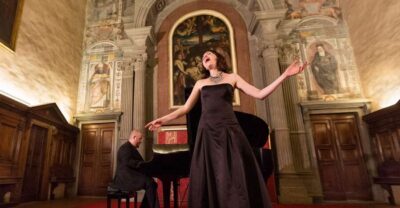
Santa Monaca Church Italian Opera Concert Ticket
Read our review →
Italian Opera Concert Ticket in Florence’s Santa Monaca Church
Read our review →
Browse the lists this tour appears in