
Reviewed · MUSEUMS
Florence: National Archeological Museum of Florence
Florence’s National Archaeological Museum rewards you with ancient art that many visitors miss while hurrying between the Duomo and Uffizi. I especially like the Etruscan burial objects and the remarkable François Vase, while the museum’s Egyptian collection adds mummies, a war chariot, and more than 14,000 artifacts to the visit.
I also like that this is a private guided tour, so the pace can suit your group better than a large museum walk. Guide Stefania received especially warm praise for her patient, precise explanations, and her ability to hold the attention of both a 10-year-old and a 17-year-old. The main drawback is simple: two hours is short for a museum with this much to see.
Key points at a glance
- See the Etruscan tomb of Inghirami: The garden reconstruction contains original alabaster urns from Volterra.
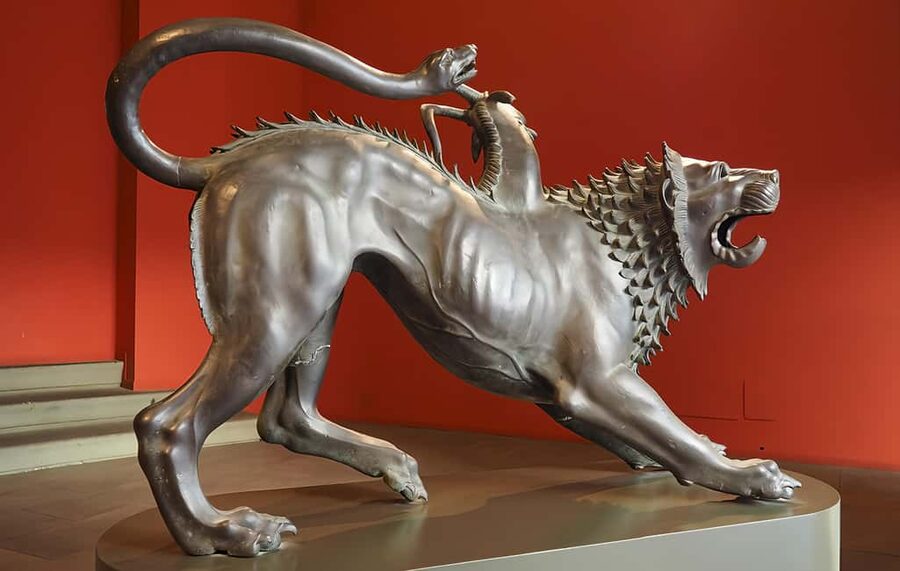
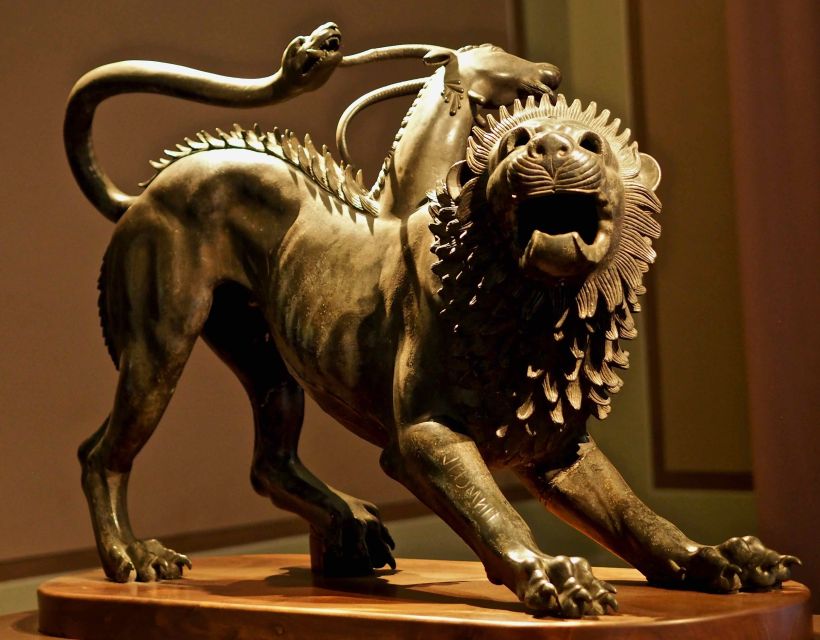
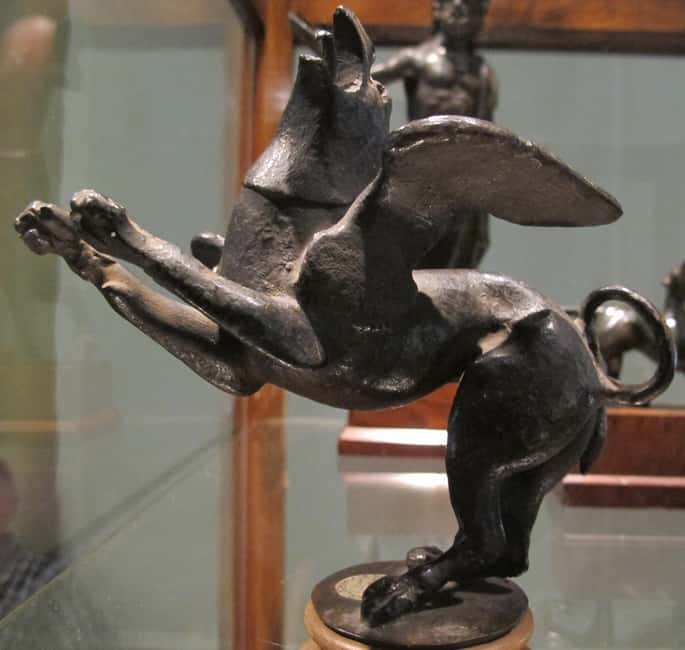
- Meet Florence’s famous Chimera: Large bronze statues show Etruscan skill and later Renaissance restoration.
- Study the François Vase: This Greek masterpiece carries a series of mythological scenes around its surface.
- Visit one of Italy’s oldest museums: The building began as the Crocetta convent, once linked with Maria Maddalena de Medici.
- Explore 14,000 Egyptian objects: Expect steles, vases, ushabti, amulets, bronzes, mummies, and a royal statue.
- Choose a language and private format: Tours are offered in English, Italian, Spanish, German, and French.
Why this small Florence museum deserves two hours
The National Archaeological Museum sits on Piazza della Santissima Annunziata, close to several major sights in central Florence. It does not have the same name recognition as the Uffizi or Accademia, but that is part of its appeal. Instead of Renaissance paintings and long queues, you get a focused look at the ancient cultures that shaped Tuscany and the wider Mediterranean world.
I like this tour because it gives the museum a clear story. You move from the building’s former religious life to Etruscan funerary objects, then to bronze sculpture, Greek pottery, and Egyptian material. Without a guide, the collection can feel like a series of beautiful but disconnected objects. With one, you have a better chance of understanding why each piece matters.
The private format is useful for families and small groups with mixed interests. An adult may want dates, techniques, and artistic comparisons, while a child may need a strong visual hook. The Chimera, mummies, chariot, and myth-covered vase provide those hooks. The group format also means you are not sharing the visit with a large crowd attached to a fixed script.
Still, two hours requires choices. You will see important highlights, but you should not expect to examine every room or read every label. If you already know ancient Greek, Roman, Etruscan, or Egyptian art well, you may want more independent time after the guided portion.
More museums and galleries in Florence:
- Florence: Skip-The-Line Uffizi Gallery Timed Entry Ticket
★ 4.5 · 27,832 reviews - Florence: Leonardo Interactive Museum Entry Ticket
★ 4.5 · 11,763 reviews - Florence Accademia Gallery Tour with Entrance Ticket Included
★ 4.5 · 6,148 reviews
Starting in Piazza della Santissima Annunziata
Meet your guide in front of the Archaeological Museum on the square. The meeting point is at approximately 43.7766227722168, 11.261474609375. The square itself makes a useful visual reference, and the tour begins with about 15 minutes devoted to the setting before the main museum visit.
That opening matters because the museum is not simply a modern gallery dropped into Florence. It began as the Crocetta convent, and Maria Maddalena de Medici once lived there. The building’s earlier purpose helps explain the character of the visit. You are walking through a place with its own story before seeing objects that are thousands of years old.
I recommend arriving with enough time to identify the entrance and meet your guide without rushing. The experience returns to the museum after the short introduction, so there is no complicated city walk or transport between sights.
Etruscan treasures and the meaning of burial goods
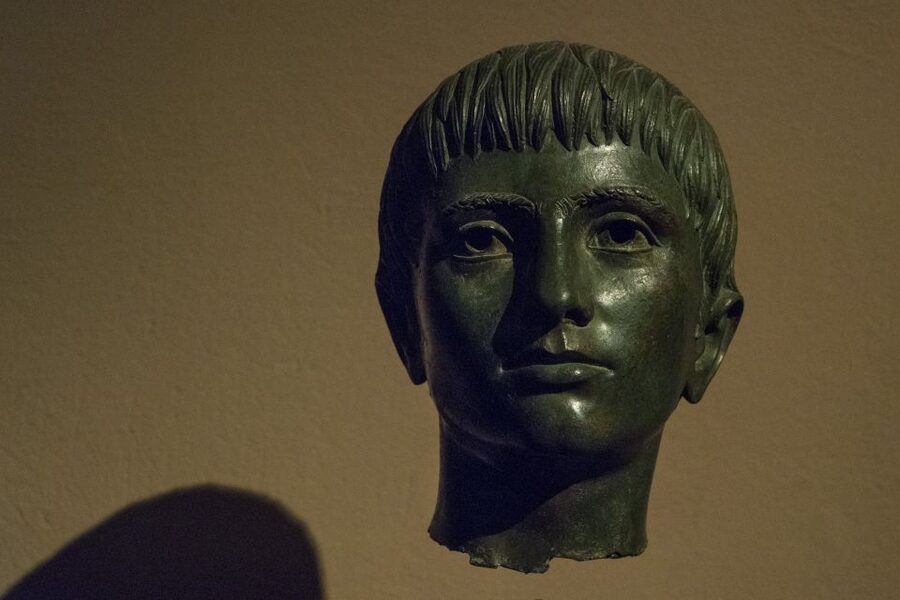
One of the strongest parts of the tour comes early, with burial goods from Etruscan aristocratic tombs in the area between Populonia and Vulci. These objects are not just decorative antiques. They offer clues about status, ritual, daily life, and the way Etruscan families prepared their dead for the next world.
This is where a guide adds real value. A display case filled with vessels, ornaments, and funerary objects can be hard to read as a group. Your guide can connect the objects to the people who owned them and explain why aristocratic tombs contain such carefully chosen goods.
The Etruscans are especially important in Tuscany, yet their culture is often overshadowed by Rome. This museum gives them proper attention. You get a more complete picture of central Italy before Roman power dominated the region.
The collection also sets up a useful contrast. Etruscan objects often bring you close to burial customs and local identity, while the Greek and Roman works later in the tour show different ideas about the human body, myth, and public display.
The bronze Chimera and Florence’s Renaissance connection
On the first floor, the tour reaches large bronze statues of the Chimera. This is one of the museum’s most memorable encounters. The creature comes from ancient Etruscan art, but its later history links it to Renaissance Florence.
The statues were restored in the 1500s by Benvenuto Cellini, one of Florence’s great goldsmiths and sculptors. That detail gives the Chimera two lives to consider. First, it was an ancient work tied to Etruscan religious imagery. Centuries later, Renaissance artists and collectors handled it as part of Florence’s renewed interest in antiquity.
I like this stop because it connects the museum to the city outside. Florence is famous for its Renaissance masters, but their work often grew from a close study of ancient sculpture. The Chimera lets you see that relationship directly.
Look closely at the creature’s body and posture. The subject is mythical, but the bronze technique and attention to form are very real. A guide can help you focus on the details that are easy to miss when you are simply admiring the statue from across the room.
For children, the Chimera is likely to be one of the easiest objects to remember. It has a strong shape and a dramatic story. For adults, the restoration by Cellini adds a second layer of interest.
A completely different way to spend an afternoon in Florence:
- Tuscany Day Trip from Florence: Siena, San Gimignano, Pisa and Lunch at a Winery
★ 5.0 · 21,634 reviews - Florence: Timed Entrance Ticket to Michelangelo’s David
★ 4.6 · 16,983 reviews - Florence: Michelangelo’s David Skip-the-Line Entry Ticket
★ 4.5 · 12,764 reviews - The Best tour in Florence: Renaissance & Medici Tales – guided by a STORYTELLER
★ 5.0 · 12,316 reviews
Greek, Roman, and Renaissance bronze works
The second floor shifts the mood from Etruscan funerary art to a wider selection of ancient Greek, Roman, and Renaissance bronzes. This section gives you a chance to compare styles across periods rather than treating each civilization as an isolated subject.
The Torso of Livorno is among the key works highlighted on the tour. As its name suggests, it is a study of the human body, and it shows how much can be expressed even when a sculpture is incomplete. The Medici Riccardi horse head offers a different subject and a reminder of the Medici family’s central role in Florence’s artistic world.
You will also see the Idolino of Pesaro, another important bronze. These works are useful when viewed together because they show different approaches to movement, proportion, and idealized form. Your guide can point out the distinctions without asking you to memorize a long list of dates.
This is also a good section for visitors who want more than famous names. Florence’s major museums can make art feel like a march from one celebrity masterpiece to another. Here, the pleasure comes from looking carefully at materials, poses, and surviving details.
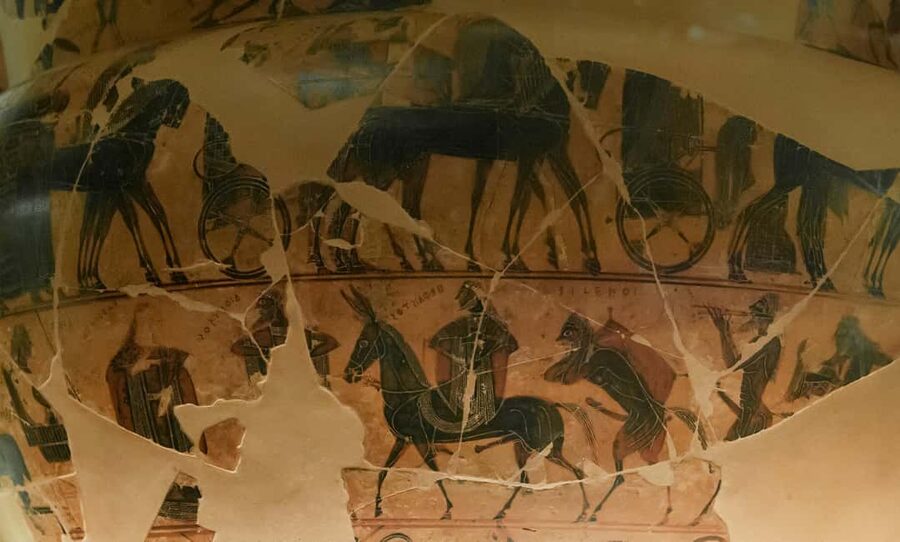
The François Vase and its mythological scenes
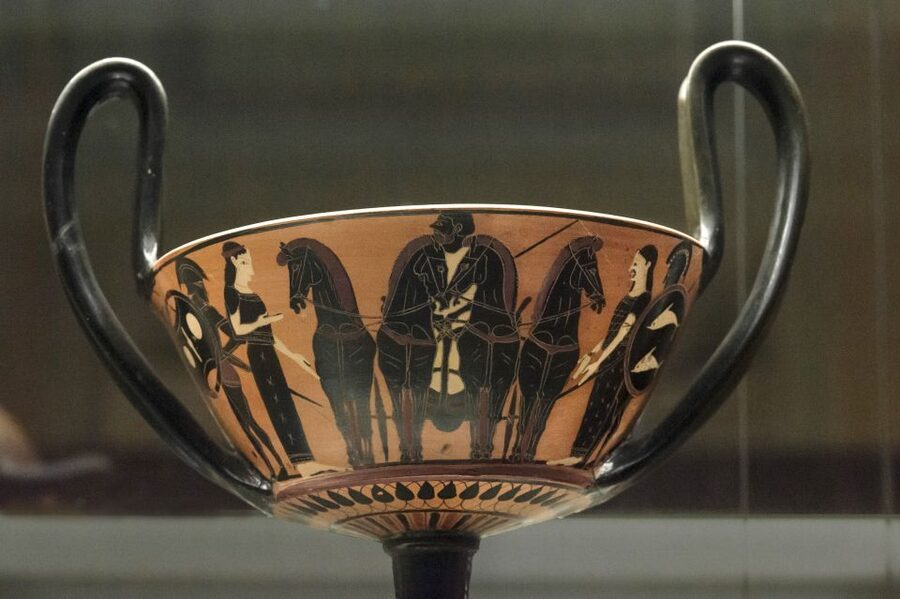
The François Vase is one of the most important objects in the museum and one of the tour’s best reasons for booking a guide. This ancient Greek vase is covered with scenes from Greek mythology. Rather than offering one isolated image, it presents a chain of stories around its surface.
Take your time here. The vase rewards close looking, but it can be difficult to understand without help. A guide can explain the figures and myths, show how the scenes relate to one another, and help you read the object as a narrative rather than a decorated container.
This is one place where two hours can feel tight. If you enjoy Greek mythology, you may want to stay longer than the main explanation allows. The private format gives you a better chance of asking questions, but the tour still has several major sections to cover.
I would place this stop near the top of your personal priorities. The vase combines art, literature, religion, and storytelling in one object. You do not need to know every Greek god in advance to appreciate it, but a little curiosity will make the visit more rewarding.
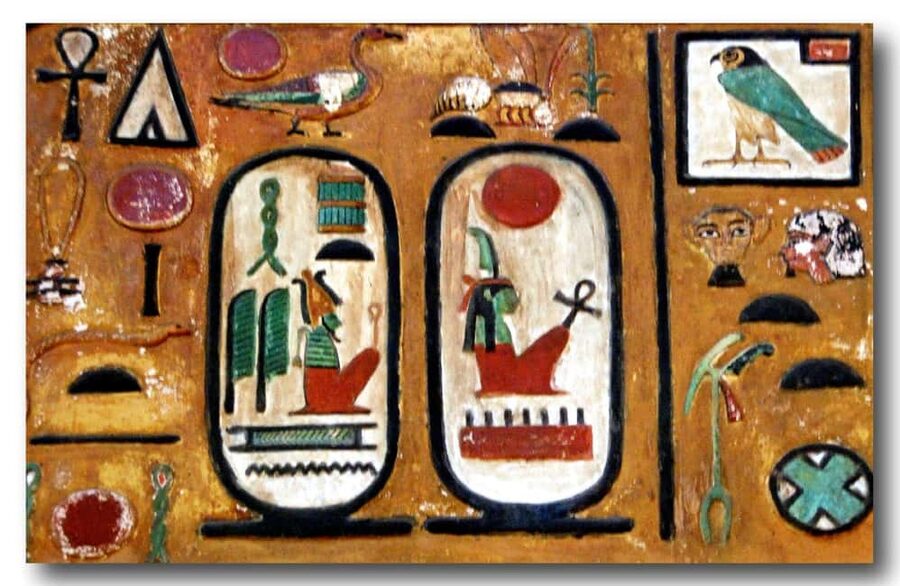
The Egyptian Museum, with more than 14,000 objects
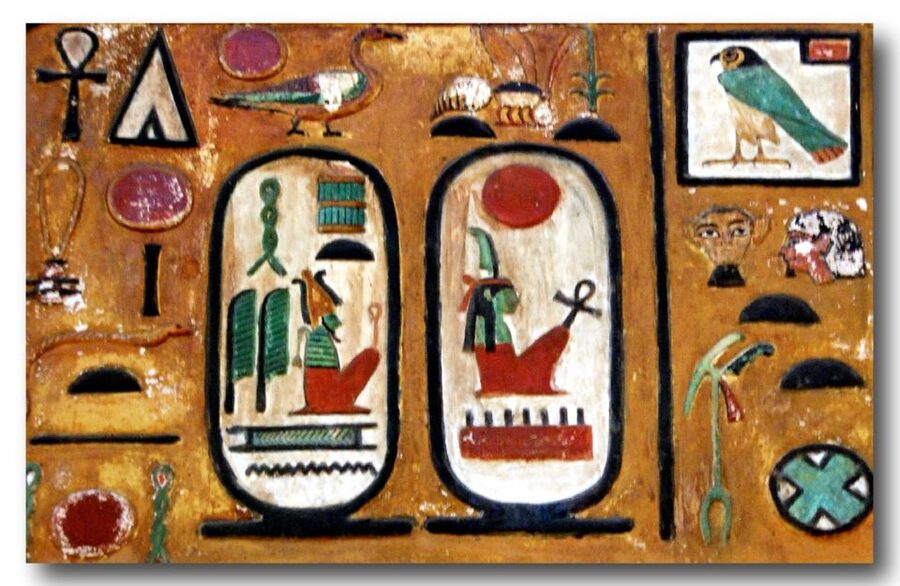
The Egyptian Museum occupies a major part of the experience. Its collection includes more than 14,000 artifacts, with steles, vases, ushabti, amulets, bronzes, mummies, and other objects from ancient Egypt.
The range is important. You are not seeing one famous statue and moving on. You get a sense of the everyday and ceremonial sides of Egyptian life, from small protective amulets to funerary objects and large sculpture. The collection can also serve as a good introduction for children, since the objects are visually varied and the subject naturally invites questions.
Among the highlighted pieces is a statue of Amenophis III. You will also see a war chariot from the seventeenth dynasty and perfectly preserved mummies. These are the objects that make the Egyptian section feel immediate. A mummy connects the collection to a person, while a chariot suggests military power, transport, and royal display.
The Egyptian material also changes the rhythm of the tour. After the open mythological scenes on the François Vase and the physical presence of bronze sculpture, you move into a collection shaped by religious practice, burial, and symbols. The guide’s explanations are especially useful here because many objects carry meanings that are not obvious from their shape alone.
If Egyptian history is your main interest, two hours may not satisfy you. The collection is large, and the guided visit can only select a portion of it. Still, the tour gives you a solid introduction and helps you identify what to return to if you have more time.
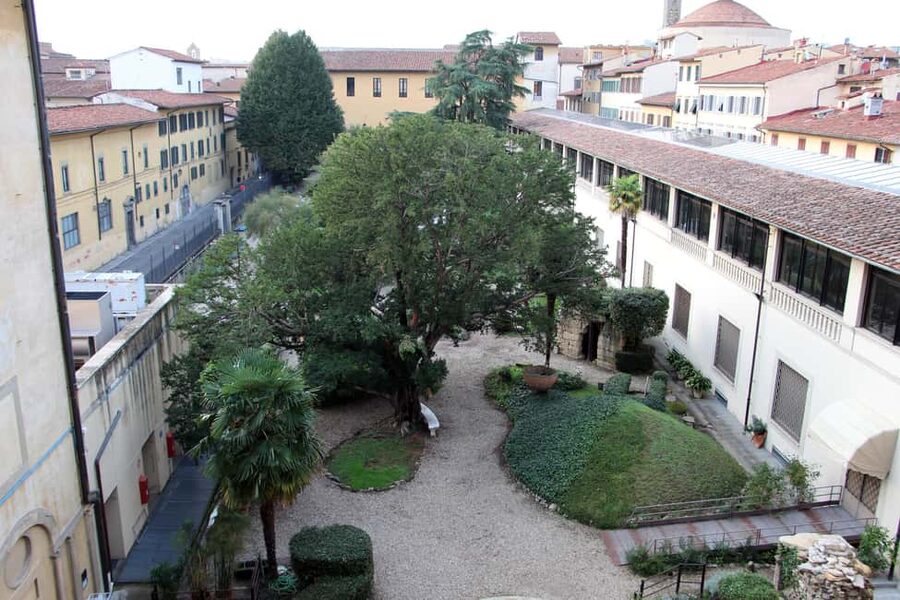
The garden and the Inghirami tomb from Volterra
The final stop takes you outside to the garden, where you can see a reconstruction of the Etruscan tomb of Inghirami from Volterra. The reconstruction contains the original alabaster urns that were placed there in ancient times.
This is a fitting ending because it brings the Etruscan story back into view. Earlier, you saw burial goods in cases. Here, you get a stronger sense of how a tomb might have been arranged and how urns formed part of a larger funerary setting.
The garden stop is also a welcome change after the indoor galleries. It gives you a chance to see the urns as part of a space rather than as separate museum objects. You should not expect a full archaeological site, since this is a reconstruction, but it adds useful context to the collection.
How the private format affects the value
The price is not provided here, so I cannot judge it against a specific figure. The value depends on how much your group wants explanation and how much the private format costs compared with entering on your own.
For a small group, family, or mixed-age party, the private structure can make sense. You can ask questions, request emphasis on Greek art or Egypt, and avoid spending your limited time on objects that do not interest you. A guide who can explain patiently is particularly helpful for younger visitors, and Stefania’s approach was praised for keeping both a 10-year-old and a 17-year-old engaged.
If you are comfortable reading labels and already know the collection, independent entry may offer more freedom. You can linger over the François Vase or Egyptian displays without worrying about the group’s timetable. The guided visit earns its value through selection, context, and saved time, not through the number of rooms covered.
The tour includes skip-the-ticket-line entry, which can matter on a busy Florence day. It is also wheelchair accessible. The guide can conduct the experience in English, Italian, Spanish, German, or French.
Cancellation is flexible up to 24 hours before the start for a full refund, and you can reserve now and pay later. Those terms are useful if your Florence plans are still changing, but they should not be the main reason to choose the museum.
Who should book this Florence museum tour?
I would recommend it to anyone curious about the cultures that came before Renaissance Florence. It is especially well suited to:
- Families who want ancient art with strong visual subjects
- First-time visitors who prefer a guided introduction
- Small private groups with different ages and interests
- Anyone interested in Etruscans, Greek mythology, bronze sculpture, or Egypt
- Visitors who want a quieter museum choice near the center of Florence
I would be more cautious if you want a slow, research-heavy museum visit. Two hours moves quickly, and the museum contains more material than the tour can cover. You may also prefer another attraction if your main goal is Renaissance painting.
Should you book the two-hour visit?
Book this tour if you want ancient Florence explained clearly rather than simply viewed. The Chimera, François Vase, Etruscan tomb, and Egyptian mummies give the visit plenty of memorable stops, while the private format makes it easier to match the pace to your group.
Skip it if you have little interest in archaeology or want to spend a full day studying one collection. For most first-time visitors with a spare two hours, though, this is a smart change from Florence’s usual Renaissance circuit. Just plan to return if the François Vase or Egyptian collection catches your attention, because two hours will only introduce the museum’s treasures.
FAQ
How long does the National Archaeological Museum tour last?
The tour lasts two hours. About 15 minutes are spent visiting Piazza della Santissima Annunziata with the guide, followed by approximately 105 minutes inside the National Archaeological Museum.
Where do I meet the guide?
Meet the guide in front of the Archaeological Museum on Piazza della Santissima Annunziata. The stated meeting coordinates are 43.7766227722168, 11.261474609375.
What languages are available?
The tour is available in English, Italian, Spanish, German, and French.
Is this a private tour?
Yes. The activity is arranged for a private group rather than a shared public group.
Is the museum tour wheelchair accessible?
Yes, the activity is listed as wheelchair accessible.
Can I cancel or pay later?
You can cancel up to 24 hours in advance for a full refund. You can also reserve your place and pay later, allowing you to keep your plans flexible.
Recently added around Florence
- Accademia and Uffizi Small-group Guided Tour★ 4.5 · 8 reviews
- The David from Michelangelo.★ 5.0 · 3 reviews
- Combo: Accademia + walking + Uffizi Galleries Guided Tour★ 3.5 · 6 reviews
- The Complete Wine Tour Brunello, Nobile, Chianti wine experience★ 4.0 · 7 reviews
- Florence Central Market Food Tour – Private Tour★ 4.0 · 7 reviews
- The Best of Tuscany in 3 Days★ 4.5 · 13 reviews
- The Cooking Lab – Authentic Food Experience★ 5.0 · 113 reviews
- Family Friendly Florence Private City Tour★ 5.0 · 47 reviews
Museums, compared.
Skip-The-Line Uffizi Gallery Timed Entry Ticket
Read our review →
Florence Accademia Gallery Tour with Entrance Ticket Included
Read our review →
Accademia Gallery Guided Tour with Entry Ticket
Read our review →
Golf Cart Tour to Fiesole Roman Theatre and Museum
Read our review →
Uffizi Gallery and Accademia Gallery Guided Tour
Read our review →Browse the lists this tour appears in