
Reviewed · FLORENCE WALKING TOURS
Walking Group Tour In Florence
Florence packs a remarkable amount into a small historic center. In two hours, this walking tour links the Ponte Vecchio, Piazza della Signoria, Uffizi courtyard, and Duomo while a local guide explains how art, politics, banking, and family power shaped the city. It is a useful first look at Florence, especially if you want the main sights without spending half a day indoors.
I like the small-group format, which gives you room to ask questions and keeps the pace relaxed. I also like that the route is not limited to postcard views. It includes side streets, artisan workshops, and stories about the Medici family and Renaissance architecture.
The main drawback is the short length. Two hours is enough for orientation and exterior views, but not for entering the major museums or climbing Brunelleschi’s Dome. The tour also operates in all weather and is not suited to people with mobility impairments.
Key Points
- See Florence’s essential sights in two hours: The route covers Ponte Vecchio, Piazza della Signoria, the Uffizi courtyard, and the Duomo area.
- Meet at the Uffizi Gallery: Look for the local partner’s sign in front of the gallery’s main exit.
- Learn from a local guide: Michele and Ilaria are among the guides named in the feedback, with tours offered in Italian, English, French, German, and Spanish.
- Expect an exterior-focused walk: Admission to museums and other attractions is not included.
- Small groups help: A particularly small group can give you more time for questions and conversation.
- Wear proper shoes: Florence’s streets and piazzas call for comfortable footwear, not fashion-first sandals.
Why This Two-Hour Florence Walk Works

This is a classic orientation walk, not a museum tour. You move through the center, stop at the big landmarks, and get the story that ties them together. That distinction matters when you plan your day.
At $77 per person, the price is not cheap for a two-hour walk. The value depends on what you want from it. If you are new to Florence and want a guide to connect the city’s main sights, the fee can make sense. If you mainly want photographs or already know the city well, you may find the cost harder to justify.
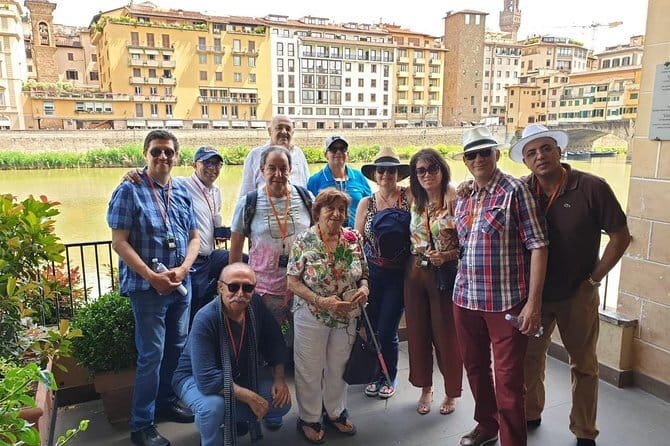
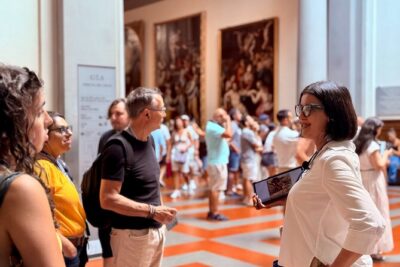
The small-group setup is the strongest reason to choose it. A guide can adjust the pace, answer questions, and point out details you might miss while walking alone. One particularly favorable experience had only two people in the group, which allowed plenty of time for questions. Group size can vary, so do not assume every departure will feel that private.
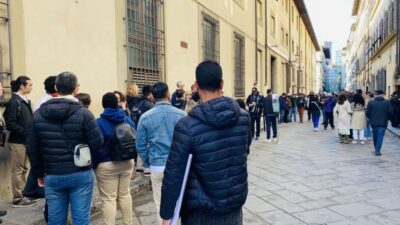
You will not receive transportation from your hotel. Plan to reach the meeting point in front of the Uffizi Gallery’s main exit on your own. Since the walk stays in Florence’s historic center, the location is practical for a day of sightseeing, but give yourself enough time to find the exact sign before the start.
More walking tours in Florence:
- Florence: Guided Walking Tour
★ 4.5 · 3,334 reviews - Skip the line: Uffizi and Accademia Small Group Walking Tour
★ 4.5 · 3,135 reviews - Florence: Guided Walking Tour
★ 4.6 · 1,602 reviews
Starting at the Uffizi Gallery
The meeting point puts you right beside one of Florence’s great cultural landmarks. Look for the sign of the local partner in front of the Uffizi Gallery’s main exit. This is an important detail because the Uffizi area has several entrances, nearby streets, and plenty of foot traffic.
The tour does not include admission to the Uffizi Gallery. You will admire the exterior and courtyard while your guide explains the building and its place in Florence’s artistic story. That works well if you have a separate museum visit planned, since you can save your ticket and time for a later appointment.
The Uffizi is closely tied to the Medici family, whose money and political influence helped shape Florence’s art and architecture. A good guide can make this connection clear: the city’s masterpieces did not appear by accident. They grew from competition among powerful families, religious institutions, civic leaders, and artists.
The courtyard also gives you an early sense of Florence’s scale. The city center is compact enough to walk between major sights, but every square has layers of use and meaning. Your guide’s role here is to help you see more than handsome stone walls.
Crossing the Ponte Vecchio
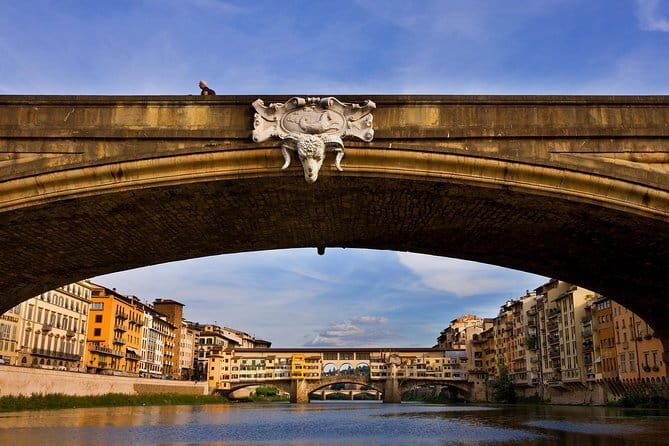
The route continues to the Ponte Vecchio, Florence’s oldest and most recognizable bridge. It crosses the Arno and is lined with traditional goldsmith shops, giving it a look unlike the city’s other bridges.
The bridge is photogenic, but it is not just a scenic stop. Its shops and busy passage show how Florence has long joined commerce with public life. Your guide can give you context for the bridge and point out details that are easy to miss when you are focused on the river view.
Expect other people in this part of the walk. The Ponte Vecchio is one of Florence’s most famous sights, so it can feel crowded, especially at popular times. A small group helps your guide keep everyone together, but you should still stay alert and listen closely.
This is also where comfortable shoes start to matter. The tour covers several streets and piazzas, and the pace is made for walking rather than quick stops in a vehicle. Wear shoes you can manage for the full two hours, and dress for the weather. The tour runs rain or shine.
Piazza della Signoria and Florence’s Public Face
Piazza della Signoria is the city’s political and artistic center, and it gives the walk a dramatic change of mood. Here, historic buildings frame sculptures that turn an open public square into an outdoor art display.
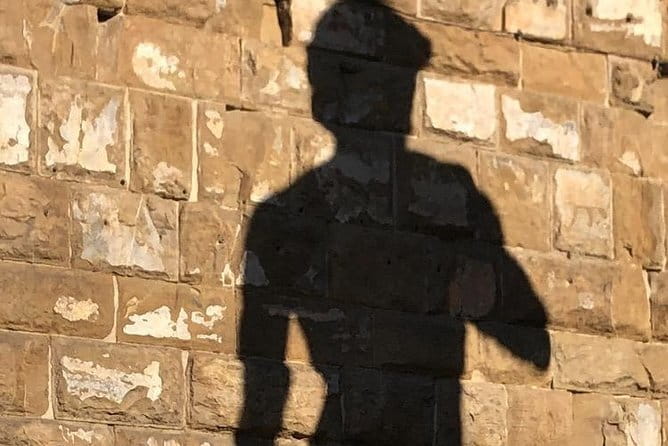
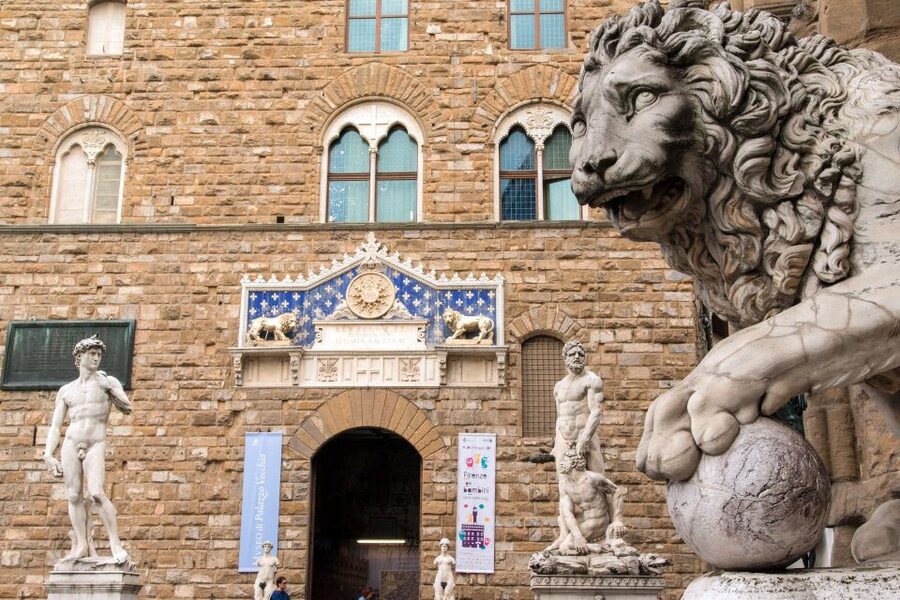
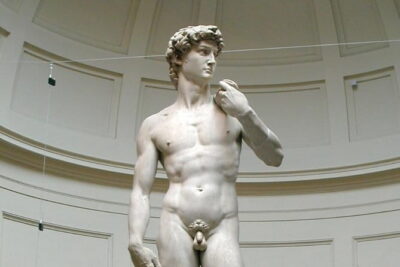
You will see a replica of Michelangelo’s David and the Neptune Fountain. The replica is not the original David, which is housed elsewhere, but it still helps you understand how the statue has become part of Florence’s public identity. The square is a good place for your guide to explain how art served civic and political purposes.
This stop is valuable because Florence’s art is not confined to museums. The streets and squares themselves tell part of the story. You can connect the sculptures, palaces, and public spaces with the larger account of Renaissance Florence without paying another admission fee.
The square can also be noisy and crowded. You may need to stand close to your guide to hear the explanation. Headsets are provided for groups larger than five, which should help when the surrounding sounds make conversation difficult.
A completely different way to spend an afternoon in Florence:
- Florence: Skip-The-Line Uffizi Gallery Timed Entry Ticket
★ 4.5 · 27,832 reviews - Tuscany Day Trip from Florence: Siena, San Gimignano, Pisa and Lunch at a Winery
★ 5.0 · 21,634 reviews - Florence: Timed Entrance Ticket to Michelangelo’s David
★ 4.6 · 16,983 reviews - Florence: Michelangelo’s David Skip-the-Line Entry Ticket
★ 4.5 · 12,764 reviews
The Uffizi Courtyard and Medici Connections
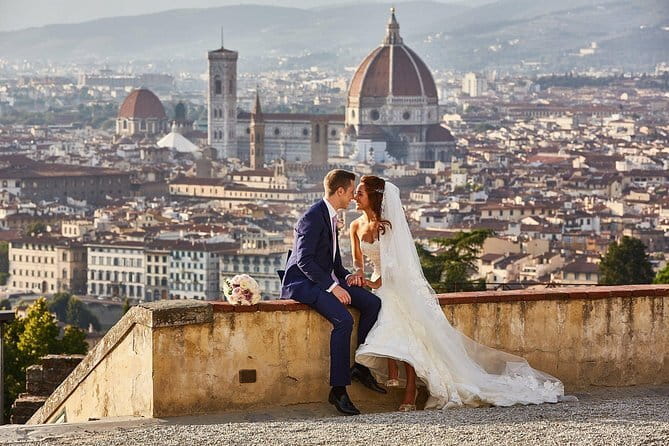
The Uffizi courtyard provides another look at Renaissance architecture and the Medici family’s influence. You will not tour the collection on this walk, but the exterior stop gives your guide a chance to explain why the gallery became such an important part of Florence’s cultural life.
The most useful part of this stop is the link between buildings and people. The Medici were not simply art collectors in the modern sense. Their patronage, power, and ambitions affected what was built, what was displayed, and which artists received support.
That background can make a later museum visit more rewarding. If you plan to visit the Uffizi separately, take note of the names and ideas introduced during the walk. You will have a better framework for understanding why the collection matters.
Do not expect a detailed discussion of every major painting. Two hours must cover several sites, and the tour stays outdoors. If you want a close look at Florence’s paintings and sculpture, plan a separate museum visit and ticket.
Brunelleschi’s Dome and the Duomo Area
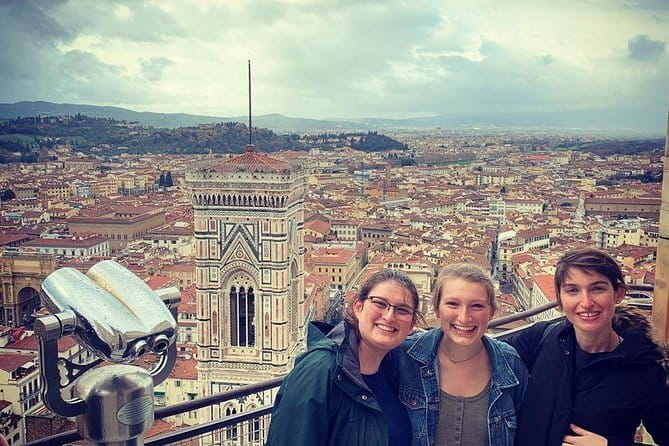
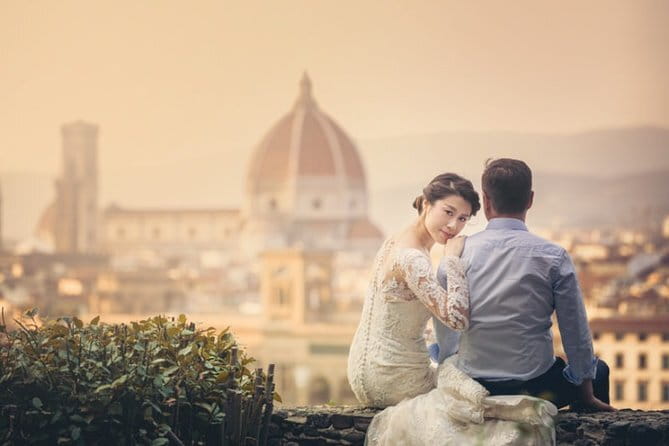
The Duomo is the visual high point of the route. Brunelleschi’s Dome dominates Florence’s skyline and gives you a clear example of the engineering and ambition behind the Renaissance.
The tour focuses on the exterior rather than entry. Admission fees are not included, and the supplied details do not promise access to the cathedral, dome, baptistery, or bell tower. That keeps the walking tour moving, but it also means you should book separate tickets if you want to go inside.
Your guide can help you understand why the dome is so important to Florence’s architectural story. You will see how its scale changes the feel of the surrounding streets and how the cathedral acts as both a religious building and a civic symbol.
This is a good place to decide what to do next. After the walk, you may want to spend more time in the Duomo complex, return to a museum, or continue exploring on foot. The tour gives you a map in your head, even if it does not include every interior.
Side Streets, Workshops, and Smaller Details

The advertised route includes lesser-known streets, artisan workshops, and less obvious corners of the center. These moments can be as useful as the headline sights because they show how Florence works between the major monuments.
You might pass shopfronts connected with traditional crafts or narrow streets where the city feels less formal. The exact stops may vary with the guide and conditions, so treat these as part of the tour’s character rather than a guaranteed list of named businesses.
I like this balance. A tour that only races between famous landmarks can make Florence feel like a checklist. Small details give you a better sense of the city’s daily life and can point you toward places to revisit later.
The route still has a broad historical focus. You will hear about Florence’s art, architecture, culture, and political past, but the depth may depend on the guide and language. One French-language experience found the guide friendly but felt that some questions were not fully answered and that the historical content needed more detail. If you choose French, keep that possibility in mind when deciding how much background you need.
Guides, Languages, and Group Size
The activity is led by a licensed professional guide. Tours are available in Italian, English, French, German, and Spanish. The named guides include Michele and Ilaria. Michele was praised for being friendly and well informed, while Ilaria was described as competent and pleasant.
Those individual strengths matter. A walking tour depends heavily on the person holding the group together. The best guide will not only recite dates but also explain why the buildings and artworks mattered to Florence.
English speakers appear to have a solid choice of language, but the quality of the experience can still vary by guide and departure. If you need French, German, Spanish, or Italian, confirm the selected language when booking. A guide who speaks the language is not automatically a perfect fit for detailed questions, so manage expectations for a fast city overview rather than a university lecture.
Headsets are supplied when the group has more than five people. That is a practical touch in busy public spaces. In a very small group, you may not need them, and you may have more direct conversation with the guide.
What the $77 Price Really Buys
The $77 fee covers the licensed guide and headsets for larger groups. It does not cover food, drinks, transportation, or admission fees. You are paying for interpretation, route planning, and the chance to understand the city while you walk through it.
For a first visit, that can be worthwhile. Florence’s center is easy to walk through, but it is not always easy to understand. A guide can connect the Ponte Vecchio, Uffizi, Piazza della Signoria, and Duomo into one story instead of leaving you with a series of attractive but unrelated sights.
Still, the price deserves a careful look. At two hours, this is a short activity. You are not getting a full-day tour, museum entry, or private guide. The experience offers better value if you use it as the first part of a larger Florence plan and then explore the places that interest you most.
Flexible booking helps reduce the risk. You can reserve and pay later, and cancellation is allowed up to 24 hours before the tour for a full refund. Those terms are useful when weather, museum reservations, or train plans may shift.
Who Should Book This Walk
I would choose this tour if you have limited time in Florence, want a clear introduction, or prefer learning while walking rather than sitting in a museum. It also suits you if you like asking questions and want a guide who can adjust the pace within a small group.
It is a sensible first-day activity because the route introduces several central landmarks. Afterward, you will know where the Uffizi, Ponte Vecchio, Piazza della Signoria, and Duomo sit in relation to one another.
I would look elsewhere if you need step-free access, a long and detailed art lecture, or entry to the major attractions. The activity is not suitable for people with mobility impairments, and the outdoor route may be tiring in poor weather.
Bring comfortable shoes and comfortable clothes. Since the walk runs in rain or shine, check the forecast and dress accordingly. Booking early is sensible because the group is kept small.
Should You Book It?
Book this walking tour if you want a friendly, compact introduction to Florence’s historic center and value personal contact with a guide. The strongest points are the central route, the chance to ask questions, and the mix of famous sights with side streets and craft details.
Skip it if you already know Florence well or expect museum admission and a highly detailed art seminar for $77. The two-hour format has limits, and the quality of the explanation may depend on the guide and language.
For many first-time visitors, the tour makes the most sense as an orientation. Use it to understand the city, then return on your own to the Uffizi, Duomo, or other sites that catch your interest.
FAQ
How long does the Florence walking tour last?
The tour lasts two hours.
Where does the tour meet?
Meet in front of the main exit of the Uffizi Gallery. Look for the sign of the local partner.
Which languages are available?
The tour is offered in Italian, English, French, German, and Spanish.
Are museum and attraction admission fees included?
No. Admission fees are not included, and the tour description does not promise entry to the attractions visited from the outside.
What should I bring?
Bring comfortable shoes and comfortable clothes. The tour operates rain or shine, so dress for the weather.
Is the tour suitable for people with mobility impairments?
No. The activity is not suitable for people with mobility impairments.
Recently added around Florence
- Accademia and Uffizi Small-group Guided Tour★ 4.5 · 8 reviews
- The David from Michelangelo.★ 5.0 · 3 reviews
- Combo: Accademia + walking + Uffizi Galleries Guided Tour★ 3.5 · 6 reviews
- The Complete Wine Tour Brunello, Nobile, Chianti wine experience★ 4.0 · 7 reviews
- The Best of Tuscany in 3 Days★ 4.5 · 13 reviews
- The Cooking Lab – Authentic Food Experience★ 5.0 · 113 reviews
- Florence Central Market Food Tour – Private Tour★ 4.0 · 7 reviews
- Family Friendly Florence Private City Tour★ 5.0 · 47 reviews
Florence Walking Tours, compared.
Skip the line: Uffizi and Accademia Small Group Walking Tour
Read our review →
Renaissance and Medici Tales Guided Walking Tour
Read our review →
Skip-the-Line Florence Highlights and David Walking Tour
Read our review →
Dark Mysteries and Legends Guided Walking Tour
Read our review →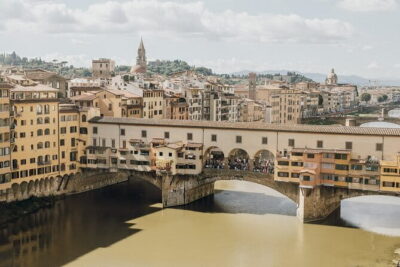
Florence in a Day: Michelangelo’s David, Uffizi and Guided City Walking Tour
Read our review →Browse the lists this tour appears in