
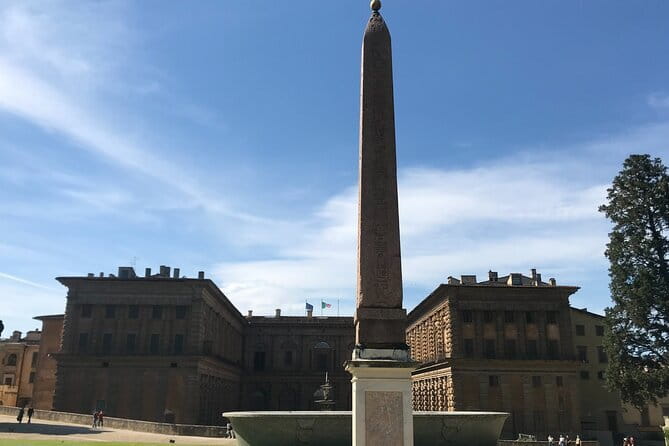
Reviewed · PITTI PALACE AND BOBOLI GARDENS TOURS
Pitti Palace & Boboli gardens tour with a Local Guide
The best part of this Florence tour is the way Palazzo Pitti links art, power, and daily court life. You move from Raphael and Titian to Medici jewels, royal clothing, and the formal gardens behind the palace, rather than seeing one isolated museum collection.
I like the small maximum of nine people and the fact that a guide leads you through the Palatine Gallery and Boboli Gardens. I also like the broad ticket coverage: the Treasury of the Grand Dukes, Modern Art Gallery, and Fashion and Costume Museum are included, not just the headline palace rooms.
The main caution is the pace. This is a lot of palace and garden territory in about two and a half hours, with plenty of stairs and outdoor walking. At $234.80 per person, the tour makes the most sense if you want context and help finding the important works, not simply admission to the buildings.
Key points to know before booking
- See Raphael in the former Medici state rooms: The Palatine Gallery includes Madonna della Seggiola and La Velata, along with works by Titian, Rubens, Caravaggio, and others.
- Expect a small English-speaking group: The maximum is nine people, and the tour includes a certified guide plus earphones.
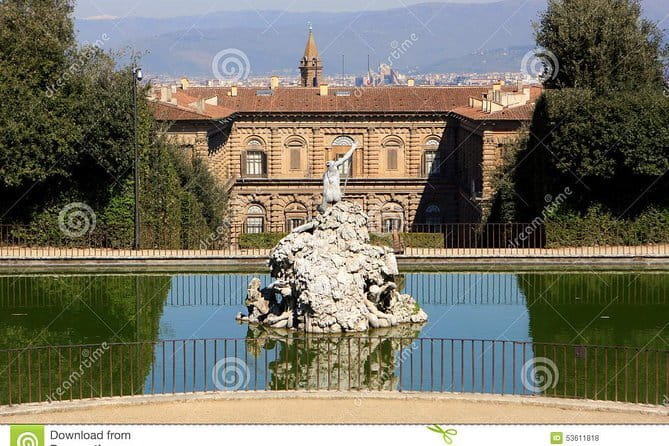
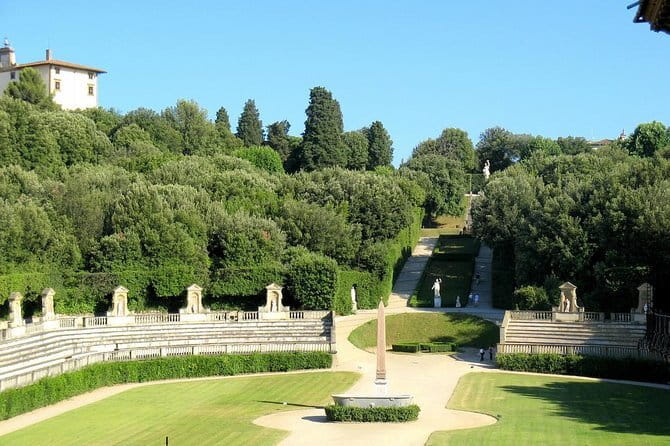
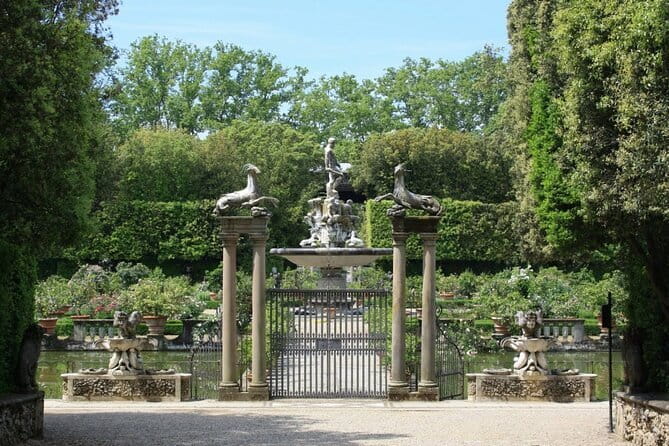
- Boboli is an outdoor art museum: Fountains, statues, grottos, terraces, and broad views fill the garden behind the palace.
- The ticket covers more than the main gallery: You also get the Treasury of the Grand Dukes, Gallery of Modern Art, and Fashion and Costume Museum.
- Plan for stairs and heat: One account describes many steps, while another tour ran longer on a very hot day to allow breaks.
- Guide quality matters here: Guides including Tina, Ellena, and Alissa have been praised for connecting Medici family life with the art.
Why Palazzo Pitti makes a good second side of Florence
Most first-time visitors spend their Florence museum time north of the Arno, around the Uffizi and Accademia. This tour takes you across the river to Oltrarno, where Palazzo Pitti gives you a different view of the city and its ruling families.
The palace was used by the Medici, the Lorraine family, and later the Savoy royal family. That succession matters. You are not just looking at paintings on white gallery walls. You are seeing art in rooms built for court life, ceremony, royal comfort, and display.
The Palatine Gallery is the central attraction. Its paintings follow the older gallery style, with works arranged for visual balance rather than by date or artist. That can feel confusing if you expect a neat timeline, but it also creates a more theatrical visit. Paintings cover the walls, ceilings carry elaborate frescoes, and the rooms themselves are part of what you are seeing.
This is where a guide earns the fee. Without help, you could walk past an important Raphael while focusing on the furniture or ceiling. With a good explanation, the collection becomes easier to read: which artists mattered to the Medici, how the rooms were used, and why these particular works were gathered together.
More Pitti Palace and Boboli Gardens visits:
- Florence: Uffizi, Pitti Palace & Boboli Combined 5-Day Pass
★ 4.5 · 1,726 reviews - Florence: Pitti Palace and Boboli Gardens Ticket & eBook
★ 4.5 · 835 reviews - Florence: Pitti Palace, Boboli Garden, Palatine Gallery Tour
★ 4.9 · 558 reviews
The Palatine Gallery and its Renaissance stars
The guided portion of the Palatine Gallery lasts about an hour. That is enough time to focus on major works without trying to cover every painting in the palace.
Raphael is a major draw. Madonna della Seggiola and La Velata are among the best-known works in the collection. You will also see paintings by Titian, Rubens, Caravaggio, Andrea del Sarto, and Pietro da Cortona.
Pietro da Cortona is important here not only as a painter but also for the grand ceiling frescoes. Look up often. The rooms can be visually busy, and the ceilings are easy to miss if you spend the entire visit studying framed paintings.
I would ask your guide to explain the gallery arrangement at the start. Once you understand that the display aims for beauty and harmony rather than a straight art-history lesson, the rooms make more sense.
The drawback is that the gallery can feel crowded with information. You are surrounded by large paintings, decorated interiors, and stories about several ruling houses. If you prefer a slow, quiet look at only a few works, one hour may feel rushed. If you want a well-chosen introduction, the structure works well.
Medici treasure in the Treasury of the Grand Dukes
The Treasury of the Grand Dukes takes about 20 minutes. It was once called the Museum of Silverware, but the collection reaches far beyond silver plates and cups.
You will see jewels, vases made from semi-precious stones, rock crystal objects, and other luxury items linked to the Medici and Lorraine families. The rooms themselves were once part of the Medici Summer Apartments and retain 17th-century fresco decoration.
This stop helps explain how a court displayed wealth. A painting shows what a ruler wanted people to see. A jewel, elaborate vessel, or crystal object shows how that same court lived and entertained.
The short time here is both useful and limiting. It keeps the tour moving, but you may want to return to particular objects if the ticket allows and your schedule permits. The tour includes entry, but the guided focus is centered mainly on the Palatine Gallery and Boboli Garden, so listen carefully when your guide points out the objects that best tell the story.
Italian art after the Medici

The Gallery of Modern Art occupies the top floor of Palazzo Pitti. Do not let the name mislead you. This is not a collection of current art. It follows Italian art from Neoclassicism into the early 20th century.
The rooms were once royal apartments used by the Lorraine and Savoy families. Inside, you will find paintings and sculptures by Antonio Canova, Francesco Hayez, Giovanni Fattori, Telemaco Signorini, and other artists connected with the Macchiaioli movement.
The Macchiaioli were Florentine artists who pushed toward direct observation, strong patches of light and shade, and scenes drawn from everyday life. They are sometimes described as an Italian forerunner to Impressionism, though the movement has its own character.
The gallery receives about 20 minutes on this tour. That is enough for an introduction, not a full study. I would treat it as a bonus for anyone interested in Italian painting beyond the Renaissance. If your main reason for booking is Raphael, you may find this section less essential. If you want to see how Italian art changed after the grand Medici era, it adds welcome range.
More guided tours in Florence:
- The Best tour in Florence: Renaissance & Medici Tales – guided by a STORYTELLER
★ 5.0 · 12,316 reviews - Florence: Duomo Cathedral Guided Tour
★ 3.9 · 5,970 reviews - Uffizi Gallery Small Group Tour with Guide
★ 4.5 · 4,923 reviews - Florence: Accademia Gallery Guided Tour
★ 4.6 · 4,156 reviews
Costumes and court style in the Fashion Museum

The Museum of Fashion and Costume, in the Palazzina della Meridiana, brings a more personal angle to palace life. Instead of paintings and silver, you see garments, accessories, and theatrical costumes dating from the 18th century to today.
The collection includes clothing connected with the Medici family, royal wardrobes, fashion houses, and Italian and international designers. Displays change from time to time, so the exact pieces on view can vary.
This is another short stop, about 20 minutes. It will suit you if clothing, design, and social history interest you. A dress can reveal rank, taste, ceremony, and changing ideas about public appearance in a way a formal portrait sometimes cannot.
The museum is also a useful change of pace after the picture galleries. Do not expect a long fashion exhibition during this tour, though. The visit gives you an overview and a chance to see one more side of the palace, rather than a detailed study of clothing across every period.
Boboli Gardens, statues, terraces, and stairs
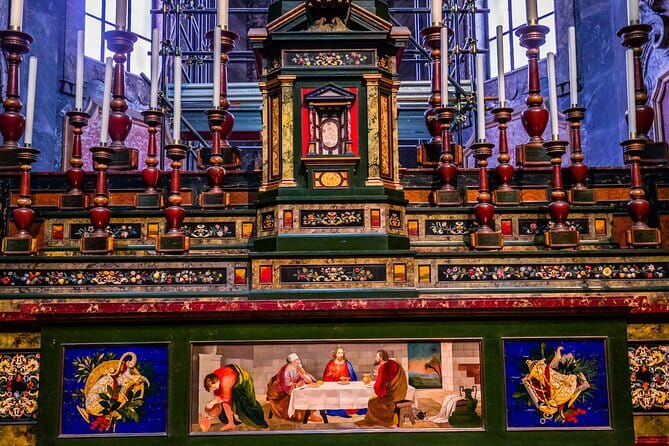
The final major stop is Boboli Gardens, behind Palazzo Pitti. About 30 minutes is set aside for the garden, which is a tight schedule for such a large historic site.
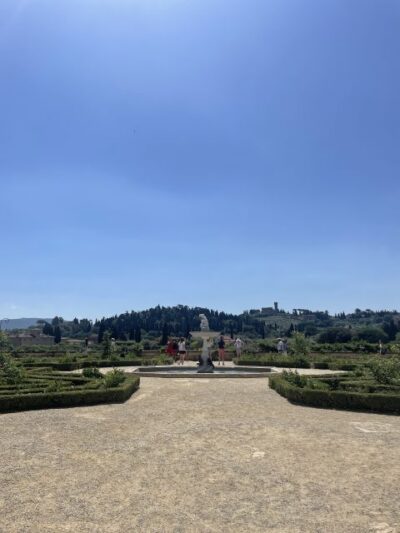
Boboli began under the Medici in the 16th century and helped establish the Italian Renaissance garden as a major formal style. Its design uses avenues, fountains, statues, grottos, terraces, and views toward Florence. The garden later influenced major European projects, including Versailles.
The Amphitheatre, Fountain of Neptune, and Buontalenti Grotto are among the features to look for. Boboli works best when you see it as an open-air collection of architecture and sculpture, not simply as a green place to stroll.
Wear practical shoes. The tour includes steps, sloping paths, and outdoor walking. One account specifically warns that there are a lot of steps. On a hot day, the garden can also demand more energy than the neat 30-minute estimate suggests.
There is one point to check carefully when booking. The advertised garden stop is Boboli, but one account refers to Bardini Gardens instead. These are different gardens. I would confirm the exact route with the provider before the day of the tour, especially if a particular garden is a priority for you.
What the small group changes
The maximum group size is nine people. That is a real advantage inside ornate rooms, where a large crowd can make it hard to hear or ask questions.
Earphones are provided, so you should be able to follow the guide even when you are not standing directly beside them. The tour is conducted in English and uses one language throughout.
A small group also gives the guide a better chance to adjust the explanation. One guide, Tina, was praised for making the palace and its objects easier to notice. Ellena was described as offering plenty of art history, while Alissa handled a difficult day with a longer tour and a relaxed pace when conditions were hot.
Those details suggest that the guide can shape the experience quite a bit. The route has a fixed framework, but the quality of the visit depends on how clearly the guide explains the rooms and how well the group keeps moving.
There have also been problems with booking information reaching the local operator. In one serious case, the guide had to take over personally after the reservation was not passed along, and the garden portion was missed. That appears to be an operational failure rather than part of the planned tour, but I would keep your confirmation details handy and arrive at Piazza de’ Pitti, 1 with time to spare.
Is $234.80 a fair price?
At $234.80 per person, this is not a cheap way to enter Palazzo Pitti. You are paying for the certified English-speaking guide, a small group, earphones, and admission to several connected museums and the garden.
The value depends on how you normally visit museums. If you are comfortable reading labels and choosing your own route, individual admission may cost less and give you more time. If you want someone to point out the important works, explain the Medici connection, and keep the visit moving, the tour can justify its price.
The included access is broad. You receive tickets for Palazzo Pitti, the Treasury of the Grand Dukes, Gallery of Modern Art, Fashion and Costume Museum, and Boboli Gardens. The guide specifically leads the Palatine Gallery and Boboli Garden, while the other spaces add value around those core stops.
The booking pattern also suggests that people plan this well ahead, with an average booking lead time of 39 days. That does not guarantee a particular guide or departure, but it is a reason not to leave the decision until your final day in Florence.
Who should book this Florence tour?
I would choose this tour if you want a clear introduction to Medici art and court life, especially if you enjoy hearing the story behind the objects rather than walking silently through galleries.
It suits first-time visitors who already plan to see the main Florence sights and want to explore the Oltrarno side of the river. It is also a good fit for couples or families who prefer a small group instead of a large guided procession.
The tour is less suitable if you need a leisurely pace, have difficulty with stairs, or want to spend a full morning in the gardens. The listed duration is about two hours and 30 minutes, but the amount of material is substantial. Heat can make the outdoor section harder, and the palace section includes several floors and rooms.
If your strongest interest is fashion, modern Italian art, or decorative objects, the included side museums are worthwhile. If your sole goal is to see Raphael slowly, you may prefer a flexible museum visit without a fixed group schedule.
Cancellation and meeting details
The tour begins and ends at Palazzo Pitti, Piazza de’ Pitti, 1, in Florence. It is near public transportation, and most people can take part, though the stairs and garden paths deserve attention when deciding.
Free cancellation is available if you cancel at least 24 hours before the local start time. Changes or cancellations made inside that period are not accepted for a refund. Refreshments are not included, so bring water, especially during warm weather.
Should you book the Pitti Palace and Boboli Gardens tour?
Book it if you want a guided story of the Medici told through paintings, rooms, objects, clothes, and gardens. The Palatine Gallery is the clear star, but the Treasury, costume displays, Modern Art Gallery, and Boboli Gardens give the visit more range than a basic palace ticket.
I would hesitate only if $234.80 feels high for a short tour or if you need lots of time at each stop. For everyone else, the small group, included admissions, and strong potential for personal explanations make this a useful choice, provided you confirm the garden route and arrive with your booking details ready.
FAQ
How long does the Pitti Palace and Boboli Gardens tour last?
The tour lasts approximately two hours and 30 minutes. The planned stops include about one hour in the Palatine Gallery, 20 minutes in the Treasury of the Grand Dukes, 20 minutes in the Gallery of Modern Art, 20 minutes in the Fashion and Costume Museum, and 30 minutes in Boboli Gardens.
What language is the tour conducted in?
The tour is offered in English. It is a single-language tour led by a certified guide, and earphones are provided so you can follow the explanations.
What admission tickets are included?
The price includes entry to Palazzo Pitti, the Treasury of the Grand Dukes, the Gallery of Modern Art, the Museum of Fashion and Costume, and Boboli Gardens. Guided touring is specifically included for the Palatine Gallery and Boboli Garden.
Where does the tour begin and end?
The tour begins at Palazzo Pitti, Piazza de’ Pitti, 1, 50125 Florence, Italy. It ends back at the meeting point.
Is the tour suitable for most people?
Most people can participate, but you should be prepared for stairs, walking through the palace, and outdoor paths in Boboli Gardens. One account specifically describes the tour as involving many steps.
Can I cancel for a full refund?
Yes. You can cancel for a full refund up to 24 hours before the experience start time. Cancellations or changes made less than 24 hours before the local start time are not refunded.
Recently added around Florence
- Accademia and Uffizi Small-group Guided Tour★ 4.5 · 8 reviews
- The David from Michelangelo.★ 5.0 · 3 reviews
- Combo: Accademia + walking + Uffizi Galleries Guided Tour★ 3.5 · 6 reviews
- The Complete Wine Tour Brunello, Nobile, Chianti wine experience★ 4.0 · 7 reviews
- The Best of Tuscany in 3 Days★ 4.5 · 13 reviews
- The Cooking Lab – Authentic Food Experience★ 5.0 · 113 reviews
- Florence Central Market Food Tour – Private Tour★ 4.0 · 7 reviews
- Family Friendly Florence Private City Tour★ 5.0 · 47 reviews
Pitti Palace and Boboli Gardens Tours, compared.
Uffizi, Pitti Palace & Boboli Combined 5-Day Pass
Read our review →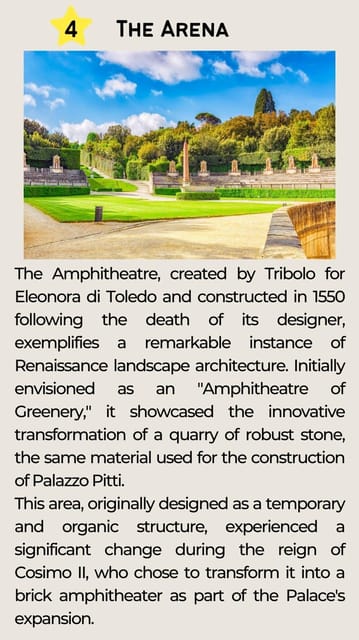

Pitti Palace, Boboli Garden, Palatine Gallery Tour
Read our review →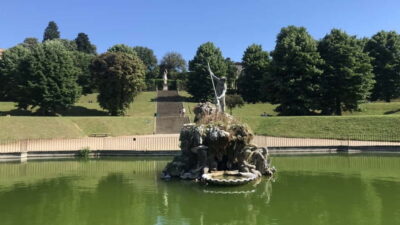
Uffizi, Pitti, Boboli and 7 Attractions 5-Day Pass
Read our review →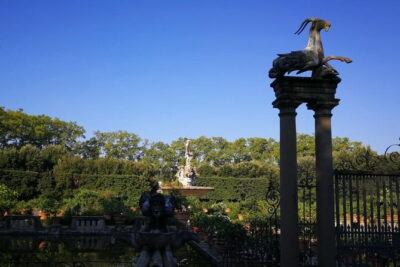
Pitti Palace, Boboli Garden & Palatina Gallery Guided Tour
Read our review →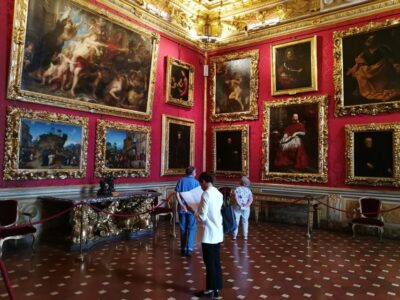
Pitti Palace and Palatina Gallery Ticket and Tour
Read our review →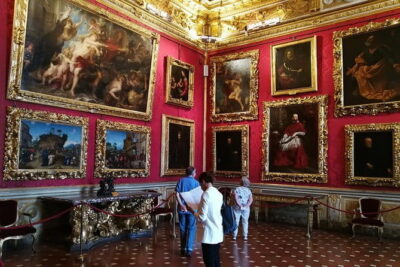
Pitti Palace, Palatina Gallery and the Medici: Arts and Power in Florence.
Read our review →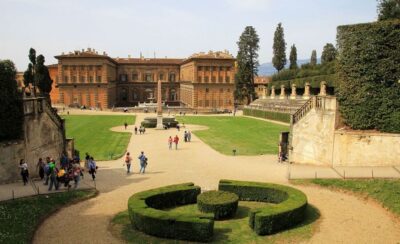
Browse the lists this tour appears in