
Reviewed · FLORENCE WALKING TOURS
Jewish traditions in Florence: private walking tour
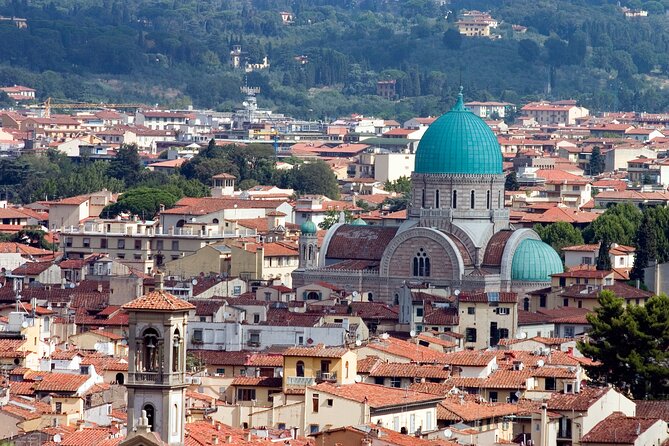
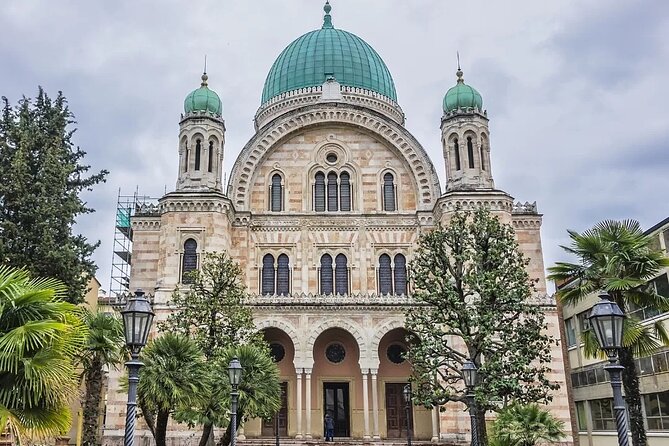
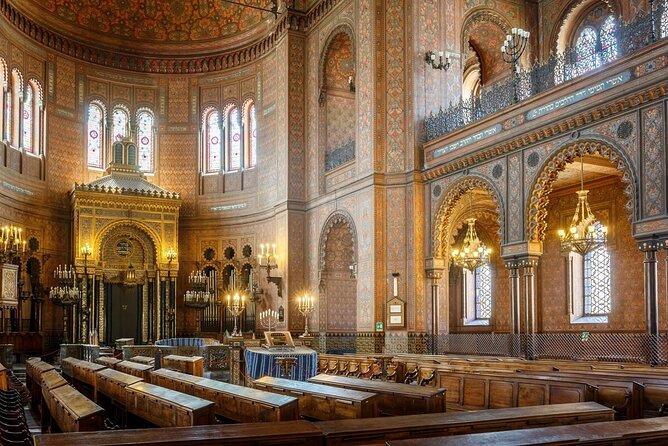
Florence’s Jewish story is easy to miss beneath the city’s famous churches and Renaissance palaces. This private walk brings that story into view, ending inside the Great Synagogue of Florence, whose green copper dome is one of the city’s familiar sights.
I like the route’s two-part shape: it connects Jewish history to central Florence, then gives you a full hour and a half at the synagogue and museum. I also like the private format, since you can ask direct questions rather than follow a large group. The main concern is consistency: one guest found the guide focused too much on general art and architecture, leaving little time for Jewish history.
Key points
- The tour begins at Ponte Vecchio: Meet by the Monument to Benvenuto Cellini and start in one of Florence’s most recognizable places.
- Former Jewish areas are part of the walk: Borgo San Jacopo and Piazza della Repubblica help explain Jewish life in medieval Florence and the later ghetto.
- You get 90 minutes at the synagogue: The interior and Jewish Museum form the main visit, not just a quick exterior stop.
- The route includes Renaissance art: At Piazza del Duomo, the guide explains Ghiberti’s Gates of Paradise and its Genesis panels.
- It is private and offered in English: Only your group takes part, with departures available throughout the day.
- The guide’s focus matters: Ask at the start for Jewish history, Jewish traditions, and Florence during the Holocaust if those are your priorities.
A Jewish history walk through Florence’s grandest center
This is not a tour of a single Jewish quarter. Florence’s Jewish story is scattered across the city, and the route uses familiar landmarks to connect those pieces.
You begin at the Monument to Benvenuto Cellini beside Ponte Vecchio. From there, the walk crosses into subjects that are easy to overlook when the goldsmith shops and river views take center stage. You continue through Borgo San Jacopo, pass through the former ghetto area around Piazza della Repubblica, pause at Piazza del Duomo, and finish at Via Farini.
That route gives you a useful city orientation, but it also creates a risk. Several stops are major Christian and civic sights rather than Jewish sites. If you want every minute devoted to Jewish people, institutions, and persecution, tell the guide that before the walk begins.
The tour lasts about three hours. The scheduled stops account for the full time, with 15 minutes at Ponte Vecchio, 15 minutes in Borgo San Jacopo, 30 minutes at Piazza della Repubblica, 30 minutes in Piazza del Duomo, and 90 minutes at the synagogue and museum.
More walking tours in Florence:
- Florence: Guided Walking Tour
★ 4.5 · 3,334 reviews - Skip the line: Uffizi and Accademia Small Group Walking Tour
★ 4.5 · 3,135 reviews - Florence: Guided Walking Tour
★ 4.6 · 1,602 reviews
Ponte Vecchio: start with Florence’s best-known bridge
The meeting point is beside the Monument to Benvenuto Cellini at Ponte Vecchio. This is a practical place to begin because the bridge is easy to identify, close to public transportation, and firmly in the center of Florence.
You get about 15 minutes here. The bridge is known for its goldsmith shops and for being the only Florence bridge to survive the Second World War. Those facts provide a quick civic and wartime setting before the tour turns toward Jewish life.
Do not expect a long museum-style talk at this first stop. The value is in placing the Jewish story inside the city you are already seeing. You are not being taken to an isolated neighborhood; you are learning how Jewish life fit into Florence’s busy commercial and political center.
The meeting point can be crowded, so arrive with the monument clearly in mind. Comfortable shoes are specifically recommended, and that advice is worth taking seriously for any three-hour Florence walk.
Borgo San Jacopo and the medieval Jewish presence
The next stop is Borgo San Jacopo in the Oltrarno district. You spend about 15 minutes here, looking at surviving reminders of Jewish life in the Middle Ages.
This is one of the more interesting parts of the route because it asks you to read the city rather than simply enter a named attraction. You might find the physical evidence subtle. The importance comes from the guide’s explanation of what this street meant and how Jewish residents fit into medieval Florence.
Because the stop is short, the quality of the commentary matters. I would ask direct questions about where Jewish families lived, what work they did, and how they related to the city’s ruling and banking circles. One disappointing account of this tour described hearing about Jews connected to Medici banking but not receiving enough information about Jewish occupations or notable Florentine Jews.
That criticism points to a useful strategy. Do not wait until the end to say what interests you. Ask for names, dates, community life, and the treatment of Jews in different periods while you are still in this part of the city.
Piazza della Repubblica and the erased ghetto
Piazza della Repubblica is a broad nineteenth-century square built over Florence’s former ghetto. The ghetto was later dismantled, so the square gives you an important lesson in how urban change can erase a community’s visible traces.
You spend around 30 minutes here. The square is bright, open, and grand, but its appearance can make the past difficult to imagine. That contrast is exactly what makes the stop useful. The guide can help you understand that the elegant square replaced an older, confined district.
The tour description promises a reading of the remaining traces, but there is not a detailed list of monuments or visible markers. I would listen closely and ask how the ghetto was arranged, when it existed, and what happened to its residents after it was dismantled.
This stop also shows why a private tour can be helpful. You can slow down for questions about forced residence, daily routines, religious practice, and the changing rules governing Jewish life. A large group would be less flexible.
At the same time, do not assume the square itself will tell you the story. Much of the learning depends on the guide’s preparation and focus. If Jewish history is your main reason for booking, say so plainly.
A completely different way to spend an afternoon in Florence:
- Florence: Skip-The-Line Uffizi Gallery Timed Entry Ticket
★ 4.5 · 27,832 reviews - Tuscany Day Trip from Florence: Siena, San Gimignano, Pisa and Lunch at a Winery
★ 5.0 · 21,634 reviews - Florence: Timed Entrance Ticket to Michelangelo’s David
★ 4.6 · 16,983 reviews - Florence: Michelangelo’s David Skip-the-Line Entry Ticket
★ 4.5 · 12,764 reviews
Piazza del Duomo and Ghiberti’s Gates of Paradise
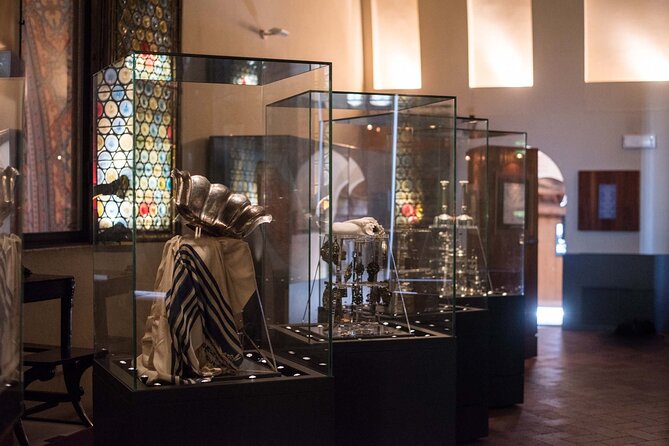
At Piazza del Duomo, the guide spends about 30 minutes explaining the Gates of Paradise. Lorenzo Ghiberti made these gilded bronze doors during the Renaissance, and their panels depict stories from Genesis.
This is the tour’s clearest departure from Jewish community history. You will be discussing a Christian Renaissance artwork in front of Florence’s cathedral complex. That may sound off-topic, but the connection is the interpretation of Jewish scripture within the city’s dominant religious culture.
The stop can add useful context if the guide explains how biblical stories were presented in Renaissance Florence and how Jewish and Christian readings differ. You will look closely at the Genesis scenes and hear how the panels tell their stories.
It is also the point where the tour’s balance becomes most important. One guide was praised for explaining Jewish history and the area’s main events, while another guest felt the walk spent too much time on churches, architecture, and assorted statues. Those are very different experiences on the same route.
If you have already seen the cathedral and doors, ask for a shorter art explanation and more time on Jewish interpretation. If Renaissance art is part of your interest, this stop may be a welcome bridge between Florence’s art and its religious history.
Inside the Great Synagogue of Florence
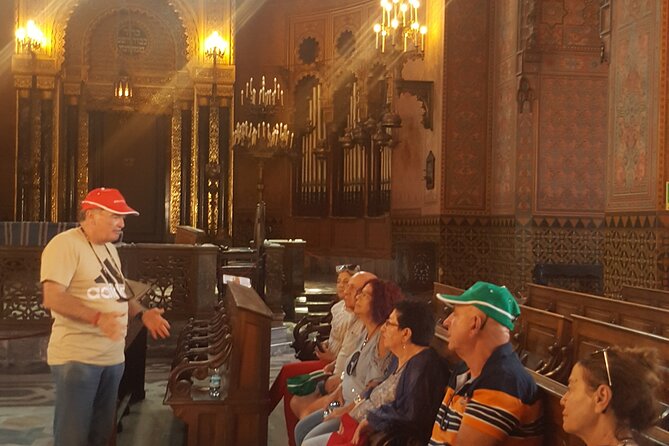
The final stop is the Sinagoga e Museo Ebraico on Via Luigi Carlo Farini. You spend about 90 minutes here, which is the strongest feature of the schedule.
The synagogue’s copper-green dome is a familiar part of Florence’s skyline. Seeing the interior gives the earlier street discussion a clear destination. Instead of only hearing where Jewish life existed, you enter a functioning historic religious space and visit the adjacent Jewish Museum.
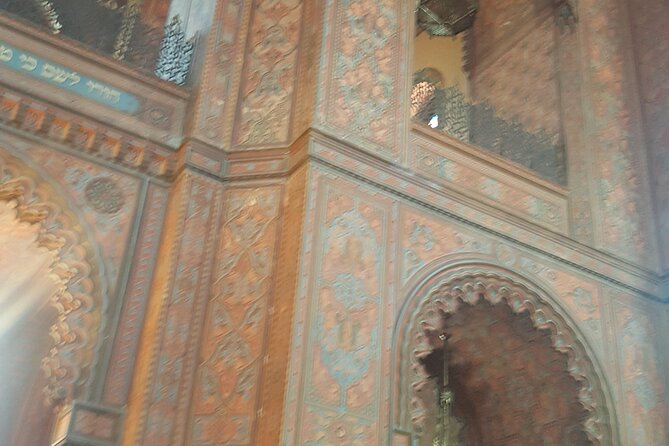
The long time allocation matters. A rushed synagogue visit can become little more than a photograph from the entrance. Here, you have time to look at the sanctuary, absorb the atmosphere, and continue into the museum. One useful tip is to leave enough time to sit quietly in the sanctuary and watch the museum video.
The museum video is worth prioritizing because it may explain the community in a more structured way than a short street talk. If your guide reaches the synagogue with only 20 minutes left, you will lose much of the value of the tour. Keep an eye on the clock as the walking portion progresses and ask the guide to protect the full museum visit.
The synagogue is also where you should ask about Jewish traditions, mezuzahs, community practice, and the Holocaust period. One account of the tour specifically criticized the lack of discussion about mezuzahs, Holocaust-era Jewish life, and memorial plaques. The guide did point out a plaque honoring a Jew killed during the Shoah, but the guest wanted more context and more markers.
That feedback is practical rather than merely negative. The tour can work well if you take an active role in shaping the conversation. Ask where Jews lived during the Holocaust, what happened to the community, and which memorials exist in Florence. If the answers matter to you, raise those subjects early.
The guide makes or breaks the experience
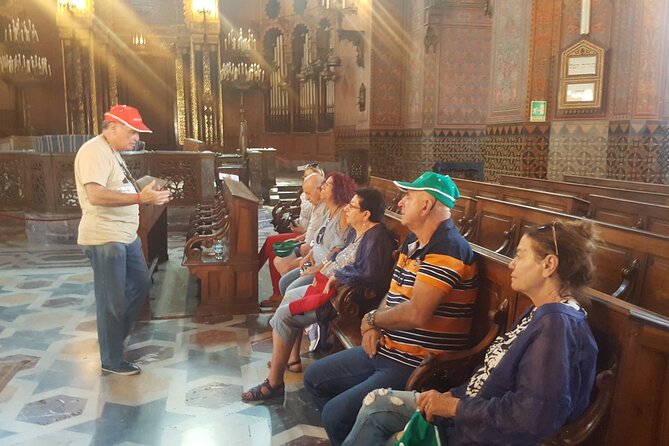
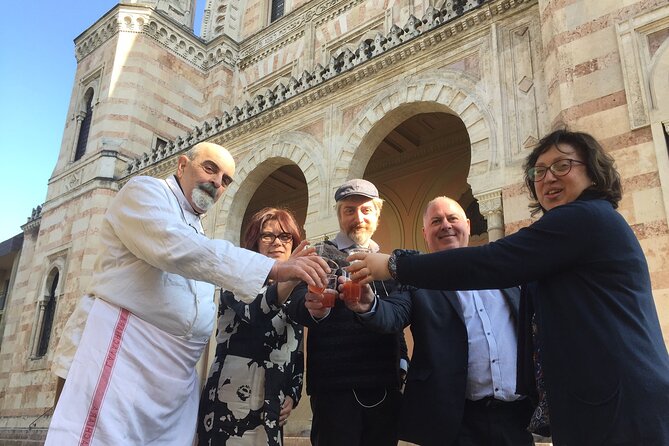
A private tour gives you access to a guide’s time, but it also puts more weight on that person’s approach. The provider’s response identifies Marijiana as one guide who aims for an intimate, personal style. That can make the walk feel like a conversation rather than a lecture.
Personal warmth is useful, but it should support the subject rather than replace it. A guide who spends too much time discussing family experiences, other countries, or unrelated architecture may leave you with less Jewish history than you expected.
The best approach is to set the agenda at the start. Tell your guide that you want Jewish people, occupations, traditions, the ghetto, the Holocaust, memorials, and the synagogue interior covered in clear detail. You can still enjoy the Ponte Vecchio and Ghiberti’s doors, but the Jewish subject should remain the spine of the tour.
Another guide received strong praise for explaining Jewish history in the area and its main events. That suggests the format can succeed when the guide stays close to the tour’s purpose. The mixed reactions also mean you should not book this as a completely scripted experience. Your questions will shape the result.
Is $251.65 per person a fair price?
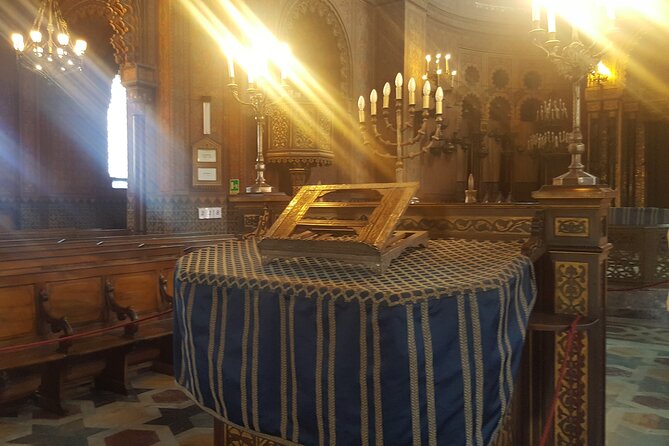
At $251.65 per person, this is an expensive walking tour. The price is easier to justify for a small private group that values personal attention and wants to ask many questions. Group discounts are available, although the exact discount is not stated.
The included synagogue and museum visit helps. You are paying for more than a guide outside on city streets, and the 90-minute final stop gives the tour a solid central attraction. The private format also lets you control the pace and request more detail on subjects that matter to you.
For one person or a couple on a tight budget, the price may feel high, especially if the guide spends too much time on general Florence sightseeing. You might get better value from this experience if your group shares the cost and uses the private setting actively.
The main value question is simple: do you want a focused introduction to Jewish Florence with a private guide, or do you mainly want entry to the synagogue? If the synagogue is your only goal, this walk costs more than a standalone visit would. If you want the city streets, former ghetto, Jewish museum, and a guide to connect them, the price has a stronger case.
Timing, meeting point, and practical details
The tour is offered in English and has a choice of departures throughout the day. That makes it easier to fit around a museum reservation, meal, or other Florence plans.
You meet at the Monument to Benvenuto Cellini at Ponte Vecchio and finish at the Synagogue and Jewish Museum of Florence, Via Luigi Carlo Farini, 6. Since the tour does not return you to the starting point, plan your next activity from the synagogue area rather than the river.
The route is near public transportation, and most people can take part. You should wear comfortable shoes, since the experience is a walking tour with several stops across central Florence.
Confirmation arrives when you book. Free cancellation is available until 24 hours before the local start time. Cancellations or changes made within 24 hours are not accepted for a refund.
Who should book this Florence Jewish history tour?
I would recommend it most strongly to visitors who want a private introduction and who are willing to ask questions. It suits families, couples, and small groups with a shared interest in Jewish traditions, Florence’s former ghetto, and the Great Synagogue.
It is also useful early in a Florence stay. The route gives you a sense of how the city’s famous center developed and how easily Jewish history can disappear behind Renaissance architecture.
I would be more cautious if you want a tightly academic tour focused only on Jewish history. The route includes major Christian landmarks and Renaissance art, and the guide’s approach may vary. If you book, make your priorities clear before leaving Ponte Vecchio and protect the full 90 minutes at the synagogue.
Should you book it?
Book this tour if you value a private guide, want to connect several central Florence locations, and especially want time inside the Great Synagogue and Jewish Museum. The synagogue visit, museum video, and chance to sit quietly in the sanctuary are the strongest reasons to go.
Think twice if $251.65 per person strains your budget or if you expect every minute to cover Jewish community history. The experience can be excellent with a focused guide, but the uneven feedback makes it important to state your interests at the start. Ask for Jewish names, occupations, traditions, ghetto life, Holocaust history, and memorials. If the guide follows that lead, this can be a meaningful half-day in Florence rather than another general art walk.
FAQ
How long is the Jewish traditions tour in Florence?
The tour lasts approximately three hours.
Where does the tour begin?
It begins at the Monument to Benvenuto Cellini beside Ponte Vecchio in Florence.
Where does the tour end?
It ends at the Synagogue and Jewish Museum of Florence at Via Luigi Carlo Farini, 6.
Is the Great Synagogue included?
Yes. Admission to the Great Synagogue and Jewish Museum is included, with about 90 minutes scheduled for the visit.
Is this a private tour?
Yes. Only your group participates in the private activity.
What language is offered?
The tour is offered in English.
Are there different departure times?
Yes. A choice of departures across the day is available.
Can I cancel for a full refund?
Yes. You can cancel at least 24 hours before the local start time for a full refund. Cancellations or changes made less than 24 hours before the start are not accepted for a refund.
Recently added around Florence
- Accademia and Uffizi Small-group Guided Tour★ 4.5 · 8 reviews
- The David from Michelangelo.★ 5.0 · 3 reviews
- Combo: Accademia + walking + Uffizi Galleries Guided Tour★ 3.5 · 6 reviews
- The Complete Wine Tour Brunello, Nobile, Chianti wine experience★ 4.0 · 7 reviews
- The Best of Tuscany in 3 Days★ 4.5 · 13 reviews
- The Cooking Lab – Authentic Food Experience★ 5.0 · 113 reviews
- Florence Central Market Food Tour – Private Tour★ 4.0 · 7 reviews
- Family Friendly Florence Private City Tour★ 5.0 · 47 reviews
Florence Walking Tours, compared.
Skip the line: Uffizi and Accademia Small Group Walking Tour
Read our review →
Renaissance and Medici Tales Guided Walking Tour
Read our review →
Skip-the-Line Florence Highlights and David Walking Tour
Read our review →
Dark Mysteries and Legends Guided Walking Tour
Read our review →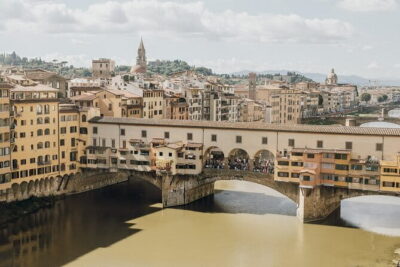
Florence in a Day: Michelangelo’s David, Uffizi and Guided City Walking Tour
Read our review →Browse the lists this tour appears in