

Reviewed · FLORENCE AUDIO GUIDE AND SELF-GUIDED TOURS
Florence Walking Tour with Audioguide on Your Smartphone
Florence rewards slow looking, but its famous center can feel crowded and confusing. This self-guided audio tour gives you a route through major churches, Medici palaces, public squares, museums, and bridges, with short recordings that add context as you walk. You listen when you want, stop for coffee, and set your own pace.
I especially like the offline map, which means you do not need mobile data once the tour is downloaded. The illustrations are also useful when several old buildings look similar. The main caution is simple: this is an app, not a person. Some users have had trouble finding the correct app or getting the GPS direction feature to work.
Key points before you book

- Thirty historian-narrated recordings: The route gives you more than a simple list of photo stops, with background on Florence’s art, politics, religion, and science.
- Offline route and GPS: Download the map and audio before setting out, since phone positioning can be less reliable among dense old buildings.
- Major sights in one walk: The route includes the Duomo, San Lorenzo, Palazzo Vecchio, Santa Croce, the Uffizi area, Ponte Vecchio, and Forte Belvedere.
- No admission tickets included: The audio can guide you around the buildings, but entry to museums, towers, churches, and exhibitions costs extra.
- Bring your own equipment: You need a smartphone and headphones. No human guide, phone, or earphones are supplied.
- Best for independent walkers: You get one year of access and can use the tour at any date and time after activation.
Starting at Santa Maria Novella
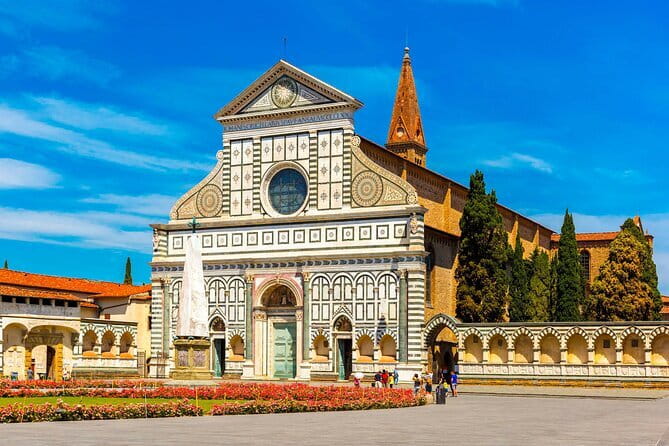
The route begins at Basilica di Santa Maria Novella, at Piazza di Santa Maria Novella 18. This is a smart starting point because the church sits near Florence’s main railway station and offers an immediate introduction to the city’s art and architecture.
The basilica’s marble façade and rose window make a strong first stop. Inside, the audio points you toward works connected with Masaccio and Ghirlandaio, as well as the church’s chapels and cloisters. You should check admission arrangements separately if you plan to enter, since tickets are not part of the tour.
From here, the route moves toward San Lorenzo and the Medici quarter. The audio format works well in this part of town because the story shifts from religious power to banking, politics, and family influence.
More audio guide and self-guided tours in Florence:
- Florence: Palazzo Vecchio Entrance Ticket & Audioguide
★ 4.4 · 4,822 reviews - Florence: Eco-Friendly Golf Cart City Tour with Audio Guide
★ 4.6 · 1,094 reviews - Florence: Uffizi Skip-the-Line Ticket & Digital Audio Guide
★ 4.2 · 1,044 reviews
San Lorenzo and the Medici world
Basilica di San Lorenzo is closely tied to the Medici family and to Filippo Brunelleschi, whose Renaissance design brought order to the church’s columns and proportions. The stop helps you see Florence as more than a collection of pretty façades. It explains how a powerful family used churches, chapels, and public buildings to shape the city.
The Medici Chapels are a major draw, especially for anyone interested in Michelangelo. They are not included as an admission, so treat the recording as an introduction rather than a substitute for seeing the interiors.
Nearby Palazzo Medici gives the story a more private setting. Its rusticated stone exterior is deliberately serious and defensive, while the Chapel of the Magi inside is known for its decorated walls and Renaissance art. If you enter, allow extra time beyond the stated two-and-a-half-hour route. The tour’s timing is approximate and works best when you do not try to visit every interior.
The Duomo area in a short, focused stop
The Cathedral of Santa Maria del Fiore is the route’s great visual centerpiece. Its colored marble façade, sculptures, and enormous dome make it hard to miss, even without an audio guide. The recording adds useful context about Brunelleschi’s dome and the cathedral’s role in Florence.
The scheduled stop is listed as about ten minutes with free admission. That does not mean every part of the cathedral complex is free. Access to the dome, Giotto’s Bell Tower, and other areas may require separate tickets, and the tour does not cover those fees.
Giotto’s Bell Tower is a worthwhile option if you want a climb. Its 414 steps lead to views across Florence, with the Duomo close by. The building itself deserves attention too, with colored marble and carved reliefs. I would not add the climb casually during a tightly timed walk. It is a separate physical commitment, and you should plan around it.
The audio guide is most useful here when it helps you compare the cathedral, dome, and bell tower as parts of one complex. Without that connection, it is easy to take a few photographs and move on without noticing how different their designs are.
Piazza della Repubblica and Palazzo Strozzi
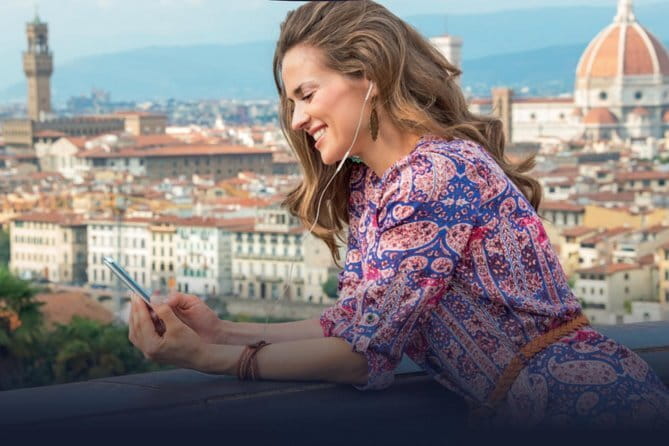
Piazza della Repubblica offers a change of mood. The square occupies the site of Florence’s old Roman forum and now has cafés, shops, and the large Arch of Triumph. The suggested stop is about ten minutes, enough for a quick orientation and a look at modern city life in a historic setting.
I like this pause because it breaks up the church-and-palace sequence. You can use it to sit briefly, get a drink, or simply watch the square before continuing.
Palazzo Strozzi brings you back to Renaissance Florence. Its balanced façade and courtyard show the confidence of a wealthy family competing for influence. Today the building hosts changing art exhibitions, so the experience depends on what is on display when you visit. Admission is not included, and the audio tour cannot replace the exhibition itself, but it gives the palace a useful place in the city’s story.
Palazzo di Parte Guelfa is a quieter political stop. The palace relates to the medieval Guelf faction and includes a courtyard and decorated areas. It may appeal most to you if political history interests you. If you prefer famous paintings and grand interiors, this can feel less immediately rewarding than the Duomo or Uffizi area.
More walking tours in Florence:
- Florence: Guided Walking Tour
★ 4.5 · 3,334 reviews - Skip the line: Uffizi and Accademia Small Group Walking Tour
★ 4.5 · 3,135 reviews - Florence: Guided Walking Tour
★ 4.6 · 1,602 reviews - Florence: Renaissance and Medici Tales Guided Walking Tour
★ 4.8 · 1,549 reviews
Mercato Nuovo and Florence’s public life
Mercato Nuovo adds a practical, everyday side of Florence. The stop presents the market as a place for fresh produce, Tuscan food, cheeses, and local specialties, with food counters and vendors nearby. The planned stop is about ten minutes.
Do not expect a long food tour. This is an audio stop within a walking route, not a tasting experience, and food purchases are your responsibility. Still, it is a useful place to pause because Florence’s culture is not only in its museums. Markets show how the city works at street level.
Palazzo Vecchio, the Loggia, and Dante
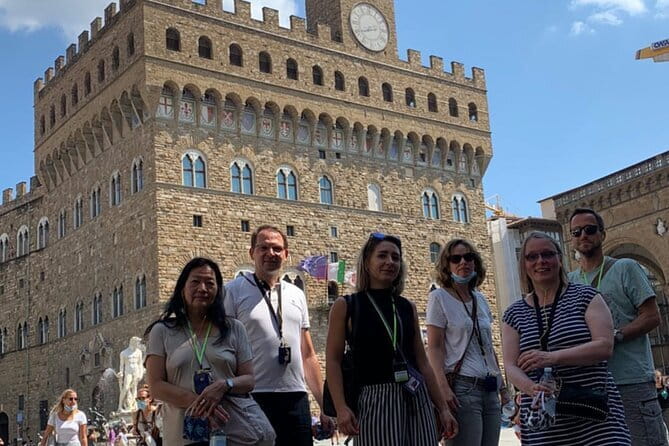
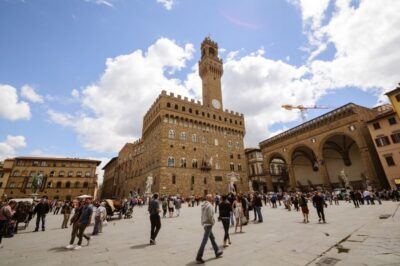
Palazzo Vecchio gives the route some dramatic civic weight. Its fortress-like exterior and tall tower reflect Florence’s political past, while the Salone dei Cinquecento is known for large wall paintings and grand decoration. The building also contains art and historical objects.
Again, the audio recording helps you know what to look for, but entrance tickets are separate. If you want to climb the tower or explore the interior rooms, allow more time than the basic walking estimate.
Outside, the Loggia dei Lanzi functions as an open-air sculpture gallery in Piazza della Signoria. Cellini’s Perseus and Giambologna’s Rape of the Sabine Women are among the works highlighted by the route. This is one of the tour’s best no-ticket art moments. You can see major sculpture in its public setting without joining a museum queue.
Casa Museo di Dante changes the subject from politics and sculpture to literature. The small museum focuses on Dante Alighieri and the medieval Florence that shaped his writing. It is a good addition for anyone curious about the city behind the Divine Comedy. The museum’s exhibits and entry fee are separate, so use the recording as a reason to decide if you want to go inside.
Santa Croce and the science of Galileo
Basilica di Santa Croce is one of the route’s most meaningful church stops. Michelangelo, Galileo, and Machiavelli are associated with its tombs, earning it the nickname Temple of the Italian Glories. The church also contains work linked with Giotto and other major artists.
I would give Santa Croce more than a quick photograph if your schedule allows. The combination of memorials, chapels, frescoes, and cloisters makes it a place where Florence’s artistic and intellectual identity comes together. Entry is not included, and the route’s two-and-a-half-hour estimate will become much longer if you explore properly.
Museo Galileo offers a different kind of Florence. Its instruments and scientific objects trace developments from the Renaissance onward, with attention to Galileo’s work in astronomy, physics, and natural science. This stop is valuable because it corrects the common idea that Florence was only a city of painters and sculptors.
The route also includes La Casa di Galileo Galilei, described as a place connected with his life and work. Together, the two Galileo stops appeal to you if you enjoy science, technical objects, and the way new ideas challenged old ones. They may be less important if your priority is purely Renaissance painting.
The Uffizi and Ponte Vecchio
The Uffizi Gallery is included as a major point along the route, with works associated with Botticelli, Michelangelo, Leonardo da Vinci, and Caravaggio. The Birth of Venus and Primavera are among the famous paintings connected with the museum.
The key practical point is that the tour does not include Uffizi admission. You should not assume that hearing the recording reserves entry or lets you bypass a line. If you already have a separate Uffizi visit planned, the audio stop can help you understand what you are about to see. If not, enjoy the building and its setting, then decide if you want to return for a full museum visit.
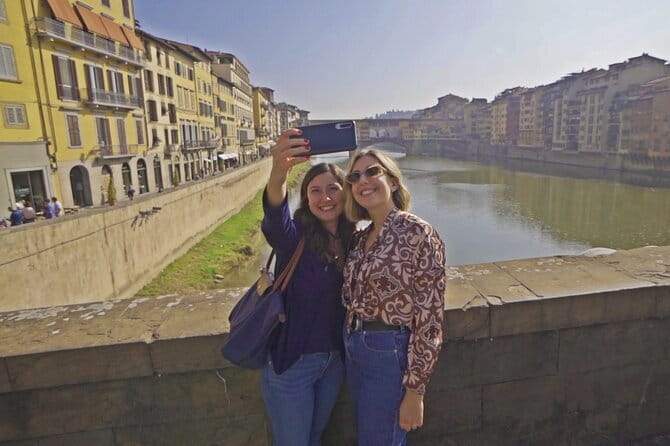
Ponte Vecchio is one of the easiest stops to enjoy without paying an entry fee. The medieval bridge crosses the Arno and is lined with goldsmith shops. The route allows about twenty minutes here, which gives you time to cross, browse, and look along the river.
The Vasari Corridor is part of the story, not a guaranteed tour entry. This elevated passage connected Palazzo Vecchio and Palazzo Pitti so the Medici could move across the city with privacy. The audio explains that connection, while the bridge gives you the visible setting.
Villa Bardini and Forte Belvedere
The final hillside section changes the pace and demands more effort. Villa Bardini is presented as a villa with gardens, flowerbeds, art exhibitions, and views across Florence. It offers a welcome contrast to the tight streets around the central monuments, though access and opening arrangements should be checked separately.
Forte Belvedere, or Forte di San Giorgio, is the last named stop and has about fifteen minutes assigned to it. Built under Francesco I de’ Medici in the late 16th century, the fortress served defensive and residential purposes. Its courtyards and high position give you broad views over Florence and the surrounding Tuscan countryside.
This is an appealing finish, but it also exposes the limits of the advertised two-and-a-half-hour duration. The route covers a lot of ground, and hill walks, interior visits, photo stops, and museum entries will extend the day. I would treat the time as a rough walking estimate, not a promise that you can see everything fully in 150 minutes.
How the app works in real use
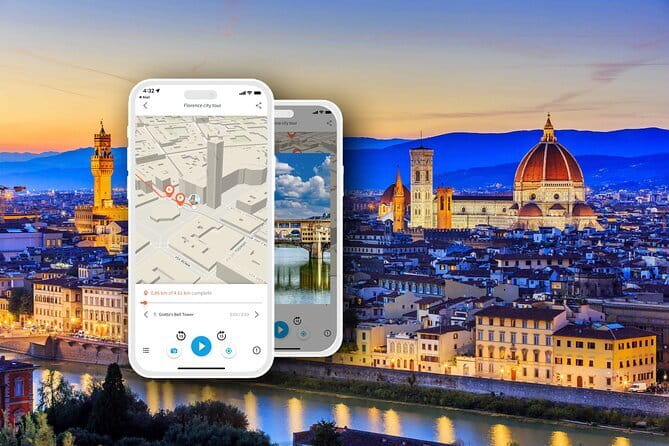
After booking, you download the TouringBee audio guide app for iPhone or Android, activate the purchase, and follow the route on the in-app map. You receive one year of access, so you can use it later than the approximate date selected during checkout.
The strongest practical feature is offline access. Download the tour before leaving reliable Wi-Fi, then test the audio and map. Bring headphones, since they are not supplied, and keep your phone charged.
The GPS feature can help you identify the next stop, but it should not be your only navigation tool. Tall buildings and narrow streets can interfere with phone positioning. If the blue dot drifts, select the stop manually and use the printed street names or visible landmarks. The audio remains available even when automatic direction is not working properly.
Initial app confusion is another possible snag. The setup instructions may arrive separately, and you need to make sure you have the correct app before reaching Santa Maria Novella. A few minutes of preparation at home can save time in the square.
Is $7.14 good value?
At $7.14 per person, this is a low-cost way to add structure to a Florence walk. The value is strongest if you want historical explanation but do not want to join a fixed group or pay for a private guide.
You are paying for content and navigation, not personal attention. A human guide can answer questions, adjust the pace, and help when the route becomes confusing. This app cannot do those things. On the other hand, you can pause for lunch, skip a stop, replay a recording, or return to the tour later during its one-year access period.
The price also does not include museum and church tickets, transportation, a phone, or headphones. Those costs can quickly exceed the app price if you add several interiors, so think of this as a low-cost walking companion rather than a complete Florence sightseeing package.
Who should choose this Florence walk?
I would recommend it to independent visitors who like art, architecture, and city history but do not need a live guide. It is especially useful for a first orientation because the route links central sights that you might otherwise see as separate pieces.
It also suits repeat visitors who want a themed walk through Medici buildings, religious sites, public sculpture, science, and literature. The audio stops let you explore familiar streets with more purpose.
I would be cautious if you dislike phone-based tours, have limited battery or data, or want guaranteed GPS directions. It is also not ideal if you plan to enter every major attraction, since the route time is too short for that. Download everything, charge your phone, bring headphones, and decide in advance which interiors matter most.
Should you book it?
Book this tour if you want a cheap, flexible introduction to Florence and are comfortable managing an app yourself. The best reasons are the historian-narrated recordings, the offline map, and the wide range of stops, from Santa Maria Novella and the Duomo to Santa Croce, Ponte Vecchio, and Forte Belvedere.
Skip it if you want a personal guide, included admission, or flawless turn-by-turn navigation. For independent walkers who prepare properly, $7.14 buys a useful layer of context and a full route through Florence’s major sights. Free cancellation is available up to 24 hours before the experience start time, which gives you some room to change plans.
FAQ
Is this a guided tour with a person?
No. This is a self-guided experience delivered through a mobile app. No guide is waiting at the meeting point.
Where does the tour start and finish?
It starts at Basilica di Santa Maria Novella, Piazza di Santa Maria Novella 18, Florence. The activity ends back at the meeting point.
How long does the tour take?
The estimated duration is about two hours and thirty minutes. Entering museums, churches, towers, or exhibitions will add time.
Are entrance tickets included?
No. Admission fees and tickets are not included. This applies to attractions such as museums, church interiors, bell towers, and exhibitions.
What do I need to bring?
Bring your own smartphone and headphones. You must download the iPhone or Android app, activate the purchase, and download the route before walking.
Can I use the tour without mobile data?
Yes. An offline map with the route is provided. Download the audio and map before you begin, since GPS positioning may not work perfectly in every part of the historic center.
Recently added around Florence
- Accademia and Uffizi Small-group Guided Tour★ 4.5 · 8 reviews
- The David from Michelangelo.★ 5.0 · 3 reviews
- Combo: Accademia + walking + Uffizi Galleries Guided Tour★ 3.5 · 6 reviews
- The Complete Wine Tour Brunello, Nobile, Chianti wine experience★ 4.0 · 7 reviews
- The Best of Tuscany in 3 Days★ 4.5 · 13 reviews
- The Cooking Lab – Authentic Food Experience★ 5.0 · 113 reviews
- Florence Central Market Food Tour – Private Tour★ 4.0 · 7 reviews
- Family Friendly Florence Private City Tour★ 5.0 · 47 reviews
Florence Audio Guide and Self-Guided Tours, compared.
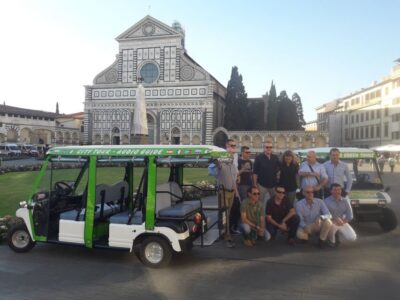
Eco-Friendly Golf Cart City Tour with Audio Guide
Read our review →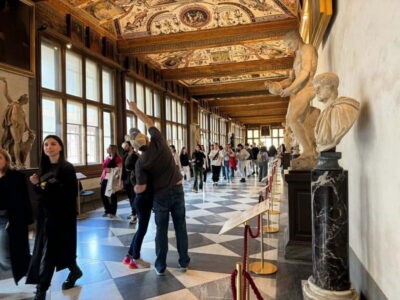
Uffizi Skip-the-Line Ticket & Digital Audio Guide
Read our review →
Private Self-Guided E-Bike Ride in Tuscany with Vineyard Visit
Read our review →
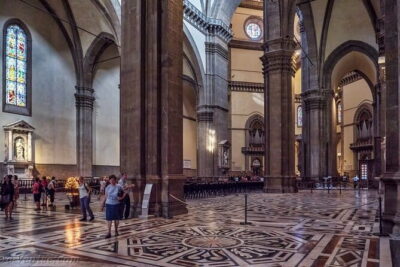
Florence Duomo Cathedral with Host & Audio Guide (Interior Only)
Read our review →
Accademia Gallery Ticket with Optional Audio Guide
Read our review →
Uffizi Gallery Tickets with Optional Audio Guide
Read our review →Browse the lists this tour appears in