
Reviewed · FLORENCE WALKING TOURS
Florence: Private Walking Tour of Florence’s Hidden Gems
Florence packs centuries of art, politics, and family rivalry into a compact center, and this two-hour private walk gives you a useful first look without asking you to commit to a full day. You move from Santa Croce and the Bargello to the Arno, cross Ponte Vecchio, then return past elegant shops and the Duomo.
I like the route for two clear reasons: it covers both sides of the river, and it gives you a guide who can explain how the Medici shaped the city rather than simply naming buildings. I also like the private format, which lets you ask about food, museums, leather, or the best places to return later.
The main trade-off is speed. You see many important sights, but nearly all visits are exterior stops, with only short explanations at each place. The route is also a serious walk over busy streets, so confirm the meeting point and mobility arrangements before booking.
Key points at a glance
- Two hours across both sides of the Arno: The route links Santa Croce, Piazza della Signoria, Ponte Vecchio, Pitti Palace, and the Duomo.
- Private group with an English or Italian guide: You can ask questions and adjust the conversation to your interests.
- Exterior sightseeing, not museum entry: The tour shows you where to return, but it does not replace tickets for the Uffizi, cathedral interior, or other museums.
- A helpful first-day orientation: You learn how the central squares, palaces, bridges, and shopping streets fit together.
- Guides add personal touches: Past guides named Giacomo, Claudia, Manuela, Marco, and others were praised for clear explanations and family-friendly storytelling.
- Check the walking demands: Comfortable shoes are essential, and the activity information both lists wheelchair access and says it is not suitable for people with mobility impairments.
Why this route works for a first look at Florence
Florence is easy to explore on foot, but it is not always easy to understand while you are walking. A palace may look like a grand residence, a church may look like another ornate church, and a square may seem like an attractive place for a coffee. A guide supplies the links between them.
This route gives you a broad orientation in a short time. You begin near the historic core, see the civic and religious center, cross into the Oltrarno, and return through the city’s polished shopping district. That range matters because Florence is more than the Duomo and the Uffizi.
The private setup should make the experience more flexible than a large group walk. If your children are curious about statues, you can keep the explanation lively. If you care about Medici politics, Renaissance buildings, or local shopping, you can ask for more detail in that direction.
Guides who have led this experience include Giacomo, Claudia, Ilaria, Giulio, Silvia, Marco, Manuela, and Natalia. The strongest feedback consistently focuses on guides who explain clearly, keep people together in crowded streets, and answer questions without making the tour feel like a lecture.
More walking tours in Florence:
- Florence: Guided Walking Tour
★ 4.5 · 3,334 reviews - Skip the line: Uffizi and Accademia Small Group Walking Tour
★ 4.5 · 3,135 reviews - Florence: Guided Walking Tour
★ 4.6 · 1,602 reviews
Starting near the Bargello and Santa Croce
The tour information gives more than one possible starting arrangement. One meeting point is listed at Door Number 8 for Accord Tours, with another starting option near Piazza Madonna degli Aldobrandini. The route description also refers to Piazza San Firenze, near the Bargello and the Florentine courthouse.
That variation is important. Florence’s center is compact, but a wrong meeting point can cost precious tour time. Check your confirmation carefully and arrive early enough to find the guide without rushing.
From the opening area, the route heads toward the Basilica of Santa Croce. This church is one of the city’s most important stops, both for its art and for the famous Italians associated with it. You should expect an exterior explanation rather than an interior visit, so plan a separate church visit if you want to see the artworks and tombs inside.
This is a good early stop because it introduces the link between Florence’s religious buildings, artists, and public life. A guide can give the square and church context before you continue through the narrow streets.
The route also includes the National Museum of the Bargello, though again the visit is outside only. The Bargello is especially useful as a landmark for understanding Florence’s civic center and its sculpture tradition. If you want to see the museum’s collection, you will need separate admission and time.
Piazza della Signoria and the political heart of the city
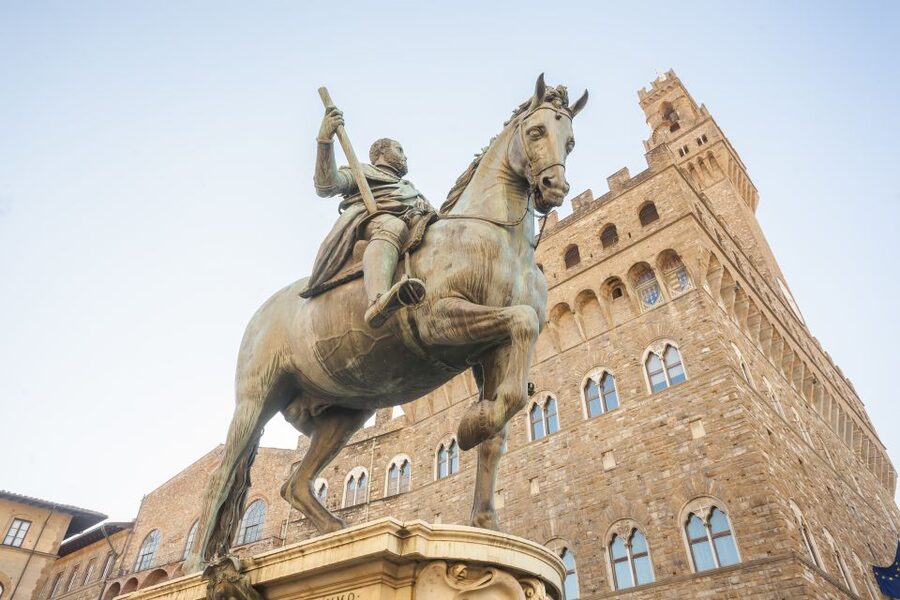
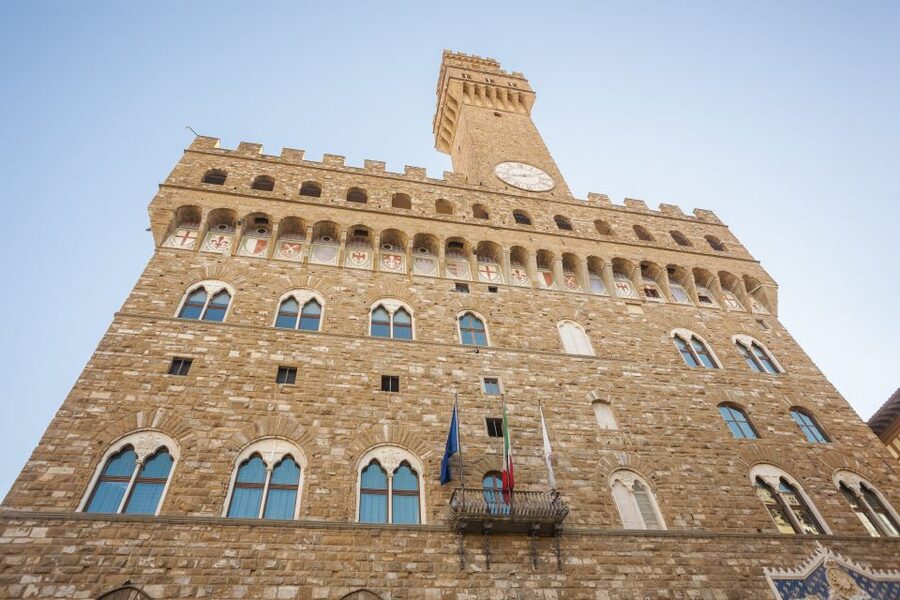
The walk continues to Piazza della Signoria, one of Florence’s most rewarding outdoor spaces. Here, the Palazzo Vecchio, statues, and Neptune Fountain create an open-air lesson in power.
The Palazzo Vecchio was the city’s government center and remains one of the clearest reminders that Florence was not just a city of painters and churches. This is where a good guide can explain how public authority, wealthy families, and artistic display worked together.
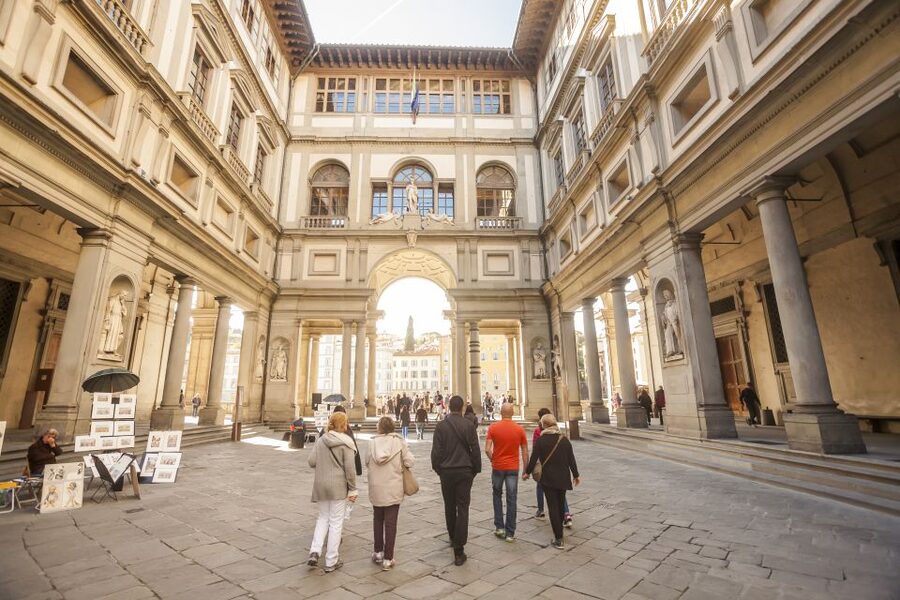
At the Neptune Fountain, you get a five-minute photo stop. That sounds brief, but it is enough for a quick look and a few pictures before the group moves on. The nearby Piazzale degli Uffizi leads you toward one of Florence’s best-known museum buildings.
Do not confuse seeing the Uffizi from outside with visiting the gallery. The tour gives you orientation and background, but it does not include an interior art visit. If the Uffizi is a priority, reserve a separate time slot.
This portion can feel crowded, especially around the main squares. One useful quality in a guide is the ability to keep the group together and speak clearly over street noise. One past complaint involved audio equipment picking up too much background noise, so if you have trouble hearing, tell the guide at once.
Crossing Ponte Vecchio into the Oltrarno
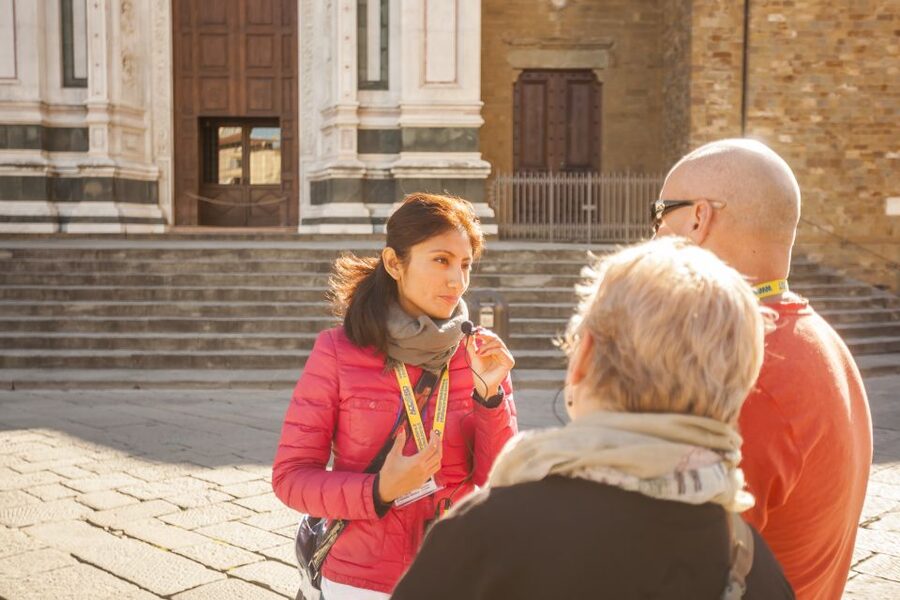
Ponte Vecchio is the route’s natural midpoint and one of Florence’s most recognizable sights. The medieval stone bridge crosses the Arno and is lined with jewelry shops, making it different from the broad civic squares you have just seen.
The bridge is narrow and busy. You will not get a quiet, empty crossing during popular hours, but a guide can point out the bridge’s role in the city and help you notice details you might miss while avoiding other pedestrians.
After crossing, the route reaches Pitti Palace, the former Medici residence. The palace gives the walk a useful change of tone. On one side of the river, you have civic buildings and public squares. Here, you encounter the scale and confidence of a powerful family home.
The guide discusses the palace and Piazza Pitti from outside. That is enough to understand the building’s position and impressive frontage, but not enough if you want the palace’s galleries and rooms. Treat this stop as a preview for a later visit.
The Oltrarno section also helps you see that Florence’s identity is not limited to the busiest tourist streets. The route is still central and popular, but crossing the river gives the walk a different rhythm and shows how the city connects across the Arno.
A completely different way to spend an afternoon in Florence:
- Florence: Skip-The-Line Uffizi Gallery Timed Entry Ticket
★ 4.5 · 27,832 reviews - Tuscany Day Trip from Florence: Siena, San Gimignano, Pisa and Lunch at a Winery
★ 5.0 · 21,634 reviews - Florence: Timed Entrance Ticket to Michelangelo’s David
★ 4.6 · 16,983 reviews - Florence: Michelangelo’s David Skip-the-Line Entry Ticket
★ 4.5 · 12,764 reviews
Via Maggio, Santa Trinita, and Florence’s style
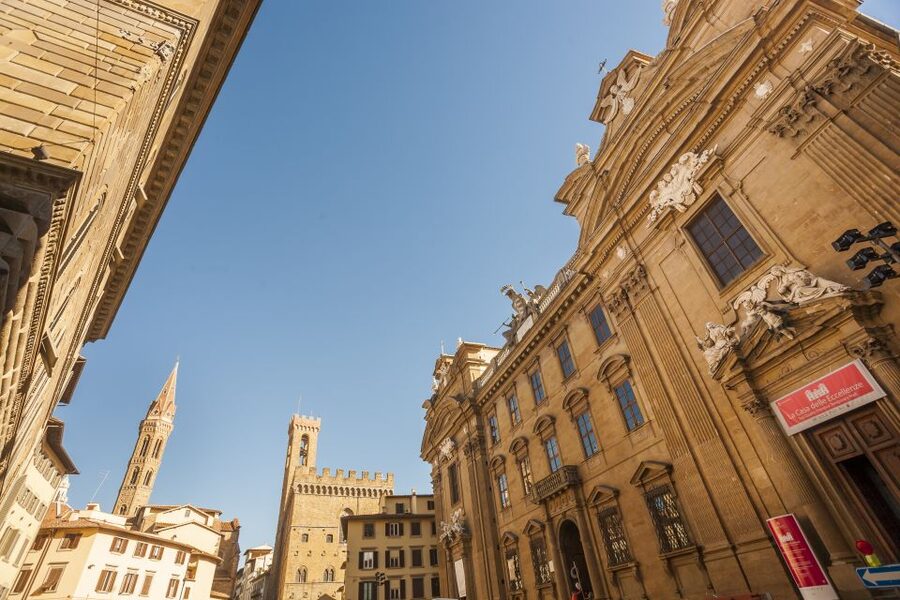
The return route follows Via Maggio and crosses Ponte Santa Trinita before reaching Via Tornabuoni. This section is less about one famous monument and more about how Florence feels as a living city.
Via Tornabuoni is lined with top fashion boutiques. You may not be shopping, but the street offers a look at Florence’s modern luxury trade alongside its Renaissance architecture. The contrast is part of the city’s appeal: old palaces now share space with international fashion names.
The walk pauses at Strozzi Palace, a strong example of Renaissance architecture. From the outside, you can study its firm geometric design and massive stonework. A guide’s explanation helps you see why this building matters rather than treating it as another handsome façade.
The return through Santa Trinita also places you close to several useful areas for later exploring. Guides have offered recommendations for restaurants and quality leather products, which can be valuable if you want practical local advice instead of buying the first souvenir you see.
Do keep expectations realistic. This is a city overview, not a dedicated shopping walk or architecture seminar. The guide has a lot to cover before the final Duomo stop.
Piazza della Repubblica and the Duomo finale
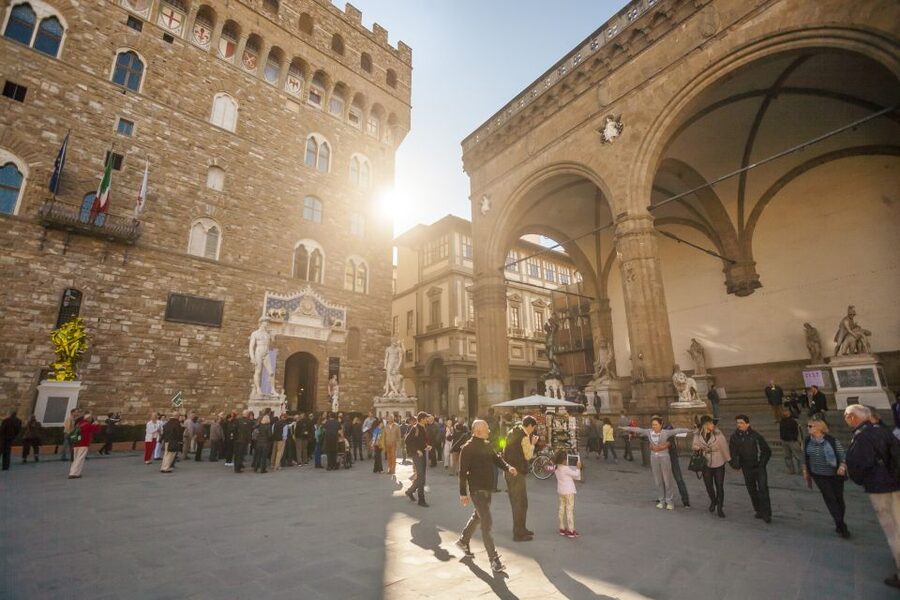
The tour finishes around Piazza della Repubblica and the Florence Duomo complex. Piazza della Repubblica is a broad, central square with cafés, shops, and a busy city atmosphere. It is a useful place to understand the modern center’s scale after walking through older lanes and medieval squares.
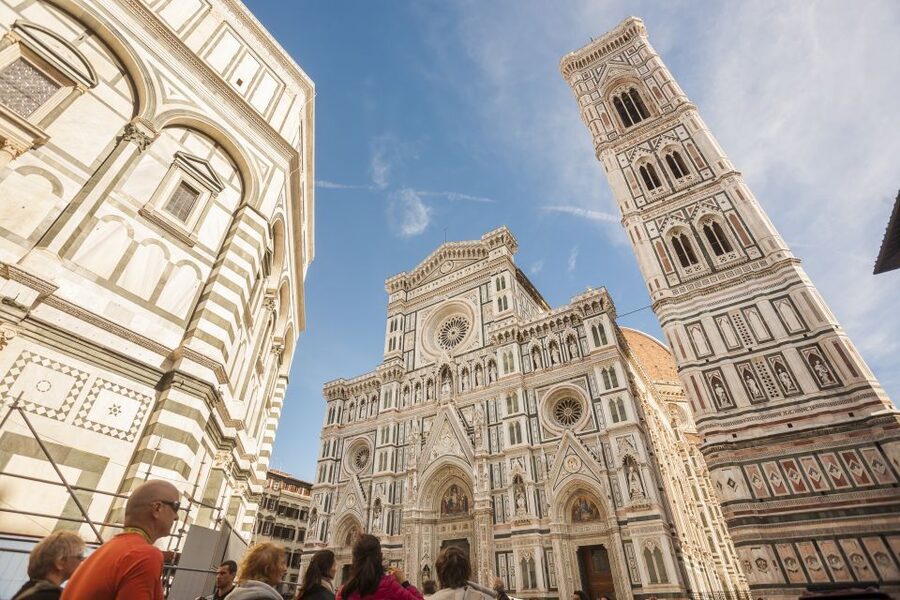
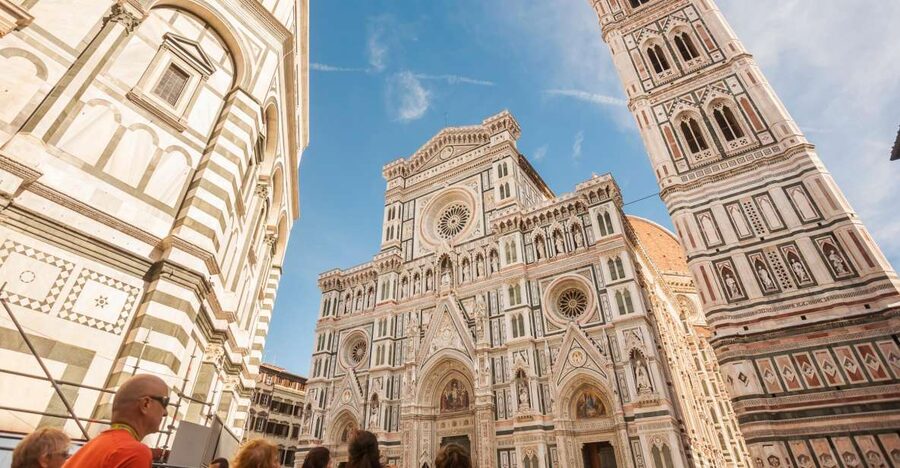
The final major sight is Florence Cathedral, officially Santa Maria del Fiore. The exterior is the visual payoff of the route, with its famous dome, patterned marble, and striking façade. You can expect a short guided explanation and time to take in the building from outside.
This is also where you should note the clothing rule. If you later enter the cathedral, shorts and sleeveless tops are not permitted. The tour itself does not provide an interior cathedral visit, but dressing appropriately can save you from having to change before a later entry.
The itinerary allows about ten minutes for several stops, so the Duomo explanation will be an introduction rather than a full study. If you plan to climb the dome, visit Giotto’s Bell Tower, or enter the cathedral, arrange those separately and allow much more time.
What the private format adds
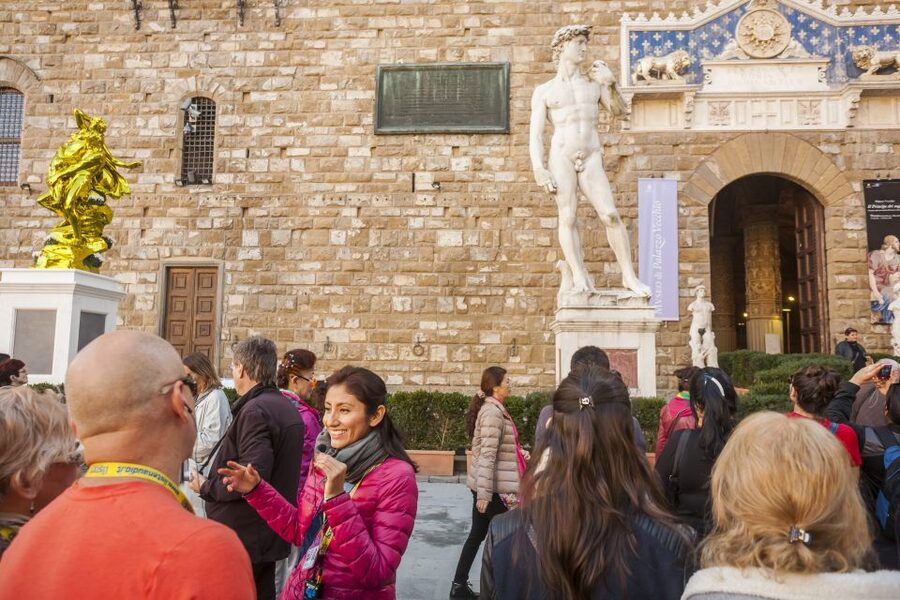
The private group is the strongest practical feature here. You are not competing with a large crowd for the guide’s attention, and the guide can respond to your questions. That matters in Florence, where a simple question about the Medici can lead naturally into art, politics, banking, or palace life.
The format also works well for families. Claudia was praised for keeping two children, aged seven and ten, involved and for explaining ideas in clear English. Other guides have been described as patient and warm, with some tours ending at a café for cappuccino, croissants, or gelato.
Those food stops are not guaranteed as part of the advertised route. Some guides have offered gelato or vouchers, but one voucher was no longer accepted at the gelateria. Enjoy any included treat as a bonus, and do not base your booking decision on it.
The private format is especially useful if you arrive in Florence without a plan. Several guides have helped people decide which museums, restaurants, viewpoints, and shops deserved a return visit. You get a map in your head, not just a list of names.
Pace, walking, and practical limits
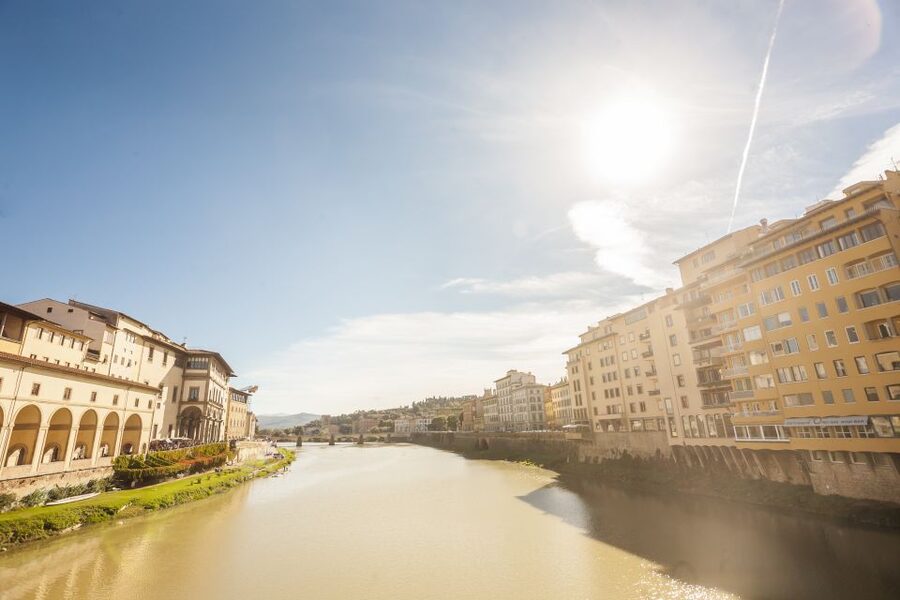
Two hours is enough to cover the main route, but not enough for long pauses. You will walk through central streets, cross bridges, and stop often for explanations. Comfortable shoes are not optional.
The route is not an endurance hike, but Florence’s paving, crowds, narrow streets, and occasional waiting around monuments can make it tiring. The activity information calls it wheelchair accessible while also listing it as unsuitable for people with mobility impairments. That is a clear point to verify directly before booking, especially if you need a specific surface, pace, or route.
The itinerary may change depending on the meeting point. That could affect the order of the stops or how much time is available at each one. Use the tour as a guided overview rather than a promise that every sight will receive equal attention.
The English and Italian options are useful for international visitors. Guide quality will depend on the individual person assigned, but the past guide names and comments suggest a strong pattern of clear communication, historical detail, and friendliness.
Value compared with exploring alone
The price is not provided here, so I cannot judge whether the booking is a bargain in cash terms. The better way to assess value is to ask what you need from the two hours.
If you already know Florence well, have studied its buildings, and are happy navigating on your own, you may prefer to spend the money on a museum ticket. This tour does not include entry to the Uffizi, Pitti Palace, Santa Croce, the Bargello, or the Duomo interior.
If this is your first visit, the value is in the explanation and the route. You see the city’s major areas in a logical sequence and can use the rest of your stay more efficiently. Past participants have found it especially useful on their first day, when they wanted to decide which places deserved a longer visit.
A private tour usually makes more sense when shared by a couple, family, or small group. The larger your private party, the more favorable the per-person value may become, depending on the booking price.
Who should book this Florence walk
I would choose this tour if you want a fast, human introduction to Florence and prefer asking a real guide questions instead of following an audio app. It suits first-time visitors, families, and anyone who wants help connecting the city’s art, buildings, and Medici story.
It is also a good fit if you want both the historic center and the Oltrarno in one outing. The route covers more ground than a tour focused only on the Duomo or Uffizi area.
I would not choose it as your only Florence sightseeing activity. The exterior stops are useful, but you still need separate time for the Uffizi, cathedral interior, Santa Croce, the Bargello, or Pitti Palace if those are on your list.
Should you book it?
Book it if you want to get your bearings quickly, hear the city explained by a private English or Italian-speaking guide, and cover both sides of the Arno in two hours. The strongest reason to go is the guide interaction, with past guides such as Giacomo, Claudia, Manuela, and Marco bringing warmth, useful detail, and practical recommendations.
Skip it if your priority is going inside monuments or spending long periods with individual artworks. In that case, put the money toward timed museum or cathedral entry. For a first afternoon in Florence, though, this is a sensible orientation walk, provided you bring good shoes, confirm the meeting point, and understand that the grand interiors come later.
FAQ
How long does the Florence walking tour last?
The tour lasts two hours. Starting times depend on availability.
Is the tour private?
Yes. It is offered for a private group rather than a large shared group.
Which languages are available?
The live guide is available in English or Italian.
Does the tour enter the monuments?
No. The listed monument visits are exterior visits only. You do not enter the Uffizi, Pitti Palace, Santa Croce, the Bargello, or the cathedral as part of this walking tour.
Where does the tour meet?
The meeting information lists Door Number 8 at Accord Tours, with coordinates provided. Another possible starting point is near Piazza Madonna degli Aldobrandini, and the route description refers to Piazza San Firenze. Confirm the exact meeting place for your booking because the itinerary may vary.
What should I wear or bring?
Bring comfortable shoes for walking. If you plan to enter the cathedral separately, shorts and sleeveless tops are not permitted.
Is the tour suitable for someone with limited mobility?
The activity information lists wheelchair accessibility but also says it is not suitable for people with mobility impairments. Contact the provider before booking to confirm whether the route meets your needs.
Can I cancel the booking?
You can cancel up to 24 hours in advance for a full refund. A reserve-now, pay-later option is also available.
Recently added around Florence
- Accademia and Uffizi Small-group Guided Tour★ 4.5 · 8 reviews
- The David from Michelangelo.★ 5.0 · 3 reviews
- Combo: Accademia + walking + Uffizi Galleries Guided Tour★ 3.5 · 6 reviews
- The Complete Wine Tour Brunello, Nobile, Chianti wine experience★ 4.0 · 7 reviews
- The Best of Tuscany in 3 Days★ 4.5 · 13 reviews
- The Cooking Lab – Authentic Food Experience★ 5.0 · 113 reviews
- Florence Central Market Food Tour – Private Tour★ 4.0 · 7 reviews
- Family Friendly Florence Private City Tour★ 5.0 · 47 reviews
Florence Walking Tours, compared.
Skip the line: Uffizi and Accademia Small Group Walking Tour
Read our review →
Renaissance and Medici Tales Guided Walking Tour
Read our review →
Skip-the-Line Florence Highlights and David Walking Tour
Read our review →
Dark Mysteries and Legends Guided Walking Tour
Read our review →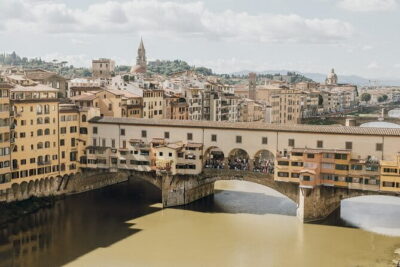
Florence in a Day: Michelangelo’s David, Uffizi and Guided City Walking Tour
Read our review →Browse the lists this tour appears in