
Reviewed · FLORENCE WALKING TOURS
Florence: Private Guided Walking Tour
Florence’s greatest hits fit into one well-planned walk here, but the real value is the human guide who connects them. You’ll move from the Medieval District and Dante’s world to the Duomo, Piazza della Signoria, the Uffizi, and Ponte Vecchio without having to sort out the city’s story by yourself. I especially like the private format and the chance to ask questions as you go.
I also like that the guide can adjust the pace and route. Larla allowed one group to pause for gelato and photos, while Constansa and Andrea earned praise for their clear, informed guiding. The main caution is simple: three hours on Florence’s streets can be tiring, and museum or church entry is not included.
Key points at a glance
- Dante and the Medieval District: Visit the House of Dante and explore the streets tied to Florence’s medieval past.
- Duomo Square in context: Learn how the Cathedral, Baptistery, Bell Tower, and Brunelleschi’s Cupola fit together.
- Outdoor art without a museum ticket: See the Uffizi colonnade, Loggia dei Lanzi, and Piazza della Signoria from outside.
- Private attention: Your guide can answer questions and make small adjustments for photos, gelato, or areas that interest you.
- Florence’s famous crossing: Walk across Ponte Vecchio and hear about its place in the city.
- A useful first-day tour: The route helps you get oriented before returning to museums or monuments on your own.
A Three-Hour Walk Through Florence’s Big Story
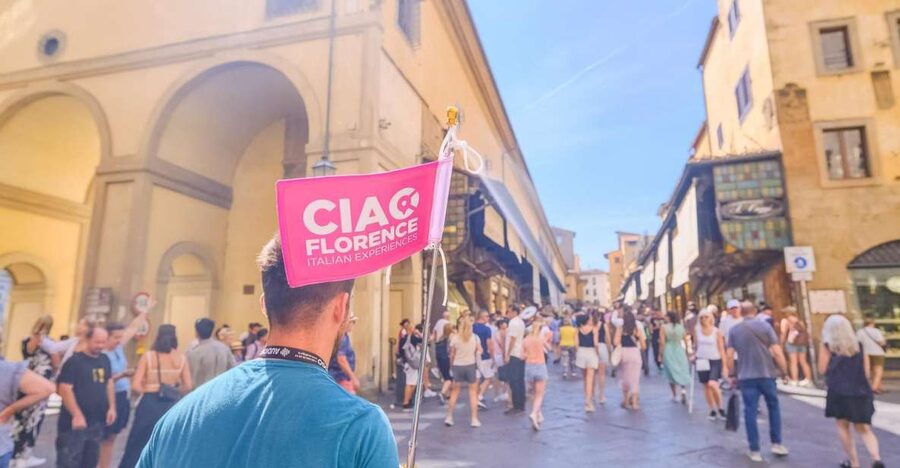
This is a private walking tour for up to eight people, priced at $341 per group. Fill all eight places and the cost works out to about $43 per person, which is reasonable for three hours of private guiding in central Florence. With only two or three people, the per-person price rises sharply, but you are paying for personal attention rather than joining a large group.
Your guide meets you on foot at the main entrance of your hotel or apartment. That is more convenient than finding a meeting point, especially if Florence is new to you. The tour lasts three hours, so plan to wear comfortable shoes and keep your expectations focused on orientation, stories, and exterior sightseeing rather than a string of museum visits.
The route covers a lot of ground, but the private format matters. If your group wants more time at the Duomo, has questions about Dante, or needs a short pause, you can ask. One group specifically appreciated being able to stop for gelato and photographs without losing the character of the tour.
More walking tours in Florence:
- Florence: Guided Walking Tour
★ 4.5 · 3,334 reviews - Skip the line: Uffizi and Accademia Small Group Walking Tour
★ 4.5 · 3,135 reviews - Florence: Guided Walking Tour
★ 4.6 · 1,602 reviews
The Medieval District and Dante’s Florence
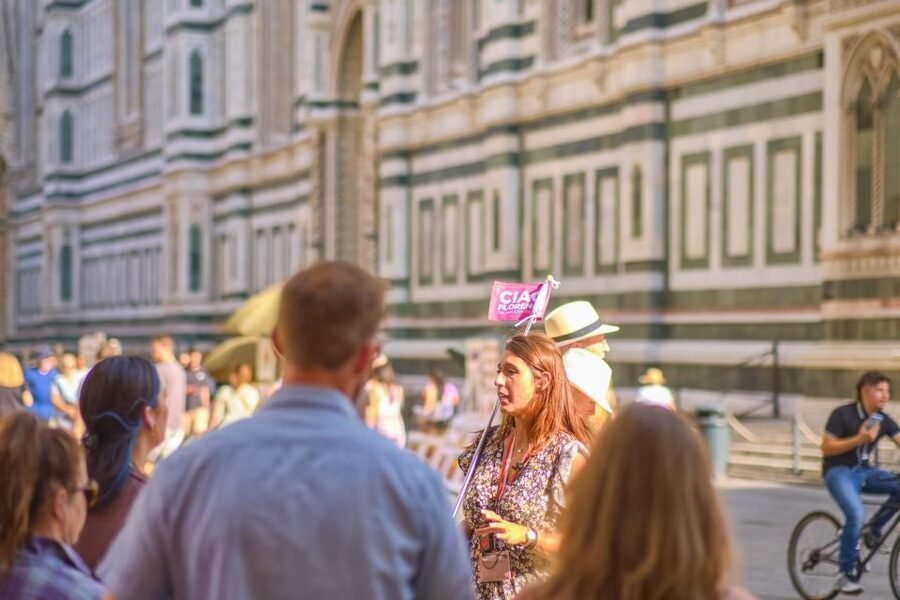
The walk begins in the part of Florence where medieval streets and Renaissance landmarks overlap. This is an important distinction. Florence can look like one grand open-air display, but its story developed in layers. Your guide helps separate the medieval city from the later world of Medici power, artists, architects, and wealthy merchants.
The House of Dante gives the route a personal point of entry. Dante is one of Florence’s best-known historical figures, and the stop connects the city’s narrow streets with The Divine Comedy. You’ll hear about the place associated with where Dante wrote the work, rather than simply passing another old building with no explanation.
This part should appeal to you if you enjoy history tied to real locations. The value is not only the building itself. It is the sense that Florence’s famous literature, political rivalries, and religious life grew out of ordinary streets and compact neighborhoods.
Do not expect the Medieval District to feel like a separate preserved village. Florence’s center is a working urban area, and major monuments appear close to shops, traffic, restaurants, and daily city life. That mixture is part of the experience, but it also means the walk may not feel quiet or slow at every moment.
Duomo Square and the City’s Most Famous Profile
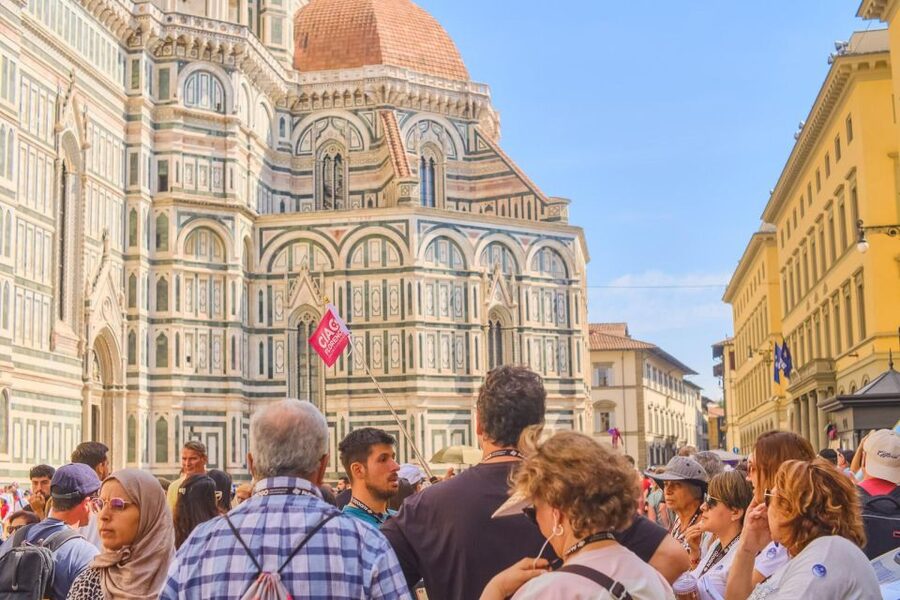
Duomo Square is the visual centerpiece of the walk. Here you see the Cathedral, the Baptistery, Giotto’s Bell Tower, and Brunelleschi’s Cupola gathered in one remarkable space. A guide adds real value here because the buildings can otherwise blur into one grand display of colored marble, arches, and towers.
You’ll learn how the Cathedral was constructed and why Brunelleschi’s Cupola matters. The cupola is not just the largest shape in the skyline. It represents one of Florence’s great architectural achievements, and its construction helped make the city a major center of Renaissance design.
The Baptistery and Bell Tower also deserve more than a quick photograph. Your guide can explain how they relate to the Cathedral complex and point out details you might miss while moving through the square alone. This is a strong section for first-time visitors because it gives you a framework for later visits.
The tour does not include entry to the Cathedral, Baptistery, Bell Tower, or any museum. You’ll see and discuss them from the outside. That keeps the three-hour route moving, but if you want to climb the Cupola or spend time inside the Cathedral, you’ll need separate admission and time in your schedule.
Piazza della Signoria, an Outdoor Art Room
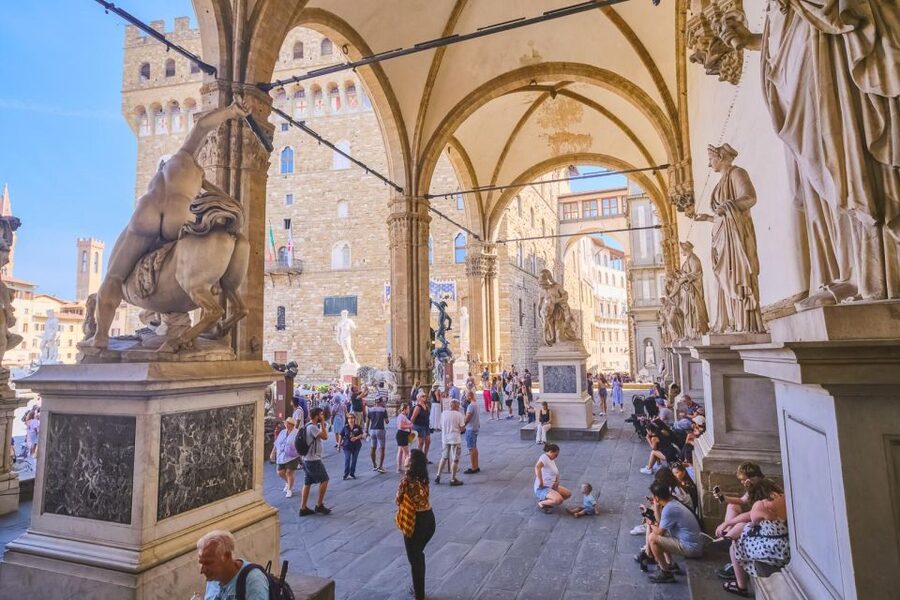
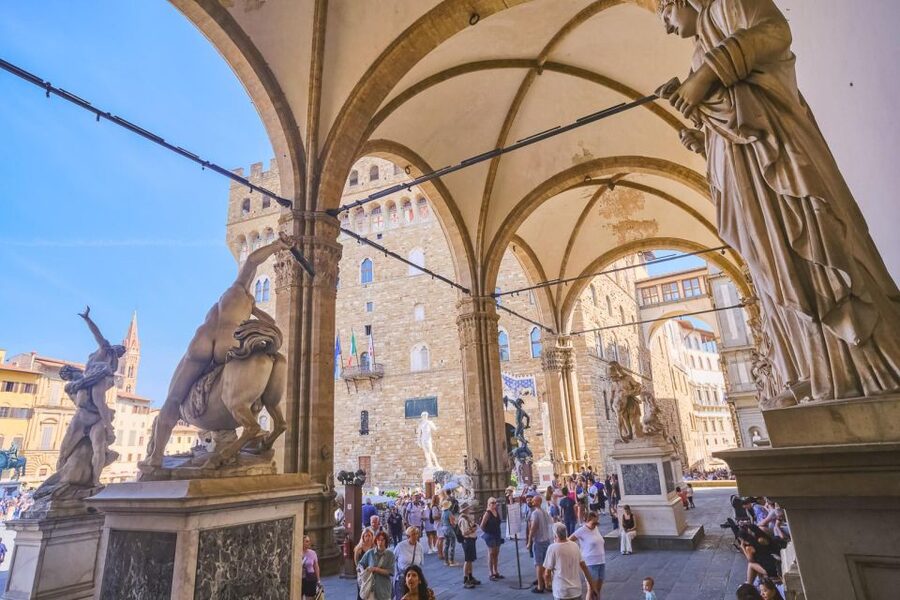
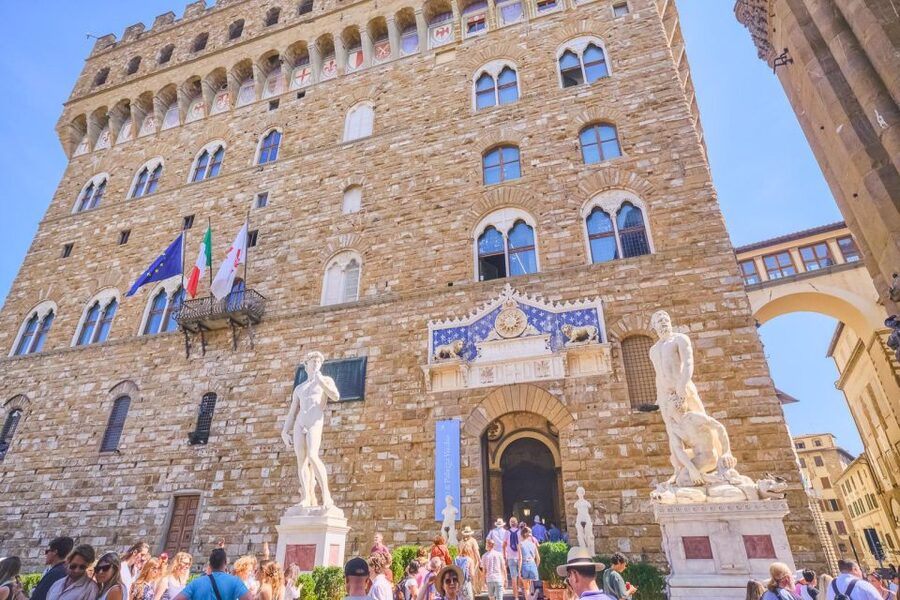
From the Duomo, the route continues toward Piazza della Signoria. Think of this square as Florence’s outdoor art room, with the Palazzo Vecchio providing the setting. It is one of the most useful places in the city for understanding how art and civic power worked together.
The Loggia dei Lanzi adds another layer. Its open colonnade shelters original statues by artists including Cellini and Giambologna. You can see major works without buying a museum ticket, although the open-air setting means you should not expect the quiet or close viewing conditions of a gallery.
A guide’s historical notes help explain why these statues were placed in such a public location. The square is not simply decorative. It was designed to project power, commemorate events, and shape how people saw Florence’s rulers and civic identity.
This is also a good spot for photographs. The architecture, sculpture, and Palazzo Vecchio create one of the city’s strongest compositions. Still, it can be a busy area, and you may have to share your view with other people stopping for the same picture. The private guide cannot remove the crowds, but can help you notice details beyond the obvious photo.
A completely different way to spend an afternoon in Florence:
- Florence: Skip-The-Line Uffizi Gallery Timed Entry Ticket
★ 4.5 · 27,832 reviews - Tuscany Day Trip from Florence: Siena, San Gimignano, Pisa and Lunch at a Winery
★ 5.0 · 21,634 reviews - Florence: Timed Entrance Ticket to Michelangelo’s David
★ 4.6 · 16,983 reviews - Florence: Michelangelo’s David Skip-the-Line Entry Ticket
★ 4.5 · 12,764 reviews
The Uffizi Colonnade Without an Included Museum Visit
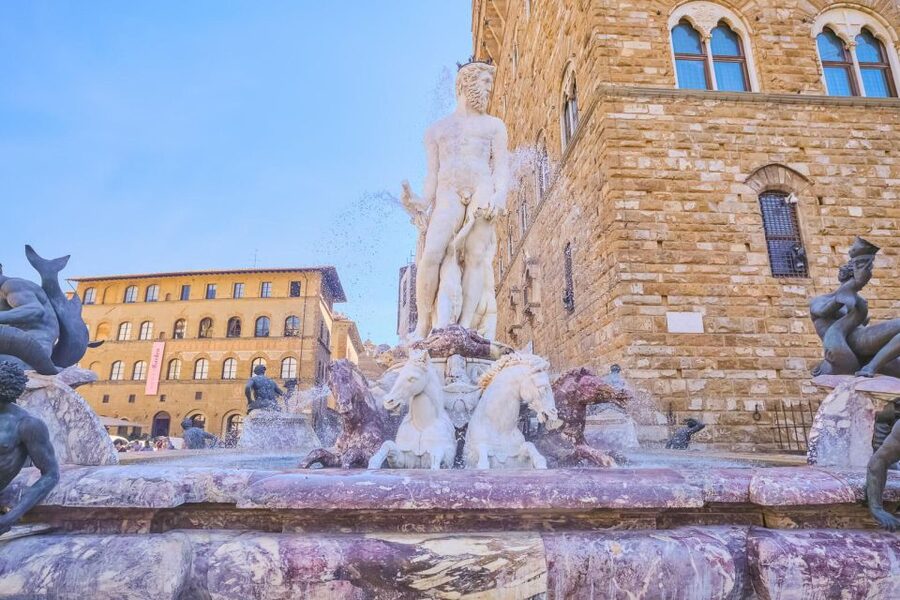
The Uffizi is one of Florence’s essential art museums, but this experience focuses on its exterior colonnade rather than an indoor visit. That distinction matters when you compare this tour with an art-focused museum tour.
Walking beneath the Uffizi’s long colonnade gives you a sense of its position beside the Arno and its connection to the city’s political center. Your guide can place the building within Florence’s artistic story and point out how the surrounding spaces connect Piazza della Signoria with the river.
You will not enter the Uffizi as part of the tour, and an admission ticket is not included. If Botticelli, Leonardo, Michelangelo, or other Renaissance painters are your top reason for visiting Florence, set aside separate time for the museum. This walking tour works best as a companion to that visit, not as a replacement.
I like this arrangement for a first orientation. You get the building, its setting, and some historical context without spending the entire three hours indoors. You can then return later with more purpose, knowing where the museum sits and how it fits into the city center.
Ponte Vecchio and the Arno Crossing
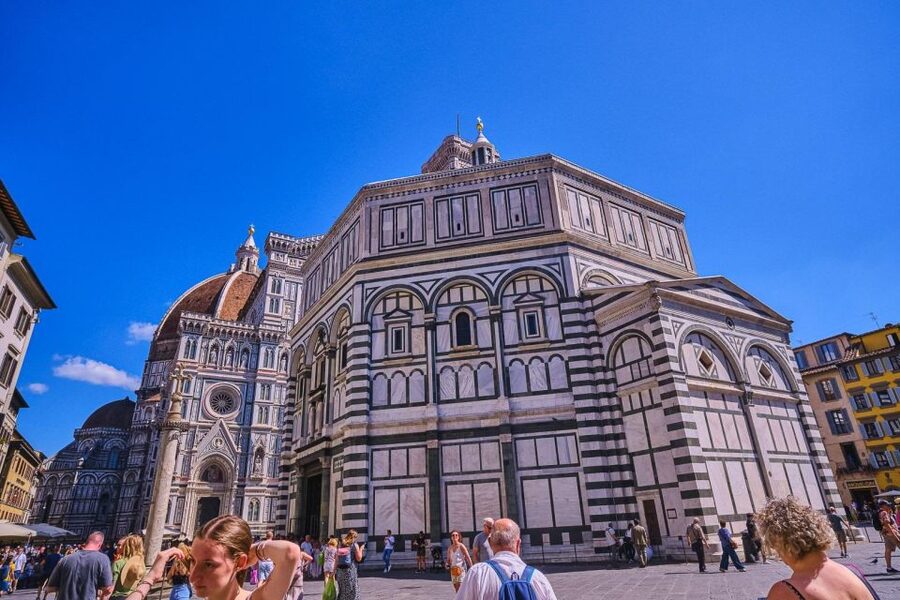
Ponte Vecchio is the tour’s natural change of pace. After the squares and monuments, you cross Florence’s famous bridge and get a different view of the city’s relationship with the Arno.
The bridge is the oldest in Florence, and its shops make it unlike a plain stone crossing. The walk is short, but the setting gives you a strong photo opportunity and a chance to see the city from the river corridor. Your guide fills in the historical details while you move toward the Oltrarno side.
Ponte Vecchio can feel crowded, and the bridge is not the place for a slow, empty stroll. Shops line the route, people stop for pictures, and the crossing can become a bottleneck. Even so, it is an essential Florence experience, and having the bridge placed into the wider route makes it feel less like an isolated photo stop.
This section suits you if you want a balance of art, history, and ordinary city movement. It is not all formal monuments. You are also walking through a living commercial route that has remained central to Florence’s identity.
Pitti Palace and the Vasari Corridor
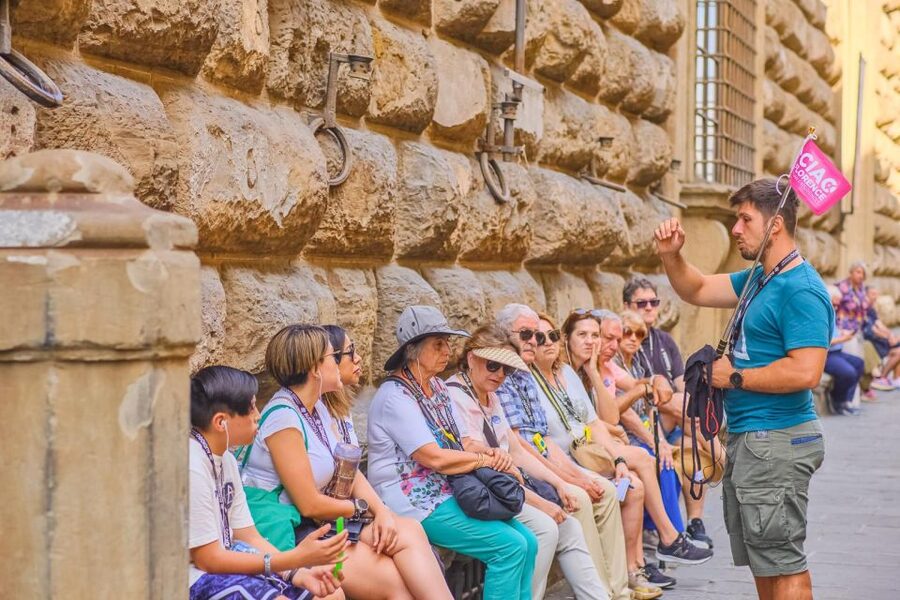
On the far side of the bridge, the route takes in Pitti Palace. The palace is tied to the grander scale of Florence, where private wealth, political power, and art came together. Seeing it after the Medieval District and civic spaces creates a useful contrast.
You’ll also hear about the Vasari Corridor, the unusual passage connecting Palazzo Vecchio to Pitti Palace. This elevated route was designed to let powerful figures move between official and private spaces without using the ordinary streets. From the outside, you may not be able to inspect every part of it, but its purpose gives the route one of Florence’s most intriguing stories.
The information provided for this tour does not include entry to Pitti Palace or the corridor. Treat these as exterior sights and historical subjects, not included attractions. If you want to visit the palace interiors, add a separate ticket and allow extra time beyond the three-hour walk.
This part is especially helpful for people who want to understand Florence beyond the Duomo. The city’s story is not only about painters and churches. It is also about who controlled movement, money, government, and access.
What the Private Guide Adds
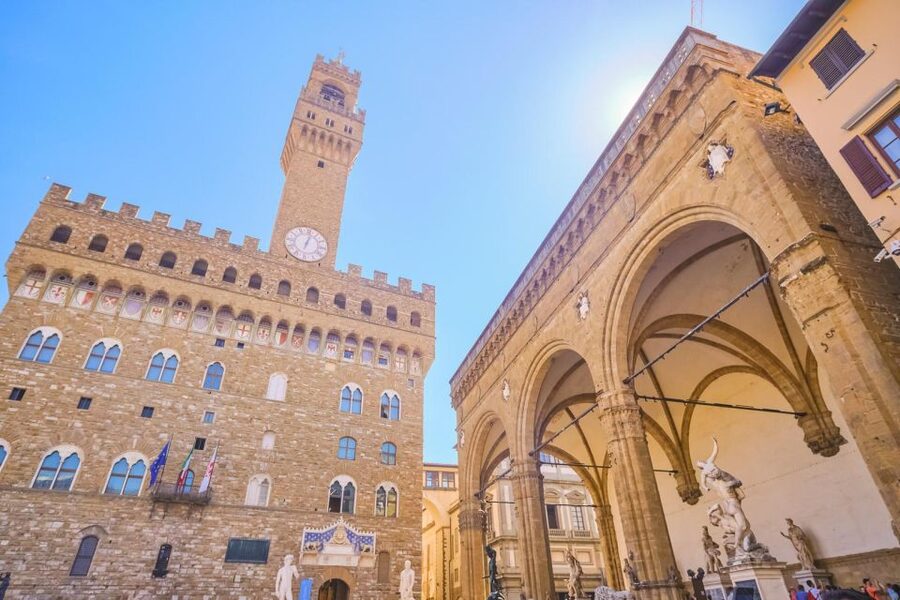
A private guide can make a familiar route feel more personal. You are not tied to a large group’s questions or pace, and the guide can respond to what your group notices. That is useful in Florence, where a small carved figure, a palace detail, or a side street can lead to a worthwhile question.
The guides available for this experience speak English, Italian, Spanish, and French. Specific guides praised by name include Larla, Constansa, and Andrea. Larla was described as patient and accommodating, with enough flexibility to allow gelato and photo stops. Constansa was praised for strong knowledge of the city, while Andrea was singled out as a great guide.
The overall rating is 4.9 from 10 reviews, with most ratings at five stars and one at four. That is a very positive record, though the sample is small. I would treat it as a good sign about guide quality, not a guarantee that every guide will match your preferred style.
You can improve the experience by telling your guide early what matters most. Ask for more Dante, more architecture, more political history, or more time at the Duomo. Since the tour is private, your questions can shape the walk.
Comfort, Access, and the Fine Print That Matters
The tour is listed as wheelchair accessible, but it is also marked as not suitable for people with mobility impairments. Those statements do not fully agree, so you should contact the provider before booking if anyone in your group uses a wheelchair, walks with difficulty, or needs a slower pace.
This is a walking tour through Florence’s historic center. The data does not provide a specific distance, number of stairs, or surface description. Do not assume that every section will be easy for every mobility level. A private format may allow some adjustment, but it does not change the city’s streets or the amount of walking involved.
The tour includes the local guide and the private walk. It does not include lunch, drinks, church entrance, or museum tickets. Plan for those costs separately, especially if you want to go inside the Uffizi, Pitti Palace, the Cathedral complex, or other sights along the way.
Cancellation is flexible up to 24 hours before the start for a full refund, and you can reserve now and pay later. Those policies help if your Florence schedule is still shifting, but the main booking decision is about how you want to spend your three hours.
Who Will Get the Most From This Florence Walk?
I would choose this tour for a first visit, a family group, or friends who want to see the main center without managing the route themselves. It also suits people who like to ask questions and adjust the pace rather than follow a fixed script.
It is a good fit if you want:
- A private guide for your own group
- A broad introduction to Florence’s major sights
- Historical stories tied to Dante, the Medici world, and Renaissance architecture
- Exterior visits to the Uffizi, Palazzo Vecchio, Loggia dei Lanzi, Ponte Vecchio, and Pitti Palace
- A flexible stop for photos or gelato
- A guide in English, Italian, Spanish, or French
You may want something else if your main goal is spending hours inside the Uffizi or entering Florence’s churches and palaces. Since admission is not included, this tour gives you the city’s structure and stories, but you must arrange the indoor art and architecture visits yourself.
Is the $341 Group Price Worth It?
At $341 for up to eight people, the price makes the most sense when you can fill several places. A full group pays about $43 per person for three hours of private guiding. That is a fair value if personal attention and flexible pacing matter to you.
For one or two people, the cost per person is much higher. You should compare it with a shared walking tour if your budget is tight and you do not need a private guide. The private option earns its price through convenience, direct questions, hotel pickup on foot, and control over the pace.
The tour also saves you from spending your first morning figuring out how Florence’s sights connect. That orientation has practical value. Afterward, you can return to the Uffizi or a church with a better sense of what you are looking at.
Should You Book This Private Florence Tour?
Book it if you want a well-rounded first look at Florence with a guide focused on your group. The strongest parts are the private format, the clear route through the Medieval District and Duomo Square, and the way the walk links Dante, civic power, Renaissance art, the Arno, and Pitti Palace.
Skip it if you want an indoor museum tour or a slow visit inside churches and palaces. Those admissions are not included, and three hours will pass quickly on foot.
For most first-time visitors who value context over a checklist, I would book it, especially with four or more people sharing the cost. Tell the guide what you care about at the start, wear sensible shoes, and leave separate time for the Uffizi and other interiors.
FAQ
How long is the private Florence walking tour?
The tour lasts three hours.
How much does the tour cost?
The price is $341 per group of up to eight people.
Is the tour private?
Yes. It is a private group experience.
Where does the guide meet the group?
The guide picks you up on foot at the main entrance of your hotel or apartment.
Which languages are available?
Guides speak English, Italian, Spanish, and French.
Does the tour enter the Uffizi Gallery?
No entrance is included. The route includes the Uffizi colonnade and exterior surroundings, but museum admission is not part of the tour.
Are church and palace tickets included?
No. Entrance to churches or museums is not included, and Pitti Palace is treated as an exterior stop and historical subject on this route.
What Florence sights are included in the walk?
The route includes the Medieval District, House of Dante, Duomo Square, Piazza della Signoria, Palazzo Vecchio, Loggia dei Lanzi, the Uffizi colonnade, Ponte Vecchio, Pitti Palace, and the Vasari Corridor area.
Can the tour stop for photos or gelato?
The private format allows the guide to make small adjustments. One group was able to stop for gelato and photographs during the walk.
Can I cancel for a full refund?
Yes. You can cancel up to 24 hours in advance for a full refund.
Is the tour suitable for people with mobility impairments?
The activity is marked as wheelchair accessible but also listed as not suitable for people with mobility impairments. Contact the provider before booking to discuss your group’s needs.
Recently added around Florence
- Accademia and Uffizi Small-group Guided Tour★ 4.5 · 8 reviews
- The David from Michelangelo.★ 5.0 · 3 reviews
- Combo: Accademia + walking + Uffizi Galleries Guided Tour★ 3.5 · 6 reviews
- The Complete Wine Tour Brunello, Nobile, Chianti wine experience★ 4.0 · 7 reviews
- The Best of Tuscany in 3 Days★ 4.5 · 13 reviews
- The Cooking Lab – Authentic Food Experience★ 5.0 · 113 reviews
- Florence Central Market Food Tour – Private Tour★ 4.0 · 7 reviews
- Family Friendly Florence Private City Tour★ 5.0 · 47 reviews
Florence Walking Tours, compared.
Skip the line: Uffizi and Accademia Small Group Walking Tour
Read our review →
Renaissance and Medici Tales Guided Walking Tour
Read our review →
Skip-the-Line Florence Highlights and David Walking Tour
Read our review →
Dark Mysteries and Legends Guided Walking Tour
Read our review →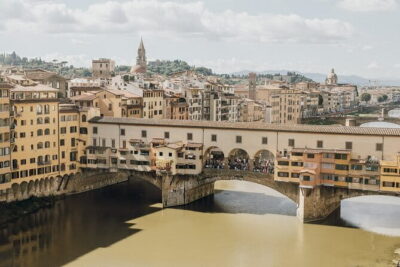
Florence in a Day: Michelangelo’s David, Uffizi and Guided City Walking Tour
Read our review →Browse the lists this tour appears in