
Reviewed · FLORENCE GELATO AND TIRAMISU CLASSES
Florence: Pasta and Tiramisu Cooking Class with Local Host
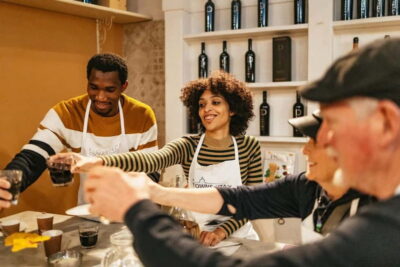
The best part of this Florence cooking class happens around a local kitchen table, not in a restaurant kitchen. You roll pasta by hand, shape two kinds of pasta, build tiramisu, and then sit down to eat what you made with wine and coffee.
I like the small-group format, which keeps the class personal and gives you real hands-on time. I also like the warm home setting. Hosts such as Marina, Carlo, Roberta, and Donatella have made the experience feel more like a meal with friends than a formal lesson. The main drawback is that your exact host and home are assigned after booking, so you cannot choose the neighborhood or instructor in advance.
Key points at a glance
- Two pasta shapes by hand: Learn to roll fresh dough and form two traditional shapes rather than simply watching a demonstration.
- Tiramisu from start to finish: Prepare the layers of this classic dessert, then enjoy it as part of your meal.
- A real Florentine home: The setting offers a personal look at Italian food culture that a restaurant class cannot quite match.
- Food, wine, aperitivo, and coffee included: The $134.81 price covers the full three-hour food experience, not just instruction.
- Groups of up to eight: Small numbers make it easier to ask questions and get help with shaping pasta.
- English and Italian instruction: Your host teaches in English and Italian, with plenty of room for conversation.
This is a cooking lesson with a meal at the end, but it feels less like school than a friendly visit. You meet your host at a private home in Florence. The exact address, host name, and mobile number arrive after booking because the hosts live in private residences.
That arrangement has a practical upside. You get a genuine home setting rather than a staged cooking studio. It also means you should not plan your route until the meeting details arrive. The class ends where it begins, so you will need to make your own way there and back.
The experience lasts three hours. That is long enough to make several dishes without turning the afternoon or evening into an exhausting production. Starting times vary, so check the available options before booking. A class that begins around lunchtime leads naturally into a midday meal, while a later session can become one of your evening meals in Florence.
Your host begins with an aperitivo. This gives everyone a chance to settle in, meet the group, and hear about local food customs before the work starts. It is also a useful part of the experience for anyone who wants more than a recipe. The conversation puts pasta and tiramisu into the setting of ordinary Italian home cooking.
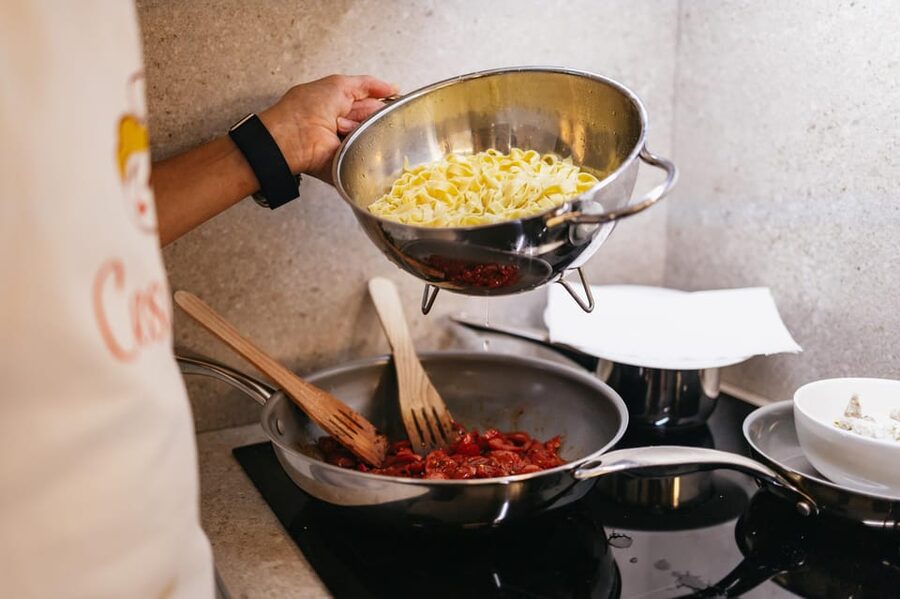
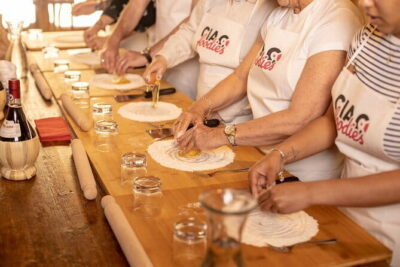
The pasta portion is the heart of the class. You learn how to prepare fresh dough, roll it by hand, and form two different traditional shapes. That distinction matters. Many cooking demonstrations show you the finished pasta, but here you take part in the steps that require touch and practice.
Fresh pasta dough can look simple, yet the feel changes as you knead and roll it. Your host can show you how thin the dough should be and how to handle it without tearing it. The class is suited to beginners because the host guides you step by step, but it still gives experienced home cooks useful technique practice.
The two-shape format adds variety. You are not repeating one basic form for the entire lesson. You get to see how the same dough changes when cut or shaped in different ways, and you can compare the techniques while they are still fresh in your mind.
Some hosts also include ravioli. Luca, for example, has guided participants through pasta, ravioli, and tiramisu in a step-by-step lesson. The exact recipes can vary by host, so think of the class as a home-cooking experience rather than a fixed professional syllabus.
That variation is part of the appeal, but it is worth understanding before you book. If you need a specific pasta recipe, ask after receiving your host details. The supplied information promises two pasta shapes, but it does not promise one identical menu for every session.
After the pasta work, you prepare tiramisu. You learn how to create its layers and assemble the dessert so it can set properly before serving. This is a good counterpoint to the pasta lesson: pasta is about dough, pressure, and shape, while tiramisu is about balance, layering, and texture.
The dessert is not an afterthought. It forms part of the meal you create and gives the class a sweet finish. You can also take the basic method home, which is one reason this experience has lasting value. Hosts provide recipes or clear instructions, and several sessions have left participants eager to recreate the dishes in their own kitchens.
I especially like the way the dessert keeps the class from becoming all about technical pasta work. If one person in your group is less interested in kneading dough, tiramisu offers another task and another chance to take part.
Families should note that the pace can work for children, depending on the child and host. Donatella, for example, kept a three-year-old involved with small tasks when he began to lose interest. That does not guarantee the same arrangement in every home, but it shows how flexible a host-led class can be.
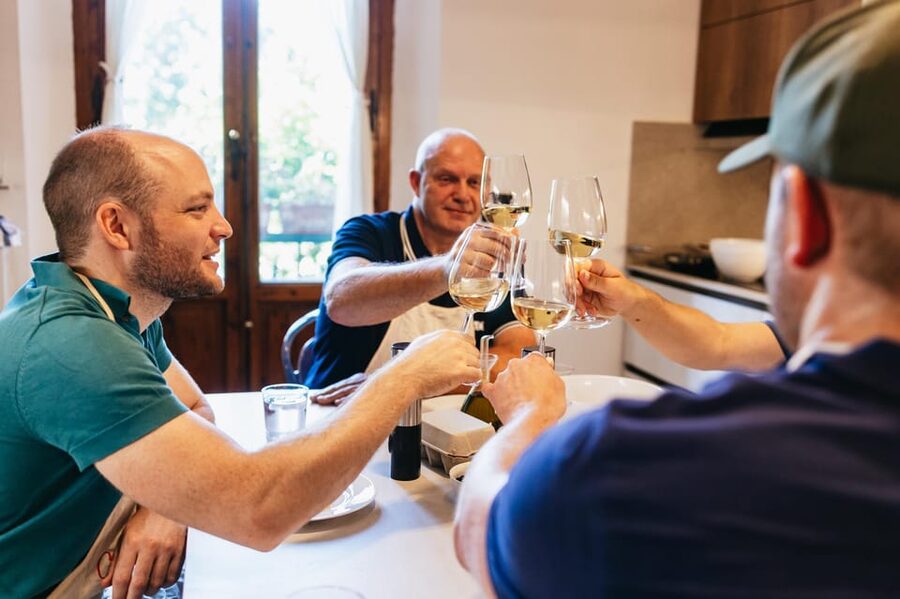
Once the food is ready, you sit down with your host and eat the finished dishes. The meal includes the pasta and tiramisu, along with a selection of local wine and coffee. These inclusions make the price easier to judge. You are paying for instruction, ingredients, equipment, an aperitivo, and a full meal rather than for a short cooking demonstration alone.
The shared meal is where the class becomes especially social. You have spent time working beside the other participants, and now you can talk over the food. The group is limited to eight, though some bookings may turn out to be private. Couples have found themselves cooking alone with a host, while other sessions include families or several small parties.
That small scale is important. In a large class, you might spend much of the time standing behind someone else or waiting for an instructor to reach your station. A maximum of eight gives you a better chance to handle the dough, ask questions, and receive corrections.
Wine is included, but this is not presented as a wine-tasting class. The focus stays on food and hospitality. If you do not drink alcohol, the supplied information does not specify substitute beverages, so ask your host in advance.
The host makes or breaks a home cooking class, and this experience has received especially strong praise for warmth, patience, and hospitality. Marina has been described as welcoming, friendly, and clear with her recipes. Carlo has adapted a sauce for a participant with a dietary issue. Roberta has welcomed people into her home and introduced them to friends and family.
Other hosts bring their own personality. Paulo and Christina have hosted with a friendly dog present, while Cecilia has made couples feel relaxed as they learned to prepare ravioli and tiramisu. Melani has made such an impression that some participants have wanted to return for another class.
These details matter because you are entering someone’s home. The experience is not polished in the same uniform way as a hotel-run class, and that is both its charm and its small uncertainty. You might receive a highly personal family recipe and a host who talks freely about Italian life. Another session may feel quieter or more instructional.
The language is Italian and English. That is enough for the basic cooking steps and conversation. The class is also a pleasant way to pick up a few Italian food words without turning the event into a language lesson.
The hosts generally provide the equipment and ingredients, so you do not need to shop or bring cooking tools. You should still wear practical clothing and shoes suitable for a home kitchen. The available information does not specify accessibility details, so contact the provider if stairs, seating, or kitchen access are important for your group.
At $134.81 per person, this is not the cheapest meal you will find in Florence. The value depends on how much you want from the experience.
If you only want to eat fresh pasta, a restaurant meal will cost less. If you want a short demonstration with no meal, you can likely find a cheaper option. This class earns its price through the combination of hands-on instruction, ingredients, kitchen equipment, aperitivo, wine, coffee, and time in a local home.
The three-hour length also helps. You are not rushing through one recipe before being sent away. You work through dough, two pasta shapes, tiramisu, and the final meal. For a special occasion, honeymoon, birthday, or family outing, the personal setting adds value that is difficult to measure on a menu.
Couples may find the cost easier to justify if the class replaces one restaurant meal. Families should calculate carefully, since the price is per person. The experience can suit children, but the youngest members may need extra help staying involved during the full three hours.
The ability to reserve now and pay later adds flexibility. You can also cancel up to 24 hours in advance for a full refund. Those terms are useful when your Florence plans are still shifting, though you should always check the conditions shown at the time of booking.
I would choose this class if you want to meet a local person and learn a recipe you can repeat at home. It suits couples looking for a relaxed evening, families who prefer an active meal, and food lovers who want more than a restaurant table.
It is also a good choice if you have already seen Florence’s major sights and want an experience that slows the pace. You do not need special cooking skills. The instruction is practical and guided, and the small group keeps the class from feeling anonymous.
This may not be the best fit if you want a highly standardized lesson, a fixed famous chef, or a guaranteed central meeting point. The host and address come later, and the home setting means the menu and personality can vary. You should also think twice if you dislike shared meals, wine, or spending several hours in a kitchen.
Dietary needs deserve advance attention. Carlo has adjusted a sauce for a participant, which suggests some flexibility, but no universal dietary menu is promised. Tell the provider about allergies or restrictions before you commit.
The exact meeting point is the host’s home in Florence. You receive the host’s name, address, and mobile number after booking. Since this is a private residence, keep those details handy and allow enough time to reach the address.
There is no hotel pickup or drop-off. You arrange your own transport to the home and leave from the same location after the meal. The activity lasts three hours, but the starting time depends on availability.
The class is offered in English and Italian. Equipment and ingredients are included, as are the aperitivo, lunch, wine, and coffee. The maximum group size is eight, though private sessions can occur depending on the booking.
The provider is Cesarine. That name connects you with local home cooks, but your individual host may be Marina, Carlo, Roberta, Donatella, Cecilia, or another host. The host names cited here are examples from actual sessions, not a promise that you will meet a particular person.
Book this Florence pasta and tiramisu class if you want a personal food experience with real participation. You will roll dough, shape two pastas, prepare dessert, and eat the results in a local home with wine and coffee. That is a full three hours of useful, social activity.
The best reason to book is the setting. A home kitchen gives you direct contact with Italian hospitality, and the small group makes it easier to learn. The main caution is the lack of control over the exact host, home, and menu details. If you can accept that small uncertainty, the $134.81 price is reasonable for a cooking lesson and meal in one.
FAQ
More gelato and tiramisu classes in Florence:
- Florence Pizza or Pasta Class with Gelato Making at a Tuscan Farm
★ 5.0 · 6,801 reviews - Florence: Pasta & Tiramisu Cooking Class with Unlimited Wine
★ 4.9 · 6,708 reviews - Florence: Cooking Class Pasta & Tiramisu Making Unlimited Wine
★ 5.0 · 2,234 reviews
How long does the Florence cooking class last?
The class lasts three hours. Starting times vary, so check availability when choosing your date.
What dishes will I learn to make?
You will learn to prepare fresh pasta, form two traditional pasta shapes, and make tiramisu. Some sessions may also include ravioli, depending on the host.
Is the meal included?
Yes. You eat the pasta and tiramisu you prepare, with local wine and coffee included.
More cooking classes in Florence:
- Florence: Pasta Cooking Class with Unlimited Wine
★ 4.9 · 10,285 reviews - Florence: Pasta Cooking Class with Unlimited Wine
★ 5.0 · 6,413 reviews - Cooking Class and Lunch at a Tuscan Farmhouse with Local Market Tour from Florence
★ 5.0 · 4,831 reviews - Pastamania – Florence Pasta Making Class
★ 5.0 · 3,050 reviews
Is wine included in the experience?
Yes. The activity includes a selection of local wines, as well as an Italian aperitivo and coffee.
Where does the class take place?
The class takes place in your local host’s home in Florence. The exact address, host name, and mobile number are sent after booking.
How large is the group?
The class is limited to eight participants. Some bookings may be private, depending on the arrangement.
Is hotel pickup included?
No. Hotel pickup and drop-off are not included. You meet at the host’s home and return to that same meeting point at the end.
More artisan workshops in Florence
- Florence Cooking Class The Art of Making Gelato & Authentic Pizza
★ 5.0 · 2,053 reviews - Small Group Cooking Class & Market Food Tour in Florence
★ 5.0 · 1,574 reviews - Florence: Pizza and Gelato Preparation Class
★ 4.8 · 1,143 reviews - Florence: Pizza and Gelato Class at a Tuscan Farmhouse
★ 5.0 · 822 reviews
More pasta making classes in Florence
- Florence: Handmade Pasta & Dessert Class with Unlimited Wine
★ 4.8 · 788 reviews - Florence: Premium Cooking Class for Pasta and Gelato
★ 4.9 · 695 reviews - Florence: Pasta Class with Wine, Limoncello and Dessert
★ 4.9 · 674 reviews - Pasta Cooking Class: Mastering Nonna’s Recipes
★ 5.0 · 554 reviews
Recently added around Florence
- Accademia and Uffizi Small-group Guided Tour★ 4.5 · 8 reviews
- The David from Michelangelo.★ 5.0 · 3 reviews
- Combo: Accademia + walking + Uffizi Galleries Guided Tour★ 3.5 · 6 reviews
- The Complete Wine Tour Brunello, Nobile, Chianti wine experience★ 4.0 · 7 reviews
- The Best of Tuscany in 3 Days★ 4.5 · 13 reviews
- The Cooking Lab – Authentic Food Experience★ 5.0 · 113 reviews
- Florence Central Market Food Tour – Private Tour★ 4.0 · 7 reviews
- MaMa Florence: The Art of Corzetti – Hands-On Pasta Class★ 5.0 · 15 reviews
Florence Gelato and Tiramisu Classes, compared.
Florence Pizza or Pasta Class with Gelato Making at a Tuscan Farm
Read our review →
Pasta & Tiramisu Cooking Class with Unlimited Wine
Read our review →
Cooking Class Pasta & Tiramisu Making Unlimited Wine
Read our review →
Florence Cooking Class The Art of Making Gelato & Authentic Pizza
Read our review →
Pasta and Tiramisu Cooking Class with optional Local Market Tour
Read our review →Browse the lists this tour appears in