
Reviewed · FLORENCE COOKING CLASSES
Pasta Cooking Class: Mastering Nonna’s Recipes
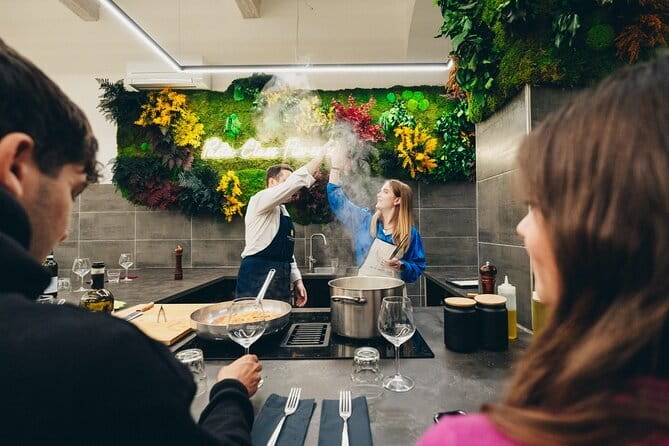
Making pasta from scratch is one of the best ways to turn a Florence sightseeing day into something personal. Here, a Michelin-trained chef guides you through three pasta shapes and sauces, then cooks your work into a full meal. Chefs including Marco, Simone, Andrea, Thomas, and Davide lead sessions, so the exact personality may vary.
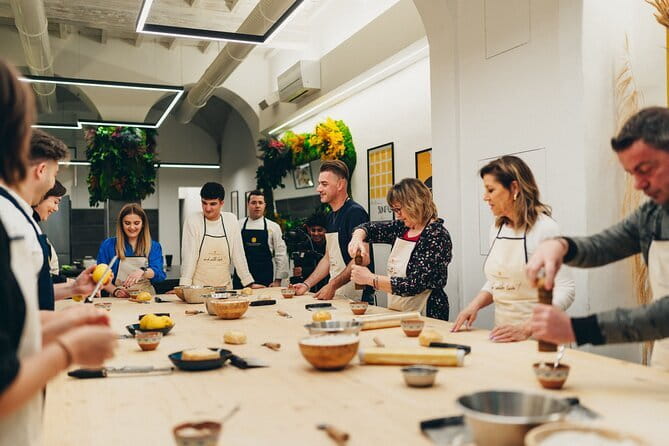
I like the small maximum of 13 people, which gives you room to work instead of fighting for counter space. I also like the practical teaching: shaping tortelli, tagliatelle, and ravioli is fun, but lessons on sauces, knives, hygiene, and dough are the skills you can carry home.
The main consideration is the unlimited wine. It adds to the convivial mood and value, but it can make a hands-on class less comfortable if you drink more than you normally would. The meeting point is a storefront on Via dell’Agnolo, and one attendee found the surrounding stretch slightly rough-looking. Inside, the cooking space was described as clean and attractive.
Key points at a glance
- Three pasta styles in one class: Make tortelli, tagliatelle, and ravioli rather than repeating one basic recipe.
- Michelin-trained instruction: Chefs such as Marco, Simone, Andrea, Thomas, and Davide combine technique with plenty of personality.
- A full meal, not just a sample: Your pasta is served in three courses with sauces and local ingredients.
- Unlimited red and white wine: Wine is available throughout the approximately three-hour experience.
- Small-group format: The class caps attendance at 13 people, with many sessions running closer to 9 or 10.
- Suitable for beginners: All cooking levels are welcome, and vegetarian options are available.
What you actually do during the three-hour class
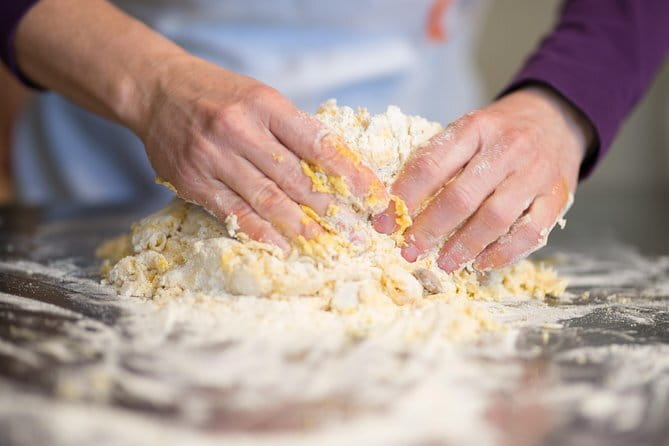
This is not a demonstration where you stand at the back and watch someone else cook. You work with the dough, shape the pasta, and eat what the class prepares. That difference matters. You are not simply taking home a recipe card. You are learning how the dough feels, how a filled pasta should be sealed, and how different shapes hold different sauces.
The class takes place in central Florence at Via dell’Agnolo 77r. It begins and ends at the same address, and the location is near public transportation. Allow yourself enough time to find the storefront without rushing. The street-level entrance may not look as polished as the cooking room, but the important point is that the class itself has been praised for its clean facilities and orderly setup.
The session lasts about three hours, though one account puts the experience closer to three and a half. That is a useful expectation if you have a train, museum reservation, or dinner booked afterward. This is both a lesson and a meal, so it is not a quick one-hour activity.
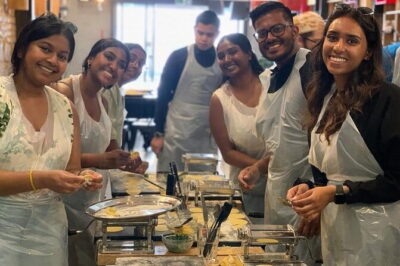
Class size is limited to 13 people. That is a sensible ceiling for pasta making. You need enough counter space to roll and shape dough, and you need to be able to see what the chef is doing. Some sessions have had 9, 10, or 12 people, which gives the class a social feel without turning it into a crowded production line.
More cooking classes in Florence:
- Florence: Pasta Cooking Class with Unlimited Wine
★ 4.9 · 10,285 reviews - Florence Pizza or Pasta Class with Gelato Making at a Tuscan Farm
★ 5.0 · 6,801 reviews - Florence: Pasta & Tiramisu Cooking Class with Unlimited Wine
★ 4.9 · 6,708 reviews
The opening lesson: sauces, ingredients, and kitchen habits
Before you start shaping pasta, the chef prepares sauces and explains how they work. This part is easy to underestimate. Pasta classes can spend all their time on flour and water, then treat the sauce as an afterthought. Here, the sauces are a major part of the meal.
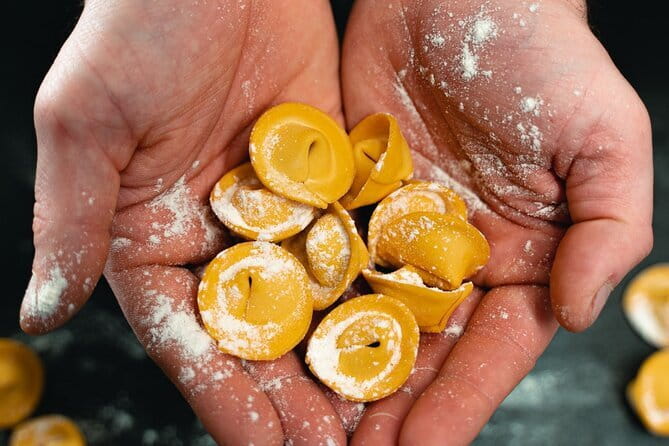
You can expect practical instruction about traditional Italian cooking and typical local products. The chef may demonstrate a Tuscan ragù, garlic oil with sage, or a butter-based sauce. The stated sample menu includes ricotta tortelli with brown butter and herbs, tagliatelle with fresh Tuscan ragù, and ravioli with garlic oil and sage.
The chefs also share broader kitchen advice. One session included lessons on everyday cooking and even a correction to a participant’s knife-sharpening method. That sort of tip is more useful than a long speech about Italian food. You leave with a better sense of how to build flavor, not just how to fold a particular pasta.
The order of the class can vary by chef, but the goal is clear: you learn what the sauce needs before the pasta arrives. That helps you understand why thin tagliatelle suits one preparation while filled tortelli needs a lighter hand.
Shaping tortelli, tagliatelle, and ravioli
The hands-on pasta work is the heart of the experience. You make three styles, each with a different challenge.
Tortelli introduces filled pasta. You work with ricotta and herbs, then learn to seal the dough around the filling. The lesson is partly about technique and partly about restraint. Too much filling makes the pasta difficult to close, while a poor seal can let the filling escape during cooking.
Tagliatelle gives you a chance to work with long, narrow ribbons. It is a more direct test of rolling and cutting. You learn how thin the dough should be and how to keep the strands from clumping together.
Ravioli brings another filled shape and a different finish. The sample preparation uses garlic oil and sage, with a twist. The class is not limited to one plain egg pasta recipe, so you get a useful comparison between long pasta and filled pasta.
The chefs demonstrate tools and techniques as you go. Davide, Simone, Marco, Thomas, and Andrea have all led sessions, and the descriptions of their teaching styles differ in personality but agree on the basics: clear instructions, patience, and active help at the work surface. The chef’s name for your scheduled class may differ, but the format remains centered on participation.
You do not need advanced cooking skills. The class is designed for beginners as well as confident home cooks. If you already make pasta, you may get the most value from the shaping details, sauce work, and corrections from the chef. If this is your first attempt, expect to need help. That is part of the point.
Eating the pasta you made
After the pasta is shaped, it is cooked and served as a three-course meal. This gives the class a satisfying finish. You do not pack up your dough and leave wondering how it turned out. You see how the pasta behaves in boiling water, taste the sauce with the finished shape, and share the meal at the same table.
The sample menu begins with ricotta tortelli, brown butter, and herbs. The main courses include tagliatelle with Tuscan ragù and ravioli with garlic oil and sage. The exact menu can depend on the chef and available ingredients, so treat these dishes as a guide rather than a guarantee.
The meal is repeatedly praised for tasting like restaurant food. That makes sense because the chef handles the cooking and finishing touches. Your work shapes the pasta, while the chef controls timing, sauce balance, and plating. It is a good arrangement for a class: you learn by doing, but the final meal still receives professional attention.
Local products are part of the cooking and eating experience. The emphasis is on typical Italian ingredients rather than a generic cooking-school menu. Vegetarian options are available, which is important because filled pasta and ragù can otherwise limit the meal for some diners.
More pasta making classes in Florence:
- Florence: Pasta Cooking Class with Unlimited Wine
★ 5.0 · 6,413 reviews - Pastamania – Florence Pasta Making Class
★ 5.0 · 3,050 reviews - Florence: Cooking Class Pasta & Tiramisu Making Unlimited Wine
★ 5.0 · 2,234 reviews - Florence: Handmade Pasta & Dessert Class with Unlimited Wine
★ 4.8 · 788 reviews
Wine, conversation, and the social side
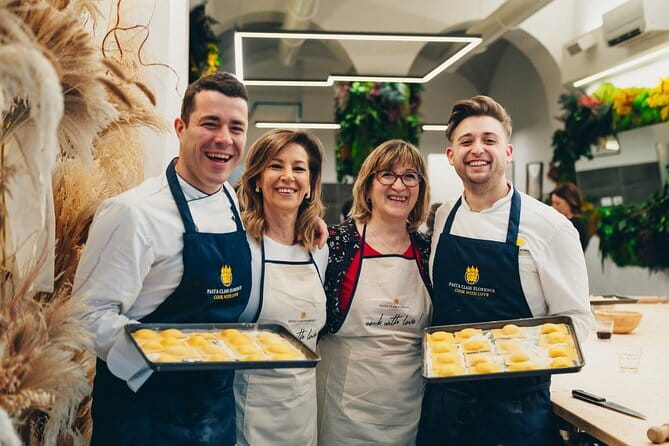
Red and white wine are available without an extra charge throughout the experience. This adds real value to the $126.98 price, especially because you also receive a three-course meal and hands-on instruction. The wine is not merely a token welcome drink. It is part of the evening or midday rhythm of the class.
There is a social tradeoff. You are cooking beside people you may not know, sharing tools and a table, and talking while you work. That can be a highlight if you like meeting people over food. It may feel intimate if you prefer a quiet, private lesson.
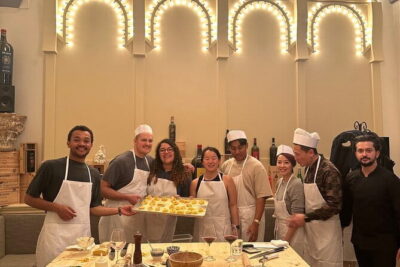
The small group helps. One class brought together people ranging in age from 20 to 80, and the format worked across that wide range. The shared tasks give everyone something to talk about, even if the group arrives as strangers. Several participants described leaving with new friendships, but you should book this with the expectation of a communal activity rather than a private couple’s class.
Drink sensibly. Unlimited wine sounds generous, and it is, but you still need steady hands for rolling, filling, and sealing pasta. The best value comes from enjoying the wine with the meal and conversation, not treating it as the main event.
How the teaching style affects your experience
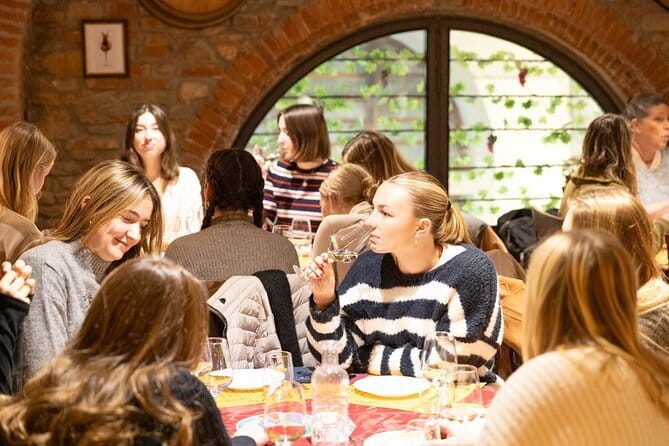
The chef makes or breaks a cooking class, and this experience benefits from instructors with both restaurant training and a teaching role. Marco is described as patient and clear. Simone brings energy and humor. Andrea is praised for keeping explanations engaging. Thomas is noted for careful hygiene and unhurried instruction. Davide is described as entertaining and helpful with local suggestions.
That range of personalities is worth keeping in mind. You will not get the exact same performance from every chef, but the format allows a good instructor to respond to the room. A mixed group may include someone who has never made dough and someone who cooks often. Patience matters more than theatrical flair, and the strongest sessions seem to combine both.
Hygiene is another useful point. You are eating food prepared by the whole group, so clean hands, surfaces, and tools matter. The teaching includes attention to hygiene, and one participant specifically appreciated the chef’s watchfulness. That will reassure you if you are careful about shared food preparation.
Recipes are provided after at least some sessions. This is useful because three pasta shapes and three sauces are a lot to remember after wine and conversation. Take notes if you want to reproduce the dishes at home, but the recipe handouts give you a practical starting point.
Is $126.98 a fair price?
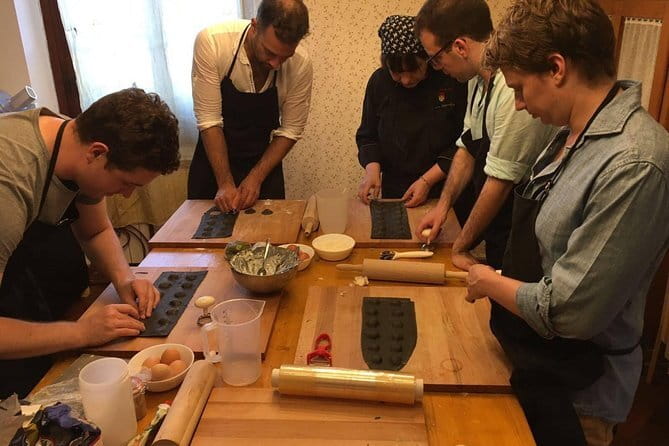
At $126.98 per person, this is not the cheapest meal in Florence, and you should not compare it with a simple bowl of pasta. You are paying for roughly three hours of instruction, ingredients, a full meal, unlimited wine, and a small-group setting with a Michelin-trained chef.
The value improves if you want an activity rather than another restaurant reservation. You eat three pasta dishes, but you also learn enough to repeat the process at home. The class can replace a meal and provide an evening of entertainment, which makes the price easier to justify.
It is also a better value for people who care about space and instruction. A crowded class can be frustrating even when it costs less. The 13-person limit gives this experience a practical advantage, particularly when everyone needs room to roll dough and shape filled pasta.
The price may feel high if you do not enjoy cooking, do not drink wine, or want a quiet meal. It may also be less useful if you have already taken several pasta classes and are looking only for advanced regional techniques. For most first-time pasta makers, the combination of food, teaching, and social time is strong.
The experience is often booked well ahead, with an average booking lead time of 47 days. If your Florence dates are fixed, reserve early. Free cancellation is available up to 24 hours before the start time for a full refund. Changes or cancellations inside that window are not accepted for a refund.
Who should book this Florence pasta class?
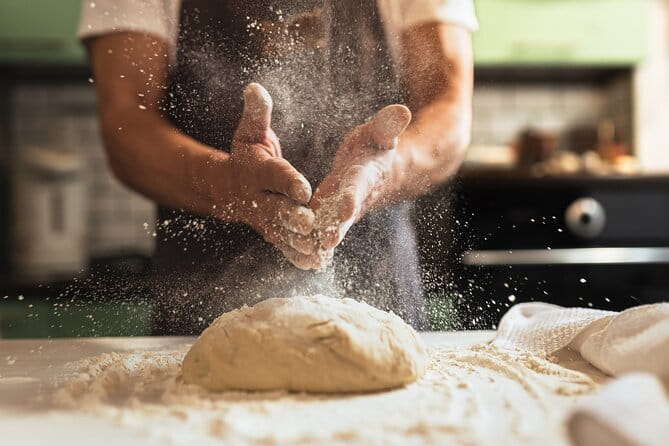
I would recommend it to couples, families, solo visitors who like meeting people, and friends looking for a break from museums and walking. It also suits a wide age range. You do not need to be an experienced cook, and the class has enough guidance for a first attempt.
It is particularly good for anyone who wants to return home with a usable skill. You will learn three pasta forms, several sauce ideas, and basic handling techniques. That is more lasting than a meal you simply order from a menu.
Vegetarians can take part, thanks to vegetarian options. If you have a food restriction beyond that, the supplied information does not specify what can be accommodated, so ask before booking rather than assuming.
I would think twice if you dislike shared cooking, prefer private instruction, or have a tight schedule. Plan for about three hours, and allow extra time around the start and end because the class may run closer to three and a half hours.
My practical verdict
Book this class if you want Florence to be more than a sequence of churches, galleries, and photographs. The strongest features are the three distinct pasta shapes, professional instruction, clean and comfortable working conditions, and the chance to eat a proper meal made during the lesson.
The main caution is that the wine and social format are central to the experience. If that sounds enjoyable, $126.98 is reasonable for the amount of food, teaching, and time included. If you want a short, quiet demonstration, choose something else. For hands-on pasta making with a meal at the end, this is a strong choice in Florence.
FAQ
Where does the pasta class meet?
The meeting point is Via dell’Agnolo 77r, 50122 Florence, Italy. The class ends back at the same location.
How long does the experience last?
The stated duration is approximately three hours. Some sessions have lasted about three and a half hours, so avoid scheduling a tight appointment afterward.
How many people can join the class?
The maximum group size is 13 people. Some sessions have had around 9, 10, or 12 participants.
Is the class taught in English?
Yes. The experience is offered in English.
What types of pasta will I make?
The class includes three pasta styles: tortelli, tagliatelle, and ravioli.
Is wine included?
Yes. Red and white wine are available without a stated limit throughout the experience.
Are vegetarian options available?
Yes. Vegetarian options are available.
Can I cancel for a full refund?
Yes. You can cancel at least 24 hours before the local start time for a full refund. Cancellations or changes made less than 24 hours before the experience are not accepted for a refund.
More artisan workshops in Florence
- Cooking Class and Lunch at a Tuscan Farmhouse with Local Market Tour from Florence
★ 5.0 · 4,831 reviews - Florence Cooking Class The Art of Making Gelato & Authentic Pizza
★ 5.0 · 2,053 reviews - Small Group Cooking Class & Market Food Tour in Florence
★ 5.0 · 1,574 reviews - Florence: Pizza and Gelato Preparation Class
★ 4.8 · 1,143 reviews
Recently added around Florence
- Accademia and Uffizi Small-group Guided Tour★ 4.5 · 8 reviews
- The David from Michelangelo.★ 5.0 · 3 reviews
- Combo: Accademia + walking + Uffizi Galleries Guided Tour★ 3.5 · 6 reviews
- The Complete Wine Tour Brunello, Nobile, Chianti wine experience★ 4.0 · 7 reviews
- The Best of Tuscany in 3 Days★ 4.5 · 13 reviews
- The Cooking Lab – Authentic Food Experience★ 5.0 · 113 reviews
- Florence Central Market Food Tour – Private Tour★ 4.0 · 7 reviews
- Family Friendly Florence Private City Tour★ 5.0 · 47 reviews
Florence Cooking Classes, compared.
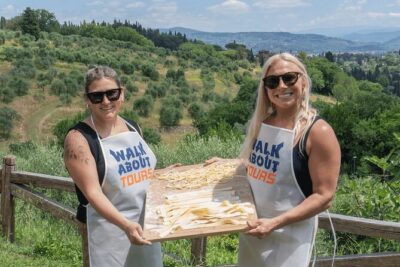
Florence Pizza or Pasta Class with Gelato Making at a Tuscan Farm
Read our review →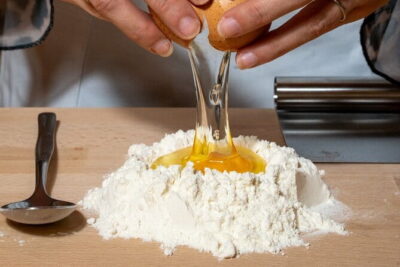
Pasta & Tiramisu Cooking Class with Unlimited Wine
Read our review →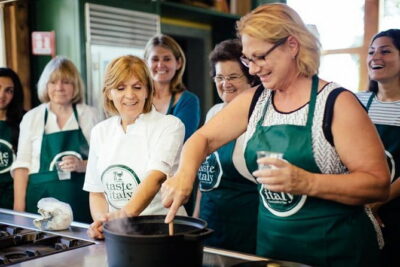
Cooking Class and Lunch at a Tuscan Farmhouse with Local Market Tour from Florence
Read our review →
Cooking Class Pasta & Tiramisu Making Unlimited Wine
Read our review →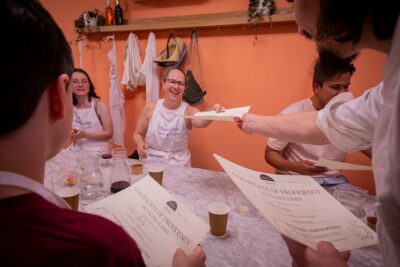
Florence Cooking Class The Art of Making Gelato & Authentic Pizza
Read our review →Browse the lists this tour appears in