
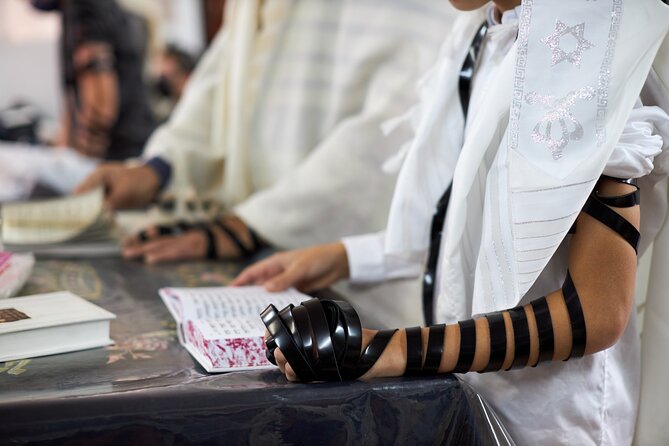
Reviewed · FLORENCE WALKING TOURS
Florence Jewish Quarter History Private Walking Tour
Florence’s Jewish story is tucked into places most art-focused visitors walk past. This private tour links a Jewish inscription near Florence Cathedral, the former ghetto around Piazza della Repubblica, the Medici-era city center, and the Great Synagogue into one clear story.
I like the way the tour connects Jewish life with Florence’s wider history, especially commerce and the Medici family. I also like the choice between a brisk two-hour walk and a three-hour version with skip-the-line synagogue and museum entry.
The main drawback is simple: the two-hour tour does not include the interiors of the Great Synagogue or Jewish Museum. If those are your main reason for booking, choose the longer option and check the meeting details carefully the day before.
Key points to know before you book

- Follow Jewish history from the 14th century to the present day, including the ghetto, wartime arrests, deportations, and Holocaust remembrance.
- See Jewish clues in famous Florence sights, including a Jewish inscription near the cathedral and a Star of David associated with Santa Croce Basilica.
- Choose your depth: the two-hour route focuses on outdoor sites, while the three-hour option adds the Great Synagogue and Jewish Museum.
- Walk with a private guide in English, French, Italian, Polish, Russian, or Spanish.
- End with local food advice, including a possible recommendation for Balagan Café or another kosher restaurant.
- Plan around worship times, since the Great Synagogue remains an active place of prayer.
Why this Florence Jewish history walk is worth your time
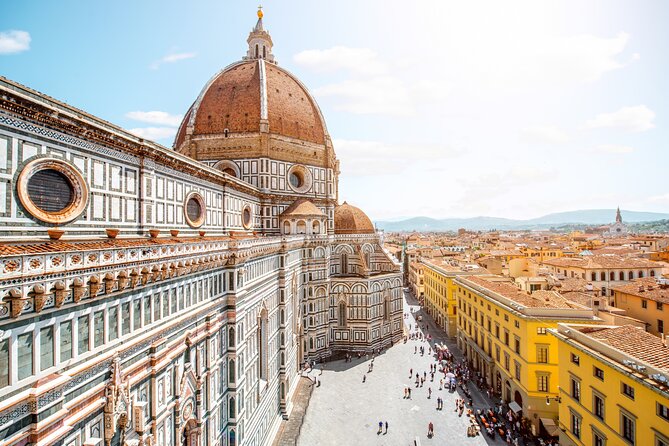
Florence is often reduced to Renaissance paintings, grand palaces, and the cathedral dome. This tour gives you another way to read the city. Instead of treating Jewish heritage as a separate subject, it places Jewish people within Florence’s commercial, political, religious, and wartime story.
I like that approach. You are not simply taken from one Jewish building to another. You begin in the Old Town, where the guide points out signs that are easy to miss, then connect those clues to the former Jewish ghetto and the later Jewish Quarter.
The tour lasts two to three hours and is offered as a private group experience. That matters here. Jewish history in Florence includes sensitive subjects, including arrests, deportations, and the Holocaust. A private setting gives you room to ask questions and set the pace without being tied to a large public group.
Recent bookings have included strong praise for the guides’ explanations. Daniela was singled out for making the Jewish history of Florence clear while also pointing out lesser-known details in the city center. Another booking described the tour as highly informative. Those comments match what this format is designed to do: give you a focused historical walk rather than a general introduction to Florence.
More walking tours in Florence:
- Florence: Guided Walking Tour
★ 4.5 · 3,334 reviews - Skip the line: Uffizi and Accademia Small Group Walking Tour
★ 4.5 · 3,135 reviews - Florence: Guided Walking Tour
★ 4.6 · 1,602 reviews
Starting near Florence Cathedral
The meeting point is near Florence Cathedral, with the exact location depending on the option you book. The listed coordinates place the start in the cathedral area, so allow time to reach the correct spot and read the message sent to you the day before.
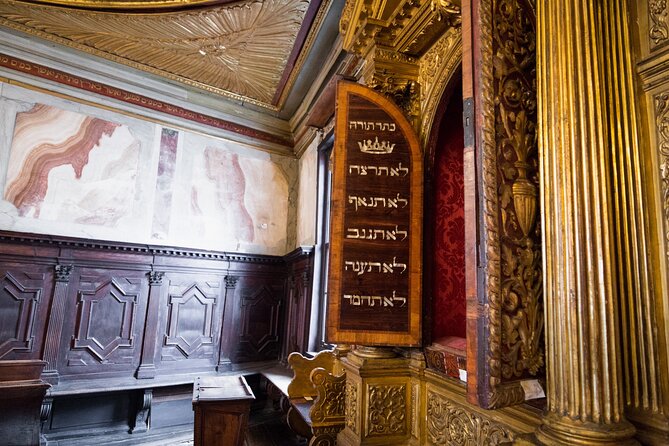
The cathedral is a smart place to begin. You already know it as one of Florence’s main sights, but the guide directs your attention to a Jewish inscription connected with the Ten Commandments. It is the kind of detail that changes how you look at a familiar monument.
This opening also sets the tone for the tour. Jewish traces in Florence are not always presented in a single, clearly marked district. Some appear in famous public spaces, religious buildings, and streets that now serve ordinary city life.
You should expect a walking tour through the historic center, not a museum-style lecture. Wear comfortable shoes, since the route links several central locations on foot. The tour is listed as wheelchair accessible, though the exact route and interior access can depend on the selected option and synagogue conditions.
Piazza della Repubblica and the old ghetto
The route continues toward Piazza della Repubblica, a major city square built over the area of Florence’s old market. The guide explains how commercial trade shaped this part of the city and how Florence’s Jewish ghetto was established here.
This is one of the most useful stops for understanding Jewish life in Florence. A ghetto was not simply a neighborhood with a distinctive name. It was a place shaped by legal restrictions, forced residence, trade, and changing relations with the ruling authorities.
The tour also looks at Jewish involvement in commerce and the relationship with the powerful Medici family. That connection gives the story more balance. You hear about Jewish residents as merchants and members of Florentine society, not only through the later tragedies of persecution.
Piazza della Repubblica is now one of the city’s busiest public spaces, so do not expect to see an intact medieval quarter. The value is in the explanation. The guide helps you understand how a familiar square replaced an older urban setting and how the city’s Jewish past can survive even when the original buildings are gone.
Piazza della Signoria and Medici connections
From there, the walk reaches Piazza della Signoria and Palazzo Vecchio. This is one of Florence’s grand political spaces, filled with sculpture and reminders of civic power.
The Jewish connection here comes through the guide’s explanation of commerce and the Medici family. You get a wider picture of how Jewish people fit into Florence’s economy and how their position related to the city’s ruling structure.
I like this part because it keeps the tour from becoming a narrow list of religious sites. Florence’s Jewish story was shaped by money, work, politics, law, and family connections, just like the history of any city community.
The tradeoff is that this portion may feel less visually specific than the synagogue visit. If you want a tour made almost entirely of Jewish buildings, the two-hour walking route may feel spread out. If you want context for how Jewish residents lived within Florence, the stop earns its place.
More Renaissance and history tours in Florence:
- Tipsy Tour: Guided Bar Crawl In Florence with Dark History
★ 5.0 · 271 reviews - Florence Cooking Course with Historic Local Market Visit
★ 4.5 · 151 reviews - Florence: Medici Family History Tour
★ 4.3 · 93 reviews - Historical Guided Tour of Florence’s Iconic Cathedral
★ 3.5 · 88 reviews
The Star of David at Santa Croce
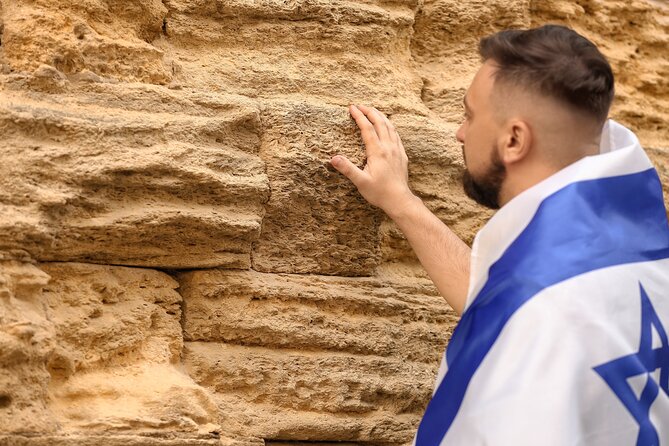
The guide then points out a Star of David connected with the facade of Santa Croce Basilica. This is another example of why a guide helps. You might pass Santa Croce focused on the basilica’s famous art and tombs, without noticing the Jewish symbolism mentioned on this route.
The stop works best as part of the larger theme: Florence contains layers that are easy to miss when you only follow the standard checklist. The guide does not replace a full visit to Santa Croce, and the tour is not presented as an interior art tour of the basilica. Instead, the church becomes part of a discussion about symbols and the city’s mixed religious history.
The former Jewish Quarter is also included. Many Jewish residents moved there after the ghetto was demolished, and the guide explains how that change reshaped Jewish life in Florence.
You should keep your expectations realistic. The route reveals history through streets, monuments, and interpretation. It is not a preserved Jewish quarter with every original building still in place.
The Great Synagogue and Jewish Museum option
The three-hour option adds entry to Florence’s Great Synagogue and Jewish Museum. If you want the fullest version of the experience, this is the option I would choose.
Skip-the-line tickets are included for the booked entry time. That means you avoid waiting at the ticket office, though it does not mean the synagogue can always be entered immediately during services or other scheduled events.
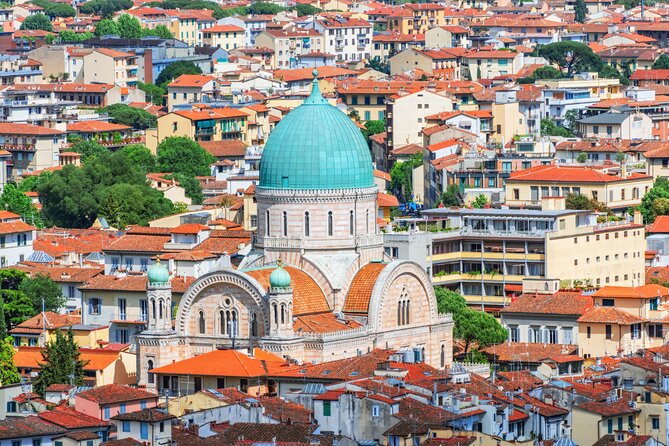
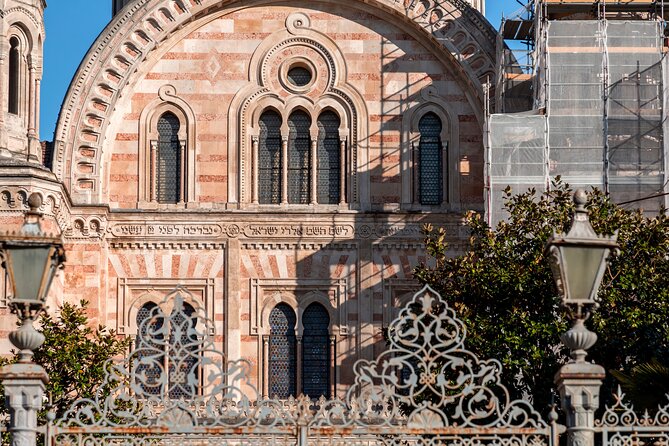
The Great Synagogue was built during the period of Jewish emancipation and is described as one of the important synagogues constructed in Europe during that era. Inside, the Jewish Museum displays religious objects and clothing. It also includes exhibits remembering victims of the Holocaust.
This visit gives physical form to the story you have heard outdoors. The walking route explains where Jewish life took place in Florence. The museum then gives you objects, clothing, and memorial material to consider at closer range.
Allow extra care with synagogue etiquette. It is an active place of worship, so dress and behave respectfully. Yarmulkes are available on site at no charge. Interior access can be limited during the Sabbath, prayer times, concerts, or other scheduled events, so follow the timing and instructions provided for your booking.
The three-hour option costs more than the shorter walk, but its value is clear if you would otherwise visit the synagogue and museum separately. You get the historical walk, the guide’s context, and reserved entry in one outing. If your schedule is tight, that combination can save both time and guesswork.
The two-hour option: good for a first introduction
The two-hour route is a better fit if you want a focused introduction rather than a full museum visit. You will see the main outdoor locations, including the cathedral area, Piazza della Repubblica, Piazza della Signoria, Santa Croce, and the former Jewish Quarter.
The shorter option still covers the major themes: Jewish arrival in Florence in the 14th century, commerce, the ghetto, movement after the ghetto’s demolition, wartime persecution, and the Holocaust.
Just remember that the Great Synagogue and Jewish Museum interiors are not included in this version. The information about the Great Synagogue may still appear as part of the route, but you should not assume that you will go inside.
At the end, the guide can point you toward Balagan Café or another kosher restaurant. This is a useful practical touch, particularly if you want to continue the subject over a meal. The exact recommendation may depend on the guide and what is open that day.
Guide languages, group size, and walking comfort
The tour is available in English, French, Italian, Polish, Russian, and Spanish. It is a private group experience, so you can ask for clarification and spend more time on subjects that matter to you.
The stated guide ratio is one licensed guide for up to 25 people. Groups of 26 to 50 receive two licensed guides. Even so, I would check the exact group arrangement when booking, especially if you are looking for a genuinely intimate private walk.
The tour is wheelchair accessible according to the activity information. Florence’s historic center can include crowded streets and uneven surfaces, but no unsupported promise should be made about every section of the route. If you need a particular route adjustment, raise it when arranging the tour.
Languages and accessibility make this a flexible choice for families and mixed-age groups. The subject matter is serious, though, so I would consider whether younger children are ready for discussion of deportation and the Holocaust.
What the excellent feedback tells you
The available feedback is brief but consistent. One booking specifically praises Daniela for explaining Jewish history in Florence while also revealing lesser-known parts of the city center. Another calls the tour excellent and informative.
That points to the strongest feature of the experience: the guide’s role. The buildings alone do not explain the full story. The walk depends on someone who can connect a cathedral inscription, a former market, Medici power, a basilica symbol, the ghetto, and the synagogue without losing the thread.
The feedback does not provide a long list of practical complaints or detailed comments about the exact route. The rating record is small, with four reviews and a five-star average, so I would treat it as encouraging rather than as proof that every guide and departure will feel identical.
Booking advice and cancellation flexibility
The activity allows free cancellation up to 24 hours before the tour for a full refund. You can also reserve now and pay later, which helps if your Florence plans are still shifting.
Check the email sent the day before. The meeting point may change by option, and the message contains important instructions.
Starting times depend on availability. For the three-hour version, the booked time also matters because synagogue entry is tied to the ticket arrangement. Build your day around that appointment rather than assuming you can arrive whenever convenient.
The price is not provided here, so compare the amount shown at booking with the cost of separate synagogue and museum entry plus a general Florence walk. The longer option offers better value if you want both the historical explanation and the interior visit. The shorter route makes more sense if you already have synagogue tickets or mainly want the outdoor history.
Who should book this Florence Jewish tour?
I would choose this tour if you want a Jewish history experience that also explains Florence’s city center. It suits first-time visitors who want more than the usual Renaissance circuit, repeat visitors looking for a different angle, and families or private groups who prefer questions and conversation.
Choose the three-hour option if the Great Synagogue and Jewish Museum are essential. Choose two hours if your schedule is tight or you mainly want the historical walk.
I would not book it expecting a preserved medieval Jewish neighborhood or a full tour of Florence Cathedral and Santa Croce. Those landmarks serve as touchpoints, not the main attraction.
For most people interested in Florence’s Jewish past, the three-hour version is the stronger choice. You get the street story, the museum objects, and the Holocaust memorial context in one carefully linked visit. If you want a shorter introduction, the two-hour route still offers a thoughtful way to see Florence with fresh eyes.
FAQ
How long does the Florence Jewish history tour last?
You can choose between a two-hour and a three-hour private walking tour.
What is included in the two-hour option?
The two-hour option covers Jewish history and heritage sites in Florence’s Old Town and former Jewish Quarter. It does not include tours inside the Great Synagogue or Jewish Museum.
Does the three-hour option include synagogue entry?
Yes. The three-hour option includes skip-the-line tickets for the Great Synagogue and Jewish Museum at the booked time.
What does skip-the-line entry mean here?
It allows immediate entry at your booked time without waiting in line at the ticket office.
Can I visit the synagogue during prayer or Sabbath services?
Interior access may be limited during the Sabbath, prayer times, concerts, and other scheduled events because the Great Synagogue is an active place of worship.
What should I wear to the Great Synagogue?
You should dress and behave appropriately for an active place of worship. Yarmulkes are available on site free of charge.
Which languages are available?
The tour is offered in English, French, Italian, Polish, Russian, and Spanish.
Is the tour wheelchair accessible?
The activity is listed as wheelchair accessible. The meeting point may vary by option, so check the day-before instructions and share any specific access needs when booking.
Recently added around Florence
- Accademia and Uffizi Small-group Guided Tour★ 4.5 · 8 reviews
- The David from Michelangelo.★ 5.0 · 3 reviews
- Combo: Accademia + walking + Uffizi Galleries Guided Tour★ 3.5 · 6 reviews
- The Complete Wine Tour Brunello, Nobile, Chianti wine experience★ 4.0 · 7 reviews
- The Cooking Lab – Authentic Food Experience★ 5.0 · 113 reviews
- Florence Central Market Food Tour – Private Tour★ 4.0 · 7 reviews
- The Best of Tuscany in 3 Days★ 4.5 · 13 reviews
- Family Friendly Florence Private City Tour★ 5.0 · 47 reviews
Florence Walking Tours, compared.
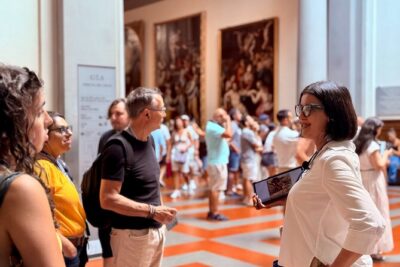
Skip the line: Uffizi and Accademia Small Group Walking Tour
Read our review →
Renaissance and Medici Tales Guided Walking Tour
Read our review →
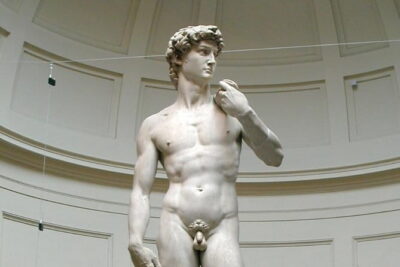
Skip-the-Line Florence Highlights and David Walking Tour
Read our review →
Dark Mysteries and Legends Guided Walking Tour
Read our review →
Florence in a Day: Michelangelo’s David, Uffizi and Guided City Walking Tour
Read our review →Browse the lists this tour appears in