
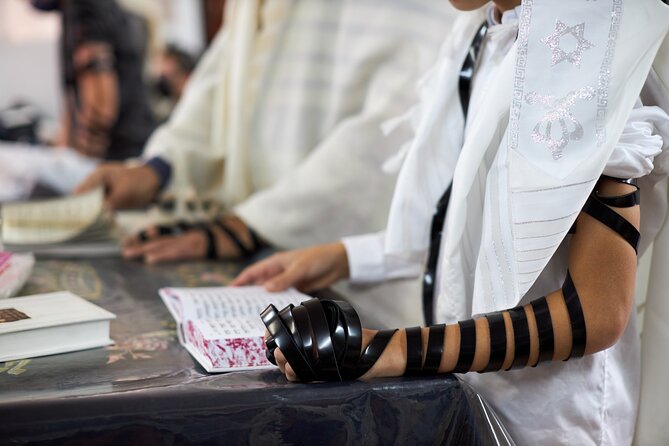
Reviewed · FLORENCE WALKING TOURS
Florence Jewish Quarter History Private Walking Tour
Florence’s Jewish story is woven into places many visitors pass without a second look. This private walk connects a Jewish inscription near the Duomo, the old market and ghetto at Piazza della Repubblica, Medici-era commerce, and the Great Synagogue. The three-hour option adds the synagogue and Jewish Museum, where the subject becomes personal through religious objects and Holocaust memorial exhibits.
I like two things here. First, the route puts Jewish life into the wider story of Florence instead of treating the community as an isolated footnote. Second, you get a private licensed guide and useful suggestions for kosher restaurants, shops, and cafés. The main caution is price: at $190.83 per person, the experience needs a strong guide to feel worthwhile, and one account describes a guide who walked ahead rather than engaging with the group.
Key points to know before booking

- The Duomo meeting point is outside the Opera del Duomo Museum: Do not enter the museum, since its staff are not connected with the tour.
- Piazza della Repubblica marks the old market and former ghetto: This is where the tour begins to explain Jewish life within Florence’s commercial center.
- Piazza della Signoria adds the Medici connection: You’ll hear about Jewish commerce and ties to Florence’s ruling family.
- Santa Croce has a Jewish detail easy to miss: Your guide points out a Star of David on the basilica’s façade.
- Only the three-hour option includes synagogue and museum entry: The two-hour version stays outside these interiors.
- The Great Synagogue remains an active place of worship: Dress and behave respectfully, and expect limited interior access during Sabbath, prayers, concerts, or other scheduled events.
Why this walk adds something new to central Florence
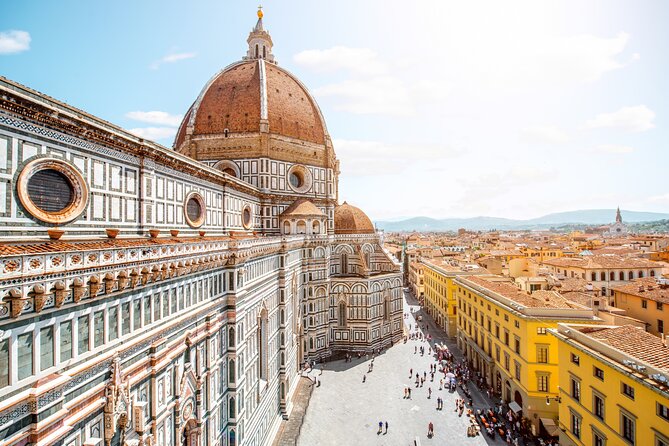
You probably already plan to see the Duomo, Piazza della Signoria, and Santa Croce. This tour’s value is in changing the way you read those familiar places.
Florence is often presented through its Renaissance painters, architects, and Medici rulers. This walk gives you another thread: Jewish merchants, religious life, the ghetto, emancipation, displacement, and the community that continues today. You are not simply looking at a synagogue. You are seeing how Jewish life fit into the city’s streets, markets, political circles, and religious setting.
The subject also works well as a walking tour because the route moves through the Old Town rather than confining the story to a museum. Your guide can point out details in the street and explain how a place used for trade or government affected Jewish residents.
The format is private, so your group has the guide to itself. That matters for a topic that may prompt questions about law, commerce, religion, discrimination, and daily life. The provider recommends one licensed guide for up to 25 people, with two guides for groups of 26 to 50, so larger private parties are not meant to crowd around one voice.
Still, the experience depends heavily on the guide. One especially praised guide is Linda Sassano Higgins, who was credited with bringing the cultural setting and individual experiences of Florence’s Jewish community to life. That is the standard you should hope for. Another account describes a guide who walked too fast and stayed ahead of the group, which made the private format feel less useful. Ask questions early, keep a comfortable pace, and speak up if the commentary becomes too thin.
More walking tours in Florence:
- Florence: Guided Walking Tour
★ 4.5 · 3,334 reviews - Skip the line: Uffizi and Accademia Small Group Walking Tour
★ 4.5 · 3,135 reviews - Florence: Guided Walking Tour
★ 4.6 · 1,602 reviews
Starting at Piazza del Duomo
The meeting point is in front of the Opera del Duomo Museum at Piazza del Duomo, 9. You should wait outside. The museum staff are not informed about the tour, so entering to ask for help could lead you in the wrong direction.
This opening stop is brief, about 10 minutes, but it gives you a useful landmark and a simple way to find your guide. The cathedral area is one of Florence’s busiest meeting zones, so allow enough time to identify the correct spot.
From here, the guide introduces a detail that many people miss: the cathedral features a Jewish inscription of the Ten Commandments. The point is not that the Duomo was a Jewish building, of course. The value lies in seeing how Jewish references and symbols can appear within a city better known for Christian art and Renaissance power.
You will want comfortable shoes. The route is on foot, and the tour lasts roughly two to three hours. The walk covers several central squares and reaches Santa Croce, so this is best done when you can give the route your full attention rather than squeezing it between timed museum entries.
Piazza della Repubblica and the old Florentine ghetto
The next stop is Piazza della Repubblica, with about 30 minutes for explanation and walking. Today, the square is a broad central space, but the tour uses it to discuss the old market and the former Jewish ghetto.
That connection gives the square a different weight. Markets are not just attractive urban spaces. They reveal who could trade, who had access to customers, and how city authorities organized daily life. Your guide explains how Jewish residents participated in commerce and how the ghetto was established in this part of Florence.
I like this section because it moves beyond monuments. You are not asked to admire a façade and move on. Instead, you learn how restrictions and opportunities shaped a community’s place in the city.
The ghetto story also provides a bridge to later parts of the route. Jewish residents did not remain in one fixed neighborhood forever. After the ghetto was demolished, many moved toward the area near Santa Croce. That change helps you understand why the tour is spread across several parts of central Florence.
The drawback is that this information requires a guide who can make an urban square feel historical without relying on visible ruins. If you prefer tours packed with surviving buildings, you may find this stop less immediately dramatic. Its value is in the explanation.
Piazza della Signoria, commerce, and the Medici
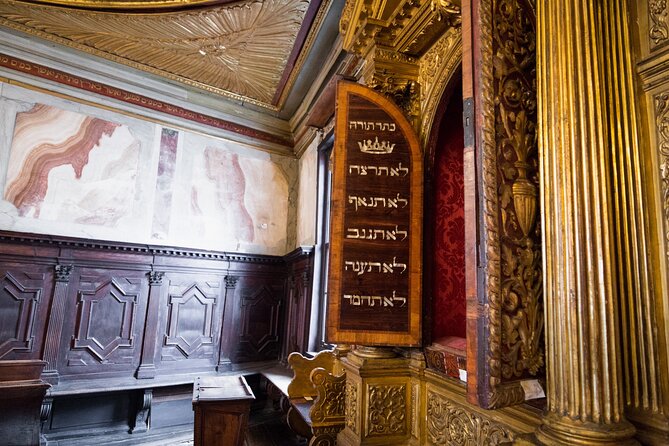
The walk then reaches Piazza della Signoria, home of Palazzo Vecchio. Allow around 50 minutes here, making it one of the longer stops.
This is where Jewish history meets Florence’s political and commercial story. Your guide discusses the role of Jewish people in commerce and their connection to the Medici family. That relationship is worth hearing in place, with Palazzo Vecchio nearby, because it connects economic activity with the ruling power of the city.
The stop should help you see the Medici period from a slightly different angle. Florence’s great ruling family is often explained through art patronage and political control. Here, you consider how Jewish merchants and financial interests fit into that system.
You will not be touring Palazzo Vecchio as part of this experience. The focus is the square and its historical setting, so do not book this tour expecting a full interior visit to the palace. The time is used for context and discussion rather than a long list of formal entries.
This is also a good moment to ask the guide for clarification. A private tour is most useful when you treat it as a conversation, not a moving lecture. If you want to understand how commerce affected Jewish life, ask how the ghetto, the market, and Medici power related to each other.
More Renaissance and history tours in Florence:
- Tipsy Tour: Guided Bar Crawl In Florence with Dark History
★ 5.0 · 271 reviews - Florence Cooking Course with Historic Local Market Visit
★ 4.5 · 151 reviews - Florence: Medici Family History Tour
★ 4.3 · 93 reviews - Historical Guided Tour of Florence’s Iconic Cathedral
★ 3.5 · 88 reviews
Santa Croce and the Star of David
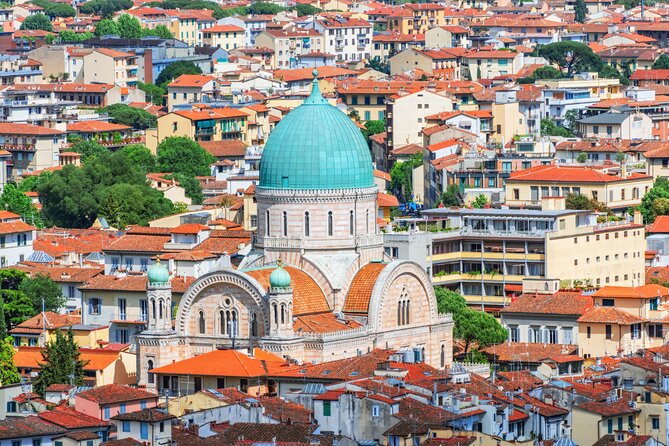
At the Basilica of Santa Croce, your guide points out a Star of David on the façade. The stop lasts about 30 minutes and leads into the former Jewish Quarter, where many Jewish residents moved after the ghetto was demolished.
The detail on Santa Croce is precisely the sort of thing you might miss alone. The basilica is famous for its Christian art and tombs, so a Jewish symbol on its façade may surprise you. The guide’s job here is not to turn the symbol into a grand claim, but to explain why it matters within Florence’s shared urban setting.
This section also makes the route feel less like a standard Florence highlights walk. You still see a major basilica, but you are looking for a specific Jewish connection rather than simply checking off a famous church.
The tour does not describe admission to the basilica interior, so do not assume your walking ticket includes a full visit inside Santa Croce. The Jewish Quarter discussion takes place as part of the outdoor route.
Near the end of this portion, the guide can suggest Balagan Café or another kosher restaurant. That practical advice is a welcome touch. A short recommendation from someone familiar with the local Jewish community can help you choose where to eat or browse after the tour. The information is more useful if you tell the guide what you are seeking, such as a meal, a café, or a shop.
The Great Synagogue and Jewish Museum
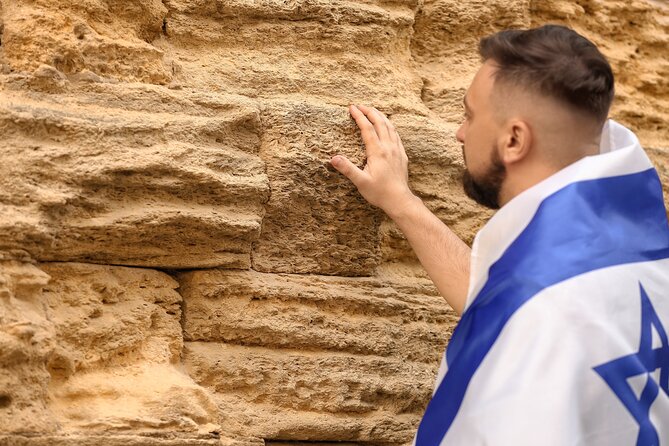
Choose the three-hour option if you want the most complete version of the experience. It includes skip-the-line entry to the Great Synagogue and Jewish Museum, with about one hour inside.
The ticket gives you immediate entry at your booked time without waiting at the ticket office. That is not the same as skipping every possible delay. The synagogue is an active place of worship, and access inside can be limited during Sabbath, prayer times, concerts, and other scheduled events. Check the timing and follow the instructions you receive before the tour.
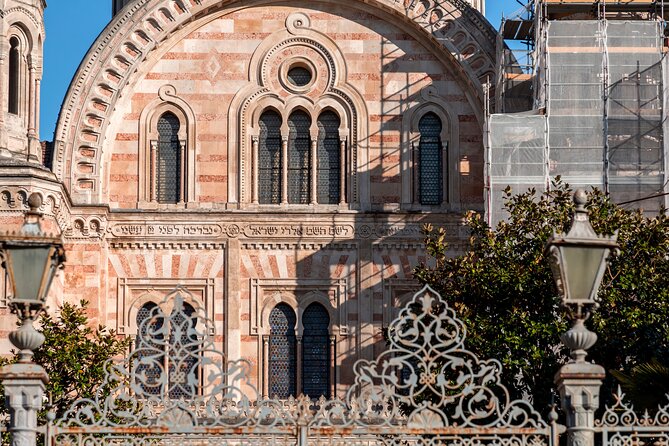
The Great Synagogue was built during the period of Jewish emancipation and is described as one of the important synagogues constructed in Europe during that era. Its scale and design provide a strong counterpoint to Florence’s better-known churches. You are looking at a building that reflects a changing legal and civic position for Jewish communities.
The Jewish Museum adds objects to the street-level story. Displays include religious items and clothing, along with exhibits commemorating Holocaust victims. These objects help turn broad subjects such as emancipation and persecution into something you can consider at a human scale.
You should dress and act appropriately because the synagogue remains an active house of worship. Yarmulkes are available free at the site. Interior access may be restricted at certain times, so even the three-hour option cannot promise the same visit under every schedule.
The two-hour option does not include entry to the Great Synagogue or Jewish Museum. This is the most important difference between the choices. If you select the shorter tour, you will learn about the sites from the guide but should not expect to go inside them.
Is $190.83 per person a fair price?
At $190.83 per person, this is not a budget walk. You are paying for a private format, a licensed guide fluent in your chosen language, and, in the three-hour version, entry to the synagogue and museum.
The value improves if you are traveling with people who have a serious interest in Jewish history, religion, Florence, or family heritage. A private guide can adjust the conversation and answer questions in a way a large group tour often cannot. The kosher dining tips also add practical value if food is part of your planning.
The price is harder to justify if you mainly want a quick introduction or if your group is comfortable reading museum displays on its own. In that case, the two-hour option may be a better fit, though it omits the interiors that give the subject much of its emotional and visual force.
Group discounts are available, but the price is listed per person, so check the final total for your party before paying. Since the experience is private, splitting the cost among several people may make more sense than booking for one or two participants.
The limited rating of 3.3 from three published assessments suggests you should not book on the private label alone. The strongest praise centers on the guide’s ability to explain cultural context and individual lives. The main criticism concerns pace and weak engagement. Those are not small details on a walking tour. They shape the whole experience.
Who should book this Florence Jewish history tour?
I would recommend it to you if you have already seen Florence’s headline sights and want a more focused subject. It also suits visitors with Jewish heritage, students of European history, or anyone who wants to understand how religion and commerce shaped the city.
The route is likely to work for most people who can take part in a city walk. It is near public transportation, and most participants can join. Still, you should be comfortable walking for up to three hours and keeping pace with a guide.
Families can use the private format to ask age-appropriate questions, though the Holocaust exhibits may need thoughtful preparation for younger children. The tour may also suit food-focused visitors because of the kosher restaurant, shop, and café suggestions.
I would be cautious about booking it if you want a relaxed stroll with little explanation, or if you dislike tours that rely on historical context rather than dramatic remains. I would also choose the three-hour option only if you can accept the possibility that synagogue access may be limited during worship or special events.
You can cancel for a full refund up to 24 hours before the start time. Changes or cancellations made less than 24 hours ahead are not accepted, with cut-off times based on local time.
Should you book it?
Book this tour if the three-hour route, the Great Synagogue, and the Jewish Museum are central to your plans. The best version combines a thoughtful guide with sites that are easy to miss on a standard Florence visit, and Linda Sassano Higgins shows the level of personal, cultural explanation that can make the experience memorable.
Before paying, confirm which option you are selecting and read the day-before email carefully. If your guide sets a fast pace or offers little conversation, say so early. At this price, you should expect a real exchange, not a guide several steps ahead.
Skip it if you only want a low-cost overview or already plan to visit the museum independently. For the right audience, though, this walk offers a useful correction to the usual Florence story: it shows the city through Jewish streets, Jewish work, Jewish worship, and Jewish memory.
FAQ
Where does the tour begin?
It begins in front of the Opera del Duomo Museum at Piazza del Duomo, 9, 50122 Florence.
Should I enter the Opera del Duomo Museum to find the guide?
No. The museum is only the meeting landmark, and its staff are not informed about the tour.
How long does the tour last?
The experience lasts approximately two to three hours, depending on the option selected.
Is the tour private?
Yes. Only your group participates in the activity.
Is entry to the Great Synagogue and Jewish Museum included?
Entry is included with the three-hour option. The two-hour option does not include interior tours or skip-the-line tickets.
What does skip-the-line entry provide?
It gives you immediate entry at your booked time without waiting at the ticket office.
Can the Great Synagogue visit be limited?
Yes. The synagogue is active, and interior access may be limited during Sabbath, prayer times, concerts, or other scheduled events.
Is suitable clothing required at the synagogue?
You should dress and act appropriately. Yarmulkes are available free of charge at the site.
Does the guide offer food recommendations?
Yes. The guide can provide tips on kosher restaurants, shops, and cafés, including Balagan Café or another recommended kosher restaurant.
Can I cancel for a full refund?
Yes. You can cancel at least 24 hours before the start time for a full refund. Changes or cancellations made less than 24 hours before the start time are not accepted.
Recently added around Florence
- Accademia and Uffizi Small-group Guided Tour★ 4.5 · 8 reviews
- The David from Michelangelo.★ 5.0 · 3 reviews
- Combo: Accademia + walking + Uffizi Galleries Guided Tour★ 3.5 · 6 reviews
- The Complete Wine Tour Brunello, Nobile, Chianti wine experience★ 4.0 · 7 reviews
- The Best of Tuscany in 3 Days★ 4.5 · 13 reviews
- The Cooking Lab – Authentic Food Experience★ 5.0 · 113 reviews
- Florence Central Market Food Tour – Private Tour★ 4.0 · 7 reviews
- Family Friendly Florence Private City Tour★ 5.0 · 47 reviews
Florence Walking Tours, compared.
Skip the line: Uffizi and Accademia Small Group Walking Tour
Read our review →
Renaissance and Medici Tales Guided Walking Tour
Read our review →
Skip-the-Line Florence Highlights and David Walking Tour
Read our review →
Dark Mysteries and Legends Guided Walking Tour
Read our review →
Florence in a Day: Michelangelo’s David, Uffizi and Guided City Walking Tour
Read our review →Browse the lists this tour appears in