
Reviewed · ACCADEMIA GALLERY AND DAVID TOURS
Florence: David Accademia Gallery Tour & Skip the Line Tickets
Michelangelo’s David is the star, but this short Accademia Gallery tour gives you more than a quick look at a famous statue. You’ll enter with priority access, then follow a certified English-speaking guide through the Medici musical-instrument collection and into the Tribune where David waits beneath its dome.
I like the tight one-hour format for a busy Florence schedule, and I like that you can stay inside afterward to see the plaster casts, gold-ground altarpieces, and Renaissance paintings. The guide also gives David a human story, explaining how one artist shaped a six-meter block of Carrara marble into a figure that still feels startlingly alive.
The main consideration is price: at $71.04 per person, this is not the cheapest way into the museum. You are paying for reserved entry, a guide, headsets, and a simpler visit, so it makes the most sense when your time is short or the Accademia’s lines are long.
Key points at a glance
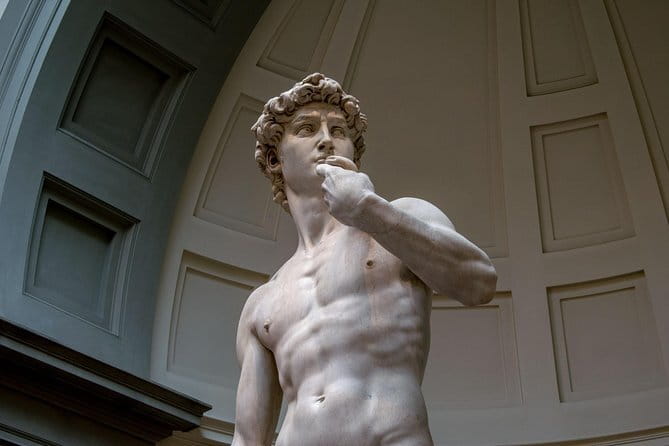
- David after just three years of carving: See Michelangelo’s most famous sculpture up close, carved from one six-meter block of Carrara marble.
- Five more Michelangelo sculptures: The four Prisoners and San Matteo help you understand the artist’s working process.
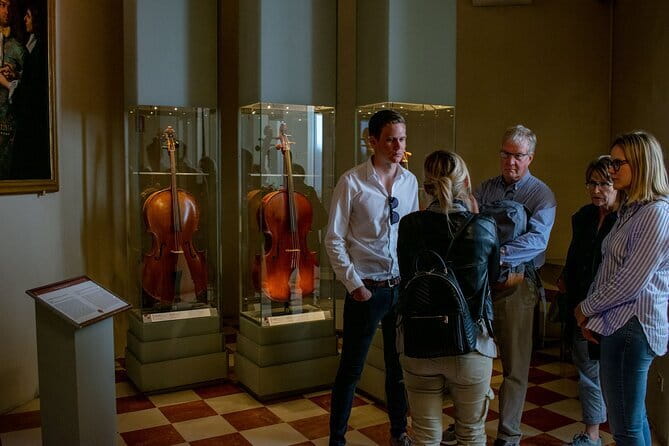
- Medici instruments before the statue: See a costly Stradivari, the oldest piano in the collection, and other unusual objects.
- Priority museum entry: Avoid the regular line, though security checks can still cause delays.
- English guidance with headsets: Follow the explanation clearly in a group of no more than 19 people.
- Extra time inside: After the guided hour, continue through the Gipsoteca, upper-floor altarpieces, and Renaissance paintings.
Why David still deserves your Florence time
Florence has no shortage of famous art. It is easy to wonder if another marble statue can really justify a ticket and an hour of your day. David answers that question quickly.
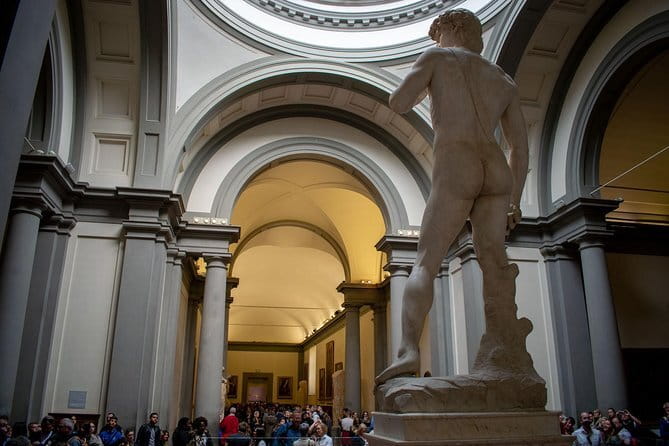
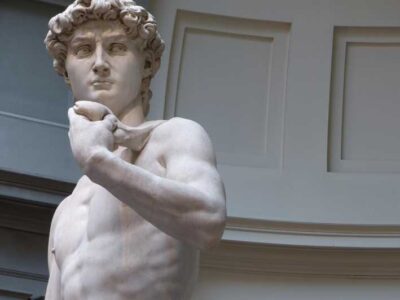
The sculpture is enormous, but it does not feel clumsy or oversized. Michelangelo carved the figure from a single block of Carrara marble, and the scale becomes clear as you move through the Tribune toward him. The details are the surprise: the turn of the head, the tension in the hands, and the careful balance between stillness and action.
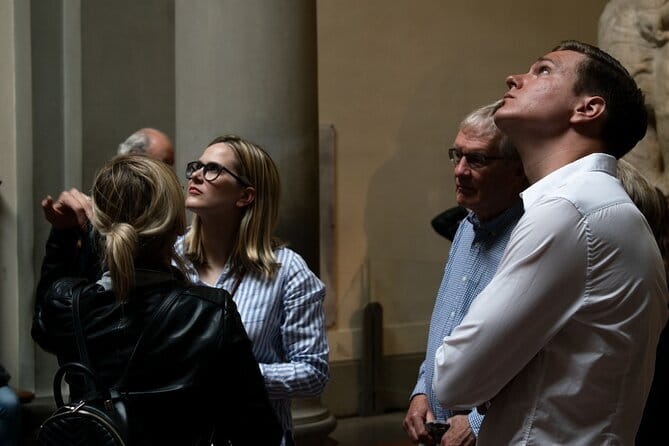
A guide helps you see why the statue matters beyond its fame. You learn about the carving process, the marble, the artistic choices, and the story behind the work. Camilla, one guide named in the tour feedback, was especially praised for explaining how a marble carving is made. That kind of explanation gives you something useful to look for instead of leaving you with only a famous name and a photograph.
The Accademia also holds the other Michelangelo works that make David easier to understand. The four Prisoners appear unfinished, with figures still emerging from the stone. San Matteo is another incomplete work. Together, these pieces let you compare a sculpture in progress with one that has reached its final form.
More ways to see the David at the Accademia:
- Florence: Timed Entrance Ticket to Michelangelo’s David
★ 4.6 · 16,983 reviews - Florence: Michelangelo’s David Skip-the-Line Entry Ticket
★ 4.5 · 12,764 reviews - Florence Accademia Gallery Tour with Entrance Ticket Included
★ 4.5 · 6,148 reviews
Start with Medici music, not just Michelangelo
The tour begins in the gallery’s musical-instrument collection connected with the Medici family. This is a smart opening because it broadens your view of the museum before the main event.
You can see a Stradivari described as the most expensive in the world, along with the oldest piano in the collection and other unusual instruments. The exact visual impact will depend on your interest in music and display cases, but the collection gives the visit a useful change of pace.
It also reminds you that the Accademia is not simply a one-statue museum. Florence’s Medici rulers supported music, painting, sculpture, and collecting, and this opening section places the gallery in that wider setting. If you arrive expecting only David, this is a pleasant surprise.
The tour is conducted in English, and earphones are supplied so you can follow the guide without standing shoulder to shoulder with the group. That matters in a museum where several groups may be listening at once. The maximum group size is 19 people, so this is not a private tour, but it is also not designed as a huge crowd.
Walking into the Tribune and facing David
From the instrument collection, you move with the guide toward the De Fabris Tribune. This is the purpose of the visit, and the route is arranged to build anticipation without wasting your limited time.
David was carved in three years from a single block of marble measuring six meters tall. The work is often described in terms of its size, but the better reason to pause is the way Michelangelo makes the body feel alert. The figure is not shown after the battle. He is poised before it, thinking and preparing.
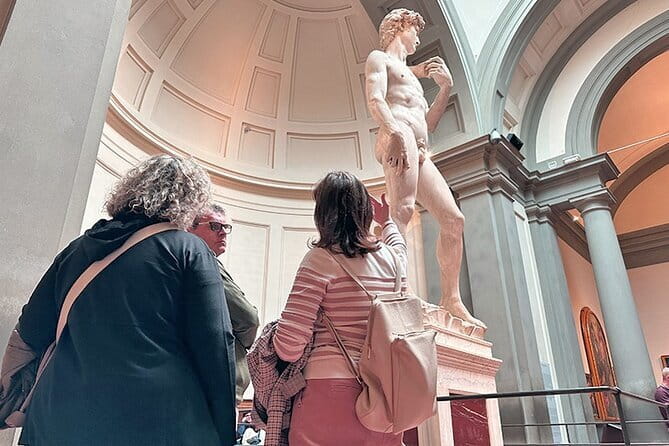
Your guide can point out the details that are easy to miss when you are busy taking in the whole statue. The hands, face, and stance carry much of the tension. You can then spend a little time looking for those details yourself.
The guided visit lasts about one hour. That is enough for a clear introduction, but it is not enough for a slow museum study. If you want to examine every painting or read every label, you will need to use the extra time after the tour.
The four Prisoners and San Matteo
David is more meaningful when you see the unfinished works nearby. The four Prisoners appear to push and struggle against the marble that still surrounds them. Their incomplete state makes Michelangelo’s method easier to imagine.
You are not just looking at damaged or abandoned statues. You are seeing the relationship between the raw block and the human form inside it. A good guide can help you consider what is finished, what remains trapped in stone, and how the work might have changed as carving continued.
San Matteo adds another example of an unfinished Michelangelo sculpture. These pieces may not have the instant recognition of David, but they are among the most valuable parts of the visit for anyone who wants to understand the artist rather than simply check off his most famous work.
The guide’s explanation is particularly useful here. Several visitors praised the way the art was placed in historical and artistic context, saying it made the museum more memorable. You can expect the strongest part of the tour to be this spoken connection between objects, rather than a fast march from one masterpiece to the next.
More skip-the-line tickets in Florence:
- Florence: Skip-The-Line Uffizi Gallery Timed Entry Ticket
★ 4.5 · 27,832 reviews - Florence: Skip-the-Line Uffizi Small Group Tour
★ 4.6 · 5,926 reviews - Skip the line: Uffizi and Accademia Small Group Walking Tour
★ 4.5 · 3,135 reviews - Florence: Skip-the-Line Accademia Guided Tour
★ 4.5 · 2,327 reviews
The museum continues after the guided hour
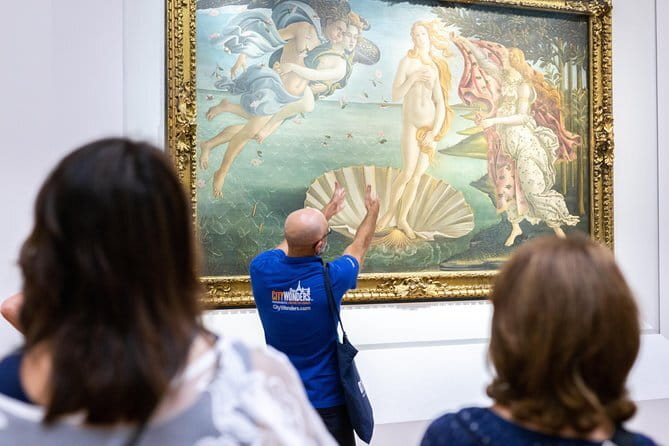
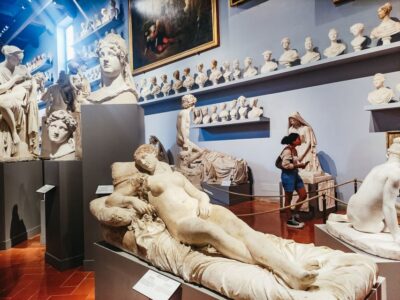
One of the best features is the chance to remain inside after the guided portion. You can visit Lorenzo Bartolini’s Gipsoteca, a collection of plaster casts displayed in a large, elegant room.
Plaster casts do not have the same instant appeal as David, but they show another side of sculpture. They let you focus on form, pose, and surface without the pressure of a single blockbuster object. If you have already seen David and the Prisoners, the Gipsoteca gives the visit a quieter second act.
The upper floor holds gold-background altarpieces and other Renaissance paintings from the 15th and 16th centuries. These works help place Michelangelo in the wider artistic world of Florence. You may find the gold backgrounds less immediately dramatic than David, but they offer a look at earlier religious painting and the visual language that preceded the High Renaissance.
Plan your energy sensibly. The guided hour gives you the essential story. The additional rooms are best treated as optional time, especially if you have another appointment or museum planned. You can stay until closing, according to the tour information, so you are not forced to leave when the guide finishes.
What the priority entry is really worth
The regular Accademia entrance can become a major time problem. This tour includes booking and priority access, which means you do not need to spend your visit waiting in the standard line.
That convenience matters most during busy periods or when your Florence schedule is packed. A one-hour museum visit can become much longer if you add an uncertain wait outside. At $71.04 per person, the price reflects more than admission. It covers the reserved arrangement, assistance at entry, a single-language guide, earphones, and the practical benefit of knowing that the visit has a set structure.
Priority entry is not a magic guarantee against every delay. Mandatory security checks can still slow the group, and the operator does not control those lines. Give yourself a little breathing room before any later booking.
The value depends on your travel style. If you enjoy reading labels alone and have a flexible schedule, you may prefer a basic entry ticket. If you have only a morning or afternoon in Florence, the guide and time saved can make the higher cost reasonable.
Meeting at Via degli Alfani
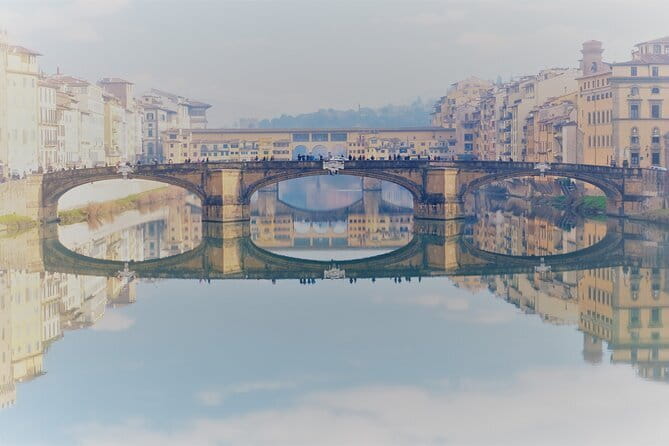
The meeting point is Via degli Alfani, 113 R, in Florence’s 50122 postal area. The location is near public transportation, which makes it practical to reach without arranging a special transfer.
Bring either a printed voucher or an electronic one. Confirmation is provided at booking. Since the group meets before entering, arrive with enough time to find the address and settle in. A late arrival could be awkward when the group is moving through a timed museum entrance.
The activity is listed as ending back at the meeting point, while the museum visit itself allows you to remain inside after the guided portion. Follow the guide’s instructions about when the formal tour ends and how to continue independently.
Who will get the most from this tour

This experience suits you if David is high on your Florence list and you want help making sense of what you see. It is also a good fit for first-time museum visitors who prefer a clear explanation instead of trying to build their own route through the galleries.
The one-hour format works well for:
- A short Florence stop
- A tightly planned day
- Anyone worried about the museum queue
- Visitors who want context for Michelangelo’s unfinished sculptures
- People who prefer an English-speaking guide
- Anyone who wants guided highlights followed by solo museum time
It may be less suitable if you want a long, slow art lesson or a private guide. The group can include up to 19 people, and the tour concentrates on selected sections rather than every room.
Most people can participate, and disabled accessibility is guaranteed according to the tour details. If you have specific mobility needs, it is still sensible to confirm the practical route when booking, since museum access and security procedures can affect timing.
Is $71.04 a fair price?
I would judge this price by the time it saves, not by the one-hour duration alone. Admission, priority access, a certified guide, and earphones make the cost easier to understand. The guided explanation also changes the visit from a quick look at David into a compact lesson in sculpture and Florence.
Still, the price is high for a short museum visit. You should book it because of the structure and access, not because the tour includes a large number of rooms. The extra time inside improves the value, especially if you visit the Gipsoteca and upper-floor paintings afterward.
The strongest value comes when the regular line is long. If you can enter easily on your own and have plenty of time, the savings may not justify the premium. If a missed entry would disrupt your day, paying more for a planned route can be sensible.
Cancellation and practical planning
You can cancel up to 24 hours before the start time for a full refund. Changes or cancellations made less than 24 hours before the experience are not accepted for a refund, and the cut-off uses Florence local time.
The tour is offered in English only. The group is capped at 19 people, and earphones are included. You should also remember that priority access does not remove mandatory security checks, so do not schedule another activity immediately afterward.
Should you book this Accademia tour?
Book it if you want David explained properly, need a reliable short visit, or want to avoid the museum’s regular line. The combination of David, the four Prisoners, San Matteo, and the instrument collection gives you a much fuller hour than a simple statue stop.
I would be especially inclined to book if you have limited time in Florence. The guide’s explanation, including the carving process and the story behind the works, helps the art stay with you after you leave. The chance to continue alone through the Gipsoteca and Renaissance galleries is a real plus.
Skip it if you are happy to arrange museum entry yourself, dislike group tours, or want to spend several hours studying every gallery at your own pace. For most first-time visitors with a busy schedule, though, the priority entry and focused guidance make this a practical way to meet David without letting the museum consume half the day.
FAQ
How long does the Accademia Gallery tour last?
The guided tour lasts approximately one hour.
What language is the tour offered in?
The tour is offered in English.
What can I see besides David?
You can see the Medici musical-instrument collection, including a Stradivari and the oldest piano in the collection, as well as Michelangelo’s four Prisoners and San Matteo. After the tour, you can continue to the Gipsoteca, gold-background altarpieces, and Renaissance paintings.
Is museum admission included?
Yes. The ticket booking and admission to the Accademia Gallery are included.
Does the tour include priority entry?
Yes. The experience includes a skip-the-line ticket and priority access, although mandatory security checks can still cause delays.
Can I stay inside the museum after the tour?
Yes. You can remain inside the museum after the guided visit until closing, allowing you to explore additional galleries independently.
Are earphones provided?
Yes. A set of earphones is provided so you can clearly follow the guide’s explanations.
How large is the tour group?
The activity has a maximum of 19 participants.
Where does the tour meet?
The meeting point is Via degli Alfani, 113 R, 50122 Firenze FI, Italy. It is near public transportation.
Can I cancel for a full refund?
Yes, if you cancel at least 24 hours before the experience start time. Cancellations or changes made less than 24 hours before the start time are not refunded or accepted.
More museums and galleries in Florence
- Florence: Leonardo Interactive Museum Entry Ticket
★ 4.5 · 11,763 reviews - Uffizi Gallery Small Group Tour with Guide
★ 4.5 · 4,923 reviews - Florence: Accademia Gallery Guided Tour
★ 4.6 · 4,156 reviews - Florence: Accademia Gallery Guided Tour with Entry Ticket
★ 4.6 · 2,253 reviews
Recently added around Florence
- Accademia and Uffizi Small-group Guided Tour★ 4.5 · 8 reviews
- The David from Michelangelo.★ 5.0 · 3 reviews
- Combo: Accademia + walking + Uffizi Galleries Guided Tour★ 3.5 · 6 reviews
- The Complete Wine Tour Brunello, Nobile, Chianti wine experience★ 4.0 · 7 reviews
- The Best of Tuscany in 3 Days★ 4.5 · 13 reviews
- The Cooking Lab – Authentic Food Experience★ 5.0 · 113 reviews
- Florence Central Market Food Tour – Private Tour★ 4.0 · 7 reviews
- Family Friendly Florence Private City Tour★ 5.0 · 47 reviews
Accademia Gallery and David Tours, compared.
Timed Entrance Ticket to Michelangelo’s David
Read our review →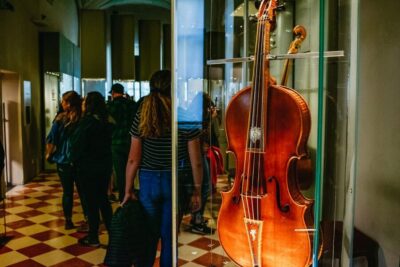
Michelangelo’s David Skip-the-Line Entry Ticket
Read our review →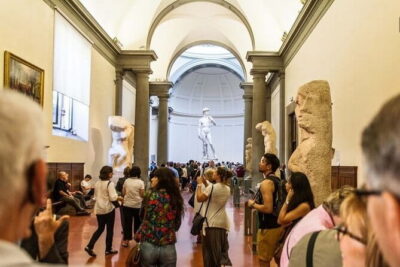
Florence Accademia Gallery Tour with Entrance Ticket Included
Read our review →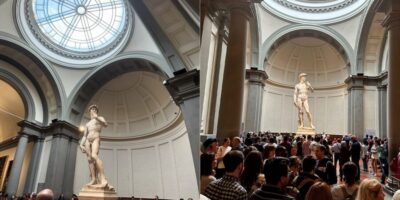
Timed Entry Ticket to Michelangelo’s David & eBook
Read our review →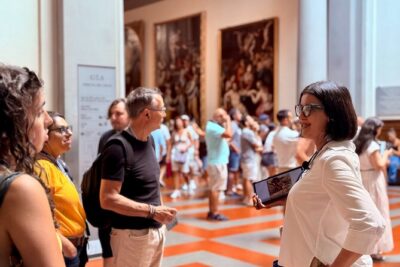
Skip the line: Uffizi and Accademia Small Group Walking Tour
Read our review →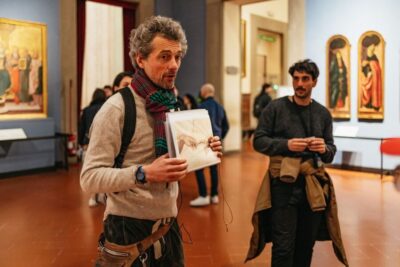
Accademia Gallery Guided Tour with Entry Ticket
Read our review →Browse the lists this tour appears in