
Reviewed · HISTORICAL TOURS
Florence: City Highlights & Historic District Guided Tour
Florence reveals its best cards on foot, and this tour takes you through the compact center where Medici power, Renaissance art, and medieval streets meet. In 90 minutes, you pass the Duomo, Ponte Vecchio, Uffizi Gallery, Palazzo Vecchio, and several less-famous stops without paying museum admission.
I like the local guide and live stories, especially the focus on the Medici family, and I like the second stage of the experience, a multilingual audio guide that lets you keep sightseeing after the walking tour ends. The main drawback is simple: the tour passes by the major sights rather than taking you inside, and the live portion is in English only.
Key points to know before booking
- A compact Florence orientation: The route links the Duomo, Ponte Vecchio, Uffizi Gallery, Piazza della Signoria, and Medici landmarks in one walk.
- A 90-minute live walk: The total activity is listed as two hours, with the guided portion lasting about 90 minutes and the rest suited to using the sightseeing app.
- English guide, six audio languages: Live commentary is in English. The recorded guide is also available in French, German, Italian, Spanish, and Chinese.
- No museum entry included: You see the exteriors and hear the stories, but entry tickets for the Duomo complex, Uffizi, and other attractions are not part of the price.
- Bring your own gear: You need a charged smartphone and headphones. Scan the QR code on your voucher before arrival to download the audio guide.
- Good value at $29: The price works best for a first look at Florence, especially if you will use the app afterward rather than treating the walk as a stand-alone tour.
What this Florence walk actually covers

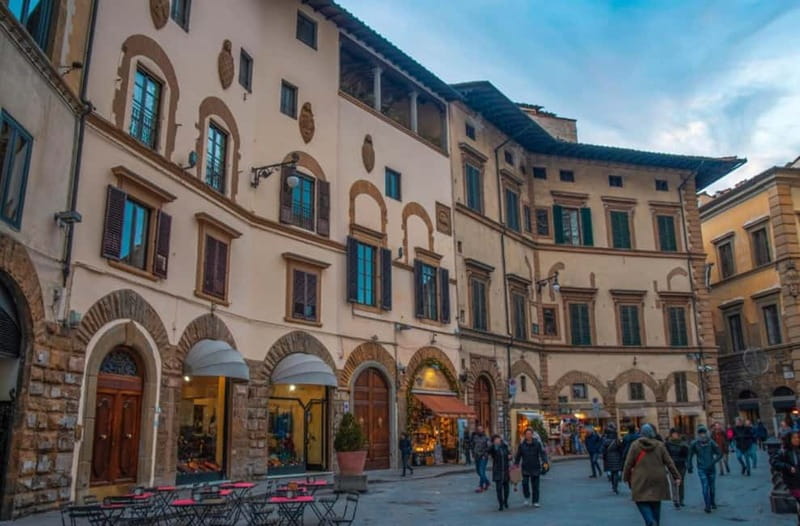
This is a city orientation, not a museum tour. You meet at Cafè Firenze on Via de’ Martelli, 50/r, at the corner of Via de’ Pucci, then follow a guide through Florence’s central streets before returning to the same place.
The route is carefully packed. It brings together public squares, bridges, churches, palaces, fountains, and market corners in a short stretch of the city. You will not enter the Uffizi or climb Giotto’s Bell Tower, but you will get the setting and basic story behind the places you may want to visit later.
That distinction matters. At $29, you are paying for orientation, live explanation, and a digital sightseeing tool, not admission to Florence’s major monuments. If you want a fast introduction before choosing your own museums, the price is sensible. If you want long interior visits, this is the wrong format.
The guide wears a dark blue Vox City uniform, which makes the meeting easier in a busy part of town. Arrive about five minutes early. The provider is Vox City Walks, and the tour is conducted in English.
More Renaissance and history tours in Florence:
- Tipsy Tour: Guided Bar Crawl In Florence with Dark History
★ 5.0 · 271 reviews - Florence Cooking Course with Historic Local Market Visit
★ 4.5 · 151 reviews - Florence: Medici Family History Tour
★ 4.3 · 93 reviews
From Piazza della Repubblica to Orsanmichele
The first major stop is Piazza della Repubblica, one of Florence’s broad central squares. The route gives you a chance to shift from the starting café into the grander public face of the city, with its monumental buildings and the Fountain of the Naiads.
This is a useful opening because Florence can feel confusing at first. The streets are close together, the major buildings rise suddenly around corners, and it is easy to walk past an important site without knowing what you are seeing. A guide helps you place the city center on a mental map from the start.
You then pass Orsanmichele, a church with an unusual connection to Florence’s civic and commercial life. Since the stop is viewed from the outside, your attention will be on the façade, sculptures, and the guide’s commentary rather than the interior.
I like this early part of the route because it sets up Florence as more than a collection of famous postcard views. The city’s churches and public buildings were tied to guilds, merchants, political power, and religious life. You get that wider frame without spending half the morning in one building.
Mercato del Porcellino and the Ponte Vecchio
The walk continues to Mercato del Porcellino, a lively market area known for its famous bronze boar. This is one of the smaller stops, but it adds texture to the route. You are not only being led from grand palace to grand church. You also see a place connected with everyday city life and local tradition.
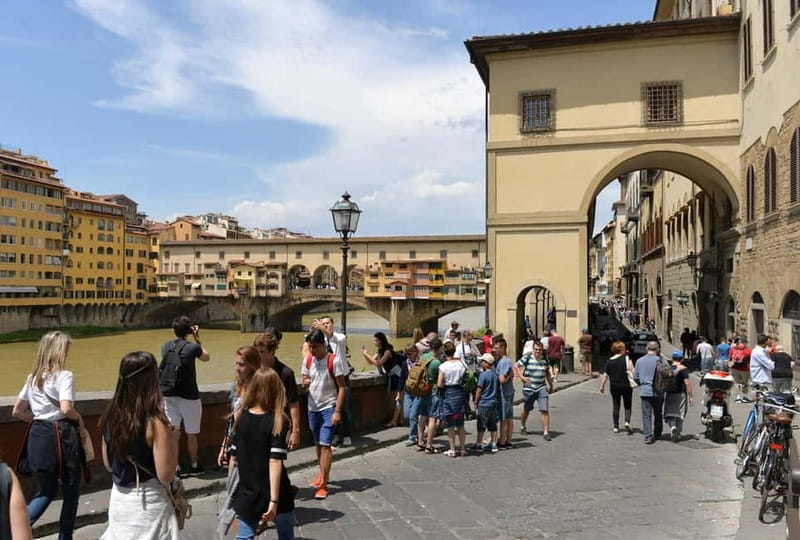
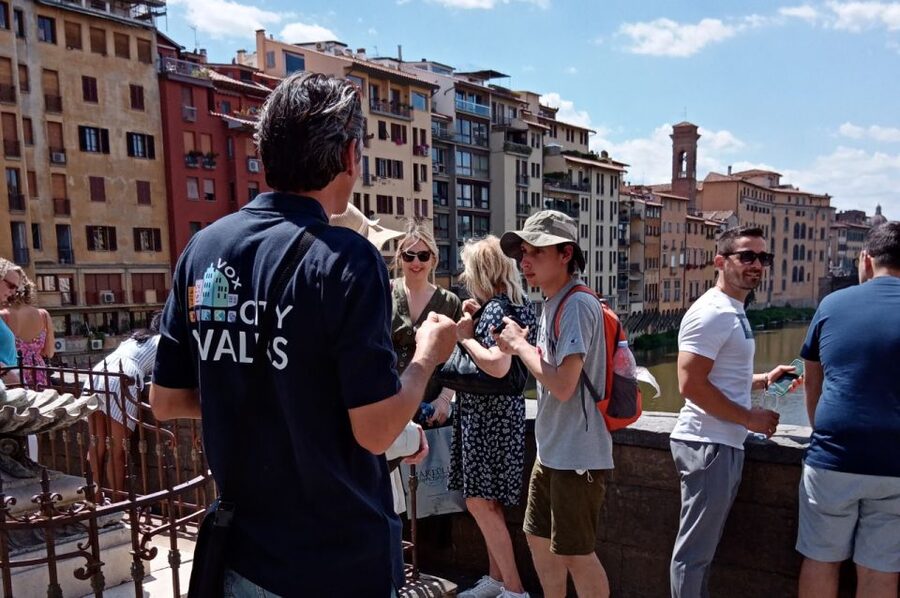
Next comes the Ponte Vecchio, Florence’s medieval stone bridge over the Arno. Its shops and distinctive built-up form make it one of the city’s easiest landmarks to recognize. From the bridge, you get a strong sense of how tightly Florence’s historic center fits together.
The bridge can be crowded, so do not expect a quiet pause or a long photographic stop. The group will be walking and listening in a public thoroughfare. Keep your belongings close, and do not let the quick pace stop you from looking up at the bridge’s structure and across the river.
The guide’s role is especially useful here. A photograph shows the shops and arches, but a short explanation helps you understand why the Ponte Vecchio feels different from a normal crossing. You also begin to see how the river divides, but does not separate, the main sights of Florence.
The Uffizi, Loggia dei Lanzi, and Palazzo Vecchio
From the bridge, the route passes the Uffizi Gallery. This is a key moment for anyone planning a first visit to Florence. The Uffizi is one of the city’s major art museums, yet this experience does not include entry, timed admission, or an indoor gallery visit.
That is both a limitation and a practical advantage. You can look at the building, hear some context, and then decide if you want to return with a separate ticket. You do not have to spend your limited tour time indoors when your main goal is to learn the layout of the city.
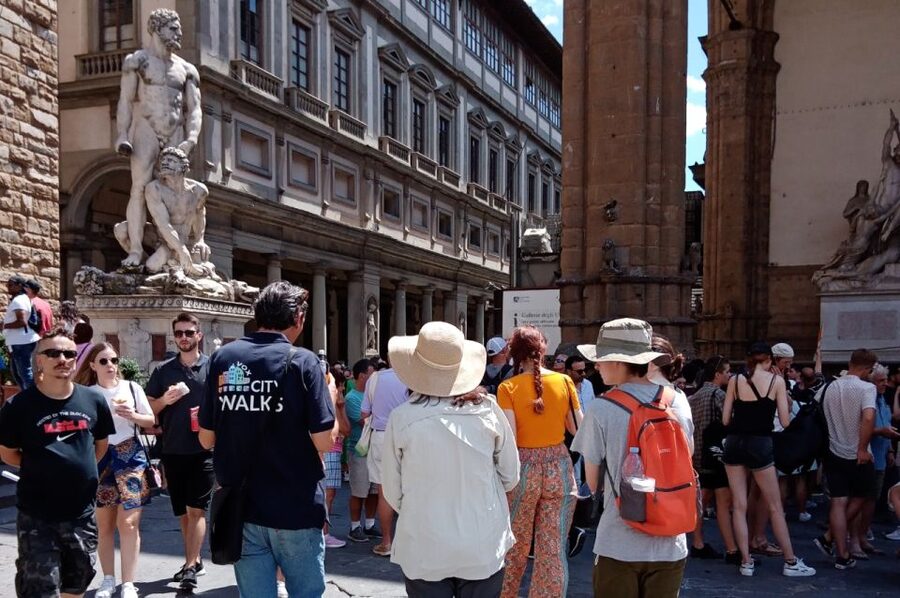
The next stop, Loggia dei Lanzi, offers an open-air setting filled with sculpture beside the main civic square. Even from the street, this area shows how Florence used public art to display wealth, power, and civic pride. Your guide can point out details that are easy to miss when you are busy navigating the square.
Palazzo Vecchio follows. Its severe exterior and tower make it one of Florence’s clearest symbols of government. The tour passes by rather than entering, so think of this as a visual introduction to the building and its position in the city’s political center.
More guided tours in Florence:
- The Best tour in Florence: Renaissance & Medici Tales – guided by a STORYTELLER
★ 5.0 · 12,316 reviews - Florence: Duomo Cathedral Guided Tour
★ 3.9 · 5,970 reviews - Uffizi Gallery Small Group Tour with Guide
★ 4.5 · 4,923 reviews - Florence: Accademia Gallery Guided Tour
★ 4.6 · 4,156 reviews
Piazza della Signoria and the Neptune Fountain
Piazza della Signoria is one of the strongest parts of the walk. It gathers Palazzo Vecchio, Loggia dei Lanzi, public sculpture, and the Neptune Fountain in one open space. You get several major sights at once, which is one reason this route works well for a first afternoon in Florence.
The Neptune Fountain is another outside viewing stop. You can study its scale and position in the square, while the guide explains its place within Florence’s civic story. The route does not promise an extended lecture, so expect concise commentary rather than a detailed art class.
This portion may feel busy, particularly if you are trying to take photographs while staying with the group. Listen first, then take your pictures during a natural pause. The tour is short enough that the guide needs to keep moving to cover the full circuit.
The Duomo complex in one concentrated stretch
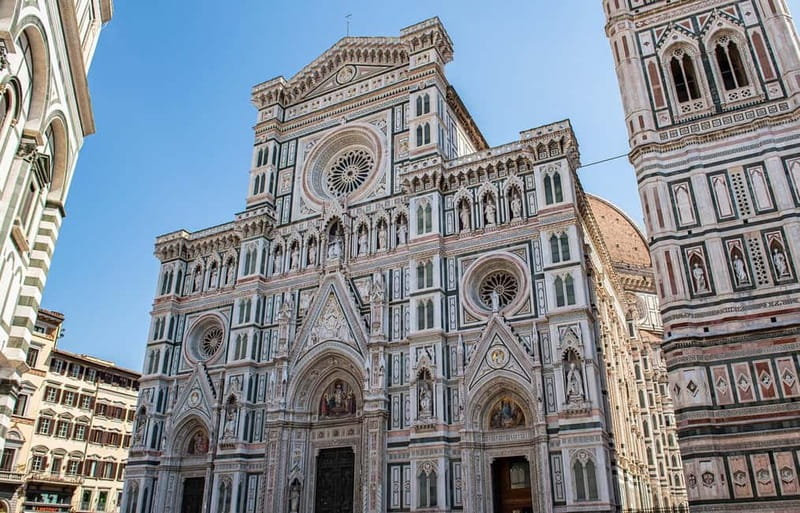
The walk then heads toward Giotto’s Bell Tower, the Florence Baptistery, and the Duomo complex. These are among the most important sights in the city, and seeing them together helps you understand the scale and design of Florence’s religious center.
Giotto’s Bell Tower is a major architectural landmark beside the cathedral. The tour passes it from ground level, so you will not climb the tower. Still, an outside look is valuable because the tower, cathedral, and Baptistery form a tightly connected group rather than isolated attractions.
The Baptistery adds another layer to the square. Its position opposite the cathedral makes the whole complex feel planned as a single civic and religious setting. Your guide can help you distinguish the buildings and understand why the square deserves more than a quick glance before you move on.
The Florence Duomo itself is the visual high point of the route. You can expect time to appreciate the exterior and hear the basic story of the complex, but not a ticketed visit or access to the dome. If climbing, interior art, or detailed architectural study is your main goal, plan a separate visit.
There is also a practical benefit to seeing the Duomo with a guide before returning on your own. You learn where the major buildings are and can decide which entrance, museum, or climb deserves your time later. The walking tour gives you the map; it does not replace the visit.
Medici Florence: Palazzo Medici Riccardi and San Lorenzo
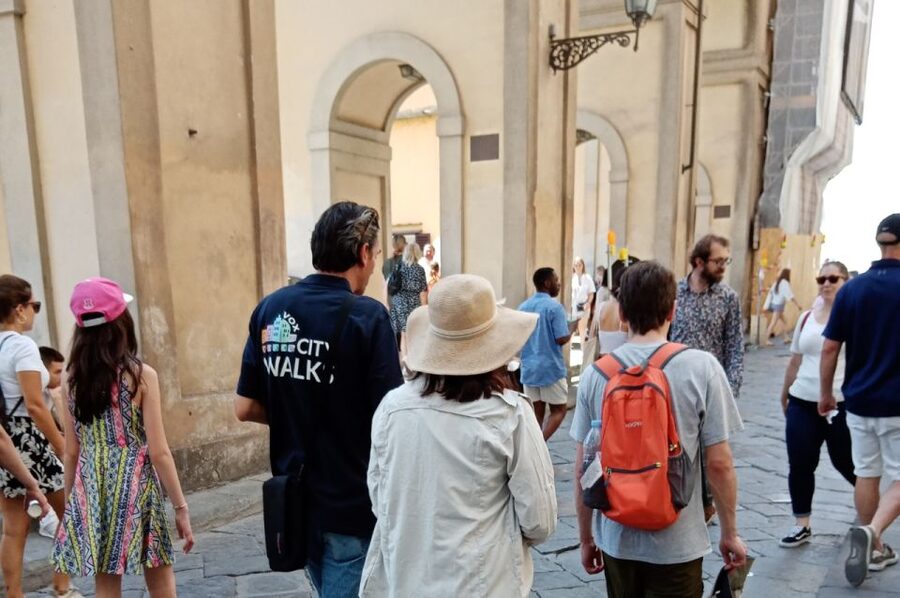
The last section turns toward the Medici family, whose influence runs through Florence’s politics, banking, architecture, and art. Palazzo Medici Riccardi is a natural place for this part of the story. The guide’s live commentary is one of the main reasons to choose this experience instead of simply following a map.
You will hear stories about the Medici family while walking past key places connected with their power. The presentation is designed for a general city tour, so expect a broad introduction rather than a full family tree or a specialized political history.
Basilica of San Lorenzo completes the circuit. It is closely tied to Florence’s religious and Medici story, and its location helps connect the city center with the family’s long influence. Again, this is a pass-by stop. You see the exterior and hear commentary, but entry is not included.
The route then returns to Via de’ Martelli, 50. Ending where you started is convenient, especially if you want to continue toward the Duomo, find lunch nearby, or begin using the audio guide immediately.
The audio guide adds useful extra time
The digital part is more than a small bonus. After the live walk, you can continue exploring with a sightseeing app, multilingual audio, and a digital map. The material covers more than 80 points of interest, with self-guided routes described as covering more than 100 sights.
You need your own smartphone and headphones, and your phone should be fully charged. Scan the QR code on your voucher before you arrive so you are not trying to download the guide while standing at the meeting point.
The audio guide is available in English, French, German, Italian, Spanish, and Chinese. This is particularly helpful if you are comfortable reading a map but prefer to hear explanations in a language other than English. The live walk itself remains in English.
I would use the app after the guided portion, not during it. Trying to follow a digital route while listening to a live guide would split your attention. Use the first 90 minutes to get your bearings, then choose one or two extra points of interest for a slower self-guided walk.
What $29 buys you in practical terms
At $29 per person, this is a moderate price for a short guided city walk with a digital follow-up tool. The strongest value comes from combining the two parts. A 90-minute walk alone would give you a quick overview, while the app lets you keep exploring after the group disperses.
The value is lower if you already know central Florence well or have a detailed plan for every hour. You may not need another orientation, and the audio material may duplicate information you already have.
The price also does not cover entry to any attraction. Budget separately if you want to visit the Uffizi, enter the Duomo complex, climb Giotto’s Bell Tower, or see the interiors of the churches and palaces along the way.
The public rating is 3.9 from 10 reviews, so I would keep expectations measured. One short comment described the experience as good, and another specifically recommended Dior Tour, though the stated provider for this activity is Vox City Walks. The limited amount of written feedback means the clearest guide to value is the structure itself: short live walk, exterior sightseeing, then optional audio exploration.
Who should book this Florence tour
I would recommend it to a first-time visitor who wants the city’s main sights explained in a compact block of time. It also suits anyone arriving in Florence with no clear plan and wanting a sensible route before choosing which museums or churches to visit.
It works well for you if you like walking, prefer outdoor sightseeing, and want to hear stories while looking at the buildings themselves. The digital map is useful if you plan to keep exploring after the guide leaves.
I would skip it if your priority is interior access, detailed art interpretation, or a small specialist group. You will not enter the listed attractions, and the tour does not provide a private guide or a language choice for the live commentary.
Bring comfortable shoes, headphones, and a charged phone. Keep the voucher handy, arrive five minutes early at Cafè Firenze, and look for the guide in the dark blue Vox City uniform. The walking pass remains valid for 12 months from the selected travel date, which gives you some flexibility if your plans change.
Should you book it?
Book this tour if you want an affordable first look at Florence’s historic center, especially the Duomo, Ponte Vecchio, Uffizi, Piazza della Signoria, and Medici sites. The best feature is the combination of a live English walk and a multilingual app you can use afterward.
Do not book it expecting museum visits or a deep architectural seminar. At $29, it is best understood as a well-packed orientation with extra digital sightseeing, a useful starting point for exploring Florence on your own.
FAQ
How long does the Florence walking tour last?
The guided walking portion lasts about 90 minutes. The activity is listed as two hours overall, including time associated with the digital audio tour and sightseeing app.
Where does the tour start?
Meet the guide at Cafè Firenze, Via de’ Martelli, 50/r, at the corner of Via de’ Pucci. Arrive about five minutes early.
How do I identify the guide?
The guide will be wearing a dark blue Vox City uniform.
What language is the live tour in?
The live guided walk is in English.
Which languages are available in the audio guide?
The recorded audio guide and sightseeing app are available in English, French, German, Italian, Spanish, and Chinese.
Are attraction entry tickets included?
No. Entry to the Uffizi Gallery, Duomo complex, Bell Tower, churches, palaces, and other attractions is not included.
What should I bring?
Bring headphones and a charged smartphone. Scan the QR code on your voucher before arrival to download the audio guide.
Recently added around Florence
- Accademia and Uffizi Small-group Guided Tour★ 4.5 · 8 reviews
- The David from Michelangelo.★ 5.0 · 3 reviews
- Combo: Accademia + walking + Uffizi Galleries Guided Tour★ 3.5 · 6 reviews
- The Complete Wine Tour Brunello, Nobile, Chianti wine experience★ 4.0 · 7 reviews
- The Best of Tuscany in 3 Days★ 4.5 · 13 reviews
- The Cooking Lab – Authentic Food Experience★ 5.0 · 113 reviews
- Florence Central Market Food Tour – Private Tour★ 4.0 · 7 reviews
- Family Friendly Florence Private City Tour★ 5.0 · 47 reviews
Historical Tours, compared.

Tipsy Tour: Guided Bar Crawl In Florence with Dark History
Read our review →
Florence Cooking Course with Historic Local Market Visit
Read our review →

Historical Guided Tour of Florence’s Iconic Cathedral
Read our review →
Fashion History Guided Walking Tour & Museum Visit
Read our review →
The History of Florence: The Renaissance Era Private Tour
Read our review →
Pitti Palace and Palatine Gallery: A Royal Art and History Tour
Read our review →
Private Tour of the Historic Center of Florence by Golf Car
Read our review →Browse the lists this tour appears in