
Reviewed · MUSEUMS
Florence: Bargello Museum Guided Tour with Entry Ticket
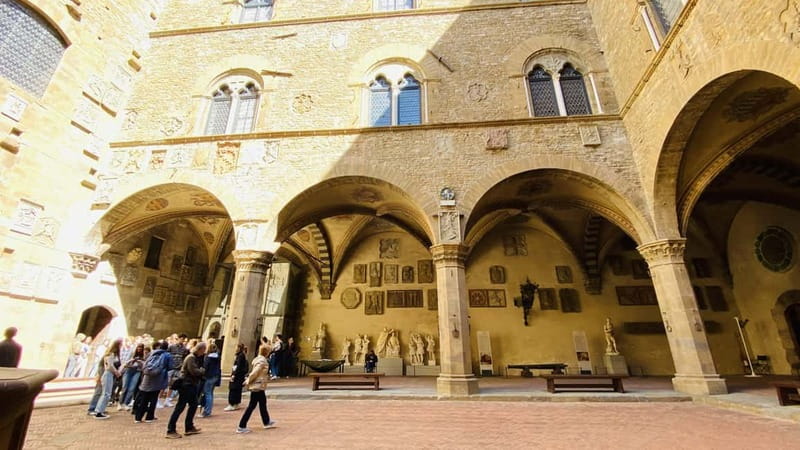
Florence’s Bargello Museum gives you a different Renaissance experience from the Uffizi. Here, sculpture takes the lead, and the setting is a stern medieval palace with a courtyard, old stone walls, and rooms full of marble, bronze, ivory, and glazed terracotta. The big reward is seeing Donatello’s David and St. George alongside Michelangelo’s Bacchus and Tondo Pitti.
I like the reserved museum entry, which saves you from dealing with the ticket line, and I like the guide-led route through a collection that can be confusing without context. Matt, one guide named in the feedback, was praised for pointing out details missed on earlier visits, while another guide’s enthusiasm for the Bargello made the art feel personal. One thing to check before booking: the details describe the visit as both one hour and about two hours, so confirm the exact duration and starting time for your chosen option.
Key points to know before you book
- Donatello gets proper attention: See David, St. George, and other early Renaissance works with an explanation of what made the sculptor so important.
- Michelangelo is a major focus: The guide highlights four works by the artist, including Bacchus and Tondo Pitti.
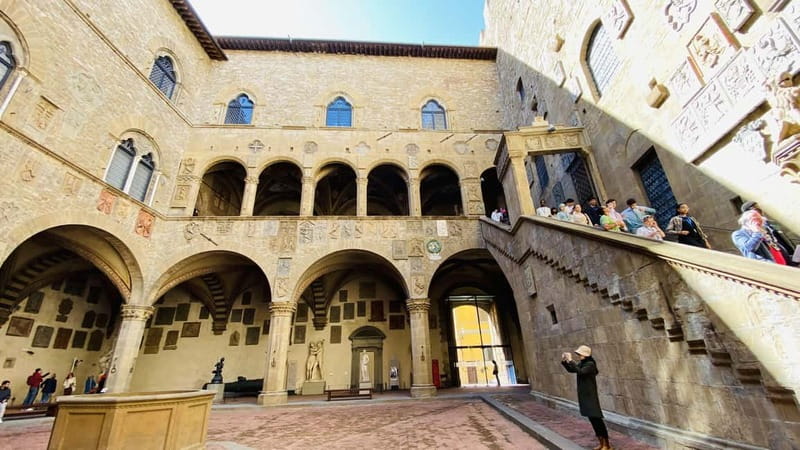
- The building tells its own story: The Bargello served as a civic headquarters, police residence, and prison before becoming a museum.
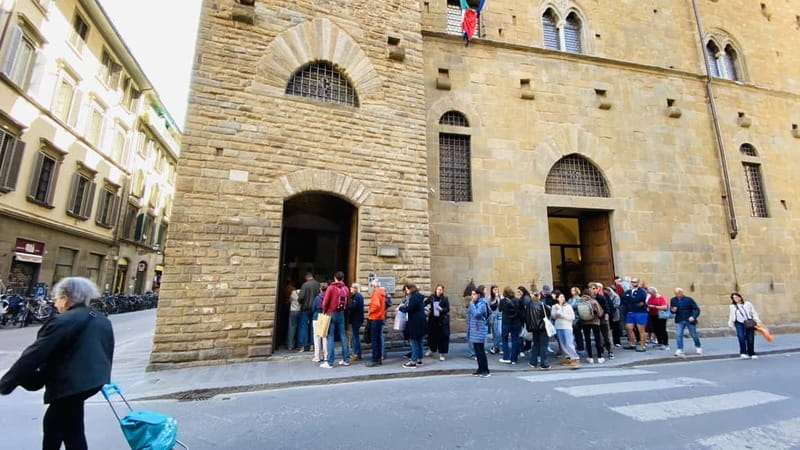
- Reserved entry is included: Your ticket is booked in advance, with skip-the-line access except for delays or strikes controlled by museum management.
- The tour covers more than famous names: Expect Cellini, Ammannati, Giambologna, Verrocchio, Roman and Byzantine objects, and Della Robbia terracotta.
- Languages and access are flexible: Tours are offered in English, Italian, French, German, and Spanish, with wheelchair access and a private-group option.
Why the Bargello deserves time in Florence
The Bargello is one of Florence’s best stops for understanding sculpture. The Uffizi gives you famous paintings in abundance, but the Bargello lets you stand close to carved marble, cast bronze, polished ivory, and bright glazed clay.
That change of focus matters. A painting asks you to look at a flat surface. A sculpture asks you to walk around it, notice the turn of a shoulder, read the folds of cloth, and see how the light changes the face. The guide can help you slow down and look at these details instead of simply ticking off famous names.
The palace also gives the visit a strong sense of place. It was once the headquarters of the Capitano del Popolo and later the Podesta, the city’s ruling official. It then became the residence of the head of the police and was later used as a prison. You are not walking into a neutral gallery. The building’s earlier jobs help explain its severe character.
I find that setting especially useful when you want a break from Florence’s grander, more polished museums. The Bargello feels tied to government, law, and civic life. Its works are now displayed as art, but the rooms still carry the weight of the building’s past.
More museums and galleries in Florence:
- Florence: Skip-The-Line Uffizi Gallery Timed Entry Ticket
★ 4.5 · 27,832 reviews - Florence: Leonardo Interactive Museum Entry Ticket
★ 4.5 · 11,763 reviews - Florence Accademia Gallery Tour with Entrance Ticket Included
★ 4.5 · 6,148 reviews
Meeting near the Bargello Palace
The tour begins at one of two listed meeting points, either near the equestrian statue of Cosimo I de’ Medici or at the Bargello National Museum. Your exact meeting point depends on the option you select, so read the booking details carefully rather than assuming you should go straight to the museum entrance.
The activity ends back at the meeting point. That makes the tour easy to fit into a walking day in central Florence, but you need to reach the starting point yourself. Hotel pickup, drop-off, and transportation are not included.
Wear comfortable shoes. The tour takes place inside a historic palace, and you will be walking through several rooms with your guide. Bring a passport or identity card, as that is listed among the required items.
A radio system is included, which is useful in a museum setting. It lets you follow the guide without having to crowd close to the group. The group may also be booked as a private experience, an option worth considering if you want to ask many questions or set a slower pace.
Entering a former civic headquarters and prison
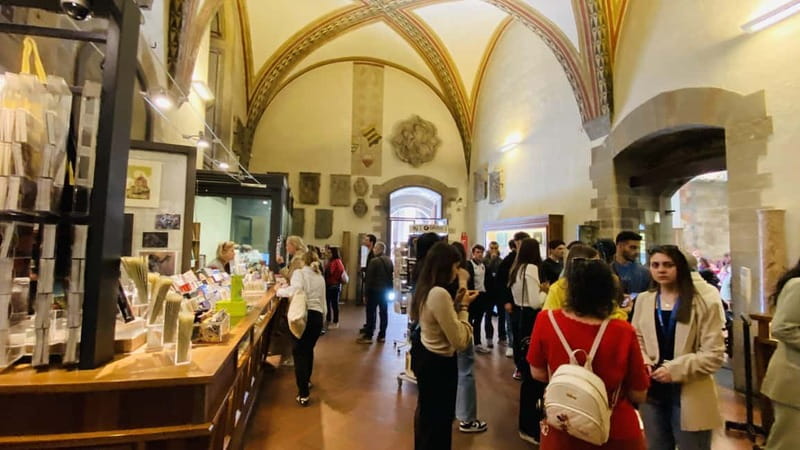
The first part of the visit sets up the building. Your guide explains how the Bargello changed from a center of public power to a police residence and then a prison. That short introduction gives you a useful lens for the rooms ahead.
I like this approach because it keeps the museum from becoming a string of disconnected statues. You learn why the palace matters before the artworks take over. The building’s changing purpose also reflects Florence’s changing political life, from medieval government to later systems of law and punishment.
This introduction should be particularly helpful if you are new to Florence’s history. The city can blur together after a few days of churches, palaces, and grand families. A guide who explains the Bargello’s civic role gives this museum its own identity.
The exact tour length needs attention. The activity information gives a one-hour duration in some places, while the description says the guided visit takes about two hours and the highlights also refer to two hours of exploration. The safest advice is to check the available time slot and confirm what the booked option includes. After the guided portion, you can return to anything you want to see again, assuming museum access remains available under your booked timing.
Ground-floor sculpture by Michelangelo and his contemporaries
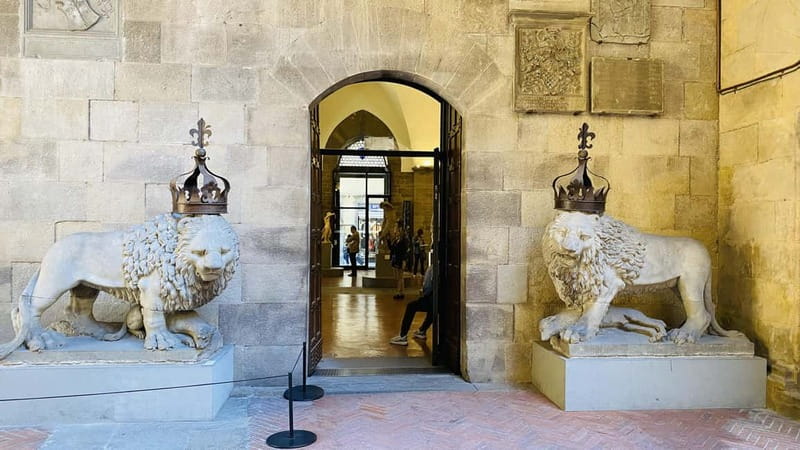
The ground-floor rooms feature Tuscan works from the 16th century. This is where the guide places particular focus on four Michelangelo works, including Bacchus and Tondo Pitti.
Bacchus gives you a chance to see Michelangelo working with a mythological subject rather than the biblical figures most associated with him. Tondo Pitti offers another view of his handling of relief sculpture. The value of having a guide here is not just learning the names. You can ask how the work relates to Michelangelo’s style and how the artist’s choices differ from those of the sculptors displayed nearby.
The tour also includes works by Bartolomeo Ammannati, Benvenuto Cellini, and Giambologna. These names help you move beyond the narrow idea that Florence’s sculpture story begins and ends with Michelangelo.
Cellini is especially important for understanding the high level of skill expected from Renaissance metalworkers. Giambologna brings another chapter of Florentine sculpture into view. Ammannati adds to the picture of the 16th century, when artists worked across architecture, sculpture, and courtly commissions.
You will also see precious ivories and bronzes, including Roman and Byzantine examples. These objects broaden the visit beyond the famous Florentine masters. They show that the Bargello collection is not only about monumental Renaissance figures. Smaller objects can reveal a different kind of craft, with close attention to surface, scale, and material.
More tickets and passes in Florence:
- Florence: Timed Entrance Ticket to Michelangelo’s David
★ 4.6 · 16,983 reviews - Florence: Michelangelo’s David Skip-the-Line Entry Ticket
★ 4.5 · 12,764 reviews - Florence: Uffizi Priority Ticket & Masterpieces Audio App
★ 4.2 · 6,402 reviews - Florence: Hop-on Hop-off Bus Tour: 24, 48 or 72-Hour Ticket
★ 4.0 · 6,283 reviews
Donatello, David, and the early Renaissance
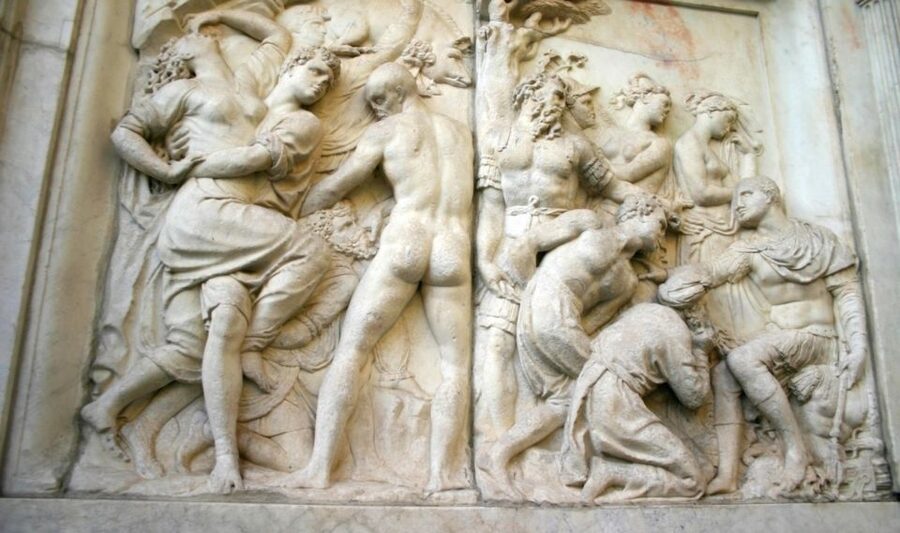
The Donatello section is one of the main reasons to book a guided visit. You will see David and St. George, along with works connected to the early Renaissance and Verrocchio.
Donatello’s David is a key work in Florence’s sculpture story. A guide can help you understand why it is more than a familiar name on a museum checklist. You can look at the figure’s pose, expression, and treatment of the body, then compare it with other sculpture in the same museum.
St. George gives you another way to see Donatello’s skill. The work is known for its forceful presence, and the guide can draw your eye to details that are easy to miss when you are moving quickly from room to room.
The early Renaissance section is where the visit’s teaching value becomes clearest. Florence’s art did not change overnight, and a guide can show you the shift through several works rather than presenting the period as one simple break from the past. Verrocchio’s presence helps place Donatello within a wider artistic circle.
One particularly useful feature of this tour is its attention to comparison. You see different artists, materials, and periods in the same museum. That makes it easier to notice how one sculptor handles the human figure differently from another.
The second floor and Della Robbia’s glazed terracotta
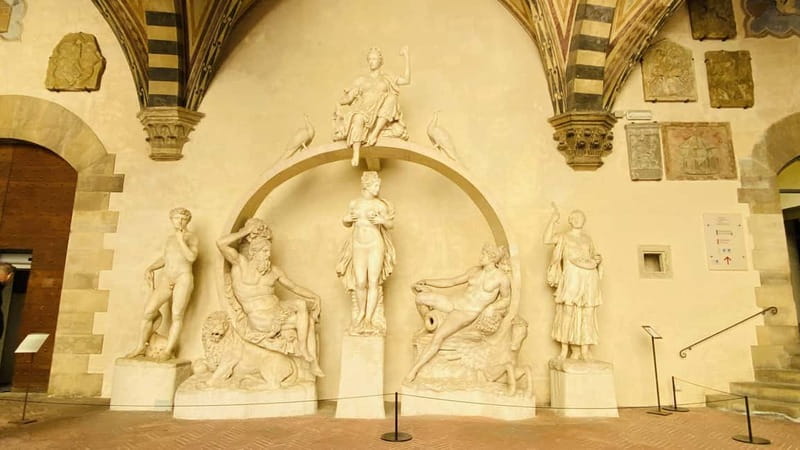
The second floor is devoted to glazed terracotta by Andrea and Giovanni della Robbia. This is a clear change from the marble and bronze emphasis downstairs.
The Della Robbia family’s work is easy to recognize for its glossy surfaces and colored decoration. The pieces bring a lighter visual rhythm to the visit, with a strong contrast between the pale figures and vivid glazed details. If your Florence schedule already includes several stone-heavy churches and palaces, this section gives your eyes a welcome change.
The guide’s role here is to explain why the material matters. Terracotta is not simply a cheaper version of marble. The glaze creates a different look and protects the surface in a way that shaped how these works were made and viewed.
This floor also helps round out the collection. Michelangelo and Donatello draw the biggest attention, but the Della Robbia rooms show why the Bargello is worth visiting for more than a handful of celebrated statues. You get a broader view of Renaissance craft and the many materials artists used.
What the guide adds to the experience
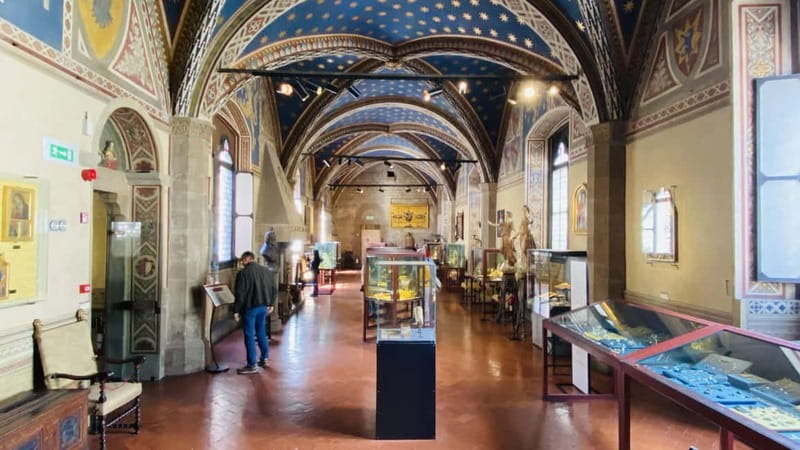
The strongest reason to choose this tour is interpretation. The museum contains important works, but a short visit without context can leave you remembering only a few names.
The guide is expected to lead you through the important rooms, explain the palace, and focus on the main masterpieces. The feedback gives a useful sense of the best possible guiding style. Matt was singled out for showing details that had been missed during two previous visits. Another guide was praised for clearly loving the Bargello, and a third was described as highly attentive and well pitched to the group’s level.
Those details matter. A good museum guide does not simply recite dates. The guide watches your response, explains difficult points in plain language, and knows when to move on. The most effective part of this experience should be that balance between the headline works and the lesser-known pieces around them.
The quality can vary by guide, of course. The booking information lists English, Italian, French, German, and Spanish, but it does not name the guide in advance except for the individual guide mentioned in the feedback. If you have a strong language preference, select it carefully when booking.
Is $44.41 a fair price?
At $44.41 per person, this is not the cheapest way to enter a Florence museum. You are paying for more than the admission ticket: a professional local guide, reserved entrance, and a radio system are included.
I think the price makes the most sense if you care about sculpture but do not want to prepare your own museum notes. The Bargello is smaller and more focused than some Florence collections, yet its range can still be hard to organize on your own. A guide helps you spend your limited time on the works that matter most.
The value is stronger during busy periods, when reserved entry can save the frustration of waiting. Skip-the-line access is guaranteed except when delays or strikes are caused by museum management. No transport, food, or drinks are included, but those omissions are reasonable for a central museum visit that you can reach on foot.
If you already know Renaissance sculpture well, you might prefer to buy entry independently and set your own pace. If you have never studied Donatello, Michelangelo, or Della Robbia, the added explanation should justify the extra cost.
Timing, access, and practical limits
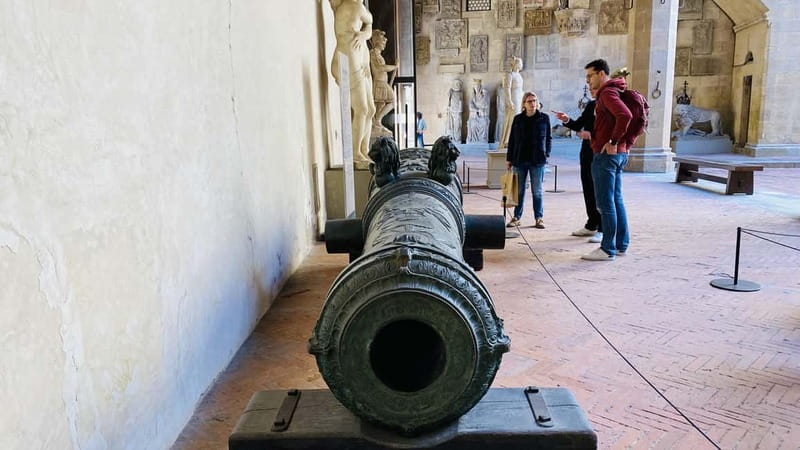
The tour is listed with starting times that vary by availability. Since the duration information is not perfectly consistent, check the exact option before you pay. One part of the information says one hour, while the main description says about two hours. That difference affects how you plan your museum day.
The tour is wheelchair accessible. A private group is available if you want a more personal format. The activity requires a minimum number of participants, so it can be canceled after confirmation if that number is not reached. In that case, you are offered an alternative or a full refund.
Free cancellation is available up to 24 hours before the activity for a full refund. You can also reserve now and pay later, which helps if your Florence schedule is still moving around.
Pets and smoking are not allowed. Bring your identity document and comfortable shoes. Since transportation is not supplied, allow enough time to reach the meeting point on foot or by your own arrangements.
Who should book this Bargello tour?
I would choose this tour if you want a compact, guided introduction to Florentine sculpture. It suits first-time visitors who want the essential works explained without spending half a day in a large museum.
It is also a good fit if you have already visited Florence once or twice. The Bargello can reward a return visit, and Matt’s feedback suggests that an attentive guide may point out details you missed before.
Families and mixed-interest groups may appreciate the focused length, though you should confirm whether your option is closer to one hour or two. Art students and serious museum fans might prefer the private-group option, especially if they want to ask detailed questions.
I would skip it if you strongly prefer silence, independent wandering, or a very slow study of each object. The guide-led structure gives you direction, but it also means following the planned route. You can return to favorite works after the tour, yet your first pass will follow the group.
Should you book it?
Book this experience if you want reserved entry and clear art guidance in a museum that deserves more attention than it often gets. The best parts are the Donatello and Michelangelo works, the unusual history of the palace, and the chance to see Della Robbia terracotta, bronzes, ivories, and other objects in one visit.
Before booking, confirm the exact duration, meeting point, language, and starting time. At $44.41, the tour is best value for anyone who wants context rather than just access. If that sounds like you, it is a sensible addition to a Florence itinerary.
FAQ
Where does the Bargello guided tour begin?
The meeting point may be near the equestrian statue of Cosimo I de’ Medici or at the Bargello National Museum. The exact location depends on the option booked.
How long does the tour last?
The activity information lists a one-hour duration in one place and describes the guided visit as taking about two hours elsewhere. Check the exact duration attached to your selected time slot.
What does the ticket include?
The price includes a reserved entrance ticket to the Bargello Museum, an official certified guide, and a radio system for hearing the guide.
Which languages are available?
The tour is offered in English, Italian, French, German, and Spanish.
Is skip-the-line entry guaranteed?
Reserved skip-the-line access is guaranteed, including during peak season, except in cases involving delays or strikes by museum management.
Which artworks are highlighted?
The tour includes Donatello’s David and St. George, Michelangelo’s Bacchus and Tondo Pitti, and additional works by Michelangelo, Verrocchio, Ammannati, Cellini, Giambologna, and the Della Robbia family.
Is the tour wheelchair accessible?
Yes, the tour is listed as wheelchair accessible.
Is hotel transportation included?
No. Hotel pickup and drop-off, as well as transportation to and from the attraction, are not included.
Can I cancel the booking?
Yes. You can cancel up to 24 hours in advance for a full refund. The activity also offers a reserve-now, pay-later option.
Recently added around Florence
- Accademia and Uffizi Small-group Guided Tour★ 4.5 · 8 reviews
- The David from Michelangelo.★ 5.0 · 3 reviews
- Combo: Accademia + walking + Uffizi Galleries Guided Tour★ 3.5 · 6 reviews
- The Complete Wine Tour Brunello, Nobile, Chianti wine experience★ 4.0 · 7 reviews
- The Best of Tuscany in 3 Days★ 4.5 · 13 reviews
- The Cooking Lab – Authentic Food Experience★ 5.0 · 113 reviews
- Florence Central Market Food Tour – Private Tour★ 4.0 · 7 reviews
- Family Friendly Florence Private City Tour★ 5.0 · 47 reviews
Museums, compared.
Skip-The-Line Uffizi Gallery Timed Entry Ticket
Read our review →
Florence Accademia Gallery Tour with Entrance Ticket Included
Read our review →
Accademia Gallery Guided Tour with Entry Ticket
Read our review →
Golf Cart Tour to Fiesole Roman Theatre and Museum
Read our review →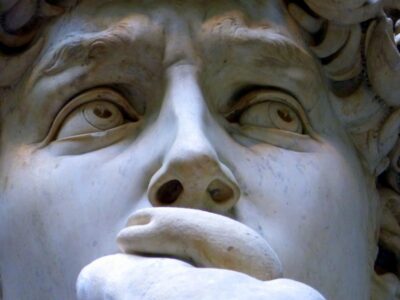
Uffizi Gallery and Accademia Gallery Guided Tour
Read our review →Browse the lists this tour appears in