
Reviewed · MUSEUMS
Florence Archaeological Museum: 2-Hour Private Guided Visit
Florence’s Archaeological Museum offers a welcome change from the city’s better-known art stops. Inside, you’ll find more than 10,000 objects covering prehistoric times through the Egyptian, Greek, Roman, Etruscan, and Coptic periods. The Chimera of Arezzo, an Etruscan bronze lion discovered in 1553, is the star.
I like two things here. First, a private guide can connect objects from several civilisations instead of leaving you to decode rows of vases and bronzes alone. Second, the two-hour format is focused enough to fit neatly into a busy Florence day. The main drawback is that some areas, including the second floor and Corridor of Gems, are temporarily closed.
Key points at a glance
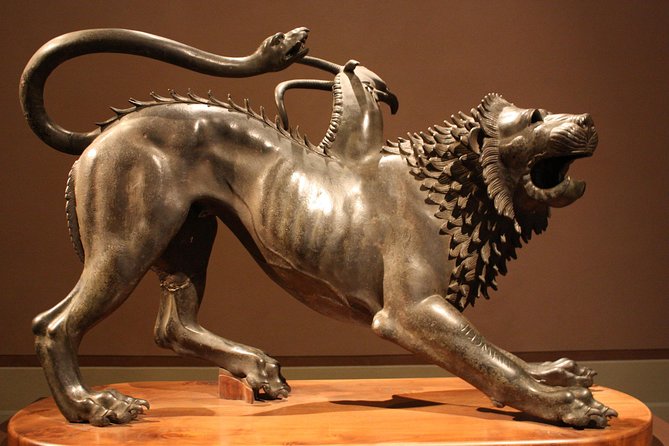
- The Chimera of Arezzo: See Florence’s famous Etruscan bronze lion, found near Arezzo in 1553.
- A private two-hour visit: Your group has its own guide, with the chance to choose a departure time that fits your plans.
- Four major ancient cultures: The route includes Egyptian, Greek, Roman, and Etruscan objects.
- A broad collection in a compact visit: The museum holds more than 10,000 items, but the guided visit lasts about two hours.
- Reserved admission included: Entry tickets are included, and central hotel pickup may be available.
- A quieter alternative: This museum can offer a calmer break from Florence’s busiest art attractions, though current closures limit the route.
Why this museum belongs on your Florence list
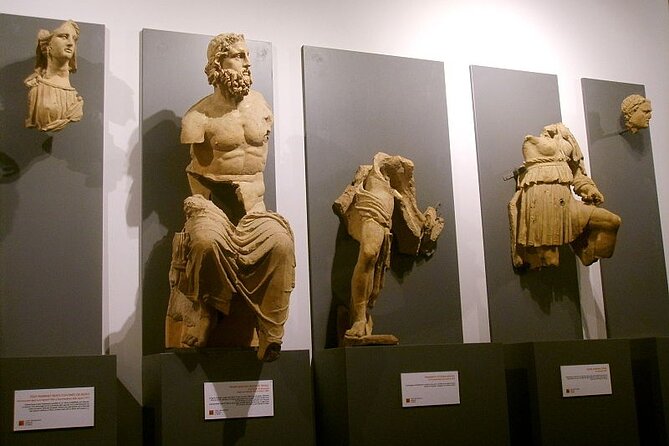
Florence is famous for Renaissance painting and sculpture, yet its Archaeological Museum reaches much further back. The collection covers prehistoric material and several ancient cultures, giving you a chance to compare how Egyptians, Greeks, Romans, and Etruscans made objects for worship, burial, daily life, and display.
That range is the museum’s main appeal. You are not signing up for two hours devoted to one famous artist or one period. Instead, you move between different civilisations and see how their art and customs overlap. A Greek vase may sit conceptually close to a Roman sculpture, while an Egyptian amulet points to a very different view of death and protection.
I find this kind of museum more rewarding with a guide than on a quick solo walk-through. Ancient objects can look beautiful without explaining themselves. A private guide can tell you what you are seeing, point out details you might miss, and adjust the pace to your interests.
The museum was founded in 1855 and has grown into a collection of more than 10,000 pieces. The public route includes nine rooms and two warehouses in a renovated area. That gives the visit a less grand, more focused feel than Florence’s headline museums. You come for the objects, not for a huge palace setting.
More museums and galleries in Florence:
- Florence: Skip-The-Line Uffizi Gallery Timed Entry Ticket
★ 4.5 · 27,832 reviews - Florence: Leonardo Interactive Museum Entry Ticket
★ 4.5 · 11,763 reviews - Florence Accademia Gallery Tour with Entrance Ticket Included
★ 4.5 · 6,148 reviews
Meeting at Piazza San Marco
The listed meeting point is Piazza San Marco, outside the Archaeological Museum at P.za di San Marco. This places you in a central part of Florence, close to public transportation. The activity ends back at the same meeting point, so you will need to plan your next stop from there.
Hotel pickup is included if your hotel is centrally located, but hotel drop-off is not included. Since the official meeting point remains the museum, confirm the pickup details when your booking is accepted. Confirmation is sent within 48 hours, subject to availability.
You can choose a departure time that suits your schedule. That flexibility matters in Florence, where museum visits, meals, church openings, and afternoon heat can make a fixed timetable awkward. I would still choose a time that leaves you unhurried. Two hours passes quickly once the guide begins explaining the collection.
Comfortable shoes are a sensible choice. The visit takes place indoors, but you will be on your feet as you move through the rooms and displays. Masks are mandatory under the stated conditions, so check the current requirements before setting out.
The two-hour route through nine rooms
The tour’s only listed stop is the Museo Archeologico Nazionale, or National Archaeological Museum. Admission is included, and the guide leads your group through the accessible collection.
The nine rooms and two warehouses give you a broad look at the museum without asking you to spend half a day there. That is useful if you have limited time in Florence. You will not see every object in a collection of more than 10,000 pieces, but a guide can help select the works that make the period-by-period story easiest to follow.
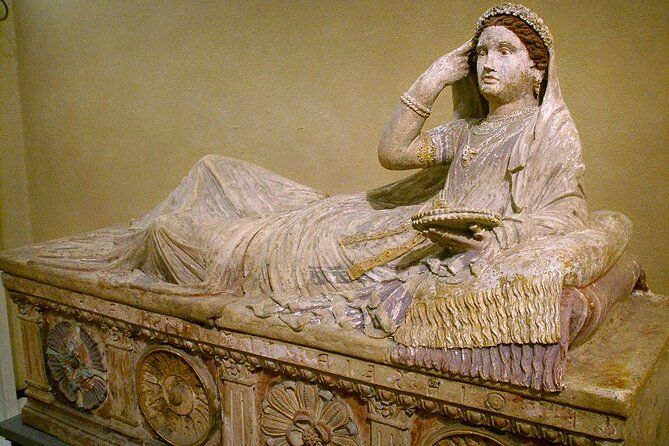
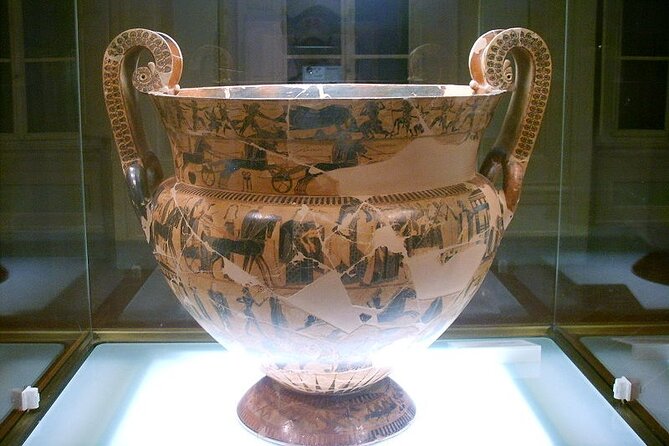
Expect a mix of bronzes, ceramics, sculptures, vases, sarcophagi, amulets, and other archaeological objects. The collection is not limited to polished masterpieces. That is part of its value. Everyday objects can reveal how people lived, worshipped, travelled, and prepared for death.
The renovated display areas should make the visit easier to follow, though the current closures mean the full museum experience is not available. The second floor and Corridor of Gems are temporarily closed to the public. If those areas are important to you, ask about their status before booking.
Meeting the Chimera of Arezzo

The Chimera of Arezzo is the object most likely to anchor the visit in your memory. This Etruscan bronze lion was discovered in Arezzo in 1553 and has become one of the museum’s defining works.
The creature is not simply a realistic animal. Its mythological form gives the guide a useful opening for explaining Etruscan art and the way ancient cultures represented power, danger, and supernatural beings. The sculpture is beautifully preserved, making it easier to study the modelling and details rather than viewing it as a damaged fragment.
I would pay close attention here, even if your main interest is Egyptian or Roman material. The Chimera provides a clear reason to visit the museum, but the surrounding Etruscan collection gives it context. You can then see the work not as an isolated famous statue, but as part of a wider collection from the civilisation that flourished in central Italy before Roman dominance.
The tour description does not specify how long the guide spends at each object. With a private visit, you can ask to linger at the Chimera or move on when you feel ready. That freedom is one of the strongest reasons to choose a private format.
More two-hour experiences in Florence:
- Florence: 2-Hour Guided Sightseeing Bike Tour
★ 4.5 · 1,004 reviews - Florence: 2-Hour Guided Bike Tour
★ 4.7 · 646 reviews - Florence: Dan Brown’s Inferno 2-Hour Walking Tour
★ 4.5 · 187 reviews - Florence Duomo 2-Hour Monumental Tour
★ 4.2 · 167 reviews
Egyptian objects, from amulets to sarcophagi
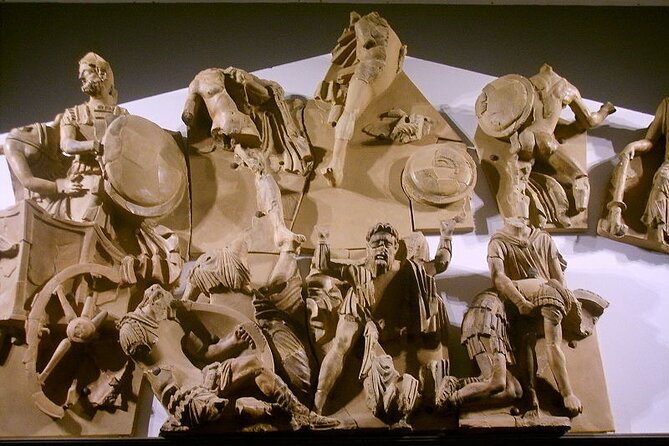
The Egyptian collection is another major part of the route. You can expect to see sarcophagi, amulets, ceramics, sculptures, and related objects. Together, these pieces provide more than a display of attractive shapes and colours. They point toward Egyptian ideas about protection, death, burial, and the afterlife.
The Egyptian section has been singled out as especially appealing, and it may be the best choice for anyone who wants a concentrated look at ancient Egypt without visiting a large specialist museum. The collection is not described as a complete survey of Egyptian civilisation, so keep your expectations realistic. It is one section of a larger archaeological museum.
Still, the mixed setting works well. After seeing an Egyptian amulet or sarcophagus, you can compare it with Greek pottery or Roman sculpture. The contrast helps you see that ancient art was not one single tradition. Each culture had its own symbols, materials, and uses for objects.
If you have children or first-time museum visitors in your group, the Egyptian objects may offer an easy starting point. Amulets and sarcophagi are immediately understandable as objects with a purpose. A private guide can then add the detail without turning the entire visit into a lecture.
Greek and Roman collections with useful variety

The Greek and Roman galleries add another layer to the visit. Here, you can see vases, sculptures, ceramics, bronzes, and other objects connected with the ancient Mediterranean world.
Greek vases are often small enough to overlook in a crowded display, yet their painted scenes can be among the most informative objects in an ancient collection. Roman sculpture, by contrast, may focus your attention on faces, bodies, public figures, or idealised forms. Moving between those object types gives you a sense of how material and purpose shape artistic choices.
The museum’s collection is broad rather than devoted to one single masterpiece. That makes a guide particularly useful. You can ask how Roman works relate to Greek models, why certain objects were made in bronze instead of ceramic, or how an item was used. The supplied information does not promise a specialist lecture on each topic, so treat the visit as a guided introduction rather than an academic course.
I like this balance for a first visit. You get enough variety to understand the museum’s scope, but the two-hour limit prevents the ancient world from becoming a blur of names and dates. If you already have a strong background in classical archaeology, you may want more time than this tour provides. For most visitors, the shorter visit is easier to fit into a Florence itinerary.
What a private guide changes

A private activity means only your group participates. That is a real advantage in a museum where different people may have very different interests. You can ask for more time with Egyptian objects, focus on Etruscan art, or keep the pace moving if your group has a later reservation.
The guide also offers a practical benefit: line-skipping through reserved tickets. The experience includes reserved admission, so you do not need to arrange the museum entry separately. Exact queue conditions can vary, but having tickets organized removes one task from your day.
The personal approach received especially strong praise. One account describes a guide who went beyond the basic service and provided a very personal visit. Another describes the guide as friendly and committed to creating a positive experience. The guide’s name is not provided, so I cannot tell you who will lead your visit. The quality will depend on the assigned guide, but the private setup gives that person room to tailor the tour.
A private guide is not automatically the best choice for every budget. You pay about $144.05 per person, which is a serious price for a two-hour museum visit. The value improves if you are travelling as a small group that wants a dedicated guide, reserved entry, and hotel pickup from a central location. It is harder to justify if you prefer reading labels on your own or are mainly interested in one famous object.
Price, timing, and practical value
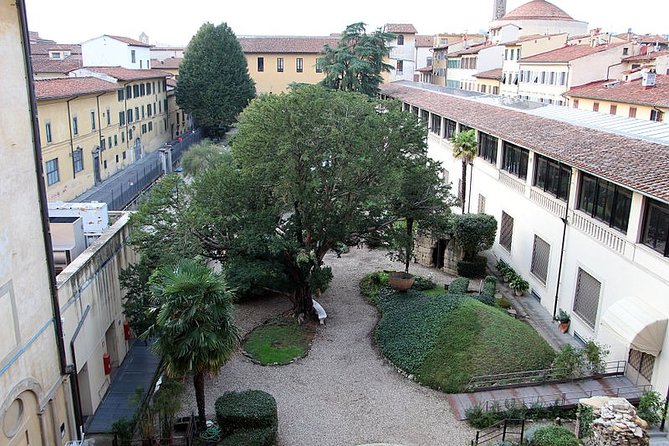
At roughly $144.05 per person, this is a premium museum visit. The fee includes an expert private guide, reserved tickets, and central hotel pickup when available. Lunch and hotel drop-off are not included.
I would compare the cost with the value of your time, not just the admission fee. Florence’s museum queues and crowded schedules can eat into a day. A private visit lets you choose a departure time, enter with tickets arranged, and spend two hours following a clear route. For a couple, family, or small group that values convenience, those details may be worth paying for.
The tour averages about two hours, so you can place it before lunch, between other central sights, or during a rainy spell. The museum’s indoor setting also makes it useful when the weather is poor. One account describes a quiet atmosphere during bad weather and pandemic restrictions, but conditions naturally change. Do not assume the museum will be nearly empty on your date.
The collection is best for people who enjoy ancient objects, archaeology, and cultural comparison. It is less suitable if you want a grand Renaissance setting or a long, relaxed museum day. The temporary closures also reduce the amount you can see.
Free cancellation is available up to 24 hours before the start time for a full refund. Cancellations or changes made within 24 hours are not refunded or accepted, and the cut-off follows local Florence time.
Who should book this museum visit
I would recommend this tour to you if you want ancient history explained clearly and have only a short window in Florence. It is also a good match for a private family outing, a couple with different levels of museum interest, or anyone who dislikes wandering through archaeological displays without context.
Egypt fans should consider it for the Egyptian Hall, while classical art fans will have plenty to see in the Greek and Roman rooms. Etruscan enthusiasts have the strongest single reason to come: the Chimera of Arezzo and the wider Etruscan collection.
I would pause before booking if your budget is tight or if you already know you prefer independent museum visits. The price is high for two hours, and the current closures mean you will not see every part of the institution. You should also confirm the pickup arrangement if you are counting on hotel collection.
Should you book the Florence Archaeological Museum tour?
Book it if the Chimera of Arezzo, Egyptian objects, and ancient Mediterranean cultures sound more appealing than another Renaissance gallery. The private guide, reserved tickets, flexible start time, and compact route make this a practical choice for a carefully planned Florence day.
Skip it if you want a full museum visit, a low-cost ticket, or access to the closed second floor and Corridor of Gems. For the right person, though, this is a focused way to see one of Florence’s less obvious cultural stops without losing half a day.
FAQ
How long does the Florence Archaeological Museum tour last?
The guided visit lasts approximately two hours.
Is this a private tour?
Yes. Only your group participates in the activity.
Are museum admission tickets included?
Yes. The experience includes admission tickets and reserved entry.
Where does the tour begin?
The meeting point is outside the Archaeological Museum at Piazza San Marco, P.za di San Marco, 50121 Florence.
Where does the tour end?
The activity ends back at the meeting point.
Is hotel pickup available?
Hotel pickup is offered if your hotel is centrally located. Hotel drop-off is not included.
What can I see in the museum?
The collection includes Egyptian, Greek, Roman, and Etruscan objects, along with prehistoric material. You may see bronzes, ceramics, sculptures, vases, sarcophagi, amulets, and other archaeological pieces.
Is the Chimera of Arezzo included?
Yes. The guided visit includes the Etruscan bronze Chimera of Arezzo, discovered in Arezzo in 1553.
Are all museum areas open?
No. The second floor and Corridor of Gems are temporarily closed to the public.
Can I cancel for a full refund?
Yes, if you cancel at least 24 hours before the experience start time. Cancellations or changes made less than 24 hours before the start are not accepted, and the amount paid is not refunded.
Recently added around Florence
- Accademia and Uffizi Small-group Guided Tour★ 4.5 · 8 reviews
- The David from Michelangelo.★ 5.0 · 3 reviews
- The Complete Wine Tour Brunello, Nobile, Chianti wine experience★ 4.0 · 7 reviews
- Combo: Accademia + walking + Uffizi Galleries Guided Tour★ 3.5 · 6 reviews
- The Best of Tuscany in 3 Days★ 4.5 · 13 reviews
- The Cooking Lab – Authentic Food Experience★ 5.0 · 113 reviews
- Florence Central Market Food Tour – Private Tour★ 4.0 · 7 reviews
- Family Friendly Florence Private City Tour★ 5.0 · 47 reviews
Museums, compared.
Skip-The-Line Uffizi Gallery Timed Entry Ticket
Read our review →
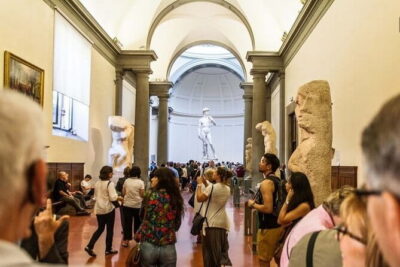
Florence Accademia Gallery Tour with Entrance Ticket Included
Read our review →
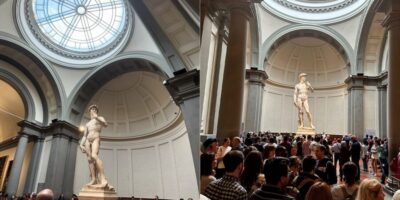
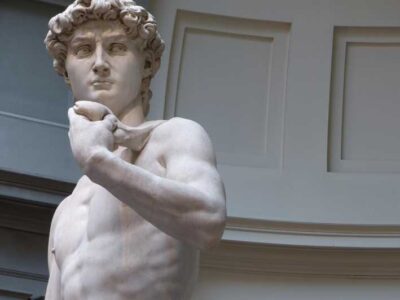
Accademia Gallery Guided Tour with Entry Ticket
Read our review →
Golf Cart Tour to Fiesole Roman Theatre and Museum
Read our review →
Uffizi Gallery and Accademia Gallery Guided Tour
Read our review →Browse the lists this tour appears in