
Reviewed · ACCADEMIA GALLERY AND DAVID TOURS
Florence: Accademia Reserved Time Ticket with Free E-Book
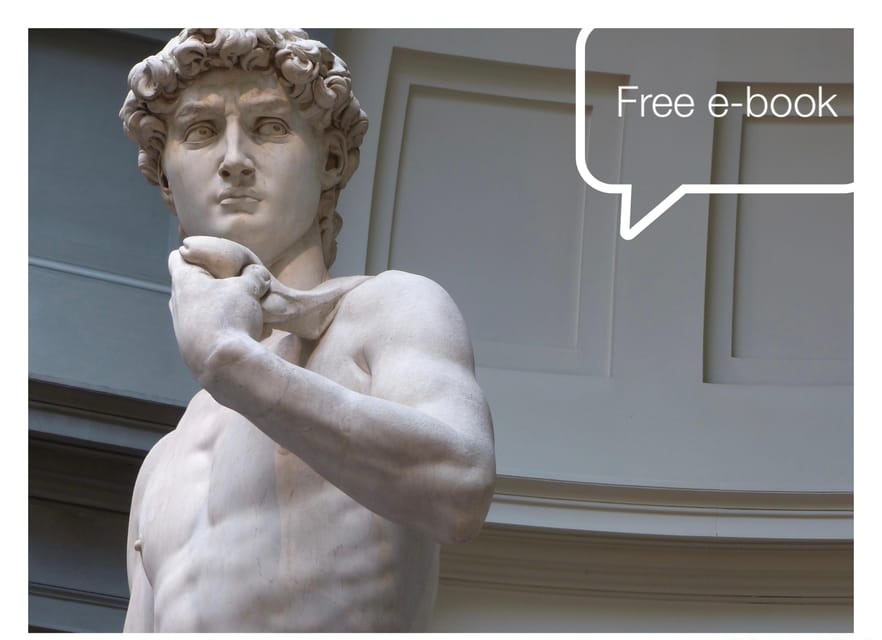
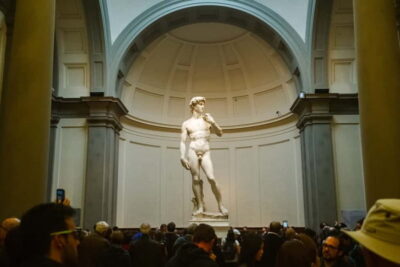
Florence’s Accademia Gallery is a small museum with one enormous draw: Michelangelo’s David, the 17-foot marble figure that turns a quick museum stop into a major Florence moment. A reserved entry ticket helps you avoid the general admission line, and the free e-book gives you background as you move through the rooms.
I like the practical meeting-point assistance and the chance to see more than David, including the unfinished Prisoners, paintings, and historic musical instruments. I also like the freedom to explore at your own pace. The main concern is reliability: two serious complaints describe last-minute cancellations, replacement tickets, and delayed refunds, so booking flexibility matters.
Key points to know
- David is the main event: See Michelangelo’s famous marble statue up close in the Accademia’s central hall.
- The reserved time saves effort: You skip the general admission line, though you still need to reach Via Ricasoli 41 fifteen minutes early.
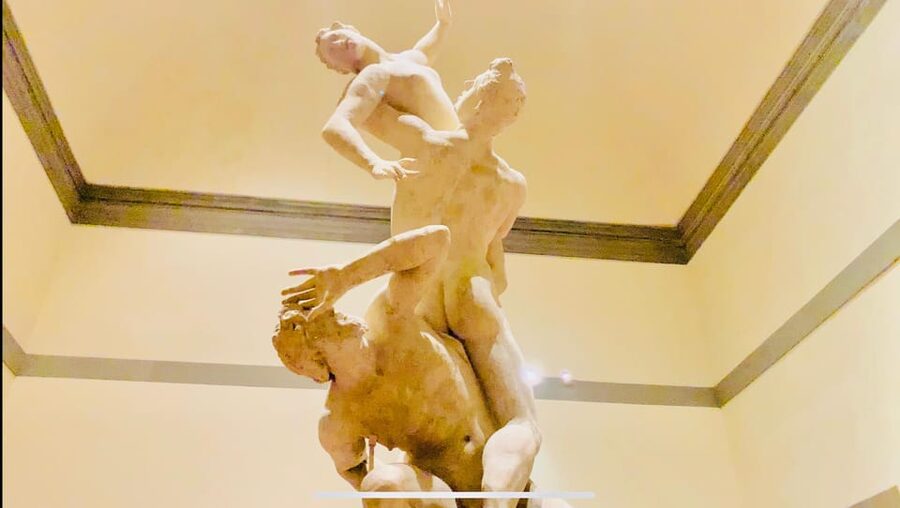
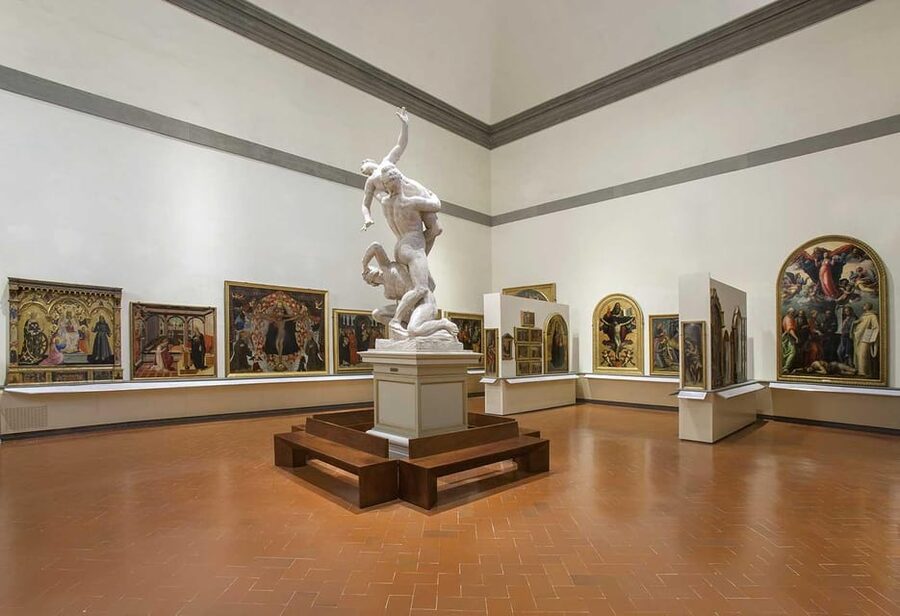
- The museum offers more than sculpture: Look for works by Botticelli, Giambologna, and Pontormo, plus paintings and musical instruments.
- The e-book replaces a live guide: It offers background and artwork notes, but you explore independently.
- The price is about convenience: At $39.48, you pay for reserved access and assistance rather than a full guided tour.
- Check the booking carefully: Last-minute cancellation complaints make it wise to confirm the activity before setting your day around it.
Why Michelangelo’s David makes this short visit worthwhile
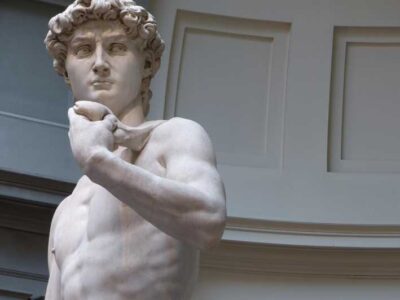
The Accademia is best known for David, and the fame is deserved. Michelangelo created the statue from a single block of marble, showing the biblical hero before his fight with Goliath. The figure’s scale is striking, but the real pleasure is looking closely at the details: the alert expression, the tension in the hands, and the careful turn of the body.
You do not need to be an art specialist to appreciate the statue. David is one of those works that explains itself quickly, though a little context helps you notice why it mattered so much to Florence. The e-book can provide that context without forcing you to follow a guide or a group.
The reserved entry is useful because the Accademia is one of Florence’s most visited museums. You meet the English-speaking assistant in front of the door at Via Ricasoli 41, not inside an office. Do not ring a bell. Arrive fifteen minutes before your assigned time and wait outside for the assistant to help you enter.
That arrangement is simple, but it is important. A reserved ticket is only helpful if you reach the correct place at the correct time. Via Ricasoli is near the Accademia, so take a moment to check the address and allow enough time to get there on foot.
More ways to see the David at the Accademia:
- Florence: Timed Entrance Ticket to Michelangelo’s David
★ 4.6 · 16,983 reviews - Florence: Michelangelo’s David Skip-the-Line Entry Ticket
★ 4.5 · 12,764 reviews - Florence Accademia Gallery Tour with Entrance Ticket Included
★ 4.5 · 6,148 reviews
Inside the Accademia: David, the Prisoners, and the main hall
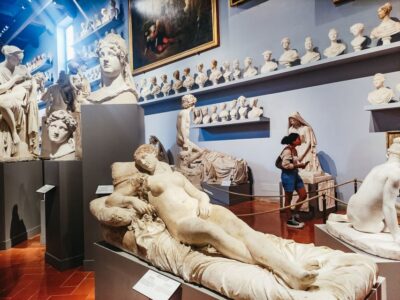
Once inside, David naturally takes first place. The statue is displayed in a large hall where you can walk around it and view it from several angles. The setting gives you time to look beyond the first impression.
After David, pay attention to Michelangelo’s unfinished Prisoners, also called the Slaves. These figures appear to emerge from the marble, with parts of the stone still enclosing their bodies. Their unfinished state lets you think about Michelangelo’s method and about the difference between a polished final work and a sculpture still taking shape.
The Prisoners are particularly valuable if you have already seen David in photographs. David shows control and completion. The Prisoners show struggle, movement, and the rough relationship between the artist’s idea and the block of stone. The contrast makes the Accademia more than a one-statue stop.
The supplied e-book should help you identify the important works and understand their setting. Since no live guide is included, download or open the e-book before you enter if possible. That way, you are not trying to sort out access or passwords while standing in a crowded museum room.
Paintings from the 13th to the 16th centuries
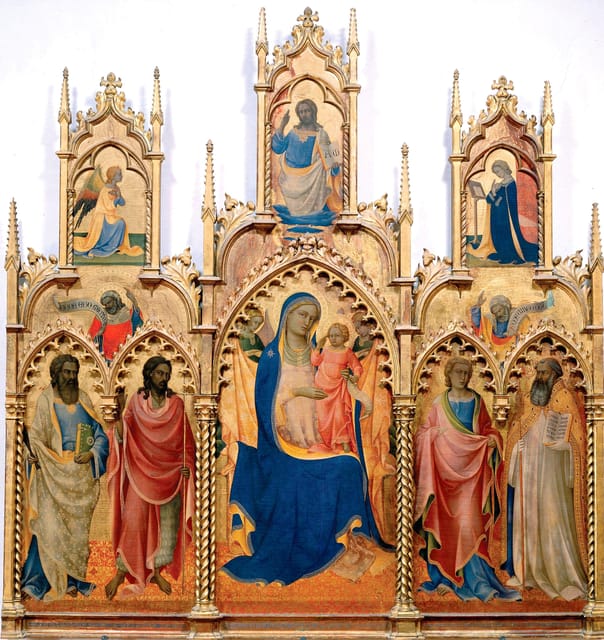
The Accademia also holds paintings and sculptures dating from the 13th through the 16th centuries. The collection gives you a wider view of Florence’s artistic world, rather than presenting Michelangelo in isolation.
Works connected with Botticelli, Giambologna, and Pontormo are among the names to look for. Each artist offers a different way to read the period. Botticelli is associated with graceful painted figures and elegant line. Giambologna is known for energetic sculpture. Pontormo brings a more unusual and expressive style to Florentine painting.
The exact path through the museum can depend on the gallery layout and the day’s conditions, so think of the e-book as a tool for selecting priorities. You do not need to give every object equal time. See David, spend a quiet few minutes with the Prisoners, then use the guide to choose the paintings and sculptures that appeal to you.
This is where the reserved ticket works best for an independent visitor. You are not tied to a live guide’s pace, and you can spend more time on one work if it catches your eye. The tradeoff is that the experience depends on your own preparation. The e-book adds information, but it does not answer questions in the room.
The musical instruments and the world’s first piano claim
One unusual part of the Accademia is its collection of musical instruments. The museum is not only a sculpture gallery, and these objects add a welcome change of pace after the marble works and paintings.
The experience information identifies the world’s first piano among the instruments on display. That detail makes this section especially appealing to anyone interested in music, design, or the history of everyday objects. Musical instruments show how artistic skill was applied to sound and craftsmanship, not only to the human form.
Allow time for this section instead of leaving as soon as you have seen David. The instrument collection may be the part that surprises you most, especially if you have visited Florence expecting only Michelangelo.
The e-book can help explain why particular instruments matter, but the package does not include a live guide. If music is a major interest for you, read the relevant section before the visit and use the gallery labels to build on it.
More tickets and passes in Florence:
- Florence: Skip-The-Line Uffizi Gallery Timed Entry Ticket
★ 4.5 · 27,832 reviews - Florence: Leonardo Interactive Museum Entry Ticket
★ 4.5 · 11,763 reviews - Florence: Uffizi Priority Ticket & Masterpieces Audio App
★ 4.2 · 6,402 reviews - Florence: Hop-on Hop-off Bus Tour: 24, 48 or 72-Hour Ticket
★ 4.0 · 6,283 reviews
What the three-hour booking really means
The activity is listed as three hours, with starting times available according to the booking calendar. That does not mean you receive three hours of guided commentary. You meet an assistant for entry, then explore the Accademia on your own with the e-book.
For many people, this is the right format. David can be appreciated in a focused visit, and the independent structure lets you avoid a long, formal tour. You can move at your own speed and decide how much time to give the paintings and instruments.
Still, you should read the three-hour duration carefully. It is best understood as the time set aside for the activity, not as a promise of three hours with a personal art historian. If you want a detailed explanation of every room, this ticket will not provide it.
I would allow enough time for the museum without planning another tightly timed attraction immediately afterward. The meeting process, entry, David, the Prisoners, the paintings, and instruments all deserve some breathing room. The booking itself may be quick, but a good museum visit should not feel like a race.
Is $39.48 a fair price?
The cost is $39.48 per person. That is a noticeable premium for a museum entry ticket, especially because food, drinks, and a live guide are not included.
You are paying for three useful extras: a reserved entry time, help from an assistant at the meeting point, and the e-book. The reserved access is the most important part. At a popular Florence museum, avoiding the general admission line can save time and reduce uncertainty in your day.
The value depends on your plans. If you have only one day in Florence, or if you are visiting during a busy period, the time saving may justify the price. If you are comfortable arranging museum entry directly and do not need meeting-point help, the cost may feel high.
The e-book improves the package, but it is not the same as a live guide. You should book this as a convenient entry service with self-guided material, not as a traditional tour.
The price also needs to be weighed against the cancellation concerns. Two serious complaints describe activities being cancelled at the last minute, including one cancellation around 1 a.m. on the scheduled day. One complaint also describes being told to buy replacement tickets elsewhere, while another says a refund had still not arrived a week later.
Those reports do not prove that every booking will fail, but they are important enough to affect my advice. Use the free cancellation policy, which allows cancellation up to 24 hours before the activity for a full refund, and confirm your reservation before making other fixed plans around it.
Meeting at Via Ricasoli 41
The meeting point is Via Ricasoli 41, 50122 Florence. You meet the English-speaking assistant outside the door. It is not an office, and you should not ring the bell.
Arrive fifteen minutes early. This is not a small detail. Reserved entry depends on timing, and the assistant needs to identify you and help with the group’s admission. Keep your booking information ready on your phone.
The end point is back at the meeting point. There is no separate transport, hotel pickup, or food stop. You make your own way to and from the museum, so include walking time when planning your day.
Large bags and oversize luggage are not allowed. Bring only what you need for the visit. This is especially useful advice in Florence, where a light day bag makes moving between museums and narrow city streets easier.
The activity is listed as wheelchair accessible. If accessibility is important to you, check the arrangements at booking and make sure the reserved entry details match your needs.
The e-book is useful, but know its limits
The free e-book is the main educational feature. It is meant to help you understand the highlights, with information about the art and its setting. Used well, it can turn a quick look at David into a more thoughtful visit.
I suggest reading the introduction before arriving. Learn the names Michelangelo, Botticelli, Giambologna, and Pontormo, then use the guide to decide which works deserve extra attention. You will get more from the museum if you know what you are looking for.
The e-book also suits different interests. You can focus on Michelangelo’s technique, Renaissance painting, sculpture, or the musical instruments. It gives you control, but it also means you must take the initiative.
Do not expect a personal guide to tell stories, answer questions, or keep the visit moving. The package includes an assistant for the meeting point, not a live art specialist inside the gallery. That distinction is one of the most important things to understand before booking.
Who should book this Accademia experience?
This ticket suits you if David is a priority and you want a simple way to arrange entry. It is also a good match if you prefer exploring alone, like having written information available, or need a reserved time to fit the museum into a busy Florence schedule.
It works well for first-time visitors who want to see the famous statue but do not want a long guided tour. Families and mixed-interest groups may also appreciate the freedom to move at different speeds, though everyone must follow the entry time and bag rules.
Art students and serious museum fans may want more than this package provides. The e-book gives useful context, but a live specialist would offer more detail and the chance to ask questions. You should also think twice if a last-minute cancellation would disrupt a tightly planned itinerary.
The strongest parts are clear: David, the Prisoners, the broader collection, reserved access, and the freedom to explore. The weak point is not the museum itself. It is the possibility of booking trouble, which makes confirmation and flexible planning especially important.
Should you book it?
Book this experience if you place a high value on seeing David at a reserved time and want a self-guided visit with basic support. The e-book and meeting-point assistant add convenience, while the museum’s sculptures, paintings, and instruments give you more to see than the famous statue alone.
I would not book it solely because it promises a three-hour guided experience. There is no live guide, and the visit is independent. I would also avoid making an unchangeable schedule around it until your reservation is confirmed.
At $39.48, the ticket is worth considering for a busy Florence trip, especially when saving time matters. Go in with realistic expectations, arrive early at Via Ricasoli 41, pack light, and treat the e-book as your guide. If the booking is confirmed and your plans have some flexibility, this is a practical way to meet Michelangelo’s David and see a broader slice of the Accademia.
FAQ
Where does the Accademia activity begin?
Meet the English-speaking assistant at Via Ricasoli 41, 50122, Florence, Italy.
Is Via Ricasoli 41 an office?
No. You should wait in front of the door and not ring any bell. The assistant will help you there.
How early should I arrive?
You should arrive at the meeting point fifteen minutes before your scheduled time.
Is a live guide included?
No. The package includes an assistant at the meeting point and an e-book, but not a live guide inside the gallery.
What does the e-book cover?
The e-book covers highlights of the Accademia Gallery and provides information to help you understand the artworks.
Can I see Michelangelo’s David?
Yes. Seeing Michelangelo’s David is the main feature of the Accademia Gallery visit.
What else can I see besides David?
The gallery includes Michelangelo’s unfinished Prisoners, paintings and sculptures from the 13th to the 16th centuries, works associated with Botticelli, Giambologna, and Pontormo, and a collection of musical instruments.
Are food and drinks included?
No. Food and beverages are not included.
Can I bring a large bag?
No. Oversize luggage and large bags are not allowed.
Can I cancel for a refund?
Yes. You can cancel up to 24 hours in advance for a full refund.
Recently added around Florence
- Accademia and Uffizi Small-group Guided Tour★ 4.5 · 8 reviews
- The David from Michelangelo.★ 5.0 · 3 reviews
- Combo: Accademia + walking + Uffizi Galleries Guided Tour★ 3.5 · 6 reviews
- The Complete Wine Tour Brunello, Nobile, Chianti wine experience★ 4.0 · 7 reviews
- The Best of Tuscany in 3 Days★ 4.5 · 13 reviews
- The Cooking Lab – Authentic Food Experience★ 5.0 · 113 reviews
- Florence Central Market Food Tour – Private Tour★ 4.0 · 7 reviews
- Family Friendly Florence Private City Tour★ 5.0 · 47 reviews
Accademia Gallery and David Tours, compared.
Timed Entrance Ticket to Michelangelo’s David
Read our review →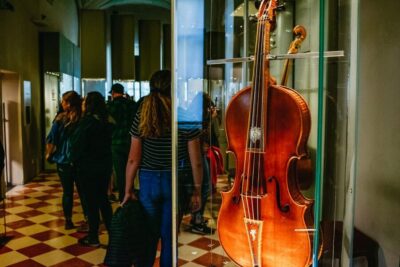
Michelangelo’s David Skip-the-Line Entry Ticket
Read our review →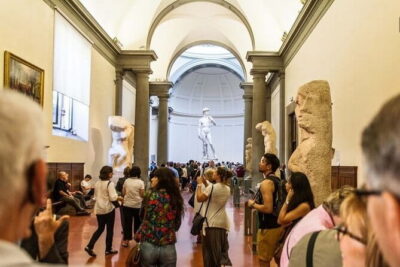
Florence Accademia Gallery Tour with Entrance Ticket Included
Read our review →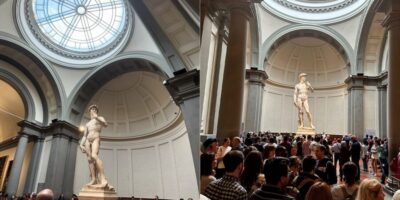
Timed Entry Ticket to Michelangelo’s David & eBook
Read our review →
Skip the line: Uffizi and Accademia Small Group Walking Tour
Read our review →
Accademia Gallery Guided Tour with Entry Ticket
Read our review →Browse the lists this tour appears in