
Reviewed · UFFIZI GALLERY TOURS
Exclusive Uffizi Gallery Private Visit
The Uffizi is not just a room full of famous paintings. It is a guided trip through the development of European art, from Giotto to Caravaggio, with Botticelli, Leonardo, Michelangelo, and Raphael along the way. This private three-hour visit gives you a guide’s full attention instead of leaving you to decode the museum alone.
I like two things especially: skip-the-line entry saves precious Florence time, and the private format lets you ask questions or focus on one artist. Guides such as Giacomo, Mike, and Viktoria Tröger have been praised for their clear explanations and lively storytelling. The main drawback is the price, $299.30 per person, which makes the tour a better fit for art lovers or small groups than for budget visitors.
Key points to know before booking
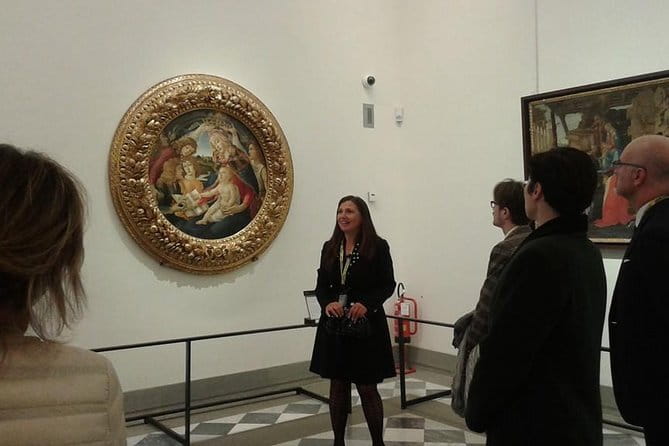
- A private route through Florence’s great art museum: Only your group joins the guide, so the pace can be adjusted to your interests.
- Botticelli is a major highlight: You’ll see The Birth of Venus and Primavera, two of the Uffizi’s best-known paintings.
- The collection follows artistic change: The rooms mainly cover the 12th through 17th centuries, making the order useful for understanding style and technique.
- The guide matters here: Giacomo, Mike, and Viktoria Tröger have all been praised for strong explanations and personable teaching.
- Three hours is a serious museum visit: It gives you time to look closely, but the Uffizi is large and can feel tiring.
- The meeting point is central: You meet in Piazza della Signoria, near the gallery, and finish at the same place.
Why a private Uffizi visit can be worth the cost
The Uffizi can be hard to handle on your own. It contains centuries of painting, a long list of famous names, and enough grand rooms to blur together after a while. A private guide gives the collection a clear shape.
You are not simply pointed toward a famous canvas and left to take a photograph. The guide can explain how painting changes from the medieval period into the Renaissance and then toward the dramatic style of the Baroque era. That context helps you see why Giotto matters, why Botticelli looks so different from Leonardo, and why Caravaggio’s work feels like such a sharp turn.
At $299.30 per person, this is not a casual add-on for every Florence itinerary. The value improves if you are traveling with family or friends and can use a group discount, or if you want one concentrated visit instead of spending time researching the museum before you arrive.
The private format also matters if your group has mixed interests. One person may care about Botticelli, another about Michelangelo, and someone else may want the social and political story of the Medici. A guide can connect those interests instead of giving everyone the same fixed speech.
More ways into the Uffizi:
- Florence: Skip-The-Line Uffizi Gallery Timed Entry Ticket
★ 4.5 · 27,832 reviews - Florence: Uffizi Priority Ticket & Masterpieces Audio App
★ 4.2 · 6,402 reviews - Florence: Skip-the-Line Uffizi Small Group Tour
★ 4.6 · 5,926 reviews
Meeting in Piazza della Signoria
You meet your guide in Piazza della Signoria, one of Florence’s central public squares, near the Uffizi. The tour does not include hotel pickup or drop-off, so you need to make your own way there.
This location is practical. It places you beside the museum and near public transportation, and it avoids the confusion of searching for a distant meeting point. Still, give yourself enough time to find the exact spot in the square. Piazza della Signoria is open, busy, and surrounded by major sights.
The experience ends back at the meeting point after the museum visit. That makes it easy to continue exploring central Florence on foot, though the tour itself does not include a transfer elsewhere.
You can choose a morning or afternoon departure. I would consider the morning if the Uffizi is a top priority for your day. One particularly useful account describes entering just as the gallery opened on a Sunday, when the pair could look more closely before the rooms became crowded. That does not guarantee empty galleries, but it shows why an early start can be a smart choice.
Inside the Uffizi, from Giotto to Botticelli
The Uffizi’s collection focuses mainly on the 12th through 17th centuries. Its chronological arrangement helps you follow the changes in painting rather than treating each work as an isolated masterpiece.
The early rooms introduce the shift away from the flatter, more formal religious images of the medieval period. Giotto’s Maestà is an important stop here. Your guide can point out how figures gain more presence and how artists begin to suggest space and human feeling with greater force.
Then the route moves into the Renaissance, when Florence became a center for new ideas in art, science, patronage, and architecture. This is where the Uffizi becomes especially rewarding with a guide. The paintings are beautiful, but the connections between them are even more useful.
You may be shown how artists handled perspective, anatomy, light, movement, and the human body. You can also ask why the Medici family supported particular artists and how the gallery’s former use as government offices fits into the story of Florence.
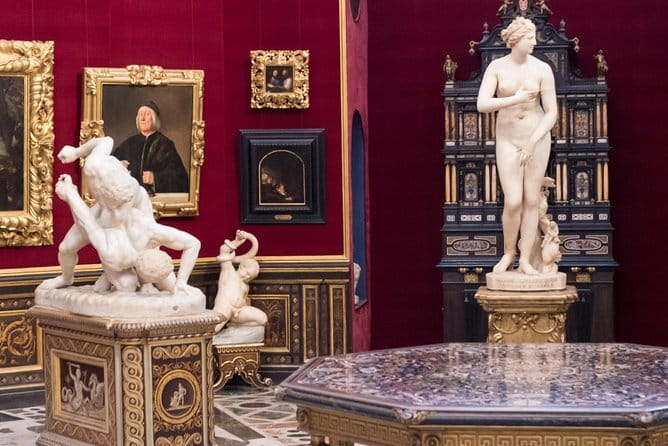
The grand rooms and decorated halls are part of the experience too. The building was once used as offices for the Medici government, so you are walking through a place tied to the city’s political power as well as its art.
Botticelli’s Birth of Venus and Primavera
For many people, Botticelli is the reason to visit the Uffizi. The tour includes The Birth of Venus and Primavera, along with other works by the artist.
These paintings are often treated as familiar images from textbooks and souvenirs. In person, they have more detail and presence than reproductions suggest. A guide can help you read the figures, symbols, gestures, and unusual sense of movement rather than simply checking off two famous titles.
The private setting is useful here because you can linger on questions. You might want help understanding the mythological subjects, the Medici connection, or Botticelli’s graceful but slightly strange figures. The guide can also place these works beside paintings from other periods so you can see what makes Botticelli’s style distinctive.
The Uffizi will not be quiet throughout the visit. One account describes the gallery as crowded and loud, and that is a fair concern for anyone hoping for a calm museum experience. A private guide can make the noise easier to manage by keeping your attention on a clear subject, but it cannot remove the crowd.
More museums and galleries in Florence:
- Florence: Leonardo Interactive Museum Entry Ticket
★ 4.5 · 11,763 reviews - Florence Accademia Gallery Tour with Entrance Ticket Included
★ 4.5 · 6,148 reviews - Uffizi Gallery Small Group Tour with Guide
★ 4.5 · 4,923 reviews - Florence: Accademia Gallery Guided Tour
★ 4.6 · 4,156 reviews
Leonardo, Michelangelo, and Raphael

The tour also brings you to work by three names that can dominate any first visit to the Uffizi: Leonardo da Vinci, Michelangelo, and Raphael.
Leonardo’s Annunciation offers a chance to consider his careful observation of nature, his handling of space, and the quiet tension between the figures. Leonardo did not leave a large number of paintings, so seeing one in this setting carries particular weight.
Michelangelo’s Doni Tondo is different in mood and form. It is a colorful, forceful painting that shows his command of the human figure. Your guide can explain why a work by Michelangelo looks so different from Botticelli’s elegant mythological scenes.
Raphael brings another kind of balance and polish. The Uffizi’s Raphael paintings help show how artists refined the Renaissance language of composition, expression, and grace.
I would not expect to spend equal time on every important work in the museum. Three hours sounds generous, but the collection is large. The private format lets you ask for your own must-see painting at the start, a useful detail noted in the experience. If you have a particular artist in mind, tell the guide before the route gets underway.
Titian, Caravaggio, and the later rooms
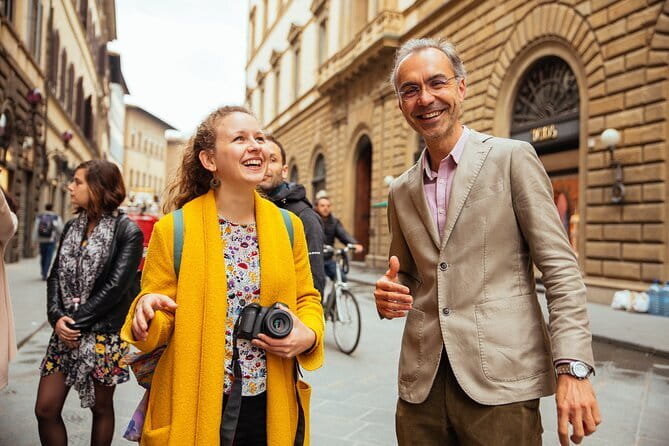
The visit continues beyond the early Renaissance. Titian’s Venus of Urbino is one of the major works included, and it gives you a chance to see how Venetian painting differs from the Florentine tradition.
The picture’s color, surface, and treatment of the figure create a different effect from the more linear style associated with earlier Florentine painters. A guide can make that comparison easier to grasp because the museum places several artistic traditions within the same overall route.
Caravaggio’s Medusa brings the tour into a more dramatic world. Caravaggio’s bold lighting and direct emotional force can feel startling after the calmer balance of earlier Renaissance art. This is one reason the chronological order is so helpful: you are not only seeing famous pictures, you are watching artistic priorities change.
The collection’s range means you can move from religious scenes to mythological subjects and then to portraits and dramatic narrative images. It is a lot to take in, but the guide’s job is to keep the three hours from becoming a parade of names and dates.
What the private guide adds
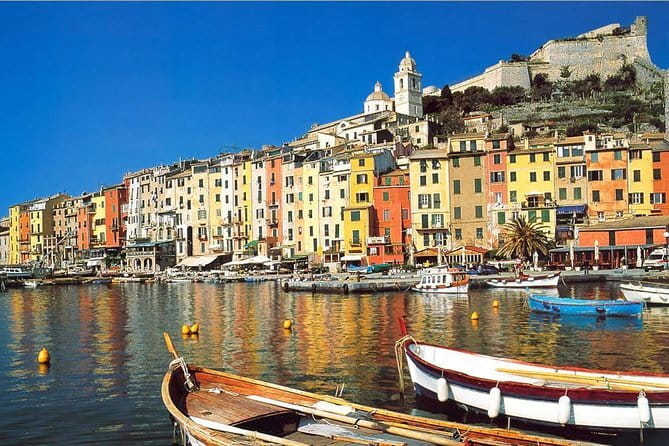
The strongest part of this experience is likely to be the person leading it. The guide is not just there to escort you through the entrance. The best accounts describe guides who make the stories behind the art easy to follow and who answer questions without rushing.
Giacomo has been praised for being passionate, entertaining, and highly informed. Mike has been described as personable and able to tailor the visit around a group’s must-see painting. Viktoria Tröger has been praised for bringing the stories behind the works to life and holding attention for the full three hours.
You should not assume that every departure will have one of these specific guides, but their approach gives you a useful standard. A good private visit should feel like a conversation, not a memorized lecture.
Language is another consideration. The tour is offered in English, and most of the feedback about the guiding is very strong. One otherwise positive account found the guide’s English difficult to understand. If clear spoken English is especially important to you, keep that possibility in mind when deciding how much to spend.
The museum can also be loud. One person wished for earphones because of the noise. Since this is a private tour, you can ask the guide to repeat a point or move closer, but the building’s sound level is outside the operator’s control.
Three hours, crowds, and your pace
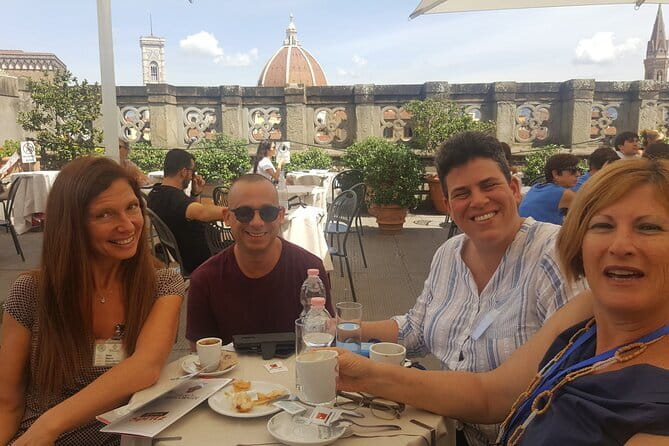
Three hours is long enough for a serious introduction, not long enough to see everything in detail. I like that balance. A shorter visit can feel rushed, while a much longer art tour may test the patience of anyone in your group who is not a museum enthusiast.
You should expect to walk and stand for much of the experience. The details provided say that most people can participate, and service animals are allowed. If someone in your party needs a more specific accommodation, ask before booking rather than relying on a general participation statement.
Crowds can affect the mood. The Uffizi is one of Italy’s most visited museums, and the rooms may be busy and loud. Morning timing may help, especially near opening, but no departure time can promise a private feeling inside a public museum.
The best way to use the time is to decide on priorities. If your list includes Botticelli, Leonardo, Michelangelo, Raphael, Titian, and Caravaggio, tell the guide at the beginning. You can still follow the main story of the collection while making sure your essential works receive proper attention.
Who should book this Uffizi experience?
I would recommend it most strongly to first-time Uffizi visitors who want the art explained in plain language. It also suits families, since the private guide can adjust the pace and keep younger members involved. One family account notes that a 14-year-old still remembered the visit later, which suggests the right guide can make the museum stick.
This is also a good fit for small groups who would rather share a guide than join a large tour. The private format means only your group participates, and group discounts may improve the price.
Art students, serious museum fans, and visitors with a short Florence stay may find the cost easier to justify. You get skip-the-line access, a professional guide, and a focused route through one of Italy’s major collections.
I would hesitate if you are happy to browse alone, have a tight budget, or prefer a quick visit with only a few famous paintings. The Uffizi charges a high price in both money and attention, and you may not need a private guide to enjoy Botticelli’s best-known works.
The tour is offered in English, with morning and afternoon choices. Confirmation arrives when you book, and free cancellation is available up to 24 hours before the start time. Changes or cancellations inside that window are not accepted for a refund.
Should you book it?
Book this private Uffizi visit if you want the museum to make sense, not just fill your camera roll. The guide can connect Giotto, Botticelli, Leonardo, Michelangelo, Raphael, Titian, and Caravaggio into one readable story, while the private format lets you slow down for the works that matter most to you.
Skip it if $299.30 per person would make the rest of your Florence budget uncomfortable. For a couple or family that loves art, the focused attention can be worth the cost. For a casual museum visit, a less expensive option may serve you just as well.
FAQ
How long does the private Uffizi tour last?
The visit lasts approximately three hours, including admission to the Uffizi Gallery.
Where does the tour begin?
You meet your private guide in Piazza della Signoria, near the Uffizi Gallery in Florence.
Where does the experience end?
The tour ends back at the meeting point in Piazza della Signoria.
Is skip-the-line entry included?
Yes. Skip-the-line access and the Uffizi admission ticket are included.
Is this a private tour?
Yes. Only your group participates in the activity.
Can I cancel for a full refund?
Yes, if you cancel at least 24 hours before the experience start time. Cancellations made less than 24 hours in advance are not refunded.
Recently added around Florence
- Accademia and Uffizi Small-group Guided Tour★ 4.5 · 8 reviews
- The David from Michelangelo.★ 5.0 · 3 reviews
- The Complete Wine Tour Brunello, Nobile, Chianti wine experience★ 4.0 · 7 reviews
- Combo: Accademia + walking + Uffizi Galleries Guided Tour★ 3.5 · 6 reviews
- The Best of Tuscany in 3 Days★ 4.5 · 13 reviews
- The Cooking Lab – Authentic Food Experience★ 5.0 · 113 reviews
- Florence Central Market Food Tour – Private Tour★ 4.0 · 7 reviews
- Family Friendly Florence Private City Tour★ 5.0 · 47 reviews
Uffizi Gallery Tours, compared.
Skip-The-Line Uffizi Gallery Timed Entry Ticket
Read our review →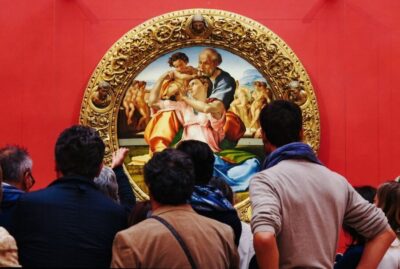
Uffizi Priority Ticket & Masterpieces Audio App
Read our review →
Skip the line: Uffizi and Accademia Small Group Walking Tour
Read our review →
Uffizi Gallery and Accademia Gallery Guided Tour
Read our review →
Uffizi Gallery Small-Group Guided Tour with Ticket
Read our review →
Michelangelo’s David, Accademia & Uffizi Small Group Tour
Read our review →Browse the lists this tour appears in