
Reviewed · FLORENCE WALKING TOURS
Discover the best of Florence: an accessible 2 hours walking tour
Florence is easiest to understand on foot, and this small-group route limited to 10 people takes you from the old Roman Forum to the Arno without relying on a bus or squeezing into a large crowd. Guide Veronica brings art, architecture, local stories, and everyday Florence into the walk, while the route is planned for wheelchair users and people who need a gentler pace.
I like the thoughtful accessibility support, including tactile materials for blind participants and a sign language interpreter on request. I also like the relaxed style praised in the feedback, especially Veronica’s patience with families and groups managing mobility challenges. The main drawback is time: two hours gives you a strong city-center introduction, but not enough time to enter every major monument.
Key points to know before booking
- The route links four major sights: You walk from the Roman Forum through the Duomo area, medieval Florence, Piazza della Signoria, and Ponte Vecchio.
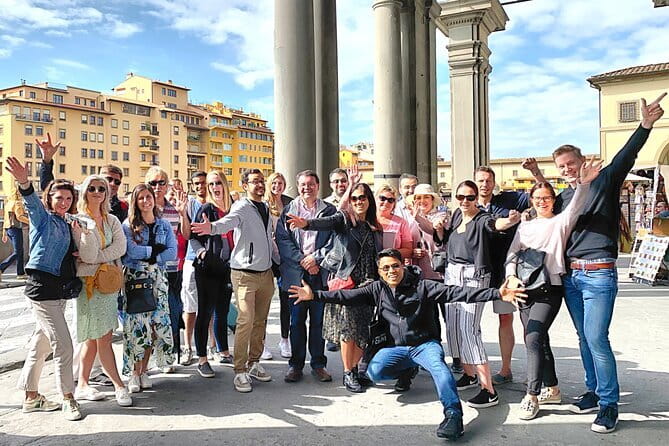
- The group stays small: A maximum of 10 people allows more conversation and makes it easier to adjust the pace.
- Accessibility is planned, not added as an afterthought: Wheelchair-friendly routing, tactile support, and sign language interpretation are available on request.
- Veronica is the named guide: Her background in art history shapes the explanations, with particular care given to families and people with limited mobility.
- It is a sightseeing walk, not a museum tour: Admission to the Duomo complex and Piazza della Signoria attractions is not included.
- The walk ends at Ponte Vecchio: You finish beside the Arno, in a useful spot for continuing around central Florence.
Starting at Caffè Gilli and the Roman Forum
Meet at Caffè Gilli on Via Roma, 1r, near the heart of Florence. This is a practical starting point because the route begins close to the city’s Roman core and quickly reaches the major sights around Piazza del Duomo.
The first historical reference is the ancient Forum, the center of Florentia when Florence was a Roman city. You will not be spending a long time on a separate archaeological visit. Instead, this opening gives you a useful time scale: Florence did not begin with the Renaissance. Roman foundations, medieval streets, religious power, banking, art, and civic government all overlap in this compact center.
That context matters. Without it, the Duomo can feel like a giant isolated church, and Palazzo Vecchio can seem like just another grand palace. With a guide, you begin to see how Florence grew around these religious and political centers.
Caffè Gilli is also easy to reach by public transportation, and the activity is near transit. The meeting point is in a heavily visited part of town, so allow enough time to locate the café and gather your group. The exact route can be adapted for mobility needs, but you should still tell the operator about those needs when booking.
More walking tours in Florence:
- Florence: Guided Walking Tour
★ 4.5 · 3,334 reviews - Skip the line: Uffizi and Accademia Small Group Walking Tour
★ 4.5 · 3,135 reviews - Florence: Guided Walking Tour
★ 4.6 · 1,602 reviews
Piazza del Duomo, Florence’s grandest first lesson
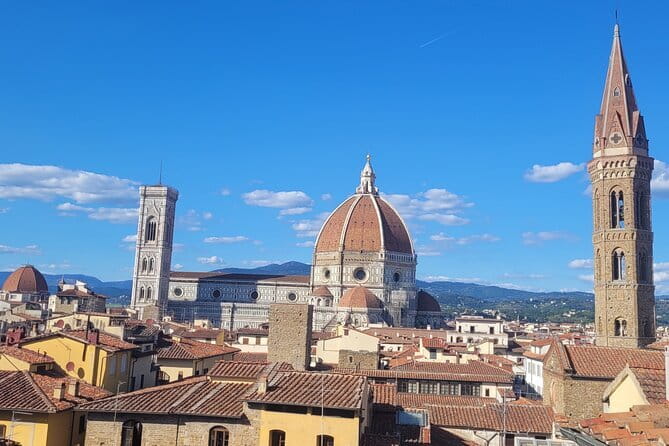
The first full stop is Piazza del Duomo, where Florence places several of its most famous buildings in one tight space. You see the Cathedral of Santa Maria del Fiore, the Baptistery, Giotto’s Bell Tower, and Brunelleschi’s huge dome.
The scheduled time here is about 30 minutes. That is enough for a clear explanation of the square’s design, the role of the cathedral, and the relationship among the buildings. It is not enough for a full interior visit, a climb, or a patient look at every sculptural detail.
The dome naturally takes center stage. Its scale is hard to grasp from photographs, and a guide can explain why Brunelleschi’s work changed Florence’s skyline and its place in European art. You should expect interpretation from outside rather than included admission. Entry tickets are not part of the tour price, so this experience works best as an orientation to the complex.
That distinction is important if you want to visit the cathedral or climb the dome. You will need separate admission arrangements, and the two-hour walk does not promise time for those activities. If your main goal is the cathedral interior, this tour should be paired with a separate visit rather than treated as a substitute.
For wheelchair users, the value is clear: you can experience the square and its major views without needing to tackle a bus route or a long-distance city walk alone. The historic center has uneven areas and heavy pedestrian activity, so the operator’s advance planning matters. Request the accessible arrangements before you arrive.
Torre della Pagliazza and medieval Florence
The next half hour centers on Torre della Pagliazza, an unusual medieval tower in the old heart of Florence. This stop shifts the focus from the grand public face of the Duomo to the narrower, more personal stories of the medieval city.
The appeal here is not a single blockbuster monument. It is the chance to hear legends and smaller stories that help you picture Florence before the Renaissance palaces and galleries became the city’s main calling cards. Veronica’s approach, based on the feedback available for her tours, favors conversation and explanation rather than a rushed list of dates.
This is also the point where the small group can make a real difference. In a group of 10 or fewer, you can ask about a detail, pause for a question, or request a little more time without competing with a full coachload of people. The stop itself is free, so there is no additional ticket decision.
You should keep your expectations in check. This is a short walking-tour stop, not a full visit to a medieval tower. The value lies in the stories and setting, especially if you enjoy seeing how ordinary streets connect the city’s grand monuments.
Piazza della Signoria, an open-air sculpture lesson

The walk then reaches Piazza della Signoria, dominated by Palazzo Vecchio. The square is filled with Renaissance sculpture and works as an outdoor gallery, making it one of the best places in Florence to learn how art and civic power worked together.
You can expect roughly 30 minutes here. That gives Veronica room to point out important sculptures and explain why the square mattered to Florence’s government and public life. Her art-history background is particularly useful at this stop, since the works are not simply decoration. Their placement, subject matter, and connection to Palazzo Vecchio carry political meaning.
Admission to the attractions associated with the square is not included. The tour focuses on the public space and exterior setting. If you want to enter Palazzo Vecchio, you will need separate admission and additional time.
I like this arrangement for a first visit. You get the essential visual experience without spending your entire morning indoors. You also avoid the pressure of trying to absorb a large museum collection while keeping up with a group.
Families may find this section especially useful. The feedback about Veronica points to her ability to keep children engaged for long stretches, using stories and questions rather than treating the walk like a lecture. That does not guarantee that every child will love every stop, but it suggests a guide who knows how to adjust her delivery.
A completely different way to spend an afternoon in Florence:
- Florence: Skip-The-Line Uffizi Gallery Timed Entry Ticket
★ 4.5 · 27,832 reviews - Tuscany Day Trip from Florence: Siena, San Gimignano, Pisa and Lunch at a Winery
★ 5.0 · 21,634 reviews - Florence: Timed Entrance Ticket to Michelangelo’s David
★ 4.6 · 16,983 reviews - Florence: Michelangelo’s David Skip-the-Line Entry Ticket
★ 4.5 · 12,764 reviews
Ponte Vecchio and the walk’s final view
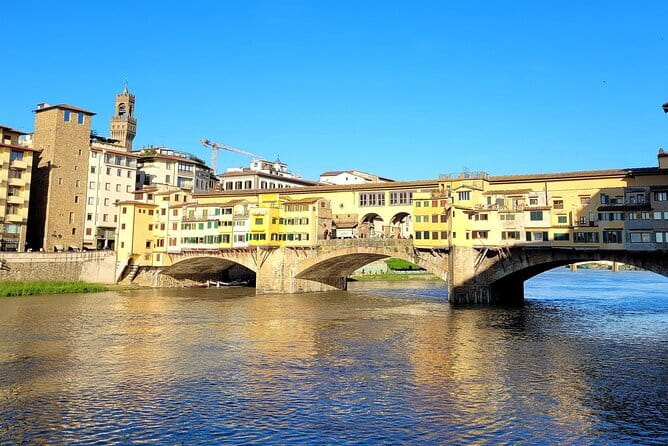
The last stop is Ponte Vecchio, Florence’s oldest and most famous bridge. It crosses the Arno with its medieval structure, tightly packed jewelry shops, and open views along the river.
The bridge is free to visit, and you finish here rather than returning to the starting point. That makes the ending practical. From Ponte Vecchio, you can continue exploring central Florence, look for a café, or make your own way toward another sight.
The bridge can be crowded, and its narrow shopping passage does not offer much room for a group to spread out. For wheelchair users, the route to and across the bridge may require careful handling, especially when foot traffic is heavy. The operator describes the experience as wheelchair-friendly, and the guide can plan around mobility needs, but you should still request those arrangements ahead of time.
Ponte Vecchio is a good final stop because it brings together several themes from the walk: medieval construction, the Arno, commerce, views, and Florence’s habit of placing major beauty in everyday public spaces. You finish with a landmark rather than a checklist of directions.
Why the two-hour format works, and where it falls short
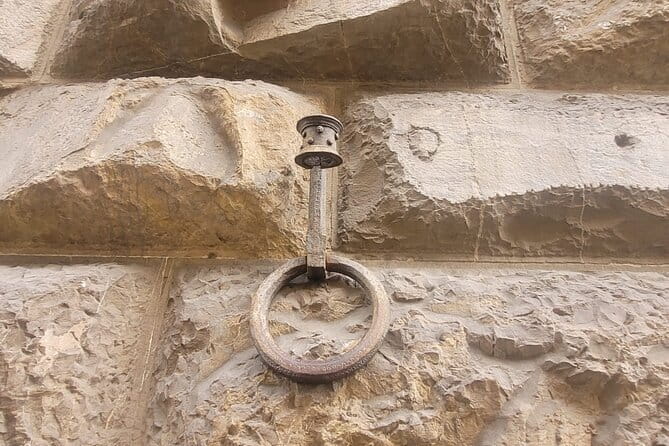
Two hours is a useful length for a first look at Florence. You cover four major areas without giving up an entire day, and the route moves through the city rather than keeping you inside one building.
I would especially choose this format if you have just arrived, are traveling with a mixed-age family, or want an accessible introduction before deciding which museums deserve more time. The walk gives you a framework for the rest of your stay.
The tradeoff is depth. Each main stop receives about 30 minutes, so the guide must keep moving. You will not have time for extended monument interiors, a full museum collection, long photo sessions, or a leisurely meal. If you want detailed art analysis of dozens of works, book a longer specialist tour or a separate gallery visit.
The tour is also offered in English only. That is straightforward for English-speaking visitors, but it will not suit you if you need another spoken language. Sign language interpretation is available on request, and tactile support is available for blind participants, but these services should be arranged in advance rather than assumed on the day.
Groups larger than four receive headsets. That is helpful in Florence, where traffic, crowds, and hard stone surfaces can make a guide difficult to hear. A group of four or fewer will not need the same equipment, but the small maximum keeps the gathering manageable.
Accessibility and pace in central Florence

The accessibility features are among the strongest reasons to consider this walk. The route is described as wheelchair-friendly, and the guide can adjust the pace and include places to rest for people with mobility challenges.
That does not mean Florence becomes perfectly smooth. The historic center has old paving, narrow passages, crowds, and busy public squares. A route can be accessible while still requiring careful movement. Give the provider clear information about wheelchair dimensions, walking limits, rest needs, or support requirements before the tour.
Tactile supports for blind participants and a sign language interpreter are available on request. Service animals are allowed. Most people can participate, but the operator should know about any special arrangements in advance so the guide can prepare properly.
I find the small maximum of 10 just as important as the formal accessibility features. A guide can see when someone needs a pause, answer a question without holding up a large group, and alter the rhythm of the walk. Veronica’s handling of mobility challenges is described as patient and attentive, which fits the needs of a route through Florence’s busy center.
What you get for $126.03
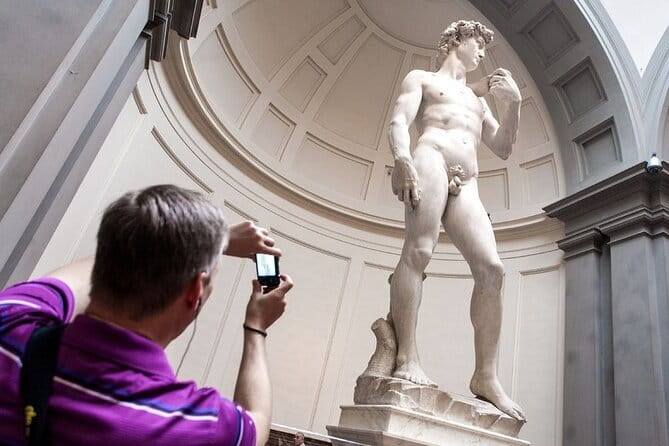
At $126.03 per person, this is not a bargain-priced orientation walk. The value depends on what you need from a guide.
You are paying for a licensed guide, a private-feeling group capped at 10, headsets for groups over four, and a route designed to connect the city’s main sights in two hours. You are also paying for help with interpretation, pacing, and accessibility planning. For a visitor who wants to walk independently and simply identify buildings, the price may feel high.
For a family, a small group of friends, or anyone who finds large tours stressful, the cost can make more sense. The guide’s ability to keep children involved, explain art without turning the walk into a classroom, and adapt to mobility limits adds value that is difficult to measure by the number of stops alone.
Admission tickets are not included. Build that into your budget if you plan to enter the cathedral complex or Palazzo Vecchio. The tour is best viewed as a guided city introduction, not an all-inclusive Florence attraction pass.
The current rating is 5 out of 5 from 19 ratings, with 100 percent recommending it. That is a strong signal, though the sample is still small. I would put more weight on the consistent practical themes: Veronica’s warmth, her ability to explain art, her success with children, and her careful handling of mobility needs.
Who should book this Florence walk?
I would choose this experience for:
- First-time visitors who want the main sights explained in one compact route
- Families with children who need a guide able to keep the pace lively
- Small groups that prefer conversation over a large organized tour
- Wheelchair users or groups with mobility concerns who want advance route planning
- Visitors interested in Florence’s architecture, public art, and stories rather than only ticking off interiors
- People who want to begin at the Duomo and finish near the Arno
I would look elsewhere if your priority is a long museum visit, a dome climb, a detailed interior tour, or a language other than English. You should also avoid expecting a quiet walk at every point. The Duomo, Signoria, and Ponte Vecchio are central Florence, and crowds are part of the setting.
Free cancellation is available if you cancel at least 24 hours before the start time. A cancellation inside that window is not refunded, and changes are not accepted. The activity also needs a minimum number of participants, so a cancellation by the operator can result in another date, another experience, or a full refund.
Should you book it?
Book this walk if you want a short, personal introduction to central Florence and need a guide who can adjust to families or mobility concerns. Veronica’s strengths are clear: art-history knowledge, an easy manner, patience, and an ability to make the route work for different ages and physical needs.
Do not book it expecting included monument admission or a full museum experience. At $126.03, the price is justified mainly by the small group, guide attention, and accessibility planning. For the right visitor, that is exactly what makes the walk worthwhile. For an independent sightseer on a tight budget, a self-guided route may offer better value.
FAQ
How long is the Florence walking tour?
The tour lasts approximately two hours.
What sights are included on the route?
The route begins near the ancient Roman Forum and includes Piazza del Duomo, Torre della Pagliazza, Piazza della Signoria, and Ponte Vecchio.
Where does the tour start?
The meeting point is Caffè Gilli, Via Roma, 1r, 50123 Firenze FI, Italy.
Where does the tour end?
The tour ends at Ponte Vecchio, 50125 Firenze FI, Italy.
Is the tour offered in English?
Yes. The experience is offered in English.
How many people can join the tour?
The maximum group size is 10 people.
Is the tour wheelchair-friendly?
Yes. The experience is described as wheelchair-friendly, and the guide can plan a manageable route and pace for mobility needs.
Are sign language interpretation and tactile support available?
Yes. Tactile support for blind participants and a sign language interpreter are available on request.
Are admission tickets included?
No. Admission is not included for Piazza del Duomo or Piazza della Signoria attractions. Ponte Vecchio and Torre della Pagliazza are listed as free stops.
Are headsets provided?
Headsets are provided for groups larger than four people.
What is the cancellation policy?
You can cancel at least 24 hours before the start time for a full refund. Cancellations or changes made less than 24 hours before the start time are not accepted for a refund.
More two-hour experiences in Florence
- Florence: 2-Hour Guided Sightseeing Bike Tour
★ 4.5 · 1,004 reviews - Florence: 2-Hour Guided Bike Tour
★ 4.7 · 646 reviews - Florence: Dan Brown’s Inferno 2-Hour Walking Tour
★ 4.5 · 187 reviews - Florence Duomo 2-Hour Monumental Tour
★ 4.2 · 167 reviews
Recently added around Florence
- Accademia and Uffizi Small-group Guided Tour★ 4.5 · 8 reviews
- The David from Michelangelo.★ 5.0 · 3 reviews
- Combo: Accademia + walking + Uffizi Galleries Guided Tour★ 3.5 · 6 reviews
- The Complete Wine Tour Brunello, Nobile, Chianti wine experience★ 4.0 · 7 reviews
- The Best of Tuscany in 3 Days★ 4.5 · 13 reviews
- The Cooking Lab – Authentic Food Experience★ 5.0 · 113 reviews
- Florence Central Market Food Tour – Private Tour★ 4.0 · 7 reviews
- Family Friendly Florence Private City Tour★ 5.0 · 47 reviews
Florence Walking Tours, compared.
Skip the line: Uffizi and Accademia Small Group Walking Tour
Read our review →
Renaissance and Medici Tales Guided Walking Tour
Read our review →
Skip-the-Line Florence Highlights and David Walking Tour
Read our review →
Dark Mysteries and Legends Guided Walking Tour
Read our review →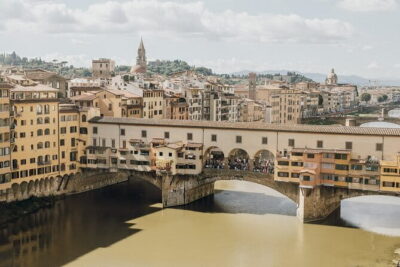
Florence in a Day: Michelangelo’s David, Uffizi and Guided City Walking Tour
Read our review →Browse the lists this tour appears in