
Reviewed · FLORENCE WALKING TOURS
Discover Florence Walking Tour: Guided Tour
Florence’s best introduction may be a walk that links Medici power with the city’s grand public squares. In 90 minutes, you move from the family palace and chapels to the Arno, Palazzo Vecchio, Piazza Pitti, and Brunelleschi’s Dome, seeing how art and politics shaped the city side by side.
I like the clear route and the live storytelling, especially at Ponte Vecchio and Piazza della Signoria. I also like that guides speak five languages, with Julia receiving especially warm praise for her memorable leadership. The main drawback is pace: the walk covers a lot, and it does not list interior admission to the palaces, chapels, cathedral, or museums.
Key points
- Medici beginnings: Start near Palazzo Medici Riccardi and San Lorenzo, where Florence’s ruling family built its influence.
- Five major stops: See Piazza della Repubblica, Piazza della Signoria, Ponte Vecchio, Piazza Pitti, and Piazza del Duomo.
- Live multilingual guiding: Choose from English, French, German, Spanish, or Portuguese.
- Compact city orientation: The 90-minute route, sometimes extended to two hours, gives you a useful first look at central Florence.
- Flexible booking: Cancel up to 24 hours before departure for a full refund, or reserve now and pay later.
- Important access note: This tour is not suitable for wheelchair users, and the itinerary order can change.
A Florence introduction built around the Medici
This walking tour works because it gives Florence a storyline rather than a disconnected parade of famous buildings. You begin with the Medici family, follow their political and cultural influence through the center, cross the Arno, and finish beneath the cathedral dome that helped define Renaissance architecture.
I find that approach useful on a first day in Florence. The city can feel compact on a map, yet each square carries a different layer of power, faith, commerce, or civic life. A guide helps you connect those pieces before you return on your own to visit a museum or church.
The meeting point is the office at Via de’ Martelli 33R. It is close to the Duomo area, but you should allow time to find the office and check in. Bring a passport or identity card, as requested, and leave a WhatsApp number so the support team can contact you after booking.
The stated duration is 1.5 hours, although the walk can run from 90 minutes to two hours. That matters if you have a museum reservation, train, lunch booking, or another guided visit afterward. I would leave a generous gap rather than schedule anything immediately after the tour.
More walking tours in Florence:
- Florence: Guided Walking Tour
★ 4.5 · 3,334 reviews - Skip the line: Uffizi and Accademia Small Group Walking Tour
★ 4.5 · 3,135 reviews - Florence: Guided Walking Tour
★ 4.6 · 1,602 reviews
Palazzo Medici Riccardi and the San Lorenzo district
The walk begins in the Medici District, with Palazzo Medici Riccardi as its first major historical marker. The palace represents the point when the Medici family moved from wealthy banking power into a more visible role in Florence’s public life.
You will not simply be looking at an old façade. This is where your guide can explain how private wealth, patronage, and political influence worked together. The Medici supported artists and architects, but they also used buildings and public gestures to strengthen their position in the city.
From there, the route passes through Piazza San Lorenzo, home to the Medici Chapels. The chapels are important for both their connection to the family and their Renaissance art. Their presence gives the opening section a strong focus: Florence’s famous artistic achievements were tied to real families, rivalries, money, and ambition.
A key limitation is worth noting. The tour description promises guided viewing and explanation, but it does not list entry into the chapels or Palazzo Medici Riccardi. If you want to see the interiors, treat this walk as an orientation and arrange a separate admission when available.
Piazza della Repubblica: Roman roots and modern Florence
Piazza della Repubblica changes the mood. This broad square is linked to the site of Florence’s ancient Roman forum, while its cafés and shops give it a more modern feel. Your guide uses the square to explain how the city changed from Roman settlement to medieval commune and then to a major Renaissance center.
I like this stop because it puts the famous artistic Florence into a wider frame. You are not only looking at domes and statues. You are standing in a place where the city’s street plan, commerce, and public life changed over many centuries.
The square can also be one of the busier parts of the walk. Stay close to the guide, especially if the group is moving through crowded pedestrian areas. The tour is short, so there is not much time to pause for café service or shopping. Think of Piazza della Repubblica as a place for context and orientation, not a long break.
Piazza della Signoria and Florence’s political stage
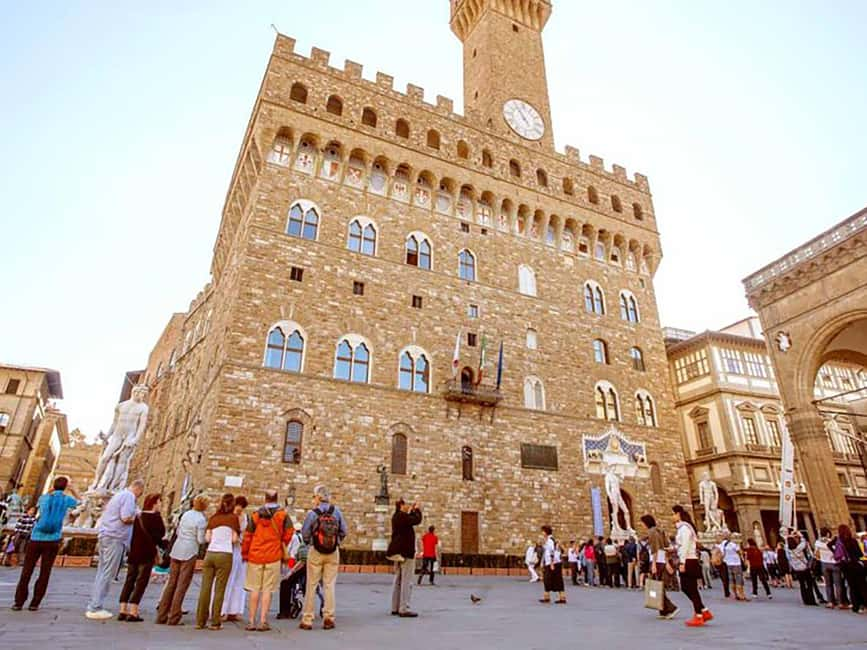
Next comes Piazza della Signoria, one of Florence’s most important civic spaces. Palazzo Vecchio dominates the square, and the surrounding statues turn the area into an outdoor lesson in power, public memory, and political messaging.
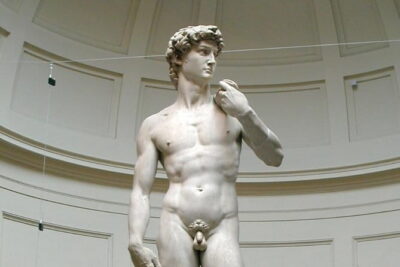
Your guide will point out the replica of Michelangelo’s David. The original statue is in the Accademia Gallery, but the copy makes sense here because this square was a political stage. David represented strength and civic independence, and its placement connected art to the concerns of the Florentine government.
Palazzo Vecchio adds another layer. It was the seat of political authority, not simply a handsome palace. As you look across the square, you can hear about the battles, decisions, and public events that shaped Florence’s direction.
This is one of the tour’s most useful stops for visitors who plan to return later. I recommend noting which buildings and sculptures you want to see in greater detail. A short guided visit cannot explain every statue or give you time inside Palazzo Vecchio, but it can help you choose where to spend your own time afterward.
A completely different way to spend an afternoon in Florence:
- Florence: Skip-The-Line Uffizi Gallery Timed Entry Ticket
★ 4.5 · 27,832 reviews - Tuscany Day Trip from Florence: Siena, San Gimignano, Pisa and Lunch at a Winery
★ 5.0 · 21,634 reviews - Florence: Timed Entrance Ticket to Michelangelo’s David
★ 4.6 · 16,983 reviews - Florence: Michelangelo’s David Skip-the-Line Entry Ticket
★ 4.5 · 12,764 reviews
Ponte Vecchio and the Arno crossing
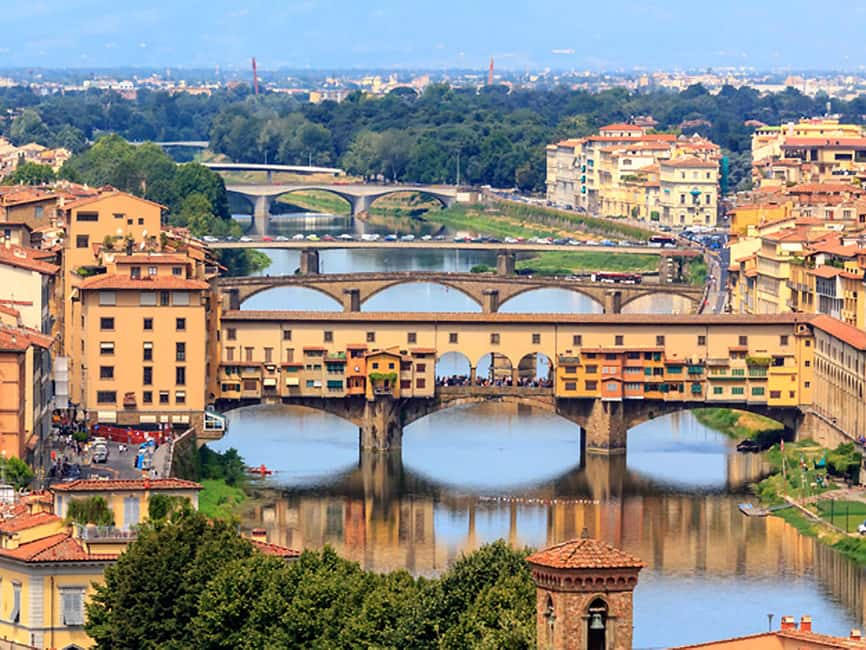
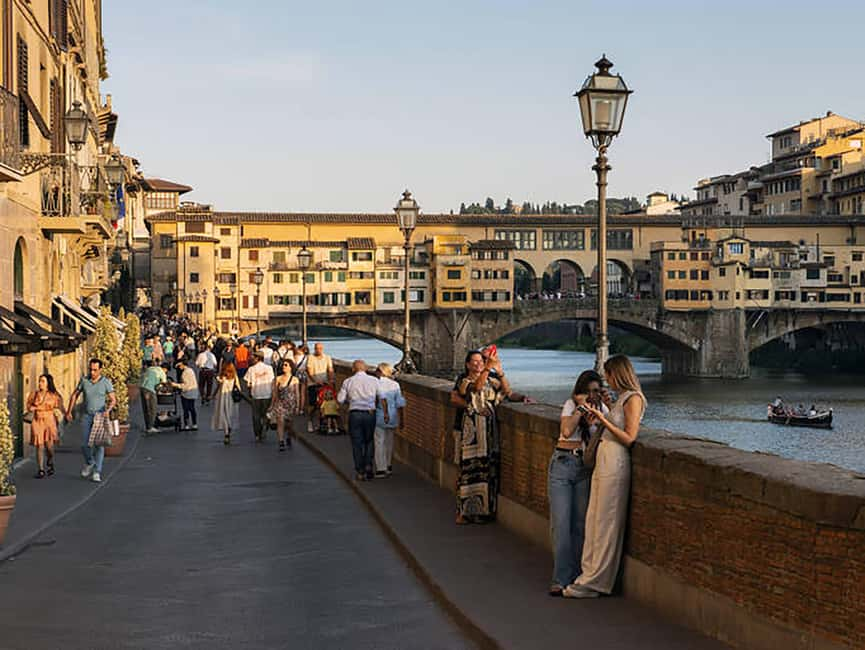
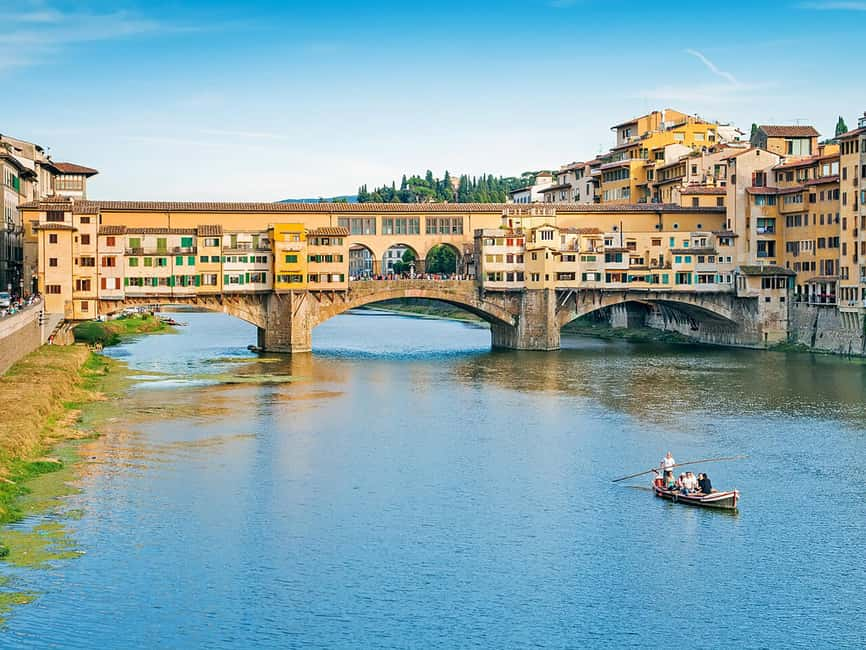
The route then reaches Ponte Vecchio, Florence’s best-known bridge. It crosses the Arno and is lined with goldsmiths and jewelry shops, giving it a look unlike the city’s other major crossings.
The bridge’s appeal comes from its history as a working passage, not just a postcard view. Your guide explains how it changed from a basic crossing into a commercial center for goldsmiths and merchants. That story helps you see why the bridge remains part of daily city life rather than only a monument.
Ponte Vecchio is also a natural point to look along the river and across the older quarters of Florence. The tour does not promise a long photo stop, so keep your camera ready as you approach. If you want quiet pictures or time to browse the shops, return later when you can move at your own speed.
The bridge may feel tight when foot traffic builds. That is another reason to keep the group and guide in sight. The route is on foot throughout, with no transport segment to give your legs a rest.
Piazza Pitti and the later Medici court
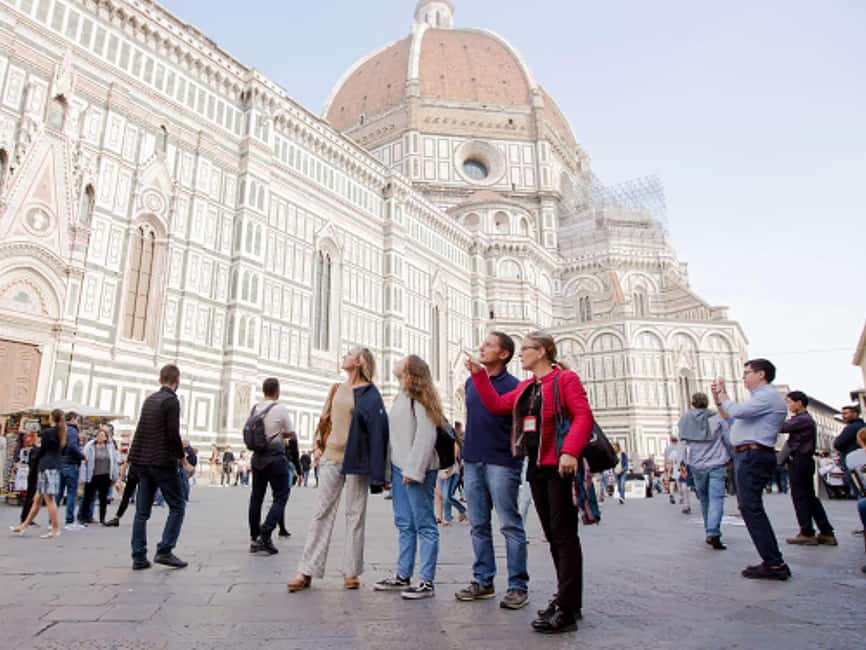
Across the river, Piazza Pitti brings the Medici story into a later period. Palazzo Pitti was the home of the Grand Dukes of Tuscany and reflects a grander, more courtly phase of Medici rule.
The square helps you compare two sides of the family’s public image. Earlier stops show the Medici building influence in central Florence. Here, the scale suggests a ruling court with greater ceremony and luxury.
The palace now contains art collections, while the Boboli Gardens offer formal paths and open space behind it. The walking tour brings you to the piazza and explains the importance of the complex, but no palace or garden admission is listed. I would not assume that your ticket includes entry.
This stop also affects the pace of the route. Reaching Piazza Pitti means you have crossed from the central civic core into the Oltrarno side of the city. You get a useful sense of Florence’s layout, but the walk remains a survey rather than a full visit to each site.
Piazza del Duomo and Brunelleschi’s great achievement
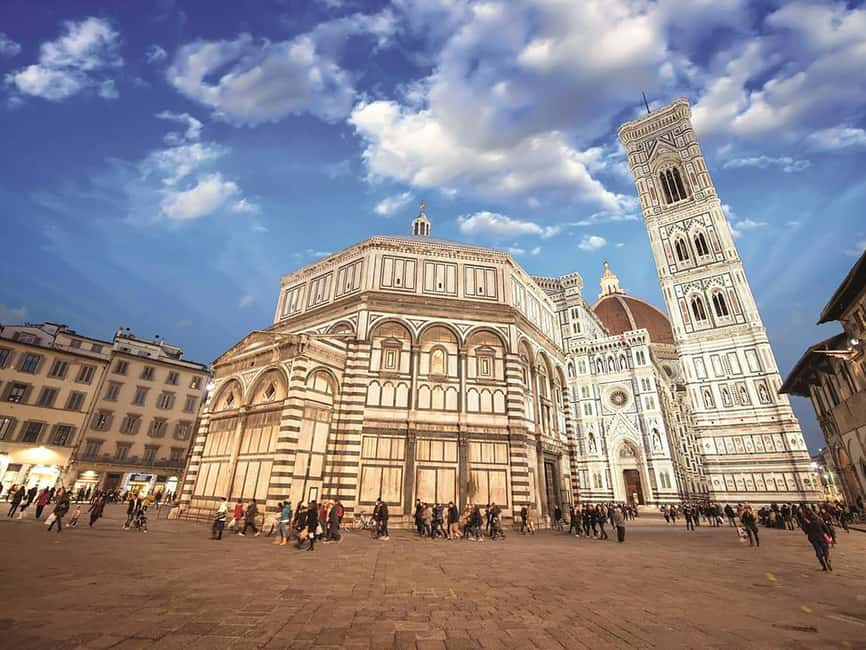
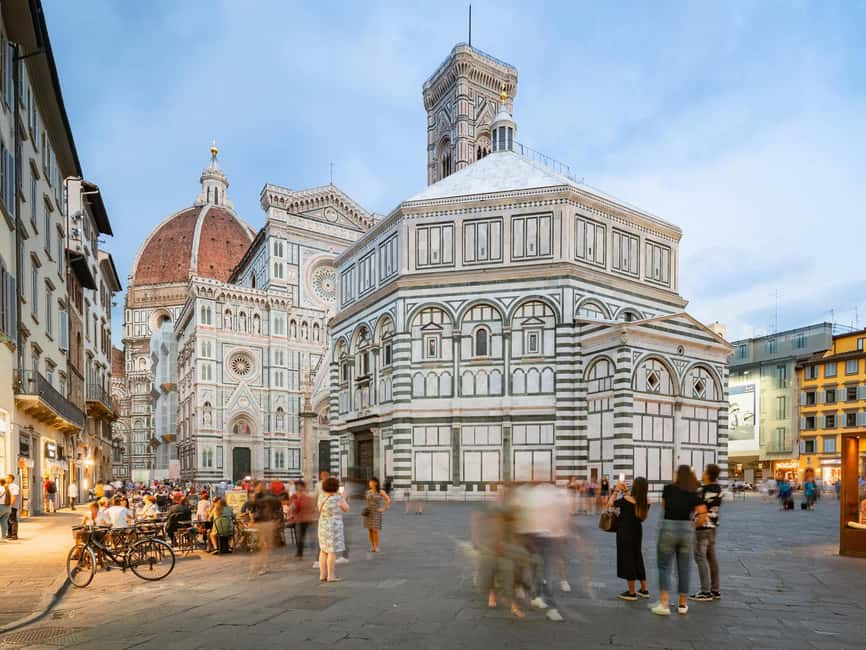
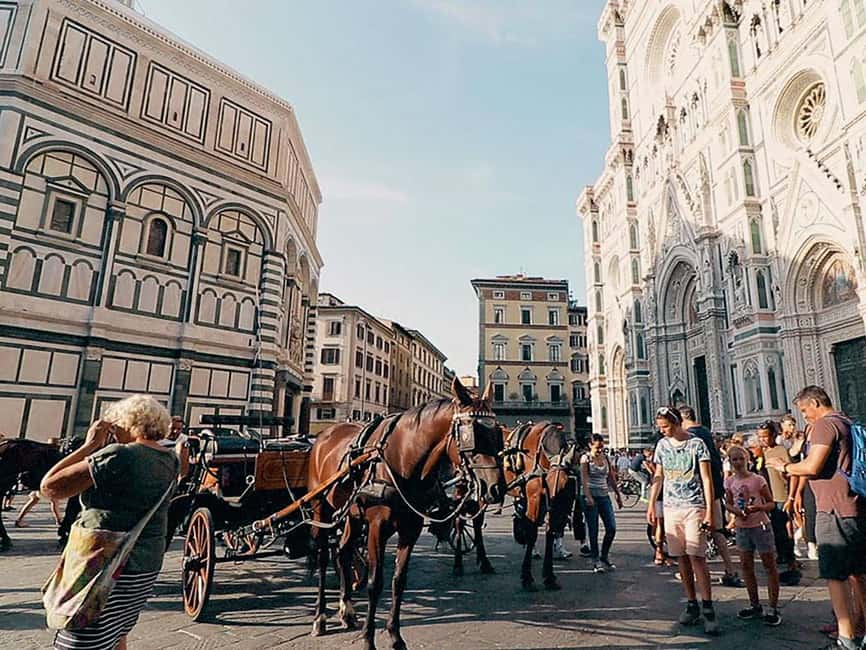
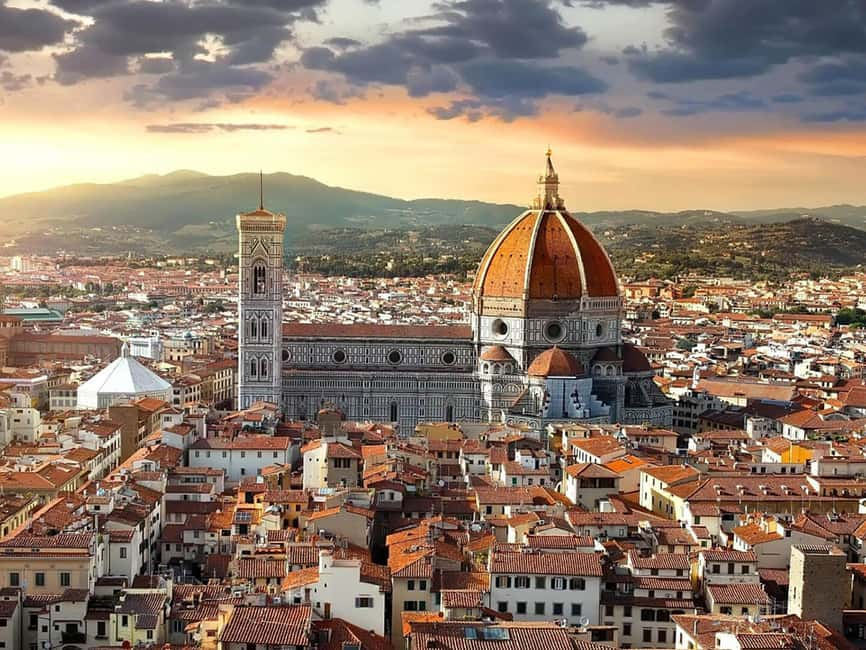
The final major stop is Piazza del Duomo, where Florence Cathedral, Giotto’s Bell Tower, and Brunelleschi’s Dome come together in one dramatic view. This is the point where the tour’s themes of art, engineering, religion, and civic pride meet.
The dome is especially valuable to hear about with a guide. Its scale is easy to admire, but the engineering challenge is harder to grasp from the square. Your guide can explain the design and construction ideas that made the dome a landmark of Renaissance architecture.
The cathedral façade and bell tower reward a slow look. Pay attention to the contrast between the patterned marble, vertical tower, and broad curve of the dome. You may have seen photographs before, but the relationship among the buildings becomes clearer when you stand in the piazza.
Again, this walk does not list cathedral, dome, or bell tower entry. If you want to climb the dome, enter the cathedral, or visit the wider Duomo complex, book that separately and check the required time slot. Do not place that appointment too close to the walking tour because the route may last up to two hours.
The listed route returns to Via de’ Martelli 33R. The order can change at the guide’s discretion, so the Duomo may not always be the final sight in exactly the same way. The important point is that the walk covers the central landmarks as a connected story.
What the 90-minute format really gives you
Ninety minutes is long enough to see the main squares and hear why they matter, but not long enough for extended interior visits, long photo sessions, or detailed art criticism. I see that as a strength if you want a first orientation, and a weakness if you want a slow specialist tour.
The route is fairly ambitious for its length. You will cover several central districts and cross the Arno, so comfortable shoes are sensible even though they are not listed as a required item. The tour can run to two hours, which gives the guide some room to explain a stop without rushing every sentence.
The format should suit:
- First-time visitors who want a clear map of central Florence
- Short-stay visitors with only a morning or afternoon available
- Families and couples who prefer a guided overview before choosing museum visits
- People who want live explanation rather than an audio guide
- Visitors comfortable walking through busy central streets
I would think twice if you use a wheelchair, need frequent sitting breaks, or want a tour built around interior access. The activity is specifically listed as unsuitable for wheelchair users, and the route includes several major outdoor public spaces.
Languages, guides, and the human side of the walk
The live guide option is available in English, French, German, Spanish, and Portuguese. That is a real advantage in Florence, where a good explanation can make the difference between recognizing a building and understanding its role.
Julia is a guide associated with especially strong feedback for this experience, so if you see her name attached to your departure, you can expect a guide-led walk with a personal touch. I would still judge the tour by the route and format rather than assume every departure has the same guide.
The guide’s job here is to connect places that can otherwise blur together. Palazzo Vecchio explains government. Ponte Vecchio explains trade. Piazza Pitti explains court life. The Duomo explains faith, engineering, and civic pride. That structure gives the walk more value than simply checking off famous sights.
Timing changes and booking value
The price is not provided here, so I cannot judge the exact cost in euros. I can judge the value of the format: you are paying for a live guide, a compact route through major central sights, and help understanding what you are seeing. If the cost is modest compared with longer museum tours, it can be a sensible first-day purchase.
The flexible terms help. You can cancel up to 24 hours in advance for a full refund, and you can reserve now and pay later. That is useful when your Florence schedule is still moving.
The main booking warning concerns departure times. A same-day time slot can be changed if it closes or becomes unavailable for an important reason. You might be moved to the next available time, such as 1:30 p.m., 3 p.m., or 5 p.m. Same-day or last-minute bookings can also be moved to the following day if no places remain.
For that reason, I would avoid booking another activity with a close start time on the same day. Leave space around this walk, keep an eye on WhatsApp, and do not build a tight chain of reservations.
Should you book this Florence walking tour?
I would book it if you want a short, guided introduction to Florence’s central sights, especially if you like seeing how the Medici connect to the city’s art and politics. The route covers a lot, the language choices are useful, and the guide-led format gives you context that a self-guided stroll may miss.
I would skip it if your main goal is to enter the major monuments. No interior admissions are listed, so you will need separate plans for the Medici Chapels, Palazzo Vecchio, Palazzo Pitti, Boboli Gardens, or the Duomo complex.
For most first-time visitors, the best use is early in your stay. Take notes on the buildings that catch your eye, then return to your favorites with more time. Just protect your schedule from last-minute changes and allow up to two hours for the walk.
FAQ
Where does the Florence walking tour meet?
Meet at the office at Via de’ Martelli 33R in Florence. The listed coordinates are 43.774173736572266, 11.255534172058105.
How long does the tour last?
The advertised duration is 1.5 hours. The actual walk can vary between 90 minutes and two hours.
Which landmarks are included?
The route includes Piazza della Repubblica, Piazza della Signoria, Ponte Vecchio, Piazza Pitti, and Piazza del Duomo. The experience also begins in the Medici District near Palazzo Medici Riccardi and Piazza San Lorenzo.
Is the tour available in English?
Yes. Live guiding is available in English, Spanish, German, French, and Portuguese.
Does the tour include entry to the museums and monuments?
The activity describes guided stops and sightseeing but does not list admission to the palaces, chapels, cathedral, bell tower, gardens, or museums. Arrange separate tickets if you want to go inside.
Can I cancel the booking?
You can cancel up to 24 hours in advance for a full refund. You can also reserve now and pay later.
Is the tour suitable for wheelchair users?
No. The activity is listed as unsuitable for wheelchair users. The itinerary order may also change at the guide’s discretion.
Recently added around Florence
- Accademia and Uffizi Small-group Guided Tour★ 4.5 · 8 reviews
- The David from Michelangelo.★ 5.0 · 3 reviews
- Combo: Accademia + walking + Uffizi Galleries Guided Tour★ 3.5 · 6 reviews
- The Complete Wine Tour Brunello, Nobile, Chianti wine experience★ 4.0 · 7 reviews
- The Best of Tuscany in 3 Days★ 4.5 · 13 reviews
- The Cooking Lab – Authentic Food Experience★ 5.0 · 113 reviews
- Florence Central Market Food Tour – Private Tour★ 4.0 · 7 reviews
- Family Friendly Florence Private City Tour★ 5.0 · 47 reviews
Florence Walking Tours, compared.
Skip the line: Uffizi and Accademia Small Group Walking Tour
Read our review →
Renaissance and Medici Tales Guided Walking Tour
Read our review →
Skip-the-Line Florence Highlights and David Walking Tour
Read our review →
Dark Mysteries and Legends Guided Walking Tour
Read our review →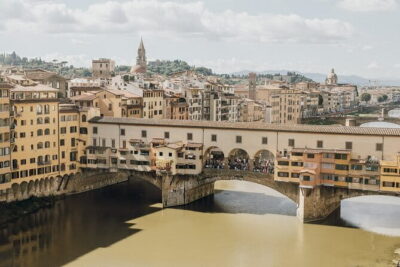
Florence in a Day: Michelangelo’s David, Uffizi and Guided City Walking Tour
Read our review →Browse the lists this tour appears in