Reviewed · GUIDED
Best of Florence Highlights with private guide
Florence reveals its greatest sights in a surprisingly compact area, and this private two-hour walk makes a smart first pass through the city. You begin at Santa Croce, cross the political center at Piazza della Signoria, pause by Ponte Vecchio, and finish near the Duomo and San Lorenzo market.
I like the one-on-one format, which gives your guide room to answer questions and point out small details a large group might miss. I also like the route itself: it joins famous monuments with medieval lanes, market corners, and local stories instead of treating Florence as a string of postcard stops. The main drawback is simple: two hours is not enough time to do justice to so many landmarks, and the price is high at $210 per person.
Key points at a glance
- Start beneath Dante’s statue: Meet on the steps of the Basilica di Santa Croce, a clear and central starting point.
- Follow Florence’s Renaissance story: The route links churches, palaces, bridges, markets, and public squares.
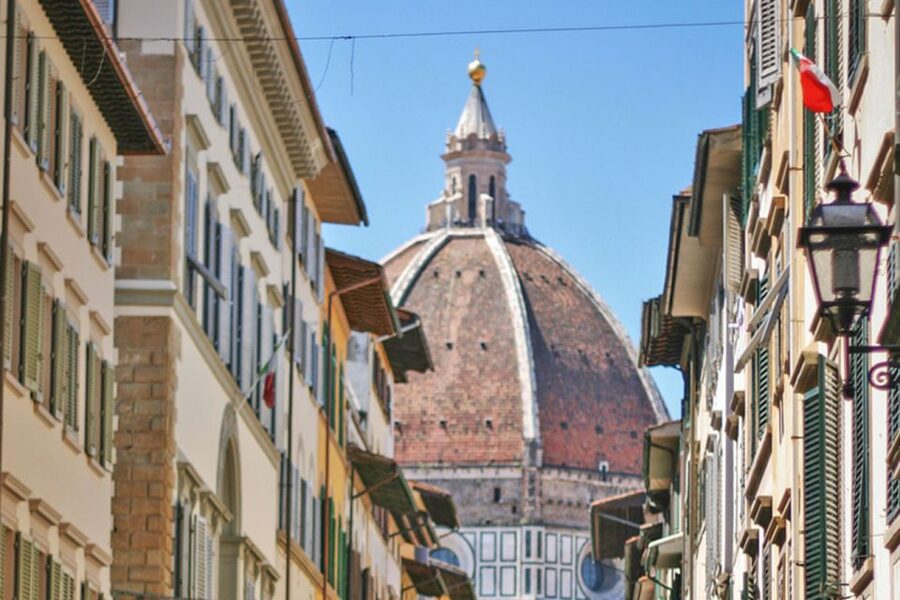
- See the city’s big sights from outside: Expect views of the Duomo, Uffizi Gallery, Palazzo Vecchio, and Ponte Vecchio.
- Private means personal: Your English- or Italian-speaking guide can shape the conversation around your interests.
- Finish near San Lorenzo: The tour ends in a useful area for exploring the market district on your own.
- Plan for an introduction, not a museum tour: No attraction admissions are included, so this is mainly an outdoor orientation walk.
A fast, thoughtful introduction to Florence
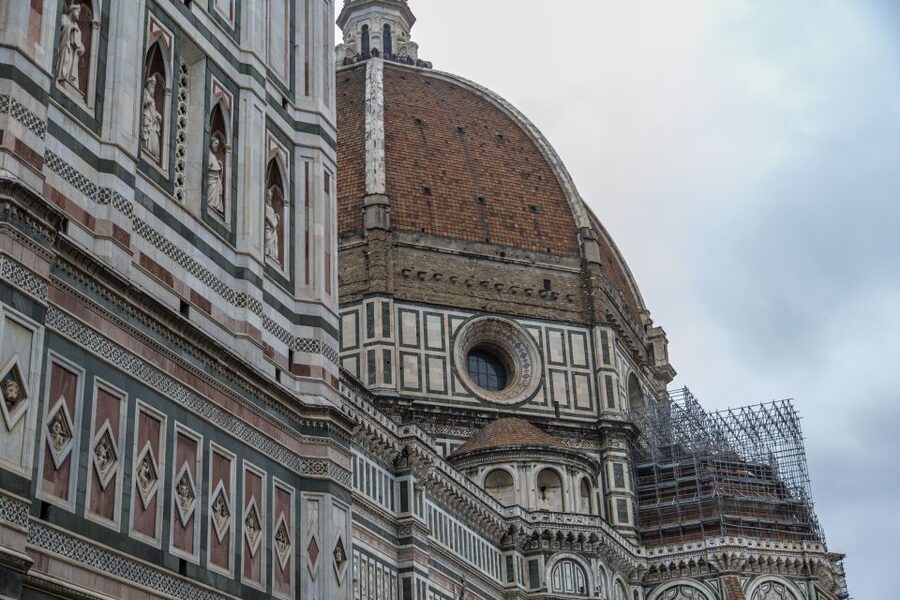
This tour is built around an easy idea: let a local guide explain Florence while you walk through the places where its political, religious, and artistic life unfolded. You are not simply checking off monuments. You are moving from the Franciscan church of Santa Croce to old streets, civic buildings, a famous bridge, the Duomo, and the market district.
That route gives you a useful mental map. After two hours, you should know how the historic center fits together and which areas deserve a longer visit. I find that especially helpful in Florence, where the major sights sit close together but the streets can feel confusing at first.
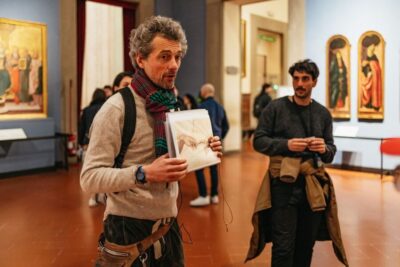
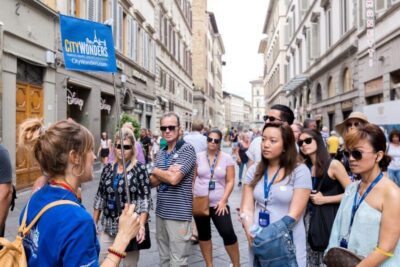
The private group format also changes the pace. You can ask why a building matters, stop briefly for a question, or tell the guide what you plan to see later. Guides named in past bookings include Roberta, Leonardo, and Daniel. Their approach has ranged from modern city life and architecture to small details that are easy to miss in a guidebook.
Still, keep your expectations in check. The tour does not include admission to the Basilica di Santa Croce, the Uffizi Gallery, Palazzo Vecchio, the Duomo interior, or other museums. You will see and discuss these places from the outside unless your booking details say otherwise. Think of this as a walking orientation with historical context, not a museum visit.
More private tours in Florence:
- Cinque Terre and Pisa Tower Tour from Florence Semi Private
★ 5.0 · 1,406 reviews - From Florence: Private Chianti Hills Tour with Tasting
★ 4.3 · 809 reviews - Private Self-Guided E-Bike Ride in Tuscany with Vineyard Visit
★ 5.0 · 775 reviews
Santa Croce and the meeting point
You meet by the statue of Dante on the steps of the Basilica di Santa Croce in Piazza Santa Croce. This is a fitting place to begin because the square introduces several themes that run through the walk: Florence’s religious life, its artistic importance, and its connection to famous figures from Italian culture.
The basilica is one of Florence’s best-known churches, and the planned route includes a stroll through its cloisters. Cloisters offer a quieter change from the open square, with enclosed walkways and a sense of how religious buildings once organized daily life. Your guide can place Santa Croce within the wider story of Florence rather than leaving it as a pretty façade.
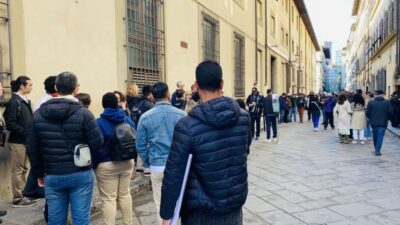
The meeting point is also practical. If you arrive early, Piazza Santa Croce gives you a clear landmark while you wait. Children must be accompanied by an adult, and the activity is listed as wheelchair accessible. Even so, you may want to confirm route needs at booking, since historic city centers can include older paving and tight streets.
Peruzzi Square and the Bargello
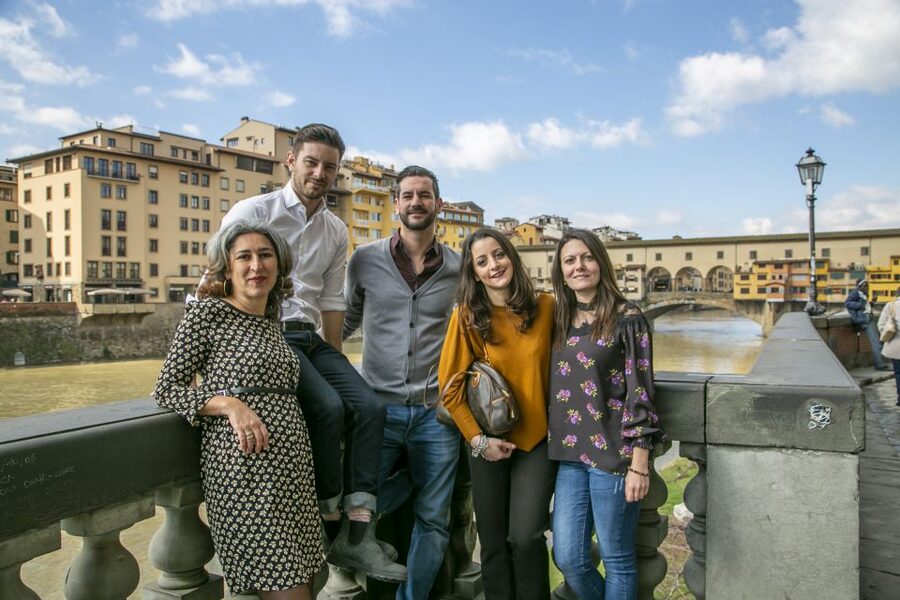
From Santa Croce, the walk continues toward Piazza dei Peruzzi and the Palazzo Bargello. This section is useful because it moves away from Florence’s most photographed views and into the texture of the old center.
Piazza dei Peruzzi helps you see how the city is made up of small connected spaces rather than broad modern avenues. The Palazzo Bargello, once associated with civic authority, adds another layer to Florence’s political story. Its severe exterior looks different from the grand church fronts and decorative palace façades nearby.
You will likely appreciate having a guide here. Without context, a walk through these streets can feel like a pleasant but random route. With explanation, the buildings become part of a story about power, public office, art, and the families who shaped Florence.
Because the tour is short, this is also one of the places where timing matters. You may stop for an explanation and a look at the architecture, but you should not expect a lengthy visit inside the Bargello. If you want to see its collections, you will need a separate museum visit.
Porcellino market and the oldest bridge
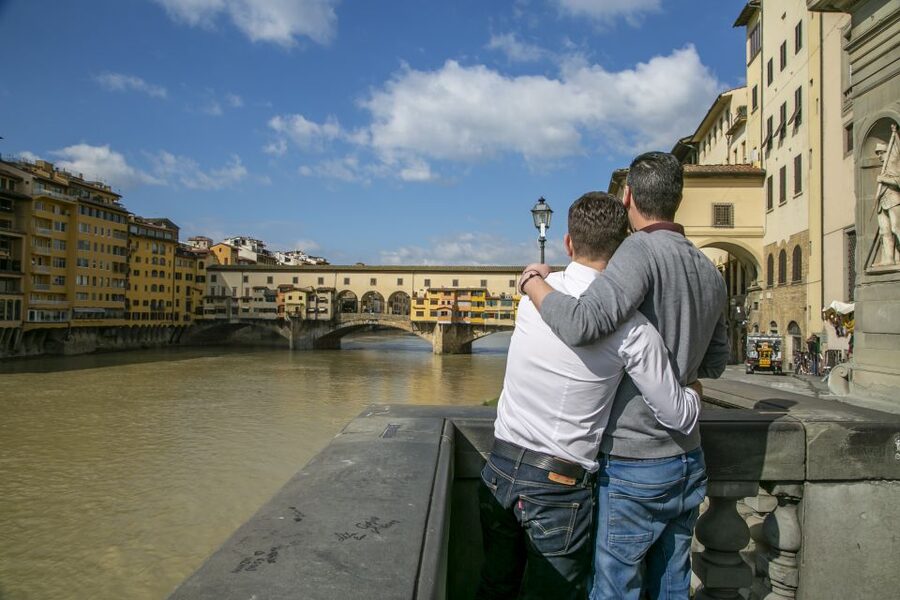
The route then passes the Porcellino market before reaching Ponte Vecchio. The market adds a more everyday note to a walk otherwise filled with major monuments. It is a useful reminder that Florence has long mixed commerce with civic and religious life.
Ponte Vecchio is one of the tour’s natural high points. Your guide explains the story of Florence’s oldest bridge while you cross or view it, depending on the exact flow of the group. The bridge is famous for its shops and its position over the Arno, but its real value on this tour is the link it creates between different parts of the city.
I like this stop because it gives the Renaissance story a physical setting. You are not hearing about Florence only inside a church or beside a palace. You are standing on a crossing that has helped connect the city for centuries.
The bridge can be crowded, and two hours leaves little room for a long pause. If you want photographs, take them efficiently and stay aware of the walking group. Your guide’s explanation is likely to be more valuable than trying to linger at every shopfront.
More guided tours in Florence:
- The Best tour in Florence: Renaissance & Medici Tales – guided by a STORYTELLER
★ 5.0 · 12,316 reviews - Florence: Duomo Cathedral Guided Tour
★ 3.9 · 5,970 reviews - Uffizi Gallery Small Group Tour with Guide
★ 4.5 · 4,923 reviews - Florence: Accademia Gallery Guided Tour
★ 4.6 · 4,156 reviews
Medieval lanes toward Piazza della Signoria
After Ponte Vecchio, the route turns through small streets dating from the Middle Ages. This is where the walk feels least like a standard monument checklist. The narrow lanes help you understand the scale of old Florence and show how quickly the city changes from a famous view to a quiet corner.
You will want comfortable shoes. The tour covers a number of central sights on foot, and the pace needs to stay steady to fit the route into two hours. Rain is not necessarily a deal breaker, but an umbrella or light waterproof layer would make the walk more comfortable. One past visit went ahead in light rain, and Florence’s outdoor sights remained worthwhile.
The lanes lead to Piazza della Signoria, the political heart of the city. This is one of the most important stops because Florence’s public life can be read directly through the square’s buildings and sculptures. Your guide can connect the square to the city government, the Medici era, and the rivalries that made Florence such an influential center.
Piazza della Signoria and the Palazzo Vecchio
Piazza della Signoria gives you several major views in one place. You can see the Uffizi Gallery and Palazzo Vecchio, the historic home of Florence’s government. Even from outside, the setting makes clear how closely art and power were tied together in the city.
The Uffizi is best understood here as part of Florence’s larger civic story, not just as a famous art museum. Palazzo Vecchio, with its fortress-like character, gives the square a serious tone. This was a place for decisions, public ceremony, and political display.
A private guide is especially useful in a square packed with visual information. You can ask which details matter most, and your guide can help you focus rather than trying to absorb every statue, façade, and architectural feature at once. Guides such as Leonardo have been praised for pointing out details that are easy to pass when you are on your own.
The limitation is the same as before: the tour offers views and explanation, not entry. If Palazzo Vecchio or the Uffizi is high on your list, reserve separate time. Do not count on fitting an interior visit into this two-hour route.
Piazza del Duomo and the marble façade
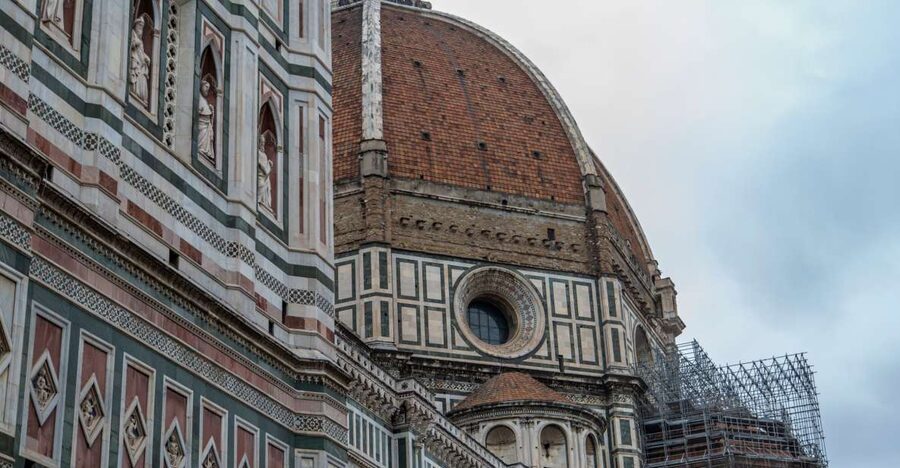
The final major landmark is Piazza del Duomo, in the oldest part of Florence. Here, the scale shifts dramatically. The marble decoration and the dome of the Duomo create the kind of view that can make even a short walk feel worthwhile.
Your guide introduces the cathedral complex and explains its place in Florence’s Renaissance story. The dome is the visual climax of the route, but the marble work deserves attention too. Look closely at the patterns and color contrasts rather than treating the façade as one large image.
This is another point where your visit may feel brief. The route brings you to the Duomo, but it does not list an interior visit or a climb. If you want to go inside, see the dome from above, or spend time with the cathedral complex, plan that separately and allow for the necessary admission arrangements.
The Duomo area is often busy, so listen carefully for the meeting instructions at the start and stay near your guide. A private group makes this easier than a large tour, but the square still has plenty of foot traffic.
San Lorenzo and the useful finish
The walk continues to the Basilica di San Lorenzo, from where you can explore the market district by yourself. This ending is well chosen because it leaves you in an area with options rather than simply dropping you at a single monument.
San Lorenzo can work well for lunch, browsing, or a second look at Florence’s commercial side. Your guide may also offer suggestions for the rest of your stay. That kind of local advice was a repeated strength of the experience, with guides helping people decide what to see next and adding observations about modern Florence.
The end point also makes the tour practical on a first day. You can continue exploring on foot, stop for food, or use the market district as a base for your next activity. Just remember that the tour finishes with independent time, so any market visit or meal is not part of the two-hour service.
What the private format is worth at $210
At $210 per person, this is an expensive two-hour walk. The cost makes the most sense for couples, families, or small groups who place a high value on a private guide and personal conversation. If you are traveling alone or watching every euro, a group walk may offer better value.
The private format does give you something a standard group tour cannot always provide. Guides have been described as relaxed, friendly, clear, and attentive. Roberta, for example, combined Florence’s past with observations about the present city, while Leonardo’s approach included local details and less obvious places. Daniel was also praised for being helpful and engaging.
That does not guarantee a particular guide for your date, but it gives you a reasonable idea of the service style to expect: informal, personal, and focused on conversation as well as prepared facts. You are paying for access to a local person who can adjust the walk to your questions, not for a long list of included admissions.
The price also buys efficiency. In two hours, you can connect Santa Croce, the Bargello, Ponte Vecchio, Piazza della Signoria, the Duomo, and San Lorenzo without spending your first day figuring out the layout yourself. For a short Florence stay, that can be useful.
Who should book this walk?
I would choose this tour if you have only two or three days in Florence and want an early orientation. It gives you enough context to decide where to return, which museums deserve your time, and how the main sights relate to each other.
It also suits families or private groups who prefer to ask questions freely. The relaxed style described by past participants should work well for people who do not want a formal lecture. Children can join, but an adult must accompany them.
You may want a different plan if your main goal is seeing museum interiors, climbing the Duomo, or spending long periods at individual monuments. The route is broad by design. It gives you a citywide introduction rather than a close study of one church or museum.
For the best experience, book it early in your Florence stay. Wear comfortable shoes, arrive at the Dante statue with a little time to spare, and make a short list of questions. If you already know you want to visit the Uffizi, Palazzo Vecchio, or the Duomo inside, arrange those visits separately.
Should you book it?
Book this walk if you want a private, fast-moving introduction to Florence and are willing to pay for personal guidance. The route is strong, the meeting point is clear, and the guides have earned praise for local stories, friendly explanations, and practical advice.
Skip it if $210 per person feels too steep for an outdoor orientation or if you want extensive time inside the major attractions. Florence is easy to explore independently once you understand the center, but this walk can help you get that understanding in a single, well-planned circuit.
FAQ
Where does the Florence walking tour meet?
Meet by the statue of Dante on the steps of the Basilica di Santa Croce in Piazza Santa Croce.
How long does the tour last?
The walking tour lasts two hours.
What landmarks are included on the route?
The route includes the Basilica di Santa Croce, Piazza dei Peruzzi, Palazzo Bargello, Porcellino market, Ponte Vecchio, Piazza della Signoria, views of the Uffizi Gallery and Palazzo Vecchio, Piazza del Duomo, and the Basilica di San Lorenzo.
Does the tour include entry to the museums and churches?
The included service is a local guide. Admission to museums, churches, the Duomo, and other attractions is not listed as included.
What languages are available?
The live tour guide is available in English or Italian.
Is this a private tour?
Yes. The activity is offered for a private group.
Is the tour wheelchair accessible?
Yes, the activity is listed as wheelchair accessible.
What is the price?
The listed price is $210 per person.
Can I cancel or pay later?
You can cancel up to 24 hours in advance for a full refund. You can also reserve now and pay later.
Recently added around Florence
- Accademia and Uffizi Small-group Guided Tour★ 4.5 · 8 reviews
- The David from Michelangelo.★ 5.0 · 3 reviews
- Combo: Accademia + walking + Uffizi Galleries Guided Tour★ 3.5 · 6 reviews
- The Complete Wine Tour Brunello, Nobile, Chianti wine experience★ 4.0 · 7 reviews
- Florence Central Market Food Tour – Private Tour★ 4.0 · 7 reviews
- The Best of Tuscany in 3 Days★ 4.5 · 13 reviews
- The Cooking Lab – Authentic Food Experience★ 5.0 · 113 reviews
- Family Friendly Florence Private City Tour★ 5.0 · 47 reviews
Guided, compared.
The Best tour in Florence: Renaissance & Medici Tales – guided by a STORYTELLER
Read our review →
Duomo Guided Tour with Optional Dome Climb Upgrade
Read our review →