
Reviewed · ACCADEMIA GALLERY AND DAVID TOURS
Florence: Private Accademia Gallery Tour
Michelangelo’s David gets top billing at Florence’s Accademia Gallery, and rightly so. But the statue is only the beginning: this two-hour private visit also brings you to Michelangelo’s unfinished Slaves, the Plaster Models Room, three Stradivari violins, and paintings that help explain Florence’s artistic power. I like the private format and the way a good guide can turn a quick museum stop into a clear lesson in Renaissance art. I also like that the route goes beyond the famous statue.
The main drawback is the price: $229 per person is a serious outlay for two hours, especially if you already know your way around art museums. Meeting details also deserve care, since the information gives both Via Ricasoli 60/R and Via Ricasoli 68 as location references. Confirm the exact spot before you go.
Key points at a glance
- David in the Tribuna: See Michelangelo’s most famous Florentine sculpture in the gallery room built around it.
- Michelangelo beyond David: The Slaves, Pieta, and San Matteo show different sides of the artist’s work.
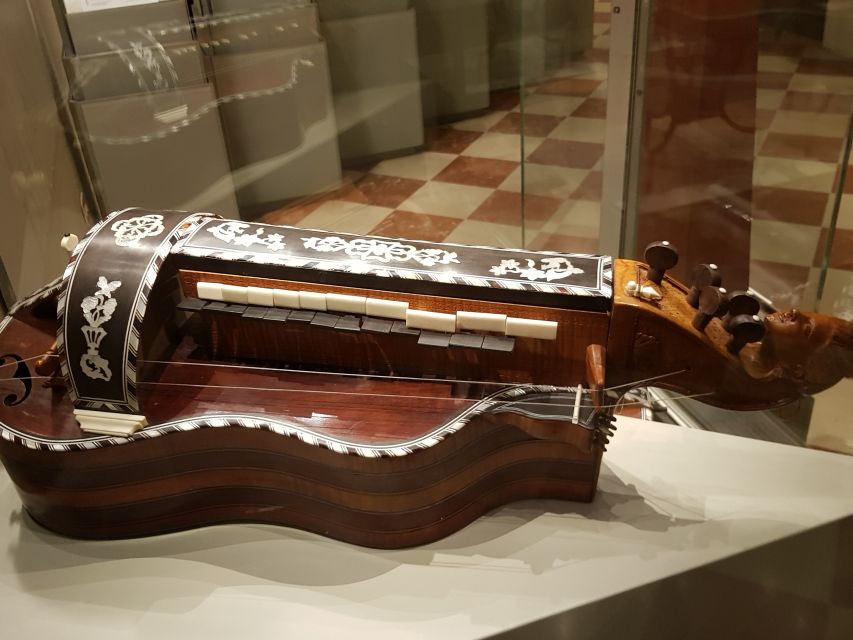
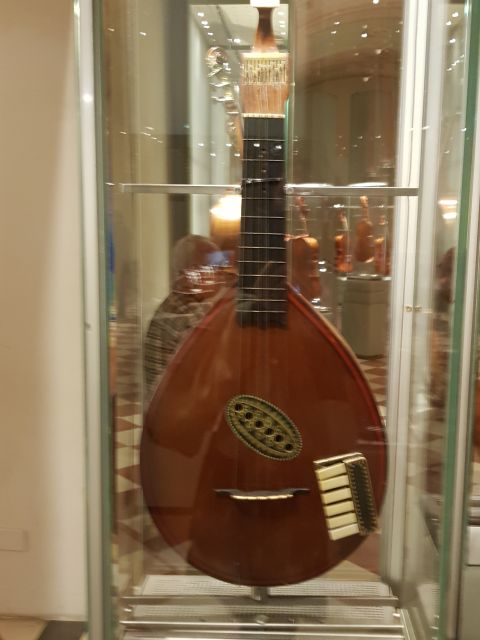
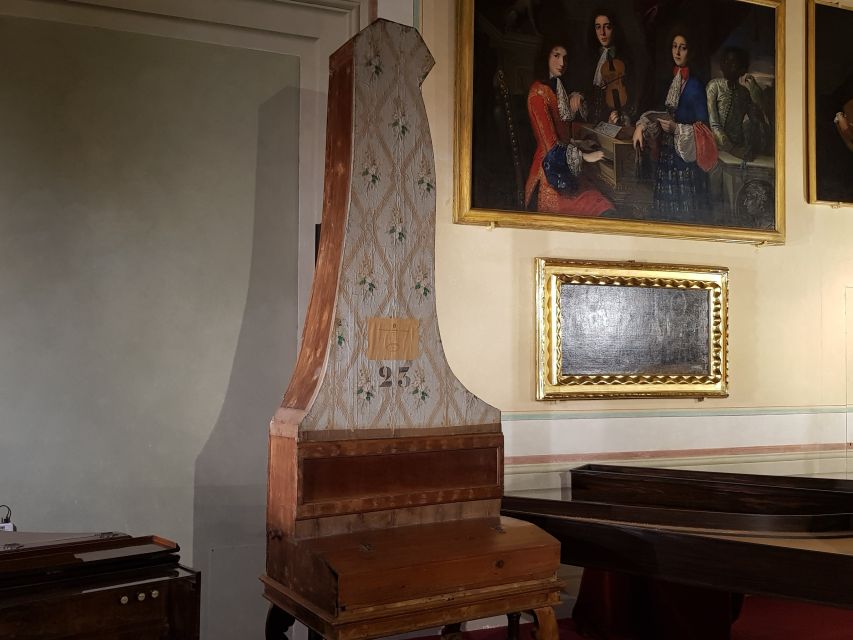
- A surprising music collection: Three Stradivari violins and the world’s first piano add an unexpected turn to the visit.
- Bartolini’s former workshop: The Plaster Models Room reveals how Lorenzo Bartolini developed large sculptures.
- Medieval and Renaissance art: Look for Lorenzo Monaco’s gold-leaf paintings, works by Botticelli and Ghirlandaio, and a fresco by Giotto.
- Private, reserved entry: Your ticket is arranged in advance, with a guide and a skip-the-ticket-line entry, though security checks can still cause a short wait.
Why the Accademia deserves more than a David photo
Many people enter the Accademia, walk straight to David, take a picture, and leave. That approach misses the point. The museum is small enough for a two-hour visit, yet its rooms cover several important chapters of Florentine art.
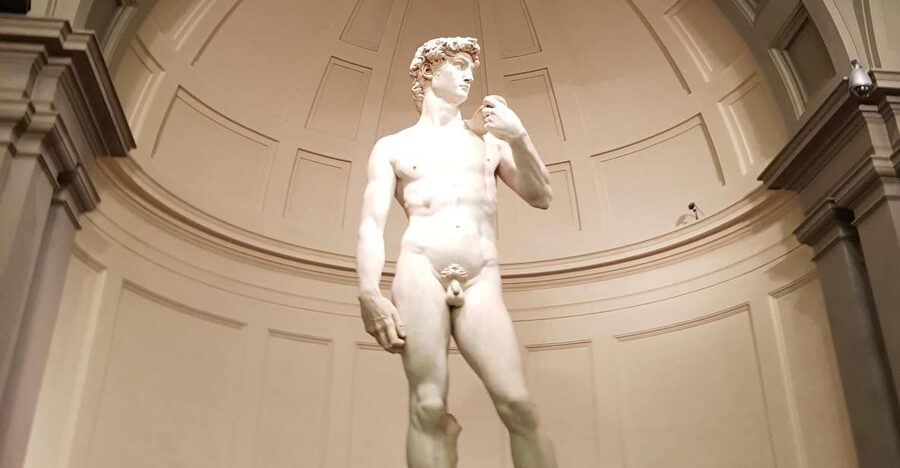
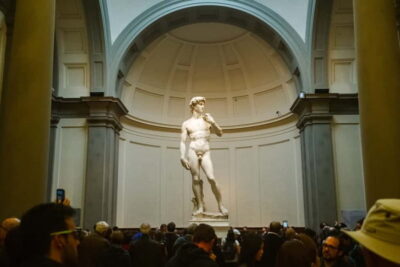
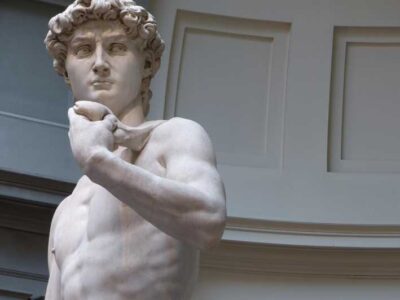
The Accademia is best known for Michelangelo’s sculpture. He created David between 1501 and 1504, and the museum’s Tribuna gives the work a grand setting. You can study the figure from different angles, notice the tension in the hands and face, and see how Michelangelo made a single block of marble appear ready for action.
A guide is useful here because the sculpture can seem familiar before you have even arrived. You may have seen hundreds of photographs of David, but a good explanation helps you look at the work itself rather than simply recognize it. The private setting also gives you room to ask why the statue was made, how it fits Michelangelo’s career, and how it relates to the other works in the gallery.
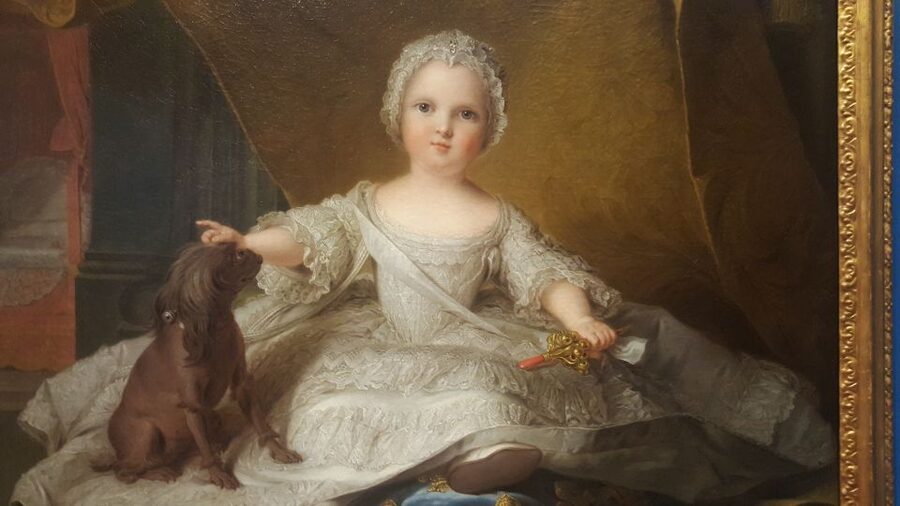
The museum’s other rooms give the visit balance. Paintings and sculptures by Sandro Botticelli, Domenico Ghirlandaio, Pontormo, Andrea del Sarto, and Giambologna show that Florence’s artistic story did not begin and end with Michelangelo. Many of these works belonged to, or were commissioned by, the powerful Medici family.
That Medici connection matters. Their money and influence helped shape Florence’s churches, palaces, and collections. You do not need a long lecture on Florentine politics to appreciate the art, but a guide can show you how patronage affected what artists made and what later generations preserved.
More ways to see the David at the Accademia:
- Florence: Timed Entrance Ticket to Michelangelo’s David
★ 4.6 · 16,983 reviews - Florence: Michelangelo’s David Skip-the-Line Entry Ticket
★ 4.5 · 12,764 reviews - Florence Accademia Gallery Tour with Entrance Ticket Included
★ 4.5 · 6,148 reviews
Meeting at Via Ricasoli and entering the museum
The listed meeting point is Galleria Accademia, Via Ricasoli 68, Florence. The itinerary also gives Via Ricasoli 60/R as the starting and return location. Since these references are close but not identical, I would check the exact meeting instructions before setting out.
This is not a hotel pickup. You make your own way to the gallery, which is practical if you are already in central Florence. Build in enough time to find the guide without rushing. One past booking had a problem when the guide waited at the wrong address, and the participant had difficulty locating her. That kind of mix-up can spoil a short tour, so arrive early, keep the guide’s contact details handy, and look carefully for the meeting instructions.
The reserved ticket lets you avoid the regular ticket line. It does not mean you walk straight through the door. Everyone must pass through security, including metal detector checks, and a short wait can still happen. Avoid bringing anything you do not need, since the gallery has no cloakroom.
You will need a passport or ID card. The activity is wheelchair accessible, and the guide can conduct the visit in Spanish, English, French, German, Italian, Portuguese, or Russian.
Thirty minutes with Michelangelo’s David
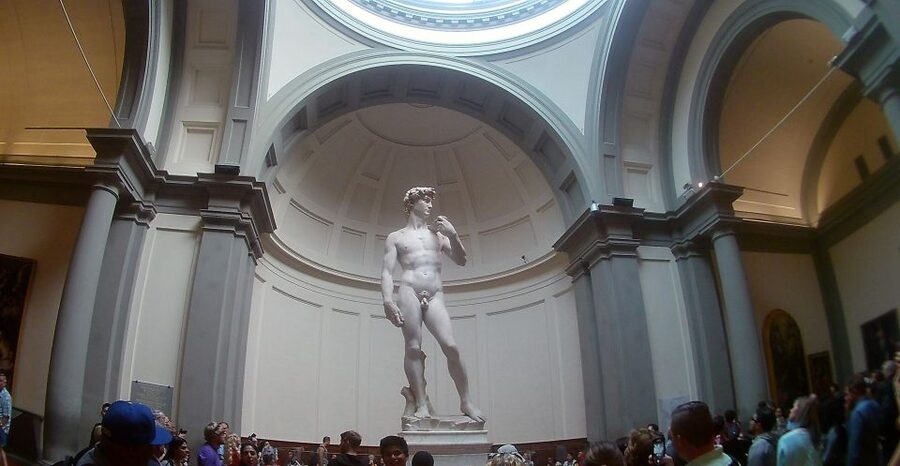
The itinerary allows about 30 minutes for David. That is enough time for a focused explanation and for you to look carefully, but it is not an unlimited block of quiet viewing. The Tribuna is the natural center of the museum, so you will likely spend a good part of your attention here.
David was carved from marble and presents the biblical hero before his fight with Goliath. The famous image is not one of relaxed victory. Michelangelo shows David alert and tense, with his body prepared for what comes next. A guide can point out how the pose, expression, and scale work together.
Do not look only at the face. Study the hands, feet, and the turn of the torso. The statue’s scale changes your sense of the human body, and the details become easier to appreciate when you slow down.
This is also where a private guide can earn the cost of the tour. The best explanations are not just a list of dates and names. They help you see what the artist chose to exaggerate, leave unfinished, or place in the viewer’s line of sight. Past guide feedback has singled out Eleonora and Sonia for careful explanations and strong command of Italian art. Guide assignments can vary, so you should not assume you will receive a particular person.
The Slaves, Pieta, and San Matteo
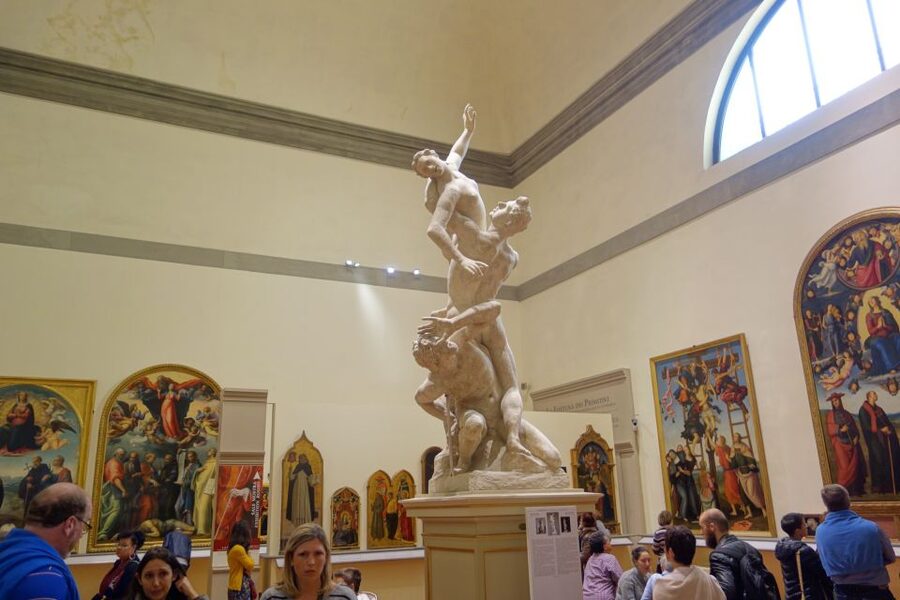
Michelangelo’s unfinished Slaves offer a sharp contrast to David. Instead of a complete, polished figure, you see bodies that appear to struggle out of the marble. Their unfinished surfaces let you think about the process of carving, even though the exact meaning and intended setting of the works require careful explanation.
I find these sculptures especially useful after seeing David. They remind you that Michelangelo was not simply producing smooth, ideal bodies. He was also interested in movement, effort, and the tension between stone and form.
The Accademia also displays Michelangelo’s Pieta and San Matteo. The Pieta should not be confused with the better-known Vatican Pieta. Here, the work adds another view of the artist’s approach to religious sculpture and unfinished forms. San Matteo continues that sense of figures emerging from the material.
A guide can connect these pieces rather than treating them as isolated objects. You will see how Michelangelo’s work changes across different subjects and stages of completion. You may also find that the unfinished works demand more attention than the polished David, since you have to imagine the forms that were never fully released from the stone.
More museums and galleries in Florence:
- Florence: Skip-The-Line Uffizi Gallery Timed Entry Ticket
★ 4.5 · 27,832 reviews - Florence: Leonardo Interactive Museum Entry Ticket
★ 4.5 · 11,763 reviews - Uffizi Gallery Small Group Tour with Guide
★ 4.5 · 4,923 reviews - Florence: Accademia Gallery Guided Tour
★ 4.6 · 4,156 reviews
Paintings that widen the picture
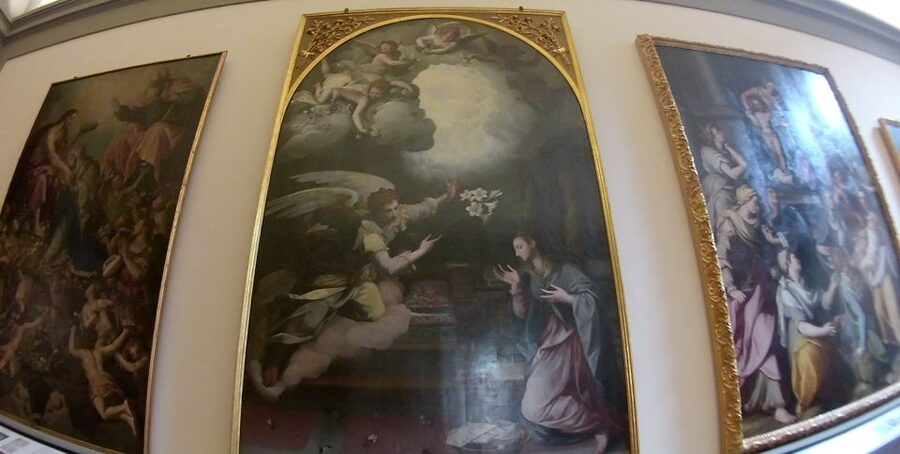
The Accademia is not only a sculpture museum. Its main rooms hold paintings and sculptures by major Italian artists, including Botticelli, Ghirlandaio, Pontormo, Andrea del Sarto, and Giambologna.
Botticelli’s name may draw your attention first, but the value of these rooms comes from comparison. Florentine artists used different approaches to the human figure, religious scenes, color, and space. A guide can help you notice those changes without turning the visit into a long catalogue of names.
The works also show why Florence became such an important art center. The Medici family supported artists and gathered major works, and their influence is present throughout the city. In the Accademia, that larger story becomes easier to follow because the paintings sit near the sculptures that made the museum famous.
You do not need to know Renaissance art before booking this tour. In fact, the private format may be most helpful if you are starting from scratch. Ask the guide to explain the difference between the main artists, the role of religious commissions, or the use of perspective. The value of a private tour is the chance to shape the explanation around your interests.
Lorenzo Bartolini’s Plaster Models Room
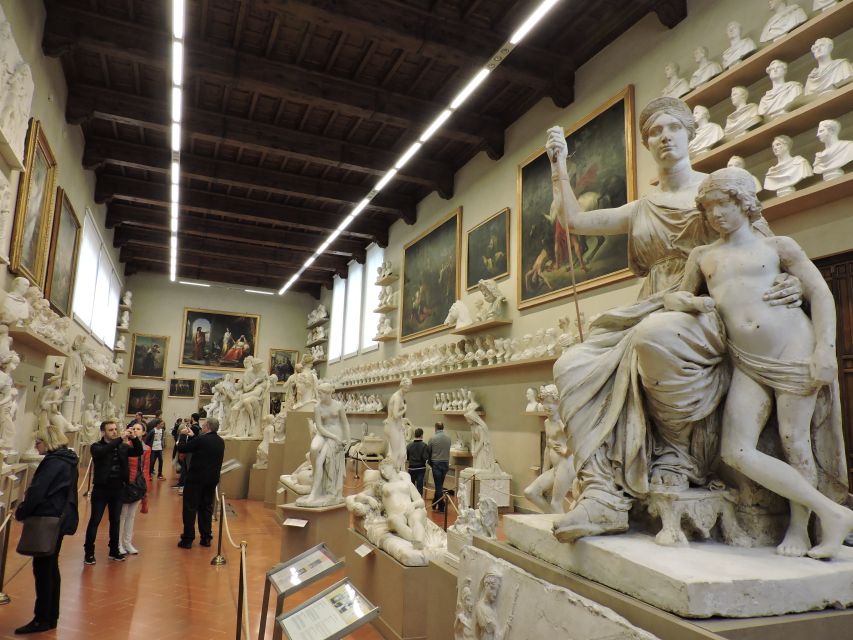
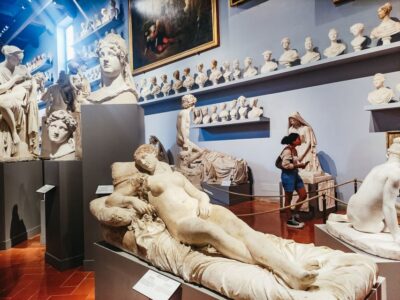
One of the more unusual stops is the Plaster Models Room, once the workshop of the Neoclassical artist Lorenzo Bartolini. It holds 18th-century plaster casts and models.
This room gives you a look at the practical side of sculpture. Before a final work was carved or cast, artists often worked through ideas in smaller or less permanent materials. Plaster models could help them study proportions, poses, and composition before creating a finished piece.
The room also changes the mood of the visit. After the emotional force of David and the Slaves, these models bring you closer to the artist’s working process. You might find this stop less instantly dramatic than the Tribuna, but it gives useful context to the craft behind large-scale sculpture.
If sculpture interests you, ask the guide how a plaster model relates to a finished marble work. The provided tour details do not promise a particular set of objects or a demonstration, so expect an explanation and close looking rather than an interactive workshop.
Stradivari violins and the first piano
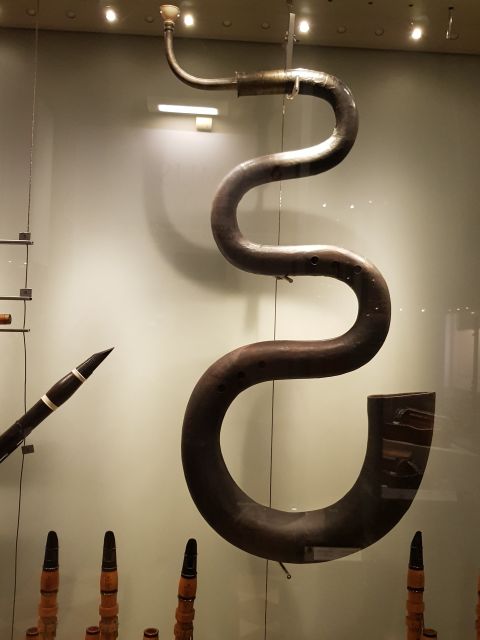
The Music Instruments Collection is an unexpected part of the Accademia. You will see three rare Stradivari violins and what is described as the first piano ever created in the world.
These objects broaden the museum’s story beyond painting and sculpture. A Stradivari violin is not only a beautiful instrument. It also shows how design, materials, skilled labor, and sound came together in historic Italian craftsmanship.
The piano adds another useful connection. Florence’s artistic culture was not limited to marble and painted panels. The city also supported music, instrument making, and courtly display. The instruments give you a different way to think about the people who commissioned and collected works of art.
Do not expect this to become a full music-history tour. The main focus remains the Accademia’s art collection, and the visit lasts only two hours. Still, the instruments are a welcome surprise, especially if you want something beyond the standard Michelangelo route.
Lorenzo Monaco, gold leaf, and Giotto
At the upper level, you will find the most complete collection of paintings by the 14th-century artist Lorenzo Monaco. These works reflect the look of Florentine medieval art, including the use of expensive gold leaf and lapis lazuli.
Gold leaf can make a painting appear instantly decorative, but it also tells you something about cost and status. Lapis lazuli was a valuable blue pigment, so its use could signal the importance of a subject or commissioner. A guide can help you read these choices as evidence of the work’s original setting and value.
The collection also includes a fresco by Giotto, an important early painter associated with a more convincing use of space and perspective. The description of the work calls attention to his prospective concept, meaning an approach that helped move painting toward a stronger sense of three-dimensional space.
This part of the museum may appeal most to visitors who enjoy seeing how art changed over time. The works can look quite different from the later Renaissance paintings and Michelangelo’s powerful figures. That contrast is the point. Florence’s art developed through several stages, and the Accademia lets you see more than one of them in a compact visit.
Is $229 per person a fair price?
At $229 per person, this is not a bargain museum entry. The fee pays for a private group, a professional local guide, and a reserved entrance ticket. It also buys you two hours of structured attention rather than a self-guided visit.
The value depends on your group. For two or more people who want an art-focused explanation, the private format can make sense. You can ask questions, move at a pace suited to your interests, and avoid being attached to a large group. A strong guide can also help you get more from the paintings and sculptures that you might otherwise pass without noticing.
For a solo visitor, the same price is harder to justify. If you already understand Renaissance art and feel comfortable reading museum labels, buying a ticket and using your own guidebook may cost much less. The tour makes its best case for couples, families, or small groups who want a focused introduction and prefer to reserve a set time.
The quality of the guide matters greatly. Most of the available comments praise careful explanations and strong interest in Italian art, with Eleonora and Sonia receiving particularly warm mentions. One booking raised concerns about a wrong meeting address, a weak apology, and an explanation that did not feel worth the price. I would treat that as a reminder to confirm the meeting point and to choose this experience because you want personal guidance, not because the entry ticket alone is a good deal.
Who should book this private visit?
I would recommend it to first-time Florence visitors who want to understand what they are seeing, not simply check David off a list. It also suits families and small groups who value a private guide and want to ask questions during the visit.
Art students and museum fans may enjoy the connections among Michelangelo, Bartolini, Lorenzo Monaco, Giotto, and the other Florentine artists. The mix of sculpture, painting, plaster models, and musical instruments gives the two hours more variety than a single-statue visit.
I would be more cautious if your budget is tight, if you have already studied the Accademia, or if you prefer to wander alone. The museum is not large, and independent visitors can see its key rooms without paying for a private guide.
The activity is wheelchair accessible, and you can choose from seven guide languages. You should still plan for security screening, carry your identification, and leave unnecessary bags behind because there is no cloakroom.
Should you book it?
Book this tour if David is important to you but you want more than a photograph, especially if you are traveling with a small private group and value clear art history. The Slaves, Bartolini’s plaster models, Lorenzo Monaco’s paintings, Giotto’s fresco, and the Stradivari instruments give the visit real range.
Skip it if $229 per person feels too high for two hours or if you are happy exploring at your own pace. If you do book, confirm whether your instructions say Via Ricasoli 60/R or Via Ricasoli 68, arrive early, and keep your passport or ID card ready. Those small steps matter when your museum time is limited.
FAQ
How long does the Accademia Gallery tour last?
The tour lasts two hours. About 30 minutes are allocated to Michelangelo’s David, followed by about 75 minutes covering the wider Accademia Gallery collection.
What is included in the price?
The price includes a professional local guide and entrance tickets with a reservation.
Is hotel pickup included?
No. Hotel pickup is not included. You must make your own way to the meeting point at the Accademia Gallery.
Where does the tour meet?
The meeting point is listed as Galleria Accademia, Via Ricasoli 68, Florence. The itinerary also gives Via Ricasoli 60/R as the starting and return location, so confirm the exact meeting instructions before arrival.
Can I choose the tour language?
Yes. Live tours are offered in Spanish, English, French, German, Italian, Portuguese, and Russian.
Is the tour private?
Yes. This is a private group experience.
Do I need identification?
Yes. Bring a passport or ID card.
Can I cancel the booking?
You can cancel up to 24 hours in advance for a full refund. You can also reserve now and pay later, keeping your plans flexible.
Recently added around Florence
- Accademia and Uffizi Small-group Guided Tour★ 4.5 · 8 reviews
- The David from Michelangelo.★ 5.0 · 3 reviews
- Combo: Accademia + walking + Uffizi Galleries Guided Tour★ 3.5 · 6 reviews
- The Complete Wine Tour Brunello, Nobile, Chianti wine experience★ 4.0 · 7 reviews
- The Best of Tuscany in 3 Days★ 4.5 · 13 reviews
- The Cooking Lab – Authentic Food Experience★ 5.0 · 113 reviews
- Florence Central Market Food Tour – Private Tour★ 4.0 · 7 reviews
- Family Friendly Florence Private City Tour★ 5.0 · 47 reviews
Accademia Gallery and David Tours, compared.
Timed Entrance Ticket to Michelangelo’s David
Read our review →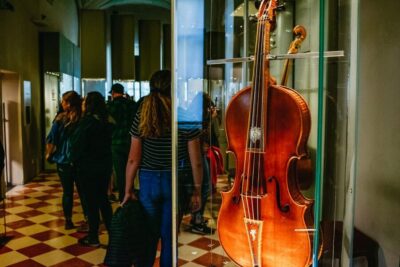
Michelangelo’s David Skip-the-Line Entry Ticket
Read our review →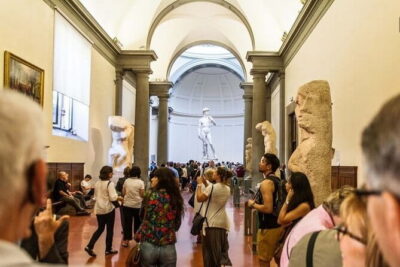
Florence Accademia Gallery Tour with Entrance Ticket Included
Read our review →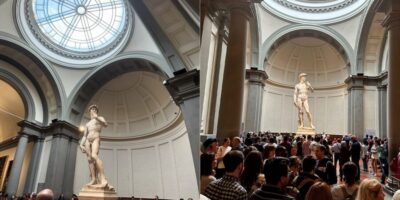
Timed Entry Ticket to Michelangelo’s David & eBook
Read our review →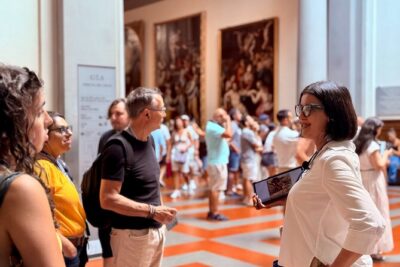
Skip the line: Uffizi and Accademia Small Group Walking Tour
Read our review →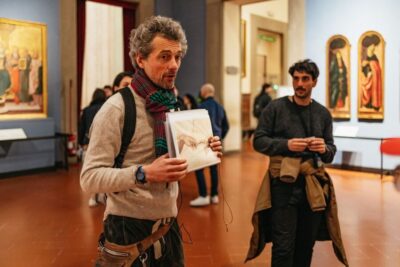
Accademia Gallery Guided Tour with Entry Ticket
Read our review →Browse the lists this tour appears in