
Reviewed · WORKSHOPS
5 Mornings Still Life Painting Guided Workshop in Florence
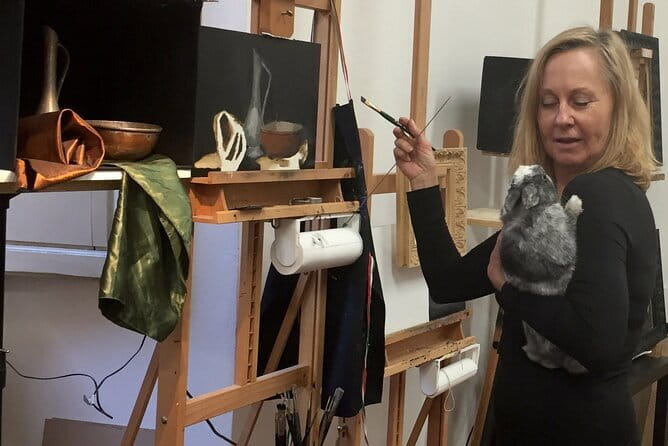
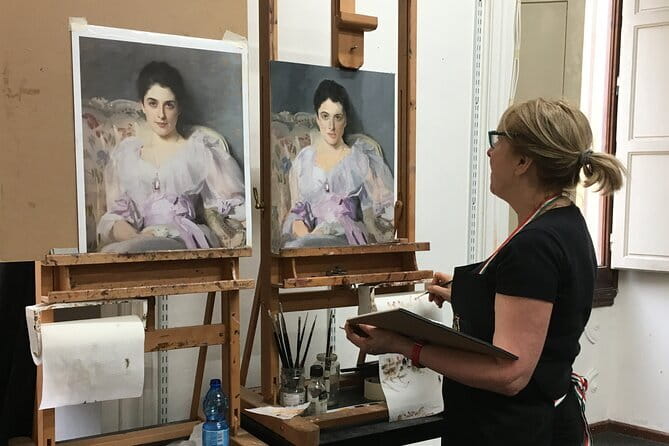
The best part of this Florence experience is that you do not just look at art. You make one. Over five three-hour mornings, you work in a light-filled palazzo near the historic center, setting up a still life, drawing it, and building an oil painting from the first dark shapes to the last details.
I like the small maximum group of 10, since painting instruction is far more useful when someone can look closely at your work. I also like that Laura and Frank create a setting that feels welcoming rather than stiff. The main consideration is time: this is a five-day commitment, not a quick holiday activity, and the $789.39 price makes most sense if you truly want hands-on art instruction.
Key points to know before booking
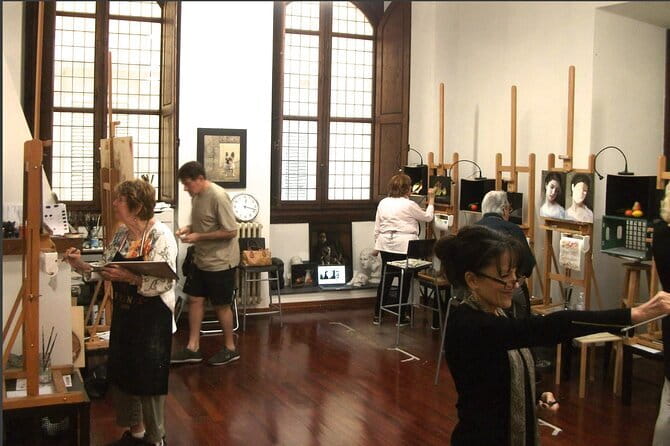
- Five mornings, 15 hours total: You attend three-hour sessions from Monday to Friday, with flexible weekday starting dates.
- A real oil painting process: You move from materials and color mixing to sight-size drawing, tonal underpainting, full color, and finishing details.
- Personal instruction from Laura and Frank: The group is capped at 10, allowing room for individual help.
- No previous experience required: Beginners can learn the basics, while experienced painters receive instruction adjusted to their level.
- A finished artwork goes home with you: The studio packs the painting for easier transport.
- Central Florence meeting point: Start at Borgo Santi Apostoli 18 at 10:00 a.m., near public transportation.
A Florentine morning spent making art
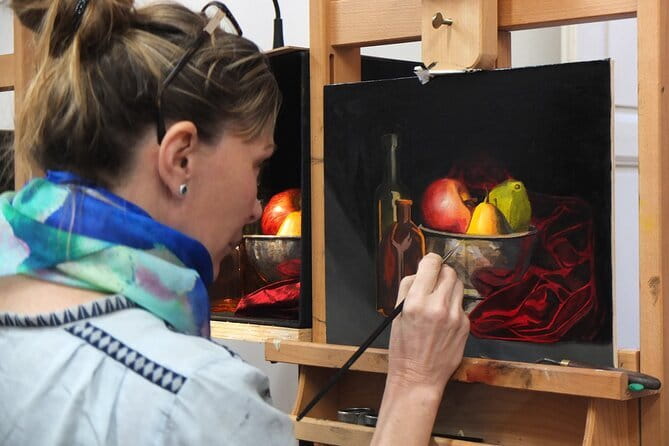
Florence can fill a day with masterpieces, chapels, and crowded museum halls. This workshop gives you a different way to spend time in the city. You step into a working studio and concentrate on one arrangement of objects, one panel, and one painting.
That slower pace matters. You are not rushing past a gallery label or trying to remember which room held your favorite Botticelli. You are learning how an image is built. The lesson begins with the tools and methods of oil painting, then gives you time to apply each stage yourself.
The setting is part of the appeal. The workshop takes place in a light-filled palazzo in the historic center, at Borgo Santi Apostoli 18. The information provided does not promise a grand tour of the building, so book this for the art instruction, not as a sightseeing stop. Still, a studio in central Florence gives the class a strong sense of place.
You begin at 10:00 a.m. each morning. That leaves your afternoons open for museums, churches, markets, or a long lunch. It also makes the course easier to fit into a city stay than an all-day class.
More artisan workshops in Florence:
- Florence: Pasta Cooking Class with Unlimited Wine
★ 4.9 · 10,285 reviews - Florence Pizza or Pasta Class with Gelato Making at a Tuscan Farm
★ 5.0 · 6,801 reviews - Florence: Pasta & Tiramisu Cooking Class with Unlimited Wine
★ 4.9 · 6,708 reviews
What the five mornings actually teach you
The course follows a clear progression. You do not simply sit down with a brush and hope for the best. Each part prepares you for the next.
Morning one: Materials, methods, and color
The first stage covers the materials used for an oil painting and the basic methods you will need. You also receive a demonstration of color mixing.
For a first-time painter, this is important. Oil paint can seem forgiving because it stays workable, but that same quality can lead to muddy colors and overworked passages. A demonstration gives you a better starting point than trying to copy a finished painting without understanding how it was made.
More experienced painters can use this time to refine habits. Since instruction is personalized, Laura can adjust the focus to your level rather than keeping every person on the same basic exercise.
Morning two: Choosing and setting up the still life
You set up a simple still life using objects and props available at the studio. This is a small detail with real value. You are not given a fixed image to copy. You take part in deciding what you will paint.
A simple arrangement is a good choice for a short course. It keeps the focus on proportion, light, color, and edges instead of burying you under too many objects. You may find that the setup feels less dramatic than the grand scenes in Florence’s museums, but that restraint makes the exercise manageable.
This stage also helps you see how painters think. The position of an object, the amount of empty space, and the relationship between light and dark shapes all affect the final image. You begin learning to look at the arrangement as a whole.
More guided tours in Florence:
- The Best tour in Florence: Renaissance & Medici Tales – guided by a STORYTELLER
★ 5.0 · 12,316 reviews - Florence: Duomo Cathedral Guided Tour
★ 3.9 · 5,970 reviews - Uffizi Gallery Small Group Tour with Guide
★ 4.5 · 4,923 reviews - Florence: Accademia Gallery Guided Tour
★ 4.6 · 4,156 reviews
Morning three: Sight-size drawing
Next, you draw the still life using a method known as sight size. The technique is notably associated with John Singer Sargent and is based on comparing your drawing directly with the subject at a consistent scale.
This is one of the most useful parts of the class. Many beginners start painting too soon, then try to correct a weak drawing with more paint. Sight-size work slows you down before that happens. You check angles, proportions, and placement first.
It may also be the stage that tests your patience. Drawing carefully is not as immediately exciting as applying bright color. Yet a careful drawing gives the painting a stronger foundation. If you have painted before, you will likely recognize this as a chance to sharpen observation rather than simply practice brushwork.
Morning four: Transferring the drawing and building values
Once the drawing is ready, you transfer it to an oil-primed linen panel. You then paint a tonal underpainting to establish values, meaning the light and dark shapes that give the still life its structure.
The linen panel is a meaningful part of the process. You are not working only on a disposable practice sheet. You are creating a finished object on a traditional painting surface, and the surface itself becomes part of the experience you take home.
The tonal underpainting helps you see why color is not the whole story. A painting can contain attractive colors and still look flat if the light and dark relationships are weak. Establishing values first gives you a way to judge the form before adding the full color layer.
Morning five: Full color and finishing details
The final stage brings in full color and finishing details. By now, you have already made the major decisions about the arrangement, drawing, and values. The last morning is not about starting from scratch. It is about bringing the painting together.
The exact finish will depend on your pace and experience. Beginners should not expect a museum masterpiece after 15 hours, and the course does not make that promise. You should expect a personal oil painting that records what you learned and gives you a foundation for continued practice at home.
At the end, the studio packs your painting for easier transport. That is practical, especially if you are continuing your trip or flying home with limited space. The provided details do not specify the size of the package or whether the painting must dry further before travel, so you may want to ask the studio about transport conditions when booking.
Why the small group matters
The maximum group size is 10. That is small enough to make personal guidance possible, while still giving you the shared energy of a class.
Painting instruction is not like listening to a lecture. A teacher needs to see how you place a line, mix a color, or handle a transition from light to shadow. A capped group gives Laura more room to work with you directly.
The teaching is described as personalized for each student. That makes the class suitable for a mixed group, with beginners learning core principles and more advanced painters receiving help that does not simply repeat the basics.
The available feedback points to a welcoming studio atmosphere. One participant specifically praised Laura for making the class comfortable and for teaching the fundamentals of oil painting. Another described the studio as dream-like and said Laura and Frank made the participant feel at home. Those details matter because a relaxed setting can help you take instruction without feeling self-conscious.
Still, a group of 10 is not the same as a private lesson. You will share the teacher’s time, and some moments may require patience while another student receives help. If you want uninterrupted one-on-one coaching, ask about private instruction before booking.
Laura and Frank’s teaching approach
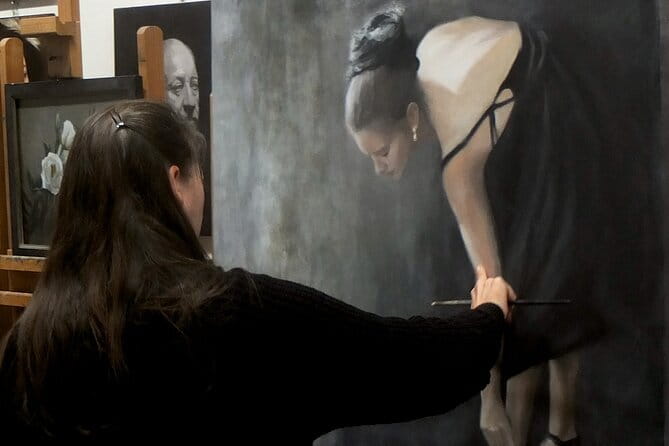
Laura is the named instructor praised for teaching the basic fundamentals of oil painting. Frank is also associated with the studio and with creating a comfortable welcome. The supplied information does not list formal art credentials, so I would judge this experience by its teaching structure rather than by a long biography.
That structure is sensible. You learn materials and methods, then color mixing. You create the arrangement, draw it with a defined method, transfer the drawing, establish values, add color, and finish the work. Each step has a purpose.
The course also leaves room for different starting points. If you have never used oil paint, the sequence gives you a clear path. If you already paint, the sight-size drawing and tonal underpainting can give you a disciplined way to revisit fundamentals.
The positive comments focus on personal comfort and instruction, not just the novelty of painting in Italy. That suggests the human side of the class is a major part of its value. You need to feel at ease when asking basic questions, showing unfinished work, or trying a method that is new to you.
The cost, and who gets good value
The listed price is $789.39 per person. That is a substantial fee, but the course includes about 15 hours of guided instruction across five mornings, a small group, studio materials and props for the still life process, and a finished painting packed for transport.
The best way to judge the price is by comparing it with the type of experience you want. If you only want a quick creative activity, this will feel expensive. If you want a structured introduction to oil painting with a professional artist and enough time to complete a work, the cost is easier to justify.
You are also paying for continuity. Many art activities offer a single session that ends just as you begin to understand the medium. Here, the next morning builds on the previous one. The five-part sequence gives your painting time to develop and gives you time to correct mistakes with guidance.
You should also consider what is not stated. The details do not spell out every included material, so confirm whether all paints, brushes, medium, and the linen panel are supplied or whether anything extra is needed. The course says you will learn about materials and methods, and your painting is packed for transport, but a direct question before booking will remove doubt.
The course is booked, on average, 42 days ahead. That is a useful planning signal, especially since the group is small and the experience runs across several dates.
Picking a start date that fits your Florence plans
You may start on any weekday. Teaching runs Monday through Friday, so a Monday start keeps the five mornings together in one calendar week.
A Tuesday start means the last class is the following Monday, because the studio does not teach on Saturday or Sunday. The same pattern applies to other weekday starts. This flexibility helps, but you must check your schedule carefully.
For example, a five-day course starting on Thursday will not finish until the following Wednesday. That can work well for a longer stay, but it will not suit a short weekend visit. The course is best for someone who can give Florence five mornings without moving to another city or catching an early departure.
The 10:00 a.m. start is friendly to normal holiday mornings. You still need to arrive at Borgo Santi Apostoli 18 with enough time to find the meeting point, but the supplied information says it is near public transportation. The activity ends back at the same meeting point.
Who should book this workshop
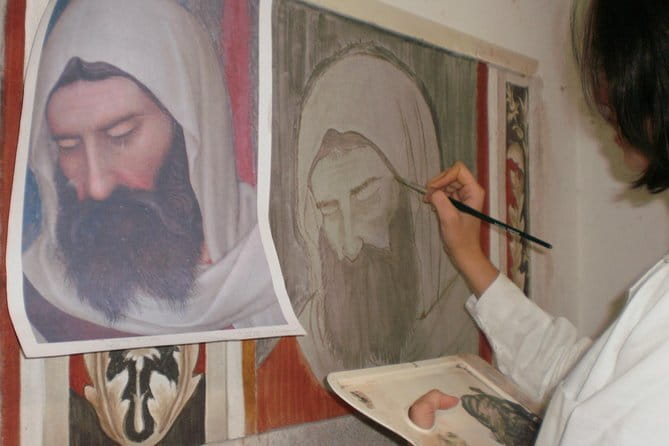
I would recommend this for a beginner who wants more than a souvenir craft session. You will learn a real sequence for making an oil painting, and you will leave with an example of your own work to study at home.
It also suits an experienced painter who wants focused practice in observation, sight-size drawing, values, and color. The personalized instruction is useful if you want to work on specific habits rather than follow a one-size-fits-all class.
This is a particularly good fit if art is a main reason for your Florence visit. You can spend afternoons with the city’s paintings and mornings thinking like a painter yourself. The connection is not forced. You are simply giving yourself time to look closely and work carefully.
I would hesitate if your schedule allows only one or two free days. Missing part of a five-morning sequence would weaken the value of the course, and the supplied information does not describe a shorter version.
Practical details worth checking

Confirmation is provided at booking, and the activity uses a mobile ticket. Most people can participate, and the meeting point is near public transportation.
The activity offers free cancellation if you cancel at least 24 hours before the start time. Cancellations or changes made inside that window are not accepted for a refund, with cut-off times based on local time.
Because the workshop is held over several mornings, check three things before paying: your exact start date, the date of the final session, and what painting materials are included. Also ask about transporting the packed painting if you are flying soon after the class.
Should you book The Florence Studio workshop?
Book it if you want a serious, calm art experience rather than a quick Florence diversion. The clear five-stage process, small group, personal instruction, and finished oil painting make this a strong choice for beginners and returning painters alike.
Skip it if your itinerary is too tight for five mornings or if $789.39 feels too high for a creative activity. For the right person, the value is not just the panel you carry home. It is the method you can continue using after Florence, plus the memory of learning to paint in a working studio at the heart of the city.
FAQ
How long does the workshop last?
The workshop runs for five mornings and totals approximately 15 hours. Each session lasts about three hours.
What time does each session begin?
The stated start time is 10:00 a.m.
Where does the workshop meet?
You meet at Borgo Santi Apostoli 18, 50123 Florence, Italy. The activity ends back at the same meeting point.
Can I choose my start date?
Yes. You may choose to begin on any weekday. The studio teaches from Monday through Friday.
What happens if I start on a Tuesday?
Your final session will be the following Monday, since the studio does not teach on Saturday or Sunday.
Do I need previous painting experience?
No. The workshop is designed for beginners and also suits more advanced painters. Instruction is personalized for each student.
Can I take my painting home?
Yes. The studio packs your painting for easier transport home.
Recently added around Florence
- Accademia and Uffizi Small-group Guided Tour★ 4.5 · 8 reviews
- The David from Michelangelo.★ 5.0 · 3 reviews
- Combo: Accademia + walking + Uffizi Galleries Guided Tour★ 3.5 · 6 reviews
- The Complete Wine Tour Brunello, Nobile, Chianti wine experience★ 4.0 · 7 reviews
- The Best of Tuscany in 3 Days★ 4.5 · 13 reviews
- The Cooking Lab – Authentic Food Experience★ 5.0 · 113 reviews
- Florence Central Market Food Tour – Private Tour★ 4.0 · 7 reviews
- Family Friendly Florence Private City Tour★ 5.0 · 47 reviews
Workshops, compared.
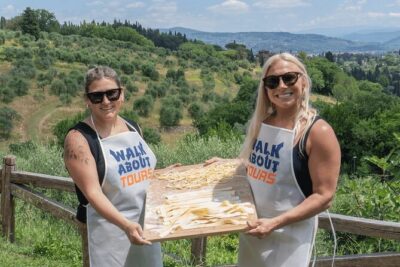
Florence Pizza or Pasta Class with Gelato Making at a Tuscan Farm
Read our review →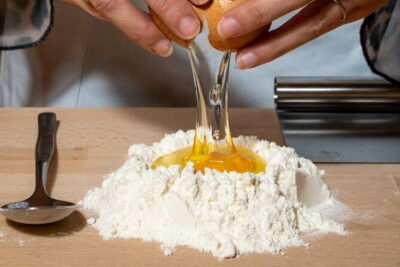
Pasta & Tiramisu Cooking Class with Unlimited Wine
Read our review →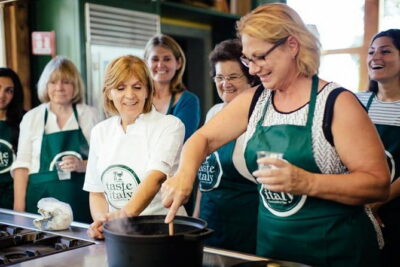
Cooking Class and Lunch at a Tuscan Farmhouse with Local Market Tour from Florence
Read our review →
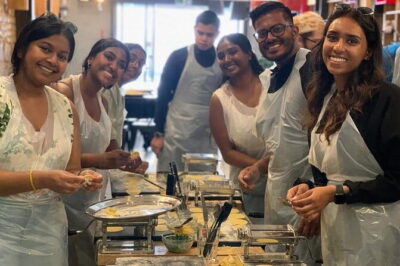
Cooking Class Pasta & Tiramisu Making Unlimited Wine
Read our review →
Florence Cooking Class The Art of Making Gelato & Authentic Pizza
Read our review →Browse the lists this tour appears in